
Reviewed · TOKYO TOURS
Shibuya Tokyo: Sushi Making Class (Vegan/Vegetarian/Halal)
Shibuya’s neon streets are only part of the story. This class gives you a place at the worktable, where you make California rolls and nigiri instead of simply ordering them. The short sushi quiz adds a bit of history before the rice, vegetables, and rolling mats come out.
I like two things right away: the class welcomes vegan, vegetarian, halal-friendly, and gluten-free diets, and you eat what you make at the end. The main drawback is practical rather than culinary: the studio can take extra time to find, so do not arrive at Shibuya Station with only a minute to spare.
Key points
- Seven minutes from Shibuya Station: The studio is close to the station, but you should allow extra time to locate the exact venue.
- A real hands-on meal: You prepare rolls and nigiri, then sit down and eat your own work.
- Dietary choices must be made ahead: Vegan, vegetarian, halal-friendly, and gluten-free options are available, but changes cannot be made on the day.
- English instruction with a friendly tone: Instructors such as Momoyo and Kaito explain each step clearly and keep the class relaxed.
- More than a cooking lesson: The opening sushi quiz gives you a quick introduction to the dish’s history and culture.
- A useful 90-minute activity: The class fits neatly into a busy day in Shibuya and costs $58 per person, including ingredients and equipment.
Making Sushi Instead of Just Ordering It
Sushi is often treated as a finished product: neat pieces arrive on a wooden plate, and the skill behind them stays hidden. This class turns the process around. You handle the ingredients, shape the rice, and learn why a roll holds together or falls apart.
That matters even if you are not confident in the kitchen. The class is designed for beginners, and the instruction is broken into manageable steps. You are not expected to arrive knowing how to use a bamboo mat or form nigiri. The point is to learn by doing, with an instructor nearby to correct your technique.
The atmosphere also appears to be more social than formal. The staff use English, explain the process, and make room for conversation. If you are traveling alone, this gives you an easy shared activity. If you are with family or a partner, the inevitable uneven rolls and misshapen pieces become part of the fun.
You should not expect a professional chef’s certification course. In 90 minutes, you will learn practical foundations and make a meal, not master every type of sushi. That is a fair trade for a compact cultural activity in central Tokyo.
More Sushi Making Classes in Tokyo
- Sushi Making Tokyo Roll and Authentic Japanese Sushi Class
★ 5.0 · 3,971 reviews - Tokyo: Roll and Authentic Sushi Making Class in Asakusa
★ 4.9 · 1,957 reviews - Tokyo: Sushi Making Class in a Happi Coat near a Famous Spot
★ 4.9 · 1,377 reviews
The Sushi Quiz Sets the Tone
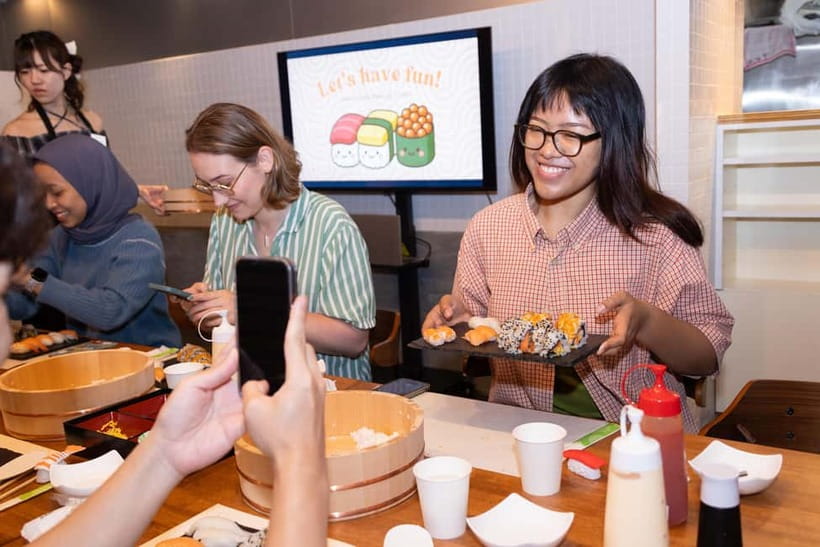
The session begins with a short quiz about sushi history. It is a small detail, but a useful one. Rather than launching straight into food preparation, the class gives you a little context about the dish Japan made famous.
The quiz is meant to be light and social, not an exam. It helps the group get acquainted and gives the instructor a natural way to explain sushi culture without turning the first part of the class into a lecture.
I like this opening because it makes the activity feel connected to Japan rather than just a generic cooking workshop. You learn a few facts, then immediately put the subject into practice. The history section is brief, so it should suit you if you want cultural context but do not want a long talk before lunch.
The quiz also helps younger participants take part. Children and adults can answer together, and nobody needs specialist food knowledge. The class works best when you treat the opening as a warm-up, not as a serious test of Japanese cuisine.
Fresh Vegetables Give the Class Its Character
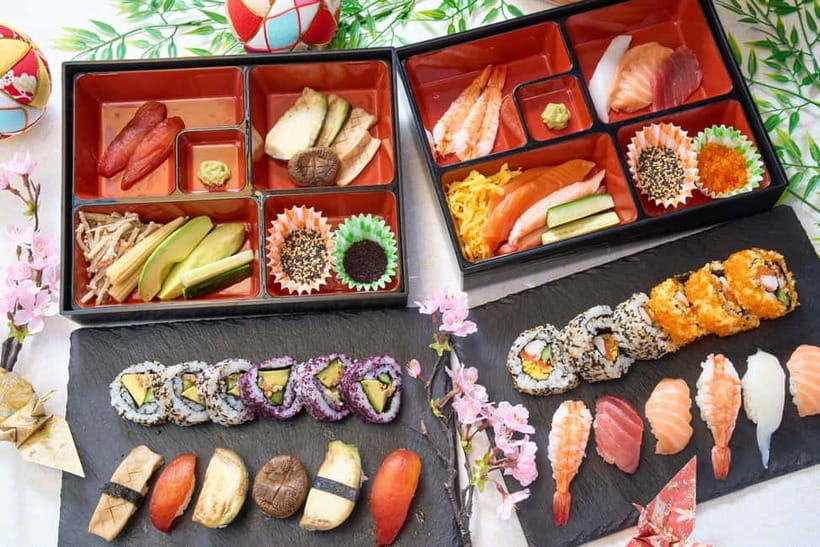
The plant-based ingredients include vegetables such as eggplant, mushrooms, tomatoes, and avocado. These choices give the class a different feel from a standard sushi lesson centered on raw fish.
For vegans and vegetarians, this is the central appeal. You can learn the shapes and methods of sushi without having to negotiate around ingredients you do not eat. The vegetables also show how much of the enjoyment comes from texture, color, seasoning, and careful presentation.
If you eat fish, the class can still be worthwhile because the focus is technique. You learn how to spread rice, place fillings, roll a California roll, and shape nigiri. The finished food is also a proper part of the experience, rather than a token taste at the end.
The phrase fresh local ingredients is part of the promise here, though the exact selection can change. That is worth remembering if you have your heart set on one particular vegetable. You receive the ingredients provided for the class, with the main choice being your dietary option rather than a custom menu.
Rolling California Rolls Without the Guesswork
The roll-making section is where the activity becomes most tactile. You work with sushi rice, fillings, and the tools supplied at the studio. The instructor demonstrates the basic method, then you try it yourself.
The first roll may not look like the neat examples in a Tokyo department store. That is normal. Getting the rice spread evenly and applying the right pressure takes practice. The useful part is having an instructor there to show you how to correct the roll before it becomes too loose or too full.
You should pay attention to the small tips. How much rice you use matters. So does where you place the filling and how firmly you roll. These are simple skills, but they are exactly the kind that are hard to learn from a photograph or a recipe alone.
The class includes sushi-making tools and utensils, so you do not need to bring equipment. You also do not need advanced cooking skills. Wear something comfortable and be ready to work with your hands, since this is not a demonstration where you sit back and watch someone else prepare everything.
More sushi classes in Tokyo:
- Tokyo Sushi Making Class in Tsukiji with Professional Chef
★ 5.0 · 1,177 reviews - Tsukiji Fish Market Guided Tour and Sushi Making with Pro Chef
★ 5.0 · 775 reviews - Tokyo: Tsukiji Fish Market Sushi Making Class with Pro Chef
★ 4.9 · 506 reviews - Tokyo Tsukiji Fish Market Tour and Sushi Making Lesson
★ 5.0 · 390 reviews
Nigiri Makes the Lesson Feel Truly Japanese
Nigiri is one of the most recognizable forms of sushi: a hand-shaped piece of rice with a topping. In this class, you learn how to make nigiri as part of the hands-on lesson, alongside rolls.
For many people, nigiri is the most satisfying technique to learn because its shape looks simple but depends on control. Too much pressure can make the rice dense. Too little can leave it loose. A teacher can show you the right feel more easily than written instructions can.
The plant-based approach gives the nigiri section its own character. You are not simply copying a fish sushi set. You are working with the ingredients assigned to your vegan, vegetarian, halal-friendly, or gluten-free option.
The result may not be perfectly uniform, and that is part of the charm. You finish with food that clearly came from your own hands. The lesson is less about producing restaurant-perfect pieces and more about understanding the basic form well enough to try it at home.
Dietary Planning Is the Important Booking Step
This class makes a real effort to include different diets, but you need to select your requirements when booking. Vegan, vegetarian, halal-friendly, and gluten-free choices are available.
The key rule is simple: do not wait until the day of the class. Menu changes cannot be accommodated on the day, so your selection needs to be recorded in advance. This is especially important for allergies or strict dietary needs.
Halal-friendly and gluten-free options are stated as available, but the information does not provide certification details or explain every ingredient-handling procedure. If you have a serious allergy or require certified preparation, contact the provider before booking and confirm that the option meets your needs.
For most people seeking a plant-based or meat-free meal, the advance choice should make the experience straightforward. The staff are described as accommodating and clear, which helps create a comfortable setting for people who might otherwise find sushi menus difficult to navigate.
English Guidance Keeps the Class Moving
The instructor language is English. That makes a difference in a practical lesson, since timing and hand movements matter. You need to understand when to spread, fold, press, and cut, and a language barrier could make those steps frustrating.
The teaching style appears friendly rather than stiff. Momoyo is named in several particularly positive accounts, and Kaito is also praised as an instructor. Their approach includes clear explanations, patience, and conversation, which is useful when you are trying a technique for the first time.
The class also includes a little sushi history without making the session feel academic. You get cultural background, cooking advice, and help at the worktable. That mix is better suited to a short holiday activity than a lengthy formal course.
Group size is not provided, so I would not assume a private lesson or a small class. Your experience may depend partly on how many people attend that time slot. Still, the format is built around hands-on preparation rather than watching from a distance, and the instructors are there to guide the process.
Eating Your Own Work Is Part of the Value
Once the sushi is prepared, you sit down and eat it. This makes the $58 price easier to assess. You are not paying only for a short demonstration. The fee includes the instructor, fresh ingredients, utensils, sushi tools, the quiz, the lesson, and the food you prepare.
The portion is described as a nice, substantial meal in one account, though exact serving size is not specified. I would treat it as a satisfying activity meal rather than a replacement for an elaborate sushi dinner.
There is also a small photo opportunity before eating. Staff are happy to take pictures of your finished sushi, so you can record the result without balancing your phone over the worktable.
The strongest value is the combination of food and a skill you can repeat. You leave with an understanding of the basic process, not just a memory of what someone else cooked. You can try rolls and simple nigiri again at home, using the technique rather than relying on a souvenir recipe alone.
Where It Fits in a Shibuya Day
The studio is about a seven-minute walk from Shibuya Station, placing the class in a useful part of Tokyo for a half-day plan. You can combine it with time around Shibuya before or after the session.
The meeting point can vary depending on the option booked, so check your confirmation carefully. The studio is close to the station, but one person specifically advises allowing extra time to find the venue. Shibuya has plenty of large streets, side roads, signs, and station exits, so those extra minutes are sensible.
The 90-minute duration is another strength. It is long enough to include the quiz, instruction, preparation, and meal, but short enough to fit between other plans. You should still avoid booking something that begins immediately afterward, especially if you are unfamiliar with the station or the meeting point.
The class is indoors and structured, which makes it a useful choice when you want a break from walking. It also gives you a change of pace from Shibuya’s shopping, observation decks, and nightlife. Instead of consuming another attraction, you spend part of the day making something.
Who Will Get the Most From This Class
I would recommend this experience most strongly to people who want a practical introduction to Japanese food and need a clear dietary option. Vegans and vegetarians, in particular, may find it easier to enjoy sushi here than at a restaurant where plant-based choices are limited.
It also suits solo visitors. The quiz and shared worktable give you a natural way to talk with other people, while the instructor provides a steady point of contact. Couples and families can work together, compare results, and take photos before the meal.
Beginners are the intended audience. You do not need previous sushi-making experience, Japanese language skills, or special cooking equipment. The class is also a good choice if you want an activity that produces something you can eat, rather than a lesson built mainly around watching.
I would be more cautious if you want a quiet, highly private, or advanced culinary session. The group format and friendly social tone may not suit someone seeking a serious chef-led course. It is also not the right pick if you want a wide range of menu substitutions on the day.
Price, Flexibility, and Small Practical Details
At $58 per person, the class is not the cheapest meal in Tokyo. The value depends on how much you want from the experience beyond eating. Ingredients, tools, English instruction, cultural information, and the finished meal are all included, so the price is reasonable for a 90-minute hands-on activity in central Shibuya.
The reserve-now, pay-later option helps if your Tokyo schedule is still changing. You can hold a place without paying immediately. Free cancellation is available up to 24 hours before the activity for a full refund, giving you some protection if your plans shift.
Check the starting time when you book, since availability varies. Also confirm the dietary option at that point. The provider is Tabiji Partners Co., Ltd., and the activity is offered in English.
Audio recording is not allowed. Photos of the finished sushi are welcome, but keep your recording equipment at home and focus on the lesson.
Should You Book the Shibuya Sushi Class?
Book it if you want to make and eat your own sushi, need vegan, vegetarian, halal-friendly, or gluten-free arrangements, and prefer a friendly English-language activity over a formal cooking school.
The class offers real participation, a useful cultural introduction, and a meal at the end. Its strongest feature is inclusion: you can learn the basics without treating dietary needs as an inconvenience. The main cautions are to choose your menu in advance and allow extra time to find the studio.
At $58, I see this as a good-value Shibuya activity for first-time sushi makers, solo visitors, couples, and families. Skip it if your main goal is an advanced lesson or a private dining experience. For everyone else, it is a smart way to turn one meal in Tokyo into a skill you can carry home.
FAQ
How long does the sushi-making class last?
The class lasts 90 minutes. It includes a sushi history quiz, hands-on preparation, and time to eat the sushi you make.
Where is the sushi class located?
The studio is in Shibuya, Tokyo, about a seven-minute walk from Shibuya Station. The exact meeting point may vary by booking option, and you should allow extra time to find the venue.
Is the class taught in English?
Yes. The instructor language is English, and the class includes English-speaking local instructors.
Can I choose a vegan or vegetarian option?
Yes. Vegan and vegetarian options are available. Ingredients may include vegetables such as eggplant, mushrooms, tomatoes, and avocado.
Are halal-friendly and gluten-free options available?
Yes. Halal-friendly and gluten-free options are available. You must indicate your dietary preference or restriction when booking, since menu changes cannot be made on the day.
What is included in the $58 price?
The price includes the English-speaking instructor, sushi history quiz, fresh ingredients, cooking utensils, sushi-making tools, the hands-on lesson, and the sushi you prepare and eat.
More Food Tours in Tokyo
- Tokyo: Shinjuku Food Tour (13 Dishes at 4 Local Eateries)
★ 5.0 · 6,603 reviews - Tokyo Tsukiji Fish Market Food and Culture Walking Tour
★ 5.0 · 3,184 reviews - Tokyo: Shinjuku Food Tour (15 Dishes and 4 Eateries)
★ 4.9 · 2,033 reviews - Best of Shinjuku: Izakaya Food Tour (4 Stops, 14+ Tastings)
★ 5.0 · 1,863 reviews
More Vegan & Vegetarian in Tokyo
- Tokyo: 2-Hour Vegan and Vegetarian Ramen Guided Walking Tour
★ 4.8 · 33 reviews
Just added around Tokyo
- Private Arrival Transfer : Narita International Airport to Central Tokyo City★ 4.5 · 12 reviews
- Narita Airport(NRT): Private Transfer to Tokyo/Yokohama 1-9pax★ 5.0 · 47 reviews
- Private Transfer from Narita Airport to Yokohama Port and City★ 4.5 · 17 reviews
- [Narita Airport Terminals 1, 2] 40-60km Sawara Itako Historic Bike Tour★ 5.0 · 13 reviews
- 3 Day Japan Highlights Tour: Tokyo, Mt.Fuji, Nara, Kyoto, Osaka★ 5.0 · 22 reviews
- The 10 Tastings of Tokyo With Locals: Private Street Food Tour★ 5.0 · 48 reviews
- Small Town in the Big City: Tasting Tokyo’s Kichijoji★ 5.0 · 195 reviews
- Small Town in the Big City: Tasting Tokyo’s Kichijoji★ 5.0 · 16 reviews
Tokyo Tours, compared.

Mt Fuji and Hakone 1-Day Bus Tour Return by Bullet Train
Read our review →

teamLab Planets TOKYO Digital Art Museum Entry Ticket
Read our review →
Mt Fuji & Hakone Cruise, Drum Show Bullet Train 1 Day from Tokyo
Read our review →
Sumo Show Experience with Chicken Hot Pot and a Photo
Read our review →
Shinjuku Food Tour (13 Dishes at 4 Local Eateries)
Read our review →
Tokyo Mt Fuji 5th St & Hakone Cruise Bus Tour w/Bullet Train
Read our review →
Flagship 2-Hours Official Street Go-Kart Tour – Tokyo Bay Shop
Read our review →Browse the lists this tour appears in