
Reviewed · HIROSHIMA TOURS
The Journey of Hiroshima from Tragedy to Peace
Hiroshima’s story becomes most powerful when you move through the places where it happened. This walking tour takes you from the Gates of Peace to the Atomic Bomb Dome, then to the exact hypocenter of the 1945 explosion, with time at memorials that often receive less attention than the famous ruins.
I like two things here: the route gives equal weight to personal stories and larger events, and the guides bring formal Peace Studies training to a subject that deserves care. Ali, Wajid, and Zunera are all praised for clear explanations, good pacing, and lively discussion. The main drawback is that the tour does not include entrance to the Peace Memorial Museum, and the walking route is not suitable for people with mobility impairments.
Key points to know before booking
- The route reaches the actual hypocenter: You finish at the point directly beneath the atomic blast, not merely near the main park sights.
- The Atomic Bomb Dome gets historical context: You learn what the building was before the bombing and why its survival matters.
- Less familiar memorials are included: The Dr. Marcel Junod, Norman Cousins, Korean, and Mother and Baby in Storm memorials add human detail to the visit.
- The guides shape the experience: Ali, Wajid, and Zunera are praised for clear teaching, friendly conversation, and a comfortable pace.
- Museum entry costs extra: This tour explains the park and its monuments, but you need a separate ticket if you want to enter the museum.
- The price is $30 per person: That is a fair fee for a guided route through the park, especially if you want help connecting the sites.
Starting at the Gates of Peace
You meet your English-speaking guide at the Gates of Peace, in front of the Italian restaurant Mario. This is a useful starting point because it puts you directly at the edge of Hiroshima Peace Memorial Park rather than wasting time on a distant meeting location.
The tour is a group walking experience, and it returns to the same meeting point at the end. Exact tour duration and group size are not provided, so you should confirm those details when booking if your day in Hiroshima is tightly planned.
This is a serious subject, but the format is approachable. You are not simply led from one famous structure to the next. The guide explains how Hiroshima functioned before the bombing, what happened during the attack, and how residents rebuilt afterward.
That broader frame matters. The Atomic Bomb Dome can be reduced to a dramatic photograph, but the city’s story is much larger than one ruin. The route helps you connect political decisions, medical aid, civilian suffering, remembrance, and the long work of peace.
A few more Hiroshima half-days to weigh up
- Peaceful Hiroshima & Miyajima UNESCO 1 Day Bus Tour
★ 5.0 · 5,309 reviews - Hiroshima: Hiroshima and Miyajima UNESCO Sites 1-Day Tour
★ 4.9 · 2,330 reviews - Hiroshima / Miyajima Full-day Private Tour with Government Licensed Guide
★ 5.0 · 1,298 reviews
Mother and Baby in Storm: beginning with human feeling
The first major stop is the Mother and Baby in Storm statue. Its focus is love and compassion in the aftermath of the atomic bombing, giving the tour a human starting point before it moves into dates, military history, and memorial language.
I appreciate this choice because it does not treat Hiroshima as a cold history lesson. You are reminded early that the bombing affected families, children, parents, and ordinary residents whose lives had nothing to do with military strategy.
The statue also sets the tone for the rest of the walk. This is a place for reflection as much as information. Your guide may pause to explain the meaning of the monument and leave room for questions, rather than rushing you toward the next stop.
Two memorials that widen Hiroshima’s story
The Dr. Marcel Junod Memorial honors a Swiss physician who became a humanitarian figure after the bombing. His memorial helps explain the medical and relief response that followed the destruction.
You then visit the Norman Cousins Peace Memorial. Cousins was an American author and peace activist who argued for nuclear disarmament. Including him gives the route an international angle and shows how Hiroshima became part of a worldwide discussion about nuclear weapons.
These stops are easy to overlook if you walk through the park on your own. That is one of the clearest reasons to pay for a guide. The main monuments are well known, but smaller memorials can pass without explanation. Here, each one adds another person or viewpoint to the story.
The Peace Cenotaph and its eternal flame
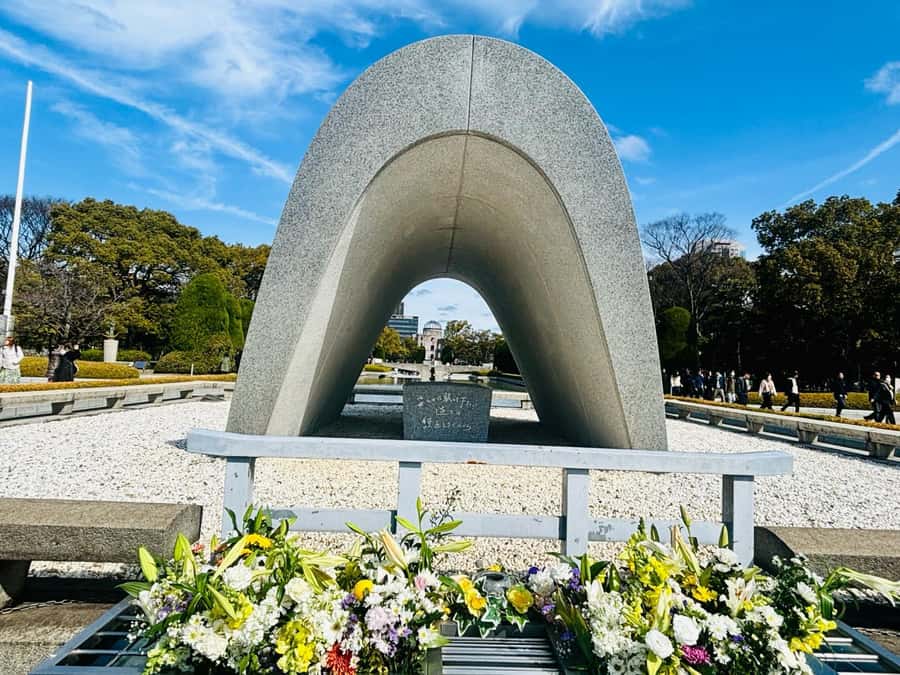
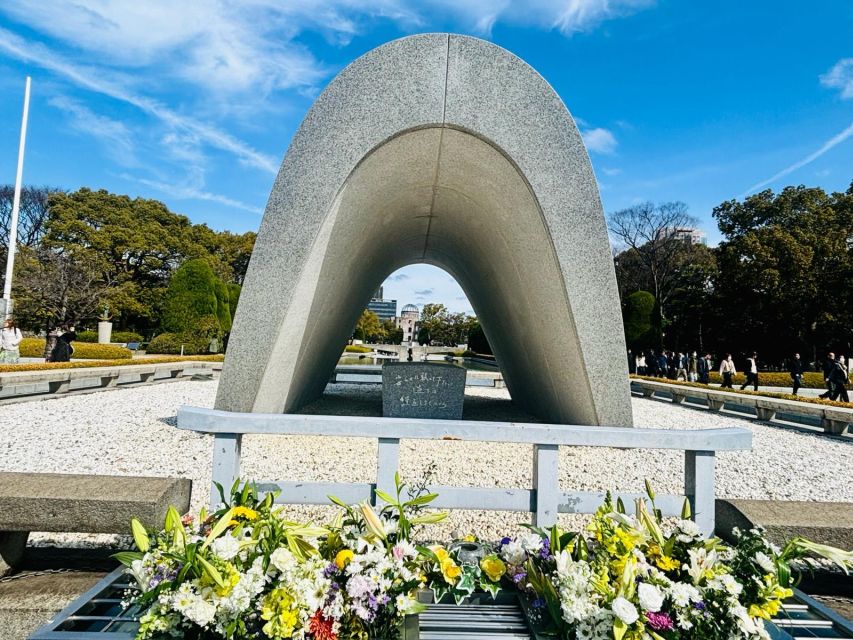
The Peace Cenotaph is one of the park’s central memorials. Its curved stone form shelters the names of the atomic bomb victims, while the Flame of Peace burns nearby.
The flame carries a clear promise: it will remain lit until the last nuclear weapon has been eliminated from the earth. Your guide explains that symbolism and connects it to Hiroshima’s continuing call for peace.
This is likely to be one of the quietest and most reflective parts of the walk. The monument is not only about remembering those who died. It also asks you to think about the future and the conditions needed to prevent another nuclear attack.
The guide’s role is especially useful here. A good explanation can help you understand why the cenotaph is shaped as it is, what the inscription means, and how the memorial fits into the park’s design. Ali and Wajid are praised for answering questions directly, while Zunera is praised for covering the expected sights at a comfortable pace.
Same base, a completely different sort of day:
- Hiroshima Historical Walking Tour – Why A-Bomb was Dropped
★ 4.8 · 893 reviews - Hiroshima Peace (Heiwa) Walking Tour at World Heritage Sites
★ 5.0 · 872 reviews - Hiroshima in a Nutshell: Morning Bike Adventure
★ 5.0 · 524 reviews - Hiroshima City 4hr Private Walking Tour with Licensed Guide
★ 5.0 · 437 reviews
Hiroshima National Peace Memorial Hall for Atomic Bomb Victims
The Hiroshima National Peace Memorial Hall for the Atomic Bomb Victims offers a different kind of remembrance. It contains an archive and records stories about people who died, including details of their lives before the bombing.
That focus on who people were before August 6, 1945, is important. A list of names can feel distant. Personal records restore some sense of individuality, reminding you that each victim had a family, a job, a routine, and a life in progress.
The tour includes the memorial hall, but entrance to the museum is specifically not included. The supplied details do not clarify whether the walking-tour fee includes every interior area of the hall, so check the day’s arrangements with the guide. In any case, plan for a separate museum visit if you want the full indoor exhibition experience at the Hiroshima Peace Memorial Museum.
You should also allow emotional space after this part of the tour. The subject is heavy, and the memorial hall may affect you more than the outdoor monuments because its material is tied to individual lives.
The Rest House and a story of survival
At the Hiroshima Peace Park Rest House, you hear about a resident who survived the explosion only 170 meters from the hypocenter. That detail gives the scale of the blast a startling physical measure.
The story is valuable because it brings the event down to a single human distance. You are no longer thinking only in terms of maps and broad numbers. You are considering what it meant to be inside a building, near the center of the explosion, and then face the long process of survival and rebuilding.
This stop also prevents the tour from becoming a simple catalogue of deaths. Hiroshima’s story includes suffering, but it also includes endurance. The guide uses the survivor’s experience to show the human capacity to continue after an event that seemed to destroy the city’s future.
Children’s Monument and Sadako Sasaki
The Children’s Monument is dedicated to Sadako Sasaki and other children affected by the atomic bombing. Colorful paper cranes surround the memorial, giving the site a softer visual character than the stark stone structures elsewhere in the park.
Sadako’s story has become one of Hiroshima’s best-known accounts of a child living with the effects of radiation exposure. The paper crane has come to represent peace and hope for a world without nuclear weapons.
For families and younger visitors, this may be the most accessible stop on the route. It offers a clear symbol that children can understand, while still opening the door to difficult questions about war and civilian life.
Even if you already know the paper-crane story, the guide adds value by placing it within the wider memorial park. You see how one child’s story became part of Hiroshima’s international message.
The Korean Monument and the wider human cost
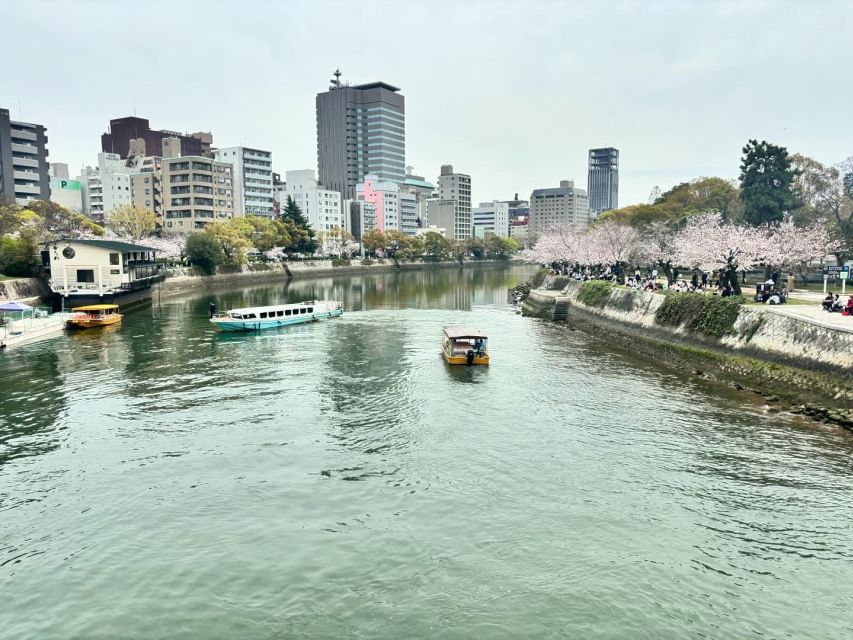
The Korean Monument honors Korean victims of the bombing. Its inclusion is important because Hiroshima’s victims were not only Japanese citizens. Koreans living and working in the city also suffered and died.
This stop adds a needed layer to the tour. It encourages you to think about colonial history, migration, and the many communities present in wartime Hiroshima. Peace remembrance is stronger when it includes people whose identities and circumstances were different from the majority population.
The Korean Monument may not be one of the first places you would seek out alone. Having it included in the route makes the tour more complete and helps you see the park as a place of shared remembrance, not only a national memorial.
Ringing the Peace Bell
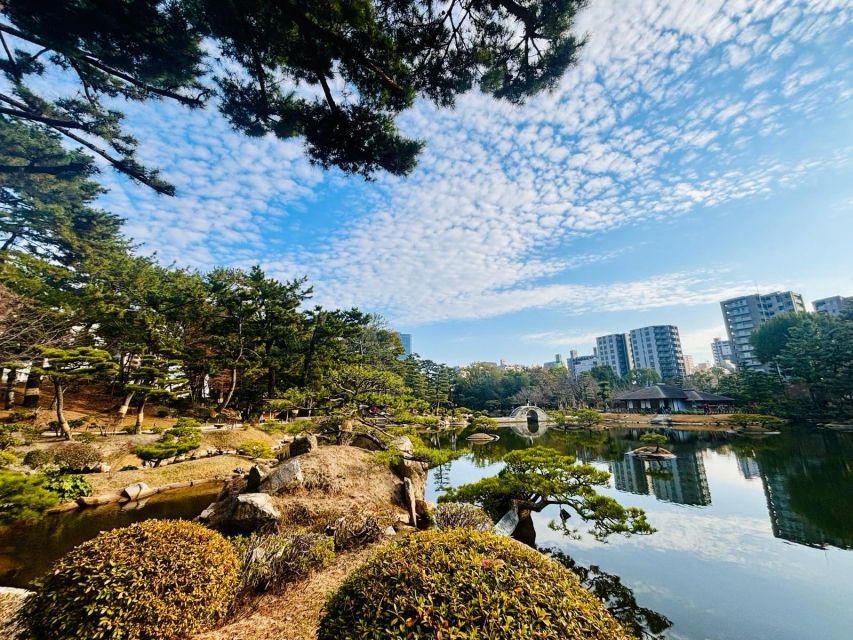
The Peace Bell invites you to take part rather than only look. You can ring it in remembrance, and its sound is meant to express a shared call for peace.
This is a brief stop, but it changes the rhythm of the tour. Much of the walk involves listening and looking. Here, you have a small physical action that connects you to the park’s message.
Do not expect a light sightseeing moment. The bell is simple, and its meaning depends on the mood you bring to it. Your guide helps explain its purpose, but the pause also gives you a chance to reflect without a long lecture.
The Atomic Bomb Dome, a difficult symbol
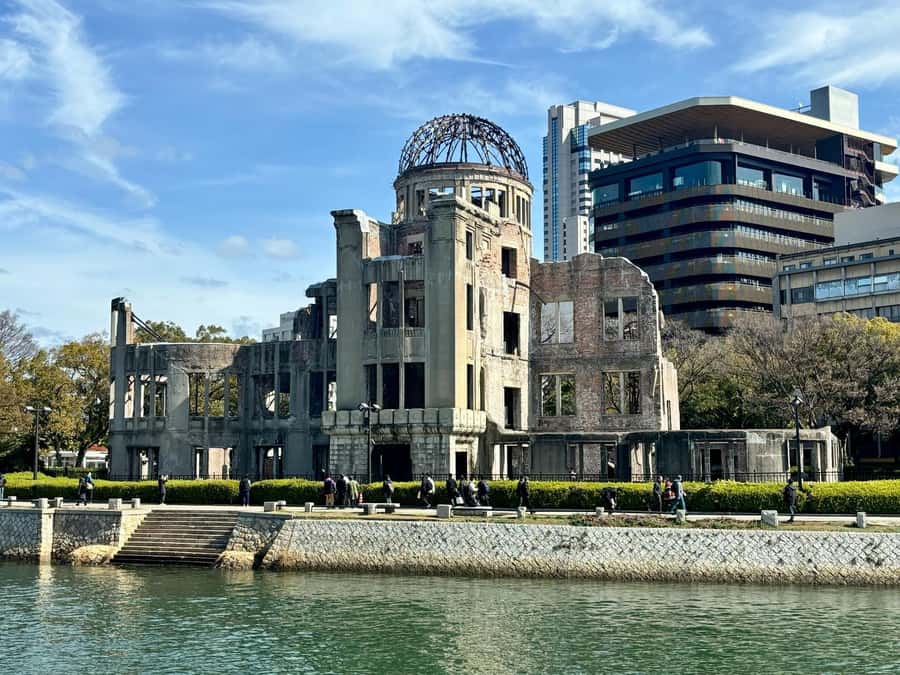
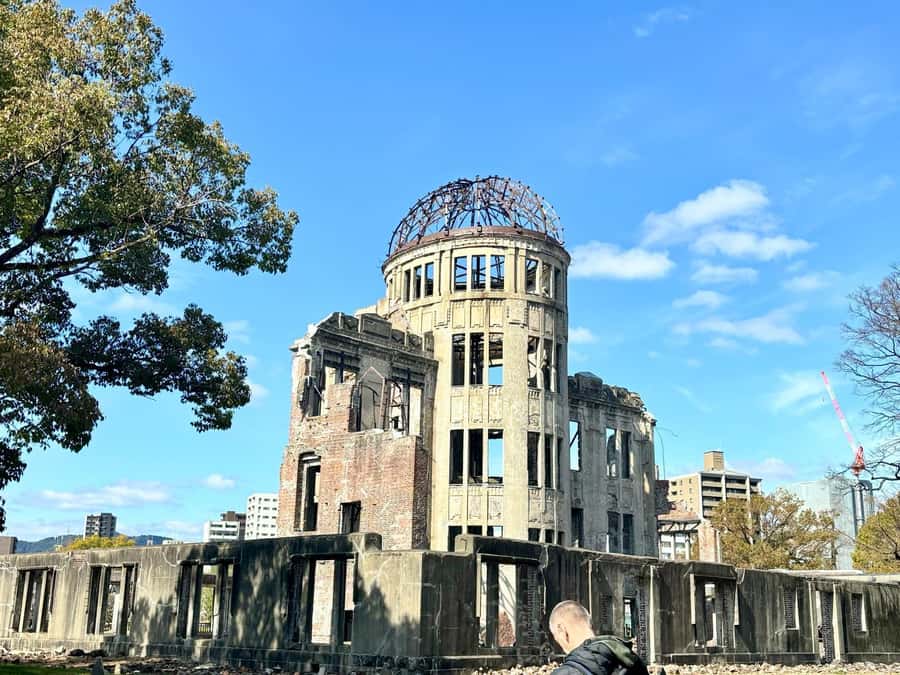
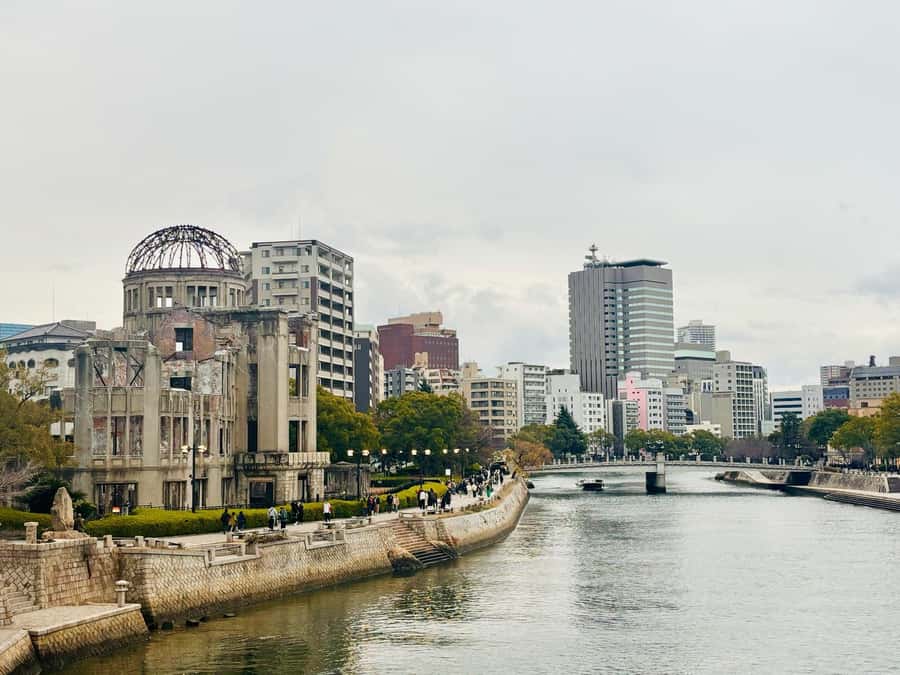
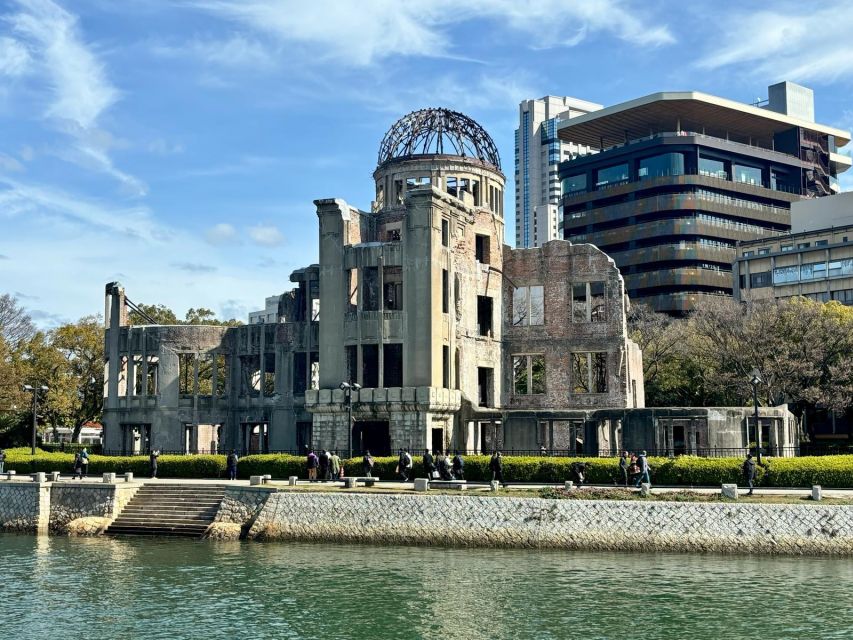
The Atomic Bomb Dome is the tour’s most recognizable sight and a UNESCO World Heritage Site. The building survived because it was close to the vertical line of the blast, while much of the surrounding area was destroyed.
Your guide explains what the structure was before the bombing and how it came to symbolize both devastation and the call for peace. You learn why it was preserved instead of demolished, and why its damaged frame remains such a powerful part of Hiroshima’s identity.
The Dome is visually striking, but a photograph cannot explain its full meaning. From the park, you can consider the difference between the building’s original civic purpose and its present role as a reminder of war.
I like that this tour reaches the Dome after several other memorials. By then, you have heard about victims, doctors, children, Korean residents, activists, and survivors. The building feels less like an isolated ruin and more like one part of a much larger human story.
Ending at the exact hypocenter
The final stop is the hypocenter, the point directly beneath the explosion. Ending here gives the walk a clear emotional and geographic destination.
At the Dome, you see what survived. At the hypocenter, you confront the location where the destruction began. The two places work together, but they are not the same experience. One is a visible ruin, while the other asks you to imagine the force and reach of the blast from a precise point.
The tour ends back at the meeting point after this reflection. Because the subject is intense, you may want to leave some unplanned time afterward rather than scheduling an immediate activity across town.
What the $30 price gets you
At $30 per person, this is a reasonable choice if you want context rather than a self-guided walk. The route includes Hiroshima Peace Memorial Park, the Atomic Bomb Dome, the Hiroshima National Peace Memorial Hall for the Atomic Bomb Victims, the Children’s Monument, and the Flame of Peace, along with several smaller memorials.
The strongest value comes from the explanations. The park is free to walk through, but it is easy to miss the purpose of individual monuments or understand only the broad outline of Hiroshima’s story. A guide with a Peace Studies degree can connect the sites and respond to your questions as you go.
The price does not cover food or museum entrance. That keeps the basic cost clear, but you should budget separately if you want to visit the museum. If you already plan to walk the park and read every sign at your own pace, the fee may feel less necessary. If you want a structured route and historical discussion, $30 is fair.
Pace, guides, and the practical fit
The most consistently praised quality is the guiding. Ali is described as friendly, passionate, and highly informed, with a gift for answering questions. Wajid receives praise for communication before and during the walk, as well as for making the meeting point easy to find. Zunera is praised for her excellent grasp of Hiroshima and for covering the route at a comfortable speed.
Those details matter more here than they would on an ordinary sightseeing walk. Hiroshima requires care, accuracy, and the ability to explain painful subjects without turning them into spectacle.
The pace also appears to suit a range of ages. One group including two young adults found the walk informative and well paced, with opportunities for discussion and photographs. Another visitor found a late afternoon start useful for avoiding the worst heat, though start times can vary, so check your chosen departure.
The tour is in English. It is not suitable for people with mobility impairments, and you should expect regular outdoor walking between memorials. Wear practical shoes and bring what you need for the weather, since the core experience takes place in the park.
Who should book this Hiroshima walk?
I would choose this tour if you are visiting Hiroshima for the first time, want the main memorials explained, or prefer learning through conversation rather than reading signs alone. It is also a good fit if you want to understand the city’s peace message from several angles, including international medical aid, nuclear disarmament, Korean victims, children, and civilian survivors.
Families with older children or young adults may find the route useful because the Children’s Monument and Sadako’s story provide an accessible entry point into a difficult subject. History students and visitors interested in peace studies will likely value the guide’s academic background.
I would think twice if you want a quick photo stop at the Dome, dislike group walks, or need a fully accessible route. You should also add the museum separately if you want to spend time with its indoor exhibits, artifacts, and personal accounts.
Book this tour if you want Hiroshima explained as a human story, not just a list of monuments. At $30, it offers solid value for a careful route, several easy-to-miss memorials, and guides such as Ali, Wajid, and Zunera who are praised for clear, personal teaching. Skip it only if you already know the park well and prefer to set your own pace.
FAQ
Where does the tour start?
Meet your English-speaking guide at the Gates of Peace, in front of the Italian restaurant Mario.
Where does the tour end?
The activity ends back at the meeting point.
Is the Atomic Bomb Dome included?
Yes. The tour visits the Atomic Bomb Dome, a UNESCO World Heritage Site, and explains its history.
Is the Hiroshima Peace Memorial Museum entrance included?
No. Entrance to the museum is not included in the $30 tour price.
What language is the tour offered in?
The tour is offered in English.
How much does the tour cost?
The listed price is $30 per person.
Does the tour include food?
No. Food is not included.
Is the tour suitable for people with mobility impairments?
No. The tour is listed as not suitable for people with mobility impairments.
Can I visit the Children’s Monument?
Yes. The route includes the Children’s Monument, which honors Sadako Sasaki and other children affected by the atomic bombing.
Can I cancel for a full refund?
Yes. You can cancel up to 24 hours in advance for a full refund.
Just added around Hiroshima
- The Peace Memorial to Miyajima : Icons of Peace and Beauty★ 4.5 · 31 reviews
- Shore Excursion from Hiroshima Port : Private Tour in Hiroshima★ 5.0 · 17 reviews
- Hiroshima Saijo Sake Tasting Tour with visit to 7 Breweries★ 5.0 · 104 reviews
- Hiroshima & Miyajima All-Inclusive Tour w/Licensed guide Pancho★ 5.0 · 54 reviews
- Hiroshima Country Cycling: Explore Rural Life 1 HR from City★ 5.0 · 22 reviews
- Okunoshima Rabbit Island Cycling Tour with Local Guide★ 4.5 · 17 reviews
- Private Full Day Hiroshima Tour★ 4.5 · 29 reviews
- Hiroshima Private Tour with a Local – Highlights & Hidden Gems★ 4.5 · 24 reviews
Hiroshima Tours, compared.

Peaceful Hiroshima & Miyajima UNESCO 1 Day Bus Tour
Read our review →
Hiroshima and Miyajima UNESCO Sites 1-Day Tour
Read our review →
Hiroshima Historical Walking Tour – Why A-Bomb was Dropped
Read our review →
Hiroshima Peace (Heiwa) Walking Tour at World Heritage Sites
Read our review →
Hiroshima in a Nutshell: Morning Bike Adventure
Read our review →
Hiroshima City 4hr Private Walking Tour with Licensed Guide
Read our review →

Japanesel Archery Experience HIROSHIMA CASTLE SHARAKU
Read our review →Browse the lists this tour appears in