
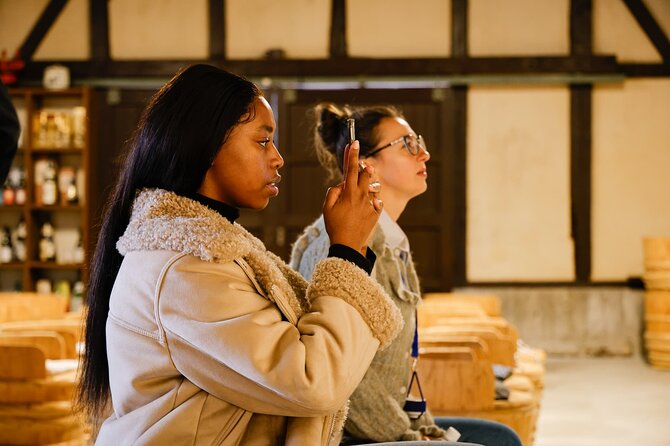
Reviewed · HIROSHIMA TOURS
Hiroshima Saijo Sake Tasting Tour with visit to 7 Breweries
Saijo’s sake district gives you a useful shortcut into Hiroshima’s drinking culture: in about two hours, you visit seven breweries and taste eight different sakes. This is not a brewery production tour. It is a walking tasting, with short introductions, local history, and a chance to compare styles side by side.
I like the small group limit of 10, which keeps the pace relaxed and makes it easier to ask questions. I also like the range of sake, from polished Daiginjo and pure-rice Junmai to cloudy and unusual bottles. The main drawback is simple: you walk about 1.5 kilometers while drinking, and the tour is less useful if you do not consume alcohol because the fee stays the same.
Key points to know before booking
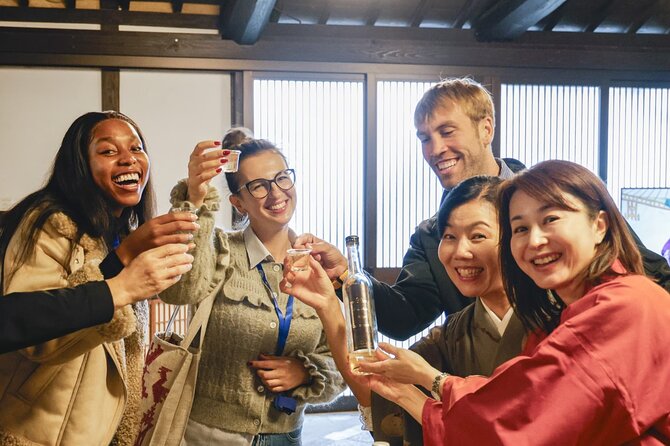
- Seven breweries in two hours: You get a broad look at Saijo’s sake district rather than spending the whole visit in one tasting room.
- Eight different samples: The lineup includes Daiginjo, Junmai, Junmai Ginjo, dry sake, cloudy sake, and unusual unfiltered styles.
- Guide Ione may lead your group: She is noted for clear explanations of Saijo, brewing methods, and sake styles.
- Meet at Saijo Station: The Tourist Information Center is directly outside the ticket gate, making the start easy to find.
- About 1.5 kilometers on foot: Comfortable shoes matter, especially since the route includes several stops and alcohol tastings.
- A tasting, not a production visit: You will learn how sake is made, including through a short video, but you will not watch brewing in progress.
Why Saijo is a good place to learn about sake
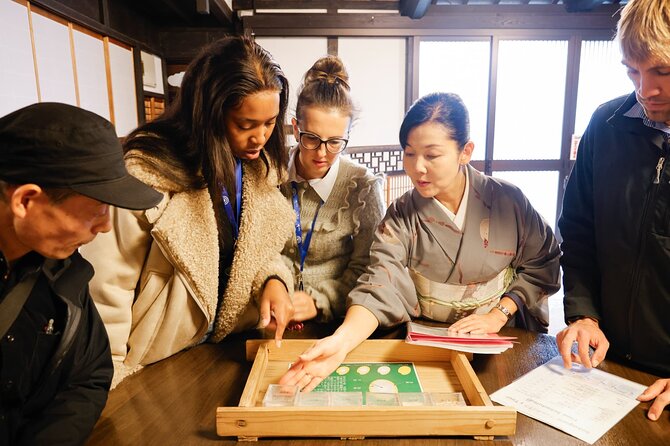
Saijo is one of Japan’s three major sake-brewing areas, so this tour gives you more than a string of unrelated samples. The breweries sit along and around Sakaguradori Street, allowing you to see how one compact district can produce sake with very different tastes and methods.
The value comes from comparison. A single cup of sake can be hard to judge if you have nothing beside it. Here, you move from a refined Daiginjo to a Junmai, then to drier sake, cloudy sake, or an unfiltered bottle. Your guide helps connect the taste to the style, ingredients, and brewing tradition.
The setting also feels more local than a large city tasting counter. You walk between old brewery areas, information centers, and tasting rooms, with the guide explaining what you are seeing. The route is gentle in pace, though the stops are short and the schedule can change depending on the groups visiting that day.
More sake tastings around Hiroshima:
- Hiroshima: Saijo Sake Tasting at 7 Breweries Guided Tour
★ 4.8 · 29 reviews - 3-Hour Kyoto Insider Sake Brewery Tour with Tastings & Pairings
★ 5.0 · 917 reviews - Arashiyama Bamboo, Temple, Monkeys, or Secret Sake Brewery
★ 4.8 · 886 reviews
Starting at Saijo Station at 1 pm
Your meeting point is the Higashihiroshima City Information Centre, at the Saijo Tourist Information Center directly outside the ticket gate at Saijo Station. This is a practical meeting place. You do not need to search for a distant shop or make your way through a large hotel lobby.
The tour begins at 1:00 pm, and arriving early is important. More than 15 minutes late is treated as a cancellation, with no refund. I would allow extra time to find the station area, use the restroom, and get settled before the guide arrives.
The tour ends back at the meeting point. Since each brewery visit is short, the first station briefing helps set expectations. You will not be lingering over a full glass at each stop. Instead, you get a measured introduction, a sample, and a short walk to the next place.
Kamotsuru and the first taste of Daiginjo
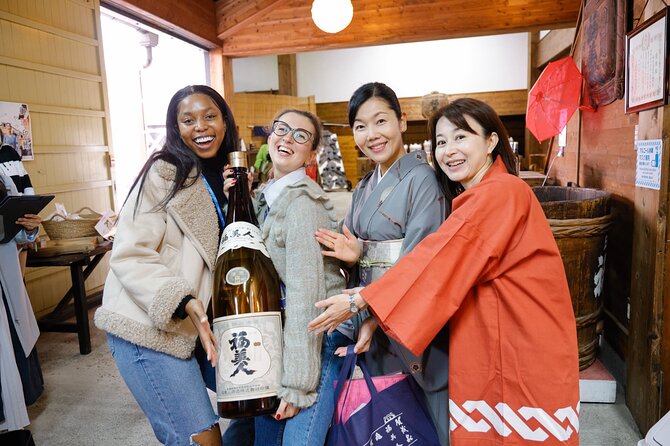
Kamotsuru is the first major tasting stop in the example route. The brewery is known for its role in Ginjo sake brewing, and the visit begins with a roughly 10-minute video about sake production in the visitor room.
That video matters because the tour does not include a look inside active brewing rooms. It gives you a basic picture of the process before you start comparing bottles. You then taste Daiginjo Gold Kamotsuru, a polished style that helps set a refined starting point for the rest of the afternoon.
Daiginjo is generally associated with carefully processed rice and a more delicate drinking style. You do not need to arrive with technical knowledge. The guide explains the difference in plain terms and shows you how this first sample fits into the wider sake family.
Kamotsuru receives about 20 minutes in the schedule. That is enough for the video and tasting, but not enough for a slow museum visit or long shopping session. Think of it as an introduction, not a full brewery tour.
Fukubijin and the option of warm sake
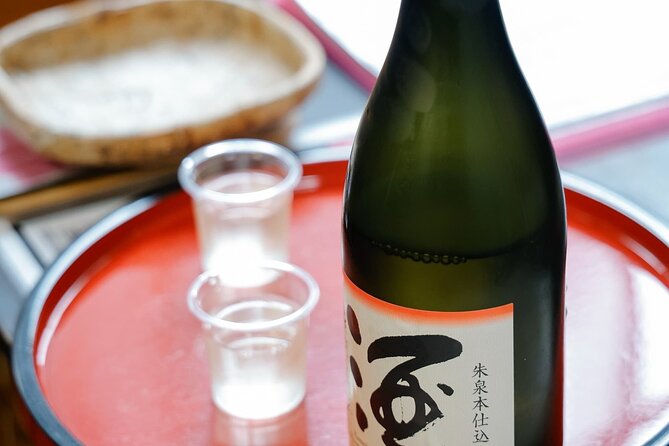
The next stop is Fukubijin, a brewery associated with the Saijo Brewing School and the training of skilled brewers. Here, you taste Fukubijin Junmai-Shu.
Junmai is useful for comparison because it focuses on rice and koji mold without added distilled alcohol. The tasting gives you a chance to notice how different a pure-rice sake can seem after the more polished Daiginjo at Kamotsuru.
During winter, you may be able to try the sake warm. That seasonal detail adds a welcome change to the tasting. Temperature can affect how a sake feels and smells, so a warm sample makes this stop more than another small pour.
The visit is scheduled for about 10 minutes. It is brief, but that is part of the route’s design. You are sampling a wide range rather than spending a long time at two or three locations.
More drinks-led nights in Hiroshima:
- Hiroshima Izakaya Food and Drink Night Tour
★ 5.0 · 297 reviews - Tokyo Bar Hopping Tour in Shinjuku (All-You-Can-Drink + Dinner)
★ 5.0 · 3,587 reviews - Best of Shinjuku: Izakaya Food Tour (4 Stops, 14+ Tastings)
★ 5.0 · 1,863 reviews - Tokyo: Shinjuku Local Bar and Izakaya Guided Walking Tour
★ 4.9 · 1,794 reviews
Kamoizumi and Hiroshima’s Junmai tradition
Kamoizumi is an important stop for anyone interested in Junmai sake. It was among the early breweries in Japan to make Junmai-Shu using only rice and koji mold as ingredients.
The featured sample is Junmai Ginjoshu Shusen Honjikomi. This gives you another chance to compare a Junmai style, this time with Ginjo characteristics. The point is not to memorize labels. It is to learn that sake categories overlap in useful ways, and that two bottles made mainly from rice can still taste quite different.
Kamoizumi receives about 15 minutes. Your guide can help you focus on the practical questions: Is this sake dry or soft? Should it be served chilled or warm? What makes it different from the last pour? Those are the questions that help when you later face a sake menu on your own.
A useful pause at the Sakaguradori Information Center
The Saijo Sakaguradori Tourist Information Center is the route’s breather. You can use the restroom, pick up brochures, learn more about Sakaguradori Street, and browse souvenirs.
This stop may sound less exciting than a tasting, but it is well placed. Seven breweries in two hours means a steady rhythm of walking, listening, and sipping. A short pause keeps the afternoon from feeling rushed.
You may also find this a handy point for local food information. One useful detail from the tour experience is that a local lunch can be found at the information station. Lunch is not included, but the stop can help you plan something to eat around the tour.
Kirei for a drier taste
Kirei Shuzo gives you a clear change of direction. Saijo sake is often associated with a softer profile, while Kirei is noted for its drier taste compared with other sake in the area.
The featured pour is Yoshidaya’s Sake, a limited blend made by the brewery with sake ready to drink that month. That makes the sample particularly tied to the timing of your visit. It is not simply a standard bottle chosen for every group.
The stop lasts about 10 minutes. I would pay close attention here if you usually prefer dry wine, crisp drinks, or less sweetness. It gives you a useful reference point for understanding the difference between a sake’s label category and its actual taste.
Saijotsuru and an award-winning style
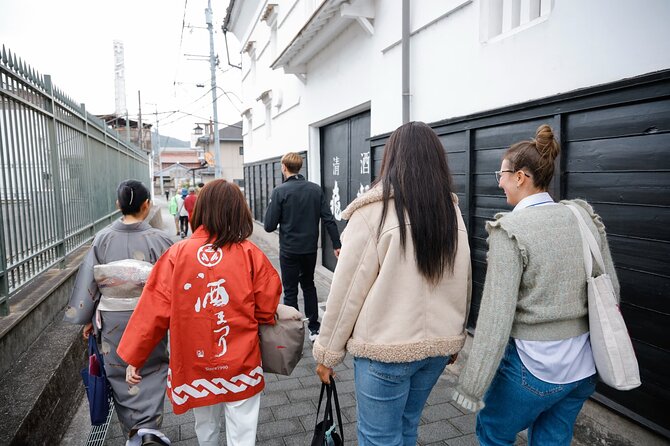
Saijotsuru uses traditional methods passed down through generations of Hiroshima brewers. Its featured sample is Junmai Daiginjo Genshu Shinzui, a style that has received repeated awards.
Genshu means undiluted sake, so this sample can offer a fuller point of comparison with lighter or more polished pours. You are also tasting both Junmai and Daiginjo features in one glass, which makes the stop a good chance to review what you have learned earlier.
The scheduled visit is about 10 minutes. As with the other stops, you should expect a focused tasting rather than a long talk or a look at working equipment. The guide’s explanations are especially useful here because technical labels can otherwise become a blur after several samples.
Hakubotan and the unusual Hyoka sample
Hakubotan is one of Hiroshima Prefecture’s oldest sake breweries, founded in 1675. Its age gives the stop a strong sense of continuity, but the tasting itself is not limited to old-fashioned styles.
You may taste Hyoka, an unfiltered sake that has been fresh frozen in a special way. This is one of the most unusual samples on the route. It shows that sake is not just a clear drink served in one standard manner. Filtration and storage choices can change both the appearance and the drinking experience.
The visit takes about 15 minutes. Since Hyoka is a distinctive sample, ask the guide how it differs from the clear sakes you have already tasted. The tour is at its best when you treat each stop as a comparison rather than trying to pick one immediate favorite.
Sanyotsuru and cloudy sake near the station
Sanyotsuru is the only brewery on the route located west of Saijo Station. It gives the walk a final change of direction and rounds out the district’s geography.
Here, you can try cloudy sake, often called Nigori. Its pale, cloudy appearance comes from sake that has not been fully filtered. It is a fitting final style because it looks and tastes quite different from the clear Daiginjo poured at the beginning.
Sake ware is also available for sale at Sanyotsuru. That can be useful if you want a physical reminder of the afternoon, though purchases are not part of the tour price. The visit lasts about 15 minutes before you return to the starting area.
What the eight samples teach you
The strength of this experience is range. In a short time, you encounter:
- Daiginjo Gold at Kamotsuru
- Junmai-Shu at Fukubijin
- Junmai Ginjoshu at Kamoizumi
- A dry, limited monthly blend at Kirei
- Junmai Daiginjo Genshu at Saijotsuru
- Unfiltered frozen Hyoka at Hakubotan
- Cloudy sake at Sanyotsuru
- One additional sake sample included in the total of eight
The exact order may change, and the course can be adjusted according to the day’s groups. That is worth knowing if you are trying to match the route to a strict schedule. The core promise is seven breweries and eight sake tastings, not a guaranteed sequence.
You also learn how to drink sake in a more informed way. The guide can explain sake styles and serving approaches, including the possibility of warm sake in winter. This is practical knowledge you can use at dinner later in your Japan trip.
The guide and the small-group pace
Guide Ione has been singled out for making the tour fun and explaining Saijo’s history and brewing techniques clearly. That kind of guide matters here because the route includes many short stops. Without context, seven tastings could become a tiring series of small cups.
The group is limited to 10 people. That is a good size for walking along a brewery street and asking questions without turning every stop into a crowd scene. It also supports the relaxed pace promised by the tour, though the schedule remains fairly brisk because all seven breweries fit into two hours.
Spanish-speaking guides can be arranged if requested in advance. The standard tour includes an English-speaking guide.
Price, walking, and who gets the best value
At $50.87 per person, the price covers the guide and eight alcoholic sake samples across seven breweries. There is no separate admission charge at the listed stops, but that does not make the tour free: you are paying for access to a structured route, explanations, and a much broader tasting than you would likely organize on your own in two hours.
I consider the price reasonable for people who want an introduction to Saijo without spending a full day planning brewery visits. It is particularly good value if you are curious about sake but do not know which labels or styles to order.
Food, transport, souvenirs, and services beyond the tastings are not included. You should also remember that the fee remains the same if you decide not to drink alcohol. For that reason, this is not the right pick for a non-drinker accompanying a group unless the cultural and walking parts alone justify the cost.
You walk roughly 1.5 kilometers. The route is not presented as strenuous, but comfortable shoes are recommended. A moderate level of physical fitness is expected, and you should be comfortable walking between several stops while tasting alcohol.
Practical timing and weather rules
The tour lasts approximately two hours and ends where it begins. Since the route is outdoors between breweries, weather can affect the schedule. If the activity is canceled because of bad weather or another sudden issue, contact is sent to the email registered with the booking by 5 pm the day before.
Free cancellation is available if you cancel at least 24 hours before the 1 pm start time. Cancellations or changes made inside that window are not refunded or accepted, and all cut-off times use local Japan time.
Bring your mobile ticket and arrive early at Saijo Station. The meeting point is easy to identify, but the late-arrival rule is strict enough that a last-minute arrival is a poor gamble.
Should you book the Saijo sake tour?
Book it if you want a compact, well-organized introduction to Hiroshima sake, especially if you value comparison over a long brewery lecture. The seven-stop route, small group, and eight styles give you a much fuller picture than a tasting at only one or two breweries.
I would also choose it for a first sake experience. The Daiginjo, Junmai, dry, unfiltered, frozen, and cloudy samples create clear contrasts, while the guide connects them to Saijo’s brewing traditions.
Skip it if you do not drink alcohol, need a seated activity, or want to watch the brewing process itself. For everyone else, the $50.87 price is fair for a focused afternoon that turns Saijo’s brewery district into an easy lesson in Japan’s national drink.
FAQ
Where does the Hiroshima Saijo sake tour begin?
The tour begins at the Higashihiroshima City Information Centre, directly outside the ticket gate at Saijo Station.
What time does the tour start?
The tour starts at 1:00 pm local Japan time.
How long does the tour last?
The walking tour lasts approximately two hours.
How many breweries does the tour visit?
The route visits seven sake breweries in the Saijo area.
How many sake samples are included?
Eight different types of sake are included.
Is an English-speaking guide included?
Yes. An English-speaking guide is included. Spanish-speaking guides can also be arranged if requested in advance.
Will I see sake being brewed?
No. This is a tasting tour, and you will not observe the brewing process. At Kamotsuru, you watch an approximately 10-minute video introducing sake making.
How far will I walk?
You will walk approximately 1.5 kilometers between the breweries and other stops. Comfortable walking shoes are recommended.
What happens if I need to cancel?
You can cancel for a full refund up to 24 hours before the experience starts. Cancellations made less than 24 hours before the start time are not refunded.
More Food Tours in Hiroshima
- Hiroshima: Food and Culture Guided Walking Tour with Dinner
★ 4.9 · 212 reviews - All-inclusive Hiroshima Nighttime Food and Cultural Immersion
★ 4.5 · 60 reviews - Best of Hiroshima Food Tour
★ 5.0 · 32 reviews - Tokyo: Shinjuku Food Tour (13 Dishes at 4 Local Eateries)
★ 5.0 · 6,603 reviews
More Breweries in Hiroshima
- Kyoto: Insider Sake Brewery Tour with Sake and Food Pairing
★ 5.0 · 704 reviews - Kyoto Sake Brewery & Tasting Walking Tour
★ 5.0 · 623 reviews - KOBE Sake Tasting Tour at Breweries (tasting fee included)
★ 5.0 · 154 reviews - Kobe: Guided Sake Breweries Tour with Tastings
★ 5.0 · 55 reviews
Just added around Hiroshima
- The Peace Memorial to Miyajima : Icons of Peace and Beauty★ 4.5 · 31 reviews
- Shore Excursion from Hiroshima Port : Private Tour in Hiroshima★ 5.0 · 17 reviews
- Hiroshima & Miyajima All-Inclusive Tour w/Licensed guide Pancho★ 5.0 · 54 reviews
- Hiroshima Country Cycling: Explore Rural Life 1 HR from City★ 5.0 · 22 reviews
- Okunoshima Rabbit Island Cycling Tour with Local Guide★ 4.5 · 17 reviews
- Private Full Day Hiroshima Tour★ 4.5 · 29 reviews
- Hiroshima Private Tour with a Local – Highlights & Hidden Gems★ 4.5 · 24 reviews
- Cultural Activities :Kimono, tea ceremony, Calligraphy and Amulet★ 5.0 · 44 reviews
Hiroshima Tours, compared.

Peaceful Hiroshima & Miyajima UNESCO 1 Day Bus Tour
Read our review →
Hiroshima and Miyajima UNESCO Sites 1-Day Tour
Read our review →
Hiroshima Historical Walking Tour – Why A-Bomb was Dropped
Read our review →
Hiroshima Peace (Heiwa) Walking Tour at World Heritage Sites
Read our review →
Hiroshima in a Nutshell: Morning Bike Adventure
Read our review →
Hiroshima City 4hr Private Walking Tour with Licensed Guide
Read our review →

Japanesel Archery Experience HIROSHIMA CASTLE SHARAKU
Read our review →Browse the lists this tour appears in