
Reviewed · HIROSHIMA TOURS
The Peace Memorial to Miyajima : Icons of Peace and Beauty
Hiroshima’s hardest story and Japan’s prettiest island make an unusual but worthwhile pair. This eight-hour outing takes you from the Atomic Bomb Dome and Peace Memorial Museum to Miyajima’s deer, wooded hills, and famous red torii gate. Guides such as Ken and Kensuke Ohguchi have earned especially warm praise for clear English, local insight, and careful handling of a serious subject.
I like the small maximum group of eight, which gives you room to ask questions and move at a sensible pace. I also like that tram, bus, and ferry fares are included, so you do not need to sort out every public transport ticket yourself. The main drawback is the travel time between Hiroshima’s sights and Miyajima. You use public transport rather than a private vehicle, and one busy day leaves limited time for lunch and unplanned wandering.
Key points to know before booking
- Two very different halves: Begin with Hiroshima’s wartime history, then shift to Miyajima’s shrine, scenery, and free-roaming deer.
- Small group format: The tour accepts no more than eight people, a useful middle ground between a private tour and a large coach.
- Strong local guiding: Ken, Kenny, Kensuke Ohguchi, and Yuka Yoshida have led departures, with particular praise for English communication and personal attention.
- Public transport is part of the day: Tram, bus, and ferry fares are included, but you should expect walking, transfers, and travel time.
- Lunch is not included: Plan to buy food on Miyajima or elsewhere during the day.
- Good for a first Hiroshima visit: You see the city’s central peace sites and Miyajima in one long outing, useful if your schedule is tight.
Why this Hiroshima day makes sense
Hiroshima can feel difficult to plan because its two main draws have different moods. The Peace Memorial area asks for quiet attention. Miyajima rewards you with open views, traditional streets, shrine architecture, and a lighter change of pace.
This tour links both without asking you to arrange every connection alone. You meet at the 7-Eleven Hiroshima Motoyasubashi East Store at 8:30 in the morning, spend the first part of the day around the Peace Memorial Park, then make your way to Miyajima by public transport. The day ends at Hiroshima Station in central Hiroshima.
I think the pairing works best if you have only one full day for Hiroshima. You will not see every corner of either destination, but you get a useful first look at the city’s central memorial sites and the island most associated with the area.
The 4.7 rating from 31 reviews and 94 percent recommendation rate point to a generally strong experience, though the lower ratings reveal the tradeoff clearly: this is not a private car tour. You pay for a small group and a guide, not for speed or door-to-door comfort.
A few more Hiroshima half-days to weigh up
- Peaceful Hiroshima & Miyajima UNESCO 1 Day Bus Tour
★ 5.0 · 5,309 reviews - Hiroshima: Hiroshima and Miyajima UNESCO Sites 1-Day Tour
★ 4.9 · 2,330 reviews - Hiroshima / Miyajima Full-day Private Tour with Government Licensed Guide
★ 5.0 · 1,298 reviews
A quiet beginning at Peace Memorial Park
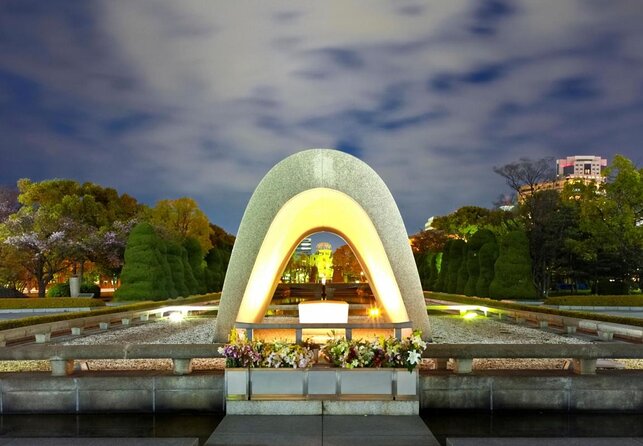
The first two hours take place in Hiroshima Peace Memorial Park, a broad public space beside the river. The setting is calm, but the subject is heavy. Your guide helps connect the lawns, waterways, memorials, and buildings to the events of August 6, 1945.
That context matters. Without a guide, you can look at the Atomic Bomb Dome and read plaques, but it is harder to understand how the separate sites fit together. A good guide gives you a clear sequence and helps you pause at the places that deserve more than a quick photograph.
The park is also where the tour’s tone is set. This is not a quick stop for a picture before moving on. You should expect discussion of the bombing, the damage to Hiroshima, and the city’s commitment to peace. The subject can be upsetting, so plan your energy accordingly. The itinerary gives the park two hours, enough time for an overview without making the entire morning a museum visit.
Several people praised Ken and Kensuke for explaining the monuments in clear English and answering questions at the group’s pace. One useful detail is that guides have adjusted the timing so the museum does not feel rushed. That flexibility is valuable here, since some visitors need time to read and reflect while others prefer a shorter visit.
The Atomic Bomb Dome and its difficult power
The Atomic Bomb Dome receives about 20 minutes within the park visit. The building’s damaged frame is one of Hiroshima’s most recognizable sights, but its importance is not simply visual.
Your guide can help explain why this ruined structure was preserved and how it relates to the wider memorial area. The visit is brief, so you should not expect a long architectural lecture or an extended period inside. The value comes from seeing the Dome in context, beside the park and the river, rather than treating it as an isolated photo stop.
You will have free time to take in the exterior, but the emotional effect can be stronger than its short time allocation suggests. I recommend listening first and photographing second. The building is easy to frame, yet the reason it remains here is far more important than its appearance.
One focused hour in the Peace Memorial Museum
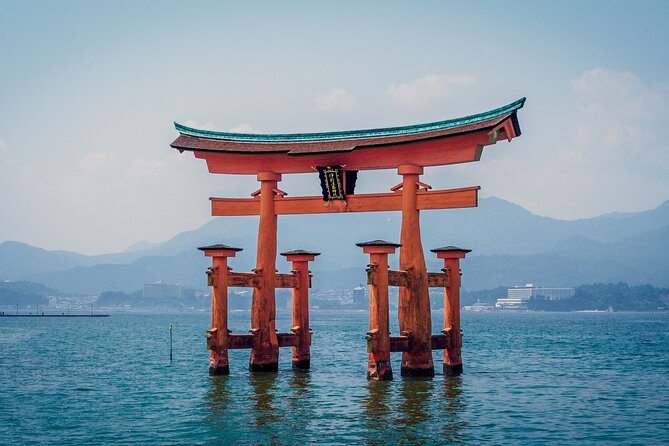
The Peace Memorial Museum is scheduled for about one hour, with admission included. This is the most demanding portion of the day, and you should allow yourself to move at your own emotional pace.
The museum gives detail to the history introduced in the park. Displays examine the bombing and its human consequences, helping you understand the scale of destruction through personal and physical evidence. The tour does not treat the museum as a box to tick. It gives you a guided introduction, then enough time to take in the exhibits.
One hour is useful for a first visit, but it is not enough for every display at a slow pace. If you read every panel carefully, you may want more time than the group schedule allows. On the other hand, the guide’s presence helps you focus on the main themes and avoid spending too long at the start.
This is one reason the small group matters. Ken has been praised for judging the timing well, while other guides have answered questions about both Hiroshima’s past and present life. You can ask for clarification without trying to get the attention of a guide managing dozens of people.
Same base, a completely different sort of day:
- Hiroshima Historical Walking Tour – Why A-Bomb was Dropped
★ 4.8 · 893 reviews - Hiroshima Peace (Heiwa) Walking Tour at World Heritage Sites
★ 5.0 · 872 reviews - Hiroshima in a Nutshell: Morning Bike Adventure
★ 5.0 · 524 reviews - Hiroshima City 4hr Private Walking Tour with Licensed Guide
★ 5.0 · 437 reviews
The public transport link to Miyajima
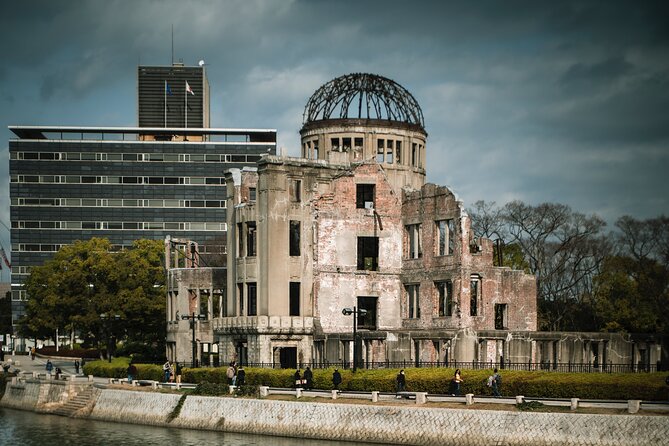
The move to Miyajima is the day’s main practical compromise. Tram, bus, and ferry fares are included, but you still need to walk and follow several transport connections. Travel time counts within the advertised eight hours.
If you prefer a smooth ride in a private car, this tour will feel basic. A private vehicle would reduce transfers and could give you more time at the museum or on Miyajima. The provider explains that smaller cruise boats from near the museum can be affected by tide and weather and may sell out ahead of time, so the public ferry offers a more dependable plan.
That reliability comes with less drama. You do not get a special sightseeing boat ride directly from the Peace Memorial area. Instead, you use ordinary local transport, which can feel slow when you are eager to reach the island. Still, it shows you how Hiroshima works as a real city, and your guide handles the route rather than leaving you to puzzle it out alone.
One past group found the transport frustrating, while others valued the guide’s ability to manage the rail and ferry system. The sensible expectation is this: public transport is included and organized, but it is still public transport. Wear comfortable shoes, keep your group together, and leave room in your schedule for ordinary delays.
Miyajima’s change of mood
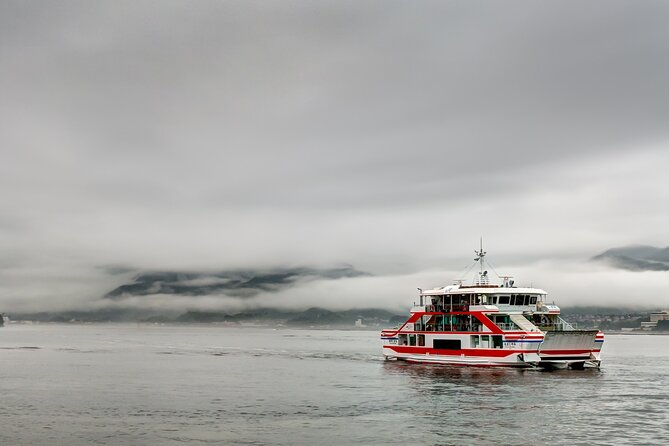
Miyajima receives about two hours before the separate shrine visit. The island is known for its traditional buildings, wooded setting, red maple trees, deer, and views across the water. After the morning’s memorial sites, the change feels sharp and intentional.
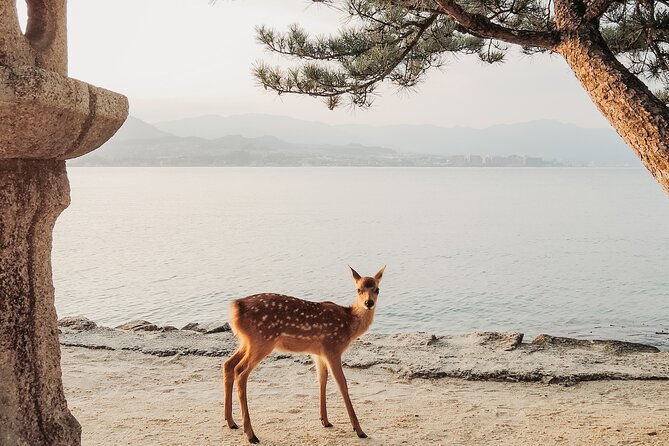
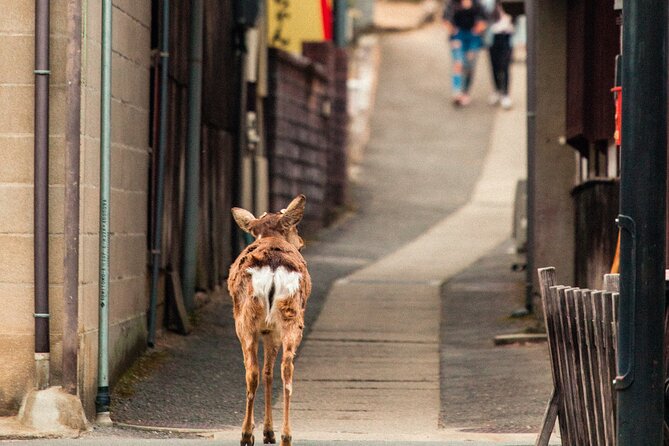
The free-roaming deer are part of the island’s appeal, though you should treat them as animals rather than props. The island also has streets lined with food shops and small restaurants, making it the natural place to buy lunch or a snack. Since lunch is not included, you need to budget both money and time for food.
Two hours is enough to get a feel for Miyajima, but not enough for a leisurely exploration of every lane and hillside. If you want a long meal, extensive shopping, or a mountain walk, you will likely wish for a separate visit. For a first introduction, the shorter stop keeps the day practical.
I like this portion because it gives you more than a second temple visit. You see the island’s everyday side, including its food, streets, and deer, before concentrating on Itsukushima Shrine. The contrast helps Hiroshima feel like a living place rather than only a site of remembrance.
Itsukushima Shrine and the famous red gate

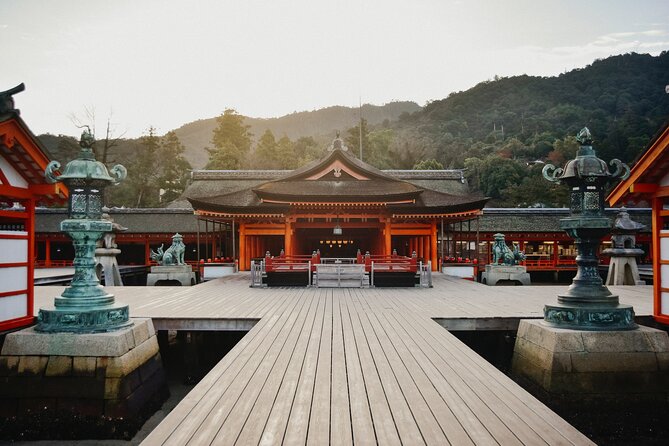
The final major stop is Itsukushima Shrine, with about 90 minutes and admission included. The shrine is built beside the water, and its red structures and torii gate create the image most associated with Miyajima.
The setting changes with the tide, so the view may not look identical from one visit to the next. The experience is not only about the gate. Your guide introduces the shrine’s design and religious setting, then gives you time to look closely at the walkways, buildings, and waterline.
This is where Yuka Yoshida received particular praise for her guidance, with Miyajima’s scenery, shrine, food, and desserts forming the high point of the day. That makes sense. Itsukushima is visually striking, but the guide helps you see the place as a Shinto site rather than merely a backdrop.
The 90-minute allocation is generous compared with the Atomic Bomb Dome, yet it remains part of a tightly timed day. Stay aware of the meeting time. It is easy to linger at the gate or stop for a sweet, then discover that the group is ready to move.
The guides make the biggest difference
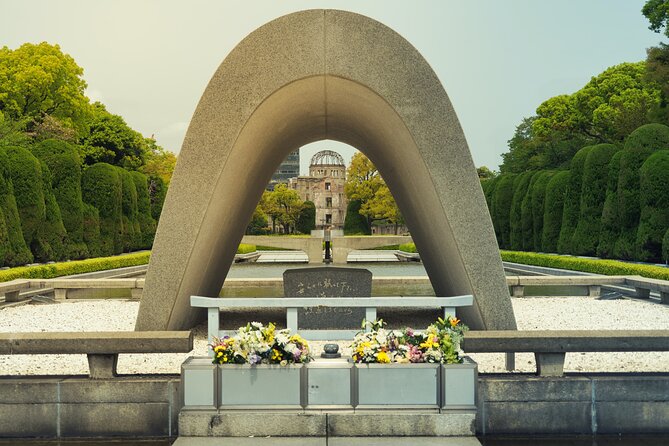
The strongest part of this tour is the human element. Ken is repeatedly described as friendly, responsive, and well informed about Hiroshima. He has helped groups keep pace, answered questions, and even assisted with Shinkansen ticket issues after the tour.
Kensuke Ohguchi has also led departures, with praise for his English, enthusiasm, and thoughtful explanations. Kenny has been noted for being flexible about the final drop-off, and Yuka Yoshida has been praised for her understanding of Miyajima and Japanese culture.
Guide assignments can vary, so you should not book solely expecting one named person. Still, these examples show what the operator aims to provide: a local guide who can explain the sites, handle transport, and speak with you about present-day life in Hiroshima.
There is one important caution. At least one departure received poor marks for English communication and organization. The provider acknowledged that a substitute guide had been used during a very busy season. That appears to be an exception within an otherwise strong record, but it is fair to note that a small group does not automatically guarantee the same guide or the same communication style every time.
What the $167.44 price buys you
At $167.44 per person, this is not a budget walking tour. The price includes admission to the Peace Memorial Park experience, the Peace Memorial Museum, and Itsukushima Shrine, along with public tram, bus, and ferry fares.
You are also paying for a guide across a full eight-hour day and a group capped at eight. That is a useful middle option. A private car tour generally costs much more, while a large bus tour may cost less but offers less room for questions and personal pacing.
The value depends on your plans. If you already understand Hiroshima’s transport system and are happy to visit the sites alone, you can spend less by arranging the day yourself. If you have limited time, want both destinations, and prefer not to manage the connections, the price is easier to justify.
Lunch is extra, as are any personal purchases on Miyajima. Group discounts are available, and the mobile ticket makes the booking simple. The tour can be canceled for a full refund up to 24 hours before the start time. Poor weather may lead to a new date or a full refund, since the experience requires suitable conditions.
Who should book this day
I would choose this tour if you want a guided first visit and have one day to cover Hiroshima’s two major draws. It suits people who value context, small groups, and help with public transportation more than private comfort.
It is also a good fit if you want to ask questions. A group of eight leaves far more room for conversation than a large coach, and the strongest guide feedback centers on personal attention, clear explanations, and flexibility.
You should think twice if you dislike walking, transfers, or fixed schedules. The tour requires moderate physical fitness, and there is a good deal of walking. It also may not suit you if the Peace Memorial Museum deserves half a day on its own or if you want a relaxed, unplanned afternoon on Miyajima.
Should you book the Peace Memorial and Miyajima tour?
Book it if you want an efficient introduction to Hiroshima, especially if you are staying briefly. You will see the Atomic Bomb Dome, Peace Memorial Park, museum, Miyajima, and Itsukushima Shrine in one organized day, with transport fares and admissions covered.
Skip it if you want a private ride, a long museum visit, or hours to wander Miyajima without watching the clock. The tour’s best qualities are its small size, thoughtful local guides, and wide coverage. Its weakness is the unavoidable public transport and the brisk pace created by fitting two major destinations into eight hours.
For most first-time visitors with limited time, I think the balance is good. Go prepared for a serious morning, a busy transfer, and a beautiful afternoon on the island.
FAQ
How long is the Hiroshima and Miyajima tour?
The tour lasts approximately eight hours, including travel time between the stops.
What time does the tour begin?
The tour starts at 8:30 am.
Where is the meeting point?
You meet at the 7-Eleven Hiroshima Motoyasubashi East Store, at 1-chōme-5-20 Ōtemachi, Naka Ward, Hiroshima.
Where does the tour finish?
Drop-off is at Hiroshima Station in central Hiroshima.
Are public transportation fares included?
Yes. Tram, bus, and ferry fares are included in the tour price.
Is lunch included?
No. Lunch is not included, so you need to arrange and pay for your own meal.
How large is the group?
The group has a maximum of eight participants.
How much walking is involved?
The tour requires a moderate level of physical fitness and includes a good deal of walking.
Can I cancel for a refund?
Yes. You can receive a full refund if you cancel at least 24 hours before the experience start time. Changes or cancellations made less than 24 hours in advance are not accepted for a refund.
Just added around Hiroshima
- Shore Excursion from Hiroshima Port : Private Tour in Hiroshima★ 5.0 · 17 reviews
- Hiroshima Saijo Sake Tasting Tour with visit to 7 Breweries★ 5.0 · 104 reviews
- Hiroshima & Miyajima All-Inclusive Tour w/Licensed guide Pancho★ 5.0 · 54 reviews
- Hiroshima Country Cycling: Explore Rural Life 1 HR from City★ 5.0 · 22 reviews
- Okunoshima Rabbit Island Cycling Tour with Local Guide★ 4.5 · 17 reviews
- Private Full Day Hiroshima Tour★ 4.5 · 29 reviews
- Hiroshima Private Tour with a Local – Highlights & Hidden Gems★ 4.5 · 24 reviews
- Cultural Activities :Kimono, tea ceremony, Calligraphy and Amulet★ 5.0 · 44 reviews
Hiroshima Tours, compared.

Peaceful Hiroshima & Miyajima UNESCO 1 Day Bus Tour
Read our review →
Hiroshima and Miyajima UNESCO Sites 1-Day Tour
Read our review →
Hiroshima Historical Walking Tour – Why A-Bomb was Dropped
Read our review →
Hiroshima Peace (Heiwa) Walking Tour at World Heritage Sites
Read our review →
Hiroshima in a Nutshell: Morning Bike Adventure
Read our review →
Hiroshima City 4hr Private Walking Tour with Licensed Guide
Read our review →

Japanesel Archery Experience HIROSHIMA CASTLE SHARAKU
Read our review →Browse the lists this tour appears in