
Reviewed · HIROSHIMA TOURS
Peaceful Hiroshima & Miyajima UNESCO 1 Day Bus Tour
The most striking feature of this day is the sharp change in mood. You begin with Hiroshima’s Atomic Bomb Dome, Peace Memorial Park, and sobering museum, then cross the water to Miyajima, where the famous torii gate, shrine, temple, deer, and food stalls bring a gentler side of Japan into view. I like the honest contrast between remembrance and beauty.
I also like that the tour handles the awkward pieces for you: the air-conditioned bus, ferry tickets, and major admissions are covered. Guides such as Rino, Marin, Momiji, and Mo have been praised for clear English, humor, good organization, and personal help. The main drawback is the pace. Eight hours is a lot to pack in, and Miyajima requires a fair amount of walking.
What makes this Hiroshima day tour useful
- Two UNESCO-related highlights in one day: Hiroshima’s memorial sites and Miyajima’s Itsukushima Shrine fit into one organized route.
- A thoughtful morning in the Peace Park: You have time for the Atomic Bomb Dome, outdoor memorials, and one hour inside the museum.
- A short, scenic ferry crossing: Round-trip tickets are included, so you can reach Miyajima without sorting out separate fares.
- Strong guide support: Rino, Marin, Momiji, and Mo are noted for warm presentations, useful recommendations, and careful group handling.
- Optional Hiroshima-style okonomiyaki: Select the lunch option if you want a set meal on Miyajima, or go without lunch for more freedom with local food.
- Practical bus comforts: The coach is air-conditioned, Wi-Fi is available, and audio guidance comes in seven languages besides the live English commentary.
One day, two very different sides of Hiroshima
This tour works because Hiroshima and Miyajima answer different questions. Hiroshima asks you to remember what happened on August 6, 1945, and to think about the people behind the statistics. Miyajima gives you an old sacred island, a sea-facing shrine, mountain scenery, food, and a little comic relief from the local deer.
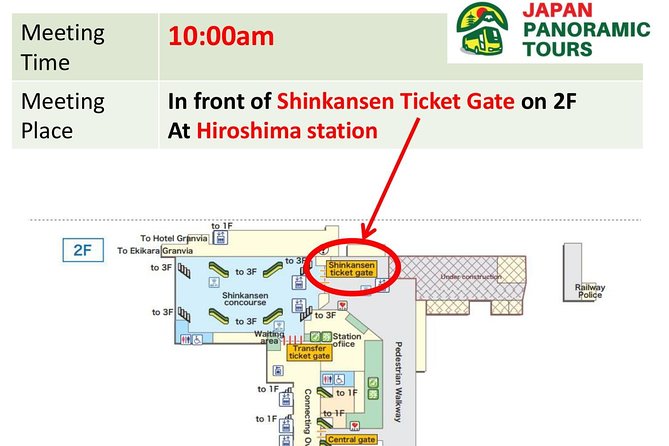
The route begins at 10:00 a.m. near Hiroshima Station, at Currency Exchange Japan in Minami Ward. You return to the same meeting point at the end of the day. The bus carries up to 45 people, so this is not a private sightseeing outing, but a good guide can make a group of that size feel orderly.
The order can change because of traffic, weather, or site operations. That flexibility is useful when crowds build up. One guide reportedly adjusted the sequence to reduce congestion, and that can make a real difference at the Peace Memorial Museum and Miyajima.
A few more Hiroshima half-days to weigh up
- Hiroshima: Hiroshima and Miyajima UNESCO Sites 1-Day Tour
★ 4.9 · 2,330 reviews - From Hiroshima: Hiroshima & Miyajima 1 Day Tour with Lunch
★ 4.7 · 395 reviews - Hiroshima and Miyajima Day Trip with Itsukushima Shrine & Ferry
★ 5.0 · 378 reviews
Hiroshima Castle gives the day an older starting point
The itinerary includes a brief look at Hiroshima Castle, built in 1589. The main building is what you see today. The smaller defensive houses are not part of the visit, since the castle is presented in a peaceful modern setting rather than as a working fortress.
This is a useful bit of context before the atomic-bomb memorials. Hiroshima was not created in 1945. It was an established castle city with centuries of political and cultural life before the war changed it forever.
Do not expect a long castle visit. The stop is more of an introduction than a full museum tour. If you want extensive time inside the castle or a detailed look at its displays, you would need a separate visit.
The Atomic Bomb Dome puts history in front of you
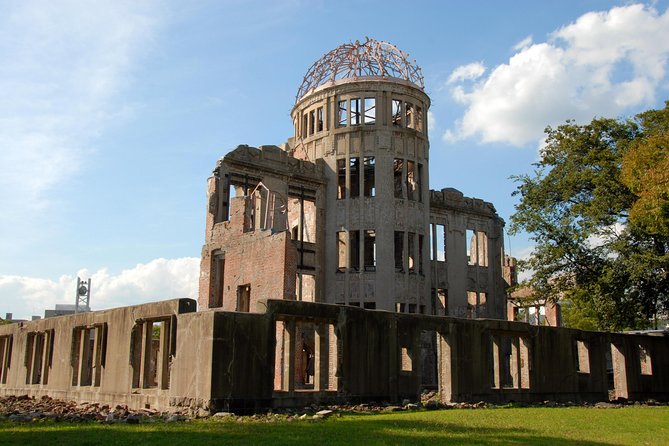
The Atomic Bomb Dome is one of those places that needs little explanation from a guide. The ruined building was once the Hiroshima Prefectural Industrial Promotion Hall, located close to the bomb’s hypocenter. Its skeletal remains were preserved rather than cleared away.
You have about 15 minutes here, with no separate admission charge. That is enough to look carefully, take in the setting, and hear the basic story, but not enough for a slow architectural study.
I value this stop because it is direct and unsentimental. You are looking at a surviving structure, not a reconstruction. The brief visit also helps keep the morning moving toward the Peace Memorial Park, where the human cost receives more attention.
Peace Memorial Park turns a ruin into a place of remembrance
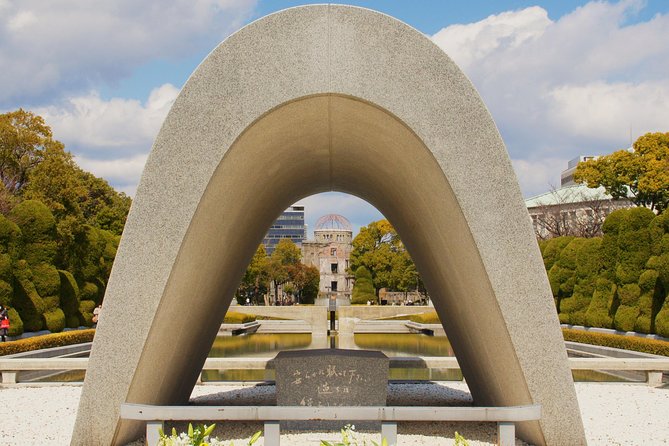
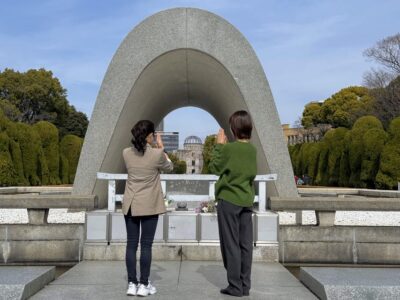
The park receives about 35 minutes. It contains monuments connected with the victims of the atomic bombing, including the Atomic Bomb Dome and the Children’s Peace Monument. Your guide helps explain what you are seeing, but the open-air setting also gives you space to think quietly.
This part of the day can be emotionally heavy. The tour does not treat the memorials as ordinary photo stops, and that matters. Several guides have been praised for setting a respectful tone while still keeping the group engaged.
You should allow yourself to be quiet here. The schedule is organized, but you do not need to fill every moment with photographs or questions. The park is an important pause before the museum’s more difficult material.
Same base, a completely different sort of day:
- Hiroshima / Miyajima Full-day Private Tour with Government Licensed Guide
★ 5.0 · 1,298 reviews - Hiroshima Historical Walking Tour – Why A-Bomb was Dropped
★ 4.8 · 893 reviews - Hiroshima Peace (Heiwa) Walking Tour at World Heritage Sites
★ 5.0 · 872 reviews - Hiroshima in a Nutshell: Morning Bike Adventure
★ 5.0 · 524 reviews
The Peace Memorial Museum is the emotional center
You have about one hour inside the Hiroshima Peace Memorial Museum, and admission is included. The exhibits use photographs, personal accounts, and artifacts to show what happened to ordinary people during and after the bombing.
One hour is enough for a meaningful first visit, but it is not enough to read every panel slowly. The museum can also become crowded. A particularly important practical warning is that large numbers of people may be moving through a set route, which can feel cramped for anyone who dislikes tight spaces or heavy crowds.
I recommend entering with a plan. Read the personal stories and examine the objects that speak to you, rather than trying to absorb every display. The material is painful, but it is also the reason the museum belongs on a first Hiroshima visit.
From February 16 to 21, 2026, the museum is scheduled to close for exhibit replacement. During those dates, the tour will visit the Hiroshima National Peace Memorial Hall for the Atomic Bomb Victims instead. No refund is offered for that substitution, so check your date before booking if the museum itself is essential to you.
The Miyajima ferry changes the rhythm
The ferry ride to Miyajima takes about 20 minutes, and return tickets are included. After the serious morning, the crossing gives you a clean break. You leave the city behind, watch the water, and arrive on an island associated with sacred buildings, sea views, food, and wandering deer.
The ferry is not a long cruise, so keep expectations sensible. Its value is convenience and transition. You do not have to purchase tickets separately or work out the island connection while keeping track of a group.
Miyajima can be busy, and the tour may adjust its order to cope with crowds. Keep your guide’s meeting instructions clear in your mind. If you wander too far or stop for shopping, the schedule will not wait indefinitely.
Miyajima offers food, deer, and a little free time
The general Miyajima visit lasts about 50 minutes, separate from the shrine and temple stops. This is your chance to notice the island beyond its best-known buildings.
If you choose lunch, the meal is Hiroshima-style okonomiyaki. Unlike the Osaka version, Hiroshima’s style is built in layers, with ingredients such as cabbage and noodles forming a fuller pancake-style dish. It is a sensible way to sample a local specialty without spending time choosing a restaurant during a packed day.
The lunch option does reduce your freedom to browse food stalls. If you would rather sample several small treats or choose your own meal, select the tour without lunch. Vegetarian food is available with no pork and no seafood, but it does include eggs and gluten. There is no allergy-free lunch, so anyone with a severe allergy should skip the included meal and bring their own food.
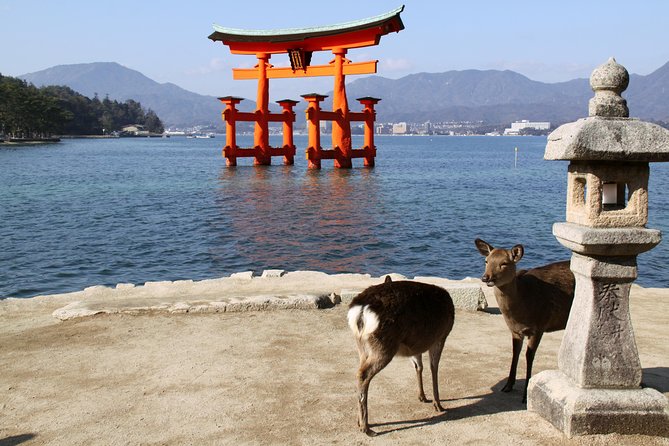
The island’s deer are part of the fun, but keep papers and food secure. One account describes them as more aggressive than their cute appearance suggests. They are not the main reason to visit, but they add an amusing, unpredictable note to the walk.
Itsukushima Shrine and the famous torii gate
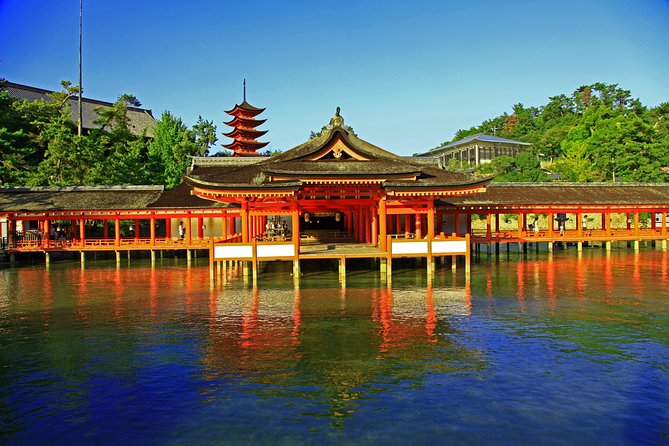
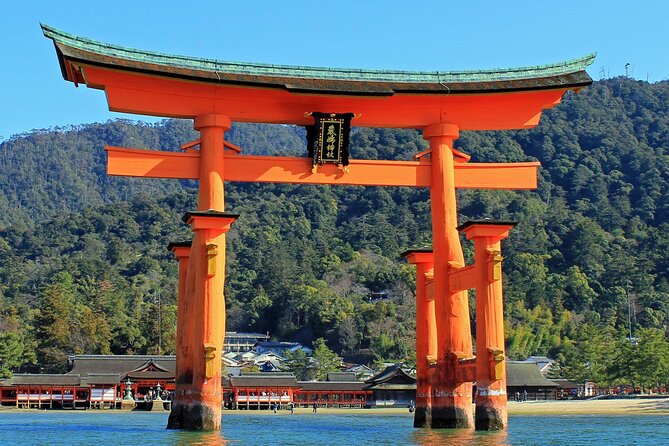
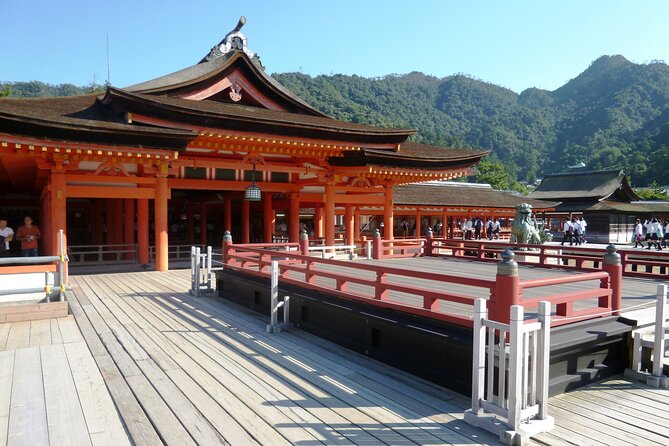
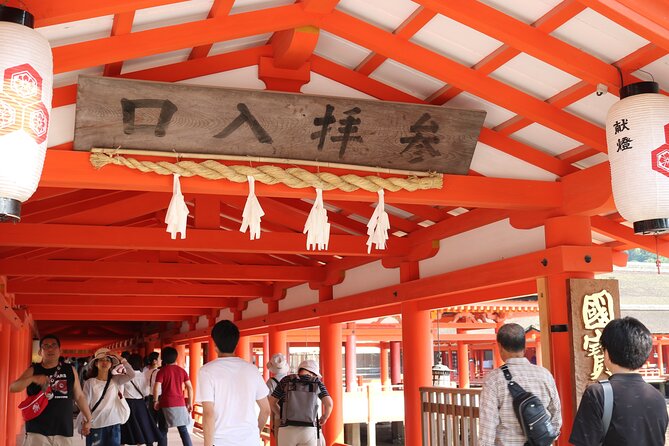
Itsukushima Shrine receives about 50 minutes, with admission included. The shrine’s origins are linked to 593, while much of the present construction was rebuilt in 1168 under Kiyomori Taira.
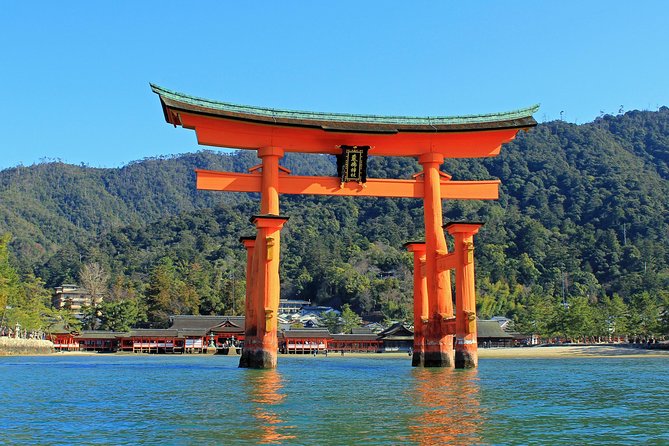
The shrine was built over the sea because Miyajima was regarded as a sacred island associated with a goddess. Its red corridors and buildings seem to float when the water is high. The large torii gate offshore is the image most people carry home, though the exact view depends on the tide and conditions.
The schedule gives you enough time to see the main shrine area, hear its story, and take photographs. It is not a slow architectural study, and the island’s crowds can make the walk feel less peaceful than the name suggests.
The contrast with Hiroshima’s memorial sites is the point. In the morning, buildings are preserved because of destruction. Here, buildings are maintained because of devotion and tradition. Seeing both in one day gives you a broader sense of the region.
Daishoin Temple is the quieter island stop
Daishoin Temple receives about 30 minutes. It is known for rows of Jizo guardian statues dressed in colorful clothing, calm Buddha figures, and many lanterns.
This stop can feel more personal than the larger shrine. Instead of one famous view, you find small details as you walk. Look at the different expressions, fabrics, and arrangements of the statues. The temple is also a good place to slow down after the crowds around the torii gate.
You need moderate physical fitness for the day. The overall schedule includes bus boarding, ferry movement, walking between island sights, and time on your feet. One older participant found the walk to the shrine tiring, so this is not the best choice if long walking days are difficult for you.
What the guides add to a tightly timed route
A bus tour of this kind depends heavily on the guide. The route itself is strong, but the guide has to explain painful history with care, keep a large group together, and still make the lighter parts of Miyajima enjoyable.
Rino is repeatedly praised for her warmth, clear English, steady pacing, food suggestions, and attention to individuals. Marin is noted for energy, humor, organization, and a friendly manner. Momiji has been singled out for historical explanations, personal help, Japanese language tips, and even taking good photographs. Mo is praised for going beyond the basic script and teaching a few Japanese words.
The guide may also help you solve practical problems. One guide assisted with a tight return-to-ship schedule, though you should not assume every cruise connection will work without checking the timing yourself. The tour ends back at the meeting point, not at your hotel or the port.
On the bus, multilingual audio guidance is available in English, French, Spanish, Italian, German, Portuguese, and Ukrainian. The live guide remains the main source of explanation, while the audio system is useful if you miss a comment or prefer listening in another language.
Is $129.25 good value?
At $129.25 per person, this is not the cheapest way to see Hiroshima and Miyajima. You are paying for the bus, an English-speaking guide, the ferry, the Peace Memorial Museum, Itsukushima Shrine, and the organization needed to connect several stops in one day.
The value is strongest if you have only one day in the region. Booking separate trains or buses, finding the ferry, timing the museum, and reaching Miyajima can consume attention. Here, the main decisions are made for you, and the admissions and ferry fare are already folded into the price.
The value is weaker if you want long museum hours, leisurely shopping, or a flexible lunch. You will see many important places, but each receives a set amount of time. Independent visitors can linger longer and spend less, though they must manage the route themselves.
Lunch is an extra choice rather than a universal inclusion. Pick it for ease and a taste of Hiroshima-style okonomiyaki. Skip it if street food, personal choice, or allergy control matters more.
Timing, meeting point, and practical cautions
The start is at 10:00 a.m. at Currency Exchange Japan, 732-0822 Hiroshima, Minami Ward, Matsubaracho 2, on an unnamed road near public transportation. Give yourself extra time to find the exact meeting point. The tour cannot pick you up at your hotel, and there is no hotel drop-off afterward.
Punctuality matters. If you miss the start, you cannot join the tour halfway through. Late arrivals and no-shows are not eligible for rescheduling or a refund.
If you plan to take a Shinkansen after the tour, buy the ticket after the tour ends or choose a departure after 6:30 p.m. The itinerary may change order, so an earlier train is a needless gamble.
You can cancel for a full refund up to 24 hours before the local start time. Changes or cancellations made inside that window are not refunded.
Who should book this Hiroshima and Miyajima tour?
I would choose this tour if you have one free day, want the major Hiroshima memorials explained in English, and prefer not to coordinate the ferry and admissions yourself. It also suits families and older children who benefit from a clear structure, though the day is still long.
It works well for first-time visitors who want both the difficult history and the beauty of Miyajima. The guides’ friendly style can help younger members stay engaged without making the memorial sites feel casual.
I would think twice if you dislike group schedules, crowded museums, or walking on uneven routes. The maximum group size is 45, and Miyajima is not a quick step off the bus. Independent visitors who want to spend half a day in the museum or climb beyond the main shrine should plan their own route instead.
Should you book it?
Book it if your priority is seeing Hiroshima’s essential memorial sites and Miyajima in one organized day. The included ferry, admissions, air-conditioned coach, audio guidance, and strong guide support make the $129.25 price reasonable for a short stay.
Choose the no-lunch option if you want local snacks or need strict food control. Check the 2026 museum closure dates, allow plenty of time to reach the meeting point, and do not schedule a Shinkansen before 6:30 p.m. With those cautions in place, this is a well-paced introduction to two very different sides of Hiroshima.
FAQ
How long does the Hiroshima and Miyajima tour last?
The tour lasts approximately eight hours. It starts at 10:00 a.m. and returns to the original meeting point.
Where does the tour begin and end?
It begins at Currency Exchange Japan in Hiroshima’s Minami Ward, near public transportation. The tour ends back at the same meeting point.
Is hotel pickup included?
No. Hotel pickup and drop-off are not included.
Is lunch included?
Lunch is included only if you select the lunch option. The meal is Hiroshima-style okonomiyaki on Miyajima Island.
Is a vegetarian lunch available?
Yes. The vegetarian meal contains no pork or seafood, but it does include eggs and gluten. An allergy-free lunch is not available.
Which admissions and transport are included?
Admission to the Hiroshima Peace Memorial Museum, Miyajima Island, and Itsukushima Shrine is included. Round-trip ferry tickets and transportation by air-conditioned vehicle are also included.
What languages are available for the audio guide?
Audio guidance is available in English, French, Spanish, Italian, German, Portuguese, and Ukrainian. The tour also includes an English-speaking local guide.
What happens if the Peace Memorial Museum is closed?
From February 16 to 21, 2026, the museum is scheduled to close for exhibit replacement. The tour will visit Hiroshima National Peace Memorial Hall for the Atomic Bomb Victims instead, and no refund will be provided for this change.
Just added around Hiroshima
- The Peace Memorial to Miyajima : Icons of Peace and Beauty★ 4.5 · 31 reviews
- Shore Excursion from Hiroshima Port : Private Tour in Hiroshima★ 5.0 · 17 reviews
- Hiroshima Saijo Sake Tasting Tour with visit to 7 Breweries★ 5.0 · 104 reviews
- Hiroshima & Miyajima All-Inclusive Tour w/Licensed guide Pancho★ 5.0 · 54 reviews
- Hiroshima Country Cycling: Explore Rural Life 1 HR from City★ 5.0 · 22 reviews
- Okunoshima Rabbit Island Cycling Tour with Local Guide★ 4.5 · 17 reviews
- Private Full Day Hiroshima Tour★ 4.5 · 29 reviews
- Cultural Activities :Kimono, tea ceremony, Calligraphy and Amulet★ 5.0 · 44 reviews
Hiroshima Tours, compared.
Hiroshima and Miyajima UNESCO Sites 1-Day Tour
Read our review →
Hiroshima Historical Walking Tour – Why A-Bomb was Dropped
Read our review →
Hiroshima Peace (Heiwa) Walking Tour at World Heritage Sites
Read our review →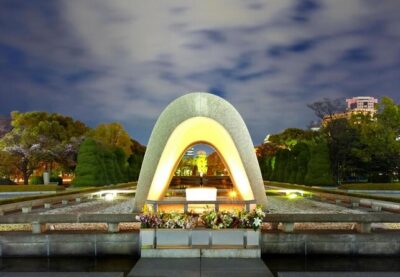
Hiroshima in a Nutshell: Morning Bike Adventure
Read our review →
Hiroshima City 4hr Private Walking Tour with Licensed Guide
Read our review →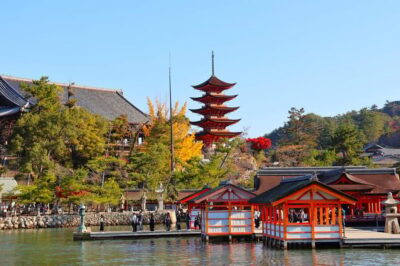

Japanesel Archery Experience HIROSHIMA CASTLE SHARAKU
Read our review →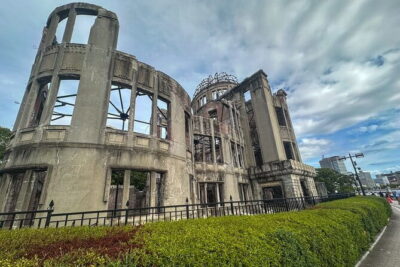
Hiroshima and Miyajima Day Trip with Itsukushima Shrine & Ferry
Read our review →Browse the lists this tour appears in