
Reviewed · HIROSHIMA TOURS
Hiroshima in a Nutshell: Morning Bike Adventure
Hiroshima is spread out just enough that a bicycle gives you a useful advantage. In one morning, you can move from the solemn Peace Memorial Park to Hiroshima Castle and then into the calm greenery of Shukkei-en Garden, with back streets and canal-side stretches between the major sights. The route covers ground quickly without feeling like a race.
I like two things here: the small group, limited to eight, and the guides who bring real warmth to difficult subject matter. Awais, James, Melissa, Yuki, Ihsan, Amy, and Levi have all led tours, and the strongest guides combine clear safety instructions with thoughtful explanations of Hiroshima’s past. The main consideration is that an electric bike costs extra, and the standard bicycle requires a reasonable level of comfort on two wheels.
Key points to know before you book
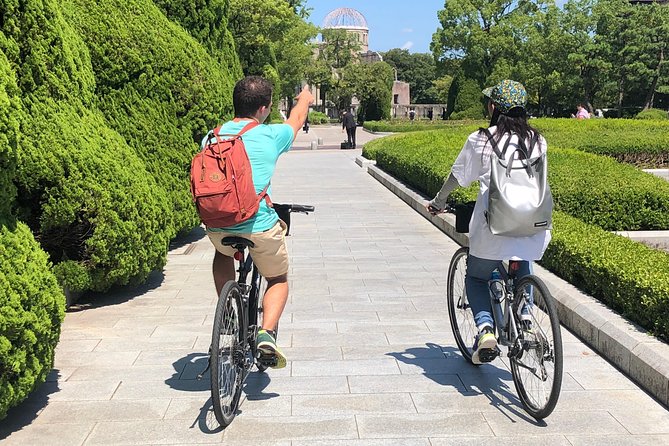
- Peace Memorial Park comes first: Begin with a quiet ride and time to reflect before reaching the Atomic Bomb Dome.
- Four major stops fit into one morning: The route includes Peace Memorial Park, the Dome, Hiroshima Castle, and Shukkei-en Garden.
- The city is mostly flat: The ride is manageable for many people, but the route may cover roughly 6 to 7 miles with repeated stops.
- The guide shapes the experience: Awais, James, Melissa, Yuki, Ihsan, Amy, and Levi have all been praised for clear explanations, friendly manner, and strong local knowledge.
- An e-bike is available for an added fee: The upgrade has been listed at 2,000 yen, with limited availability, so arrange it ahead of time if needed.
- It is built for older children and adults: Riders must be at least 140 centimeters tall, and the activity is not recommended for children aged 12 and under.
Why a bicycle works so well in Hiroshima
Hiroshima’s key sights are not packed into one compact square. Peace Memorial Park sits near the city center, Hiroshima Castle is farther north, and Shukkei-en Garden lies beyond the castle area. You can use public transport, walk between selected sights, or take a taxi, but a bicycle ties the route together neatly.
The practical gain is time. You do not have to wait for a bus, search for a taxi, or spend the whole morning walking along ordinary streets. You can also reach smaller roads and canal-side areas that are less useful to a car. The ride itself becomes part of the introduction to the city.
This is not mainly a sports outing. Guides set a steady pace, stop often, and explain the places you are seeing. One reported route covered about 6.81 miles over more than four hours, though your exact distance and timing can vary. Expect regular stops, short rides, and several moments when you leave the bicycles to look around.
At the start, the guide provides a bicycle, helmet, and bottled water. Safety instructions include hand signals, basic riding guidance, and checks to make sure the bike fits. That setup matters because the group may include people with different levels of cycling experience.
The maximum group size is eight. That is small enough for a guide to keep an eye on the group and answer questions without shouting across a crowd. It also makes the tour feel more personal than a large coach outing.
More bike days around Hiroshima:
- Hiroshima 2hr Peace Cycling Tour with Local Guide
★ 5.0 · 321 reviews - Hiroshima: Peace Cycling Tour with Local Guide
★ 4.8 · 286 reviews - Hiroshima and Miyajima by Bike and Boat
★ 5.0 · 172 reviews
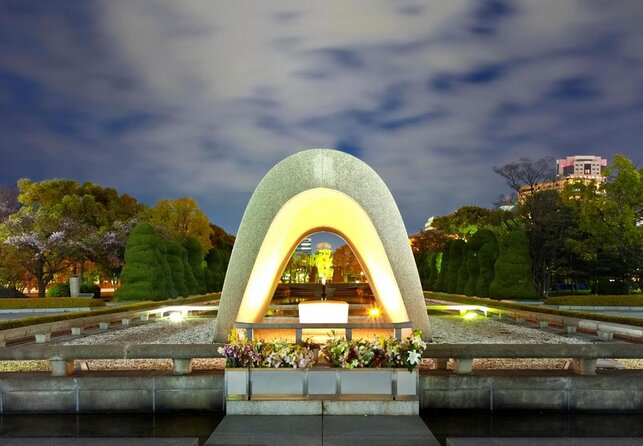
Peace Memorial Park: beginning with quiet reflection
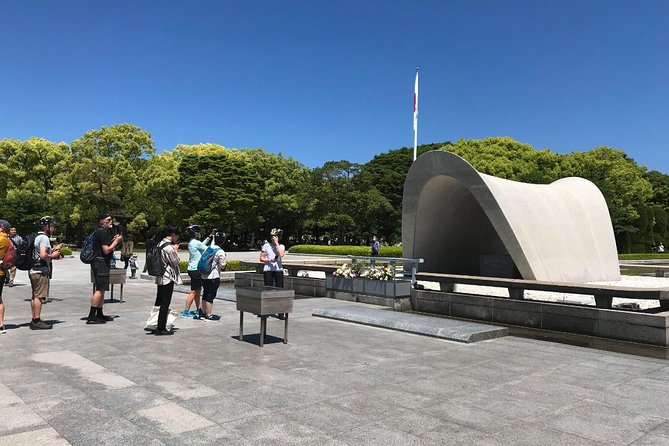
The first stop is Hiroshima Peace Memorial Park, where the tone of the morning changes quickly. The guide takes you through the park at a slow pace, with a short explanation of the area before 1945 and old images that help you picture what stood here before the bombing.
You should expect this part to be reflective rather than cheerful sightseeing. The park contains monuments and memorials connected to the atomic bombing, and the guide’s commentary gives you a framework for understanding what you see. The best guides handle this material with care, giving you facts and space to think rather than rushing from one marker to the next.
The park is also where the bicycle format proves useful. You can move between widely spaced points without wearing yourself out before the rest of the route. At the same time, cycling means you will not receive the same detailed visit as a dedicated walking tour of every memorial.
Some groups have also made origami cranes for the Children’s Peace Monument. That activity is not listed as a guaranteed part of every departure, so treat it as a possibility rather than a promise. The central value of this stop is the setting, the short historical context, and the chance to begin the day with the subject treated seriously.
The Atomic Bomb Dome: a powerful ten-minute stop
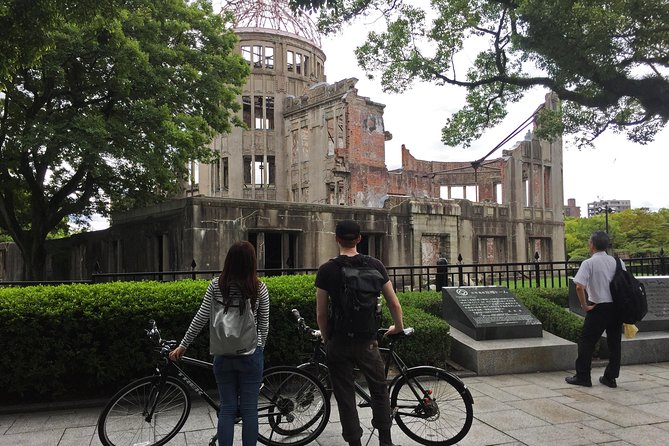
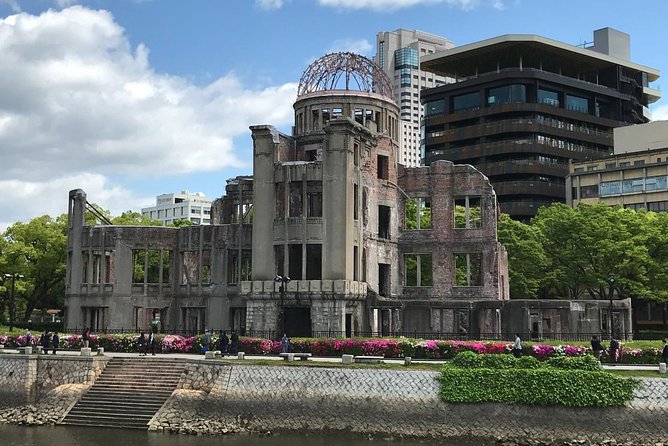
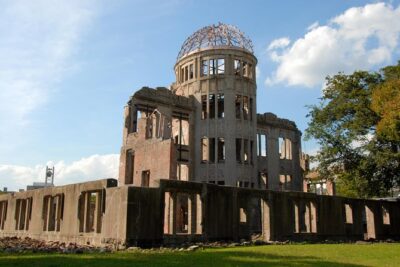
The Atomic Bomb Dome is close to the Peace Memorial Park and is one of Hiroshima’s most recognizable sights. The tour pauses here for photographs and reflection, with the damaged structure providing a direct physical link to the events of 1945.
The stop is scheduled for about 10 minutes. That is enough to see the exterior, take pictures, and hear the guide’s explanation, but not enough for an extended study of the surrounding area. If the Dome is especially important to you, return later on your own and give it more time.
I appreciate the short pause because it keeps the morning moving while still allowing the building to make its impact. The Dome is not just a photo stop, and a good guide makes that clear. You will hear about what happened here and why this preserved structure carries such weight.
The overall discussion of the bombing can sometimes touch on difficult political questions. One participant found parts of the commentary uncomfortable from an American perspective. That is worth keeping in mind. This is a serious history tour, not a light city ride, and you should expect direct discussion of responsibility, destruction, and the years that followed.
Hiroshima Castle: gardens, photographs, and a different side of the city
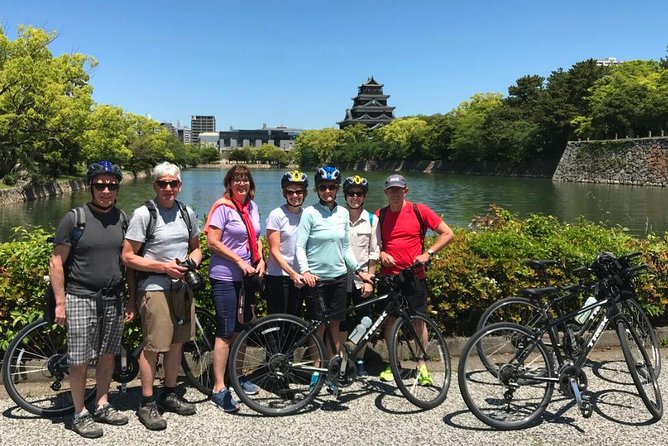
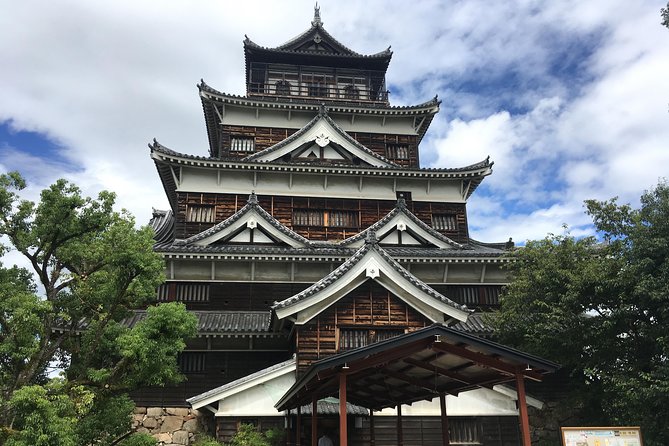
From the memorial area, the ride continues toward Hiroshima Castle. This shift is useful. After the heavy subject matter of Peace Memorial Park and the Dome, the castle introduces the city’s older political and cultural story.
The tour takes you close to the castle and through its landscaped gardens. You will hear about the castle’s past and have time for photographs. The stop lasts about 25 minutes, which gives you a good look at the grounds but not a long visit inside the castle keep.
That distinction matters. The castle stop is primarily an exterior and garden visit. If you want a full museum experience or a close study of the exhibitions, plan another visit after the tour. The bicycle outing gives you a useful first look and helps you understand how the castle fits into Hiroshima’s wider city center.
The ride to the castle also provides a change of scenery. Instead of moving from one memorial site to another, you see ordinary city streets and get a sense of Hiroshima beyond the atomic bombing. That balance is one of the tour’s strengths. Hiroshima is defined by 1945, but it is not only a city of memorials.
More early starts in Hiroshima:
- Hiroshima: Morning Hiking Tour with Open-air Tea Ceremony
★ 4.8 · 58 reviews - Kyoto Early Morning Tour with English-Speaking Guide
★ 5.0 · 1,427 reviews - Kyoto: Early Morning Tour with English-Speaking Guide
★ 4.9 · 1,128 reviews - Kanazawa: World Heritage Shirakawa-go Morning Guided Tour
★ 4.9 · 988 reviews
Shukkei-en Garden: a calm final stop
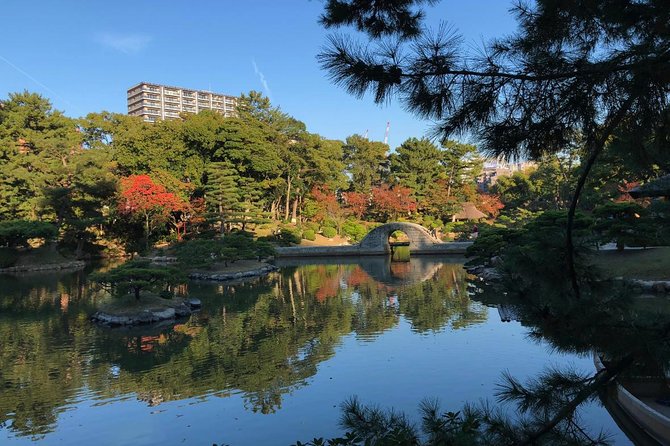
Shukkei-en is the final planned stop, and it makes a pleasant counterpoint to the morning’s earlier sites. This Japanese garden is designed around water, greenery, paths, and carefully balanced views. The guide explains how the garden was built and how Japanese garden design uses proportion and changing viewpoints.
Admission is included, which is a small but useful value. You do not need to stop at the entrance and pay separately, and the 25-minute visit gives you time to enjoy the setting without turning the tour into a long garden walk.
Still, 25 minutes is brief for a garden. You will see the main character of Shukkei-en, but you will not have unlimited time for every path, bridge, or pond. If gardens are a priority for you, return later and explore at a slower pace.
Ending here works well. The garden offers quiet after the emotional weight of the Peace Park and the visual presence of the castle. It also shows you a more delicate side of Japanese culture and gives the tour a sense of variety rather than leaving you with four similar historical monuments.
The guides make the difference
The route is fixed, but the guide can change the feel of the morning. Guides such as Awais, James, Melissa, Yuki, Ihsan, Amy, and Levi have been described as friendly, attentive, and strong English speakers. Several have also been praised for answering detailed questions and taking photographs for the group.
Awais is known for giving extensive explanations of Hiroshima and Japanese history while keeping the ride comfortable. James has been noted for careful bike checks, safety hand signals, and looking after the group when delays caused a time problem. Melissa has been praised for bringing energy and warmth to a family outing, while Levi began with a history lesson before the cycling started.
These details tell you what to look for: a guide who does more than point toward a monument. The best experience combines safety, local context, and a tone that respects the subject. Because the guides vary, the exact storytelling style will not be identical on every departure.
The tour is conducted in English. If you enjoy asking questions, this format should suit you well. If you prefer a silent ride with only brief explanations, you may find the amount of commentary more than you want. One guide in particular was described as eager to explain nearly everything, which will delight some people and tire others.
Riding conditions, bikes, and the e-bike question
The standard ride is described as mostly flat, which removes much of the strain associated with a cycling tour. You still need to pedal for several hours, stop and start repeatedly, and remain alert around city streets.
The bikes have generally been described as being in good condition. The guide adjusts seat height and helps match each rider with a suitable bicycle. Helmets and water are provided, so you can arrive without bringing cycling equipment.
An e-bike upgrade is available for an additional 2,000 yen. It may be worth considering if you have not ridden a standard bicycle recently, are concerned about stamina, or are visiting during hot weather. Availability is limited, so do not assume you can decide at the last minute.
The tour is not possible for riders under 140 centimeters and is not recommended for children aged 12 and under. The information does not give a precise maximum age or fitness requirement, so use your own judgment. If you can comfortably ride a bicycle on mostly flat terrain, the outing should be manageable, but it is not a vehicle-based sightseeing tour.
Weather can change the plan. Rain has led to a walking version of the experience, which still covered the sights and history but removed the cycling benefit. Poor weather can also result in cancellation, with the choice of another date or a full refund.
What the $72.96 price includes
At $72.96 per person, this is not the cheapest way to see Hiroshima. The value comes from combining equipment, a small group, an English-speaking guide, garden admission, bottled water, and a route that covers several separated sights in three to four hours.
You are paying for more than bicycle rental. A basic rental would not provide the safety briefing, route planning, historical explanations, or access to a guide who can connect the Peace Park, castle, and garden. If you have only one day in Hiroshima, that time savings can make the cost easier to justify.
The price is less compelling if you are staying several days and prefer to explore slowly. You may want more time at the Peace Museum, Atomic Bomb Dome, castle, or Shukkei-en than this schedule allows. In that case, use the tour as an introduction, then revisit the places that matter most.
Remember that the e-bike costs extra and alcoholic drinks are not included. Hotel pickup and drop-off are also not included. The tour starts at Cycle Hiroshima, at 4-chōme-5-4 Ōtemachi in Naka Ward, at 10:00 a.m., and ends back at the same meeting point.
Who should book this morning ride
I would choose this tour if you have one or two days in Hiroshima and want a clear first look at the city. It is especially useful for first-time visitors who want the major sights explained in a sensible order rather than pieced together from a map.
Families with teenagers may also find the format more engaging than a long walking tour. One family outing kept teenage sons interested, while another family of four enjoyed the mix of cycling, culture, and historical storytelling. The age and height rules still matter, and younger children may be better served by another type of outing.
This is a good match for people who like context. The guides tend to explain not only the atomic bombing but also local history, Japanese gardens, castle traditions, and the way Hiroshima rebuilt itself. You will get exercise and fresh air, but the tour’s main purpose is understanding the city.
I would hesitate if you dislike bicycles, have not cycled for years, or need a long, slow visit at each memorial. You can ask about the e-bike, but it costs more and may not be available. I would also avoid booking it as your only Hiroshima plan if the Peace Memorial Museum is a personal priority, since the scheduled stops do not include a museum visit.
Practical details that matter
Confirmation is provided at booking, and a mobile ticket is accepted. Arrive ready to ride, with clothing suitable for the weather and shoes that feel secure on bicycle pedals.
The tour has free cancellation up to 24 hours before the 10:00 a.m. start time. Changes or cancellations made within 24 hours are not refunded. If poor weather cancels the outing, you can choose another date or receive a full refund. The same choice applies if the minimum number of participants is not reached.
The tour returns to its starting point, so allow time afterward if you need to catch a train, board a ship, or reach another appointment. One guide went out of his way to help with a delayed rider’s onward transport, but you should not build a tight schedule around that kind of personal assistance.
Should you book Hiroshima by bicycle?
Book it if you want an efficient, thoughtful introduction to Hiroshima. The mostly flat route, small group, included bicycle and helmet, and strong guide-led commentary make it a smart choice for a short stay. You will see the city’s major sights while also reaching quieter streets that a bus route would skip.
Think twice if you need long visits inside museums and monuments, or if you are not comfortable riding a standard bicycle. In that case, ask about the e-bike in advance or choose a walking and public transport plan. For most first-time visitors who can ride comfortably, this morning outing offers a useful balance of movement, history, and quiet reflection.
FAQ
How long does the Hiroshima bike tour last?
The experience lasts approximately 3 to 4 hours. It begins at 10:00 a.m. and ends back at the Cycle Hiroshima meeting point.
What sights are included?
The route visits Hiroshima Peace Memorial Park, the Atomic Bomb Dome, Hiroshima Castle, and Shukkei-en Garden.
Are the bicycle and helmet included?
Yes. Bicycle rental, a helmet, bottled water, and an English-speaking guide are included. Admission to Shukkei-en Garden is also included.
Can I use an electric bicycle?
An e-bike upgrade may be available for an additional 2,000 yen. Availability is limited, so arrange it ahead of time if you need one.
Is the tour suitable for children?
The tour is not recommended for children aged 12 and under, and riders must be at least 140 centimeters tall.
What happens if the weather is bad?
The experience depends on good weather. If it is canceled because of poor weather, you can choose another date or receive a full refund.
Just added around Hiroshima
- The Peace Memorial to Miyajima : Icons of Peace and Beauty★ 4.5 · 31 reviews
- Shore Excursion from Hiroshima Port : Private Tour in Hiroshima★ 5.0 · 17 reviews
- Hiroshima Saijo Sake Tasting Tour with visit to 7 Breweries★ 5.0 · 104 reviews
- Hiroshima & Miyajima All-Inclusive Tour w/Licensed guide Pancho★ 5.0 · 54 reviews
- Hiroshima Country Cycling: Explore Rural Life 1 HR from City★ 5.0 · 22 reviews
- Okunoshima Rabbit Island Cycling Tour with Local Guide★ 4.5 · 17 reviews
- Private Full Day Hiroshima Tour★ 4.5 · 29 reviews
- Hiroshima Private Tour with a Local – Highlights & Hidden Gems★ 4.5 · 24 reviews
Hiroshima Tours, compared.
Peaceful Hiroshima & Miyajima UNESCO 1 Day Bus Tour
Read our review →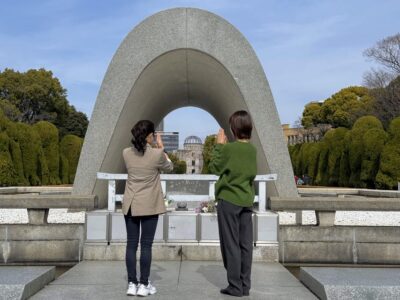
Hiroshima and Miyajima UNESCO Sites 1-Day Tour
Read our review →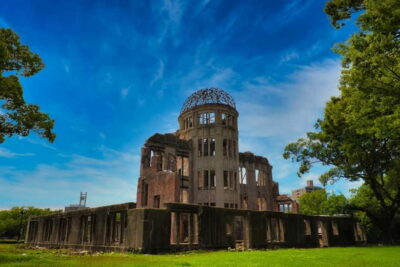
Hiroshima Historical Walking Tour – Why A-Bomb was Dropped
Read our review →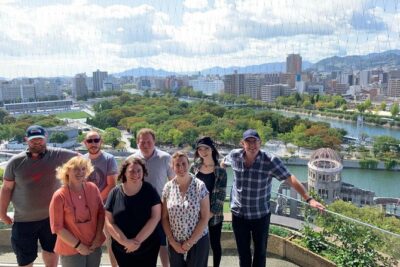
Hiroshima Peace (Heiwa) Walking Tour at World Heritage Sites
Read our review →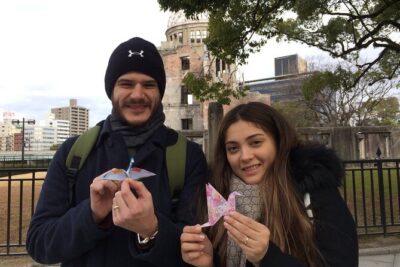
Hiroshima City 4hr Private Walking Tour with Licensed Guide
Read our review →

Japanesel Archery Experience HIROSHIMA CASTLE SHARAKU
Read our review →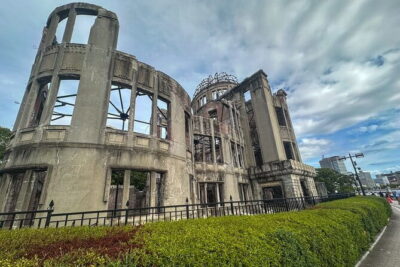
Hiroshima and Miyajima Day Trip with Itsukushima Shrine & Ferry
Read our review →Browse the lists this tour appears in