
Reviewed · HIROSHIMA TOURS
Hiroshima and Miyajima by Bike and Boat
Hiroshima and Miyajima make a fine pair, but seeing both in one day takes planning. This tour handles the connections by bicycle, train, and ferry, giving you river paths, memorials, a castle, island shrines, and a local lunch without making you work out the route yourself.
I like the small maximum of eight, which allows guides such as Aimee, Alex, Ishan, and James to adjust the pace and answer real questions. I also like the range of experiences: quiet cycling through city neighborhoods, serious reflection at the Peace Memorial Park, then deer, shrine buildings, and sea views on Miyajima. The main drawback is time. It is a packed day, and one slow lunch or a hot afternoon can leave too little room for Hiroshima’s Peace Memorial Museum and the castle.
Key points to know before booking
- Two major destinations in one day: Cover Hiroshima and Miyajima with the main transport connections arranged for you.
- A small group of up to eight: The guide can fit bikes, adjust the pace, and shape the conversation around your interests.
- Cycling adds local texture: Rivers, parks, canals, and ordinary neighborhoods show you more than a point-to-point walking route.
- Miyajima lunch is included: Expect a sit-down meal featuring local Hiroshima dishes, with vegetarian choices available.
- The Peace Memorial Museum is not included: You will see the park and memorials, but museum time requires a separate visit.
- Weather and stamina matter: The tour lasts about seven to eight hours, though one experience ran closer to ten.
Why the bicycle is the right way to see Hiroshima
Hiroshima is easy to admire from a tram or a walking route, but a bicycle gives the day a better rhythm. You move along rivers, through parks, and across city neighborhoods, covering ground without feeling sealed off from the place. You can notice the water, bridges, trees, and daily life between the major sights.
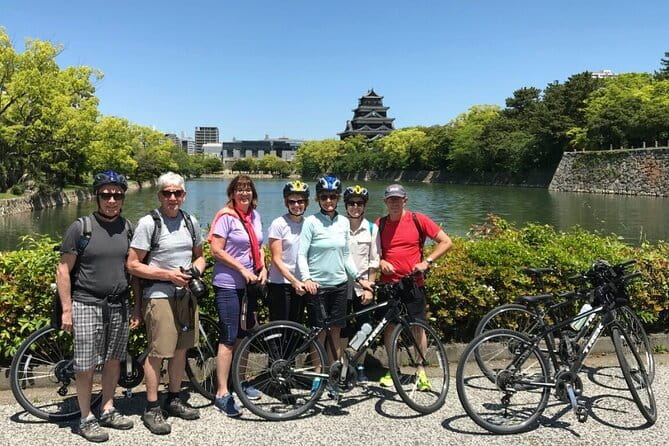
The cycling is not presented as a hard athletic ride. The guide sets a group pace, and several people appreciated having breaks and water during hot, humid weather. Aimee was especially attentive to hydration and cooling down, while Sage kept the ride at a speed the whole group could manage. Bikes came in different sizes, and one guest who is 159 centimeters tall was fitted with a Trek bike that worked well.
Still, you should be comfortable riding a bicycle for part of a long day. The route includes walking on Miyajima, train and ferry boarding, and sightseeing on your feet, so this is not simply a leisurely two-hour bike outing. If rain is heavy, the plan may change. One tour became a walking-focused day because of the forecast, with the guide still covering the main places.
The starting point is Cycle Hiroshima at 4-chōme-5-4 Ōtemachi in Naka Ward. The tour begins at 9:30 a.m. and returns there at the end, making it useful if you have luggage stored at the shop or need advice for your next stop.
More bike days around Hiroshima:
- Hiroshima in a Nutshell: Morning Bike Adventure
★ 5.0 · 524 reviews - Hiroshima 2hr Peace Cycling Tour with Local Guide
★ 5.0 · 321 reviews - Hiroshima: Peace Cycling Tour with Local Guide
★ 4.8 · 286 reviews
Hiroshima’s rivers, parks, and everyday streets
The opening ride gives you a gentle introduction to the city. Rather than rushing directly to the atomic bomb memorials, you first see Hiroshima as a living city with waterways, green spaces, and residential areas.
That matters because Hiroshima is not only a place of remembrance. The bike route gives you a little context for the city people live in today. Guides have also used this part of the ride to point out smaller monuments and details that are easy to miss on foot.
The group size helps here. With no more than eight people, you can stop without creating a large crowd, and the guide can explain what you are seeing without shouting over a bus group. Alex, Aimee, and James were all praised for keeping the mood friendly while still taking the subject seriously.
Peace Memorial Park and the Cenotaph
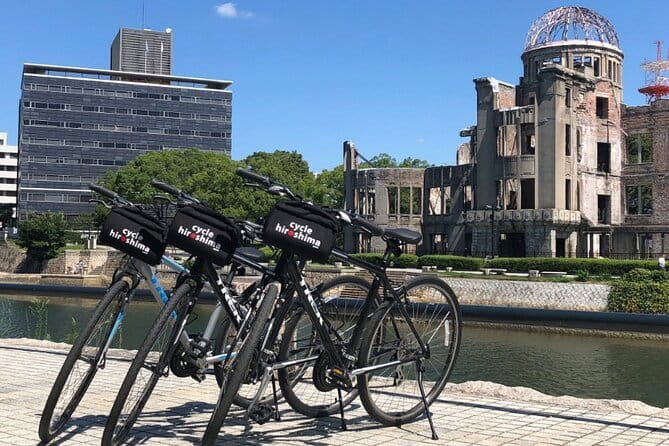
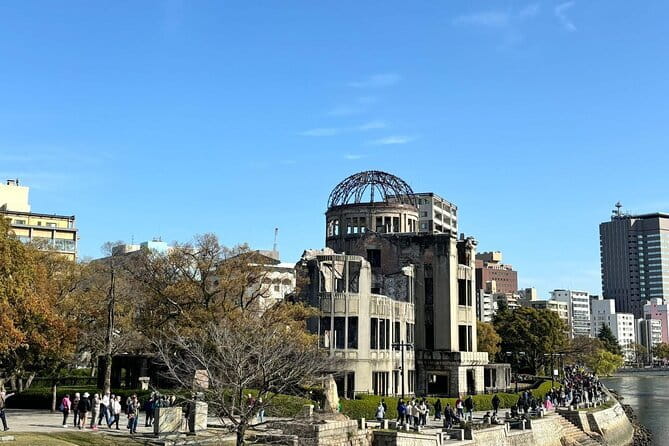
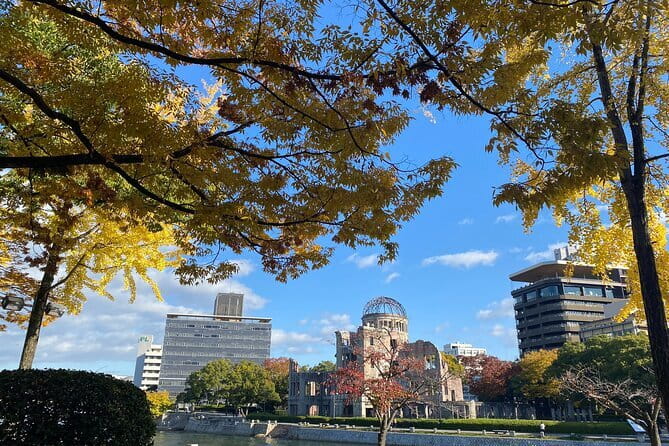
The Peace Memorial Park is the emotional center of the Hiroshima portion. You spend about an hour exploring the park and its memorials, followed by about 15 minutes at the Cenotaph for the Atomic Bomb Victims.
The Cenotaph is a brief stop, but it is not a throwaway photo break. The design and setting invite quiet reflection, and a good guide helps you understand why the monument matters without turning the moment into a lecture. James was particularly appreciated for explaining the events leading to the bombing and its aftermath with care. Other guides, including Aimee and Ishan, were praised for presenting the subject clearly and from more than one point of view.
This is also where the quality of your guide matters most. The tour has received strong marks overall, with a 4.9 rating from 172 reviews and 98 percent recommendation, but one account found the historical discussion too light and felt that the guide’s wording did not suit the seriousness of the subject. That is a fair concern. You are paying for more than transportation and a bike, so you should expect thoughtful commentary at Hiroshima’s central memorial sites.
A practical point: the Peace Memorial Museum is not part of the tour. You see the park, the Cenotaph, and other memorials, but museum admission and dedicated museum time are not included. If the museum is important to you, plan a separate visit before or after the tour. Several people felt they needed extra time for monuments and sculptures that the schedule passed quickly.
Hiroshima Castle and the city’s feudal past
Hiroshima Castle gives the day a different historical frame. The castle grounds, moats, and restored main tower introduce the feudal city that existed long before the 20th century.
The planned stop is about 30 minutes. That is enough for a look at the exterior, a photo, and a short explanation of the castle’s role, but it is not enough for a slow museum-style visit. If you like Japanese castles and want to study the exhibits, you may feel hurried.
I like the contrast between the castle and Peace Memorial Park. One explains Hiroshima’s earlier political and military life; the other asks you to think about the city’s destruction and rebuilding. Together, they prevent the day from reducing Hiroshima to a single event.
The order can vary. Some guides take you to Miyajima first and return to the memorial area later. That can be a smart choice, especially if the goal is to avoid arriving at the island late in the day. Ask your guide about the order at the start, particularly if you have a strong preference for how you want to handle the more serious stops.
A few more Hiroshima half-days to weigh up
- Peaceful Hiroshima & Miyajima UNESCO 1 Day Bus Tour
★ 5.0 · 5,309 reviews - Hiroshima: Hiroshima and Miyajima UNESCO Sites 1-Day Tour
★ 4.9 · 2,330 reviews - Hiroshima / Miyajima Full-day Private Tour with Government Licensed Guide
★ 5.0 · 1,298 reviews - Hiroshima Historical Walking Tour – Why A-Bomb was Dropped
★ 4.8 · 893 reviews
Riding the JR ferry to Miyajima
After the Hiroshima sights, you use the train and the JR Miyajima Ferry. The ferry fare is included, as are the train and the tour’s other listed fees and taxes.
The crossing is a welcome change from the bicycle. You can sit, look back toward the shore, and shift from city streets to island sightseeing. The ferry portion is listed at about 30 minutes, and the guide handles the route so you do not need to solve the transfer on your own.
This combination is one of the tour’s best practical features. Hiroshima and Miyajima are close enough to pair, but the trip between them still involves transport choices. Here, you get the movement of a self-guided day without the uncertainty of figuring out each connection.
The ferry is also a useful reminder that Miyajima is not simply another neighborhood of Hiroshima. It has its own setting, traditions, and pace. Once you arrive, most of the exploring is done on foot.
Miyajima’s lanes, deer, and Itsukushima Shrine
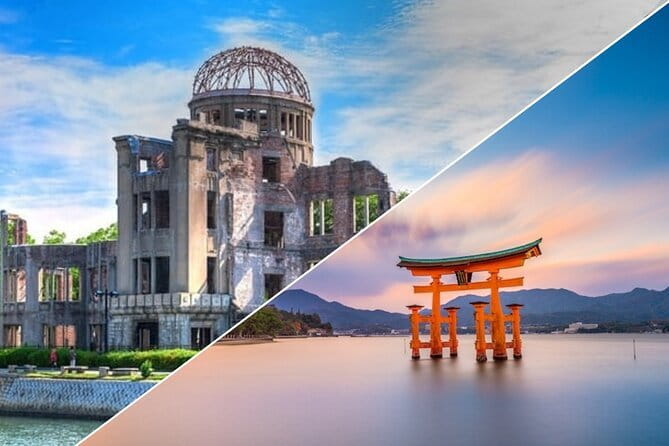
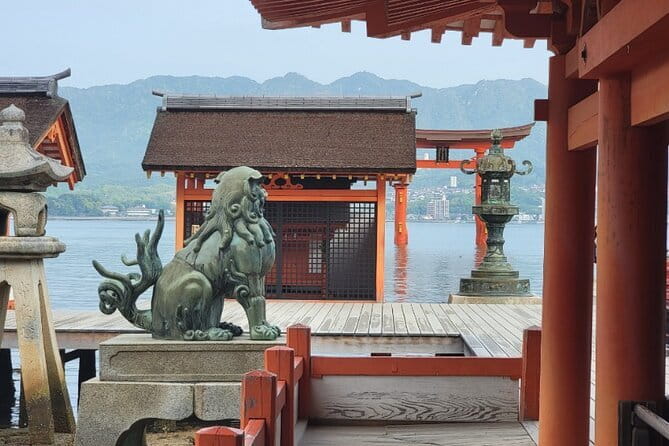
Miyajima receives about an hour and a half of guided exploration, followed by another hour and a half around Itsukushima Shrine and lunch. Expect attractive orange shrine buildings, wooded slopes, narrow streets, and deer around the public areas.
The deer are a fun part of the visit, but the island is more than a wildlife stop. Your guide explains the island’s religious and cultural importance, helps you find the key monuments, and points out places worth photographing. Aimee also encouraged one solo guest to try the Kaidan Meguri at Daishoin Temple, showing how a flexible guide can add a personal touch when time allows.
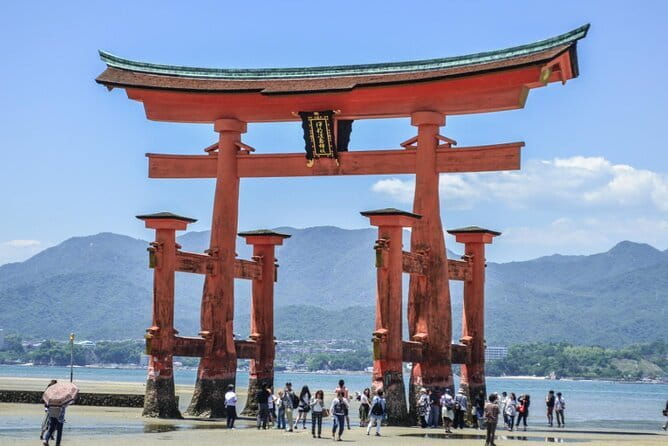
Itsukushima Shrine is the main visual prize. The bright buildings and famous gate create the picture most people associate with Miyajima. Tides affect how the gate appears, but the provided details do not promise a particular tide condition, so you should treat the view as changeable rather than guaranteed in one exact form.
The island portion has a tradeoff. It is beautiful and substantial, but it can take over the day. One person felt that too much time went into walking around Miyajima and lunch, leaving Hiroshima’s castle and memorial park rushed near sunset. Another person wanted more free time on the island for smaller sights, shopping, and independent wandering.
That tension is built into the tour. You are choosing breadth over long visits. You see two major destinations, but you do not get a full museum day in Hiroshima or a relaxed island day in Miyajima.
The included lunch and local flavors
Lunch is included at a nearby eatery around Itsukushima Shrine. The meal features local Hiroshima dishes, and the food received repeated praise. Hiroshima-style okonomiyaki was a particular highlight, and other meals included local Japanese fare and ramen.
This is valuable for two reasons. First, you do not need to spend the middle of a busy day searching for a restaurant. Second, the guide can help connect the meal to local food culture rather than leaving you with a generic tourist stop.
Vegetarian options are available. For other dietary restrictions, you need to contact the operator before the tour. That is important because the schedule leaves little time to improvise a replacement meal.
Lunch can also affect the length of the day. Most descriptions place the experience at seven to eight hours, but one day lasted about ten hours because the meal and island visit ran long. If you have an evening train, flight, or dinner booking, leave a generous buffer.
What the $142.05 price covers
At $142.05 per person, this is not a cheap way to rent a bicycle for a few hours. It is a full-day guided outing that includes the bicycle, lunch, train and ferry rides, and listed fees and taxes.
The value depends on what you want from Hiroshima. If you are happy navigating the city, booking your own transport, choosing a restaurant, and researching the memorial sites, you can spend less independently. But you will need to arrange the Hiroshima to Miyajima connection, manage the return trip, and decide how to fit both places into one day.
I think the price makes more sense for a first visit, a short stay, or anyone who wants historical explanation along with sightseeing. The guide is the main product. The strongest days included careful bike fitting, flexible stops, clear explanations, help with photos and food, and sensitive discussion of the atomic bombing and its aftermath.
The price is less compelling if you want long, quiet visits inside museums or plenty of independent time. You are buying a broad introduction, not a slow study tour.
Guides, flexibility, and the human side
Guide quality can shape this experience more than any single stop. Aimee appears repeatedly in the strongest accounts for her humor, warmth, clear English, flexibility, and care in extreme heat. Alex was praised for knowing the city’s lesser-seen memorials and for adapting the route to the group. Ishan handled the historical subject with detail and kept the day friendly. James combined strong language skills, historical depth, bike fitting, and attention to practical needs.
Those names do not guarantee a particular guide on your date, but they show what the operator is trying to provide: a personal day rather than a script read to eight people. Guides have changed the order, slowed the pace, switched to walking in bad weather, helped arrange museum tickets after the tour, and added stops when the group’s interests allowed.
The flexibility has limits. You cannot assume that every optional monument, garden, museum, or shopping street will fit. Tell the guide early if the museum, photography, local food, castle, or wartime history is your priority.
Heat, rain, and the seven-to-eight-hour pace
Hiroshima can be hot and humid, and this is an outdoor day. People who enjoyed the tour in difficult heat credited their guides with adding breaks, keeping a gentle speed, offering water, and helping everyone stay comfortable. Even so, you should prepare for exposure and steady activity.
Rain is another factor. The experience requires good weather, and poor conditions can lead to a new date or a full refund. On a rainy day, the tour may shift from cycling to walking, as happened with one guest, but that does not make it an indoor tour.
Most people can take part, but the combination of cycling, walking, ferry boarding, and a long day deserves an honest look at your energy level. The small group makes pacing easier, but it cannot remove the distance between the sights.
Cancellation is free if you cancel at least 24 hours before the 9:30 a.m. start. Changes or cancellations inside that window are not refunded, and the operator may also cancel if the minimum number is not reached.
Who should book this Hiroshima and Miyajima tour?
Book it if you have one full day, want to see both Hiroshima and Miyajima, and prefer a guide to handle the moving parts. It is especially suited to people who enjoy light cycling, local food, serious history, and a friendly small group.
It is also a good choice if you are visiting Hiroshima alone. The small setting and attentive guides can make the day feel social without the size and noise of a large coach tour. Families and mixed-interest groups may appreciate the range, from bicycles and deer to the castle and memorial park.
Think twice if the Peace Memorial Museum is your main reason for coming. The museum is not included, and the schedule may not leave enough time to add it comfortably. Also think twice if you want a relaxed Miyajima visit with long stretches of free time, or if a seven-to-eight-hour outdoor day sounds tiring.
FAQ
How long does the Hiroshima and Miyajima bike tour last?
The planned duration is approximately seven to eight hours. The day can run longer if lunch, island sightseeing, weather changes, or group pacing slow the schedule.
What time does the tour start?
The tour starts at 9:30 a.m. at Cycle Hiroshima, located at 4-chōme-5-4 Ōtemachi, Naka Ward, Hiroshima.
Is lunch included?
Yes. A local lunch is included, with vegetarian options available. Contact the operator before the tour about other dietary restrictions.
Are the train and ferry included?
Yes. The train and JR Miyajima Ferry rides are included, along with the listed fees and taxes.
Does the tour include the Peace Memorial Museum?
No. The tour visits the Peace Memorial Park and the Cenotaph for the Atomic Bomb Victims, but museum admission and a museum visit are not included.
What happens if the weather is poor?
The experience requires good weather. If it is canceled because of poor conditions, you can choose a different date or receive a full refund. The tour may also be canceled if the minimum number of participants is not reached.
Should you book it?
I would book this tour if your goal is to understand Hiroshima and fit Miyajima into the same day without handling every bike route, train, ferry, meal, and historical stop yourself. The strongest value comes from the guide, the small group, and the way cycling connects the city’s major places.
Go in with realistic expectations. You will cover a lot, but you will not have unlimited time at the museum, castle, or island. Tell the guide what matters most, prepare for heat or rain, and leave your evening open. If you can accept that brisk pace, this is a thoughtful and active introduction to two of Japan’s most important places.
Just added around Hiroshima
- The Peace Memorial to Miyajima : Icons of Peace and Beauty★ 4.5 · 31 reviews
- Shore Excursion from Hiroshima Port : Private Tour in Hiroshima★ 5.0 · 17 reviews
- Hiroshima & Miyajima All-Inclusive Tour w/Licensed guide Pancho★ 5.0 · 54 reviews
- Hiroshima Saijo Sake Tasting Tour with visit to 7 Breweries★ 5.0 · 104 reviews
- Hiroshima Country Cycling: Explore Rural Life 1 HR from City★ 5.0 · 22 reviews
- Okunoshima Rabbit Island Cycling Tour with Local Guide★ 4.5 · 17 reviews
- Private Full Day Hiroshima Tour★ 4.5 · 29 reviews
- Hiroshima Private Tour with a Local – Highlights & Hidden Gems★ 4.5 · 24 reviews
Hiroshima Tours, compared.

Peaceful Hiroshima & Miyajima UNESCO 1 Day Bus Tour
Read our review →
Hiroshima and Miyajima UNESCO Sites 1-Day Tour
Read our review →
Hiroshima Historical Walking Tour – Why A-Bomb was Dropped
Read our review →
Hiroshima Peace (Heiwa) Walking Tour at World Heritage Sites
Read our review →
Hiroshima in a Nutshell: Morning Bike Adventure
Read our review →
Hiroshima City 4hr Private Walking Tour with Licensed Guide
Read our review →

Japanesel Archery Experience HIROSHIMA CASTLE SHARAKU
Read our review →Browse the lists this tour appears in