
Reviewed · HIROSHIMA TOURS
Hiroshima: Peace Cycling Tour with Local Guide
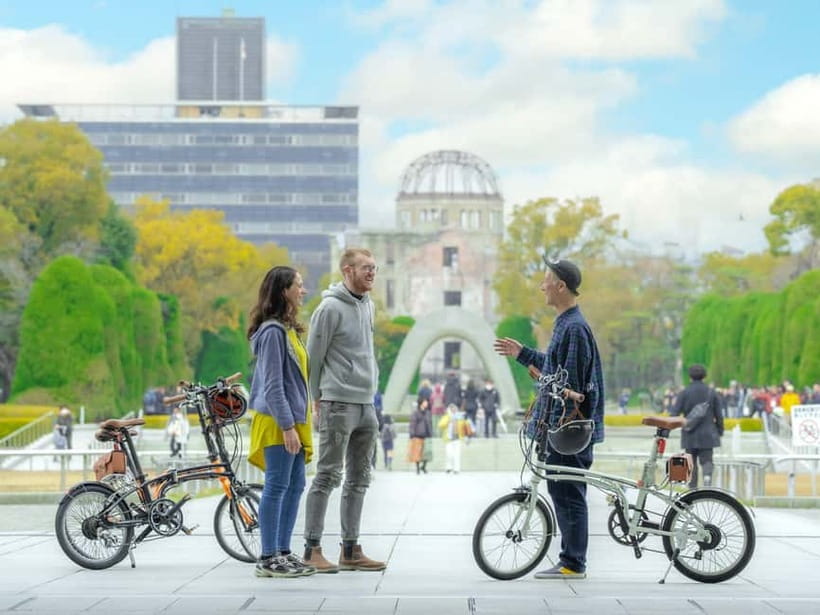
Hiroshima’s story reaches far beyond the Atomic Bomb Dome. This small-group electric-bike tour carries you from Peace Memorial Park into ordinary neighborhoods, where surviving streetcars, hospital buildings, bridges, trees, and rivers help show how widely the bombing affected the city.
I like two things right away: the electric bikes make a wider route practical without demanding athletic fitness, and local guides such as Shin and Kana add family stories passed down through generations. The tour also keeps its tone focused on peace and recovery, not only destruction. The main drawback is that the group may slow down for young or less confident riders, and taller cyclists may find the adult bikes a little small.
Key points to know before booking
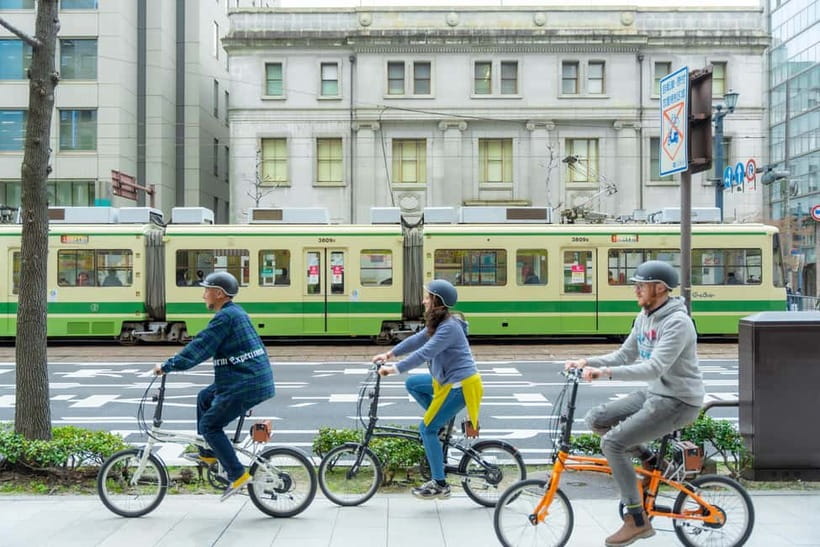
- The 3-hour route reaches well beyond Peace Park, visiting Hiroshima Castle, Aioi Bridge, the Red Cross Hospital, Miyuki Bridge, and other important sites.
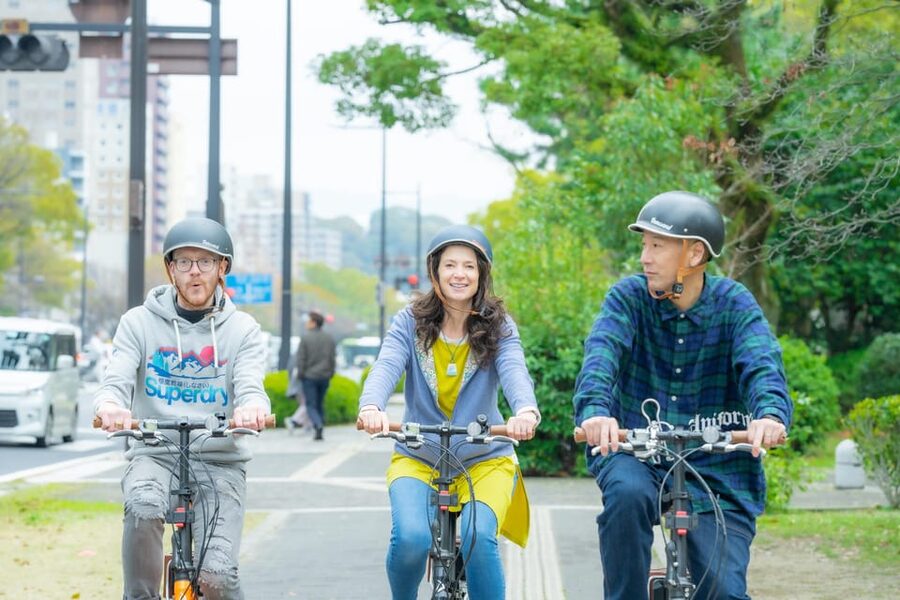
- Electric bicycles make the ride manageable, including for people who are not regular cyclists.
- Local storytelling is the heart of the tour, with guides including Shin, Kana, Moe, Bella-Kana, and others sharing family connections and local memories.
- The tour is limited to 10 people, so you can hear the guide and ask questions without being lost in a crowd.
- The route includes less-touristed areas, giving you a clearer sense of Hiroshima’s rebuilding beyond the central memorials.
- Bring water, comfortable clothes, shoes, and a towel, especially in warm weather. High heels are not suitable.
Why a bicycle is a good way to understand Hiroshima
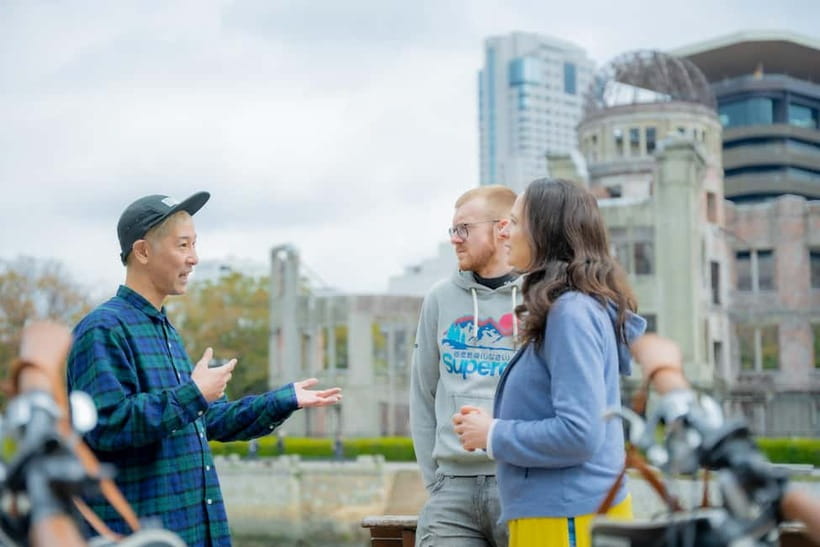
Peace Memorial Park is essential, but it can also leave you with an incomplete picture of Hiroshima. The park gathers the city’s most powerful memorials in one place. It does not, by itself, show how the bombing spread outward through homes, streets, bridges, hospitals, rail lines, and everyday neighborhoods.
A bicycle changes that. You move between the main memorials and the wider city at a useful pace, stopping where the guide can explain what happened. The advertised damage within roughly 2.5 kilometers of the hypocenter gives the route its scale. You are not simply ticking off famous monuments. You are connecting them to the streets and infrastructure around them.
The electric assistance matters. This is not a racing excursion, and the route covers relatively short distances between stops. You still pedal, but the motor takes much of the strain. Several guides have been praised for setting a comfortable pace, and the experience suits people who can ride a bicycle but do not want a physically demanding day.
You should still feel comfortable balancing, starting, stopping, and riding in a group. The operator may adjust the pace if someone is new to cycling, particularly when children are present. That is considerate, but it means the tour may feel slower than a private ride.
More bike days around Hiroshima:
- Hiroshima in a Nutshell: Morning Bike Adventure
★ 5.0 · 524 reviews - Hiroshima 2hr Peace Cycling Tour with Local Guide
★ 5.0 · 321 reviews - Hiroshima and Miyajima by Bike and Boat
★ 5.0 · 172 reviews
Starting at the Peace Park Rest House
The meeting point is the Rest House in Hiroshima Peace Memorial Park. From Hiroshima Station, take the Hiroshima Electric Railway to Atomic Bomb Dome Station. The ride takes about 20 minutes, followed by a walk of roughly five minutes.
Allow extra time. If you arrive late without contacting the operator, the tour can be cancelled and the same-day fee is non-refundable. This is one activity where arriving early is worth the effort, since you also need to find the meeting spot and get ready for the bicycle.
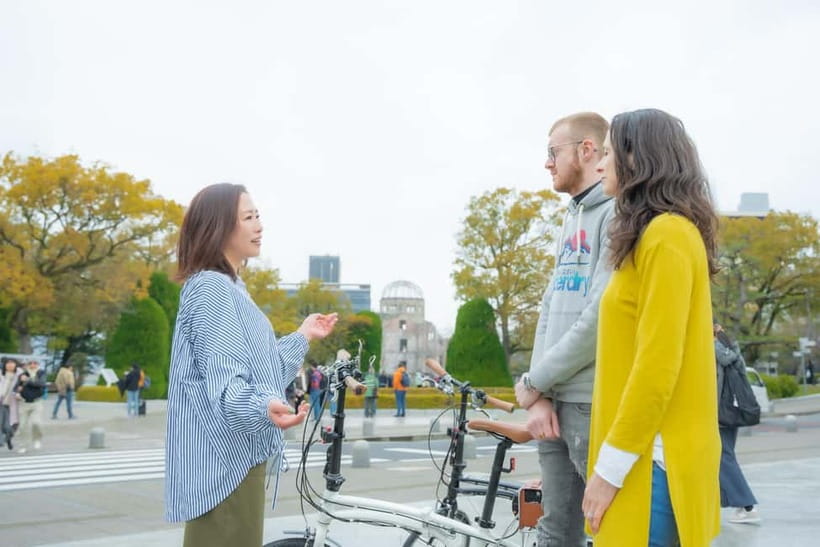
The Rest House is a fitting place to begin. From here, the guide introduces the purpose of Peace Memorial Park and explains the memories attached to its monuments. You will discuss the Atomic Bomb Dome and the events of August 6, 1945, before moving into the city beyond the most familiar tourist views.
The exact order can change depending on conditions, so treat the schedule as a framework rather than a promise down to the minute. The listed routes are carefully timed, with the 2-hour option running at 11:00 or 15:00 and the 3-hour option at 10:00 or 14:00.
The 2-hour route: a focused introduction
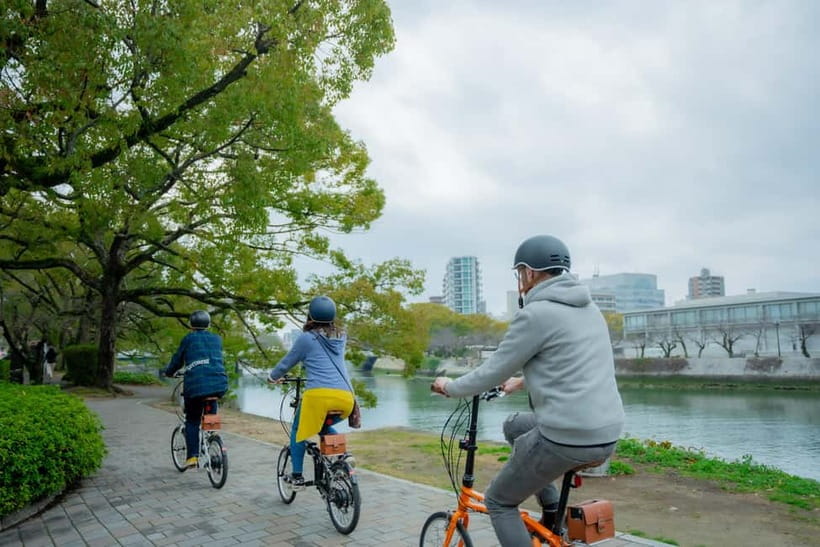
The shorter tour begins with Peace Memorial Park, then moves toward suburban areas away from the main sightseeing zone. At about noon on the morning departure, or 4:00 p.m. on the afternoon departure, the guide introduces one of Hiroshima’s most memorable living links to the past: the A-bombed streetcars.
The fact that a train still runs today after surviving the atomic bombing gives the history a direct, everyday quality. It is not only a relic in a display case. It is part of the city’s working transport network, and seeing it in the townscape helps connect August 6 to Hiroshima’s life today.
The guide then points out other A-bomb heritage sites and explains how the city changed after the destruction. The route is particularly useful if you have only a short stay in Hiroshima. It gives you the central memorial area plus a look at places you would probably pass without recognizing their importance.
The trade-off is simple: the 2-hour version cannot include all the stops listed on the longer route. If your schedule allows, the 3-hour course offers a fuller picture and more time for questions. If you are combining the tour with the Peace Memorial Museum, Miyajima, or a train departure, the shorter option may fit better.
The 3-hour route: from castle grounds to Peace Boulevard
The longer route begins at Hiroshima Castle, a useful reminder that the city’s story did not start in 1945. From there, you visit Hiroshima Gokoku Shrine and its shrine gate before passing through Hiroshima Central Park.
These opening stops provide architectural and civic context before the route turns directly toward the bombing. The progression is well judged. You first see places connected with Hiroshima’s earlier identity, then follow the city toward the central memorial area.
A few more Hiroshima half-days to weigh up
- Peaceful Hiroshima & Miyajima UNESCO 1 Day Bus Tour
★ 5.0 · 5,309 reviews - Hiroshima: Hiroshima and Miyajima UNESCO Sites 1-Day Tour
★ 4.9 · 2,330 reviews - Hiroshima / Miyajima Full-day Private Tour with Government Licensed Guide
★ 5.0 · 1,298 reviews - Hiroshima Historical Walking Tour – Why A-Bomb was Dropped
★ 4.8 · 893 reviews
Aioi Bridge and the Atomic Bomb Dome
Aioi Bridge is one of the key points on the route. Its distinctive shape helped identify the target area, and the stop gives the guide a natural place to explain the bombing’s location and reach.
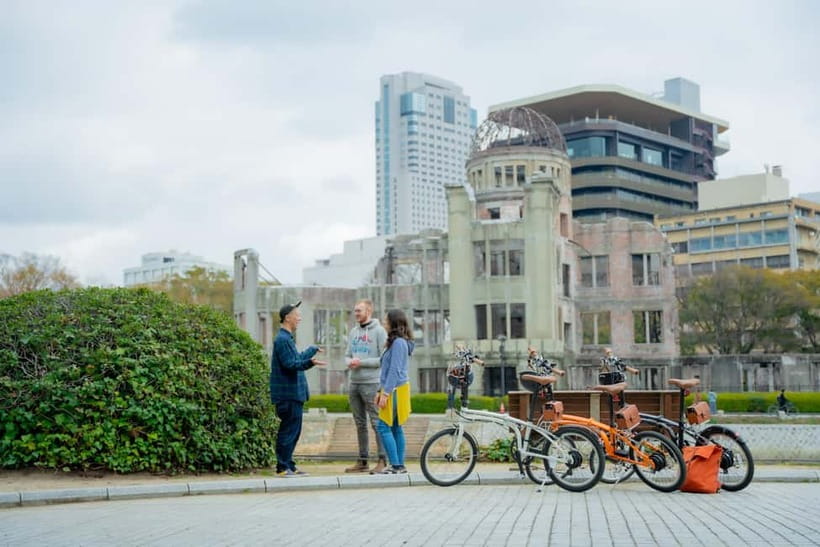
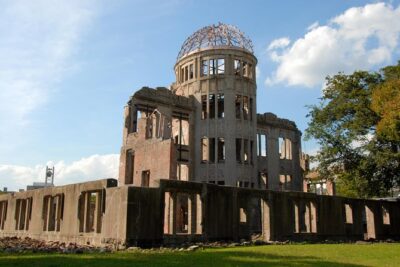
A few minutes later, you arrive at the Atomic Bomb Dome. Most visitors see it from the riverbank and move on, but the guide gives the structure a place within the larger story. You learn what the building represented before the bombing, what happened around it, and why it remains central to Hiroshima’s message.
This is likely to be one of the more emotional sections. The bicycle does not make the subject lighter, but it allows the tour to move between sites without turning the whole experience into a long indoor lecture. You can pause, listen, and then continue when you are ready.
The rivers and Peace Bridge
The route follows the Motoyasu River and reaches Peace Bridge. Hiroshima’s rivers are not background scenery here. They help explain the city’s layout and the way the bombing affected movement, rescue, and communication.
Cycling beside the water also gives you a visual sense of how much Hiroshima has changed. Today, the city is full of greenery, open paths, and rebuilt streets. The contrast with the guide’s account of the destroyed city is one of the tour’s strongest ideas: recovery is not an abstract word when you are physically moving through the rebuilt spaces.
The suburban stops make the history feel real
After the central memorial area, the 3-hour route reaches Higashisenda Park and the Hiroshima Red Cross Hospital. These stops matter because they shift your attention from symbols to practical consequences.
A hospital linked to the bombing helps explain the medical crisis and the scale of suffering. Parks and surrounding neighborhoods show that the disaster was not confined to one monument or one block. The guide uses these locations to describe the city at the time and the long work of rebuilding afterward.
The route continues toward Hiroshima Railway, then to Miyuki Bridge and the Kobayashi River. These are exactly the kinds of places that can disappear into a normal city walk. On your own, you might see a bridge, a rail line, or a stretch of river and have no idea what it means. With a local guide, the ordinary setting becomes part of the historical record.
One of the most distinctive stops is the surviving weeping willow tree. It offers a small, tangible point of connection with the bombing and the city’s return to life. The tour does not rely only on grand memorials. Trees, transport, medical buildings, and bridges can carry memory too.
The final section passes along Peace Boulevard before returning to the meeting point at around 1:00 p.m. or 5:00 p.m. The boulevard gives the tour a fitting close, bringing the route back to Hiroshima’s public message of peace after taking you through the places that explain why that message matters.
The guides are the main reason to choose this tour
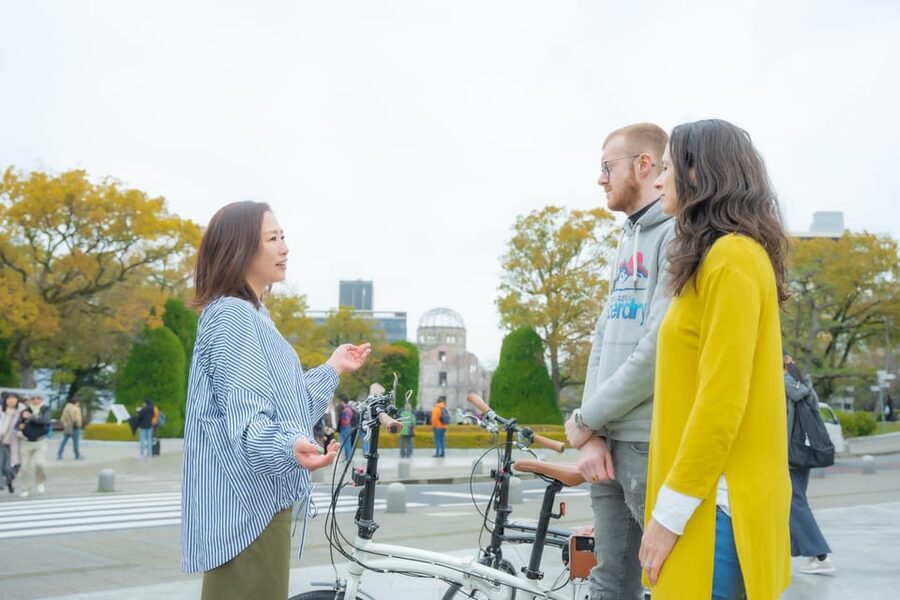
The route is worthwhile, but the guide makes the difference. Shin is repeatedly praised for his energy, clear English, humor, and personal family connection to the bombing. His stories link grandparents, parents, and the present generation, giving you a sense of how memory has been handed down.
Kana is another guide to look out for. She has been described as warm, thoughtful, and highly engaging, with personal family experiences that bring the stops to life. Moe and Bella-Kana are also noted for combining historical explanation with care for the group.
The guides do not present Hiroshima only as a place of loss. The strongest version of the tour places difficult facts beside hope, courage, healing, and the city’s rebuilding. That balance is important. You will hear about destruction, but the purpose is not to leave you overwhelmed or numb.
Personal stories can make the experience more moving, though they also mean the tone may vary somewhat by guide. Shin’s lively style may suit families and solo visitors who enjoy a talkative guide. Another guide may take a quieter approach. The subject deserves respect, and the team appears to understand that good guiding here requires empathy as well as facts.
Electric bikes, group size, and comfort
The tour is shared, with a maximum of 10 participants. That is small enough for the guide to manage the group and answer questions, though it is not a private tour. If another participant is learning to ride or a child needs extra time, the pace may be adjusted.
Adult electric bicycles are intended for people at least 145 centimeters tall. The stated minimum height is about 4 feet 8 inches, so anyone shorter should not book this standard option. Children between 110 and 145 centimeters may use a children’s cross-bike, with two children’s bicycles available per booking.
Infant seats are available for children under 22 kilograms and under 115 centimeters, but supplies are limited. Children aged 1 and older can be reserved, and infant seats and children’s bicycles should be arranged before booking.
The equipment receives strong praise for being comfortable and easy to operate. Still, one taller rider at 6 feet 1 inch found the bike small-framed. If you are tall, ask about the bicycle fit before committing. Bring comfortable shoes and clothes, a towel, and drinks. High heels are not allowed.
Warm weather deserves attention. On hot days, guides have carried cold towels, salt candies, wet wipes, ice packs, and umbrellas, and have stopped for cooling breaks when needed. These thoughtful touches are useful, but you should still arrive hydrated and dressed for outdoor riding.
What the $52 price buys you
At $52 per person, the tour is reasonably priced for two or three hours of bicycle hire, an English-speaking guide, and bicycle accident insurance. The value is strongest if you want more than a standard walk around Peace Park.
You are paying for access to a wider route and for interpretation at sites that do not explain themselves. The electric bike also saves time and effort. A private guide would normally cost more, while a self-guided rental would leave you to research each location and navigate the connections between them.
Food and drinks are not included. That is not a major issue for a two-hour activity, but bring water, especially in summer. You finish at the original meeting point, so you can plan lunch or dinner afterward without arranging a second pickup.
Free cancellation is available up to 24 hours before the start, and you can reserve now and pay later. Those terms are useful when your Japan itinerary depends on rail schedules or weather. The strict late-arrival rule is the one policy to take seriously.
Who should book this Hiroshima bike tour?
I would choose this tour if you want the major memorials explained in context and also want to see how Hiroshima functions as a modern city. It is especially good for a first visit, a one-day stay, families with older children, and solo visitors who want a small social setting without joining a large bus group.
It suits you if you can ride a bicycle confidently and appreciate personal storytelling. The electric assistance means you do not need to be especially fit, but you should not treat it as a sightseeing ride that requires no cycling skills.
The tour may not suit anyone below 145 centimeters unless the operator confirms a suitable child setup. It is also not ideal if you want a long visit inside the Peace Memorial Museum, a food-focused outing, or a broad tour of all Hiroshima attractions. The route concentrates on the city center and sites tied directly to the atomic bombing.
Should you book it?
Book it if you want Hiroshima’s peace message connected to real streets, railways, rivers, hospitals, bridges, and family memories. The 3-hour route is the better choice for depth, while the 2-hour course works well when your schedule is tight.
I especially recommend it before or after visiting the Peace Memorial Museum. The museum gives you a concentrated presentation of the bombing; the bicycle tour helps you understand the city’s geography and recovery. For a respectful, active, local-led introduction to Hiroshima, $52 is fair value. Just arrive early, check the bike size if you are tall, and bring water.
FAQ
Where does the Hiroshima Peace Cycling Tour meet?
The meeting point is the Rest House in Hiroshima Peace Memorial Park. From Hiroshima Station, take the Hiroshima Electric Railway to Atomic Bomb Dome Station, then walk about five minutes.
How long is the tour?
You can choose a 2-hour or 3-hour course. The 2-hour departures are scheduled for 11:00 and 15:00, while the 3-hour departures are scheduled for 10:00 and 14:00. Starting times depend on availability.
Is the tour conducted in English?
Yes. The tour has a live English-speaking guide.
Are bicycles and insurance included?
Yes. Rental bicycles and bicycle accident insurance are included in the price. Food and drinks are not included.
Can children join the tour?
Children aged 1 and older can be reserved. Adult electric bicycles are for riders at least 145 centimeters tall. Children between 110 and 145 centimeters may use a children’s bicycle, and infant seats are available for children under 22 kilograms and under 115 centimeters. These smaller options are limited, so contact the operator before booking.
What should I bring?
Bring comfortable shoes, comfortable clothing, a towel, and drinks. High-heeled shoes are not allowed. Arrive on time, since an unexplained late arrival can lead to cancellation with no refund.
Just added around Hiroshima
- The Peace Memorial to Miyajima : Icons of Peace and Beauty★ 4.5 · 31 reviews
- Shore Excursion from Hiroshima Port : Private Tour in Hiroshima★ 5.0 · 17 reviews
- Hiroshima Saijo Sake Tasting Tour with visit to 7 Breweries★ 5.0 · 104 reviews
- Hiroshima & Miyajima All-Inclusive Tour w/Licensed guide Pancho★ 5.0 · 54 reviews
- Private Full Day Hiroshima Tour★ 4.5 · 29 reviews
- Hiroshima Country Cycling: Explore Rural Life 1 HR from City★ 5.0 · 22 reviews
- Okunoshima Rabbit Island Cycling Tour with Local Guide★ 4.5 · 17 reviews
- Hiroshima Private Tour with a Local – Highlights & Hidden Gems★ 4.5 · 24 reviews
Hiroshima Tours, compared.
Peaceful Hiroshima & Miyajima UNESCO 1 Day Bus Tour
Read our review →
Hiroshima and Miyajima UNESCO Sites 1-Day Tour
Read our review →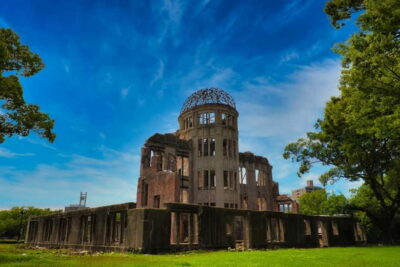
Hiroshima Historical Walking Tour – Why A-Bomb was Dropped
Read our review →
Hiroshima Peace (Heiwa) Walking Tour at World Heritage Sites
Read our review →
Hiroshima in a Nutshell: Morning Bike Adventure
Read our review →
Hiroshima City 4hr Private Walking Tour with Licensed Guide
Read our review →

Japanesel Archery Experience HIROSHIMA CASTLE SHARAKU
Read our review →Browse the lists this tour appears in