

Reviewed · HIROSHIMA TOURS
Okunoshima Rabbit Island Cycling Tour with Local Guide
Okunoshima is famous for rabbits, but the animals are only half the story. This small Seto Inland Sea island once vanished from maps because of its secret wartime poison gas production. On this two-hour bicycle tour, local guide Junko connects the cheerful rabbit colonies with the darker places hidden around the shore.
I like the mix of wildlife and serious history, and I like that a bicycle lets you cover the island without turning the visit into a long walk. The tour is capped at five people, so you can ask questions and keep a personal pace. The main drawback is that several ruins cannot be entered, and the experience depends on good weather and a minimum of two participants.
Key points to know before you book
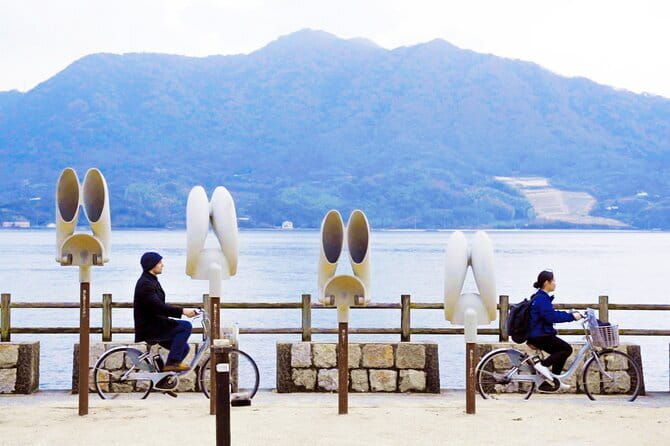
- Rabbits in the wild: You see Okunoshima’s famous rabbits around the shrine and other parts of the island, rather than visiting an enclosed animal attraction.
- A wartime story beneath the calm: The route includes a poison gas storage site, power plant ruins, and former cannon positions.
- Guide Junko adds human context: Her explanation focuses on the island’s difficult past as well as its peaceful present.
- Small group, easy format: The tour accepts no more than five people and lasts about two hours.
- Bicycle and insurance included: You pay $59.12 per person, while the 360-yen ferry from Tadanoumi is extra.
- Weather matters: A forecast calling for a 60 percent or higher chance of rain by noon the day before can cancel the tour without a cancellation fee.
Why Okunoshima is more than Rabbit Island
The first thing you notice about Okunoshima is likely to be the rabbits. They give the island a gentle, almost storybook feel. Yet the bicycle route keeps that charm from becoming the whole point of the visit.
Okunoshima was once left off maps because of its wartime role. Poison gas was secretly produced and stored here, and the military also placed artillery around the island. Today, the buildings are quiet ruins, and many can only be viewed from outside. That contrast gives the tour its weight: you move through a peaceful island while learning about a past that was anything but peaceful.
I think a guide matters here because the remains do not always explain themselves. A concrete shell, a sealed building, or a patch of broken wall can look like a random ruin if you do not know what it did. Junko has been praised for her passion for explaining the island’s difficult past, and that focus is central to the experience.
You should also expect the history to be handled as a serious part of the visit, not as a quick footnote between rabbit photos. If your ideal island outing is only feeding animals and taking pictures, this tour may feel heavier than expected. If you want to understand why Okunoshima is so unusual, that balance is a major reason to go.
More bike days around Hiroshima:
- Hiroshima in a Nutshell: Morning Bike Adventure
★ 5.0 · 524 reviews - Hiroshima 2hr Peace Cycling Tour with Local Guide
★ 5.0 · 321 reviews - Hiroshima: Peace Cycling Tour with Local Guide
★ 4.8 · 286 reviews
Cycling the four-kilometer island route

Okunoshima has a circumference of about four kilometers, making a bicycle a sensible way to see the main points in a short time. You are not signing up for a strenuous full-day ride. The route lasts around two hours, with stops for explanation and sightseeing.
The bicycle also helps you connect places that would otherwise feel scattered. You can move from a scenic coastal point to a shrine, then onward to wartime remains without spending the whole visit walking between them. Still, the tour requires a moderate level of fitness, and you should be comfortable riding a bicycle.
The group size is limited to five people. That is useful on an island where you may want to stop for a photograph, ask about a ruin, or pause near the rabbits. A very small group can also make the guide’s historical explanations easier to follow than a large organized excursion.
The tour begins and ends at Kyukamura Ohkunoshima, the hotel on the island. The ferry fee is not included, so you need to budget 360 yen for the crossing from Tadanoumi. Bicycle use, taxes, and travel insurance are included in the tour price.
Okunoshima Lighthouse and the Seto Inland Sea views
The lighthouse is the first listed stop, with about ten minutes set aside for it. You cannot enter the lighthouse, so this is an exterior viewing stop rather than a climb to the top.
That limitation is worth knowing before you arrive. The appeal is the setting and the view, not access inside the tower. From here, you can look out across the Seto Inland Sea and its many islands. The scenery gives you an immediate sense of Okunoshima’s position in a broad island region, rather than treating it as an isolated rabbit park.
Ten minutes is enough for a short explanation and photographs. I would not choose this tour solely for the lighthouse, but it provides a calm opening before the route turns toward the island’s more troubling past.
Okunoshima Island: rabbits, quiet roads, and an unusual mood
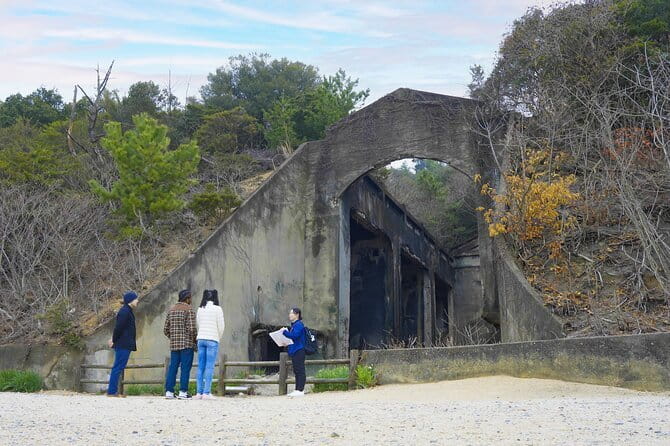
The main island portion takes about an hour, making it the longest part of the outing. This is where the bicycle format pays off. You get time to enjoy the setting, look for rabbits, and listen as the guide explains how the island changed from a secret military site to a place known for peace and wildlife.
The rabbits are wild. That distinction matters. You are not entering a controlled exhibit, and the animals may gather in some places more than others. Their presence adds a playful side to the ride, but you should not expect every rabbit to appear on command.
The island’s calm can feel surprising once you know what happened here. The trees, shore, and open views create a restful setting, while the guide’s account gives the same places a more serious meaning. I like that the tour does not force you to choose between beauty and history. It lets both exist together.
The main caution is that the route is not simply a rabbit encounter. The tour title may attract people looking for a light animal outing, but the actual experience is built around the island’s full story. Families and first-time visitors should prepare children for wartime subjects if they are joining.
A few more Hiroshima half-days to weigh up
- Peaceful Hiroshima & Miyajima UNESCO 1 Day Bus Tour
★ 5.0 · 5,309 reviews - Hiroshima: Hiroshima and Miyajima UNESCO Sites 1-Day Tour
★ 4.9 · 2,330 reviews - Hiroshima / Miyajima Full-day Private Tour with Government Licensed Guide
★ 5.0 · 1,298 reviews - Hiroshima Historical Walking Tour – Why A-Bomb was Dropped
★ 4.8 · 893 reviews
Okuno Shrine and rabbits in a sacred setting
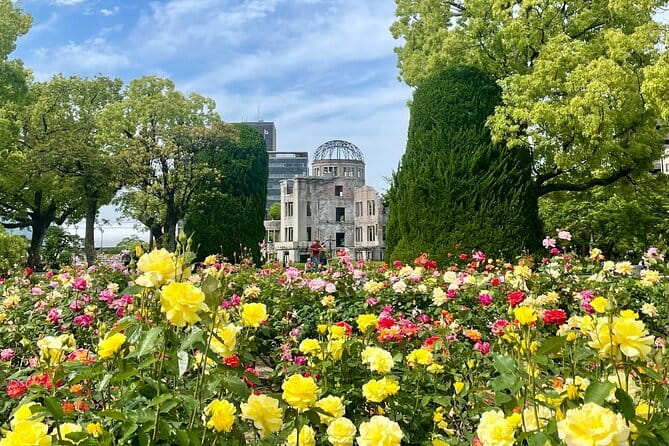
Okuno Shrine is the only shrine on the island, and it is also a place where rabbits gather. The stop lasts about ten minutes, so you get a brief look at the shrine and time to notice the animals around it.
This is one of the tour’s most memorable contrasts. A shrine usually suggests quiet reflection, while the rabbits bring movement and humor. Their presence helps explain why Okunoshima feels different from a standard historical site. You are not walking through empty ruins alone. Living creatures are part of the island’s current identity.
The shrine also gives the guide a natural place to explain the island’s present-day character. After hearing about military facilities, seeing rabbits around a religious site can feel like a clear change in tone. It does not erase the past, but it shows how the island is now understood and visited.
You should follow the guide’s lead around the animals and shrine. The supplied details do not promise feeding supplies or any particular rabbit interaction, so I would treat close encounters as a possibility rather than a guarantee.
Nagaura Poison Gas Storage Ruins
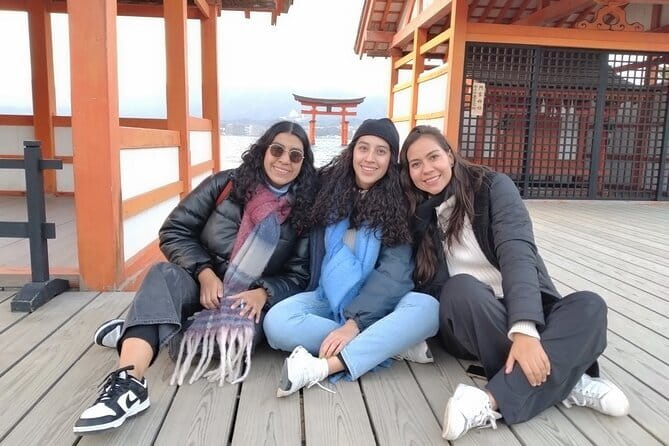
The Nagaura Poison Gas Storage Ruins are a ten-minute stop. The facility once stored tanks filled with poison gas, but you cannot enter for safety reasons. You view it from a short distance while the guide explains its purpose.
This is one of the most important stops because the building gives physical shape to a part of the island’s past that is easy to overlook. A written account can feel abstract. Seeing the storage site, even from outside, makes the story more direct.
The restricted access is not a flaw in the tour. It is a practical safety rule, and it also means you should keep your expectations realistic. You will not be exploring dark rooms or walking through the interior. The value comes from the explanation, the view of the remains, and the knowledge that this quiet island once held dangerous military materials.
If you want a tour built around dramatic access to abandoned buildings, this may disappoint you. If you value context and careful interpretation, the outside viewing still earns its place on the route.
Power Plant Ruins and the island’s industrial past

The power plant ruins take another ten minutes. The plant supported the secret production of poison gas on Okunoshima. Like the storage facility, it is closed for safety reasons and can only be viewed from nearby.
The power plant helps you understand that the wartime operation required more than one building. Production, storage, power, and defense all formed part of a larger system. The stop is short, but it adds an important piece to the story.
I would pay close attention to how Junko links this site with the storage ruins. Without that connection, you might see two old structures and move on. With it, the island becomes easier to read as a working military facility hidden inside a scenic island setting.
Again, there is no interior visit. The tour works best for people who enjoy learning what a place was used for, even when the remains are viewed from outside.
Northern Cannon Battery Remnants
The final listed stop is the Northern Cannon Battery Remnants, with about fifteen minutes to see them closely. Unlike the poison gas storage and power plant, this area can be approached more directly.
The battery shows that Okunoshima was also prepared for defense. The remains add another layer to the island’s wartime role and help round out the route. You are not only hearing about production and storage. You are also seeing evidence of military protection.
This stop may appeal to anyone interested in fortifications and old military sites. It is also a good place to ask questions because you have more time than at the ten-minute stops. The route does not present the cannon battery as a polished museum display. You are seeing remnants in their island setting, which can make the visit feel more immediate but less explanatory without the guide.
What the $59.12 price includes
At $59.12 per person, this is not the cheapest way to see Okunoshima. The ferry costs another 360 yen from Tadanoumi, and food and drinks are not included. You also need to arrange your own transport to the ferry departure area and allow time to reach the island meeting point.
The price makes more sense when you separate the guided service from the basic island visit. Your fee includes the bicycle, taxes, and travel insurance. More important, it gives you a local guide for a compact route that joins the rabbits, shrine, scenery, and wartime remains.
I see the value in this if you have only a short window on the island. You could explore independently, but you might miss the meaning of buildings that are closed or partly ruined. The small group, with a maximum of five people, is another advantage over a large group outing.
It is less compelling if you already plan to spend several hours exploring at your own pace and are comfortable researching the island’s past independently. The tour is priced for interpretation and convenience, not simply for bicycle rental.
Timing, weather, and the ferry connection
The tour is usually booked about 27 days ahead, which suggests you should not leave it until the last minute if your Hiroshima-area schedule is fixed. Confirmation arrives within 48 hours, subject to availability.
The weather policy is helpful for an outdoor activity. If the Japan Meteorological Agency forecasts a 60 percent or higher chance of rain by noon the day before the tour, it can be canceled without a cancellation fee. You may be offered another date or a full refund.
The tour also needs at least two participants to operate. If that minimum is not met, you can receive another date or experience, or a full refund. This is worth considering if Okunoshima is the main reason for your day’s plan.
The ferry from Tadanoumi costs 360 yen and is separate from the tour. Since the meeting and ending point is Kyukamura Ohkunoshima, make sure you understand the island-side meeting arrangement and leave enough time for the crossing. The experience ends in front of the hotel.
You can cancel for a full refund up to 24 hours before the start time. Changes or cancellations made within 24 hours are not accepted for a refund, except when the operator cancels because of weather or the minimum group size.
Who will enjoy this Okunoshima bicycle tour
I would recommend this tour to you if you want a compact introduction to Okunoshima and prefer learning from a local guide rather than piecing the island together alone. It suits people who enjoy scenic cycling, wildlife, military remains, and difficult historical subjects in the same outing.
It is also a good choice for first-time visitors who want to see the key locations without spending the day walking. The small group should make it easier to hear Junko’s explanations and ask about the island’s past.
You may want another plan if you dislike bicycles, have trouble with moderate physical activity, or want to enter abandoned buildings. The lighthouse, poison gas storage facility, and power plant are closed inside, and the tour does not include meals or drinks.
Families should decide based on the children’s age and interest. The rabbits are approachable in spirit, but the wartime story is serious. This is not only a cheerful animal stop.
Should you book the Okunoshima cycling tour?
Book it if you want the rabbits with the reason behind them. The strongest part of the experience is the way Junko’s guiding connects the island’s soft present with its painful past. You get a bicycle, a small group, several key sites, and a clear route in roughly two hours.
I would especially choose it if your time on Okunoshima is limited or if military history is important to you. I would skip it if you only want unstructured rabbit time, a long island walk, or access to interiors that are closed for safety.
At $59.12 plus the ferry, the tour is a fair buy for guided context and a bicycle-based visit. Just check the weather, allow for the ferry, and arrive ready for an experience that is both charming and sobering.
FAQ
How long does the Okunoshima cycling tour last?
The tour lasts approximately two hours.
What is the maximum group size?
The tour has a maximum of five participants.
Is this a private tour?
No. It is a shared group tour, so other participants may join the same departure.
How many people are required for the tour to operate?
A minimum of two participants is required.
Is the bicycle included?
Yes. Use of a bicycle is included in the tour price.
Is the ferry included?
No. The ferry from Tadanoumi to Okunoshima costs 360 yen and is not included.
Where does the tour start and finish?
The tour starts and ends at Kyukamura Ohkunoshima, located at 5476-4 Tadanoumicho, Takehara, Hiroshima.
Can you enter the lighthouse and wartime ruins?
No. The lighthouse, Nagaura Poison Gas Storage Ruins, and Power Plant Ruins are currently closed to entry. You view them from outside or nearby. The Northern Cannon Battery Remnants can be seen closely.
What happens if the weather is poor?
If the Japan Meteorological Agency forecasts a 60 percent or higher chance of rain by noon the day before, the tour may be canceled. You will be offered another date or a full refund.
Can you cancel for free?
Yes. You can cancel up to 24 hours before the start time for a full refund. Cancellations and changes made less than 24 hours before the start time are not accepted for a refund.
Just added around Hiroshima
- The Peace Memorial to Miyajima : Icons of Peace and Beauty★ 4.5 · 31 reviews
- Shore Excursion from Hiroshima Port : Private Tour in Hiroshima★ 5.0 · 17 reviews
- Hiroshima & Miyajima All-Inclusive Tour w/Licensed guide Pancho★ 5.0 · 54 reviews
- Hiroshima Saijo Sake Tasting Tour with visit to 7 Breweries★ 5.0 · 104 reviews
- Hiroshima Country Cycling: Explore Rural Life 1 HR from City★ 5.0 · 22 reviews
- Private Full Day Hiroshima Tour★ 4.5 · 29 reviews
- Hiroshima Private Tour with a Local – Highlights & Hidden Gems★ 4.5 · 24 reviews
- Cultural Activities :Kimono, tea ceremony, Calligraphy and Amulet★ 5.0 · 44 reviews
Hiroshima Tours, compared.

Peaceful Hiroshima & Miyajima UNESCO 1 Day Bus Tour
Read our review →
Hiroshima and Miyajima UNESCO Sites 1-Day Tour
Read our review →
Hiroshima Historical Walking Tour – Why A-Bomb was Dropped
Read our review →
Hiroshima Peace (Heiwa) Walking Tour at World Heritage Sites
Read our review →
Hiroshima in a Nutshell: Morning Bike Adventure
Read our review →
Hiroshima City 4hr Private Walking Tour with Licensed Guide
Read our review →

Japanesel Archery Experience HIROSHIMA CASTLE SHARAKU
Read our review →Browse the lists this tour appears in