
Reviewed · HIROSHIMA TOURS
All-inclusive Hiroshima Nighttime Food and Cultural Immersion
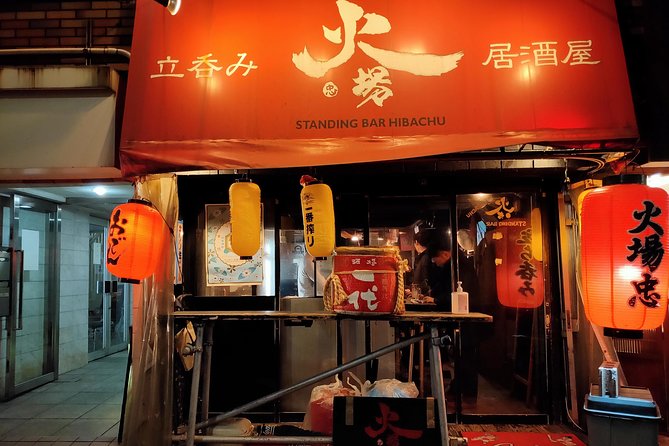
Hiroshima’s best evening story may begin at a tiny bar you would never enter alone. This three-hour outing moves through Hon Dori Shotengai and three local standing bars, where your guide chooses the food, explains the customs, and helps conversations with locals flow. I like the three-stop format and the fact that you get a full dinner, not just a few samples.
I also like the three included drinks, with non-alcoholic choices available, and the personal touch from guides such as Ken, Kensuke, Alex, Trevor, and Kevin. The main catch is simple: standing and eating is part of the experience. One stop may offer seating, but you should not book this expecting three conventional restaurant meals.
Key points to know before booking
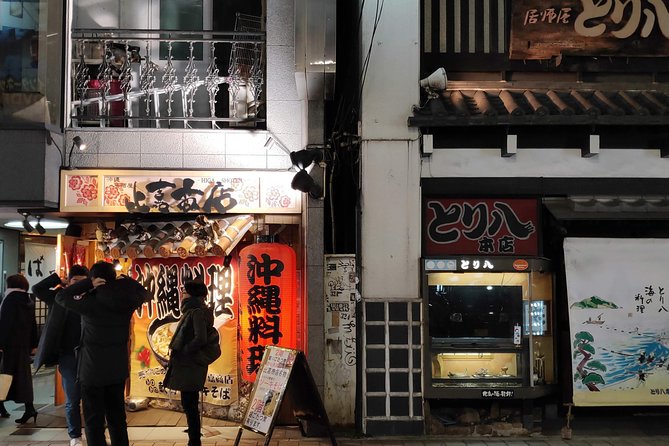
- Three local stops: The evening uses three different standing bars or small neighborhood restaurants around Hon Dori Shotengai.
- Food and drinks included: You receive three foods and three alcoholic or non-alcoholic drinks, enough for a full dinner.
- Guide-led ordering: Your guide selects suitable dishes and helps you enter places that can be hard to navigate without Japanese.
- A social evening: Locals may strike up conversations, with guides often helping translate and explain customs.
- Private for your group: Only your own party takes part, although group discounts may be available.
- Important comfort note: You may stand while eating, and the minimum drinking age in Japan is 20.
Three stops through Hiroshima’s Hon Dori district
The tour begins at 6:30 pm in front of Tiffany’s at 5-3 Shintenchi, in Naka Ward. That puts you close to Hiroshima’s Hon Dori Shotengai, a covered shopping district that serves as the evening’s main route.
This is a useful meeting area because it is near public transportation and easy to reach in central Hiroshima. The activity finishes back at the same meeting point, so you do not need to work out a late-night pickup at another part of the city.
Your guide leads you through the shopping arcade and nearby streets, stopping at three different standing bars or casual small restaurants. The exact venues and dishes can change, which is part of the point. You are not following a fixed restaurant script. Instead, the guide decides what suits the evening and what is available locally.
That flexibility can produce a more personal meal. Ken has taken groups to three unusual restaurants, while Alex and Trevor have led groups into places that many visitors would likely pass without noticing. The venues are casual, local, and often not the sort of places you would find by searching a standard sightseeing guide.
The drawback is that the word food stalls can create the wrong picture. This is not necessarily a row of outdoor stalls where you sit at a table. The route includes standing bars, sometimes called tachinomi, and one account makes clear that at least some eating may be done on your feet.
I see that as a feature if you want a slice of everyday evening life. If you need a chair for every course, or prefer a quiet, formal dinner, this is not the right match.
More food tours in Hiroshima:
- Hiroshima Izakaya Food and Drink Night Tour
★ 5.0 · 297 reviews - Hiroshima: Food and Culture Guided Walking Tour with Dinner
★ 4.9 · 212 reviews - Hiroshima Saijo Sake Tasting Tour with visit to 7 Breweries
★ 5.0 · 104 reviews
What you eat across the three bars
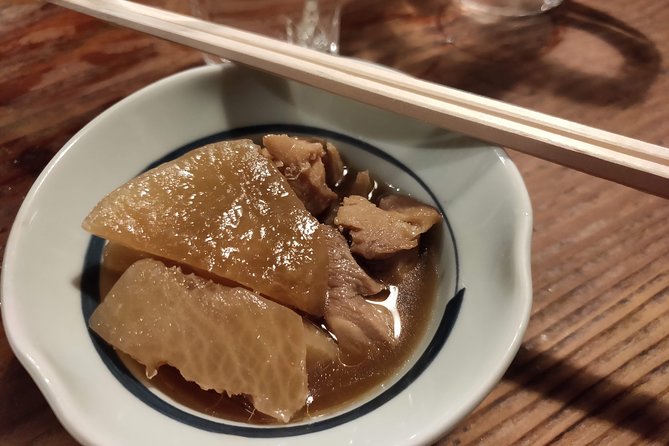
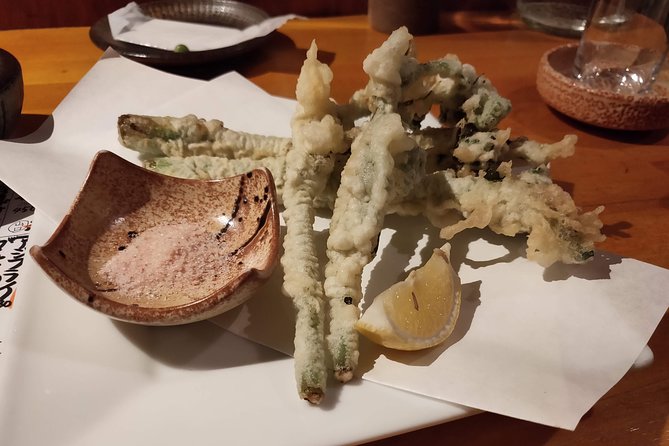
The meal is built around three foods and three drinks. That sounds modest until you consider the way the food is served. Several dishes may arrive at each stop, so the total can feel closer to three small meals than three tiny tastes.
The menu is not specified in advance. That is helpful if you want the guide to make the decisions, but less helpful if you need a precise food plan before booking. Past meals have included sushi, fried foods, soup, egg dishes, squid prepared in two ways, gansu, okonomiyaki, and other local fare.
Hiroshima-style okonomiyaki is a major draw. The dish is associated with the city and is typically built in layers, making it different from the mixed batter style found in Osaka. The tour does not promise okonomiyaki on every departure, but one group singled it out as a highlight.
You may also encounter gansu, a Hiroshima-area fried seafood cake, and red eyes, a drink that became a favorite discovery for one participant. These details show the real value of a guide-led food walk: you can try things you might not recognize on a menu, then learn what you are eating without turning the evening into a lecture.
The food is not aimed at fine dining. Think casual, generous, and local. One particularly negative experience described the food at two of the three stops as poor, so I would not book this expecting every plate to impress. The strongest pattern is variety and quantity rather than polished presentation.
Drinks are part of the plan, not an extra
Three drinks are included, and you can choose alcoholic or non-alcoholic options. For many people, that makes the price easier to understand because you are not paying for the tour and then adding a separate bar bill at every stop.
The evening can include beer, sake, or other local drinking choices, but the exact drinks are not guaranteed. One evening lasted longer because the group continued enjoying sake, though the scheduled activity itself is about three hours.
You do not need to drink alcohol to take part. Non-alcoholic drinks are included, which makes the outing workable for people who do not drink, younger participants, and anyone pacing themselves during a longer Japan trip.
The minimum drinking age in Japan is 20. All participants must be at least 13, so younger members of a family can join, but anyone under 20 cannot drink alcohol.
This is also where you should judge your own priorities. Most of the evening’s praise centers on the mix of food, drinks, and conversation. One disappointed participant felt the outing leaned too much toward drinking. If your main goal is a serious food study, you may find the bar setting less focused than a cooking class or dedicated restaurant tour.
Why the guide matters so much
Without a local guide, the biggest challenge is not finding food in Hiroshima. It is understanding where to go, how to order, what to choose, and how to behave in a very small neighborhood bar.
The guide handles those awkward first steps. You can enter a place without worrying about whether it welcomes visitors, order without guessing at the menu, and ask questions about food or local customs as you go.
Ken appears often in the strongest accounts, described as friendly, relaxed, and good at asking questions that bring a group together. Kensuke has received particular praise for handling an allergy without taking away from the meal. Alex has been valued for his personal approach and local restaurant choices, while Trevor has been praised for explaining food and customs.
Kevin is another named guide associated with izakaya visits and an easygoing evening. Guide assignments can vary, so you should not assume a specific person is guaranteed unless the booking details say so.
The guide also acts as a bridge between you and the people at the bars. One small bar became a memorable stop because the guide translated between the group and curious local patrons. That kind of exchange cannot be promised every night, but it is one of the more distinctive possibilities here.
You should expect conversation rather than a long formal history talk. The cultural side comes through in the places you visit, the ordering process, the food, and the way locals spend their evenings.
Same base, a completely different sort of day:
- Peaceful Hiroshima & Miyajima UNESCO 1 Day Bus Tour
★ 5.0 · 5,309 reviews - Hiroshima: Hiroshima and Miyajima UNESCO Sites 1-Day Tour
★ 4.9 · 2,330 reviews - Hiroshima / Miyajima Full-day Private Tour with Government Licensed Guide
★ 5.0 · 1,298 reviews - Hiroshima Historical Walking Tour – Why A-Bomb was Dropped
★ 4.8 · 893 reviews
A private evening with a flexible feel
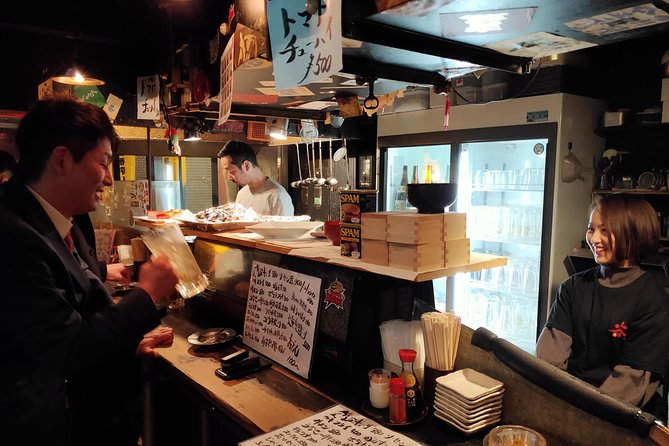
Although the activity is described as a private tour, only your own group participates. That gives you a better chance to ask questions and makes food choices easier, especially if someone in your party has dietary needs.
The group size can shape the mood. A couple may receive a very personal evening, while a family or larger party may have more energy at the bars. One family spanning grandparents, parents, and teenagers found that Alex kept everyone involved, which suggests the format can work across generations.
Dietary requirements can be accommodated if you tell the guide in advance. This is important, but the information does not specify every diet or allergy that can be handled, so provide clear details when booking rather than waiting until the first stop.
The private setup also reduces one common problem with food tours: spending the whole night negotiating with strangers over what to order. Your own group can discuss preferences with the guide, and the smaller setting makes it easier to adapt.
Still, flexibility has limits. You are visiting working local bars, not private dining rooms. Menus, seating, and dish choices can change with the venue, time, and availability.
Is $119 a fair price?
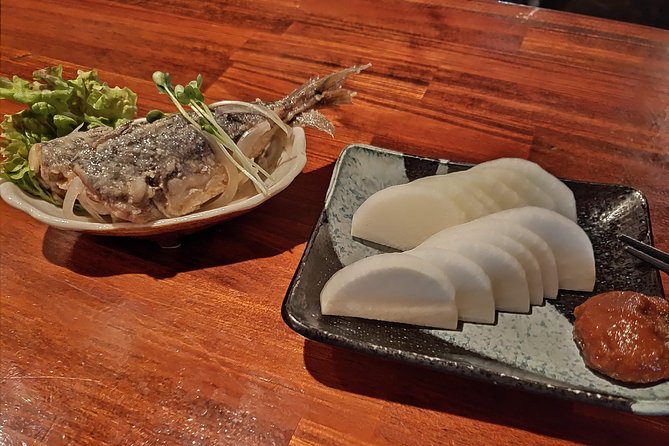
At $119 per person, this is not a cheap way to get dinner in Hiroshima. You can certainly eat for less at casual restaurants, especially if you are comfortable ordering on your own.
The value comes from the work around the meal. Your guide chooses three stops, leads you through the nighttime streets, selects dishes, includes three drinks, explains customs, and helps you cross the language gap. You are also paying for access to places you may not identify on your own.
The price looks stronger if you would otherwise spend the evening hesitating outside small bars or settling for familiar restaurants near major attractions. It is also attractive on a first night, when a local guide can help you understand the city’s food culture before you explore alone.
I would not call it a bargain for a light eater. The evening includes a whole dinner’s worth of food, and some people finish very full. If you do not drink and prefer a small meal, part of the package may be less useful.
Group discounts may improve the value for larger parties. Since the activity is private, the cost can make more sense when shared by a family or group that wants a dedicated guide rather than a large public outing.
The current score is 4.6 out of 5, with 92 percent recommending the experience. That is strong, but the low rating is worth taking seriously. Food quality can vary, and the alcohol-centered setting will not suit everyone.
Timing, meeting point, and comfort
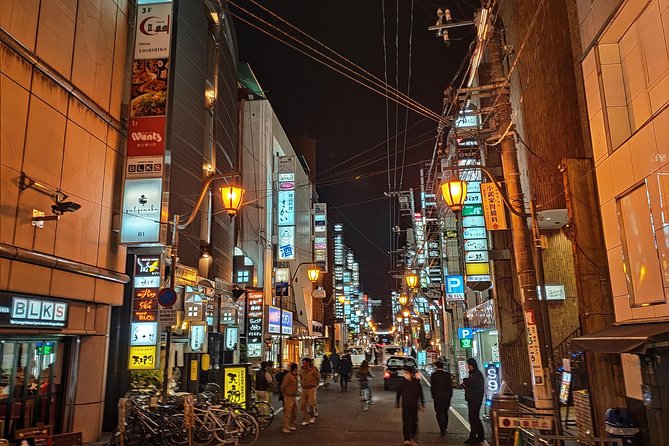
Plan on roughly three hours, beginning at 6:30 pm. The timing places you in Hiroshima after the daytime sightseeing rush and gives you a useful evening activity without taking up the entire night.
Meet in front of Tiffany’s at 5-3 Shintenchi, Naka Ward, Hiroshima 730-0034. The tour returns there at the end, which is convenient if you want to continue exploring the central area or return to your accommodation by public transportation.
Wear comfortable shoes. Even though the route is not described as a strenuous walk, you will move between several places and may spend time standing. The standing-bar format also means comfort depends partly on how long you are happy to remain on your feet.
This is a mobile-ticket activity, and confirmation is received when you book. You should still check the meeting instructions carefully on the day, especially if you are unfamiliar with central Hiroshima’s shopping streets.
Most people aged 13 and up can participate. The supplied information does not give detailed accessibility notes, so anyone who needs regular seating or has mobility concerns should ask the provider before booking.
Free cancellation is available if you cancel at least 24 hours before the local start time. Changes or cancellations inside that window are not accepted for a refund.
Who will enjoy this Hiroshima night out
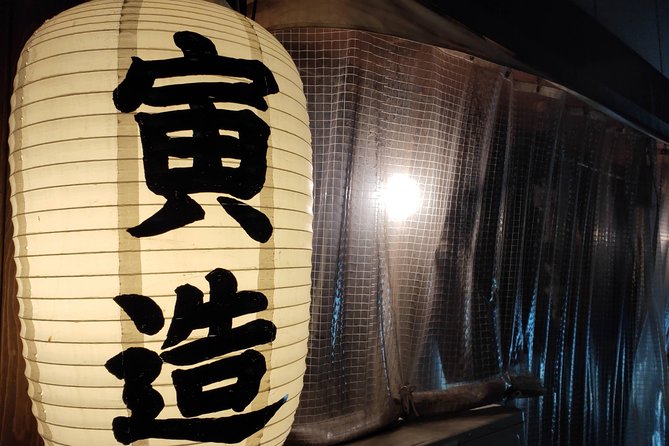
I would choose this for someone who wants food with a social side. You should be willing to let another person make some decisions, try dishes you may not recognize, and enter small local places without expecting a polished tourist setup.
It suits first-time visitors especially well. The guide handles the confusing parts of ordering and helps you get past the natural hesitation that comes with a tiny Japanese bar.
It also works well for couples, families, and private groups. A multigenerational party joined successfully, and the private format means you can keep the evening at your own pace within the three-hour plan.
Food-focused visitors should enjoy the range, but serious restaurant hunters may want more control over the menu. Likewise, people seeking a historical walking tour should know that culture here is explained through food, drink, neighborhood habits, and casual conversation rather than through a long sequence of monuments.
You should skip it if standing while eating is a dealbreaker, if you want guaranteed dishes, or if you dislike alcohol-centered settings. Non-alcoholic drinks are available, but the bars and social drinking culture remain central to the atmosphere.
Should you book the Hiroshima nighttime food tour?
Book it if you want a guided introduction to Hiroshima’s small local bars, a generous dinner spread across three stops, and the chance to meet people outside the usual sightseeing circuit. The guide support is the main reason to pay the premium, especially if you do not speak Japanese or feel unsure about entering small venues.
Before booking, accept three facts: the menu is flexible, some eating may be done standing, and the food quality can vary from stop to stop. If those conditions sound like part of the fun, this could be one of your most memorable evenings in Hiroshima.
FAQ
Where does the Hiroshima nighttime food tour begin?
It begins at 5-3 Shintenchi, Naka Ward, Hiroshima 730-0034, in front of Tiffany’s. The meeting time is 6:30 pm.
How long does the experience last?
The activity lasts about three hours and ends back at the original meeting point.
How many foods and drinks are included?
Three different foods and three alcoholic or non-alcoholic drinks are included. The meal is intended to provide a full dinner.
Will I have to stand while eating?
You may. The tour visits standing bars, and standing while eating is part of the experience at some stops. At least one stop may have seating, but seating at every venue is not promised.
Can dietary requirements be accommodated?
Yes. Dietary requirements can be accommodated if you tell your guide in advance. The guide may be able to adjust choices without removing you from the experience.
Can children join, and can everyone drink alcohol?
All participants must be at least 13 years old. The minimum drinking age in Japan is 20, and non-alcoholic drinks are available.
Just added around Hiroshima
- The Peace Memorial to Miyajima : Icons of Peace and Beauty★ 4.5 · 31 reviews
- Shore Excursion from Hiroshima Port : Private Tour in Hiroshima★ 5.0 · 17 reviews
- Hiroshima Saijo Sake Tasting Tour with visit to 7 Breweries★ 5.0 · 104 reviews
- Hiroshima & Miyajima All-Inclusive Tour w/Licensed guide Pancho★ 5.0 · 54 reviews
- Hiroshima Country Cycling: Explore Rural Life 1 HR from City★ 5.0 · 22 reviews
- Okunoshima Rabbit Island Cycling Tour with Local Guide★ 4.5 · 17 reviews
- Private Full Day Hiroshima Tour★ 4.5 · 29 reviews
- Hiroshima Private Tour with a Local – Highlights & Hidden Gems★ 4.5 · 24 reviews
Hiroshima Tours, compared.

Peaceful Hiroshima & Miyajima UNESCO 1 Day Bus Tour
Read our review →
Hiroshima and Miyajima UNESCO Sites 1-Day Tour
Read our review →
Hiroshima Historical Walking Tour – Why A-Bomb was Dropped
Read our review →
Hiroshima Peace (Heiwa) Walking Tour at World Heritage Sites
Read our review →
Hiroshima in a Nutshell: Morning Bike Adventure
Read our review →
Hiroshima City 4hr Private Walking Tour with Licensed Guide
Read our review →

Japanesel Archery Experience HIROSHIMA CASTLE SHARAKU
Read our review →Browse the lists this tour appears in