
Reviewed · KYOTO TOURS
From Kyoto: Nara History Guided Half Day Bus Tour with Lunch
Nara’s great draw is wonderfully simple: a 15-meter Buddha, ancient shrines, and deer wandering through the park as if they own the place. This six-hour trip from Kyoto gives you the essential sights without asking you to plan several train connections or decode temple customs alone.
I like the English-speaking guides, who explain the rituals and history in a clear, friendly way. I also like the included Japanese-style lunch, which turns the outing into more than a quick temple dash. The main catch is the pace: you will walk a lot, and the schedule leaves little room for wandering off on your own.
Key points
- See Todaiji’s Great Buddha: Enter one of Nara’s major temples and view its huge bronze Buddha inside a famous wooden hall.
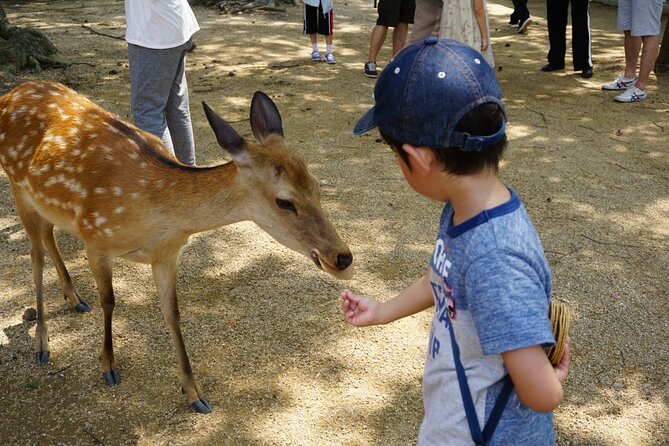
- Feed deer in Nara Park: The deer are charming, familiar with people, and very much part of the Nara experience.
- Visit Kasuga Taisha: Worship at the main sanctuary of this important shrine, with a guide to explain proper customs.
- Lunch is included: A Japanese-style meal is served after the sightseeing, with a souvenir shop nearby.
- Transport is handled for you: The trip may use a coach, train, or both, depending on the day.
- Good value at $77: Temple admission, guide service, transport, and lunch are covered, though drinks cost extra.
Why this half-day Nara trip works from Kyoto
Nara is close enough to visit from Kyoto, but the city’s key sights are spread across a broad park area. This tour removes much of the guesswork. You meet near Kyoto Station, ride south, follow a clear route through the major sights, eat lunch, and return to Kyoto in roughly six hours.
That structure suits you if this is your first time in Nara or if your Kyoto schedule is tight. You get the major landmarks in one morning and afternoon without giving up a full day. The tradeoff is that you are following the group’s timetable rather than setting your own.
The listed price is $77 per person. I consider that fair value because it covers the air-conditioned transport, an English guide, admission to Todaiji Temple, and lunch. If you were arranging everything yourself, the transportation and food would still cost money, and you would need to manage the route between Nara’s sights.
The tour has a listed rating of 4.8 out of 5 from 114 bookings, and transport received a perfect score from 91 percent of participants. The most consistent praise goes to the guides. Yuko, Tammy, Emiko, Aki, Sachi, Kato, and Mana are among the guides specifically named in the feedback, with special attention given to their explanations, patience, and ability to keep the day organized.
More lunch stops in Kyoto:
- Bike Tour Exploring North Kyoto plus Lunch
★ 5.0 · 1,087 reviews - Osaka/Kyoto: Arashiyama, Nara & Fushimi Inari Shrine w/Lunch
★ 4.4 · 754 reviews - Kyoto Zen Meditation & Garden Tour at a Zen Temple with Lunch
★ 5.0 · 441 reviews
Meeting near Kyoto Station
The meeting point is the Kyoto Station Hachijo Exit Tourist Bus Parking Area, in front of Kyoto Avanti. The more specific gathering area is Kyoto Station Hachijo Entrance Square Sunken Garden.
Kyoto Station is large, so do not leave this detail until the last minute. The final meeting information is sent by email seven days before the activity date. Give yourself time to reach the Hachijo side of the station, especially if you are arriving on foot from a hotel near the north side or transferring from another train.
The group then travels toward Nara for about 75 minutes. The transport may be a bus, a train, or a combination of both. One recent route used the train from Kyoto to Kintetsu-Nara, followed by a smaller private bus around Nara. The exact arrangement can vary, so you should think of this as a guided transportation day rather than a fixed coach-only ride.
An air-conditioned vehicle matters in Nara’s warmer months, particularly because much of the sightseeing takes place outdoors. The ride also gives you a useful break before the walking begins.
Kasuga Taisha and the manners of a Japanese shrine
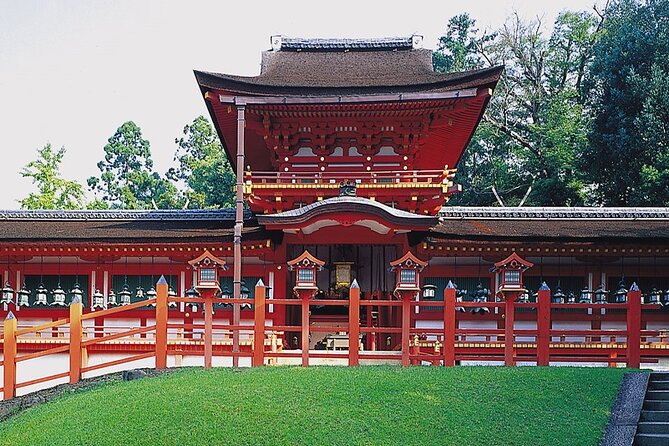
Kasuga Taisha is the first major stop, with about 45 minutes for a guided visit. This shrine is closely tied to ancient Nara and is one of the city’s most important religious sites.
You visit the main sanctuary for general worship. The guide can explain shrine customs and help you understand the difference between visiting a Shinto shrine and a Buddhist temple. That context is valuable because the buildings, gestures, and religious symbols can otherwise blur together during a fast sightseeing trip.
The tour does not include special worship at the main sanctuary, entry to the Kasugataisha Museum, or the Botanical Garden. If you hoped to spend a long time studying the shrine grounds or visiting its extra facilities, this stop may feel brief.
Still, 45 minutes is enough for a focused introduction. I like the order of the itinerary here. You begin with a shrine, then move to Todaiji Temple, giving you a useful comparison between two major Japanese religious traditions before lunch.
Todaiji Temple and the Great Buddha
After Kasuga Taisha, you walk for about 15 minutes to Todaiji Temple. Comfortable shoes are important from the start, since this short transfer is only one part of a day with substantial walking.
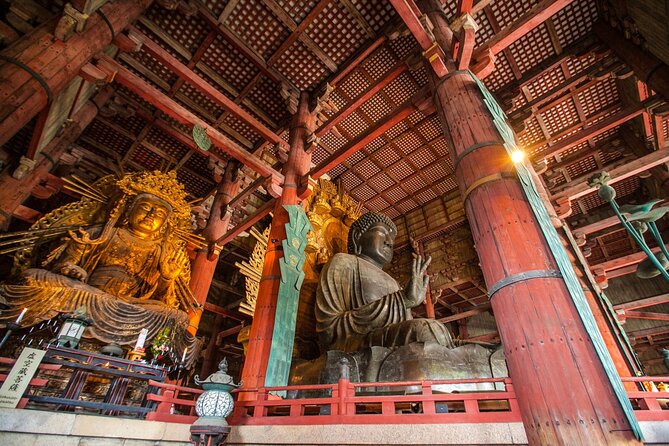
Todaiji is the emotional center of the outing. Its Great Buddha is about 15 meters tall and ranks among Nara’s most famous sights. The temple hall itself is also famed for its immense wooden construction. You enter the temple with the group, view the Buddha, and receive around 45 minutes of guided explanation.
The scale is the point. Even if you have visited large temples elsewhere in Japan, the size of the statue and hall gives Todaiji a different weight. A good guide helps you notice more than the spectacle, including the religious role of the temple and the customs that shape a visit.
The included entrance fee is a useful part of the price. You do not have to stop at a ticket counter or make a separate decision about entering the temple. That keeps the group moving and makes the half-day schedule possible.
Construction can affect what you see. Some buildings or Buddha statues may look different, or certain areas may be unavailable because of work. This is not a reason to avoid the tour, but it is worth keeping expectations flexible.
More history-led days in Kyoto:
- Kyoto Gion: 2-Hour Geisha Culture & History Walking Tour
★ 5.0 · 1,186 reviews - Kyoto Gion Historical Walking Tour
★ 5.0 · 188 reviews - Historical Kyoto E-Bike Tour
★ 5.0 · 181 reviews - Kyoto: Nijo Castle World Heritage Guided Tour with Admission
★ 5.0 · 128 reviews
Nara Park and its famous deer

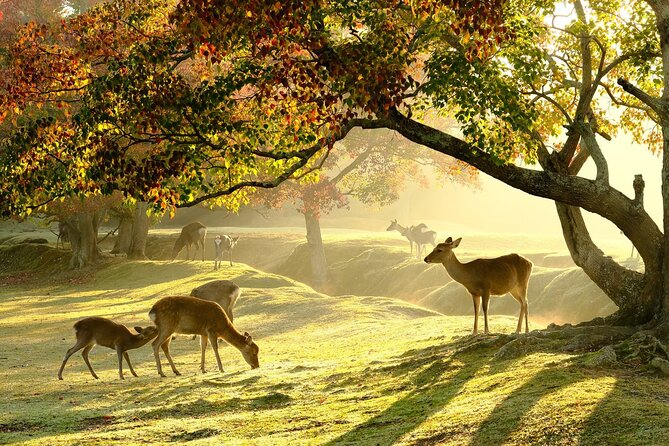
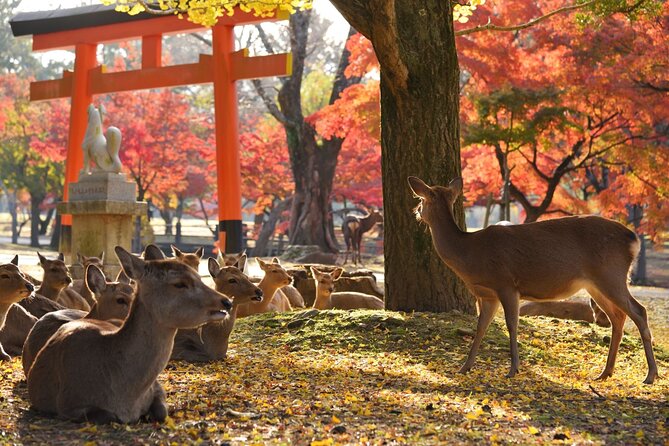
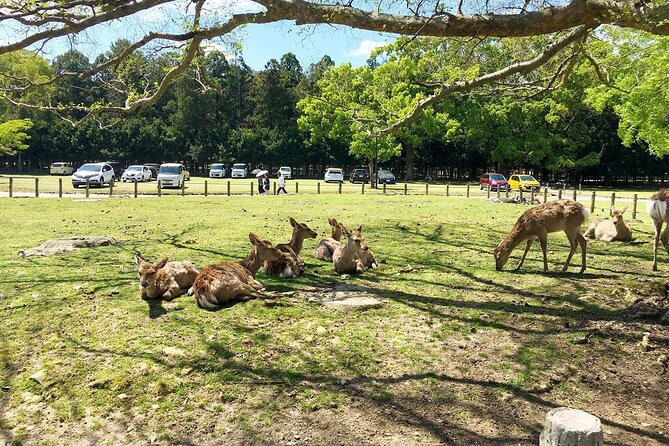
Nara Park gets about 30 minutes of guided time. This is the least formal stop and often the most playful. Deer roam through the park, approach people, and have become one of Nara’s defining sights.
You can enjoy watching them and, when appropriate, feeding them. The deer are friendly and accustomed to people, but they are still animals. Keep food and belongings under control, and follow your guide’s advice. The appeal is their closeness, not treating them like tame pets.
Thirty minutes is enough for photographs and a short encounter, but it is not a long free period. If you want to sit quietly in the park, seek out every deer, or explore farther from the main route, you may prefer an independent visit with more time.
The early timing can help. Several people found the morning visit quieter than expected, including one outing affected by rain and another during a typhoon. Of course, weather and crowd levels change, but beginning the Nara visit in the morning gives you a reasonable chance to see the main sights before the day becomes more crowded.
Rain does not necessarily ruin this part of the trip. One guide, Mana, was praised for keeping a small group interested during wet weather, and the park can feel calmer when fewer people are outside. Bring suitable rain protection if the forecast is poor, since much of the route is outdoors.
A Japanese-style lunch after the temples
Lunch follows the sightseeing, with about 50 minutes at a restaurant in Nara. A Japanese-style meal is included, but beverages are not, so budget separately for drinks.
The meal adds useful rhythm to the day. After the shrine, temple, and park, you get a proper pause rather than eating hurriedly between stops. One family found the meal workable for a child, and chicken could be requested instead of sashimi when arranged during booking.
You should mention allergies and dietary restrictions when you reserve. Menu changes cannot be made on the day, so this is the time to communicate clearly. Do not assume the restaurant can improvise a replacement after you arrive.
The restaurant also has a shop selling local souvenirs. That is convenient if you want a small reminder of Nara without spending time searching for a shop elsewhere. It is also a limitation if shopping is important to you, because the schedule provides only a little time after lunch.
The lunch is one reason the $77 price feels reasonable. You receive a sit-down meal and a break built into the schedule, rather than paying for a tour that only moves from monument to monument.
How the six-hour schedule feels
The basic timing is:
- About 75 minutes from Kyoto toward Nara
- About 45 minutes at Kasuga Taisha
- About 15 minutes walking to Todaiji
- About 45 minutes inside Todaiji
- About 30 minutes in Nara Park
- About 30 minutes by transport to lunch
- About 50 minutes for lunch
- About one hour back to Kyoto
That leaves little unused time, which is exactly why the trip works as a half-day outing. You see the major points without a full day away from Kyoto.
The schedule may feel fast at Todaiji and Nara Park. You are not getting an open-ended cultural day. You are getting a guided introduction with transportation and lunch arranged. I would choose this format if you want orientation and efficiency. I would choose an independent day if you already know Nara well or want to explore museums, gardens, shopping streets, or smaller temples.
Group size can vary. Some departures have been small enough to feel almost private, including a group of five and another with only a few participants. Other days will be standard group tours. The company cannot add personal requests or alter the route, even if your party is large or the group is small.
What the guides add
The guide is the difference between simply seeing Nara and understanding what you are seeing. Tammy was praised for explaining Japanese customs at shrines and temples, while Emiko answered questions and made the transportation and site visits easy to follow. Yuko was noted for patience and careful organization.
Guides may have different personalities and backgrounds. Mana, for example, had worked as a history teacher before guiding, while Kato was described as relaxed and well informed during a quieter-weather departure. You cannot select a particular guide, but the named examples suggest that the human side of this tour is a major strength.
The service is in English. That matters most at Kasuga Taisha and Todaiji, where a few explanations about worship, symbolism, and the buildings can make the visit feel much more substantial.
Walking, weather, and practical limits
This is not a good choice if you have trouble walking. The route includes the shrine grounds, the walk to Todaiji, the temple complex, Nara Park, and movement between transport stops. Wheelchair access is not available, and wheelchair users should not book this activity.
Large luggage is not allowed. Bring only what you need for the day, such as a small bag, water, weather protection, and comfortable shoes. Pets are also not permitted.
The tour runs in different seasons, and conditions can change the feel of Nara. Summer can be hot, while rain may slow the outdoor sections. The air-conditioned transport helps, but it does not remove the need to prepare for weather.
The departure also depends on a minimum of four participants. If that number is not reached 14 days before the scheduled date, the tour may be cancelled. The cancellation policy allows a full refund when you cancel at least 24 hours ahead, and you can reserve now and pay later, which gives you some flexibility while arranging a Kyoto itinerary.
Who should book this Nara tour
I would recommend it to a first-time visitor who wants to see Nara’s essential sights without building the day from scratch. Families may like the deer, the short travel window, and the included lunch, though younger children still need to manage the walking and temple pace.
It also suits solo visitors and couples who prefer a guide for cultural context. You will get more from Kasuga Taisha and Todaiji when someone explains what to do and why the places matter.
I would hesitate if you need a wheelchair-accessible route, want a private itinerary, dislike group schedules, or plan to spend hours shopping and exploring side streets. The tour is also less suitable for anyone carrying large luggage between Kyoto and Nara.
Should you book it?
Book this tour if you want Nara’s three headline experiences in one organized half-day: Kasuga Taisha, Todaiji’s Great Buddha, and the deer of Nara Park. The included lunch, temple admission, and English guide make the $77 price sensible, especially when your Kyoto stay is short.
Skip it only if you need a slower visit or a fully flexible route. For most first visits, the tour offers a practical balance: enough time to understand Nara, enough structure to avoid logistical headaches, and just enough free space to enjoy the deer and take home a souvenir.
FAQ
How long does the Nara tour last?
The tour lasts six hours, including transportation from Kyoto, visits to the Nara sights, lunch, and the return journey to Kyoto.
What is the price per person?
The price is $77 per person.
What language is the tour conducted in?
The live tour guide speaks English.
What does the tour include?
It includes air-conditioned transportation, an English-speaking guide, the entrance fee for Todaiji Temple, and a Japanese-style lunch.
Are drinks included with lunch?
No. Beverages are not included.
Where is the meeting point in Kyoto?
The meeting point is the Kyoto Station Hachijo Exit Tourist Bus Parking Area, in front of Kyoto Avanti. The gathering area is also identified as Kyoto Station Hachijo Entrance Square Sunken Garden.
How do I know the final meeting location?
The activity provider sends participants the meeting information by email seven days before the activity date.
Can the tour use a train instead of a bus?
Yes. The tour may use a bus, a train, or a combination of both, depending on the departure.
Is the tour suitable for wheelchair users?
No. The tour is not wheelchair accessible and involves substantial walking. Wheelchair users should not book it.
Just added around Kyoto
- Kyoto: Zen Meditation at a Private Temple with a Monk★ 5.0 · 25 reviews
- Kyoto: Gion Geisha District & Sake-in-Hand Walking Tour★ 5.0 · 37 reviews
- Private Pewter Sake Cup Experience with a Kyoto Artisan★ 5.0 · 31 reviews
- Your Private Vacation Photography Session In Kyoto★ 5.0 · 110 reviews
- Private Guided Traditional Buddhist Cooking in Japan★ 5.0 · 16 reviews
- Kyoto Wagashi(Japanese sweets) Cooking Class near Fushimiinari★ 5.0 · 60 reviews
- Traditional Japanese Music show & Experience Tour in Kyoto★ 5.0 · 57 reviews
- Kyoto:Family-Friendly Kimono & Yukata Experience at WARGO★ 5.0 · 147 reviews
Kyoto Tours, compared.
Fushimi Inari, Kinkakuji, Bamboo Grove 1 Day Bus Tour
Read our review →
Tea Ceremony in a Traditional Tea House in Kiyomizu
Read our review →
Kyoto Geisha Walking Tour: Gion District & Hidden Gems
Read our review →
Gion Magical Night Walking Tour with Geisha Trivia
Read our review →
Gion Geisha District Walking Tour – Stories of Geisha
Read our review →Browse the lists this tour appears in