
Reviewed · TOKYO TOURS
Tokyo: Night Cooking Class: 5 Home-Cooked Japanese Dishes
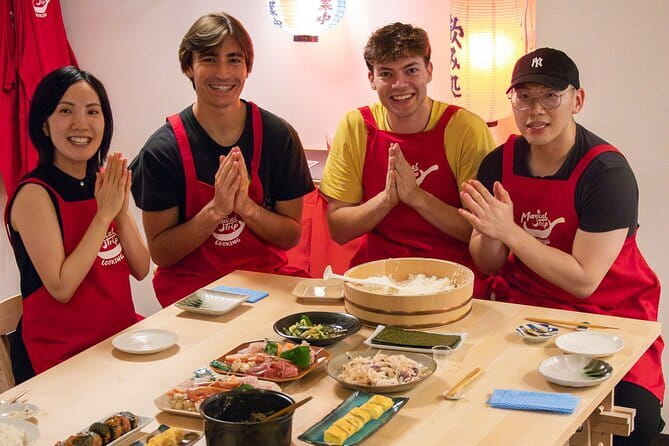
Japanese home drinking culture is the heart of this three-hour evening class. You cook several small dishes, pour sake or beer, and learn how food is meant to support a Japanese nomikai, or social drinking gathering. I especially like the small six-person limit and the practical recipes, which use ingredients you can find outside Japan. I also like that the class is not just about sushi: wagyu steak, tamagoyaki, tempura, pickles, and miso eggplant give you a wider view of everyday Japanese cooking.
The main thing to check before booking is the age and dietary policy. The activity says participants can be six or older, but also lists children under 12 as unsuitable, with knife and hot-stove work limited to those aged 12 and above. Vegetarians can be accommodated, but vegan and gluten-free diets cannot, and allergy-free preparation is not guaranteed.
Key points to know before booking
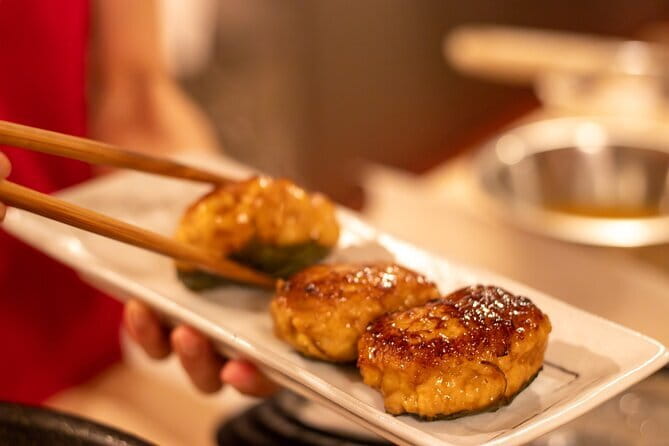
- Cook five home-style dishes: Prepare a sushi hand roll, wagyu or tofu steak, Japanese rolled egg, grilled eggplant with miso, plus other izakaya-style bites such as skewers, tempura, or pickles.
- Pair food with three drinks: Choose alcoholic or soft drinks, with sake and beer available only to participants aged 20 and above.
- Small English-speaking class: The group is limited to six people, and guides may include Alice, Masae, or Fuji.
- Recipes go home with you: The dishes use ingredients that are practical to find in your own country.
- Meet at Iriya Station: Find the FamilyMart beside the Gindako takoyaki shop and Doutor Coffee near Exit 2.
- Plan for dietary limits: Vegetarian cooking is possible, but the class is not suitable for vegan or gluten-free diets.
Why this Tokyo cooking class feels different
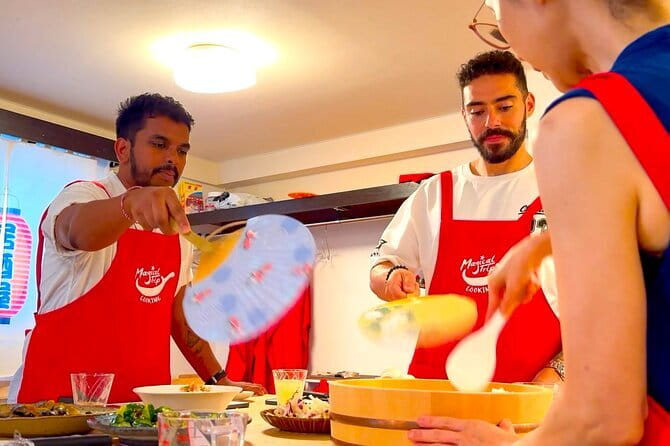
Many Japanese cooking classes focus on one famous dish. This one takes a broader route. You prepare a table of small plates designed to be eaten with drinks, much like an evening at an izakaya, the casual Japanese pub where people order several dishes for the table rather than one large main course.
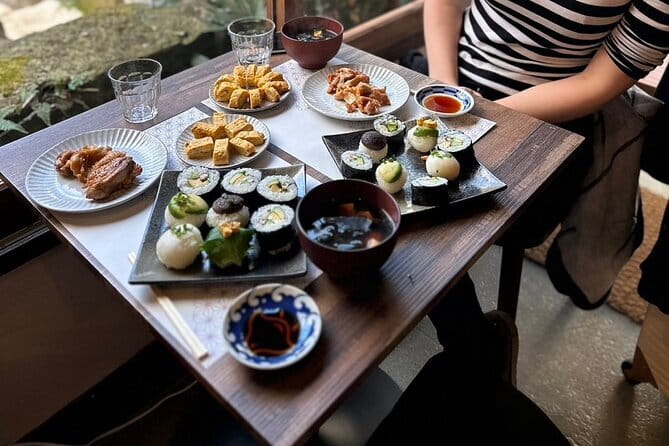
That format matters because it shows you how Japanese food works in a social setting. A rolled egg may be sweet and soft, eggplant can take on a deep miso flavor, and a small steak or skewer gives the meal a savory anchor. You are not simply learning a recipe. You are learning how several modest dishes create a relaxed evening together.
The class is held at night, which fits the subject well. The cooking, tasting, and conversation are meant to feel like a home drinking party rather than a formal daytime lesson. Three cans of alcoholic or soft drinks are included, so the price covers more than instruction and ingredients.
The class has a maximum of six participants. That is a useful number for a hands-on lesson because you should have room to work while still meeting other people. A private session may occur if only a few spots are booked, but a private class is not guaranteed.
More cooking classes in Tokyo:
- Ramen & Gyoza Cooking Class in Tokyo with Local Supermarket Visit
★ 5.0 · 823 reviews - Tokyo: Easy Ramen Cooking Experience in Kabukicho, Shinjuku
★ 4.6 · 321 reviews - Ramen and Sushi Cooking Class with Sake Pairing Set in Tokyo
★ 5.0 · 291 reviews
Your evening begins at Iriya Station
The meeting point is in front of the FamilyMart beside the Gindako shop near Iriya Station Exit 2. This detail deserves attention because there are two FamilyMart stores at Iriya Station. Use the Gindako takoyaki shop and Doutor Coffee as your landmarks, not just the convenience store name.
There is no hotel pickup or drop-off. You need to reach Iriya Station on your own and arrive at the correct storefront. Build in a few extra minutes if you are unfamiliar with Tokyo station exits, since a wrong FamilyMart can put you at the wrong end of the meeting area.
From there, your English-speaking guide leads the class. Alice, Masae, and Fuji are among the guides associated with this experience. The guide is an important part of the evening because the lesson includes more than cooking steps. You will also hear about Japanese home meals, drinking customs, ingredients, and the role of small plates in a social gathering.
One particularly appealing variation is a visit to a local supermarket before cooking. That has been part of some sessions with Masae, but it is not promised for every booking. If it happens, you get a useful look at ordinary Japanese ingredients before they are turned into dinner.
The cooking menu, from hand rolls to miso eggplant
The exact order can vary, but the included hands-on dishes give you a good sense of the meal.
Sushi hand rolls
Hand-rolled sushi is a friendly starting point because it is less rigid than making perfectly shaped nigiri. You assemble the components yourself and learn how a simple sheet of seaweed, rice, and filling becomes a casual meal.
This is also a practical dish to take home as a party idea. You can set out ingredients and let people build their own rolls, which fits the social spirit of an izakaya-style night. The activity description does not specify every filling, so do not book this expecting a particular fish or seafood selection.
More hands-on workshops in Tokyo:
- Sushi Making Tokyo Roll and Authentic Japanese Sushi Class
★ 5.0 · 3,971 reviews - Tokyo: Roll and Authentic Sushi Making Class in Asakusa
★ 4.9 · 1,957 reviews - Tokyo Shinjuku Chopsticks Making Class
★ 5.0 · 1,763 reviews - Tokyo: Sushi Making Class in a Happi Coat near a Famous Spot
★ 4.9 · 1,377 reviews
Wagyu or tofu steak
The steak course adds a rich, savory dish to the menu. You may prepare wagyu, or tofu as the vegetarian alternative. This is one of the better features for people who want something beyond standard sushi.
The tofu option makes the class more useful for vegetarians, since it is not treated as an afterthought. Still, vegetarian participants should make their needs clear in advance. The class can arrange vegetarian ingredients and cooking steps, but it cannot promise an allergy-free kitchen.
Japanese-style rolled egg
Japanese rolled omelette, or tamagoyaki, is a small dish that rewards technique. The egg is cooked in layers and rolled into a neat shape. It looks simple, but the timing and handling matter.
For a first-time cook, this is the kind of recipe that makes a class worthwhile. You get a dish that is recognizably Japanese, yet still manageable at home. The flavor profile can be quite different from a Western omelette because Japanese versions often have a gentle sweet-savory balance.
Grilled eggplant with miso sauce
Eggplant with miso brings a warm, soft vegetable dish to the table. Grilling gives the eggplant a smoky quality, while miso adds salt and depth. It is a useful reminder that Japanese home cooking is not limited to raw seafood and rice.
This course should appeal to vegetarians and to anyone who wants a vegetable recipe with strong flavor. It also pairs naturally with a drink, which is the point of the menu: each small plate is meant to be enjoyed alongside something to sip.
Skewers, tempura, pickles, and other small plates
The class also teaches recipes for savory skewers, crisp tempura, tangy pickles, and other foods suited to an evening of casual eating. The precise selection may depend on the session, so think of these as part of the cooking style rather than a guaranteed fifth named dish.
This variety is the best reason to choose the class over a single-dish workshop. You leave with several techniques: frying, grilling, rolling, seasoning, and assembling. You also learn which drinks work best with different flavors instead of simply being handed a beverage.
What you learn about Japanese drinking culture
The food is only half the lesson. The class explains how Japanese home drinking gatherings work and why small dishes are a natural match for beer, sake, and other drinks.
A nomikai is a social drinking occasion, often centered on conversation and shared food. The meal is not necessarily served in a strict sequence. Several plates can appear together, and people can continue eating, sipping, and talking at their own pace.
That makes the class useful for understanding izakaya menus. When you enter a Japanese pub, you may see grilled items, fried food, vegetables, tofu, pickles, and rice dishes listed separately. Here, you learn how those categories fit together on a table.
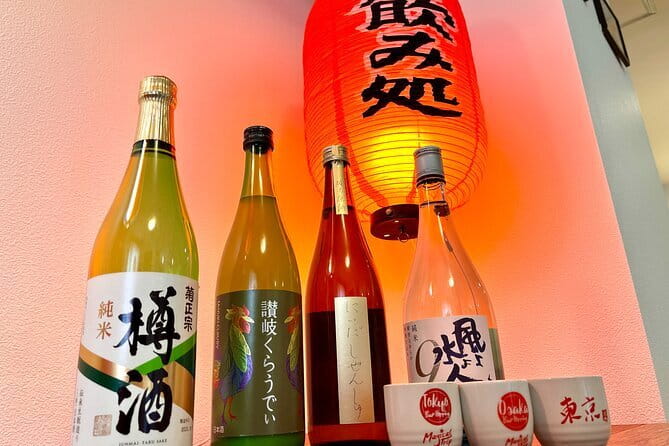
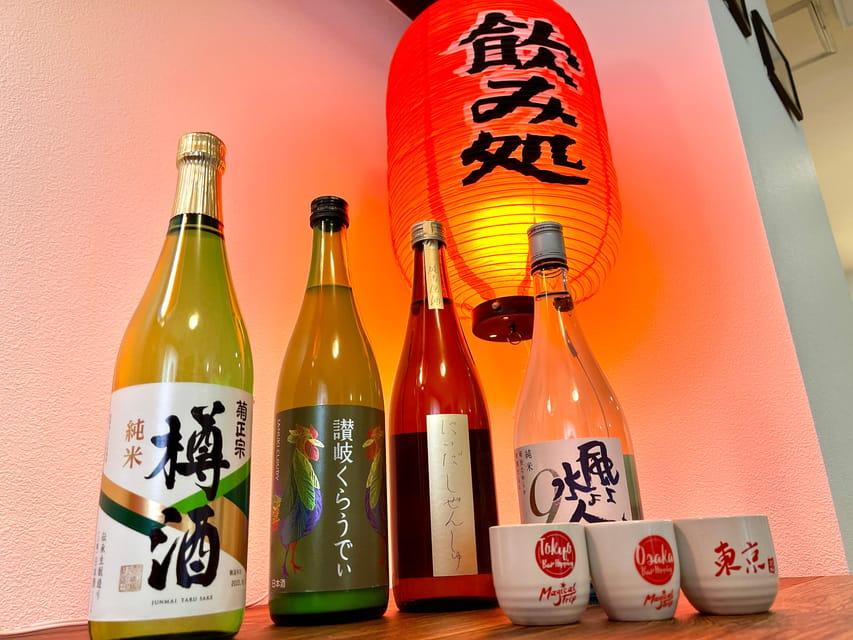
Three cans of alcoholic or soft drinks are included. Participants aged 20 and above can taste alcoholic drinks under Japanese law. Anyone younger than 20 receives soft drinks instead. The class does not require you to drink alcohol, so people interested mainly in cooking can still take part.
The pairing lesson is a real benefit for sake and beer fans. You can compare how a drink works with salty tempura, sweet-savory egg, miso-coated vegetables, or a richer meat dish. The information provided does not promise a formal tasting of many varieties, so expect practical pairing guidance rather than a specialist sake seminar.
How the class works for beginners
You do not need advanced cooking skills. The class is designed for complete beginners as well as experienced home cooks, and the small group format should make it easier to ask questions.
The recipes are chosen with home use in mind. Ingredients are described as readily available in your own country, which makes the class more valuable after your vacation. You are not learning a dish that depends on one hard-to-find Tokyo ingredient and then leaving it behind.
You also receive recipes to take home. That turns the evening into something you can repeat for friends or family. The recipes may be especially useful for hosting a Japanese-style party, since many of the dishes can be served in small portions with drinks.
The guide’s teaching style can shape the evening. Alice has led classes described as fun and well organized, Masae has combined cooking with a supermarket visit and cultural explanation, and Fuji has taught both as a guide and cooking instructor. Since guides are assigned by the provider, you should not assume a specific person will lead your session unless confirmed at booking.
Who will enjoy this most
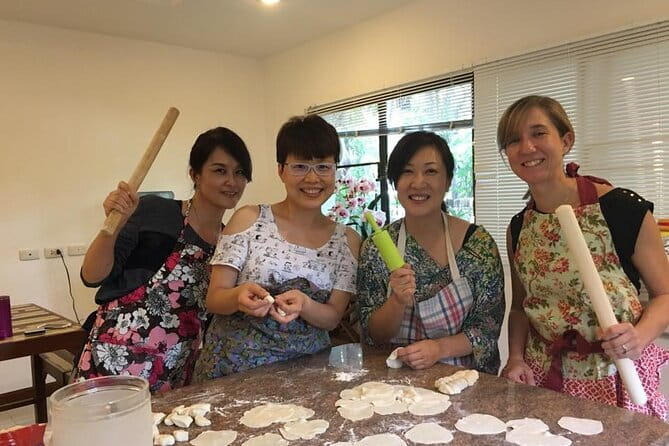
I would choose this class for a couple or a solo participant who wants a social evening with a clear local focus. The six-person limit gives solo participants a reasonable chance to meet others without the class becoming a large demonstration.
It also suits friends who want an activity more involving than a restaurant meal. You cook together, sit down with drinks, and have recipes to use later. For people already interested in sake, Japanese beer, or izakaya food, the drinking-culture angle adds useful context.
Families need to read the age rules carefully. The information says children from age six can join, but it also says the activity is not suitable for children under 12. Knife and hot cooking steps are restricted to those aged 12 and above under a parent or guardian’s supervision. Because those statements do not fully match, families with younger children should confirm the current policy before paying.
Pregnant participants are listed as unsuitable. The activity also includes kitchen work with heat and knives, so anyone who needs special physical accommodations should check carefully before booking.
Vegetarian, allergy, and access considerations
Vegetarians are welcome, and the cooking process can be adjusted with vegetarian ingredients. The tofu steak is the clearest example of this approach.
The class is not available for vegans or people requiring a gluten-free diet. It also cannot guarantee an allergy-free meal because the food is prepared in kitchens that do not belong to MagicalTrip. Substitutions may not be possible at every stage, though the provider says it will try to compensate at other stops.
If you have a serious allergy, ask specific questions before booking rather than relying on a general dietary note. Shared kitchens and prepared ingredients can make cross-contact difficult to control.
Some parts of the experience are not accessible to wheelchairs or strollers. No hotel transportation is included, and the meeting point is at a station exit. You should check the route and venue access before committing if mobility is a concern.
Is $103 a fair price?
At $103 per person, this is not a cheap cooking lesson. The value depends on what you want from the evening.
The fee includes three hours of instruction, all ingredients, cooking equipment, three cans of alcoholic or soft drinks, recipes, a local guide, and tour photos. You are also paying for a small group capped at six, which usually matters more in a practical class than it does on a sightseeing walk.
I think the price is reasonable for someone who wants a full evening activity rather than a quick demonstration. You get several dishes, cultural explanation, drinks, and a meal-like experience. The recipes also give the class value after you return home.
It is less attractive if you mainly want to eat wagyu or sample premium sake. The focus is participation, not a luxury tasting. You will spend part of the evening preparing food, and the alcoholic selection is limited to the included drinks.
The free cancellation policy allows a full refund if you cancel at least 24 hours ahead. You can also reserve now and pay later, which helps if your Tokyo schedule is still changing.
Getting the most from the three hours
Arrive at the correct FamilyMart, since Iriya has two. Wear clothes you do not mind cooking in, although the supplied information does not specify a dress code or apron policy.
Tell the provider about vegetarian needs before the class. Do not assume vegan, gluten-free, or allergy-sensitive substitutions will be available on the night.
If you are booking with children, ask for a clear age ruling before arrival. The six-and-over wording conflicts with the separate note saying children under 12 are not suitable, and heat and knife work is limited for younger participants.
Keep the recipe cards. The strongest practical feature of this class is its repeat value. You can recreate the rolled egg, hand rolls, miso eggplant, tofu or steak, and other small plates for a home gathering rather than treating the lesson as a one-night souvenir.
Should you book this cooking class?
Book it if you want to understand Japanese food through a shared evening, not just watch a chef prepare sushi. The strongest parts are the small class size, the broad menu, the drink pairings, and the chance to learn recipes you can make at home.
I would especially recommend it to couples, solo participants, friends, beginner cooks, and people curious about sake or izakaya culture. It is also a good choice if rain or tired feet make another Tokyo sightseeing night less appealing.
Skip it if you need vegan or gluten-free food, have serious allergy concerns, require full wheelchair or stroller access, or want a high-end wagyu and sake tasting. Families should confirm the age policy first.
For the right participant, $103 buys more than dinner. It buys a practical lesson in how Japanese home cooking and social drinking fit together, with enough recipes to keep the evening going after you leave Tokyo.
FAQ
Where does the cooking class meet?
Meet in front of the FamilyMart next to the Gindako takoyaki shop near Iriya Station Exit 2. There are two FamilyMart stores at Iriya Station, so use the Gindako and Doutor Coffee shops as landmarks.
How long is the experience?
The cooking class lasts three hours. Starting times vary, so check availability when booking.
Is the class taught in English?
Yes. The live tour guide language is English.
How many people can join?
The class is limited to six participants. Other people may join your session.
What food will I prepare?
The included hands-on dishes are a sushi hand roll, wagyu or tofu steak, Japanese-style rolled egg, and grilled eggplant with miso sauce. The class also covers small izakaya-style foods such as skewers, tempura, and pickles.
Are drinks included?
Yes. Three cans of alcoholic or soft drinks are included. Alcoholic drinks and sake are available only to people aged 20 and above.
Can vegetarians take part?
Yes. Vegetarian participants are welcome, and the ingredients and cooking process can be arranged for them. The class is not available for vegan or gluten-free diets.
Can I cancel or pay later?
You can cancel up to 24 hours before the activity for a full refund. The reserve-now, pay-later option lets you book without paying immediately.
More Evenings Out in Tokyo
- Tokyo Night Foodie Tour in Shinjuku – Seasonal Sushi, Wagyu Beef
★ 5.0 · 1,161 reviews - Tokyo: Daikoku JDM Car Meet & Night Car Culture Tour
★ 4.8 · 626 reviews - Tokyo After 5: Authentic Japanese Food & Drink Night Tour
★ 4.5 · 560 reviews - Tokyo: Samurai Entertainment Night Show in Kanda Shrine
★ 4.6 · 417 reviews
Just added around Tokyo
- Private Arrival Transfer : Narita International Airport to Central Tokyo City★ 4.5 · 12 reviews
- Narita Airport(NRT): Private Transfer to Tokyo/Yokohama 1-9pax★ 5.0 · 47 reviews
- Private Transfer from Narita Airport to Yokohama Port and City★ 4.5 · 17 reviews
- [Narita Airport Terminals 1, 2] 40-60km Sawara Itako Historic Bike Tour★ 5.0 · 13 reviews
- 3 Day Japan Highlights Tour: Tokyo, Mt.Fuji, Nara, Kyoto, Osaka★ 5.0 · 22 reviews
- Small Town in the Big City: Tasting Tokyo’s Kichijoji★ 5.0 · 195 reviews
- Small Town in the Big City: Tasting Tokyo’s Kichijoji★ 5.0 · 16 reviews
- The 10 Tastings of Tokyo With Locals: Private Street Food Tour★ 5.0 · 48 reviews
Tokyo Tours, compared.

Mt Fuji and Hakone 1-Day Bus Tour Return by Bullet Train
Read our review →

teamLab Planets TOKYO Digital Art Museum Entry Ticket
Read our review →
Mt Fuji & Hakone Cruise, Drum Show Bullet Train 1 Day from Tokyo
Read our review →
Sumo Show Experience with Chicken Hot Pot and a Photo
Read our review →
Shinjuku Food Tour (13 Dishes at 4 Local Eateries)
Read our review →
Tokyo Mt Fuji 5th St & Hakone Cruise Bus Tour w/Bullet Train
Read our review →
Flagship 2-Hours Official Street Go-Kart Tour – Tokyo Bay Shop
Read our review →Browse the lists this tour appears in