
Reviewed · HIROSHIMA TOURS
Hiroshima and Miyajima Private Guided Tour
Hiroshima’s most powerful day combines the quiet sorrow of the Peace Memorial Park with the sea views and deer of Miyajima. This private tour gives you a guide for the city’s hardest stories, then takes you by tram and ferry to the floating torii gate at Itsukushima Shrine.
I like the personal approach, especially with guides such as Kazuko, John, and Gajender, who bring local knowledge, family connections, food tips, and lesser-seen temples into the day. I also like that tram and ferry travel are handled for you. The main catch is pace: covering Hiroshima and Miyajima can mean a long, very active day, and the 4 to 8-hour range needs careful planning.
Key points to know before booking
- The tour joins Hiroshima and Miyajima in one private day: You can see the Peace Park, museum, shrine, and torii gate without arranging each part yourself.
- Guide quality is central to the experience: Kazuko is praised for warmth and local insight, while John and Gajender are noted for strong knowledge of Japanese and Hiroshima history.
- Public transport is included: Your guide helps with the Hiroshima tram and ferry to Miyajima, though private transport and the faster Peace Park boat cost extra.
- The walking load is real: You may cover many steps, stations, park paths, shrine grounds, and shopping streets, especially in hot weather.
- The full route is flexible, not guaranteed: Hiroshima Castle and Shukkeien require extra admission and may be skipped if Miyajima, the museum, or transport takes longer than planned.
- The $150 price buys personal attention: It can be good value for a family or small group that wants help with context, navigation, photos, and schedule choices.
Hiroshima’s difficult morning at Peace Memorial Park
The tour’s emotional center is Hiroshima Peace Memorial Park. You begin with the city’s message of peace and remembrance, then move among monuments that ask you to pause rather than rush from one sight to the next.
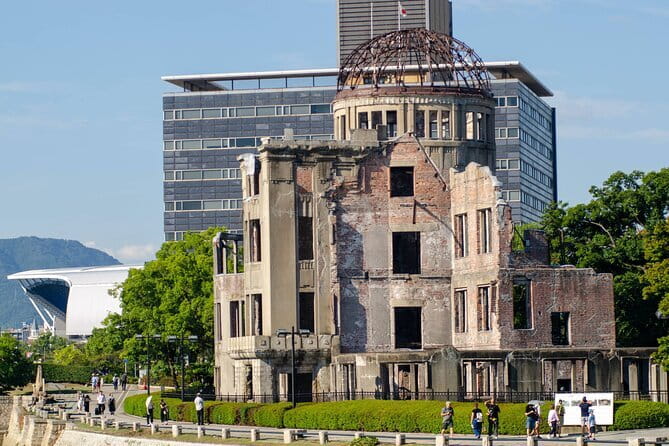
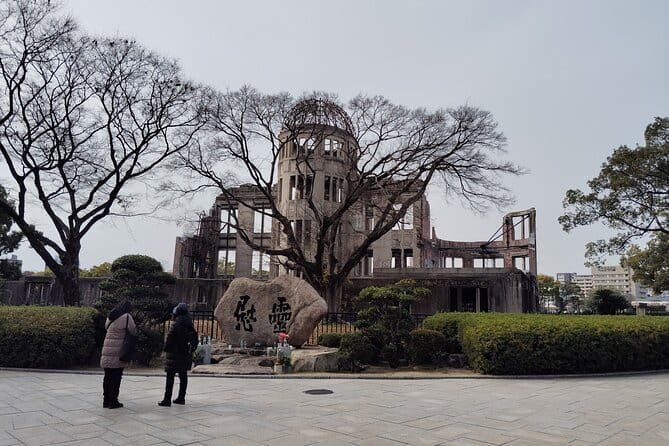
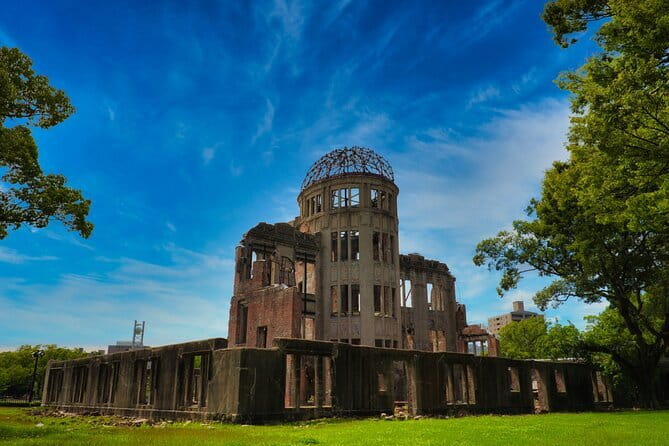
The Atomic Bomb Dome is usually the first image that fixes Hiroshima in your mind. Its damaged structure remains near the river, preserved after the bombing of August 6, 1945. You spend about 15 minutes here, which is enough to view the building and hear the basic story, but not enough for a long architectural discussion.
The short stop works because the Dome is an outdoor site. You can look closely at its exposed frame, take in its position beside the water, and let your guide explain why Hiroshima chose preservation instead of demolition. It is a stark beginning to the day.
Next comes the Hiroshima Peace Memorial Museum, with about an hour set aside. Admission is included, which is useful because this is the one paid visit most visitors should protect time for. The museum presents the bombing, the lives lost, and the years that followed through documents, objects, photographs, and personal accounts.
This is not light sightseeing. Some displays are upsetting, and you should expect the museum to change the mood of the entire day. A good guide helps with context before and after the visit, but you will still want a little quiet time to process what you see.
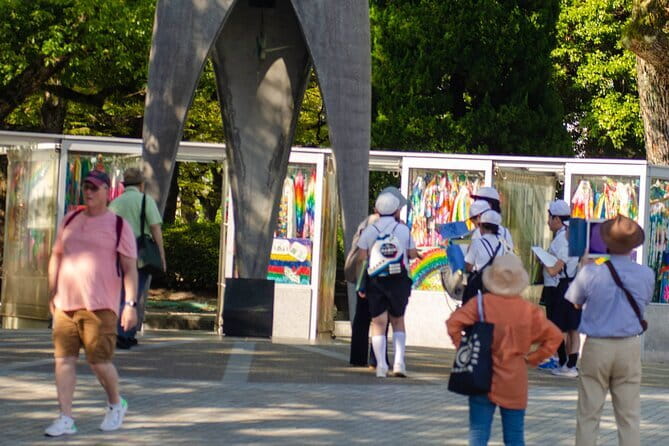
The park’s Children’s Peace Monument adds a more personal focus. It honors children who died because of the bombing and is linked to Sadako Sasaki, the young girl whose illness became associated with the paper-crane peace movement. The nearby Peace Flame and Peace Bell continue the park’s message through symbols rather than long explanations.
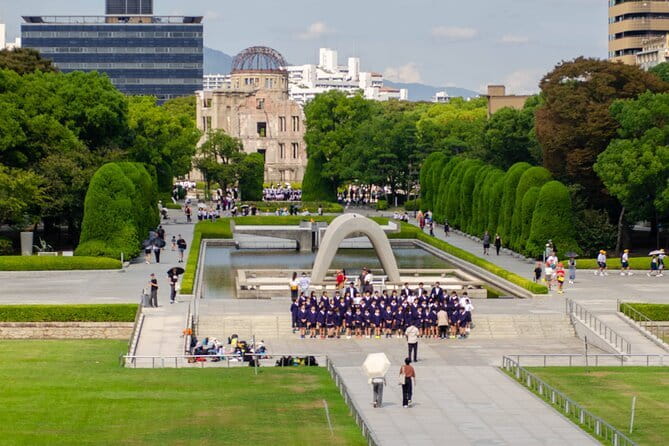
The Cenotaph for the A-Bomb Victims is another scheduled stop, with roughly 45 minutes. Its curved design frames the Atomic Bomb Dome in the distance, creating one of the park’s most meaningful views. Your guide can explain the monument’s purpose and the names remembered there, while you decide how much time you need for reflection.
The park stops add up to a serious morning. If you are visiting Hiroshima mainly for its wartime history, this portion alone may justify the tour. If you want a lighter sightseeing day, tell your guide early so the pace and number of monuments fit your group.
A few more Hiroshima half-days to weigh up
- Peaceful Hiroshima & Miyajima UNESCO 1 Day Bus Tour
★ 5.0 · 5,309 reviews - Hiroshima: Hiroshima and Miyajima UNESCO Sites 1-Day Tour
★ 4.9 · 2,330 reviews - Hiroshima / Miyajima Full-day Private Tour with Government Licensed Guide
★ 5.0 · 1,298 reviews
From solemn memorials to Hiroshima-style food
Hiroshima Hondori offers a change of rhythm. This pedestrian arcade brings shops, restaurants, and everyday city life into the day. The tour information allows room for flexible choices, and the guides have helped visitors find local food, including Hiroshima-style okonomiyaki.
That dish is a practical lunch choice if the timing works. It is associated with Hiroshima and gives you a taste of the city beyond memorial sites. Lunch is not included, so budget separately for your meal.
A private guide is especially useful here because you can ask for a food stop instead of losing time choosing among restaurants. Still, the tour does not promise a specific restaurant, and lunch can affect how much time remains for the castle, garden, or Miyajima.
Hiroshima Castle and Shukkeien Garden
Hiroshima Castle, also called Carp Castle, offers a look at the city before the atomic bombing. The original castle dates to the late 16th century and was linked to Mori Terumoto and the Mori clan. The present visit provides a contrast to Peace Park, shifting attention from modern war memory to feudal-era Japan.
About an hour is planned here, but the castle ticket costs 500 yen and is not included. That extra fee is modest, yet the larger issue is time. If you are taking the long public transport route to Miyajima, or spending a full hour at the museum, the castle may become an optional stop rather than a sure part of the day.
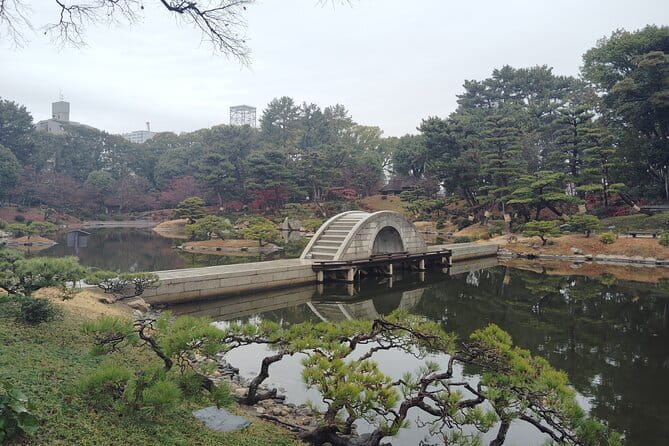
Shukkeien Garden dates to 1620 and was created for the Asano family. Its name refers to a miniature or shrunken scenic garden, with carefully arranged water, paths, bridges, and planted areas. It is a calmer stop after the museum and a good choice if gardens matter more to you than another historical building.
Admission is 300 yen, also paid separately. Like the castle, the garden may be dropped when the day runs long. Ask your guide at the start how strongly you want these two sites included. Trying to force every stop can turn a thoughtful tour into a race.
Taking the tram and ferry to Miyajima
The standard transport plan uses Hiroshima’s public tram system and the ferry to Miyajima. Those tickets are included, and your guide helps with the transfers. This matters because the day crosses from a city sightseeing area to an island reached by water, with several points where a first-time visitor could lose time.
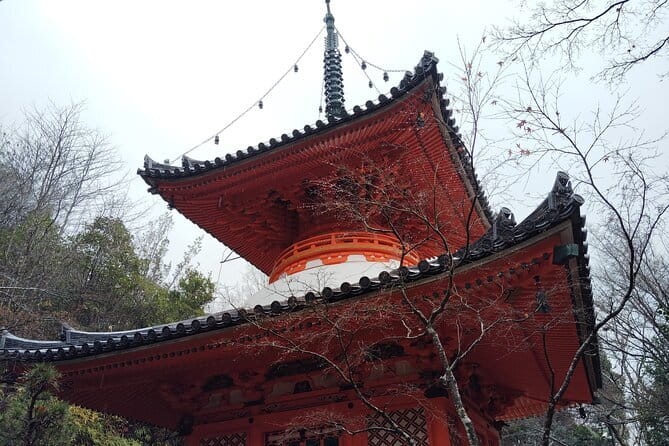
Miyajima is the visual counterpoint to Hiroshima’s memorial park. The island brings sea views, shrine architecture, wooded slopes, and free-roaming deer into the same day. The schedule gives about an hour for Miyajima and another hour for Itsukushima Shrine, though actual timing depends on transport, crowds, tide conditions, and your chosen stops.
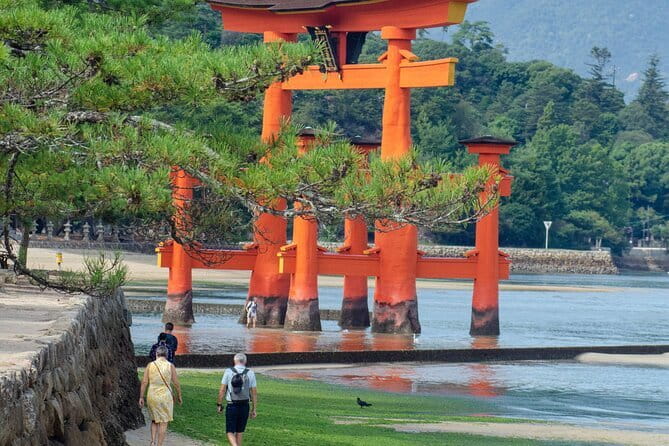
The famous torii gate is best known for its floating appearance at high tide. Its relationship with the water changes, so your guide can help you understand what you are seeing when you arrive. The gate is only one part of the visit. The approach to the shrine, the island setting, and the chance to hear local stories give Miyajima its pull.
Itsukushima Shrine admission is included. Allow time for the shrine grounds, views across the Seto Inland Sea, and the island’s religious setting. A cable car is mentioned in the tour description, but the supplied details do not clearly state whether a ropeway ride is part of the standard program, so ask before booking if reaching higher viewpoints is important to you.
The island can become crowded around its best-known sights. Guides such as Kazuko have helped visitors move through the main areas and find quieter temples or less familiar corners. That is one of the strongest reasons to choose a private guide instead of handling Miyajima alone.
Same base, a completely different sort of day:
- Hiroshima Historical Walking Tour – Why A-Bomb was Dropped
★ 4.8 · 893 reviews - Hiroshima Peace (Heiwa) Walking Tour at World Heritage Sites
★ 5.0 · 872 reviews - Hiroshima in a Nutshell: Morning Bike Adventure
★ 5.0 · 524 reviews - Hiroshima City 4hr Private Walking Tour with Licensed Guide
★ 5.0 · 437 reviews
Why the guide can make or break the day
This tour is not a simple vehicle circuit. The guide walks with you, explains the sites, manages public transport, and adjusts the order when conditions change. Your experience will depend heavily on the person assigned.
Kazuko receives especially strong praise for her warmth, energy, personal connection to Hiroshima, and ability to adapt the day. She has helped visitors understand the city’s painful past while also showing its present-day food and daily life. She is also noted for taking photos and helping groups move through busy areas.
John is described as a strong source of Japanese and Hiroshima history, with personal stories and knowledge of places outside the standard route. Gajender is praised for his English and Japanese, clear explanations, patience, and care with transportation and photographs. You can request a particular guide, but availability is not guaranteed.
One of the most useful features of a private tour is the ability to discuss priorities. You might choose more museum time, a quicker route to Miyajima, okonomiyaki for lunch, a garden, a castle visit, or a quieter temple. The advertised 4 to 8 hours gives flexibility, but not enough time to treat every stop as a full visit.
The time problem: four hours is not eight
The biggest planning issue is the broad duration. Four hours is not enough for the complete Hiroshima and Miyajima program at a comfortable pace. Eight hours is more realistic for the major highlights, but even then you need to make choices.
A long transfer from a distant pickup point can consume a large share of the day. One booking involved more than 1.5 hours by streetcar before reaching Miyajima, leaving much less time on the island. The lesson is simple: confirm your meeting point and ask how much travel time it creates before you pay.
Cruise passengers should be especially careful. Pickup by public transport is offered, but private pickup from a faraway port is not part of the basic price. If you have a ship departure or port shuttle deadline, tell the operator and guide in advance. One group needed a taxi back to the port after running short on time, while another arranged a private car during extreme heat.
The faster boat between Miyajima and Hiroshima Peace Park can save time. It is not included. The stated fare is 2,200 yen one way or 4,000 yen round trip, and one booking also raised concern about paying the guide’s fare when choosing this option. Confirm the full cost before agreeing, particularly if the fast boat is suggested late in the day.
Walking, heat, and comfort
You should treat this as a walking tour that uses public transport, not as a private driving tour. The day can include park paths, shrine grounds, station walks, shopping streets, tram platforms, ferry access, and long periods on your feet.
Summer heat has made the route uncomfortable for some people. The guide can adjust the pace and add breaks, but weather still affects the experience. Bring water, wear comfortable shoes, and tell the guide about mobility limits at the start.
The tour is private, so your group does not need to match another party’s speed. That is a real advantage for families and older visitors, but the route itself remains active. If walking is difficult, ask about private transport before booking. Private transportation is not included, and the standard plan relies on tram and ferry travel.
Is $150 per person a fair price?
At $150 per person, this is not the cheapest way to see Hiroshima and Miyajima. You are paying for an English-speaking guide, a private format, transportation by tram and ferry, Peace Memorial Museum admission, and Itsukushima Shrine admission.
The price makes better sense for a small group that values help with the emotional weight of Hiroshima, the transfers to Miyajima, and flexible sightseeing. A family can also benefit because one guide can adjust explanations and pace for different ages.
The value drops if you only want a quick look at the Atomic Bomb Dome and torii gate, or if you are comfortable using Japanese trains, trams, ferries, and museum information on your own. The castle and garden tickets are extra, lunch is extra, and private cars or the fast boat add more cost.
The strongest value is the human element. Guides can connect the memorial sites to the present city, explain customs at Miyajima, suggest okonomiyaki, take photos, and point out places you might miss on a self-guided route. That is more useful than simply being escorted between famous sights.
Who should choose this Hiroshima tour?
I would choose this experience if you have one full day, want both Hiroshima and Miyajima, and prefer conversation over an audio guide. It suits first-time visitors who want the history explained with care and who would rather not work out the tram and ferry connections alone.
It also fits families, couples, and small groups that want a private pace. The guide can spend more time on the subjects that matter to you, and the group does not include strangers.
I would be cautious if you have a strict cruise departure, limited walking ability, or only four hours available. In those cases, choose one area, or arrange private transport and a tightly confirmed schedule. The complete route is ambitious even with eight hours.
FAQ
How long does the Hiroshima and Miyajima tour last?
The tour lasts approximately 4 to 8 hours. The shorter option cannot comfortably include every listed stop, so confirm your priorities and timing with the provider.
What transportation is included?
Pickup with public transportation, Hiroshima tram travel, and the ferry to Miyajima are included. Private transportation is not included.
Are the Peace Memorial Museum and Itsukushima Shrine tickets included?
Yes. Admission to the Hiroshima Peace Memorial Museum and Itsukushima Shrine is included.
Do Hiroshima Castle and Shukkeien Garden cost extra?
Yes. Shukkeien Garden costs 300 yen, and Hiroshima Castle costs 500 yen. These admission fees are not included.
Is lunch included?
No. Lunch is not included. You can ask your guide about local food options, including Hiroshima-style okonomiyaki.
Can I cancel for a full refund?
Yes, if you cancel at least 24 hours before the experience start time. Cancellations or changes made within 24 hours are not refunded or accepted.
Should you book it?
Book this tour if you want Hiroshima’s memorial sites and Miyajima in one carefully guided day, with public transport handled and room for local stories. The guides, especially Kazuko, John, and Gajender, appear to be the main reason this experience works so well.
Before booking, confirm your pickup point, total hours, walking ability, and must-see stops. Ask about the fast ferry, guide fare, private car options, and whether the castle and garden fit your schedule. With those details clear, the $150 price can be worthwhile for a meaningful, personal introduction to two of western Japan’s most important places.
Just added around Hiroshima
- The Peace Memorial to Miyajima : Icons of Peace and Beauty★ 4.5 · 31 reviews
- Shore Excursion from Hiroshima Port : Private Tour in Hiroshima★ 5.0 · 17 reviews
- Hiroshima Saijo Sake Tasting Tour with visit to 7 Breweries★ 5.0 · 104 reviews
- Hiroshima & Miyajima All-Inclusive Tour w/Licensed guide Pancho★ 5.0 · 54 reviews
- Hiroshima Country Cycling: Explore Rural Life 1 HR from City★ 5.0 · 22 reviews
- Okunoshima Rabbit Island Cycling Tour with Local Guide★ 4.5 · 17 reviews
- Private Full Day Hiroshima Tour★ 4.5 · 29 reviews
- Hiroshima Private Tour with a Local – Highlights & Hidden Gems★ 4.5 · 24 reviews
Hiroshima Tours, compared.

Peaceful Hiroshima & Miyajima UNESCO 1 Day Bus Tour
Read our review →
Hiroshima and Miyajima UNESCO Sites 1-Day Tour
Read our review →
Hiroshima Historical Walking Tour – Why A-Bomb was Dropped
Read our review →
Hiroshima Peace (Heiwa) Walking Tour at World Heritage Sites
Read our review →
Hiroshima in a Nutshell: Morning Bike Adventure
Read our review →
Hiroshima City 4hr Private Walking Tour with Licensed Guide
Read our review →

Japanesel Archery Experience HIROSHIMA CASTLE SHARAKU
Read our review →Browse the lists this tour appears in