
Reviewed · FUSHIMI INARI TOURS
Inside of Fushimi Inari – exploring and lunch with locals
The best part of this Fushimi Inari tour is that it takes you beyond Kyoto’s famous tunnel of red torii gates. You begin at the main shrine, then leave much of the crowd behind for bamboo and cedar paths, worship stones, a waterfall, and a gate factory. I like the local detail, and I like that the guide explains what you are seeing instead of treating the mountain as a photo stop.
I also like the small-group format and the included soba lunch, tea, and boiled egg break. Guides Go, Satsuki, and Ko have each been praised for clear explanations and for adjusting the walking pace. The catch is the climb: steep stairs and a 20-minute ascent to the summit make this a poor choice if hills are difficult for you.
Key points to know before booking
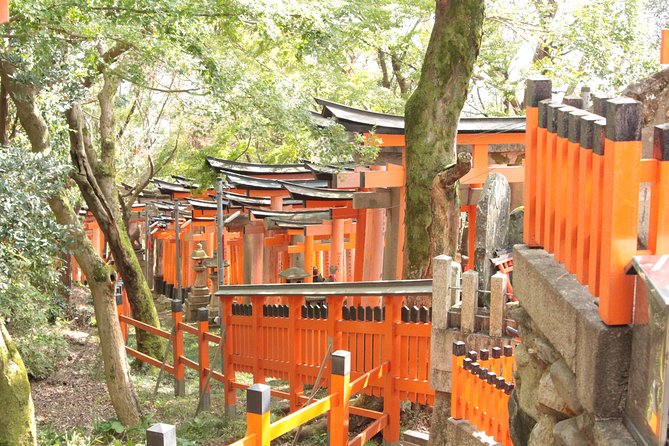
- A quieter side of Fushimi Inari: Leave the busiest torii-gate route for bamboo woods, small shrines, worship stones, and a waterfall.
- The famous gates still come first: You see the main shrine and learn about the meaning and background of the thousands of red torii.
- A real hill walk: The summit sits at 233 meters, with steep stairs and a roughly 20-minute climb through the forest.
- Lunch is part of the plan: Your half-day includes soba noodles, Japanese tea, and a boiled egg break.
- Personal guiding matters: The group is described as limited to 12 people, while the additional information lists a maximum of 6, so the actual size may vary.
- Plan carefully at the meeting point: The tour starts at the Great Torii in Fushimi Ward and returns there after about four hours.
Why this Fushimi Inari walk feels different
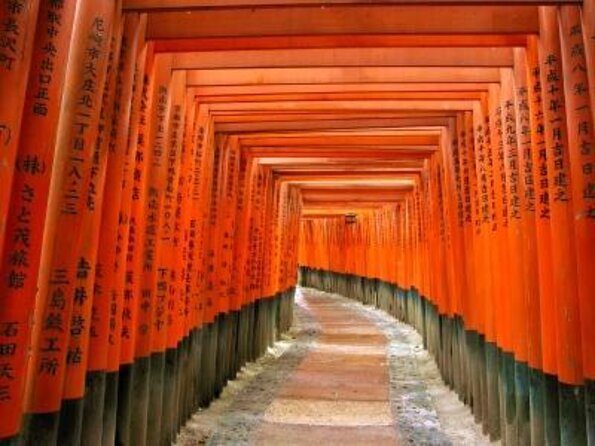
Fushimi Inari-taisha is one of Kyoto’s most recognizable sights. The image is simple: thousands of orange-red torii gates climbing Mount Inari. The reality is more useful to know before you arrive. The entrance and first stretch can be extremely busy, especially around the main shrine and the most photographed gates.
This tour uses that famous route as an introduction, not as the entire experience. You get the expected sights, along with a slower walk through parts of the mountain that many people miss. That makes the tour a good choice if you want context and local texture rather than a quick stop for photographs.
The guide helps explain why the gates are there and how they relate to worship at Fushimi Inari. You also visit less obvious sacred places, including worship stones and a waterfall. These stops give the mountain a different feel. It becomes more than a long orange corridor. You see it as a working religious site with small devotional places spread through the woods.
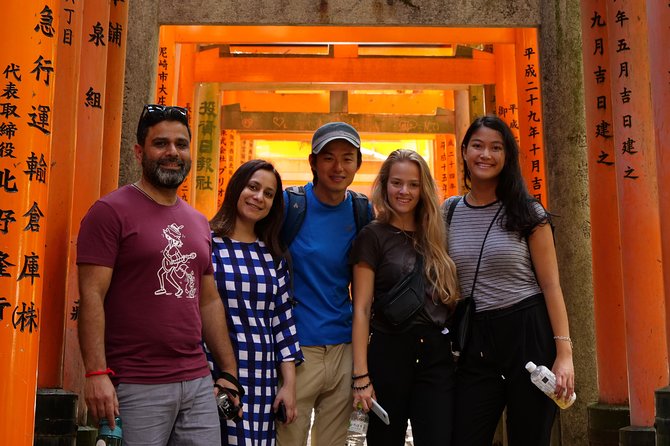
The format is social but not unwieldy. The description sets the group limit at 12, while the additional details say a maximum of 6. That discrepancy is worth noting when you book. Either way, this is intended to be a small-group walk, not a large procession with a guide holding up a flag.
More ways to walk Fushimi Inari:
- Kyoto: Fushimi Inari, Kinkakuji, Bamboo Grove 1 Day Bus Tour
★ 4.8 · 4,316 reviews - Fushimi Inari Hidden Hiking Tour (Private Option Available)
★ 5.0 · 1,750 reviews - Kyoto/Osaka: Nara, Fushimi Inari Taisha, Arashiyama Bus Tour
★ 4.7 · 1,275 reviews
Starting at the Great Torii
The meeting point is the Great Torii in Fushimi Ward, at 68 Fukakusa Yabu-no-uchi-cho. The tour ends at the same point, which keeps the logistics simple. The location is near public transportation, but you should still allow enough time to identify the exact meeting place.
A meeting point at a major shrine entrance can be confusing when foot traffic is heavy. Pay close attention to the instructions sent before the tour. One missed meeting once led to a serious problem, with the guide waiting at the location and wearing a distinctive red cap while trying to find the booked party. The details were disputed, so the practical lesson is clear: arrive early, keep your phone available, and confirm the guide’s identifying information.
Once the group is together, the first portion focuses on the main shrine. This is where the guide sets the scene, explains the cultural background, and helps you understand what makes Fushimi Inari different from a standard temple visit. You are not simply walking beneath gates. You are learning how the shrine’s symbols and mountain setting fit together.
The famous red torii gates, with meaning attached
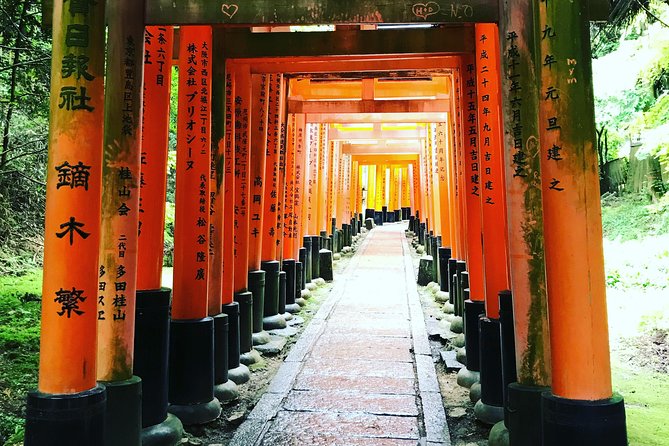
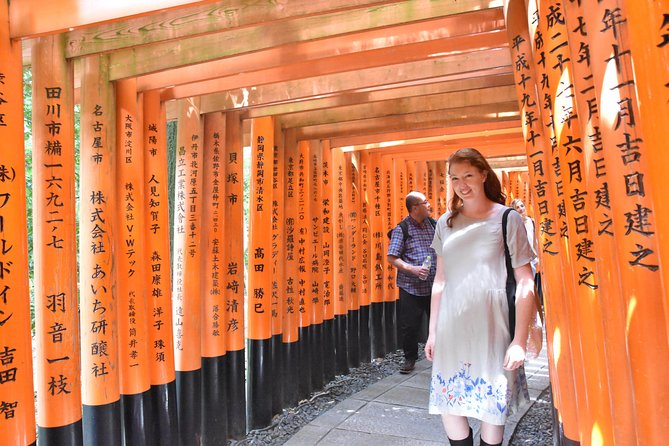
The torii gates are the visual centerpiece. They create a long series of shaded passages, with one gate after another forming a striking red-orange tunnel. The route is photogenic, but the guide’s explanations give the sight more weight.
You learn about the significance of the gates and the shrine’s history and cultural background. That matters because the gates are not just decorative structures placed along a scenic path. They reflect devotion and offerings connected to the shrine. A guide can point out details you might otherwise pass without noticing.
The main torii route is also where you are most likely to meet the largest crowds. The tour does not promise an empty Fushimi Inari, and it should not. The value is that you see the iconic section, then move toward quieter paths rather than spending the whole morning or afternoon in the busiest corridor.
If your main goal is a short visit to photograph the first gate tunnel, you may not need four hours. This experience makes more sense if you want to understand the mountain and are willing to walk beyond the most familiar view.
Bamboo, cedar, worship stones, and a waterfall
After the main sights, the route turns toward a peaceful forest path. Bamboo and cedar trees replace much of the visual noise of the entrance area. The change is one of the strongest reasons to choose this tour.
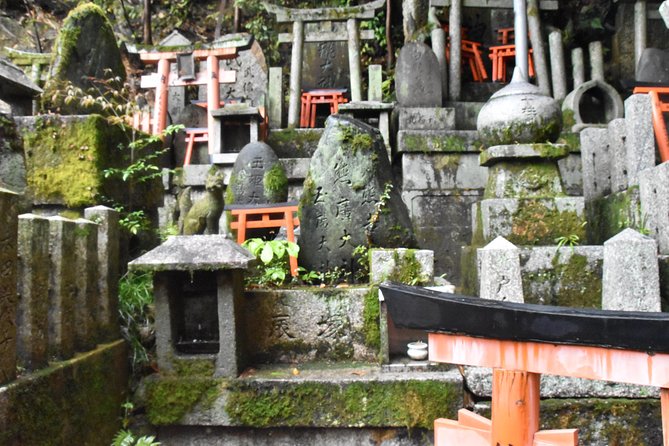
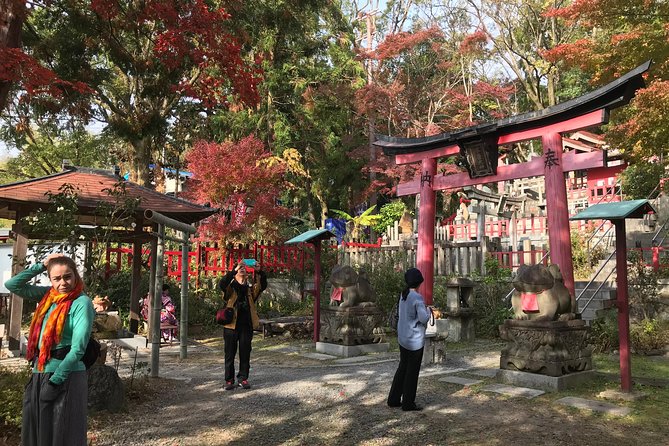
The path includes authentic holy spots, worship stones, and a waterfall. These are smaller and less immediately famous than the torii gates, but they help show how worship is spread throughout the mountain. You may find these stops more memorable than another photograph beneath an orange gate because they offer quiet and a clearer sense of place.
This section also gives the guide room to explain local customs and the mountain’s religious role. The experience is not built around a lecture, though. You are walking, stopping, looking, and asking questions as the route unfolds.
The forest setting does not remove the physical demands. Uneven paths, stairs, and changes in elevation are part of the day. Wear shoes suited to a moderate hike, and bring enough water for your own comfort. The tour data calls for moderate physical fitness, and that is a useful warning rather than a formality.
More lunch stops in Kyoto:
- Bike Tour Exploring North Kyoto plus Lunch
★ 5.0 · 1,087 reviews - Osaka/Kyoto: Arashiyama, Nara & Fushimi Inari Shrine w/Lunch
★ 4.4 · 754 reviews - Kyoto Zen Meditation & Garden Tour at a Zen Temple with Lunch
★ 5.0 · 441 reviews - 4.5-Hour Kyoto Bike Tour with Lunch and UNESCO Zen Temples
★ 5.0 · 122 reviews
A look at Fushimi’s gate-making tradition
A visit to a gate factory adds a practical local detail to the shrine experience. You see that the famous torii are not simply an abstract symbol on a map. They are physical objects that must be made, maintained, and connected to the surrounding community.
This stop helps link the spiritual setting with everyday work in Fushimi. It is also a welcome change of pace after the forest walk. Instead of looking only at finished gates, you get a glimpse of the craft and production behind a feature that defines the mountain.
The information provided does not specify how long you spend at the factory or exactly what parts of the process are shown. Keep expectations measured. The point is an added local attraction along the route, not a separate factory tour.
The 233-meter summit climb
The climb to the summit shrine takes about 20 minutes along the forest route. The summit is 233 meters high. That number may sound modest, but the stairs make the walk feel more serious than the elevation alone suggests.
Several people found the hike more challenging than expected, particularly because of the steep stairs. That matches the practical reality here: this is not a flat sightseeing walk with a few gentle steps. If you have trouble with inclines, knees, or sustained stair climbing, choose a shorter visit to the lower shrine area instead.
For hikers who are comfortable with moderate effort, the ascent is a key part of the experience. You get a fuller sense of Fushimi Inari as a sacred mountain, not merely a shrine entrance. The guide shows you around the summit shrine and can explain how to pray there if you wish.
The pace is another important advantage of a small group. Guide Go was praised for adjusting the pace to suit the group. That does not erase the stairs, but it can make the climb feel more manageable than trying to keep up with a large walking party.
Soba lunch, Japanese tea, and a boiled egg break
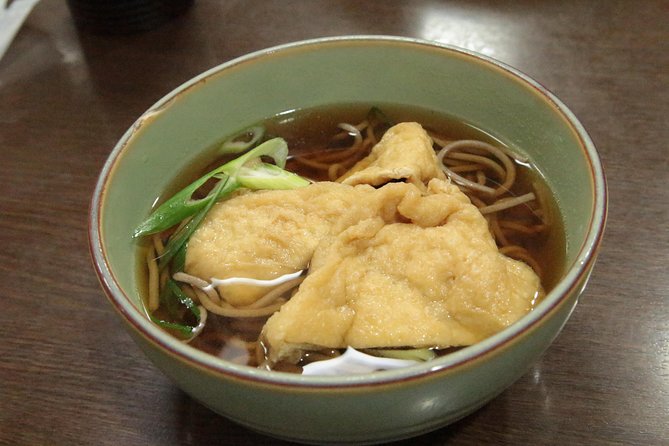
Food is included, which adds useful value to a four-hour outing. The meal is soba noodles, followed by or paired with a break featuring Japanese tea and a boiled egg. After the climb, this is more than a minor snack. It gives you a chance to sit, recover, and enjoy something simple and local.
Soba is a fitting choice for a Kyoto walking tour. It is familiar enough for many people, but still part of everyday Japanese food culture. The meal also means you do not have to leave the route searching for lunch before the activity ends.
Vegetarian, halal-friendly, and gluten-free food options are available, according to the tour information. You should request the needed option when booking rather than waiting until the day itself. The provided details do not explain the exact menu changes, so anyone with a strict allergy or dietary requirement should confirm what can be prepared.
Do not expect a long restaurant meal with many courses. This is a practical lunch break built into a walking tour. Its value comes from convenience, timing, and the chance to pause with the group.
What the $72.26 price gets you
At $72.26 per person, the tour costs more than visiting Fushimi Inari on your own, since shrine entry is free. You are paying for the guide, route planning, cultural explanations, summit walk, local stops, and included food.
That price makes the most sense if you value access to a less obvious route. Finding the main torii gates is easy. Finding a sensible path that also includes a waterfall, worship stones, a gate factory, the summit shrine, and lunch is harder when you are unfamiliar with the mountain.
The small-group setting also affects the value. A guide can answer questions and adjust the pace more easily with six people than with a full coach group. Since the published information gives both 12 and 6 as possible group limits, I would book this for the guiding rather than for a guaranteed very small party.
The tour is often booked about 80 days ahead. That suggests you should reserve early if your Kyoto dates are fixed, especially during a busy season. The provider also offers free cancellation up to 24 hours before the start time. Changes or cancellations inside that window are not accepted for a refund, and poor weather can lead to a different date or a full refund.
Who will enjoy this most
I would choose this tour if you want Fushimi Inari to be one of the active highlights of your Kyoto visit. It suits you if you enjoy walking, want an explanation of the shrine, and prefer smaller local sights to a quick checklist visit.
It is especially useful for first-time visitors who might otherwise see only the first section of the torii route. The guide provides structure, takes you toward the summit, and adds places that are easy to miss.
It also works well for people who like food included in their sightseeing. The soba, tea, and boiled egg break remove one planning decision from the day and create a natural rest period.
I would think twice if you want a relaxed, flat outing. The steep stairs are the main limitation, and the tour takes roughly four hours. You should also be comfortable walking in forest conditions and with the possibility of a group larger than six.
Useful planning advice for the morning or afternoon
Arrive early at the Great Torii. Do not rely on finding the guide at the last second, particularly if the entrance area is crowded. Check the pre-tour instructions and look for the guide’s identifying detail.
Wear comfortable walking shoes. The route includes forest paths, stairs, and a summit climb, so sandals or stiff city shoes could make the day less pleasant.
Keep your schedule flexible after the tour. The activity lasts about four hours, with the main shrine and hidden-route hike listed as roughly three and a half hours. Timing can vary with pace, questions, and the group.
Think of the tour as a complete half-day outing. The food break, cultural stops, and summit visit are part of the value. Rushing away halfway through would mean missing much of what separates this route from an ordinary Fushimi Inari visit.
Should you book the Fushimi Inari hidden-route tour?
Book it if you want the famous gates plus the quieter side of the mountain. The combination of shrine explanations, bamboo and cedar paths, a waterfall, a gate factory, summit access, and soba lunch gives you a fuller visit than a self-guided walk through the first torii tunnel.
The strongest reason to choose it is the route. Guides such as Go, Satsuki, and Ko have been praised for clear explanations, friendly pacing, and taking groups away from the heaviest crowds. The main reason to skip it is physical: the stairs are steep, and the hike can be harder than expected.
For an active visitor who wants local context, this is a good use of half a day in Kyoto. For anyone seeking an easy shrine stop, it is better to visit the lower grounds independently.
FAQ
How long does the Fushimi Inari tour last?
The experience lasts approximately four hours. The main shrine, hidden-route hike, and lunch portion are listed as about three hours and 30 minutes.
Where does the tour begin and end?
The tour begins at the Great Torii in Fushimi Ward, Kyoto, at 68 Fukakusa Yabu-no-uchi-cho. It ends back at the same meeting point.
What food is included?
The tour includes a soba noodle lunch, Japanese tea, and a boiled egg break.
Are dietary options available?
Vegetarian, halal-friendly, and gluten-free food options are available. Request your required option when booking.
How difficult is the hike?
You need moderate physical fitness. The route includes forest walking, stairs, and a roughly 20-minute climb to the 233-meter summit. Some stairs are steep.
What is the group size?
The overview describes a group limited to 12 participants. The additional information gives a maximum of 6 participants, so confirm the expected group size when booking.
Can I cancel for a refund?
You can cancel at least 24 hours before the local start time for a full refund. Cancellations or changes made less than 24 hours before the start time are not accepted for a refund. If poor weather causes the tour to be canceled, you will be offered another date or a full refund.
Just added around Kyoto
- Kyoto: Zen Meditation at a Private Temple with a Monk★ 5.0 · 25 reviews
- Kyoto: Gion Geisha District & Sake-in-Hand Walking Tour★ 5.0 · 37 reviews
- Private Pewter Sake Cup Experience with a Kyoto Artisan★ 5.0 · 31 reviews
- Your Private Vacation Photography Session In Kyoto★ 5.0 · 110 reviews
- Private Guided Traditional Buddhist Cooking in Japan★ 5.0 · 16 reviews
- Kyoto Wagashi(Japanese sweets) Cooking Class near Fushimiinari★ 5.0 · 60 reviews
- Traditional Japanese Music show & Experience Tour in Kyoto★ 5.0 · 57 reviews
- Kyoto:Family-Friendly Kimono & Yukata Experience at WARGO★ 5.0 · 147 reviews
Fushimi Inari Tours, compared.

Fushimi Inari, Kinkakuji, Bamboo Grove 1 Day Bus Tour
Read our review →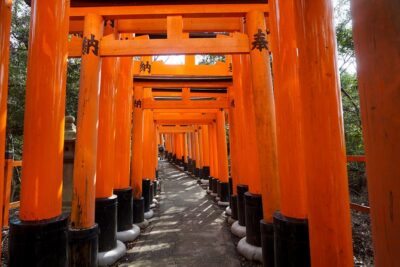
Fushimi Inari Hidden Hiking Tour (Private Option Available)
Read our review →
Kyoto/Osaka: Nara, Fushimi Inari Taisha, Arashiyama Bus Tour
Read our review →
Osaka/Kyoto: Arashiyama, Nara & Fushimi Inari Shrine w/Lunch
Read our review →
Nijo Castle, Kiyomizu & Fushimi Inari Guided Tour
Read our review →
Nijo, Kinkaku-ji, Arashiyama, Kiyomizu & Fushimi Inari
Read our review →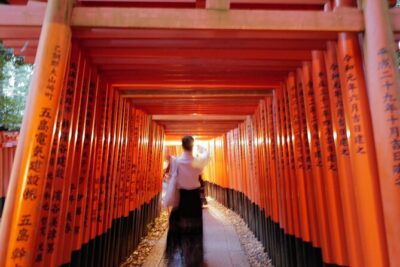
Browse the lists this tour appears in