
Reviewed · KYOTO TOURS
Kyoto Gion Early Morning Walking Tour
Kyoto’s famous sights are far more pleasant before the afternoon crowds arrive. This three-hour morning walk takes you from Gion’s willow-lined canal to Kiyomizu-dera, then through old lanes, a pagoda, and Yasaka Shrine.
I like the small maximum group of 12, which gives you a fair chance to ask questions. I also like the strong guides, especially Hiro, Caleb, and Vincent, who bring Kyoto’s history and present-day culture to life. The one catch is timing: Kiyomizu-dera may already be crowded by the time you reach it, so this tour reduces the crowds rather than guaranteeing an empty temple.
Key points at a glance
- Early access to Gion: See Shirakawa and Hanamikoji Street in a quieter part of the day.
- Six worthwhile stops: The route covers Gion, Kiyomizu-dera, Sannenzaka, Ninenzaka, Yasaka Pagoda, and Yasaka Shrine.
- Guides who invite questions: Hiro, Caleb, and Vincent have earned praise for clear English, humor, and broad knowledge of Kyoto.
- Small group, maximum 12 people: You get more room to hear explanations and speak with the guide.
- Good value for a walking tour: The $49.42 fee includes the English-speaking guide, while Kiyomizu-dera’s ¥500 admission costs extra.
- A real morning of walking: Wear comfortable shoes and expect to get your steps in before breakfast or your next Kyoto activity.
Why an early start changes Gion
Gion is one of Kyoto’s most photographed areas, but its appeal can be lost when the lanes fill with tour groups and visitors stopping for pictures. The early start gives you a calmer first look at the Shirakawa River, wooden machiya houses, and Hanamikoji Street.
I especially like the opening part of this route because it lets you see Gion as a neighborhood of traditional buildings and waterways, not just as a backdrop for photographs. The quiet makes it easier to notice the details your guide points out, including the relationship between the streets, teahouses, shrines, and daily life.
The tour begins at the Statue of Izumo-no-Okuni in Kawabatacho, in Kyoto’s Higashiyama Ward. You receive a mobile ticket after booking, and the meeting point is near public transportation. There is no hotel pickup, so you need to make your own way there.
The tour is capped at 12 people. That is not a private tour, but it is small enough to feel manageable on narrow streets. You can ask about a building, a custom, or a shrine without trying to interrupt a guide speaking to a large crowd.
More geisha-district evenings:
- Kyoto Geisha Walking Tour: Gion District & Hidden Gems
★ 4.7 · 3,273 reviews - Kyoto: Gion Magical Night Walking Tour with Geisha Trivia
★ 4.9 · 2,393 reviews - Kyoto: Gion Geisha District Walking Tour – Stories of Geisha
★ 4.7 · 2,187 reviews
Gion Shirakawa and Hanamikoji Street
The first stop, Gion Shirakawa, lasts about 15 minutes. The Shirakawa River runs beside traditional machiya houses and weeping willows, creating one of Kyoto’s most graceful street scenes.
This is a short stop, but the early hour matters here. The river and buildings are easier to appreciate when you are not working around crowds. Your guide can also give you a useful introduction to Gion before the route moves into the district’s better-known streets.
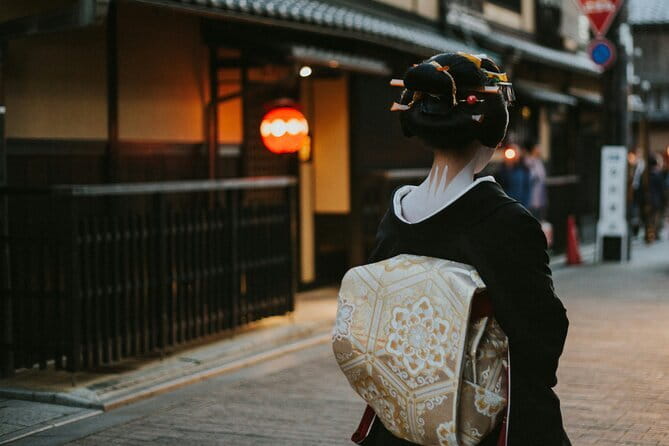
Next comes Hanamikoji Street, with about 20 minutes to walk through the historic geisha district. The street is lined with wooden machiya and traditional teahouses called ochaya. Your guide can explain the role of geisha and maiko in Kyoto’s cultural life, while also helping you understand that Gion is a working district, not a theme park.
This is a place where good manners matter. Keep your voice low, avoid blocking entrances, and do not assume that someone in traditional dress wants to be photographed. The tour’s value here comes from context and observation, not from chasing a glimpse of a performer.
The short time at each Gion stop is both a strength and a limitation. You get a focused introduction to two key areas, but you will not have long for independent wandering. If Gion is your main reason for visiting Kyoto, plan to return later on your own.
Kiyomizu-dera and the famous wooden stage
Kiyomizu-dera receives the longest visit, about one hour. This is the centerpiece of the tour, and the ¥500 admission fee per person is not included in the tour price.
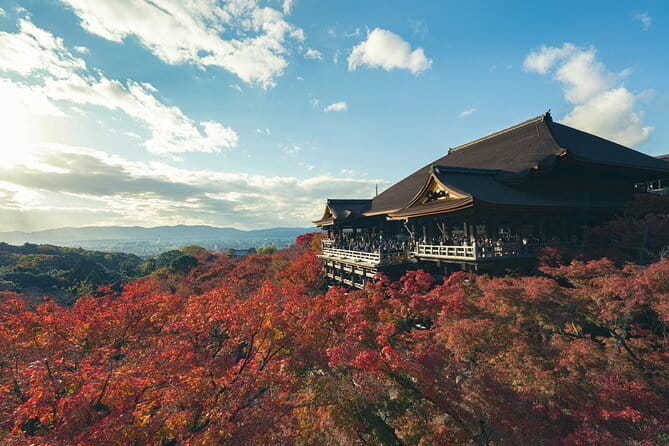
The temple is famous for its large wooden stage, which looks out over Kyoto. Depending on the season, the surrounding trees may show spring blossoms or autumn color. The setting gives you both a religious site and a broad view over the city.
An hour is a useful amount of time for a guided visit. You have enough room to hear the story of the temple, look at the main features, and take in the view without rushing through the grounds. The guide can also help you understand how Kiyomizu-dera fits into Kyoto’s wider religious and cultural traditions.
There is an important timing point here. The tour is designed to reach the major sights before the day becomes crowded, but Kiyomizu-dera can still be busy by the time you arrive. One person found the temple swarming with people and wished the walk began an hour earlier. That is the clearest warning in the available feedback.
I would book this tour for the calmer Gion opening and the guide’s explanations, not on the promise of an empty Kiyomizu-dera. If crowd avoidance is your top concern, check the exact departure time and consider arriving at the meeting point as early as possible.
Sannenzaka and Ninenzaka on foot

After Kiyomizu-dera, the walk continues through Sannenzaka and Ninenzaka for about 30 minutes. These stone-paved lanes are lined with traditional wooden townhouses, small shops, and places to stop for local goods or a quick look inside.
This section connects the temple to the surrounding historic streets. It is easy to understand why the area appears in so many Kyoto photographs, but the streets are also practical routes filled with shops and foot traffic. The old buildings and sloping lanes make this one of the most atmospheric parts of the walk.
The tradeoff is space. Sannenzaka and Ninenzaka can feel tight, especially later in the day, and the stone paving is not the place for flimsy footwear. You do not need specialist hiking equipment, but comfortable shoes will make the morning much easier.
The guide’s navigation is useful here. Kyoto’s lanes can look similar, and it is easy to lose track of where you are while stopping for photographs. A guide keeps the group moving toward the next landmark while explaining what you are seeing.
You will not have a long shopping break built into the schedule. If you want souvenirs, sweets, ceramics, or a leisurely café stop, save time for a return visit. The walking tour gives you an introduction and a route through the area rather than a full shopping session.
More walking tours in Kyoto:
- Night Walk in Gion: Kyoto’s Geisha District
★ 4.5 · 2,003 reviews - Kyoto Gion Geisha District Walking Tour – The Stories of Geisha
★ 5.0 · 1,441 reviews - Nishiki Market Brunch Walking Tour (7 Tastings + Brunch)
★ 5.0 · 1,355 reviews - Kyoto Arashiyama Walking Tour: Bamboo, Monkeys, Gardens & Secrets
★ 5.0 · 1,216 reviews
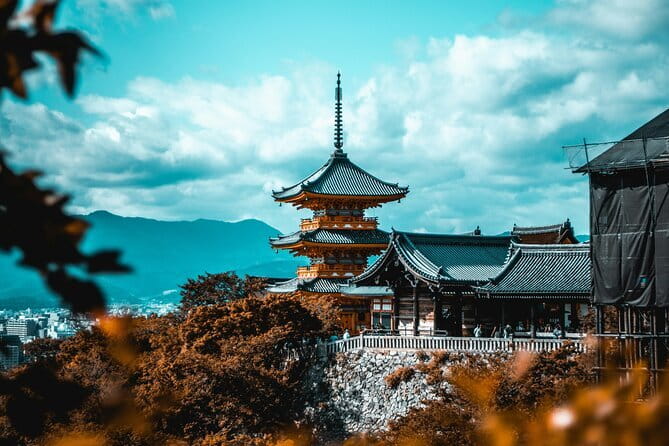
Yasaka-no-To, Kyoto’s familiar pagoda
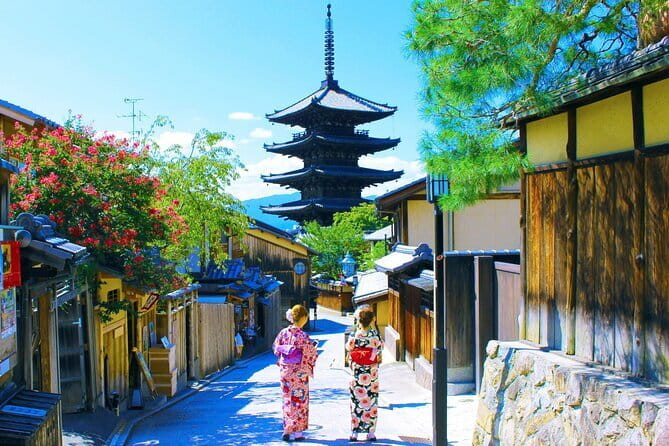
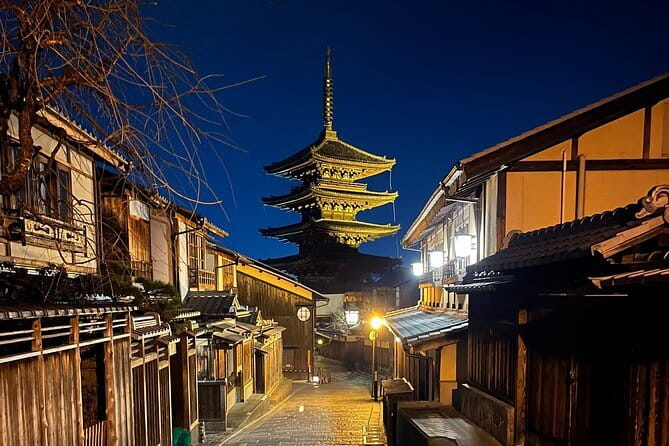
The stop at Yasaka-no-To lasts about 10 minutes. The Yasaka Pagoda rises among the historic streets and is one of Kyoto’s most recognizable views.
Ten minutes is enough for orientation and photographs, especially in the early morning when the streets may be less crowded. The pagoda also helps tie together the route’s different parts: Gion, the temple district, and the old streets around Higashiyama.
This is a brief photo and explanation stop, not a long temple visit. If you want time to study the pagoda from several angles, you may need to return after the tour. Still, its inclusion adds variety to the morning and gives you a memorable landmark between Sannenzaka and Yasaka Shrine.
Yasaka Shrine and the end of the route
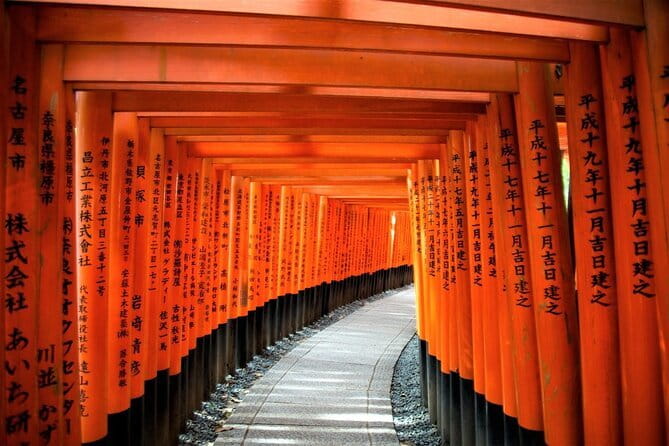
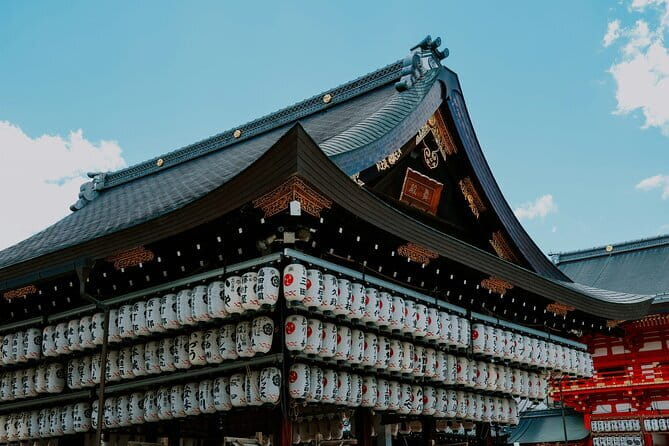
The final stop is Yasaka Shrine, with about 30 minutes scheduled. This is one of Kyoto’s major Shinto shrines, known for its vermilion gate and lantern-lit dance stage.
The shrine offers a different experience from Kiyomizu-dera. Instead of a Buddhist temple complex and its wooden stage, you see a Shinto site tied to long-standing local traditions. Your guide can explain the shrine’s role in Kyoto and help you notice details that might otherwise pass by as attractive architecture.
Ending at Yasaka Shrine gives the tour a useful sense of place. You have moved from the canal and teahouses of Gion through temple lanes and pagoda views, then finished at a major shrine. The activity ends back at the original meeting point, so you do not need to work out a new pickup location.
The route covers a lot in three hours. That makes it a good first morning in Kyoto, especially if you want an overview before exploring specific areas on your own. It also means the pace may feel steady. If you prefer long pauses, quiet meditation, or extensive photography, this may feel more like an orientation walk than a slow cultural outing.
The guides make the difference
The strongest part of this experience is the guide. Hiro is praised for his explanations of Japanese history in a wider global setting, as well as his humor. Caleb is described as friendly and passionate about history, with a willingness to answer questions and help make the early start worthwhile.
Vincent is noted for taking time to explain the sights and responding to questions, including questions outside the strict route. That flexibility matters because Kyoto raises plenty of questions as you walk. You may want to know about a shrine ritual, a building style, or how the old district functions today.
The guide names are not a guarantee that you will receive a particular person on your date. They do, however, give you a useful sense of the tour’s strengths. You can expect an English-speaking guide who aims to explain both historical facts and current local culture, rather than simply leading you from one photo stop to the next.
The small group supports that style. With no more than 12 people, the guide can hear questions and keep the group together through narrow lanes. I would choose this over a large bus-style sightseeing tour if you want conversation and a clearer explanation of what you are seeing.
One memorable detail from the route is the possibility of finishing or pausing for coffee nearby. A previous group enjoyed coffee at Here after the walk. Coffee is not listed as an included feature, so treat that as a possible nearby idea rather than part of the tour package.
What $49.42 buys you
The price is $49.42 per person. It includes approximately three hours with an English-speaking guide, but not hotel pickup or the ¥500 Kiyomizu-dera admission fee.
I consider the price reasonable if you value a well-organized introduction to Kyoto. You are paying for local explanation, navigation, and a carefully chosen route through several major sights. The value is strongest on a first visit, when you want to understand how Gion, Higashiyama, Kiyomizu-dera, and Yasaka Shrine fit together.
The value is weaker if you only want transportation or a quick set of photographs. This is a walking experience, and the route includes historic lanes, temple approaches, and stone-paved streets. You are paying for time on foot and interpretation, not a ride between attractions.
The extra ¥500 at Kiyomizu-dera is modest, but remember to budget for it. Food, drinks, shopping, and hotel transportation are also your responsibility. Since the tour ends at the starting point, you can plan a café stop or another activity afterward.
Who will get the most from this walk
I would recommend this tour to a first-time Kyoto visitor who wants to see several essential places in one morning. It also suits you if you prefer a guide’s structure and want to ask questions rather than read signs on your own.
It is a good match for photographers who care about quieter streets and morning light. The early timing gives you a better chance of uncluttered views at Gion Shirakawa, Hanamikoji Street, and Yasaka Pagoda, though Kiyomizu-dera may still be crowded.
History and culture fans should benefit most from guides such as Hiro, Caleb, and Vincent. Their apparent strengths are explanation, context, and conversation. You will get more from the experience if you ask questions and pay attention to how the sites connect.
I would be more cautious about booking if you want a slow, private walk or a long shopping session. The group can contain up to 12 people, and the schedule gives each stop a set amount of time. Families and most visitors can participate, but everyone should be ready for several hours of walking.
Booking confirmation arrives at the time of purchase, and free cancellation is available until 24 hours before the start time. Changes or cancellations made inside that window are not accepted for a refund.
Should you book the Kyoto Gion Early Morning Walking Tour?
Book it if you want a strong first look at Kyoto’s most famous eastern districts, especially with an English-speaking guide who can answer questions. The early Gion streets, six-stop route, and small group make the $49.42 fee fair for many visitors.
Just keep your expectations realistic. This tour can help you reach the sights before the worst afternoon crowds, but it cannot promise an empty Kiyomizu-dera. Bring comfortable shoes, budget ¥500 for temple admission, and choose it for the guidance and cultural context as much as for the photographs.
FAQ
How long does the Kyoto Gion Early Morning Walking Tour last?
The tour lasts approximately three hours.
Where does the tour start?
It starts at the Statue of Izumo-no-Okuni in Kawabatacho, Higashiyama Ward, Kyoto, 605-0076, Japan.
Where does the tour end?
The activity ends back at the meeting point.
What sights are included on the walking route?
The route includes Gion Shirakawa, Hanamikoji Street, Kiyomizu-dera Temple, Sannenzaka and Ninenzaka, Yasaka-no-To, and Yasaka Shrine.
Is the Kiyomizu-dera admission fee included?
No. Kiyomizu-dera admission costs ¥500 per person and is paid separately.
How many people can join the tour?
The maximum group size is 12 travelers.
Is hotel pickup included?
No. Hotel pickup is not included. The meeting point is near public transportation, and you make your own way there.
What is the cancellation policy?
You can cancel up to 24 hours before the experience start time for a full refund. Cancellations or changes made less than 24 hours before the start time are not accepted for a refund.
More Morning in Kyoto
- Kyoto Early Morning Tour with English-Speaking Guide
★ 5.0 · 1,427 reviews - Kyoto: Early Morning Tour with English-Speaking Guide
★ 4.9 · 1,128 reviews - From Kyoto: Nara Guided Morning Tour
★ 4.6 · 335 reviews - Kyoto Morning Tour from Kyoto or Osaka
★ 4.0 · 281 reviews
Just added around Kyoto
- Kyoto: Zen Meditation at a Private Temple with a Monk★ 5.0 · 25 reviews
- Kyoto: Gion Geisha District & Sake-in-Hand Walking Tour★ 5.0 · 37 reviews
- Private Pewter Sake Cup Experience with a Kyoto Artisan★ 5.0 · 31 reviews
- Your Private Vacation Photography Session In Kyoto★ 5.0 · 110 reviews
- Private Guided Traditional Buddhist Cooking in Japan★ 5.0 · 16 reviews
- Kyoto Wagashi(Japanese sweets) Cooking Class near Fushimiinari★ 5.0 · 60 reviews
- Traditional Japanese Music show & Experience Tour in Kyoto★ 5.0 · 57 reviews
- Kyoto:Family-Friendly Kimono & Yukata Experience at WARGO★ 5.0 · 147 reviews
Kyoto Tours, compared.


Fushimi Inari, Kinkakuji, Bamboo Grove 1 Day Bus Tour
Read our review →
Tea Ceremony in a Traditional Tea House in Kiyomizu
Read our review →
Kyoto Geisha Walking Tour: Gion District & Hidden Gems
Read our review →

Gion Magical Night Walking Tour with Geisha Trivia
Read our review →

Gion Geisha District Walking Tour – Stories of Geisha
Read our review →Browse the lists this tour appears in