
Reviewed · FUSHIMI INARI TOURS
Kyoto Early Bird English Tour: Fushimi-Inari and Arashiyama
The best reason to book this Kyoto tour is simple: you see two of the city’s most crowded sights before the day gets going. You start at Fushimi Inari, then cross Kyoto to Arashiyama while the light is soft and the paths are far calmer than they will be later.
I like the small group size, advertised at no more than eight travelers, and I like having a guide handle the train connections. Guides such as Vincent, Hiro, Caleb, and Eri are praised for clear explanations, good humor, and thoughtful photo help. The main drawback is value: at $96.83 per person, you still pay ¥390 for transportation, and you could visit these places on your own for much less.
Kyoto’s early start is the real attraction
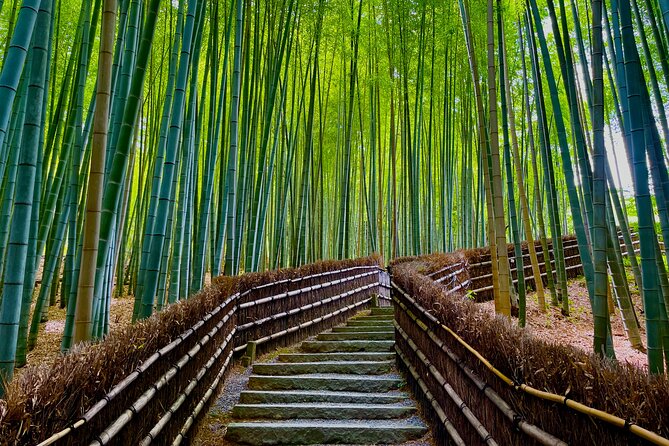
This is a four to five-hour morning tour built around timing. Fushimi Inari Shrine and Arashiyama Bamboo Forest draw huge numbers once the day is underway, so an early meeting gives you a better shot at quiet paths and clean photographs.
Do not expect complete solitude. These are major Kyoto sights, and even an early visit can have other people on the paths. Still, the timing matters. One guide-led morning was already seeing crowds gather as the group left, and another traveler found the early start especially useful during cherry blossom season.
You meet at the 7-Eleven Heart-In beside the central entrance of Kyoto Station. The exact address is Karasumadori Shiokoji-sagaru Higashishiokojicho, Shimogyo Ward. This is a practical meeting point, but Kyoto Station is large, so allow time to find the store. The tour ends back at the same meeting point.
The experience uses public transportation. That is part of its charm, since you get a small taste of moving around Kyoto as locals do, but it also means you need to be ready to walk between platforms, trains, and attractions. Your guide helps keep the group on track, which is particularly useful if Kyoto’s rail system is new to you.
Fushimi Inari’s torii gates before breakfast
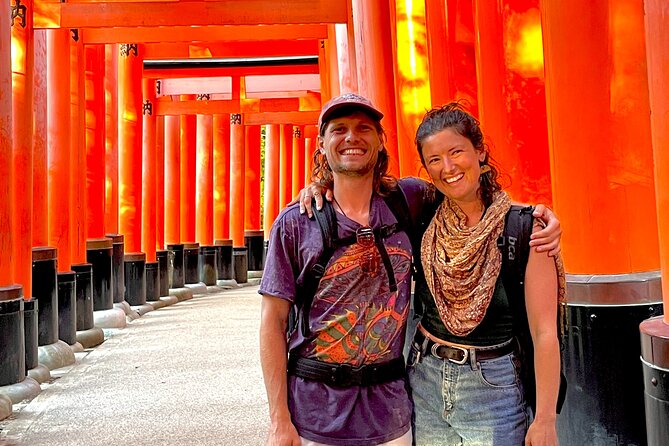
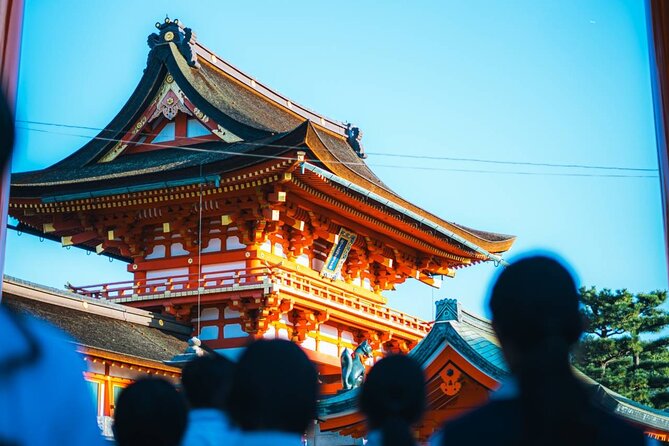
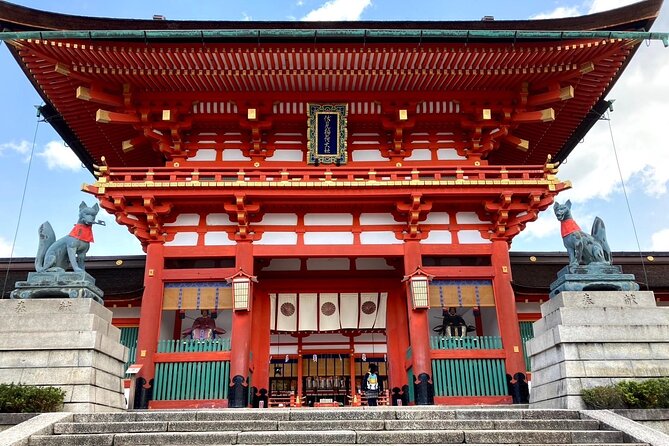
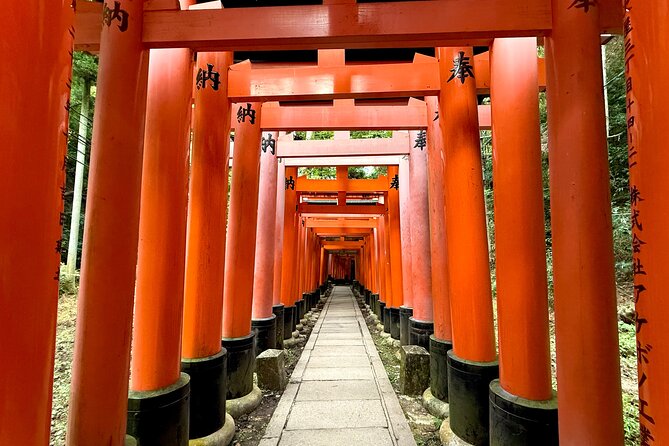
Your first stop is Fushimi Inari-taisha, Kyoto’s famous shrine dedicated to Inari, a Shinto deity linked with rice, business, and prosperity. The shrine is best known for its long corridors of orange-red torii gates, donated over many years by individuals and companies.
You have about 90 minutes here. That gives you time to pass through the main shrine area and begin the uphill route on Mount Inari. The gates are close together at first, creating the tunnel-like effect seen in nearly every Kyoto photo. Farther up, the path becomes more wooded and the mood quieter.
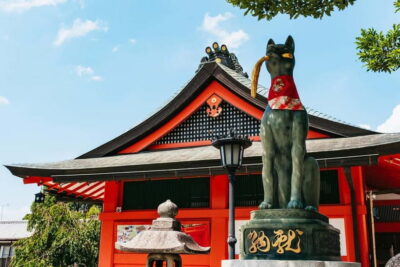
Your guide can add meaning to what might otherwise feel like a quick photo stop. You will learn about shrine customs, the role of fox statues, and the way the site has grown into one of Kyoto’s most important religious and tourist landmarks. The strongest guides, including Vincent, Hiro, Caleb, and Cade, have been praised for explaining culture and local history in a way that stays accessible rather than sounding like a lecture.
The 90-minute slot is useful, but it is not enough for a full Mount Inari hike. If you want to climb all the way to the summit, you will need to return on your own. This tour gives you an introduction and the famous gate sequence, not an exhaustive mountain walk.
Fushimi Inari is free to enter. That helps keep the morning moving, since there is no admission queue to manage. Wear shoes you can walk in, and remember that the route includes steps and an incline. The early hour also helps with summer heat. One particularly practical comment praised the tour for beating both the crowds and the heat.
More ways to walk Fushimi Inari:
- Kyoto: Fushimi Inari, Kinkakuji, Bamboo Grove 1 Day Bus Tour
★ 4.8 · 4,316 reviews - Fushimi Inari Hidden Hiking Tour (Private Option Available)
★ 5.0 · 1,750 reviews - Kyoto/Osaka: Nara, Fushimi Inari Taisha, Arashiyama Bus Tour
★ 4.7 · 1,275 reviews
Arashiyama Bamboo Forest without the midday crush
After Fushimi Inari, the group travels to Arashiyama. The journey is not a private transfer, and the ¥390 transportation fee is not included in the tour price. Your guide handles the route and keeps everyone together, which is a real convenience when you are trying to make the most of one morning.
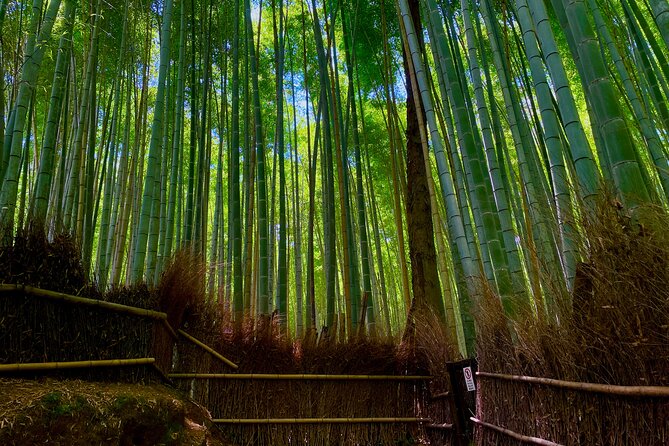
The Bamboo Forest receives about an hour. The famous path runs between tall bamboo stalks that filter the light and create a cool, green corridor. It is one of Kyoto’s most photographed places, but the experience changes sharply with crowd levels. Later in the day, the narrow path can feel more like a photo queue. Early in the morning, you have more room to walk and stop.
Your guide may point out the best places for photographs and help take pictures. Haruka was specifically praised for taking good photos, while Hiro and Vincent were noted for finding strong photo spots away from the worst congestion. That extra help matters for solo visitors and families who want one picture with everyone in it.
The forest itself is not a long hiking route. Think of it as a scenic path and a short atmospheric walk. The surrounding Arashiyama district offers more to see, but this tour keeps to its scheduled stops, so you will not have time to explore every side street or shop.
If you want shopping time, you may find the schedule brief. One person used the tour as an introduction, then returned the next day to spend longer hiking and shopping in the area. That is a sensible way to use this experience: let the guide show you the essential sights, then revisit the places that deserve more time.
Tenryu-ji adds a Zen garden and breathing room
The next stop is Tenryu-ji, a UNESCO World Heritage temple in Arashiyama. You have about an hour here, which gives the morning a welcome change of pace after the torii gates and bamboo path.
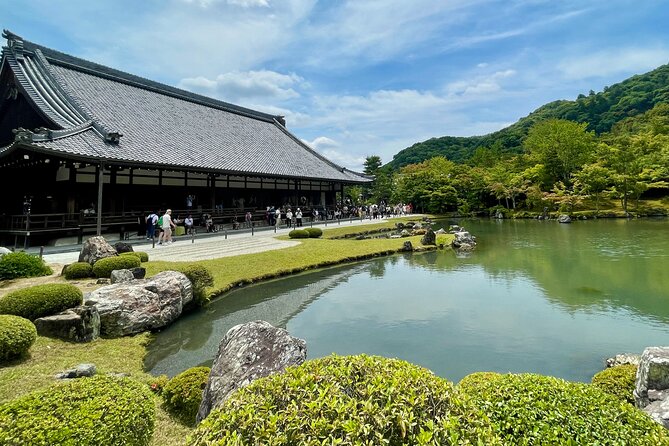
Tenryu-ji is known for its Zen garden and views toward the surrounding mountains. The garden is carefully arranged, with ponds, rocks, trees, and borrowed scenery working together rather than competing for attention. This is the kind of place where a guide’s explanation can help you notice why the garden feels balanced and calm.
The tour information contains a pricing inconsistency worth checking before you pay. The inclusion list says the Tenryu-ji admission fee is included, while the itinerary line says admission is not included. Confirm the current arrangement with Tomodachi Tours so you know if a separate temple payment is required.
An hour is enough to see the principal areas included in the visit, but it is not a long temple study session. If gardens are your main interest, you may want to return independently. For a first look at Arashiyama’s cultural side, though, Tenryu-ji keeps the tour from becoming only a series of famous photographs.
Togetsu-kyo Bridge closes the Arashiyama visit
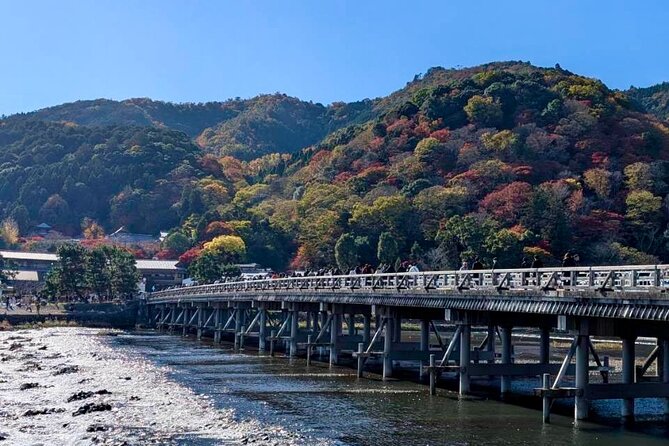
The final stop is Togetsu-kyo Bridge, with about 15 minutes set aside for it. The name means Moon Crossing Bridge, and the bridge spans the Katsura River at the center of Arashiyama.
The current structure dates from 1934, though a bridge has stood here since the Heian Period. The short stop is mainly for views and photographs. You will see the river, the hills, and the bridge’s place within the wider Arashiyama setting.
Fifteen minutes is not enough to linger, cross back and forth several times, or explore the riverbanks. That is not a flaw if you see the bridge as a closing viewpoint. It is a limitation if you want a relaxed riverside visit.
After Togetsu-kyo, the activity ends back at the Kyoto Station meeting point. The return makes planning easier, especially if you have an afternoon reservation or want to continue sightseeing near the station.
More Arashiyama and bamboo walks:
- Osaka/Kyoto:Kinkakuji,Arashiyama,FushimiInariShrine,NaraPark
★ 4.1 · 1,596 reviews - Kyoto Arashiyama Walking Tour: Bamboo, Monkeys, Gardens & Secrets
★ 5.0 · 1,216 reviews - Arashiyama Bamboo, Temple, Monkeys, or Secret Sake Brewery
★ 4.8 · 886 reviews - Kyoto: Arashiyama Bamboo Forest, Monkeys, Matcha & Temple Tour
★ 5.0 · 759 reviews
What the guide adds to a do-it-yourself morning
You can visit all four stops without a tour. Fushimi Inari and the Bamboo Forest are free, and Kyoto’s rail system can get you between them. The reason to pay for this experience is not access. It is structure, local explanation, and navigation.
The guide meets you early, leads the group through public transportation, explains what you are seeing, and keeps the morning moving. That can save you from losing time at the station or wondering which path makes sense at a busy shrine.
The strongest guide feedback centers on personality as much as facts. Vincent is repeatedly praised for being attentive, friendly, and helpful with directions and photographs. Hiro is described as funny, enthusiastic, and well informed about Kyoto. Caleb is praised for clear English, cultural context, and keeping the group moving on hot days. Eri, Jem, Haruka, and Cade also receive warm comments for making the morning personal and easy to follow.
You should not assume a particular guide will lead your departure. Names connected with the experience include Vincent, Hiro, Caleb, Eri, Jem, Haruka, and Cade, but assignments can vary. The important point is that the guide quality appears to be a major part of the experience, so the tour works best if you enjoy asking questions and walking with a group.
The group size is another selling point. The information gives two limits, maximum nine in one description and maximum eight in the additional details. In either case, this is intended to be a small group, not a full coach tour. A group of three or five plus a guide allows more conversation and makes it easier to pause for photos.
Is $96.83 a fair Kyoto tour price?
At $96.83 per person, this is a premium price for a half-day outing. The major sights themselves are largely inexpensive or free, and transportation costs only ¥390 per person according to the tour details. That means you are paying mainly for the guide’s time, the early planning, and the convenience of moving between districts.
I would consider the price reasonable if you have only one day in Kyoto, feel uneasy using Japanese trains, or want cultural context rather than a checklist of places. It can also make sense for solo visitors who want company and help with photographs, or for families who prefer a guide to handle the morning.
I would be more cautious if you are a confident independent visitor. You can spend longer at each site, return for shrine stamps, hike farther on Mount Inari, or shop in Arashiyama without watching the clock. One important criticism came from someone who wanted shrine and temple stamps. The temple was not open early enough to collect one during the tour, so a second visit was needed.
The transportation charge should be part of your calculation. The tour price does not include the ¥390 train fare, and food and drinks are also excluded. Hotel pickup and drop-off are not provided.
The Tenryu-ji admission wording also needs clarification before booking. One section says the fee is included, while another says it is not. This may be a simple presentation error, but it affects the final cost.
Who will get the most from this morning?
I would choose this tour for a first-time Kyoto visit when time is tight. It covers two major districts and gives you a useful first look at four major sights in four to five hours.
It suits you especially well if you:
- Want photographs before the heaviest crowds arrive
- Prefer a group capped at roughly eight people
- Like learning cultural background as you walk
- Need help with Kyoto’s public transportation
- Are traveling alone or with family
- Want an early introduction before exploring independently
Families can do well here, though you should be comfortable with walking and an early start. Jem was praised for keeping a family with a six-year-old engaged, and Hiro was praised for accommodating a family with a baby. Those examples suggest the guides can adjust their pace, but the route still involves walking and stairs.
This is less suited to anyone who dislikes early mornings, wants a slow visit, or expects transportation and every admission fee to be covered. It is also not the right choice if your main goal is a full Mount Inari hike or a long Arashiyama shopping session.
Dress for the forecast. Rain can make the paths quieter, but wet weather changes the feel of the morning. Summer can be hot and humid, while cherry blossom season can bring larger crowds even at an early hour.
Booking details worth checking first
Confirmation is provided when you book, and the activity is near public transportation. Most people can take part, but you should be ready for several hours of walking, standing, steps, and train travel.
The ticket is mobile, so keep your booking accessible on your phone. Arrive early at the Kyoto Station meeting point, since missing a small group at the start can create problems. One group had trouble finding one another despite receiving clear joining instructions, so do not treat the early meeting time casually.
Free cancellation is available if you cancel at least 24 hours before the local start time. Cancellations or changes made less than 24 hours before the start are not accepted for a refund.
Should you book the Fushimi Inari and Arashiyama early tour?
Book it if beating crowds and simplifying Kyoto’s trains matter more to you than saving money. The itinerary is smart, the group is small, and the early start tackles the biggest problem at both Fushimi Inari and the Bamboo Forest.
Skip it if you are comfortable planning your own route and want maximum time at each stop. At nearly $100 before food and transportation, the tour is not a bargain sightseeing pass. It is a guided morning designed to make Kyoto’s most popular sights easier, calmer, and more understandable.
Before booking, confirm the Tenryu-ji admission detail and the exact group-size limit. If those points are clear and the early hour suits your plans, this is a strong introduction to Kyoto, especially when you have only one morning to spare.
Key points
- Early access to two crowded sights: Visit Fushimi Inari and Arashiyama Bamboo Forest before the day’s largest crowds arrive.
- Small-group format: The tour is limited to about eight travelers in the additional details, allowing more personal attention.
- Four contrasting stops: Combine torii gates, bamboo paths, a Zen garden, and a historic river bridge.
- Public transportation included in the experience, not the price: Your guide leads the train journeys, but you pay ¥390 per person separately.
- Strong guide element: Vincent, Hiro, Caleb, Eri, Jem, Haruka, and Cade are among the guides associated with especially warm feedback.
- Check Tenryu-ji admission: The tour details conflict on whether the temple entrance fee is included.
FAQ
How long does the Kyoto Early Bird English Tour last?
The tour lasts approximately four to five hours.
Where does the tour start?
It starts at the 7-Eleven Heart-In store beside the central entrance of Kyoto Station in Kyoto’s Shimogyo Ward.
Where does the tour end?
The activity ends back at the same Kyoto Station meeting point.
Which places are visited?
The tour visits Fushimi Inari-taisha Shrine, Arashiyama Bamboo Forest, Tenryu-ji Temple, and Togetsu-kyo Bridge.
Is transportation included?
The guide leads the group on public transportation, but the transportation fee of ¥390 per person is not included in the tour price.
Is the Tenryu-ji admission fee included?
The details are inconsistent. One section says the admission fee is included, while another says it is not. Confirm this with Tomodachi Tours before booking.
How many people can join the tour?
The additional information says the activity has a maximum of eight travelers. Another description says the group can have a maximum of nine, so confirm the current limit when booking.
Can I cancel for a full refund?
Yes. You can cancel at least 24 hours before the local start time for a full refund. Cancellations or changes made less than 24 hours before the start are not accepted for a refund.
Just added around Kyoto
- Kyoto: Zen Meditation at a Private Temple with a Monk★ 5.0 · 25 reviews
- Kyoto: Gion Geisha District & Sake-in-Hand Walking Tour★ 5.0 · 37 reviews
- Private Pewter Sake Cup Experience with a Kyoto Artisan★ 5.0 · 31 reviews
- Your Private Vacation Photography Session In Kyoto★ 5.0 · 110 reviews
- Private Guided Traditional Buddhist Cooking in Japan★ 5.0 · 16 reviews
- Kyoto Wagashi(Japanese sweets) Cooking Class near Fushimiinari★ 5.0 · 60 reviews
- Traditional Japanese Music show & Experience Tour in Kyoto★ 5.0 · 57 reviews
- Kyoto:Family-Friendly Kimono & Yukata Experience at WARGO★ 5.0 · 147 reviews
Fushimi Inari Tours, compared.

Fushimi Inari, Kinkakuji, Bamboo Grove 1 Day Bus Tour
Read our review →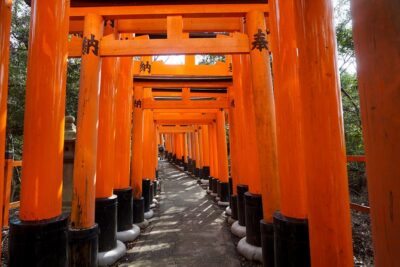
Fushimi Inari Hidden Hiking Tour (Private Option Available)
Read our review →
Kyoto/Osaka: Nara, Fushimi Inari Taisha, Arashiyama Bus Tour
Read our review →
Osaka/Kyoto: Arashiyama, Nara & Fushimi Inari Shrine w/Lunch
Read our review →
Nijo Castle, Kiyomizu & Fushimi Inari Guided Tour
Read our review →
Nijo, Kinkaku-ji, Arashiyama, Kiyomizu & Fushimi Inari
Read our review →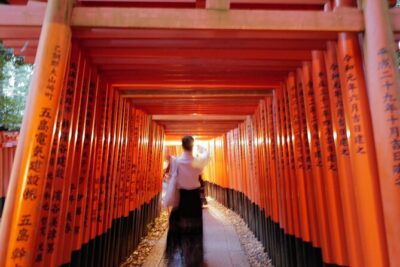
Browse the lists this tour appears in