
Reviewed · KYOTO TOURS
Kyoto Tea Ceremony and Samurai Photo Session
The best part of this Kyoto experience is that you do not just watch a tea ceremony. You make the matcha yourself, enjoy seasonal wagashi, prepare a creamy latte, and finish with photos in samurai armor inside a 100-year-old machiya. Maya, the main instructor named in the feedback, brings a warm, funny teaching style and explains the customs in clear English.
I like the mix of old and new. You learn traditional matcha preparation, then use the same tea in a modern latte you can recreate at home. I also like the small group size, capped at 10, since it gives you room to ask questions and take part instead of sitting in the back of a large demonstration.
The main consideration is timing. The hands-on tea portion is described as about 50 minutes, while the full activity lasts roughly 1 hour 20 minutes. This is a compact introduction, not a long formal tea-school lesson, and the samurai photo session adds a playful note that may feel less solemn than a strictly traditional ceremony.
Key points at a glance
- Make two kinds of matcha: Prepare tea in the traditional style, then craft a Kyoto-style matcha latte.
- Visit a 100-year-old machiya: The traditional townhouse gives the class a setting with genuine Kyoto character.
- Learn with Maya: Her cheerful manner, clear English, humor, and patient instruction are central to the experience.
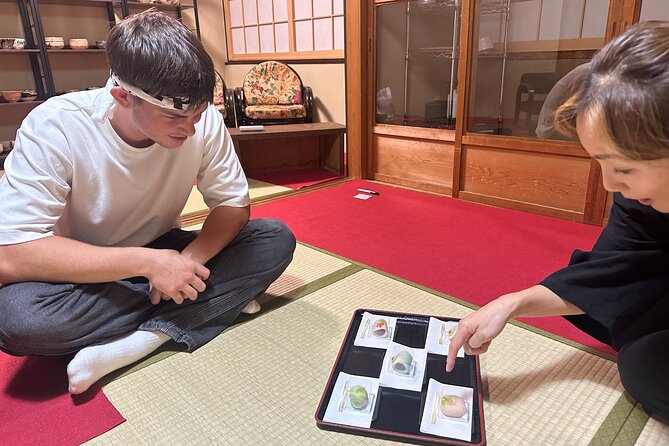
- Taste seasonal wagashi: Traditional Japanese sweets accompany the tea and add a small seasonal touch.
- Pose in real samurai armor: The final photo session gives you a memorable souvenir beyond the usual cup of tea.
- Keep logistics simple: Meet at Samurai Gyoza Factory, near public transportation, with a maximum of 10 participants.
A hands-on tea lesson in a Kyoto machiya
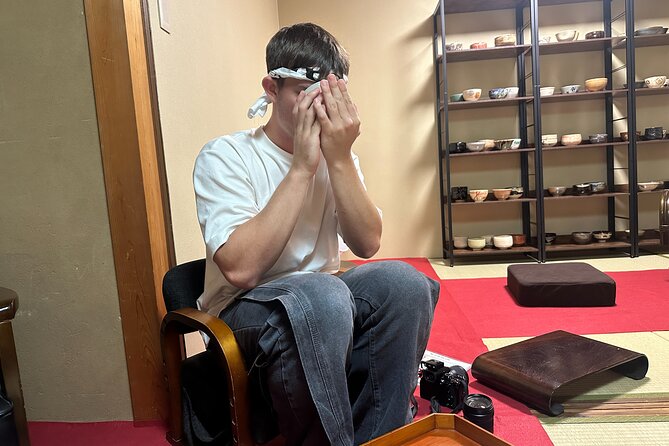
This activity begins at Samurai Gyoza Factory, at 230-1 Kamimyokakujicho in Nakagyo Ward. The class takes place in a 100-year-old machiya, the traditional wooden townhouse style that gives Kyoto much of its visual character.
That setting matters. Tea ceremony can feel abstract when it is presented in a modern classroom or a hotel meeting room. Here, the old townhouse helps you connect the small gestures of tea preparation with the buildings and daily customs that shaped Kyoto life.
You should expect the core tea portion to take about 50 minutes. The full visit is listed at approximately 1 hour 20 minutes, allowing time for the ceremony, hands-on preparation, latte making, and photographs.
The group limit of 10 is a useful detail. You are not simply watching a performer across a room. You have a chance to handle the whisk, follow the preparation steps, and ask for help. That makes this a good choice if you are new to matcha or unsure about the etiquette.
More Samurai and Ninja Experiences in Kyoto
- Kyoto Samurai Experience
★ 5.0 · 1,294 reviews - Kyoto: Kendo and Samurai Experience with Uniform and Gear
★ 4.9 · 815 reviews - Kyoto: Samurai Sword Class by Experts in Traditional Arts
★ 4.9 · 657 reviews
Maya makes the formal customs easy to follow
Maya receives especially strong praise for her teaching style. She explains the background of tea ceremony, demonstrates the process, and then encourages you to try it yourself. Her English is described as very good, which is important when an activity depends on small movements and unfamiliar terms.
Her personality also keeps the lesson from becoming stiff. The tone is friendly, funny, and encouraging. That is useful for anyone who worries about doing something incorrectly in front of a group.
Tea ceremony has a quiet, mindful side. You learn that attention is paid to the cup, the preparation, the seasonal sweet, and the person sharing the tea with you. Maya explains this idea alongside the practical steps, so you receive more than a recipe.
At the same time, you should not expect the full discipline of a formal tea-school ceremony. This is designed as an approachable cultural activity for visitors, with plenty of participation and a modern latte at the end. That is its strength, but it also means the experience favors access and enjoyment over strict formality.
Preparing traditional matcha yourself
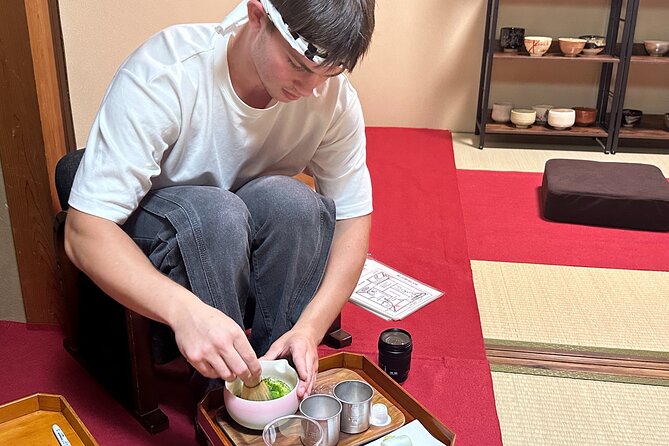
The class includes a demonstration of traditional matcha preparation before you make your own. You learn how to work with the tea and whisk, then taste the result.
For many first-time participants, this is the most useful part. Matcha is not prepared like loose-leaf tea. The powdered tea is whisked directly into water, so the technique affects the texture and flavor. A patient instructor can show you how to avoid a flat or lumpy cup.
The activity uses good-quality matcha, according to the available details. That makes a difference because first impressions of matcha can be shaped by the powder itself. Properly prepared tea has a distinct taste that can be grassy, lightly bitter, creamy, or sweet depending on the tea and preparation.
You also learn how to appreciate the moment rather than rush through it. The class connects the physical act of whisking with mindfulness, a useful idea that you can carry into your own tea routine.
This is not a tasting flight with many teas. You focus on the process and on making the drink yourself. If you want a broad lesson about Japanese tea-growing regions or a long comparison of grades, this will feel limited. If you want to understand how a bowl of matcha is made, the format works well.
Seasonal wagashi add a small but important detail
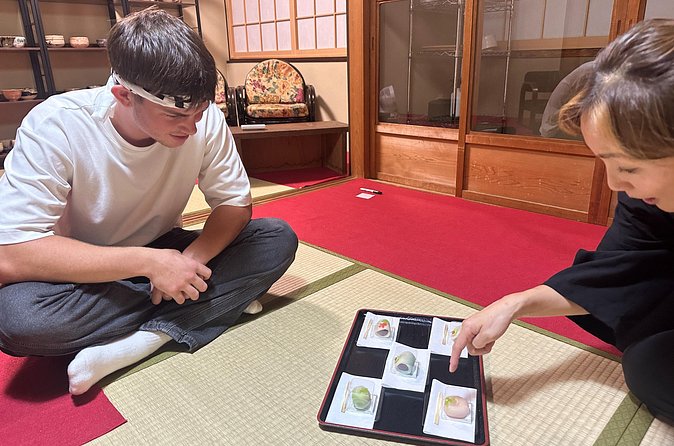
The matcha is served with wagashi, traditional Japanese sweets. These are not just snacks placed beside the tea. Their sweetness helps balance matcha’s sharper flavor, and their seasonal character reflects one of the central ideas of Japanese tea culture.
The available information does not specify the exact sweet served on each date, so the selection can vary. You should expect a small seasonal wagashi rather than a full dessert course.
I like this pairing because it gives you a simple lesson in balance. Take a bite of the sweet, then sip the tea, and you will notice how the flavors change. It also gives the ceremony a sense of occasion without turning the class into a meal.
If you have a serious sweet tooth, keep expectations in check. Wagashi tends to be delicate, and this is a modest serving designed to accompany the tea.
More Tea Ceremonies in Kyoto
- Kyoto: Tea Ceremony in a Traditional Tea House in Kiyomizu
★ 4.9 · 3,519 reviews - Kyoto: Tea Ceremony Ju-An at Jotokuji Temple
★ 4.9 · 3,207 reviews - Kyoto: 45-Minute Tea Ceremony Lesson Experience
★ 4.3 · 2,378 reviews - Kyoto: Table-Style Tea Ceremony at a Kyo-Machiya
★ 4.9 · 1,211 reviews
A modern Kyoto-style matcha latte
After the traditional preparation, you make a matcha latte. This is the most practical modern twist in the class and one of its strongest features.
The latte gives you a softer entry point if straight matcha tastes too intense. You work with the tea in a different format, creating a creamy drink that many people find easier to enjoy.
The instructor provides a recipe so you can practice at home. That changes the value of the experience. You are not only leaving with a memory and a few photos. You also have a method you can use after your Kyoto visit.
The contrast between the two drinks is worth noticing. Traditional matcha shows you the tea in its simplest form. The latte shows how the same ingredient can fit into a modern café-style drink. Together, they explain why matcha remains both a formal part of Japanese culture and a popular everyday flavor.
The latte section also makes this activity appealing to people who are more interested in food than ceremony. You still learn the customs, but you are not expected to spend the full session in a formal posture.
Samurai armor turns the final minutes playful
The experience ends with photographs in authentic samurai armor. This is a clear change of mood from the quiet tea preparation.
You may enjoy this most if you want a strong visual souvenir from Kyoto. The armor adds drama to your photos and gives families, friends, and couples something fun to do together. It also connects the setting with another familiar part of Japanese culture, the world of the samurai.
There is a tradeoff. If you want a purely traditional tea ceremony with no staged element, the photo session may feel like a tourist add-on. I see it differently for most visitors: the class is already presented as a cultural activity with a modern angle, and the armor photographs make the experience more relaxed and memorable.
The photos also help break up the lesson. After sitting quietly and focusing on small tea-making movements, you finish with a chance to be active and playful.
What the $71.74 price really buys you
At $71.74 per person, this is not the cheapest way to drink matcha in Kyoto. You can buy a tea and sweet at a café for far less.
The value comes from the combination of instruction, participation, setting, food, recipe, and samurai photographs. You are paying for a structured cultural activity rather than a beverage. The small group size adds value because the session depends on personal guidance.
I would consider the price fair if you want one compact Kyoto activity that covers several interests at once. It works especially well for a first visit, when you may want a clear introduction without committing to a lengthy ceremony.
The cost is harder to justify if you already know how to prepare matcha, have attended a formal tea ceremony, or mainly want a quiet bowl of tea. In that case, a more focused tea experience may suit you better.
The activity is also a practical option for a tightly planned itinerary. At roughly 80 minutes, it does not consume half a day. You can place it between other sights in central Kyoto, though you should allow enough time to reach the meeting point without rushing.
Who will enjoy this experience most
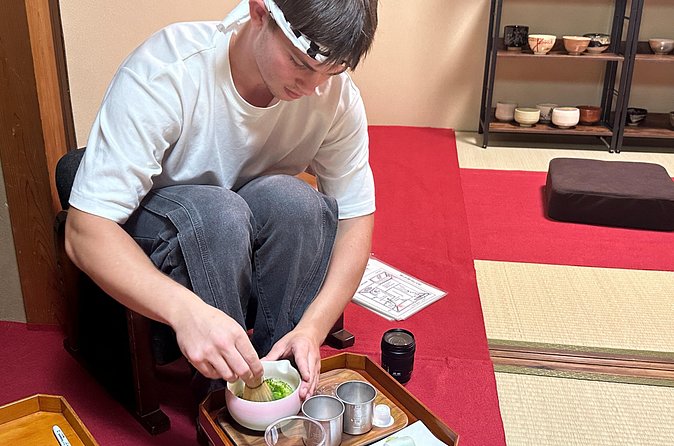
I would recommend it to first-time matcha drinkers, curious food lovers, families, couples, and friends looking for something more interactive than sightseeing.
It is also a good fit if you want cultural context but prefer a light, friendly presentation. Maya’s clear English and humor make the activity approachable, especially if Japanese customs are new to you.
The class suits people who like to take photos. The old townhouse, tea equipment, wagashi, latte, and armor all create different picture opportunities.
You may want to choose another activity if your main goal is an extended, highly formal tea ceremony. The short format and playful ending are designed for accessibility. That is helpful for many people, but it is not the same as attending a ceremony led according to every formal rule.
The group size can reach 10, so you should not expect a private lesson unless your booking happens to fill the room with your own party. Still, 10 is small enough for a hands-on class and much more personal than a large demonstration.
Getting there and planning your booking
The meeting point is Samurai Gyoza Factory Kyoto, at 230-1 Kamimyokakujicho, Nakagyo Ward, Kyoto, postal code 604-0025. The activity ends at the same location.
The site is near public transportation, which makes it easier to fit into a day of sightseeing. Use the mobile ticket supplied with your booking, and check the address carefully before leaving. Kyoto addresses can be difficult to read quickly, especially when several streets use similar names.
Confirmation is provided when you book. Since the activity is often reserved well ahead of time, with an average booking lead time of about 72 days, you should reserve early if your Kyoto dates are fixed.
You can cancel for a full refund up to 24 hours before the start time. Changes or cancellations made within 24 hours are not accepted for a refund, and the cut-off follows Kyoto local time.
Should you book the tea ceremony and samurai session?
Book this if you want an easy, compact way to take part in Japanese tea culture rather than simply watch it. The combination of a century-old machiya, traditional matcha, seasonal wagashi, a make-your-own latte, and samurai armor gives you a lot to do in a short visit.
I especially recommend it for beginners. Maya’s patient, cheerful instruction helps remove the fear of making a mistake, and the recipe gives the experience some value after you return home.
Skip it if you want an austere, lengthy ceremony or a specialist lesson in tea history. For most visitors, though, the format hits a useful middle ground: cultural, tasty, hands-on, and fun without taking over your Kyoto day.
FAQ
How long does the Kyoto tea ceremony and samurai photo session last?
The full activity lasts approximately 1 hour 20 minutes. The central tea ceremony and matcha-making portion is described as taking about 50 minutes, with the remaining time covering the latte and samurai photo session.
Where does the activity begin and end?
You meet at Samurai Gyoza Factory Kyoto, located at 230-1 Kamimyokakujicho, Nakagyo Ward, Kyoto, 604-0025, Japan. The activity ends back at the meeting point.
How many people can join the experience?
The group has a maximum of 10 participants.
Is the activity suitable for beginners?
Yes. The experience is designed for beginners and curious participants. You receive an explanation and demonstration before making your own traditional matcha and matcha latte.
What is the price?
The listed price is $71.74 per person.
Can I cancel for a full refund?
Yes. You can cancel at least 24 hours before the scheduled start time for a full refund. Cancellations or changes made less than 24 hours before the start time are not accepted for a refund.
More Photo Shoots in Kyoto
- Kyoto: Maiko Makeover and Photoshoot Experience
★ 4.7 · 239 reviews - Kyoto: Private Photoshoot Service
★ 5.0 · 158 reviews - Your Private Vacation Photography Session In Kyoto
★ 5.0 · 110 reviews - Kyoto: Tea Ceremony with Kimono and Photoshoot
★ 4.9 · 90 reviews
Just added around Kyoto
- Kyoto: Zen Meditation at a Private Temple with a Monk★ 5.0 · 25 reviews
- Kyoto: Gion Geisha District & Sake-in-Hand Walking Tour★ 5.0 · 37 reviews
- Private Pewter Sake Cup Experience with a Kyoto Artisan★ 5.0 · 31 reviews
- Your Private Vacation Photography Session In Kyoto★ 5.0 · 110 reviews
- Private Guided Traditional Buddhist Cooking in Japan★ 5.0 · 16 reviews
- Kyoto Wagashi(Japanese sweets) Cooking Class near Fushimiinari★ 5.0 · 60 reviews
- Traditional Japanese Music show & Experience Tour in Kyoto★ 5.0 · 57 reviews
- Kyoto:Family-Friendly Kimono & Yukata Experience at WARGO★ 5.0 · 147 reviews
Kyoto Tours, compared.


Fushimi Inari, Kinkakuji, Bamboo Grove 1 Day Bus Tour
Read our review →
Tea Ceremony in a Traditional Tea House in Kiyomizu
Read our review →
Kyoto Geisha Walking Tour: Gion District & Hidden Gems
Read our review →

Gion Magical Night Walking Tour with Geisha Trivia
Read our review →

Gion Geisha District Walking Tour – Stories of Geisha
Read our review →Browse the lists this tour appears in