
Reviewed · HIROSHIMA TOURS
Hiroshima & Miyajima: UNESCO A-Bomb Dome & Itsukushima
Hiroshima is best understood through both sides of its story: the quiet spiritual beauty of Miyajima and the solemn memory preserved in the city. This private day brings them together with local guides such as Masa and Yuka, some with family connections to atomic bomb survivors, so the past feels personal rather than distant.
I especially like the flexible pacing and the practical help with trains, ferries, trams, food stops, and photographs. The main caution is that seven hours is a tight frame for two major destinations, and transportation, lunch, island taxes, and some optional activities cost extra.
Key points to know before you go
- Family history adds meaning: Some Hiroshima-born guides share stories passed down through families affected by the bombing.
- Miyajima comes first: You visit Itsukushima Shrine, the floating torii, Daishoin Temple, Senjokaku Pavilion, deer, and the shopping street.
- The city portion is serious and moving: The Atomic Bomb Dome, hypocenter, Peace Memorial Park, Children’s Peace Monument, and museum form the second half.
- Private means adaptable: Your guide can change the order, walking pace, transport, and emphasis to suit your group.
- Local food fits naturally into the day: You can stop for okonomiyaki, oysters, eel, beef, momiji manju, and other regional foods at your own cost.
- Budget for transport: The $177 price covers the guide and stated admissions, but public transport, taxis, food, and Miyajima’s visitor tax are extra.
Why this private Hiroshima day works
The strongest feature here is not simply the number of sights. It is the connection between place and memory.
On Miyajima, you see an island shaped by Shinto belief, Buddhist practice, tides, deer, temples, and local food. In Hiroshima, you confront the consequences of August 6, 1945, through buildings, memorials, photographs, artifacts, and personal accounts.
A group excursion often has to move everyone along at the same pace. This private format gives you room to ask questions, pause when needed, or change the plan. Guides have adjusted visits for elderly family members, wheelchair users, changing tides, rain, photography interests, and tight schedules.
I also like the human scale. Guides such as Yuka and Masa are described as warm, careful, and easy to talk with, but their real value is practical as much as personal. They can meet you at a central hotel, Hiroshima Station, a cruise terminal, or another agreed location, then help you handle the transport network throughout the day.
The experience costs $177 per person. That is not a bargain in the same sense as a self-guided train trip, especially because transport and meals are not included. But for a private group, the price can make sense if you want a local interpreter for the history, help with navigation, photographs, and a day adjusted to your interests.
A few more Hiroshima half-days to weigh up
- Peaceful Hiroshima & Miyajima UNESCO 1 Day Bus Tour
★ 5.0 · 5,309 reviews - Hiroshima: Hiroshima and Miyajima UNESCO Sites 1-Day Tour
★ 4.9 · 2,330 reviews - Hiroshima / Miyajima Full-day Private Tour with Government Licensed Guide
★ 5.0 · 1,298 reviews
Start on Miyajima, where the day feels lighter
The usual pattern begins with a train ride of about 40 minutes and a ferry ride of about 15 minutes. The exact route can change based on your starting point, the tide, and your preferences.
Miyajima, officially Itsukushima, gives the day a gentle opening. The island is famous for its shrine and torii gate, but the appeal is broader. You have sacred sites, mountain scenery, deer, small food shops, temple grounds, and a slower rhythm than in central Hiroshima.
Your guide can explain the religious ideas behind the island rather than simply point out attractive buildings. That matters because Itsukushima Shrine is not just a seaside photo stop. Its position over the water, its ceremonial design, and the changing tide all shape how you see it.
The island also gives your guide a chance to learn your pace. You may prefer to cover several sites quickly, linger over details, or stop often for photographs and snacks. The day can be adjusted, though you should be honest about your walking ability from the beginning.
Itsukushima Shrine and the famous floating torii
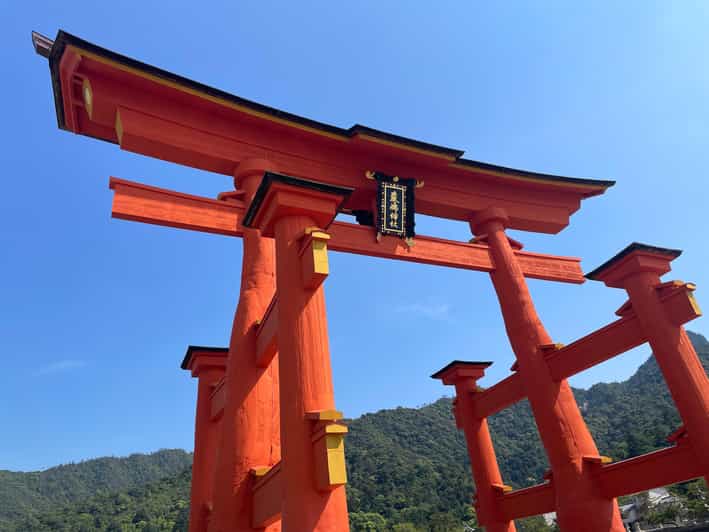
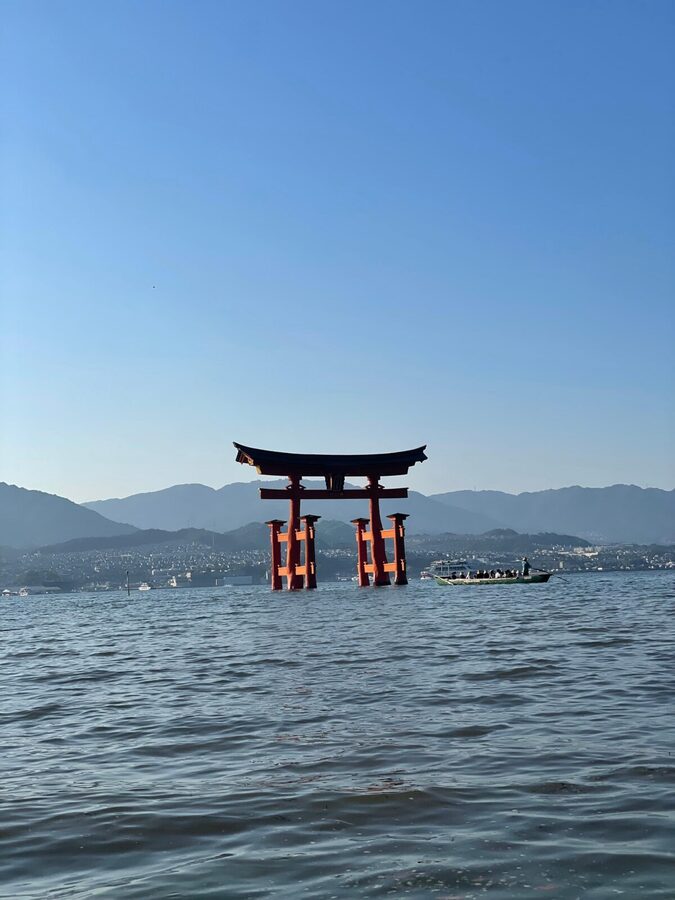
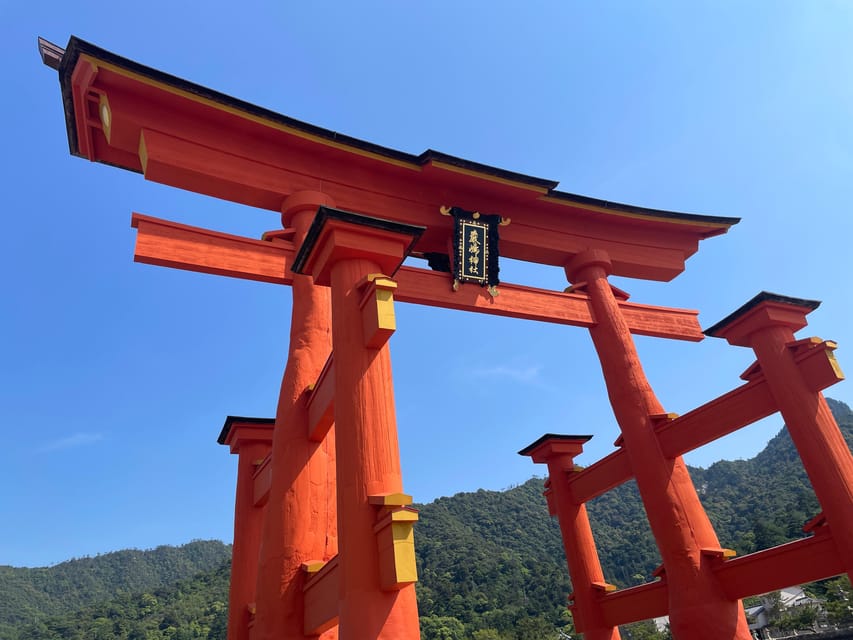
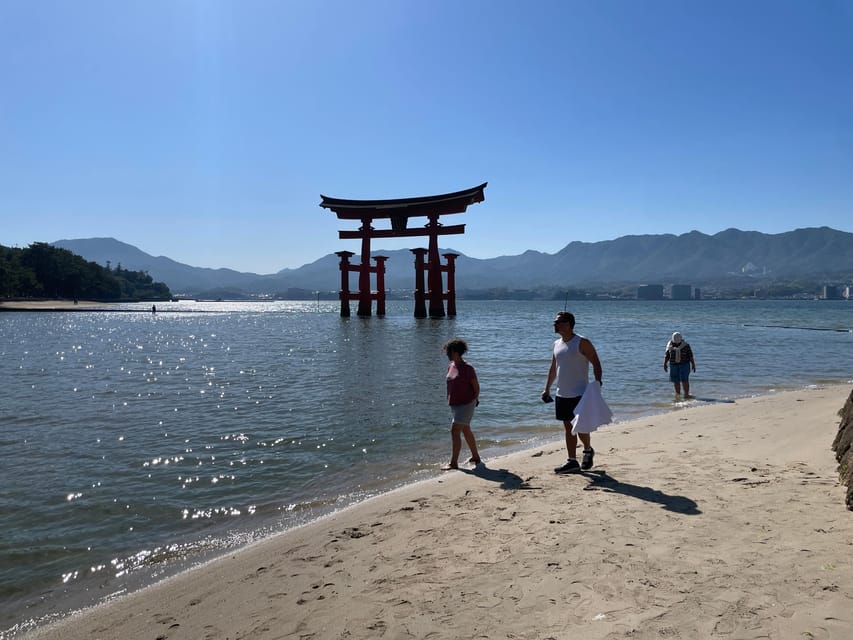
The floating torii gate is the image most people associate with Miyajima. Your visit includes a photo stop and guided explanation, with the view changing according to the tide.
At high tide, the gate appears to float offshore. At lower water, you may be able to see the ground around it more clearly. The tour provider warns that tides can affect the order and shape of the day, so do not expect every timing detail to remain fixed.
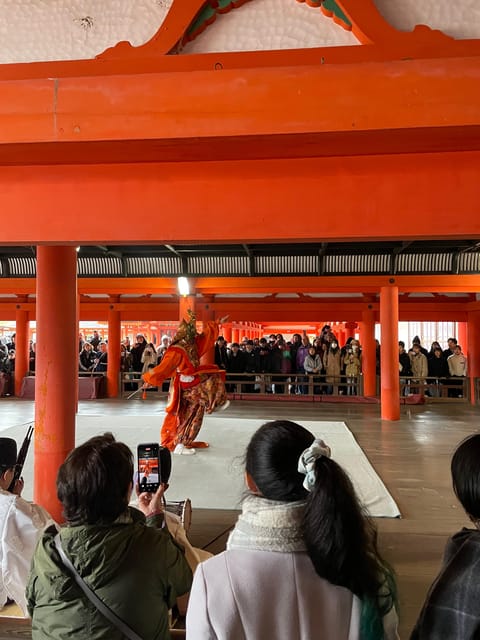
Itsukushima Shrine itself receives about 20 minutes in the planned schedule, including free time and scenic views along the way. That is enough for a focused introduction, but not an exhaustive architectural study. If the shrine is your main reason for visiting Miyajima, tell your guide early so the balance can be adjusted.
The calm atmosphere is part of the charm. You can listen to explanations about Shinto traditions, watch the water and surrounding hills, and take photographs without treating the shrine as just another item on a checklist.
Daishoin Temple, Senjokaku, and Miyajima’s spiritual side
Daishoin receives about 30 minutes, making it one of the more substantial stops on the island. The temple offers a different religious experience from Itsukushima Shrine, and your guide can help explain the relationship between Shinto and Buddhist traditions in Japan.
This stop is especially useful if you want more than the island’s most famous view. The temple complex has details that are easy to overlook alone, and a local guide can point out symbolism, customs, and small features that do not always make it into a standard guidebook.
Senjokaku Pavilion follows with a shorter photo stop and guided visit. It provides another useful pause in the route, though the ten-minute schedule means you will not spend long there.
You will also see deer around Miyajima. They are part of the island experience, but remember that they are living animals, not props for photographs. Keep food and belongings secure, and follow local guidance.
Same base, a completely different sort of day:
- Hiroshima Historical Walking Tour – Why A-Bomb was Dropped
★ 4.8 · 893 reviews - Hiroshima Peace (Heiwa) Walking Tour at World Heritage Sites
★ 5.0 · 872 reviews - Hiroshima in a Nutshell: Morning Bike Adventure
★ 5.0 · 524 reviews - Hiroshima City 4hr Private Walking Tour with Licensed Guide
★ 5.0 · 437 reviews
Omotesando Street brings in the food
Miyajima Omotesando Shopping Street is where the day shifts from sacred sites to food and local shopping. The schedule allows about 30 minutes for a workshop or similar activity, but optional events are not included, so confirm the cost before joining anything.
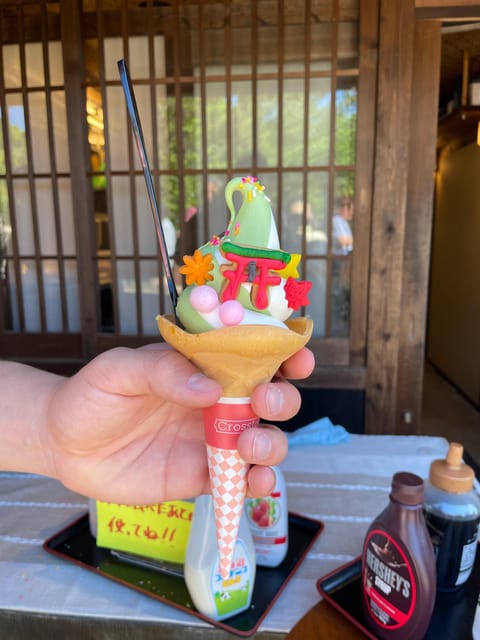
Lunch is allotted about an hour and a half. This is a sensible place to try regional food, though meals are paid separately. Depending on what interests you, your guide can help you look for oysters, eel, beef, street food, and momiji manju, the small maple-leaf-shaped cake associated with Miyajima.
Hiroshima-style okonomiyaki is another strong choice, although you may eat it in the city rather than on the island. The food stop is more valuable with a guide because you can ask what is local, what is seasonal, and how a dish fits into the area’s food culture.
Build in some restraint here. A long lunch, a workshop, and shopping can squeeze the Hiroshima memorial portion. If the museum and Peace Memorial Park are your priority, tell your guide that you want to protect enough time for them.
Returning to Hiroshima by ferry, tram, or taxi
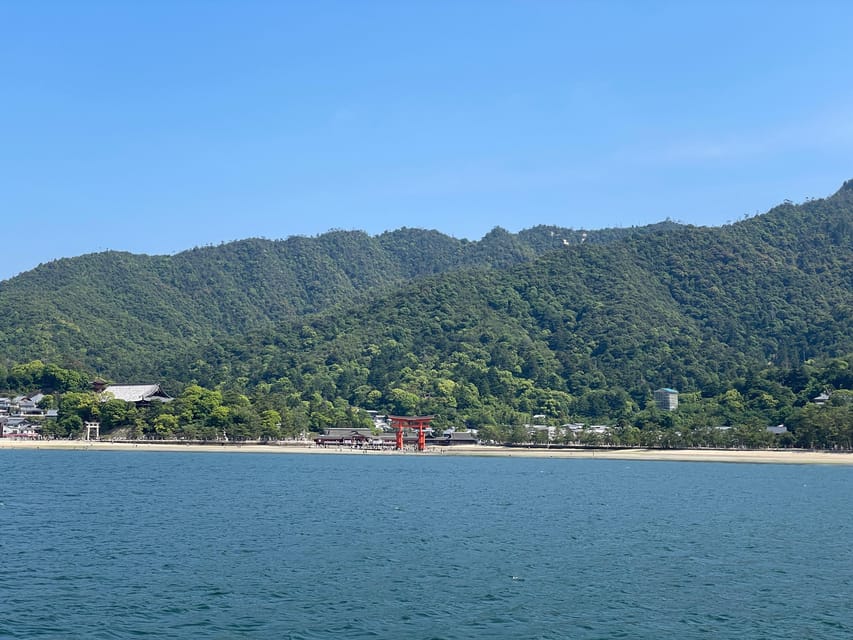
After Miyajima, the published route allows about 15 minutes for the ferry and about 45 minutes for a tram or related city transfer. The actual return can vary.
This is one area where the private format earns its keep. Guides have used different boats, including faster return options, when that helped reduce walking or fit the tide. One guide also waited in a restaurant queue for a couple, which is a small service but useful when the day is busy.
You pay for transportation yourself. That includes trains, ferries, trams, buses, and taxis, depending on the route chosen. A JR pass may cover some portions, but the provided details do not promise coverage for every segment, so carry a usable transit card or budget for fares.
If you are coming from a cruise port, note that a taxi from and back to the port is not included. Pickup is on foot, and central Hiroshima hotels and several transport points are listed as pickup choices. If your accommodation is not listed, contact the provider in advance. Central Hiroshima locations may still be accepted.
Hiroshima Castle and Shukkei-en add local context
The city portion may include Shukkei-en Garden and Hiroshima Castle before the memorial sites. Shukkei-en receives about 30 minutes, enough for a guided walk and photographs.
I like this garden stop because it gives you a quieter setting before the emotionally heavy part of the day. It also helps show Hiroshima as a living city, not only a place defined by wartime destruction.
Hiroshima Castle receives about 15 minutes. That is a brief visit, so expect an outside look and explanation rather than a full museum visit. The castle stop can also be added or emphasized when your group has a special interest in the city’s older history.
The order may change with your pickup point, weather, tides, and the time available. That flexibility is useful, but you should not assume every listed stop will receive equal attention. Ask your guide to identify the non-negotiable sights at the start.
The Atomic Bomb Dome and the hypocenter
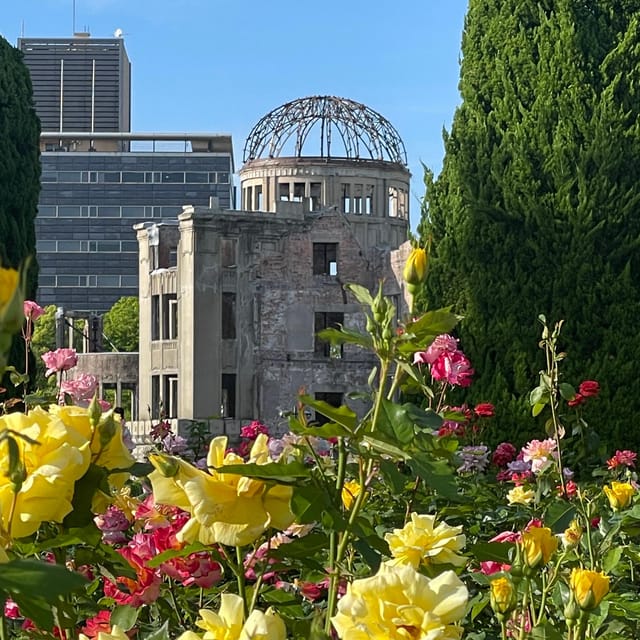
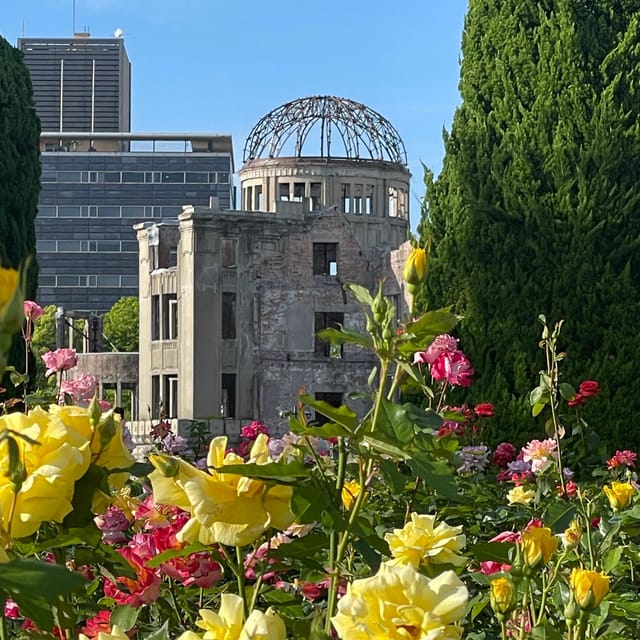
The Atomic Bomb Dome is one of Hiroshima’s most important surviving structures. The planned stop lasts about 15 minutes and includes photographs and a guided explanation.
The building’s damaged frame is powerful precisely because it is not a reconstructed monument. It remains a physical link to the morning of August 6, 1945, and to the city that was rebuilt around it.
The hypocenter stop is shorter, about ten minutes. It is less visually dramatic than the Dome, but its importance is geographic and historical. The point helps you understand that the bombing was not an abstract event somewhere in the city. It happened at a specific place, among ordinary homes, schools, streets, and families.
A guide with family connections to survivors can add a personal layer here. The point is not to turn someone else’s pain into a performance. A good guide gives you context, answers questions carefully, and lets the site remain serious.
Peace Memorial Park and the Children’s Peace Monument
Peace Memorial Park allows about 30 minutes in the planned schedule, followed by the Children’s Peace Monument. The park is open, spacious, and quiet, with several monuments that ask you to consider the lives affected by the bombing and the city’s later commitment to peace.
The Children’s Peace Monument is closely associated with the story of children affected by radiation sickness and with paper cranes as a symbol of hope. Your guide can explain the meaning and help you connect the monument to the wider memorial area.
This section of the day requires emotional energy. You can ask for a pause, shorten a stop, or spend more time in silence. The private setting is helpful because you are not forced to match a large group’s mood or schedule.
One hour in the Peace Memorial Museum
The museum is allotted about one hour and admission is included. The tour provider also says you can skip the ticket line, which can protect valuable time on a busy day.
One hour gives you a clear introduction, not a full reading of every display. The museum contains difficult photographs, personal objects, and accounts of the bombing’s aftermath. You may find the material upsetting, especially after visiting the Dome and hypocenter.
Some people prefer a guide nearby to explain context and answer questions. Others need to move through the museum alone. Tell your guide which approach suits you. In crowded periods, the guide may not be able to provide continuous commentary inside every room, so the best help may come before and after your museum visit.
The museum is closed from February 16 through 21 for renewal. If your date falls in that period, confirm how the time will be used and do not assume the standard museum visit will happen.
How flexible is the private format?
The flexibility is genuine, but it is not unlimited. You have seven hours, and Miyajima and Hiroshima each deserve more time than a single day can provide.
You can ask for more food, gardens, castle history, photography, temple details, memorial sites, or less walking. Guides have adapted plans for older adults, wheelchair users, families with children, and people arriving by train or cruise ship.
The best approach is to send your priorities before the day. List your top three sights, your walking limits, food interests, and any transport pass you hold. That allows the guide to shape a practical route instead of trying to fit everything in at the last minute.
The tour is wheelchair accessible, but you must notify the provider in advance. Depending on the group’s needs, the route may use more taxis or avoid some walking. Extra transport costs remain your responsibility.
Who gets the best value from $177?
I would choose this tour if you have one day in Hiroshima and want both Miyajima and the memorial district without spending time figuring out connections. It is also a strong choice for families, older couples, small private groups, and anyone who wants direct conversation about local customs and history.
The price includes a Hiroshima-born live guide, photography with the data provided, admission to the Peace Memorial Museum, and entry to Shukkei-en Garden. Those inclusions matter because a private guide can do more than repeat dates. You receive help with transport, food choices, timing, photographs, and questions.
The value is weaker if you are comfortable navigating Japan alone and want a long, unhurried visit to one site. You will still pay for food and transportation, and the seven-hour schedule may feel brisk, especially if you want to shop or climb around Miyajima.
The strongest reason to pay for this experience is the guide’s personal connection. Masa and Masayo are both names that appear in the guide team’s work, while Yuka is especially active in advance planning and custom routes. English communication is described as strong, and the guides can explain both everyday Japanese culture and Hiroshima’s wartime memory.
Practical advice for making the day comfortable
Wear shoes suitable for walking and bring water. The route uses trains, ferries, trams, and possibly taxis, with time spent moving between locations.
Plan your emotional stamina as carefully as your physical stamina. Miyajima’s temples and food provide a softer beginning, but the Atomic Bomb Dome and museum can be harrowing. It is fine to ask for a quiet break or to visit part of the memorial area at your own pace.
If photography matters to you, say so. Guides can suggest useful viewpoints and take photographs for you. If food matters more, ask for recommendations for okonomiyaki, oysters, eel, beef, or island sweets.
If you have a cold, this activity is not suitable. For wheelchair use, contact the provider in advance. For a non-listed hotel or Airbnb in central Hiroshima, send the location before booking so pickup can be arranged.
Should you book this Hiroshima and Miyajima tour?
Book it if you want a private, human-scale introduction to two very different sides of Hiroshima. The guides’ local roots, family stories, transport help, and willingness to adjust the day give the experience more substance than a basic sightseeing transfer.
Do not book it expecting a slow, scholarly visit to every site. Seven hours is ambitious, the museum may feel rushed, and your final cost will rise with transport and meals.
For most first visits, I think the combination works well. You see Miyajima’s beauty, taste local food, and then give Hiroshima’s memorial sites the attention they deserve. The result is a demanding day, but one that can help you understand the city as a place of faith, loss, recovery, and ordinary life.
FAQ
How long does the Hiroshima and Miyajima tour last?
The tour lasts seven hours.
Is the tour private?
Yes. It is offered as a private group experience.
Which languages are available?
Live guiding is available in English and Japanese.
What sites are visited on Miyajima?
The day can include Miyajima Island, the floating torii gate, Itsukushima Shrine, Daishoin Temple, Senjokaku Pavilion, and Omotesando Shopping Street.
What Hiroshima memorial sites are included?
The route can include the Atomic Bomb Dome, the hypocenter, Peace Memorial Park, the Children’s Peace Monument, and the Hiroshima Peace Memorial Museum.
Is admission to the Peace Memorial Museum included?
Yes. The museum entry ticket is included, and skip-the-line access is stated. The museum is closed from February 16 through 21 for renewal.
Are transportation and meals included?
No. You are responsible for trains, ferries, trams, buses, taxis, food, drinks, and Miyajima’s visitor tax. A taxi from and to the cruise port is also not included.
Can the tour accommodate wheelchair users?
Yes, the activity is wheelchair accessible. You must notify the provider in advance so the route and transportation can be adjusted.
Just added around Hiroshima
- The Peace Memorial to Miyajima : Icons of Peace and Beauty★ 4.5 · 31 reviews
- Shore Excursion from Hiroshima Port : Private Tour in Hiroshima★ 5.0 · 17 reviews
- Hiroshima Saijo Sake Tasting Tour with visit to 7 Breweries★ 5.0 · 104 reviews
- Hiroshima & Miyajima All-Inclusive Tour w/Licensed guide Pancho★ 5.0 · 54 reviews
- Hiroshima Country Cycling: Explore Rural Life 1 HR from City★ 5.0 · 22 reviews
- Okunoshima Rabbit Island Cycling Tour with Local Guide★ 4.5 · 17 reviews
- Private Full Day Hiroshima Tour★ 4.5 · 29 reviews
- Hiroshima Private Tour with a Local – Highlights & Hidden Gems★ 4.5 · 24 reviews
Hiroshima Tours, compared.

Peaceful Hiroshima & Miyajima UNESCO 1 Day Bus Tour
Read our review →
Hiroshima and Miyajima UNESCO Sites 1-Day Tour
Read our review →
Hiroshima Historical Walking Tour – Why A-Bomb was Dropped
Read our review →
Hiroshima Peace (Heiwa) Walking Tour at World Heritage Sites
Read our review →
Hiroshima in a Nutshell: Morning Bike Adventure
Read our review →
Hiroshima City 4hr Private Walking Tour with Licensed Guide
Read our review →

Japanesel Archery Experience HIROSHIMA CASTLE SHARAKU
Read our review →Browse the lists this tour appears in