
Reviewed · HIROSHIMA TOURS
Hiroshima:Guided Virtual Tour/PEACE PARK TOUR VR
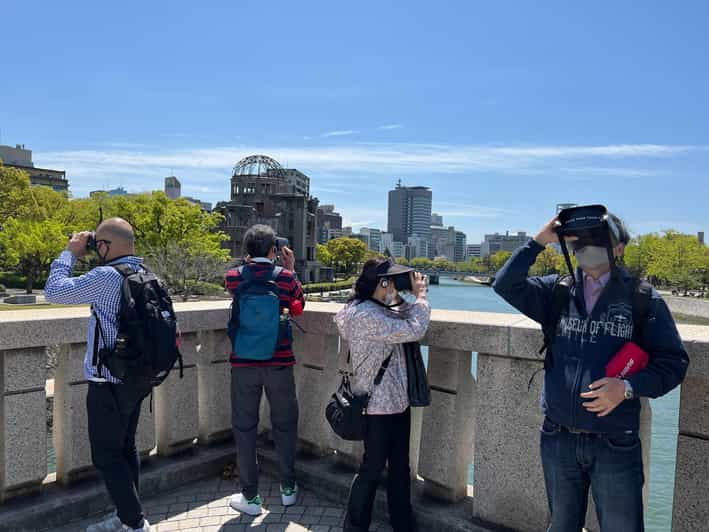
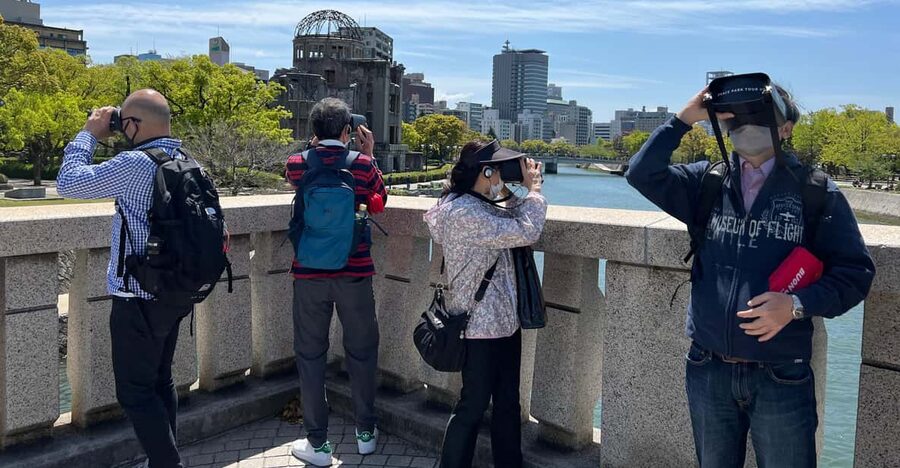
Hiroshima Peace Park changes when a VR headset shows you the city before the atomic bomb, the burned plain of August 6, and the recovery that followed. This is not a headset-only attraction. You walk with a local guide, stop at key sites, and connect the images to the ground beneath your feet.
I like the small group of up to six, which gives you room to ask questions. I also like the human side of the tour: guides such as Yoko, Kazuko, and Hiroshi add survivor stories and family connections, rather than leaving you alone with a screen. The main consideration is the serious subject matter, plus the fact that rainy weather can shorten the VR portion.
Key points at a glance
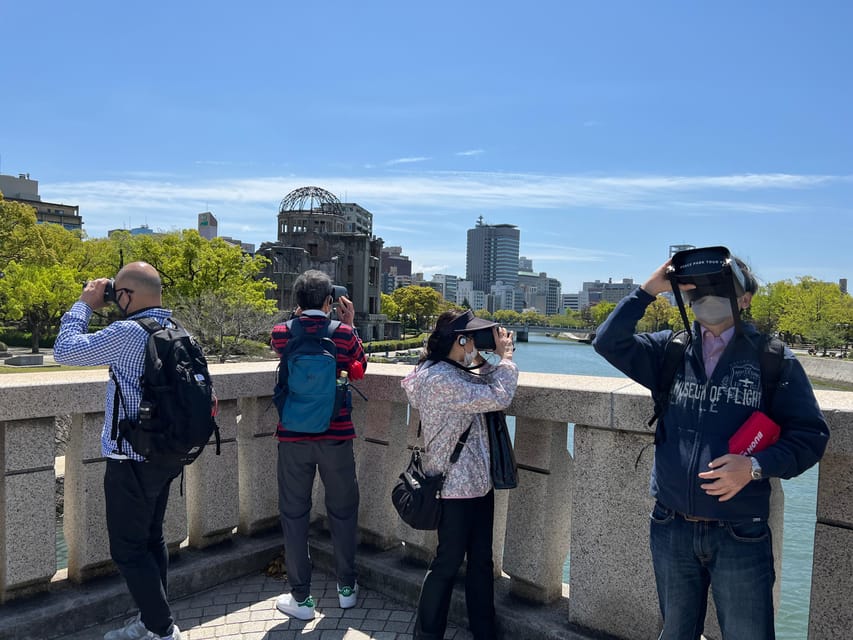
- VR at four Peace Park stops: Use the headset near the Rest House, Atomic Bomb Dome, Aioi Bridge, and Motoyasu Bridge.
- Survivor testimony shapes the scenes: The program uses hibakusha accounts and photographs from the period.
- A local guide leads the conversation: English-speaking guides answer questions and help you talk through the experience.
- Only 80 minutes: It fits well before or after the Peace Memorial Museum and other Hiroshima sights.
- Small groups matter: With no more than six participants, the walk feels more personal than a large city tour.
- Rain does not automatically cancel it: In heavy rain, fieldwork may be followed by a shorter five-minute VR session indoors.
Why this VR walk feels different in Hiroshima
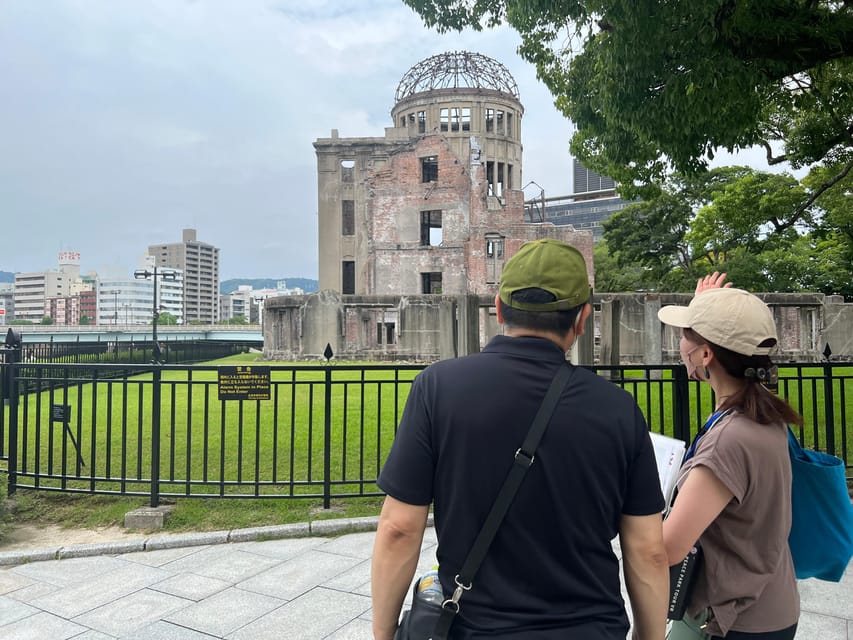
The Peace Park is easy to visit on your own. You can walk between the Atomic Bomb Dome, memorials, bridges, and the Rest House with a map or audio guide. This tour adds a clear point of comparison: you see the present site, then look through VR to picture what occupied it before the bombing and what happened immediately afterward.
That contrast is useful because the park today is calm and carefully planned. The VR scenes bring back the streets and buildings that once filled this part of Hiroshima. You are not simply looking at a monument. You are being asked to connect a normal city, a moment of destruction, and the long work of rebuilding.
The program also matters because the number of hibakusha, or atomic bomb survivors, has fallen over the decades. Their testimony remains central here, giving the VR material a human source rather than making the experience a generic war simulation.
Expect a sober visit, not light entertainment. The goal is understanding. The headset is a tool, while the guide supplies context and gives you space to ask what you are seeing.
A few more Hiroshima half-days to weigh up
- Peaceful Hiroshima & Miyajima UNESCO 1 Day Bus Tour
★ 5.0 · 5,309 reviews - Hiroshima: Hiroshima and Miyajima UNESCO Sites 1-Day Tour
★ 4.9 · 2,330 reviews - Hiroshima / Miyajima Full-day Private Tour with Government Licensed Guide
★ 5.0 · 1,298 reviews
Meeting at the Peace Park Rest House
Your starting point is the tourist information counter on the first floor of the Hiroshima City Peace Memorial Park Rest House. Arrive at least five minutes before your booked time, and look for the guide at the counter.
This is a practical meeting point because the tour begins and ends there. You do not need to find a separate street corner or chase a guide through the park. The Rest House also gives you a clear place to orient yourself before the walk.
Do not bring luggage expecting storage. The building cannot hold your bags, so arrange your own luggage before arriving. If you are running late, contact the operator at once. Arriving more than 10 minutes after the start time can mean missing the tour, and a delayed group may receive a shortened version.
The listed duration is 80 minutes. That is long enough for four stops and conversation, but short enough to fit into a day of sightseeing. You may want to visit the Peace Memorial Museum at a separate time, since the VR walk is not a replacement for the museum’s exhibits and survivor records.
The Rest House stop: setting the scene
The first section takes place around the Rest House and lasts about 20 minutes, including guided walking and sightseeing. The guide begins to place you in Hiroshima before the bombing and explains how survivor accounts shape the VR scenes.
One especially useful story concerns Eizo Nomura, a hibakusha who was inside a building about 170 meters from the hypocenter. The VR presentation follows the kind of personal experience represented by his testimony, helping you understand the blast through one person’s location and circumstances.
This is where the guide’s role becomes important. Kazuko, for example, has used a survivor story to explain how the VR scenes connect to the people and buildings around you. A screen can show destruction, but a guide can answer the question you are likely to have next: how did this affect ordinary families and the wider community?
The headset may feel unusual in a memorial setting, so expect a short adjustment period. The purpose is not spectacle. It is to place the historical images in the physical setting you are visiting.
The Atomic Bomb Dome: seeing absence and survival
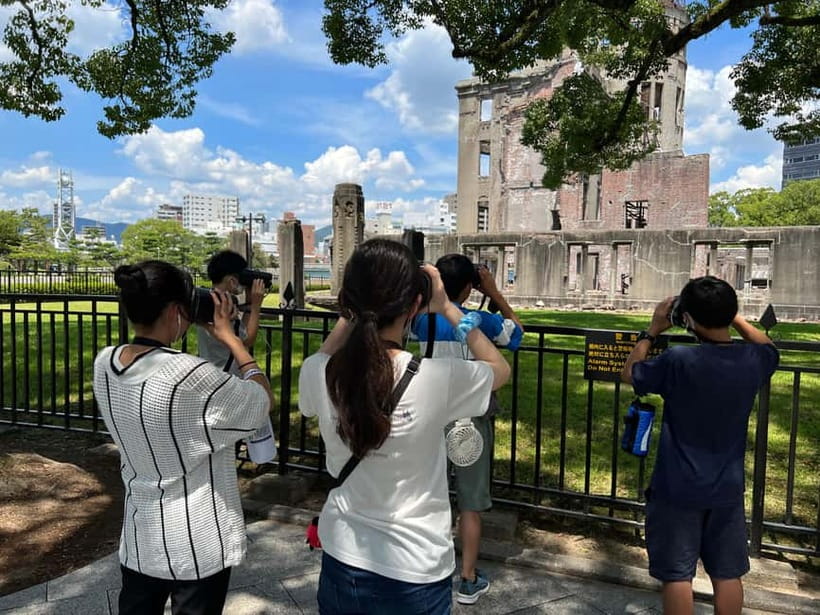
The walk continues to the Atomic Bomb Dome, with roughly 20 minutes for guided viewing and movement. This is the most instantly recognizable stop, but the VR layer gives you a different way to read it.
Today, the Dome is an exposed shell beside the river. The virtual scenes can show the surrounding city before the bombing and the immediate aftermath, making the empty spaces around the structure easier to picture. You see not only what remains, but also what disappeared.
The guide can keep the focus on people rather than architecture alone. Hiroshima’s memorial sites can sometimes feel like a sequence of names and structures. Here, the Dome becomes part of a lived city, with streets, homes, work, and daily routines behind the image.
Give yourself time to look away from the headset as well. The value of this stop comes from moving between the reconstructed view and the real Dome in front of you. The contrast can be unsettling, and that is part of the point.
Same base, a completely different sort of day:
- Hiroshima Historical Walking Tour – Why A-Bomb was Dropped
★ 4.8 · 893 reviews - Hiroshima Peace (Heiwa) Walking Tour at World Heritage Sites
★ 5.0 · 872 reviews - Hiroshima in a Nutshell: Morning Bike Adventure
★ 5.0 · 524 reviews - Hiroshima City 4hr Private Walking Tour with Licensed Guide
★ 5.0 · 437 reviews
Aioi Bridge: the city before August 6
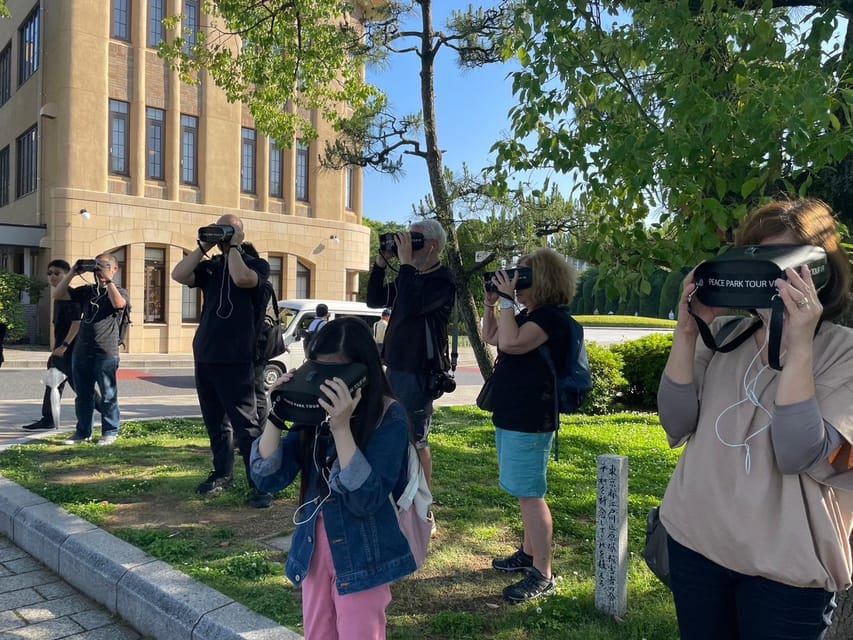
The next stop is Aioi Bridge, also called T-Bridge, with about 15 minutes for walking and sightseeing. Its shape and position are closely tied to the bombing, and it helps the guide explain how the area functioned as part of the city before the attack.
This is a good place for the VR to show ordinary urban life. The supplied material focuses on Hiroshima before the bombing, the burned plain afterward, and the city’s recovery. At Aioi Bridge, those stages are easier to grasp because the river and the surrounding open areas give you a clear sense of place.
You may find this section less emotionally direct than the Dome, but it adds scale. Destruction is not only a damaged building. It is the loss of a working city, its routes, buildings, and communities.
The bridge stop also breaks up the indoor feeling of a conventional digital presentation. You are outside, walking, then stopping for the virtual reconstruction. That fieldwork makes the headset feel tied to the city rather than to a separate attraction.
Motoyasu Bridge: connecting the river to recovery
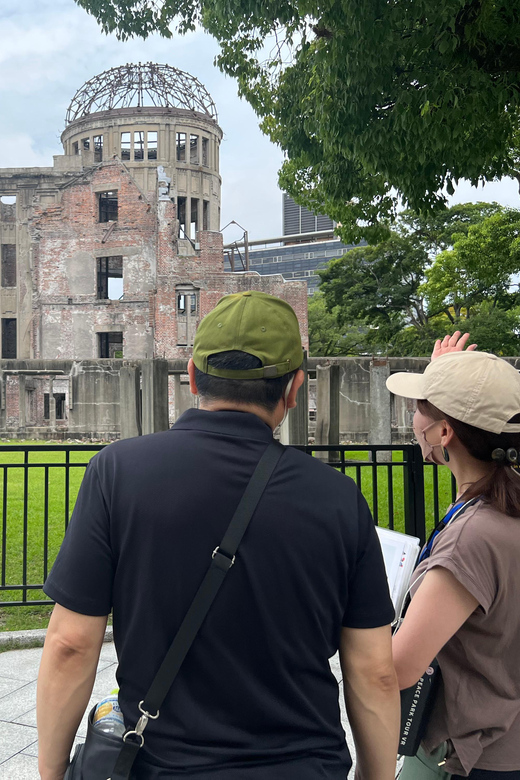
The walk then reaches Motoyasu Bridge for another 15-minute guided stop. The river is a useful reference point as the guide moves the story from the bombing toward Hiroshima’s recovery.
The VR scenes are not limited to August 6 itself. They also show how the city began to recover, which gives the experience a wider time frame. You are encouraged to think about what rebuilding means after a city has been destroyed, not just to picture the moment of impact.
This section may appeal most to people who want more than a single tragic image. Hiroshima’s story includes devastation, survival, rebuilding, and the ongoing effort to preserve memory. A guide can help you connect those parts without reducing the visit to a quick before-and-after effect.
At the end, you return to the Rest House and talk about what you thought of the experience. That closing conversation is a worthwhile feature. It gives you a chance to ask a final question, compare reactions with the small group, and leave with something more personal than a set of visual impressions.
What the guides add to the VR
The strongest part of this experience is the partnership between the guide and the technology. Yoko Shimada has been praised for answering questions carefully and creating a warm atmosphere. Kazuko has used Eizo Nomura’s account to link the VR scenes to the effect on local people. Hiroshi brings extensive historical knowledge, along with stories connected to his own family and surroundings.
You should not expect every departure to have the same guide. The names above show the kind of local perspective available, but the operator assigns the English-speaking guide. The important point is that the guide lives in Hiroshima and leads the discussion in English.
The tour includes an English audio guide as well as the live guide. That gives you two ways to follow the material, though the live conversation is likely to be the more valuable part if you have questions.
Because the group is capped at six, you can speak up without trying to interrupt a crowd. This is especially helpful with a difficult subject. You may want to ask about a specific scene, the survivor whose testimony inspired it, or the way the city changed afterward.
Price, timing, and the value of the experience
At $32 per person, this is not the cheapest way to walk through Peace Park. You can see many of the same outdoor sites without paying for a guide. The fee covers the English-speaking guide and VR goggles, so the real question is how much structure and interpretation you want.
I think the price is reasonable if you want a focused introduction in under 90 minutes. The guide handles the route, the equipment, the historical framing, and the discussion. The small group also gives the tour more value than a basic audio-only walk.
The value is less clear if you already know Hiroshima well, have spent substantial time at the museum, or prefer to move through memorial sites privately. In that case, the headset may repeat some material rather than add a new layer.
Book this as a focused Peace Park experience, not as your entire Hiroshima education. The strongest plan is to pair it with time at the Peace Memorial Museum or other memorial sites, allowing the VR walk to provide place-based context and the museum to offer a broader record.
You can reserve now and pay later, which helps if your schedule is still changing. Cancellation is free up to 24 hours before the start time. Those policies are useful, but the bigger planning issue is punctuality: the group moves on a fixed schedule, and a late arrival can cost you the tour.
Weather, group size, and the emotional tone
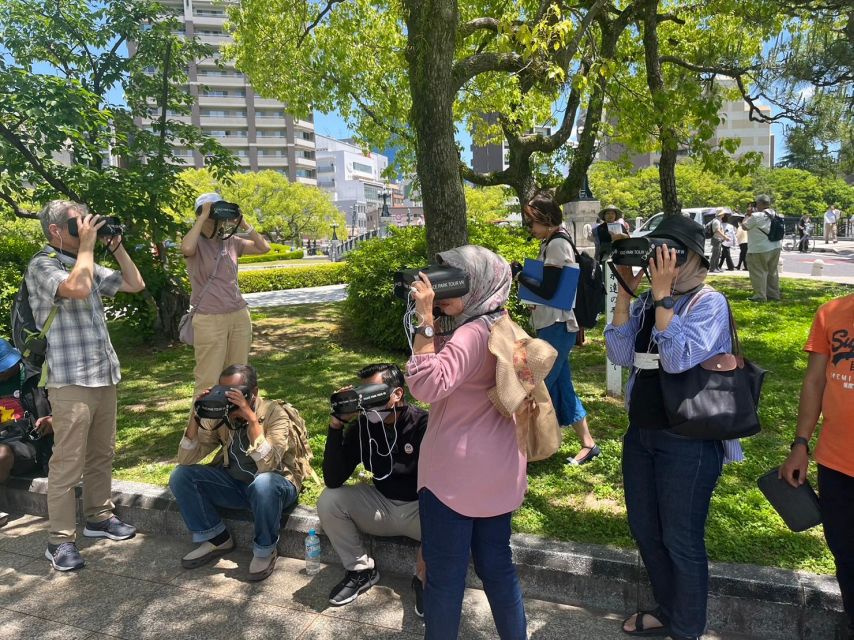
The activity runs in rain or shine. Hiroshima’s Peace Park is an outdoor setting, so wear clothing suitable for walking and bring rain protection when needed. The supplied information does not promise a full indoor alternative during heavy rain.
If weather becomes severe, fieldwork may be followed by a short five-minute VR viewing at the Rest House. That is a fallback, not an equal substitute for stopping at the Dome and bridges. If the forecast looks poor, keep your expectations flexible.
The small group limit of six is a real advantage. You will not have the privacy of a private tour, since other customers may join, but you should have more opportunity for questions than on a large group walk.
The subject also deserves thought before booking. The VR recreates the city before the bombing, the destruction, and the aftermath. That can be sad and sobering, especially when paired with survivor testimony. The guide-led discussion helps, but this is best for people ready to give the subject their full attention.
Who should book this Peace Park tour
I would choose this experience if you are visiting Hiroshima for the first time and want a clear introduction to the Peace Park without spending half a day on a large tour. It suits families with older children, history-minded visitors, and anyone who learns best by comparing what is in front of them with a visual reconstruction.
It is also a strong choice if you want to speak English with a local guide. Guides such as Yoko, Kazuko, and Hiroshi bring different personal angles, but the format consistently leaves room for questions and reflection.
You may want to skip it if you dislike headsets, want a completely self-guided visit, or have very little tolerance for a serious emotional experience. It is also a poor fit if you cannot arrive on time or need luggage storage at the meeting point.
Should you book it?
Book the Hiroshima Peace Park VR tour if you want the memorial sites explained through survivor testimony, period photographs, and a local guide’s voice. The four stops give you a strong sense of place, while the 80-minute format keeps the experience manageable.
I would not book it as a substitute for the Peace Memorial Museum or a longer study of Hiroshima. I would book it as a thoughtful first layer, especially if you value a small group, English conversation, and a direct link between the modern park and the city that existed before August 6, 1945.
FAQ
How much does the Hiroshima Peace Park VR tour cost?
The tour costs $32 per person.
How long does the tour last?
The experience lasts 80 minutes.
Where does the tour begin?
The meeting point is the tourist information counter on the first floor of the Hiroshima City Peace Memorial Park Rest House.
Where does the tour finish?
The walk returns to the Hiroshima City Peace Memorial Park Rest House.
Which language is offered?
The tour is offered in English, with an English-speaking live guide and English audio support.
How many people can join the group?
The tour is a small-group experience limited to six participants. It is not a private tour, so other customers may join you.
What places does the walking route include?
The route includes the Peace Park Rest House, the Atomic Bomb Dome, Aioi Bridge, and Motoyasu Bridge.
What does the tour include?
The price includes rental of the VR goggles and an English-speaking guide.
What happens if it rains heavily?
The event operates in rain or shine. During heavy rain, fieldwork may be followed by a shortened five-minute VR session at the Rest House.
How early should I arrive?
Arrive at the Rest House reception at least five minutes before your reservation time. Contact the operator if you are delayed. If you arrive 10 minutes after the start time, you may not be allowed to join.
Just added around Hiroshima
- The Peace Memorial to Miyajima : Icons of Peace and Beauty★ 4.5 · 31 reviews
- Shore Excursion from Hiroshima Port : Private Tour in Hiroshima★ 5.0 · 17 reviews
- Hiroshima Saijo Sake Tasting Tour with visit to 7 Breweries★ 5.0 · 104 reviews
- Hiroshima & Miyajima All-Inclusive Tour w/Licensed guide Pancho★ 5.0 · 54 reviews
- Okunoshima Rabbit Island Cycling Tour with Local Guide★ 4.5 · 17 reviews
- Private Full Day Hiroshima Tour★ 4.5 · 29 reviews
- Hiroshima Country Cycling: Explore Rural Life 1 HR from City★ 5.0 · 22 reviews
- Hiroshima Private Tour with a Local – Highlights & Hidden Gems★ 4.5 · 24 reviews
Hiroshima Tours, compared.

Peaceful Hiroshima & Miyajima UNESCO 1 Day Bus Tour
Read our review →
Hiroshima and Miyajima UNESCO Sites 1-Day Tour
Read our review →
Hiroshima Historical Walking Tour – Why A-Bomb was Dropped
Read our review →
Hiroshima Peace (Heiwa) Walking Tour at World Heritage Sites
Read our review →
Hiroshima in a Nutshell: Morning Bike Adventure
Read our review →
Hiroshima City 4hr Private Walking Tour with Licensed Guide
Read our review →

Japanesel Archery Experience HIROSHIMA CASTLE SHARAKU
Read our review →Browse the lists this tour appears in