
Reviewed · TOKYO TOURS
Ramen and Sushi Cooking Class with Sake Pairing Set in Tokyo
The best part of this Tokyo cooking class is its small size. With no more than eight people around the counter, you get close help while shaping sushi, preparing ramen, and tasting sake. Sato, Kaori, Taka, Alex, and Ryushi are among the instructors connected with the sessions, and the teaching style is warm, relaxed, and hands-on.
I like the practical cooking skills here, especially the chance to move beyond watching a chef and actually make your own sushi. I also like the sake pairing, which turns lunch or dinner into a short lesson in how Japanese food and drink work together.
The main consideration is that the ramen portion may be less hands-on than the sushi portion. You have more room to customize the ramen than to build it from the ground up, so this suits you best if you want a social food class rather than a full professional kitchen lesson.
Key points to know before booking
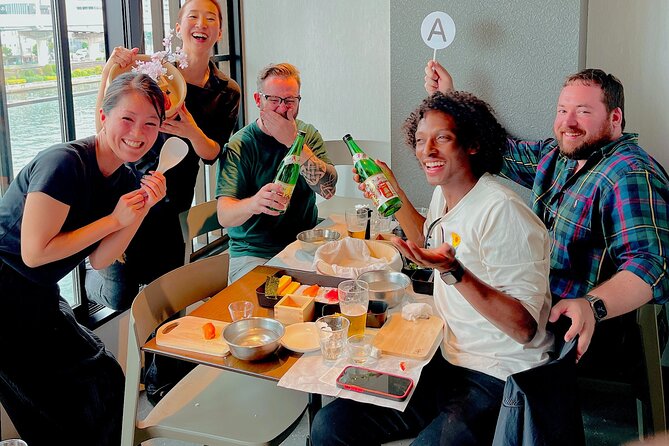
- Maximum eight people: Small groups make it easier to ask questions and get close instruction.
- Three Japanese staples: You prepare sushi, ramen, and a sake pairing during one three-hour session.
- English-language guidance: The instructor explains techniques, food culture, and the background of each dish.
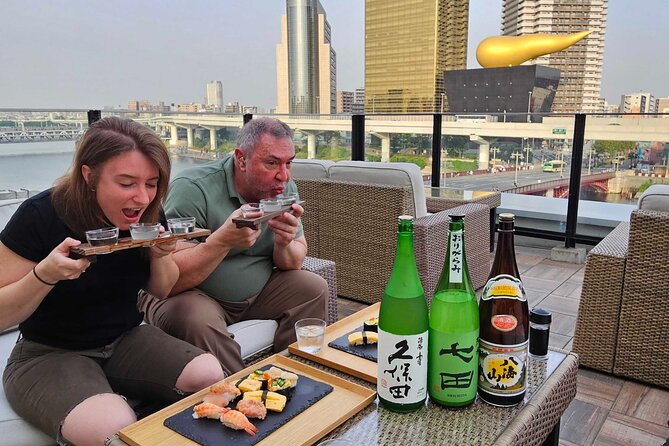
- A pleasant river outlook: The class setting overlooks the river, adding a calm sense of place.
- All food and drinks included: The listed price covers ingredients, the meal, and drinks, with no hotel transfer.
- Useful for home cooks: You leave with techniques that can be repeated in your own kitchen, not just a meal you watched someone else prepare.
Starting in Tsukuda, near the Sumida River
The class meets at HAUS Tsukishima, 2-chome 13-5 Tsukuda, in Tokyo’s Chuo City, postal code 104-0051. It is near public transportation, and the experience ends at the same place, so you do not need to arrange a separate return transfer.
I like this setup for a food class. You arrive at one clear meeting point, settle in, and spend the full three hours on the cooking rather than waiting for a bus or moving between restaurants. The river outlook also gives the room a pleasant Tokyo setting without turning the class into a sightseeing tour.
You should plan your route before the start time and allow a little extra time for finding the building. Hotel pickup and drop-off are not included. Your mobile ticket is useful for entry, but it does not replace checking the exact route to Tsukuda.
More cooking classes in Tokyo:
- Ramen & Gyoza Cooking Class in Tokyo with Local Supermarket Visit
★ 5.0 · 823 reviews - Tokyo: Easy Ramen Cooking Experience in Kabukicho, Shinjuku
★ 4.6 · 321 reviews - Tokyo: Wagyu and 7 Japanese Dishes Cooking Class
★ 4.9 · 273 reviews
A friendly class limited to eight people
A maximum of eight participants changes the feel of this activity. In a large class, sushi shaping can become a distant demonstration followed by a rushed turn at the counter. Here, the instructor can watch how you hold the knife, spread rice, or roll the sushi and correct you as you work.
That personal attention matters most if you have tried making sushi at home and ended up with loose rolls, uneven rice, or more filling on the cutting board than inside the sushi. The class is designed to show you the small details that videos often skip.
The atmosphere is another strong point. Instructors such as Sato and Ryushi have been praised for making nervous beginners feel at ease, while Kaori, Taka, and Alex have also been singled out for their friendly, easygoing approach. The repeated pattern is clear: this is meant to be fun first, with instruction folded into the conversation.
You may also take part in a quiz about sushi and ramen history and facts. That adds a bit of light competition and gives the food more context without making the class feel like a formal lecture.
Making sushi with close instruction
The sushi segment is likely to be the most hands-on part of the experience. You work with the ingredients provided, follow the instructor’s steps, and prepare sushi that you eat during the class.
The real value is not simply the finished plate. You learn how to handle the rice, arrange fillings, and form the sushi so it holds together. The exact styles and ingredients are not specified, so you should not book this expecting a particular regional sushi menu or a long list of advanced techniques.
Still, the format suits beginners. The instructor can slow down, demonstrate again, and help you fix a roll before you move on. One session had only five people, allowing especially close guidance, while another had just four participants. Even when the group reaches eight, that is still a manageable number for a cooking lesson.
The setting adds to the meal. The class looks out toward the river, giving you something to enjoy while the sushi is prepared and eaten. This is not a market tour or a restaurant crawl, but the view helps the class feel connected to Tokyo rather than sealed inside a generic cooking studio.
Ramen broth, pork belly, and room to customize
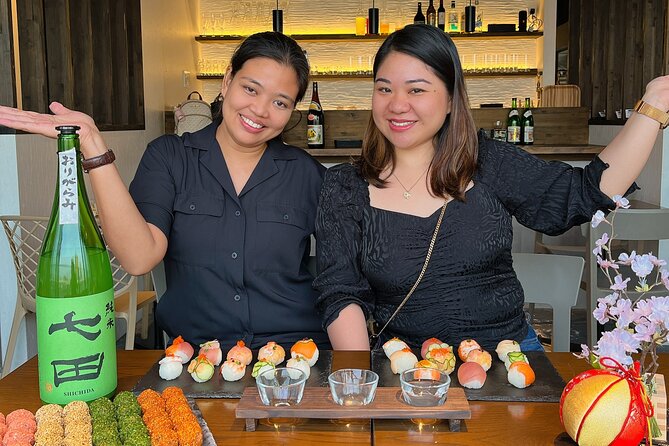
The ramen section gives you a different kind of lesson. The class covers savory broth prepared from scratch, then lets you customize the bowl. The experience includes pork belly, which has been a particular hit, and you do not leave hungry.
There is an important distinction here. The ramen can be less physically hands-on than the sushi. You may spend more time learning how the broth comes together and choosing how to finish your bowl, rather than spending the whole session making every element from raw ingredients.
I see that as a fair trade in a three-hour class that also includes sushi and sake. Ramen broth can take time and involves several components. A guided preparation gives you a useful understanding of the process without turning the class into an all-day kitchen project.
The best way to approach this portion is to treat it as a lesson in balance and assembly. You get to see how broth, noodles, toppings, and seasoning work together. At home, that knowledge can help you improve a quick bowl even if you do not recreate the entire preparation from scratch.
More drinks-led nights in Tokyo:
- Tokyo Bar Hopping Tour in Shinjuku (All-You-Can-Drink + Dinner)
★ 5.0 · 3,587 reviews - Best of Shinjuku: Izakaya Food Tour (4 Stops, 14+ Tastings)
★ 5.0 · 1,863 reviews - Tokyo: Shinjuku Local Bar and Izakaya Guided Walking Tour
★ 4.9 · 1,794 reviews - Shibuya Meltdown Nightlife Tour: All-You-Can-Drink Bar Hopping
★ 5.0 · 1,058 reviews
Sake pairing with the meal
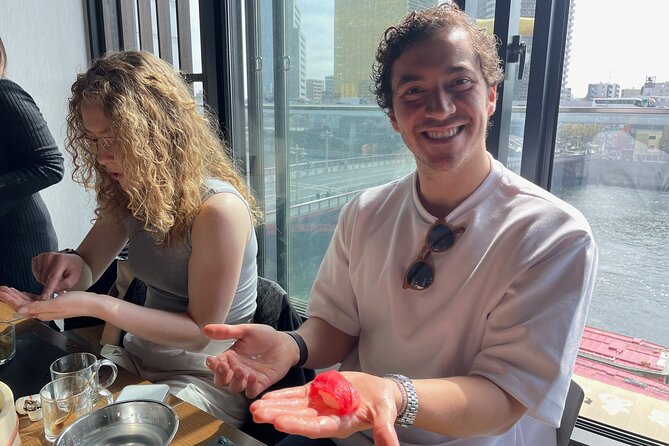
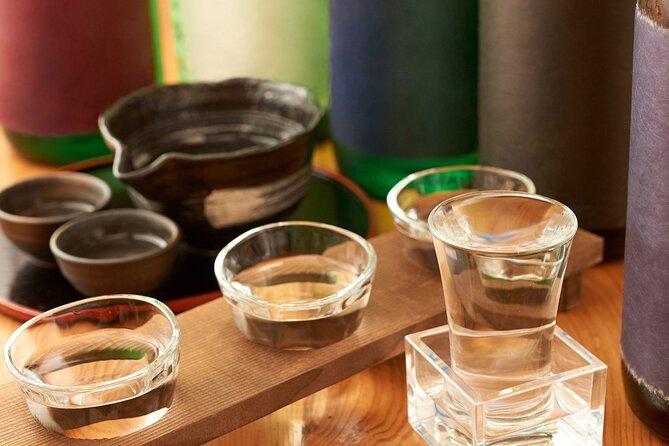
All drinks are included, and sake is selected to complement the sushi and ramen. This is more useful than a random tasting because you can compare the drink with food at the same time.
You do not need to be a sake expert to enjoy this part. The class presents sake as part of the meal, not as a separate technical subject. Different choices can show how a drink changes the taste of seafood, rice, broth, or savory toppings.
The sake has drawn strong praise for being smooth and well chosen. Still, keep in mind that this is a cooking class with a sake pairing, not a dedicated sake tasting tour. If your main goal is to visit breweries or study production methods, a specialist tasting would give you more depth.
For most people, the pairing is a welcome extra. It gives you something to sip while the food is prepared and helps turn the class into a complete Japanese dining experience.
Food culture explained without a heavy lecture
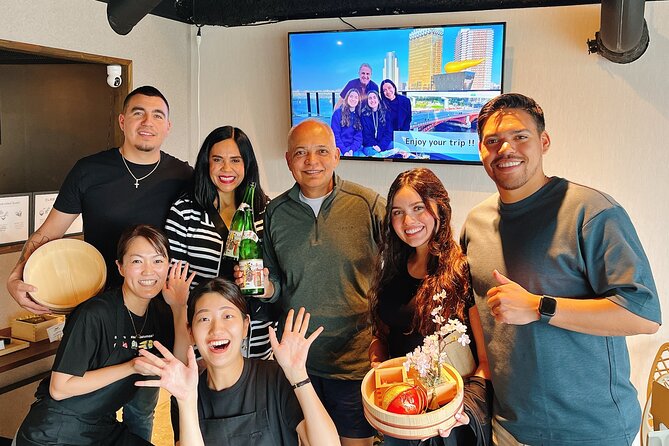
The instructors share stories behind the dishes and offer background on Japanese culinary culture. I like this approach because it connects technique with meaning. Sushi is not just rice and filling, and ramen is not simply noodles in soup. The class gives you a sense of how these foods fit into Japanese eating culture.
The information appears to be delivered in a relaxed way, through conversation, tips, and the quiz. That should work well for you if you want cultural context but do not want to sit through a long classroom talk.
The English-speaking instructor is included, so you can ask questions and follow the demonstrations without relying on translation. The teaching also seems to be aimed at a range of cooking abilities. People with little experience can get direct help, while confident home cooks can focus on the finer points of shaping sushi and balancing ramen.
I would not expect a professional chef certification or a detailed recipe book based on the information available. Think of it as a guided introduction with practical ideas you can use at home.
What the three-hour schedule feels like
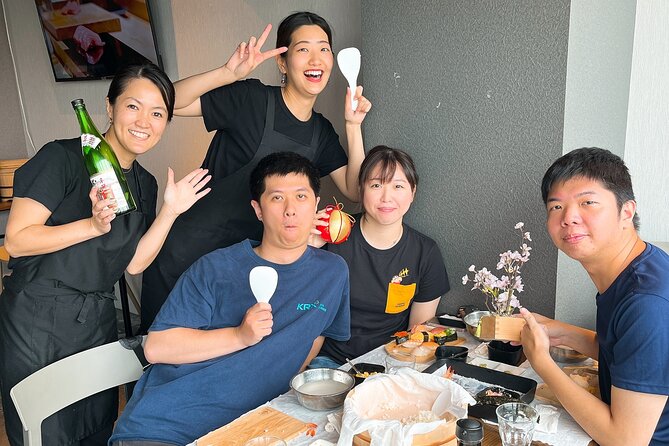
Three hours is a sensible length for this combination of food, instruction, and conversation. It gives enough time to cover sushi, ramen, eating, and sake without making the class feel like a quick demonstration.
The pace should feel social. You learn a step, try it yourself, receive help, and then move on to the next part. The food is prepared and eaten during the same visit, so the class has a clear reward at the end of each section.
You will probably spend the most concentrated time on sushi because forming it requires direct practice. Ramen offers more guidance on broth and customization, while the sake pairing adds a slower, conversational pause.
Because the activity ends where it begins, you can continue exploring Tokyo afterward without having to find a return meeting point. If you book a morning or afternoon session, leave room for the full three hours and avoid scheduling something with a tight connection immediately afterward.
Is $79.59 a fair price?
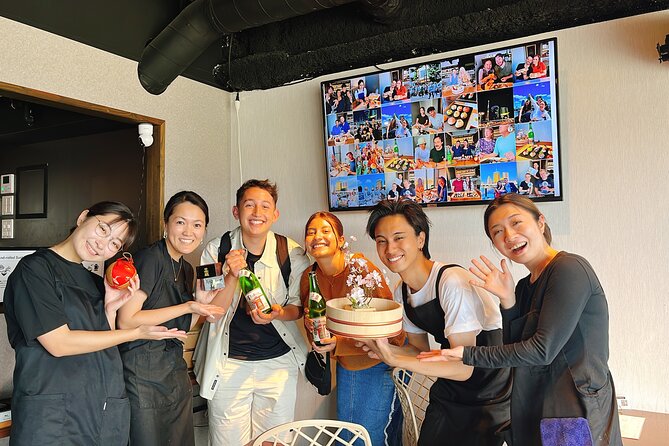
At $79.59 per person, the value depends on how you use the class. You are paying for three hours of instruction, all cooking ingredients, the meal you prepare, all drinks, an English-speaking instructor, and a small group capped at eight.
That is a reasonable package for Tokyo if you want more than a restaurant meal. A sushi and ramen dinner might cost less, but it would not teach you how to make the food or explain the choices behind it. A private cooking lesson could cost more, especially with drinks and ingredients included.
The price is strongest for couples, families, and food-focused visitors who want one activity that combines a meal with local knowledge. It is also good value if you have tried to make sushi at home and want someone to correct your technique.
The value is weaker if you dislike group activities, do not drink sake, or mainly want an advanced ramen workshop. You are also not paying for hotel transport, so add the cost and time of reaching Tsukuda yourself.
Who will enjoy this class most?
I would recommend it to first-time visitors who want a break from temples, shopping, and crowded food halls. It gives you a social afternoon or evening with a clear purpose, and you eat what you make.
It is especially well suited to:
- Couples looking for a shared activity
- Families with an interest in Japanese food
- Beginner cooks who want patient guidance
- Home cooks who have struggled with sushi technique
- People who enjoy sake but do not need a specialist tasting
- Anyone who prefers a small class to a large group demonstration
You may want to choose something else if you need a fully private experience, a hotel transfer, or a highly technical study of ramen broth. The class is warm and practical, but it is still an introductory food experience.
Service animals are allowed, and the location is near public transportation. The available details do not specify other accessibility features, so contact the provider before booking if you need particular seating, mobility, or dietary arrangements.
Booking advice and cancellation rules
You receive confirmation at the time of booking, and the activity uses a mobile ticket. Book early if you want a particular date, since the class has only eight places and has been booked multiple times recently.
The cancellation rule is simple but strict near the start time. You receive a full refund if you cancel at least 24 hours before the experience begins. Cancellations or changes made within 24 hours are not accepted and are not refunded. Cut-off times follow Tokyo local time.
My final call: book it for the hands-on food lesson
I would book this class if you want to learn, eat, and meet a small group in one compact Tokyo activity. The personal instruction, friendly teaching, river outlook, and included sake make it more memorable than a meal alone.
Book it with realistic expectations: sushi is the strongest hands-on element, while ramen involves more guided preparation and customization. If that balance suits you, $79.59 buys a useful skill, a filling meal, and a pleasant look at Japanese food culture in Tsukuda.
FAQ
Where does the cooking class meet?
The class meets at HAUS Tsukishima, Japan, 104-0051 Tokyo, Chuo City, Tsukuda, 2-chome 13-5.
Where does the activity end?
The activity ends back at the same meeting point.
How long does the experience last?
The class lasts approximately three hours.
What food do you prepare?
You prepare sushi and ramen. The ramen includes savory broth prepared from scratch and pork belly, with room to customize the bowl.
Is sake included?
Yes. All drinks are included, including sake selected to pair with the dishes.
Is the class taught in English?
Yes. An English-speaking instructor is included.
How many people can join?
The maximum group size is eight participants.
Can I cancel for a full refund?
Yes. You can cancel at least 24 hours before the experience start time for a full refund. Cancellations or changes made within 24 hours are not refunded or accepted.
More Workshops in Tokyo
- Sushi Making Tokyo Roll and Authentic Japanese Sushi Class
★ 5.0 · 3,971 reviews - Tokyo: Roll and Authentic Sushi Making Class in Asakusa
★ 4.9 · 1,957 reviews - Tokyo Shinjuku Chopsticks Making Class
★ 5.0 · 1,763 reviews - Tokyo: Sushi Making Class in a Happi Coat near a Famous Spot
★ 4.9 · 1,377 reviews
More Food Tours in Tokyo
- Tokyo: Shinjuku Food Tour (13 Dishes at 4 Local Eateries)
★ 5.0 · 6,603 reviews - Tokyo Tsukiji Fish Market Food and Culture Walking Tour
★ 5.0 · 3,184 reviews - Tokyo: Shinjuku Food Tour (15 Dishes and 4 Eateries)
★ 4.9 · 2,033 reviews - Tokyo: Tsukiji Fish Market Food and Walking tour
★ 5.0 · 1,724 reviews
Just added around Tokyo
- Private Arrival Transfer : Narita International Airport to Central Tokyo City★ 4.5 · 12 reviews
- Narita Airport(NRT): Private Transfer to Tokyo/Yokohama 1-9pax★ 5.0 · 47 reviews
- Private Transfer from Narita Airport to Yokohama Port and City★ 4.5 · 17 reviews
- [Narita Airport Terminals 1, 2] 40-60km Sawara Itako Historic Bike Tour★ 5.0 · 13 reviews
- 3 Day Japan Highlights Tour: Tokyo, Mt.Fuji, Nara, Kyoto, Osaka★ 5.0 · 22 reviews
- Small Town in the Big City: Tasting Tokyo’s Kichijoji★ 5.0 · 195 reviews
- Small Town in the Big City: Tasting Tokyo’s Kichijoji★ 5.0 · 16 reviews
- The 10 Tastings of Tokyo With Locals: Private Street Food Tour★ 5.0 · 48 reviews
Tokyo Tours, compared.

Mt Fuji and Hakone 1-Day Bus Tour Return by Bullet Train
Read our review →

teamLab Planets TOKYO Digital Art Museum Entry Ticket
Read our review →
Mt Fuji & Hakone Cruise, Drum Show Bullet Train 1 Day from Tokyo
Read our review →
Sumo Show Experience with Chicken Hot Pot and a Photo
Read our review →
Shinjuku Food Tour (13 Dishes at 4 Local Eateries)
Read our review →
Tokyo Mt Fuji 5th St & Hakone Cruise Bus Tour w/Bullet Train
Read our review →
Flagship 2-Hours Official Street Go-Kart Tour – Tokyo Bay Shop
Read our review →Browse the lists this tour appears in