
Reviewed · KYOTO TOURS
Kyoto: Gion Magical Night Walking Tour with Geisha Trivia
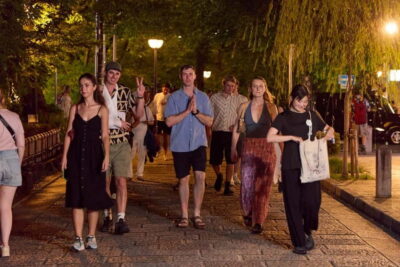
Gion changes character after sunset. Lanterns glow, temple buildings take on a softer look, and the crowds thin out. This 100-minute walk begins at Minamiza Theatre and moves through Hanamikoji, geisha streets, shrines, side paths, and a beautifully lit Buddhist pagoda. You might spot a geiko or maiko, but the point is to understand the district, not chase one.
I like the small group of up to 10, since you can hear the guide and ask questions without shouting across a crowd. I also like the mix of geisha customs, Shinto rituals, Buddhist sites, local legends, and quiet corners that you could easily pass on your own. The main drawback is the walking route’s stairs, which rule it out for wheelchairs, strollers, and anyone with limited mobility.
Key points at a glance
- Gion after dark: See Hanamikoji, shrines, pagodas, and old lanes under evening lights and with fewer people around.
- Geisha culture explained: Learn the difference between geiko and maiko, plus the rules and customs that shape Gion.
- Small-group format: The tour generally has no more than 10 participants, making questions and conversation easy.
- Local guide personalities: Guides including Shino, Hina, Masami, Sho, Pam, Yuri, and Kevin have been praised for clear English, humor, and useful Kyoto advice.
- Good value at $24: You receive 100 minutes with an English-speaking guide and photography service.
- Know the route: Stairs are part of the walk, and the start time is when the group leaves, not when you arrive at the meeting point.
Why Gion works better at night

Gion is often treated as a daytime sightseeing stop, but evening gives the district a different mood. Hanamikoji’s traditional wooden buildings look especially appealing beneath the lamps, while the narrow lanes feel calmer once the day’s crowds have moved on.
That calmer pace matters. You can look up at rooflines, notice lanterns, and listen to the guide without constantly stepping aside for large groups. Several tour times are offered, and in February there is a limited 3pm departure for people with evening plans or those who prefer to begin in daylight. The later walks are the best fit if your main goal is illuminated shrines and a quieter Gion.
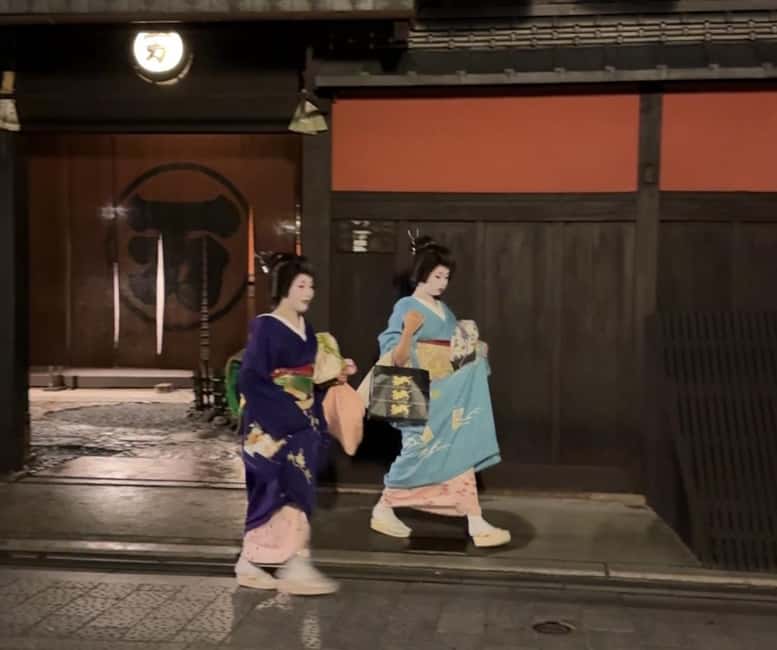
I would not book this expecting a dramatic geisha encounter. A real geiko or maiko may appear, and some groups have seen one entering or leaving a taxi, but sightings are luck. The guide explains how the district works and how to behave respectfully. That makes this a better choice than a tour built around the promise of meeting performers.
More geisha-district evenings:
- Kyoto Geisha Walking Tour: Gion District & Hidden Gems
★ 4.7 · 3,273 reviews - Kyoto: Gion Geisha District Walking Tour – Stories of Geisha
★ 4.7 · 2,187 reviews - Best of Kyoto: Gion, Geisha, Pagodas & Cobblestones
★ 4.9 · 2,058 reviews
Starting at Minamiza Theatre
The meeting point is in front of Minamiza Theatre, on the front side of the building. Look for a guide holding a TravelinGood sign. Arrive at least five minutes early, because the advertised time is the departure time.
This is a useful detail in Kyoto, where a late arrival can be costly. If you come by bus or taxi, allow extra time for traffic. The theatre is an easy landmark, but the group will not wait while you search for the sign after the stated start.
Once everyone is together, the route heads toward Hanamikoji. The opening walk gives the guide a chance to set the scene and explain why Gion developed as an entertainment district. It also helps you settle into the evening rather than rushing straight from one photo stop to the next.
Hanamikoji and the rules of geiko culture
Hanamikoji is the tour’s main introduction to Gion’s geisha world. Here, your guide explains the difference between a geiko, the Kyoto term for a fully trained entertainer, and a maiko, a performer in training. The discussion also covers clothing, makeup, work traditions, private clubs, lanterns, and the etiquette that visitors should follow.
The best guides use photographs, videos, and simple comparisons to make these details clear. Sho has used visual examples of geiko and maiko differences, while other guides have explained the meaning of lanterns and the role of private establishments. These touches are useful because the streets alone cannot tell you much about what happens behind the closed doors.
This part also calls for good manners. Gion is a working neighborhood, not a stage set. You should keep a respectful distance, avoid blocking narrow lanes, and never treat a possible geiko sighting as a photo opportunity at any cost. The tour’s own warning is sensible: seeing a performer is possible, but it is not the purpose of the walk.
Some guides add personal context. Masami, Hina, Shino, and Yuri have been praised for answering many questions in patient, clear English. A local guide can also explain why certain behavior is considered rude, something that is harder to grasp from a guidebook paragraph.
Shrines, prayer, and Kyoto’s spiritual side
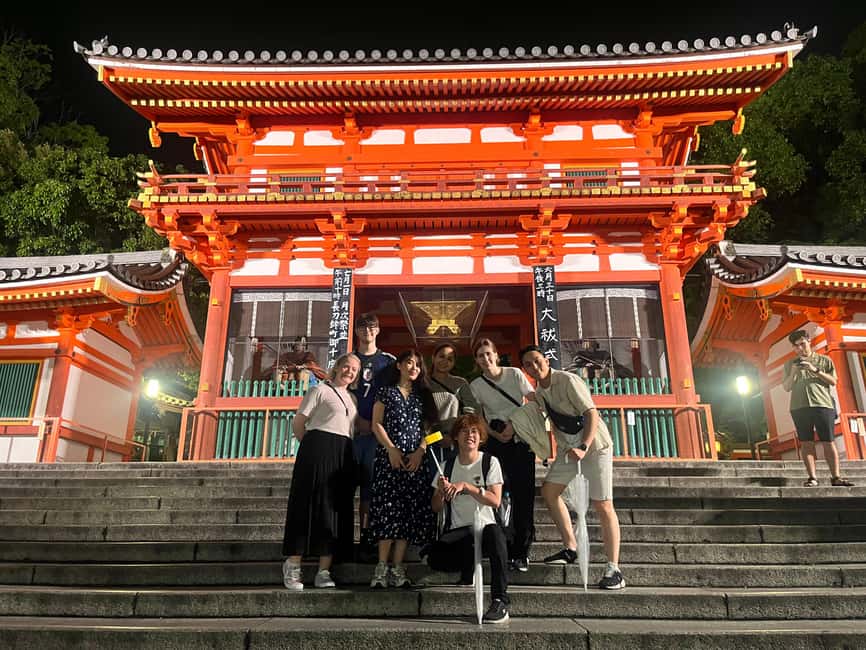
The route moves beyond geisha culture to a matchmaking shrine and other sacred places. This widens the tour’s scope. You are not simply walking through pretty streets, you are learning how Gion connects entertainment, religion, local custom, and everyday life.
At one Shinto shrine, the guide demonstrates how to pray. Shino has helped groups practice the ritual and made sure everyone understood the steps. That is a small but worthwhile feature, especially if you have been visiting Japanese shrines without knowing what the gestures mean.
You will also hear about legends and stories linked to the shrines. The exact stops can vary with conditions, timing, or the guide’s route, so do not think of this as a formal temple tour with long indoor visits. It is a street-level introduction, with short explanations that keep the group moving.
The religious portion is valuable because it gives you a way to read the city afterward. You may notice the difference between Shinto and Buddhism more clearly, understand why a shrine attracts people seeking romance, and feel more comfortable following basic prayer customs during the rest of your stay.
More walking tours in Kyoto:
- Night Walk in Gion: Kyoto’s Geisha District
★ 4.5 · 2,003 reviews - Kyoto Gion Geisha District Walking Tour – The Stories of Geisha
★ 5.0 · 1,441 reviews - Nishiki Market Brunch Walking Tour (7 Tastings + Brunch)
★ 5.0 · 1,355 reviews - Kyoto Arashiyama Walking Tour: Bamboo, Monkeys, Gardens & Secrets
★ 5.0 · 1,216 reviews
The illuminated Buddhist pagoda
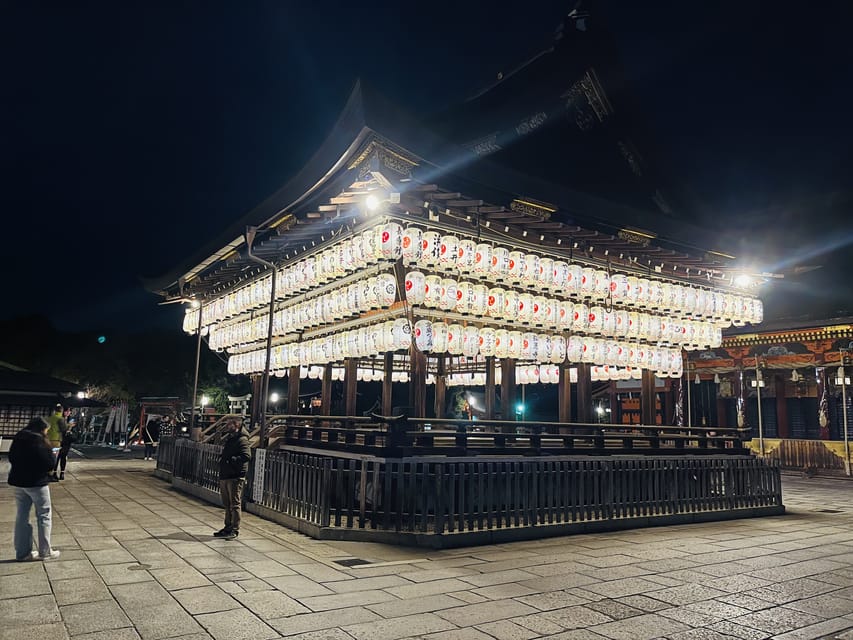
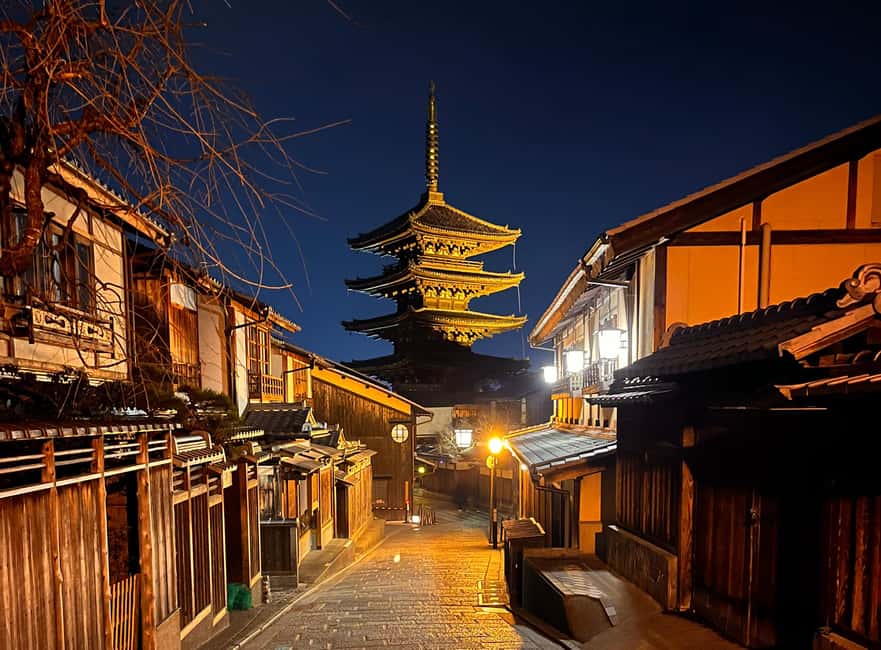
One of the visual highlights is a Buddhist pagoda outside the main geisha district. It is illuminated at night, and the lighting gives the structure a striking presence against the dark streets.
The pagoda works well as a counterpoint to Hanamikoji. The geisha district is about refined entertainment and carefully maintained townhouses, while the pagoda points toward Kyoto’s religious traditions and older layers of the city. You get both in one short walk.
The stop is mainly an exterior view, so set your expectations accordingly. You are not signing up for an extended temple visit or a specialist architecture lecture. The guide’s explanation, the evening light, and the change of setting make it memorable without slowing the route too much.
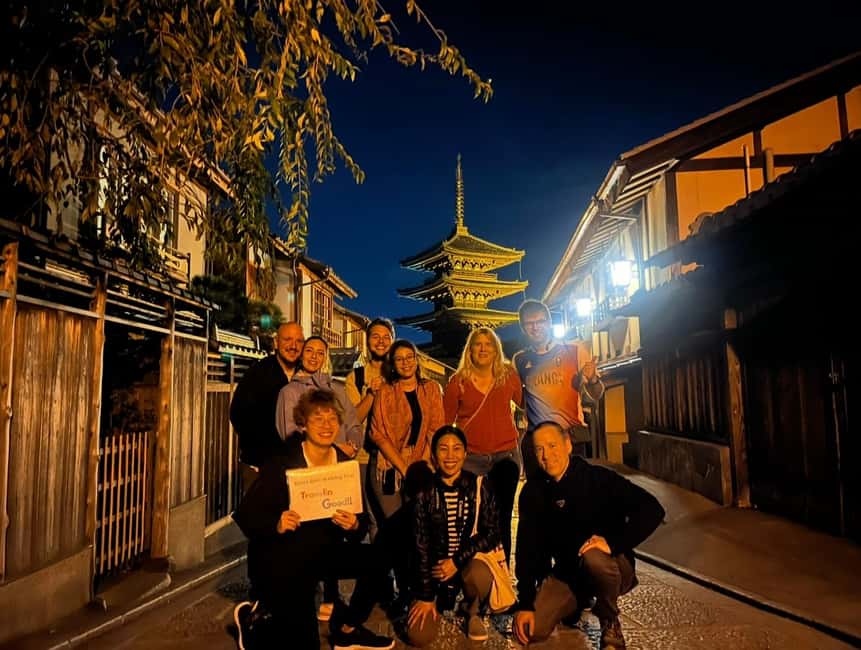
Photography service is included. That can be handy when you want a group picture or a well-timed shot without asking a stranger to take it. Bring a phone or camera if you want your own photos as well, and remember that low light can make steady shooting harder.
Quiet lanes and the final old shrine
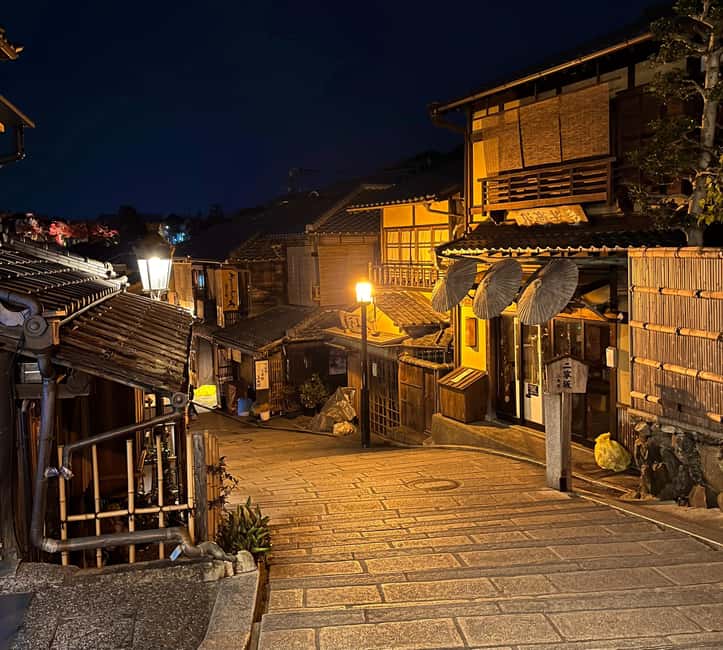
After the better-known streets, the guide takes the group through less obvious paths and small corners of Gion. This is where a guide earns the $24 price. You can wander around Hanamikoji alone, but you are less likely to know which side lanes are worth following or what details deserve attention.
The walk ends at a shrine more than 1,000 years old. The closing stop gives the experience a sense of place beyond the famous geisha image. By this point, you have seen the district in layers: traditional streets, working customs, sacred spaces, local stories, and the city’s evening atmosphere.
The pace is generally gentle. One older participant found the walking manageable, and another group described moving slowly through Gion while hearing stories along the way. Still, the route includes stairs, so manageable does not mean fully accessible. Wear shoes with a secure sole, particularly if the pavement is damp or you are walking in winter darkness.
What the guides add
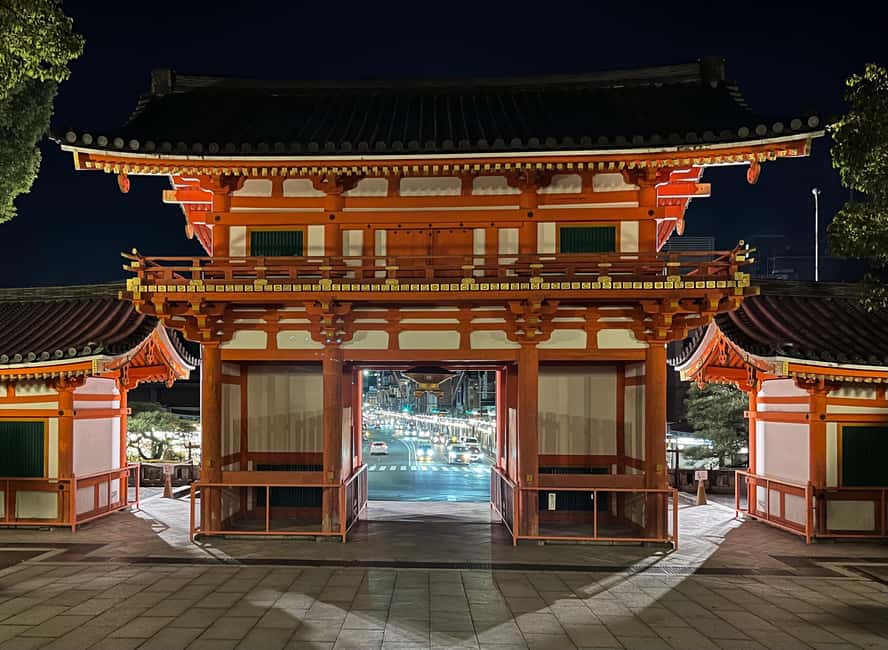
The guide roster changes, so you should not book around one specific person unless your reservation lets you choose. Names that have drawn especially warm attention include Shino, Hina, Masami, Sho, Pam, Yuri, Kevin, Sora, Ricky, Hina, and Hinari.
The common thread is not a scripted performance. The strongest guides combine facts with personal conversation, answer questions, and adjust to the group. Hina has been praised for making the walk friendly and entertaining. Masami has taken time with detailed questions. Shino has added festival information, restaurant suggestions, shrine instruction, and advice for daytime sightseeing.
English ability has also been a strong point. Kevin, Hina, Shino, and others have been singled out for clear, easy-to-follow communication. That matters here, since the value comes from explanation rather than simply following a guide through photogenic streets.
You can also ask for practical advice during the walk. Guides have suggested restaurants and nearby places to visit, and some have offered tips for seeing Gion during daylight. These recommendations are a useful bonus, especially if you schedule this tour early in your Kyoto stay and use it to plan the following days.
Group size, timing, and comfort
The advertised maximum is 10 people. Some departures may be smaller, with one group having only four participants and another consisting of three people plus the guide. A small group makes a clear difference in narrow lanes. You can stop to look at a detail without losing the guide, and you have a fair chance to ask about customs that interest you.
The full duration is 100 minutes. That is long enough to cover several parts of Gion, but short enough to fit before dinner or after an afternoon of sightseeing. I would allow extra time afterward if you want to eat nearby, since the tour ends in the Gion area and restaurant choices can require planning.
Night temperatures can make the walk feel different by season. The February 3pm option is useful if you dislike cold evenings or want some daylight at the start. One guide even handed out a hand warmer during a January walk, but do not count on that as a standard inclusion. Dress for the forecast and bring comfortable shoes.
Children under six do not need tickets. The tour can suit older children who enjoy stories and cultural detail. One family found that children aged nine and 11 stayed interested, especially because the guide explained geisha traditions, shrine legends, and local customs rather than offering only adult historical commentary.
Is $24 a fair price?
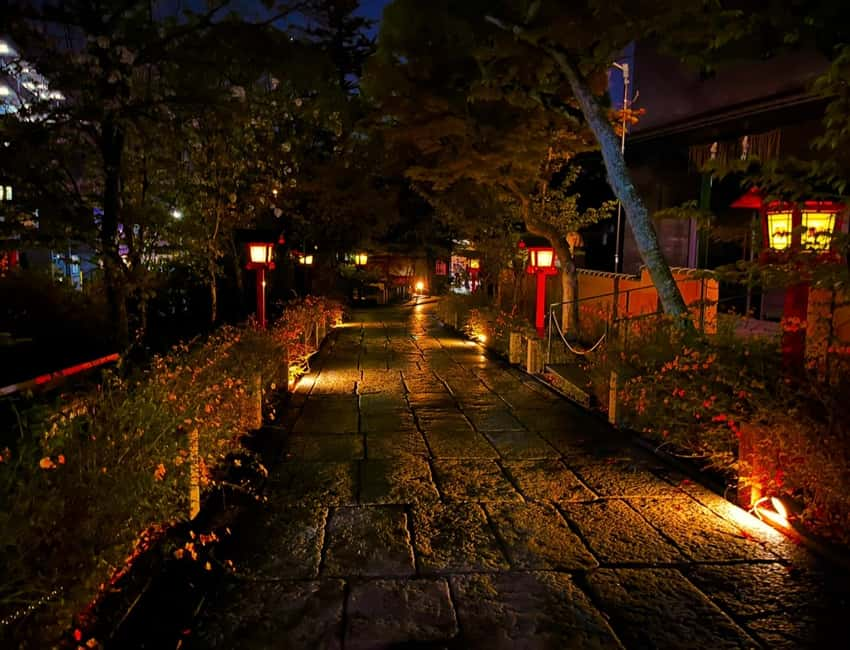
At $24 per person, this is a reasonable buy if you want context as well as scenery. You receive 100 minutes, an English-speaking guide, a small group, and photography service. You are not paying for a meal, performance, transport, or entry to a major attraction, so the value depends on how much you want interpretation.
For a first visit to Kyoto, I think the price works particularly well. A guide helps you understand what you are seeing, points out details you might miss, and gives you a basic map of Gion’s culture. The quiet evening setting adds something that a standard daytime stroll may not.
If you have already studied geisha culture or explored every lane of Gion, the tour may feel introductory. One participant who already knew much of the subject found fewer new facts. Even then, the nighttime views, pagoda, shrines, and lack of crowds can still justify the cost, but your expectations should be realistic.
The high overall score, 4.9 from 2,393 ratings, matches the main strengths of the experience: friendly guides, clear English, a relaxed pace, and a route that combines famous sights with less obvious paths. The guide is the key variable, but the small-group design gives each guide room to do a good job.
Who should book this Gion walk?
I would recommend it to first-time Kyoto visitors, couples who want a pleasant evening stroll, families with older children, and anyone curious about geiko and maiko traditions. It is also useful early in your stay, since guides can point you toward restaurants and daytime sights.
Book it if you want a respectful introduction rather than a staged geisha show. Choose it if you like asking questions, hearing local stories, and seeing religious sites along with traditional streets.
You should think twice if stairs are difficult, if you need a wheelchair or stroller-friendly route, or if you are looking for an in-depth specialist lecture. Babies under one, people with colds, and people with mobility impairments are listed as unsuitable for this activity.
Should you book it?
Yes, if you want Gion at its most atmospheric and prefer a small group to a large walking tour. The best reasons are the evening light, the quiet lanes, the pagoda and shrine stops, and guides who make geisha customs understandable without turning the district into a spectacle.
Just keep the geisha sighting in perspective. It is a lucky possibility, not a promise. Arrive early at Minamiza Theatre, wear good walking shoes, and reserve the date and time you actually plan to attend. At $24, this is a practical way to give Gion some meaning before you explore it on your own.
FAQ
Where does the Gion Magical Night Walking Tour meet?
Meet in front of the Minamiza Theatre, on the front side of the theatre. Your guide holds a TravelinGood sign.
How long does the tour last?
The walk lasts 100 minutes.
What language is the tour conducted in?
The tour is conducted in English with a live English-speaking guide.
How many people are in the group?
The tour is limited to 10 participants, and some departures may be smaller.
Does the tour guarantee a geisha sighting?
No. You may see a geiko or maiko if you are lucky, but meeting or seeing geisha is not the purpose of the tour.
What places does the route include?
The route includes Hanamikoji and the Gion geisha district, a matchmaking shrine, a Buddhist pagoda outside the geisha district, quiet paths, and a shrine more than 1,000 years old.
Is photography included?
Yes. Photography service is included.
Are children under six required to buy a ticket?
No. Children under six do not need to purchase tickets.
Is the tour accessible for wheelchairs or strollers?
No. Stairs along the route mean it is not suitable for wheelchair users, baby carriages, or people with limited mobility.
What happens if I need to cancel?
You can cancel up to 24 hours in advance for a full refund. You can also reserve now and pay later.
More Evenings Out in Kyoto
- Kyoto Night Foodie Tour in Gion (9+ dishes + 6 Sake tastings)
★ 5.0 · 1,762 reviews - Kyoto Gion Night Walk & Geisha District Guided Tour
★ 5.0 · 786 reviews - Kyoto Ghost Tour: Dark Tales, Urban Legends, Bamboo Forest Night
★ 5.0 · 625 reviews - Kyoto Bar Hopping Night Tour
★ 5.0 · 613 reviews
Just added around Kyoto
- Kyoto: Zen Meditation at a Private Temple with a Monk★ 5.0 · 25 reviews
- Kyoto: Gion Geisha District & Sake-in-Hand Walking Tour★ 5.0 · 37 reviews
- Private Pewter Sake Cup Experience with a Kyoto Artisan★ 5.0 · 31 reviews
- Your Private Vacation Photography Session In Kyoto★ 5.0 · 110 reviews
- Private Guided Traditional Buddhist Cooking in Japan★ 5.0 · 16 reviews
- Kyoto Wagashi(Japanese sweets) Cooking Class near Fushimiinari★ 5.0 · 60 reviews
- Traditional Japanese Music show & Experience Tour in Kyoto★ 5.0 · 57 reviews
- Kyoto:Family-Friendly Kimono & Yukata Experience at WARGO★ 5.0 · 147 reviews
Kyoto Tours, compared.
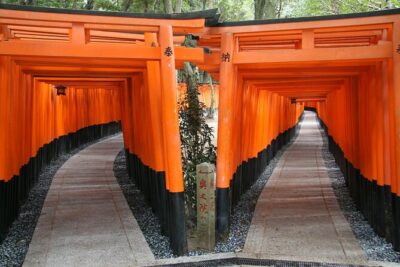
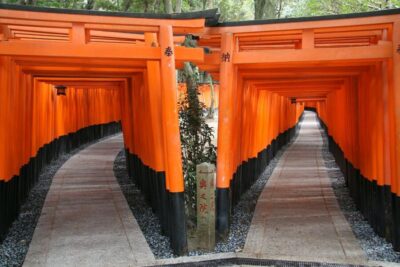
Fushimi Inari, Kinkakuji, Bamboo Grove 1 Day Bus Tour
Read our review →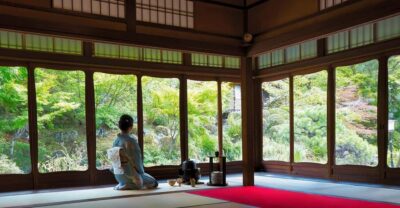
Tea Ceremony in a Traditional Tea House in Kiyomizu
Read our review →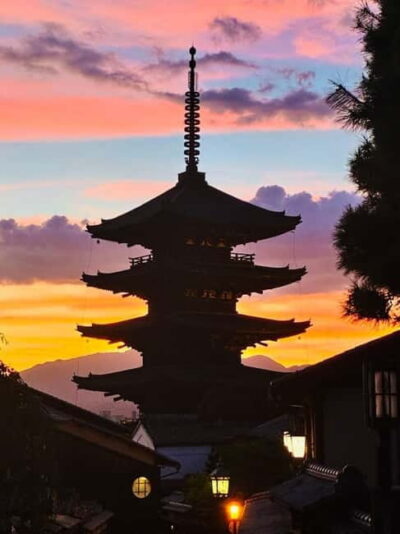
Kyoto Geisha Walking Tour: Gion District & Hidden Gems
Read our review →
Gion Geisha District Walking Tour – Stories of Geisha
Read our review →
Best of Kyoto: Gion, Geisha, Pagodas & Cobblestones
Read our review →Browse the lists this tour appears in