
Reviewed · HIROSHIMA TOURS
Miyajima: Private Rickshaw Tour to Itsukushima Shrine
Miyajima is easy to walk, but a private rickshaw ride gives you a faster, more personal way to see the island. You roll from the ferry terminal through old town streets, pause for the floating torii gate, and hear local stories while your guide handles the route. It is a fine way to get your bearings before exploring on foot.
I like the flexible route choices, especially the longer options that reach Daishoin Temple, Senjokaku Shrine, and quieter seaside roads. I also like the friendly human touch. Guides such as Kim, Jose, and Shinemasa have been praised for humor, photos, local knowledge, and the willingness to use Google Translate when needed.
The main catch is space and comfort. A rickshaw seat is 74 centimeters wide and fits two adults side by side, but that can feel close on a longer ride. The tour is also not suitable for people with back problems or pregnant women, and the guide speaks Japanese, with English communication varying by guide.
Key points before you book
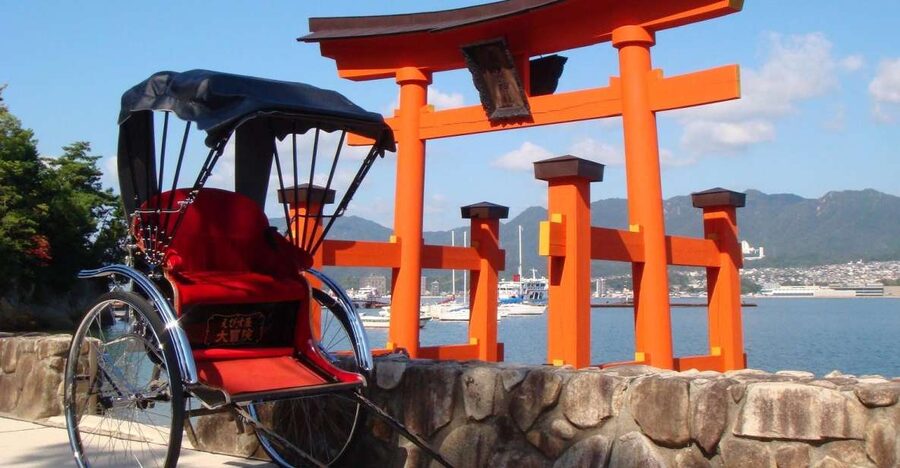
- The floating torii is best seen at high tide, when the large orange gate appears to rise from the sea in front of Itsukushima Shrine.
- The 70-minute option adds Daishoin Temple, a 1,200-year-old temple known as a place of spiritual energy and fine views over Miyajima.
- The 130-minute option reaches Senjokaku Shrine, built by order of Toyotomi Hideyoshi, with a small ¥100 entry fee not included.
- The 190-minute ride includes scenic routes, with roads through parks and along the seaside, plus the major shrine and temple stops.
- Each rickshaw carries up to two adults, though separate rickshaws may be more comfortable for two adults who want extra room.
- The ride is private and adjustable, so you can discuss your interests and choose an endpoint.
Starting outside Miyajima Ferry Terminal
Your guide meets you just outside the ferry terminal on Miyajima Island at the booked time. After you reserve, the local operator sends a map and a photograph of the meeting place. That matters here because the ferry terminal area can feel confusing when several groups arrive at once.
The starting point is practical. You do not need to cross the island looking for the rickshaw, and you can begin your sightseeing almost as soon as you step off the boat. Keep your booking details handy and allow a little time to find the exact meeting spot.
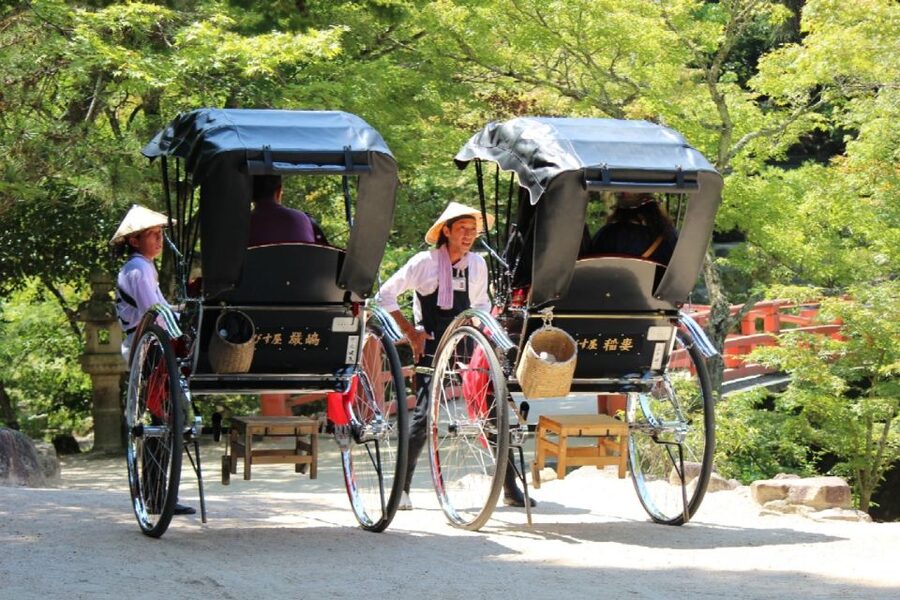
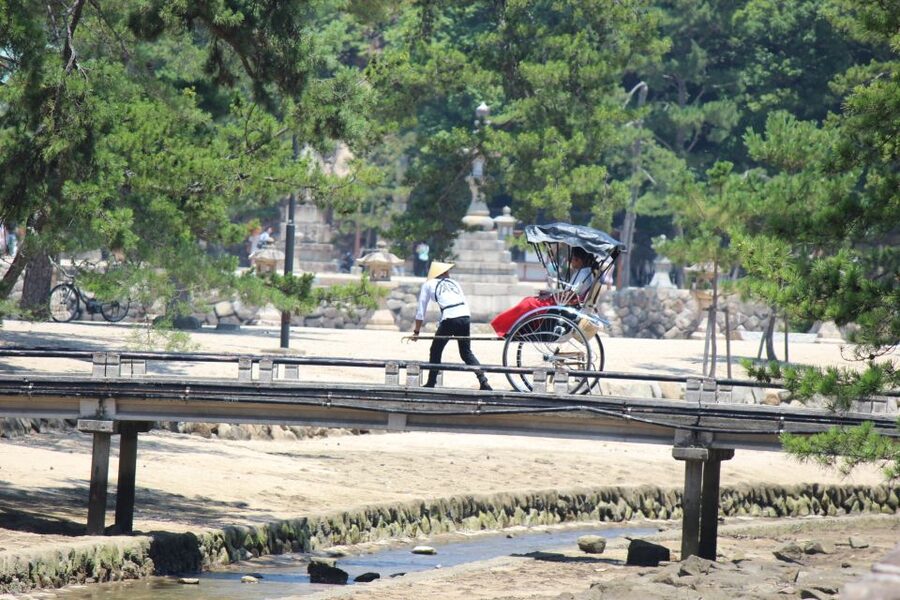
This is a private group experience, not a shared carriage with strangers. The rickshaw is pulled by your guide, who also provides the commentary. The ride gives you a raised view of the streets and a relaxed pace for photographs, while your guide points out details you could easily miss on your own.
The official tour language is Japanese. That is important to understand before booking. Some guides speak enough English for a useful tour, and one guide used Google Translate when a word or explanation was difficult, but you should not expect every guide to give a full English-language talk.
A few more Hiroshima half-days to weigh up
- Peaceful Hiroshima & Miyajima UNESCO 1 Day Bus Tour
★ 5.0 · 5,309 reviews - Hiroshima: Hiroshima and Miyajima UNESCO Sites 1-Day Tour
★ 4.9 · 2,330 reviews - Hiroshima / Miyajima Full-day Private Tour with Government Licensed Guide
★ 5.0 · 1,298 reviews
Rolling through Miyajima’s old town
The first part takes you down Miyajima’s charming streets toward the center of town. You pass traditional townhouses and the old-fashioned shopping arcade, where the island’s everyday character mixes with its famous sightseeing stops.
This is one of the ride’s strongest features. On foot, you may focus on reaching the shrine or finding a snack. From the rickshaw, you can look up at the buildings and watch the town unfold without stopping every few steps. Your guide can also explain local customs and point out places that might otherwise blend into the street.
You will still want time to walk later. A rickshaw tour is an introduction, not a replacement for exploring Miyajima at your own pace. The carriage takes you through the town, but shops and food stops are best handled on foot, and admission to religious sites is not included.
The island’s deer are part of the experience too. You may see them near the streets and waterfront. They are charming, but treat them as animals rather than photo props, and follow local guidance about feeding and handling them.
The waterfront and Itsukushima Shrine’s famous gate
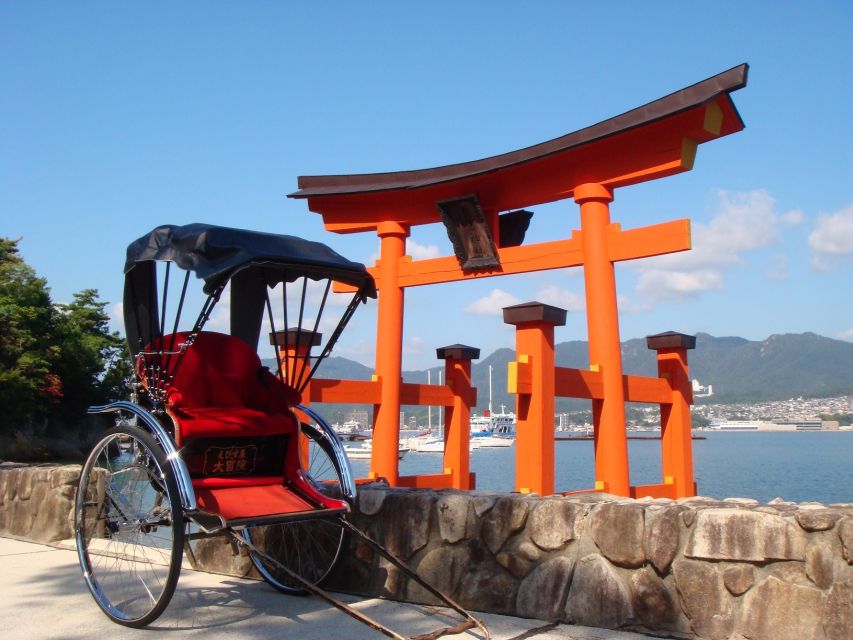
The route continues along the waterfront toward Itsukushima Shrine. This is where the tour delivers its most recognizable view: the large orange torii gate set in the water before the shrine.
Tide timing shapes the scene. At high tide, the gate appears to float offshore, which is the classic Miyajima image. At lower water, the view changes, and you may see the exposed ground around the gate. Neither view is wrong, but you should check the tide if the floating effect is the main reason you are booking.
Your guide can stop at suitable points for photographs. This is especially useful for couples, families, or solo visitors who would otherwise need to rely on a stranger or a timer. Several guides have been praised for taking good photographs, adding a small but valuable service to the ride.
The rickshaw also gives you a better sense of the relationship between the shrine, the sea, and the town. You are not simply ticking off a famous gate. You are seeing how Miyajima’s religious setting depends on the water and the changing tide.
Admission to Itsukushima Shrine is not included in the tour price. The supplied details specifically identify temple and shrine entry fees as an extra, so plan for those costs if you want to go inside.
Choosing the 45-minute ride
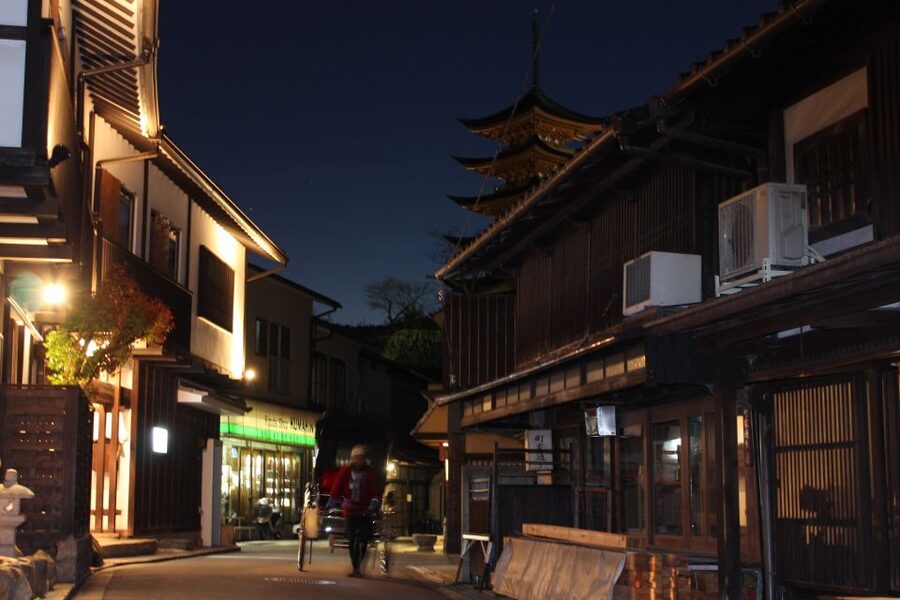
The shortest option lasts 45 minutes. It is the sensible pick if you want a quick orientation, a few photographs, and the main streets and waterfront without giving up much of your day.
I would choose this length if you have limited time on Miyajima, are traveling with young children, or mainly want the torii gate and a taste of the old town. It also suits anyone who finds a long seated ride uncomfortable.
One review specifically judged that 30 minutes would have been enough. That tells you something useful: the shortest tour may be plenty if your priority is simply seeing the central sights. The 45-minute option gives you a little more breathing room, but it is still an introductory ride rather than a full island circuit.
You should not expect Daishoin Temple, Senjokaku Shrine, and the longer scenic roads on this version. If those places matter to you, book more time rather than hoping the guide can fit everything in.
Same base, a completely different sort of day:
- Hiroshima Historical Walking Tour – Why A-Bomb was Dropped
★ 4.8 · 893 reviews - Hiroshima Peace (Heiwa) Walking Tour at World Heritage Sites
★ 5.0 · 872 reviews - Hiroshima in a Nutshell: Morning Bike Adventure
★ 5.0 · 524 reviews - Hiroshima City 4hr Private Walking Tour with Licensed Guide
★ 5.0 · 437 reviews
Adding Daishoin Temple with 70 minutes
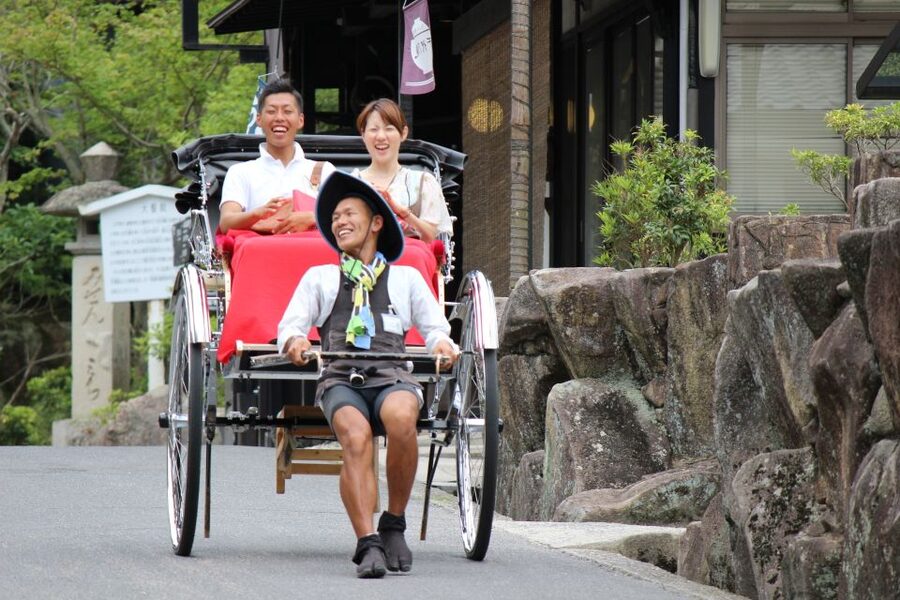
The 70-minute option includes Daishoin Temple, a 1,200-year-old temple on Miyajima. It is described as a power spot, a place where visitors are said to receive positive energy. Whether you take that idea literally or simply enjoy the calm of a historic temple, this stop adds a more reflective side to the tour.
The temple also offers a strong view over Miyajima. That makes the stop worthwhile for more than its age or religious importance. You get a different angle on the island, with the sea and surrounding area laid out below you.
This option is a good middle ground. You see the town, waterfront, torii, and Daishoin without committing to the longest ride. If you want more than a photo stop but do not need every scenic route, I would give the 70-minute tour serious consideration.
Remember that admission fees are not included. The activity information does not give a separate Daishoin admission price, so check the current fee when planning your budget.
Reaching Senjokaku Shrine at 130 minutes
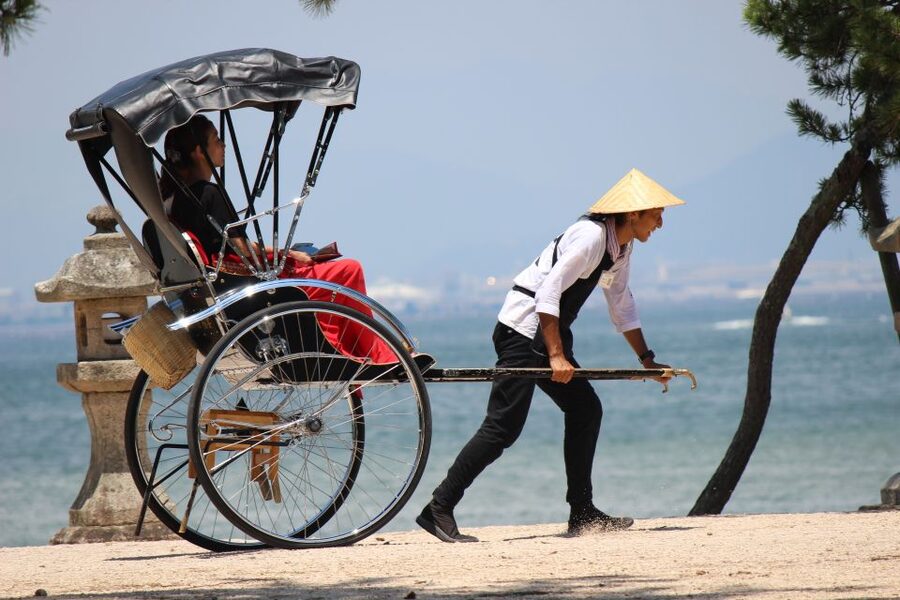
The 130-minute route adds Senjokaku Shrine. It was built under the order of Toyotomi Hideyoshi, a major figure in Japanese history. Your guide can put the building and its purpose into context, which is particularly helpful because the site has a different feel from the waterfront shrine.
The stop also gives you more sea views. By this point, the ride is less about a quick introduction and more about connecting several parts of Miyajima into one guided outing.
Entry to Senjokaku Shrine costs ¥100 and is not included. That is a small extra charge, but it is worth knowing before you arrive. Temple and shrine admissions generally need to be paid separately from the $51 per person tour price.
The 130-minute choice suits you if this is your main Miyajima visit and you want a broad look at the island without selecting the full 190-minute route. It is also a sensible choice for visitors who enjoy historical sites but do not want to spend the entire afternoon in a rickshaw.
Taking the 190-minute scenic route
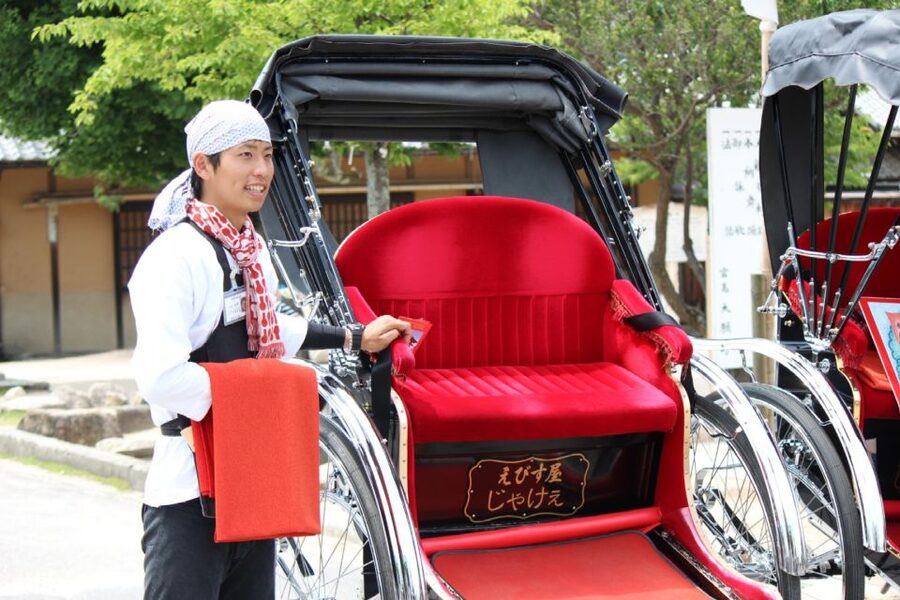
The longest option lasts 190 minutes. Along with the central sights, Daishoin Temple, and Senjokaku Shrine, it includes special scenic roads through parks and beside the sea.
This longer route is the best choice if you want the ride itself to be a major part of your Miyajima day. You have more time to move away from the busiest central streets and see a quieter side of the island. The extra length also leaves more room for pauses, photographs, and conversation with the guide.
The trade-off is simple: three hours and ten minutes is a long time to sit in a compact rickshaw. The seat width is 74 centimeters, or about 29.1 inches, and two adults can fit side by side. Still, the operator notes that booking individual rickshaws may be more comfortable for some passengers.
The route can be adjusted around your interests, and you can choose your endpoint. That flexibility is useful if you want to finish near a particular part of the island rather than return to the ferry terminal. Confirm your preferred endpoint with the local partner or guide, since the exact adjustment depends on the tour arrangement.
What the private format adds
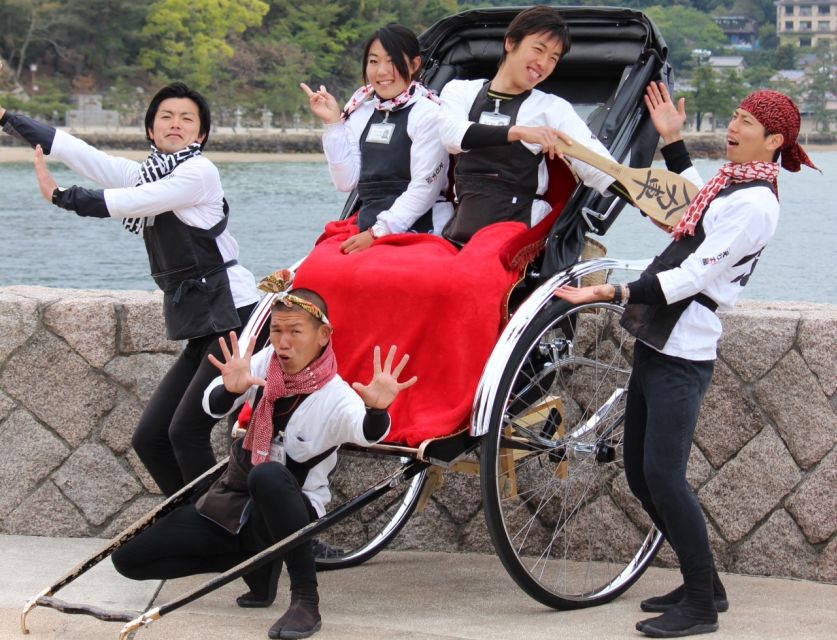
A private rickshaw changes the mood of the outing. You can ask questions, request a photo stop, and discuss what interests you without trying to keep up with a large group. The guide can spend more attention on your party and adjust the pace within the selected time.
The guides are part of the value. Kim has been praised for enthusiasm, humor, island stories, and photographs. Jose has been described as friendly and good at bringing local history and culture to life. Shinemasa has been noted for listening carefully and sharing lesser-known details about the island.
These names do not guarantee who you will receive, but they show the kind of service the operator aims to provide. The strongest personal accounts focus less on the carriage and more on the guide’s warmth, storytelling, and effort to make the ride feel special.
Communication deserves a fair warning. The listed live tour language is Japanese. Some English may be available, and translation apps can help, but you should not book this as an English-language history lecture unless that has been confirmed for your date.
Is $51 per person good value?
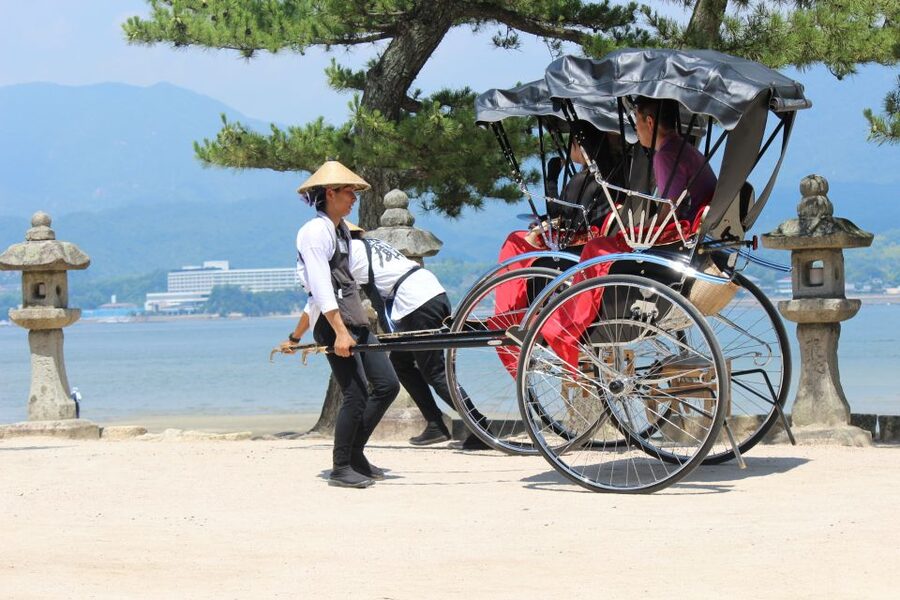
At $51 per person, the price is reasonable when you want a private guide, a photo-friendly ride, and a quick way to cover Miyajima’s main area. The value improves if two people share one rickshaw and you select a longer option with several stops.
The price is less attractive if you only want transport. Miyajima’s central area can be explored on foot, and a short ride will not replace the need to walk around the shrine, shops, and temple grounds. You are paying for the guide, the private setting, the rickshaw experience, and the route planning, not simply for a lift.
Factor in extra admission fees. Food and drinks are not included, and the ¥100 Senjokaku entry is separate. The included souvenir postcard and sticker are small keepsakes, not major parts of the value.
The reserve-now, pay-later option also helps if your Japan schedule is still moving around. You can book without paying at once, and cancellation is free up to 24 hours before the tour for a full refund. Check the exact booking terms for your reservation.
Comfort, children, and practical limits
Each rickshaw holds a maximum of two adults. Children aged six and under can ride free on an adult’s lap, with one child per adult and a maximum of two adults and two children per rickshaw.
A child aged six or older who uses one of the two seats must be booked as an adult. This rule is easy to miss, so count seats rather than simply counting family members.
The narrow seating is the main comfort issue. If you are broad-shouldered, dislike close seating, or plan to take the 190-minute route, consider individual rickshaws. The operator specifically notes that separate carriages can be more comfortable.
The activity is not recommended for people with back problems or pregnant women. It is also not recommended during the first 16 weeks of pregnancy. You cannot use selfie sticks, so bring a normal camera or phone and let the guide help with photographs.
Who should book this Miyajima ride?
I would recommend it to first-time visitors who want a clear introduction to Miyajima without spending the first hour figuring out the streets. It is also a good fit for couples, families with small children, and anyone who values local stories and photographs as much as sightseeing.
Choose 45 minutes for a quick overview. Choose 70 minutes if Daishoin Temple matters to you. Choose 130 minutes for a fuller historical route with Senjokaku Shrine, and 190 minutes if you want the parks, seaside roads, and a slower private outing.
I would be more cautious if you have back trouble, are pregnant, dislike compact seating, or need a guaranteed English-speaking guide. In those cases, confirm the language and comfort details before paying.
FAQ
Where does the Miyajima rickshaw tour meet?
Your guide waits just outside the Miyajima Ferry Terminal at the scheduled time. After booking, the local partner sends a map and photograph of the meeting point.
How long does the tour last?
The available options range from 45 minutes to 190 minutes. Starting times depend on availability.
Is the rickshaw tour private?
Yes. The tour is operated as a private group experience.
How many adults can ride in one rickshaw?
A maximum of two adults can ride in one rickshaw. The seats are 74 centimeters wide and fit two adults side by side.
Can children ride for free?
Children aged six and under can ride free on an adult’s lap, with one child per adult. The maximum is two adults and two children per rickshaw.
Is the tour available in English?
The listed live tour language is Japanese. Some guides may communicate in English, and Google Translate may be used when needed, but an English-speaking guide is not guaranteed by the supplied tour information.
Does the tour visit Daishoin Temple?
The 70-minute option includes Daishoin Temple. The temple is described as 1,200 years old and offers views over Miyajima.
Is entry to Senjokaku Shrine included?
No. Entry to Senjokaku Shrine costs ¥100 and is paid separately.
Can I cancel the tour?
You can cancel up to 24 hours in advance for a full refund. The reserve-now, pay-later option lets you book without paying immediately.
Should you book it?
Book this tour if you want more than a walk between Miyajima’s headline sights. The private carriage, flexible route, friendly guides, and help with photographs give the island a personal feel, especially on the 70-minute or longer options.
For the best balance, I would choose 70 minutes if your main goals are the torii gate, old town, waterfront, and Daishoin Temple. Pick 130 or 190 minutes if you want the ride to shape your whole Miyajima visit. Skip it if you only need a quick transfer, require guaranteed English commentary, or may find the narrow seat uncomfortable.
Just added around Hiroshima
- The Peace Memorial to Miyajima : Icons of Peace and Beauty★ 4.5 · 31 reviews
- Shore Excursion from Hiroshima Port : Private Tour in Hiroshima★ 5.0 · 17 reviews
- Hiroshima Saijo Sake Tasting Tour with visit to 7 Breweries★ 5.0 · 104 reviews
- Hiroshima & Miyajima All-Inclusive Tour w/Licensed guide Pancho★ 5.0 · 54 reviews
- Hiroshima Country Cycling: Explore Rural Life 1 HR from City★ 5.0 · 22 reviews
- Okunoshima Rabbit Island Cycling Tour with Local Guide★ 4.5 · 17 reviews
- Private Full Day Hiroshima Tour★ 4.5 · 29 reviews
- Hiroshima Private Tour with a Local – Highlights & Hidden Gems★ 4.5 · 24 reviews
Hiroshima Tours, compared.

Peaceful Hiroshima & Miyajima UNESCO 1 Day Bus Tour
Read our review →
Hiroshima and Miyajima UNESCO Sites 1-Day Tour
Read our review →
Hiroshima Historical Walking Tour – Why A-Bomb was Dropped
Read our review →
Hiroshima Peace (Heiwa) Walking Tour at World Heritage Sites
Read our review →
Hiroshima in a Nutshell: Morning Bike Adventure
Read our review →
Hiroshima City 4hr Private Walking Tour with Licensed Guide
Read our review →

Japanesel Archery Experience HIROSHIMA CASTLE SHARAKU
Read our review →Browse the lists this tour appears in