
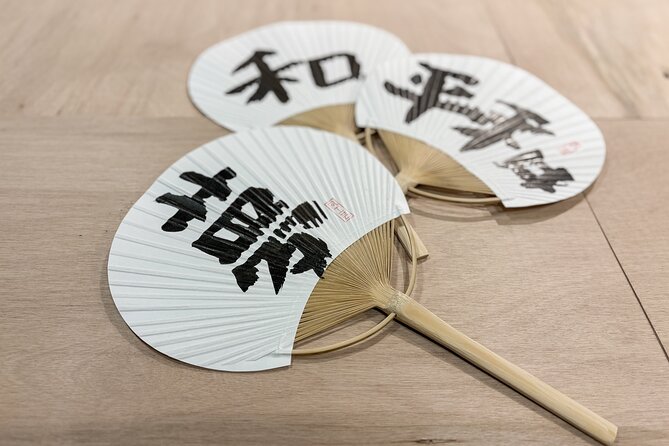
Reviewed · HIROSHIMA TOURS
Calligraphy Workshop at Traditional Folk Craft Shop in Hiroshima
The best part of this Hiroshima activity is the chance to make something meaningful with your own hands, not simply buy another souvenir. At Takumi, an award-winning calligrapher called Sensai Ryosei leads you through brush, ink, and paper in a calm session that feels part art lesson and part quiet meditation.
I like the use of handmade Kumano brushes, produced in Hiroshima’s famous brush-making town. I also like the setting: Takumi is a 50-year-old folk craft shop with a wall of ukiyo-e prints, and it sits just five minutes from the Atomic Bomb Dome. The main drawback is the short 45-minute format, which gives you a pleasant introduction rather than time for a full study of calligraphy.
Key points to know before booking
- Write a final artwork on a fan or shikishi board, then take it home.
- Learn from Sensai Ryosei, an award-winning instructor known for a patient, calm teaching style.
- Use handmade brushes from Kumano, Hiroshima’s leading brush-making town.
- Meet at Takumi on the fifth floor of Sanmall Mall, close to the Atomic Bomb Dome and Hondori Station.
- Work in a private group, with only your own party taking part.
- Expect a 45-minute session, with all brushes, ink, paper, and other tools supplied.
Why this short Hiroshima workshop feels different
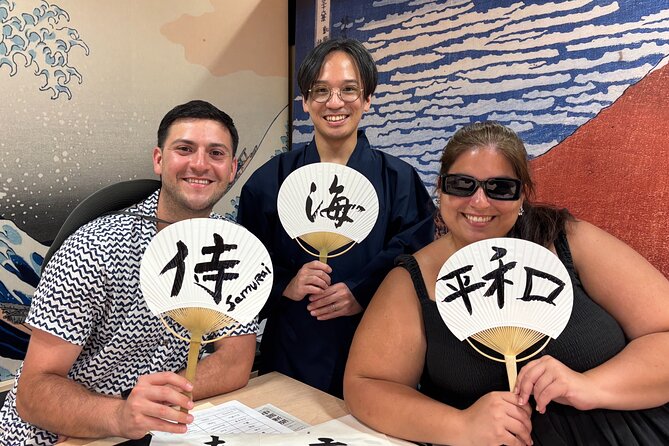
Calligraphy can look intimidating when you see an expert produce a perfect character in one swift motion. This class breaks the process into manageable steps, so you can focus on how the brush moves instead of worrying about producing museum-quality work.
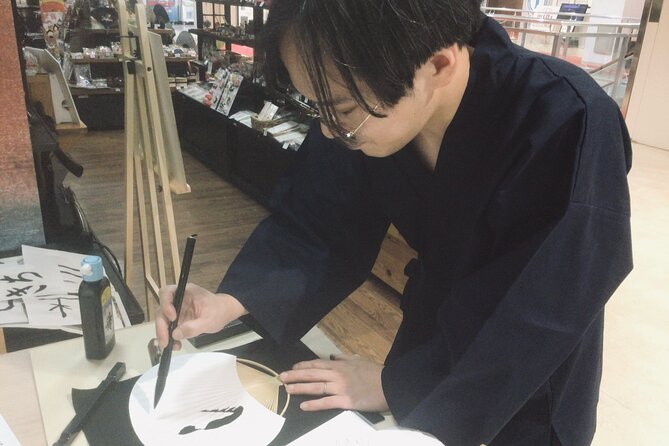
You begin with an introduction to the tools. The brush, ink, and paper are not just props for a photo opportunity. Each behaves differently, and learning how they work gives you a better sense of why Japanese calligraphy requires control, patience, and a steady hand.
The activity then moves into basic strokes, including dots, lines, and sweeping movements. These simple marks are useful because they let you practice pressure and direction before attempting hiragana or kanji. You do not need previous experience, Japanese language skills, or artistic training.
The final stage is the most personal. You choose a word and write it on a traditional hand fan, called an uchiwa, or on a square calligraphy board called a shikishi. The supplied information specifically includes an original calligraphy fan souvenir, while the activity description also gives you the shikishi option. Confirm the preferred format when you arrive if the choice matters to you.
More hands-on workshops in Hiroshima:
- Private Japanese Cooking Class in Hiroshima with Machiko’s Family
★ 5.0 · 35 reviews - Experience the Soul of Hiroshima: A Peaceful Koto Workshop
★ 5.0 · 32 reviews - Hiroshima:Private lacquer workshop experience tour(gift included)
★ 5.0 · 13 reviews
Meeting Sensai Ryosei at Takumi
The instructor is Sensai Ryosei, an award-winning calligrapher who offers hands-on guidance throughout the class. A calm teacher matters here. Calligraphy rewards slow movements, and hurried instructions would make the session feel like a race against the clock.
The teaching style is described as patient and gentle. That is especially helpful if you are nervous about making a mistake in front of someone who works with a brush every day. You can expect guidance on the basic movements rather than a lecture about Japanese writing.
The class is private to your group. That does not necessarily mean a one-on-one lesson, but it does mean other booking parties will not be taking part in the same activity. For couples, families, and small groups of friends, this makes the session feel more personal and gives you room to concentrate.
You also have the option of a free photo service. Staff can take pictures during the workshop and send them to you digitally afterward. This is useful because your hands are occupied with the brush, and it lets you keep a record of the process rather than only the finished piece.
Finding the fifth floor of Sanmall Mall
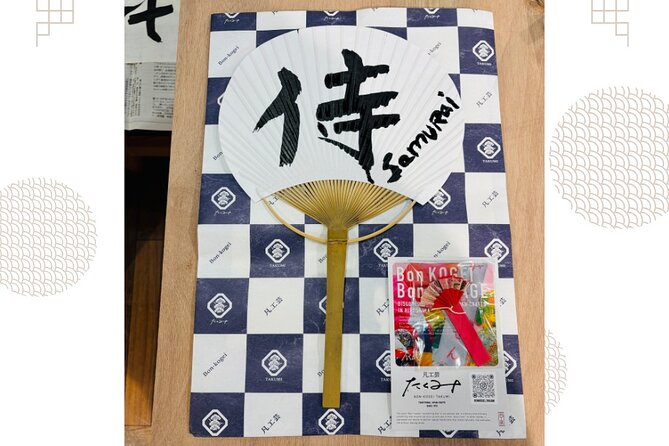
The meeting point is Bonkogei Takumi at 2-chōme-2-18 Kamiyachō, Naka Ward, Hiroshima. The shop is on the fifth floor of Sanmall Mall. UNIQLO is on the second floor, a useful landmark when you are finding your way through the building.
The location is one of the strongest practical features. Takumi is about a five-minute walk from the Atomic Bomb Dome and about three minutes from Hiroden Hondori Station. You can fit the workshop into a day of central Hiroshima sightseeing without arranging private transport.
That central setting also makes the activity a good choice when the weather turns poor. You are not walking far from the tram or the main sights, and the workshop takes place indoors. The shop itself is part of the appeal, with traditional items from across Japan and a wall decorated with ukiyo-e prints.
Allow a little extra time to locate the mall and reach the fifth floor. The meeting point is not a separate street-level studio, so arriving with a few minutes to spare is sensible, especially if you are moving between the Atomic Bomb Dome, Hondori, and the tram network.
Practicing with Kumano brushes
Hiroshima has a special connection to brush-making through Kumano, a town known as Japan’s top brush-making center. The workshop uses handmade brushes from Kumano, giving you a local connection that goes beyond simply trying an imported calligraphy set.
At the start, you learn the basic tools and how to handle them. The practice strokes are simple, but they help you feel the brush’s flexibility. A dot is not just a dot when the amount of pressure changes its shape. A line can become thin, thick, firm, or soft depending on your movement.
This is where the session takes on its meditative quality. You must pay attention to the brush, ink, and paper at the same time. The exercise gives you a break from sightseeing and phone screens, even though the whole activity is less than an hour.
You should not expect to master Japanese calligraphy in 45 minutes. That is not the point. The value comes from learning a few foundations, receiving direct correction, and gaining enough confidence to create one finished piece.
A few more Hiroshima half-days to weigh up
- Peaceful Hiroshima & Miyajima UNESCO 1 Day Bus Tour
★ 5.0 · 5,309 reviews - Hiroshima: Hiroshima and Miyajima UNESCO Sites 1-Day Tour
★ 4.9 · 2,330 reviews - Hiroshima / Miyajima Full-day Private Tour with Government Licensed Guide
★ 5.0 · 1,298 reviews - Hiroshima Historical Walking Tour – Why A-Bomb was Dropped
★ 4.8 · 893 reviews
From hiragana practice to your chosen kanji
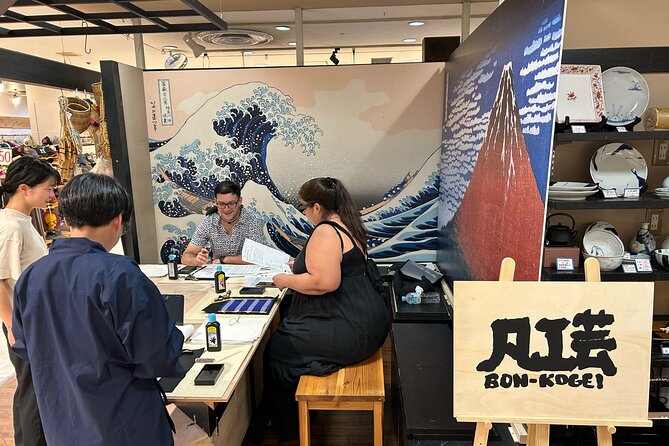
Once you have practiced the main strokes, you try writing hiragana and kanji. Hiragana is a Japanese phonetic script, while kanji are characters with individual meanings. The class lets you work with both, which gives you a glimpse of the range of Japanese writing.
The final word is your choice. That makes the souvenir more personal than a standard object purchased from a shop. You might choose a word connected to your trip, a name, or an idea that matters to you. The supplied information does not provide a fixed list of words, so Sensai Ryosei’s guidance is important if you need help selecting or shaping your final design.
Do not judge your finished work only by how closely it matches the instructor’s. Calligraphy includes controlled movement and personal expression. A slight variation in pressure or form is part of your own learning process, and the finished fan or shikishi records that moment.
The artwork is also easy to carry compared with many traditional crafts. A fan is light and practical, while a shikishi board has a more formal, displayable feel. If you are flying home with limited luggage, either is a simpler souvenir than a large craft object.
The ukiyo-e room and traditional craft shop
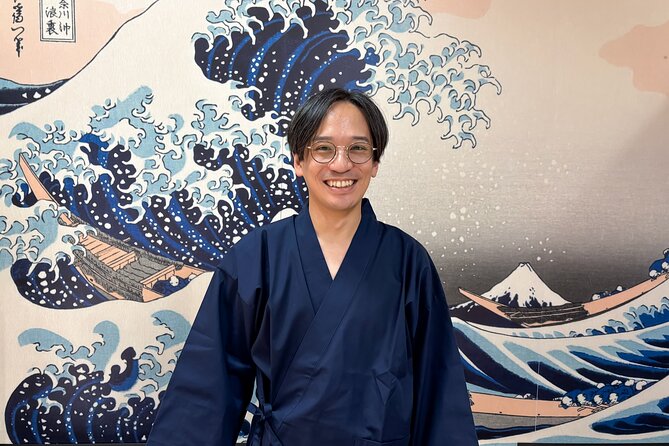
Takumi is more than a classroom. It is a 50-year-old folk craft shop offering traditional goods from around Japan. That gives the workshop a stronger cultural setting than a generic activity room with blank walls.
The ukiyo-e prints are a particularly nice touch. Ukiyo-e is known for its woodblock print tradition, and the decorated wall adds visual context without turning the lesson into a history talk. You can look around before or after the activity and see how the workshop fits into a broader world of Japanese craft.
I would treat the shop as part of the experience, not a promise that you will receive a guided shopping tour. The focus is calligraphy, and the time is limited. Still, the setting makes the activity feel connected to living craft traditions rather than separated from them.
The location also works well after a visit to the Atomic Bomb Dome. Hiroshima’s Peace Memorial sites call for quiet reflection, and calligraphy offers another calm activity nearby. It does not replace a visit to the museum or memorial grounds, but it can provide a gentle creative pause in the same central area.
What the 45-minute schedule really gives you
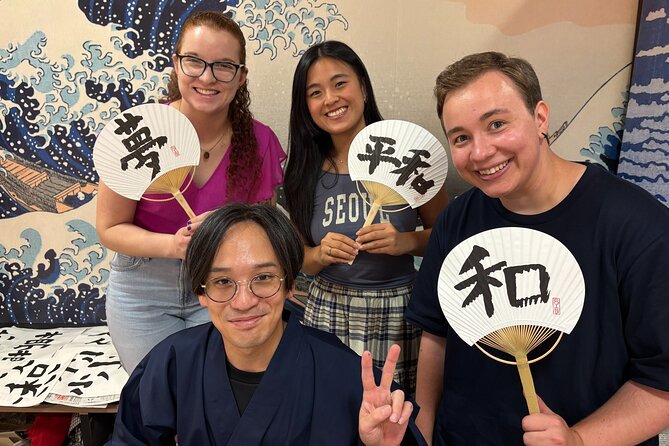
Forty-five minutes is enough for a clear sequence:
- Introduction to the brush, ink, paper, and other tools
- Practice with dots, lines, and sweeping strokes
- Attempts at hiragana and kanji
- Creation of a final word on a fan or shikishi
- Photos during the session if you want them
The short length is useful for a packed Hiroshima itinerary. You can place it between sightseeing stops without giving up half a day. Families and first-time participants may also prefer this format because it keeps the activity focused.
The tradeoff is that the lesson cannot go far into calligraphic history, advanced technique, or repeated attempts at a large number of characters. If you already study Japanese calligraphy, you may want a longer or more specialized class.
For most first-timers, the timing is sensible. You receive enough instruction to understand the basics and enough practice to produce a finished item. The final piece may take several attempts, so listen carefully during the early exercises and save your energy for the last character.
Is $32.81 a fair price?
At $32.81 per person, this is not the cheapest souvenir stop in Hiroshima. You could buy a decorative fan or a brush in a shop for less. The price makes more sense when you count the instruction, the private group setting, the use of calligraphy tools, the final artwork, and the venue.
You are paying for a guided activity rather than an object alone. Sensai Ryosei’s support helps you avoid the common beginner problem of not knowing how to hold the brush or where to start. The handmade Kumano brush adds a local connection, and the fan or shikishi gives you something made during the session.
The value is strongest if you want an activity you can remember and discuss later. It is less compelling if you only want a quick purchased gift or if you already have strong calligraphy skills.
The included materials also keep the cost clear. Brushes, ink, paper, and the venue fee are included. Private transportation and parking are not included, but the central tram and shopping-mall location mean you are unlikely to need either.
Who should book this activity?
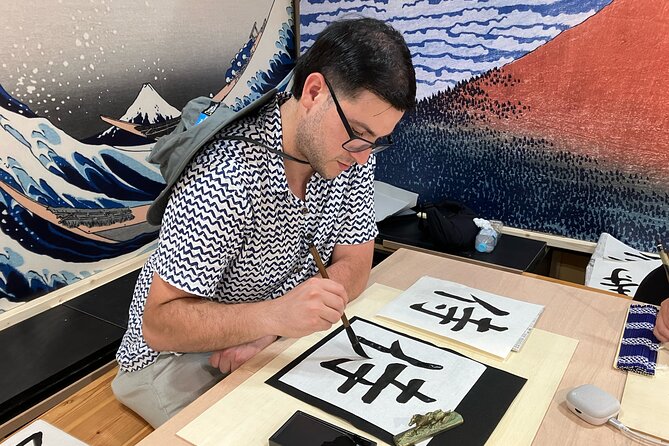
This workshop suits first-timers best. You receive step-by-step help, and no preparation is required. You only need to bring yourself and an interest in trying something new.
It also fits people who enjoy Japanese culture but want more than sightseeing and photography. You handle traditional tools, learn a few writing movements, and leave with a piece you created yourself.
Families can consider it too, since most people can participate and the private format keeps the group together. The 45-minute length may work well for children or anyone who prefers short activities, though the supplied information does not state a minimum age.
Couples and friends may like the photo option. One person can work while another takes in the setting, and staff can send digital images afterward. Solo participants can also join, but the booking is described as a private activity for each group, so check the available booking arrangement if you are alone.
This is not the right pick if you want a long cultural lecture, a formal museum visit, or advanced brush training. It is a compact hands-on introduction with a finished souvenir at the end.
Practical details before you reserve
Confirmation is sent within 48 hours of booking, subject to availability. The experience uses a mobile ticket, so keep the booking available on your phone.
The activity begins and ends at Takumi. It is close to public transportation, with Hiroden Hondori Station about three minutes away and the Atomic Bomb Dome about five minutes on foot.
Free cancellation is available up to 24 hours before the start time for a full refund. Cancellations or changes made less than 24 hours before the local start time are not accepted for a refund.
All tools are provided, including brush, ink, paper, and related materials. Parking and private transportation are not included. Since the workshop takes place in a shopping mall near major sights, public transport is the practical choice.
Should you book the Takumi calligraphy workshop?
Book it if you want a calm, local-feeling activity that fits neatly into a day around the Atomic Bomb Dome. The combination of Kumano brushes, Sensai Ryosei’s patient instruction, the ukiyo-e setting, and a handmade fan or shikishi gives the short session real character.
The key question is what you want from the price. If you want expert-level training, 45 minutes will feel brief. If you want a guided introduction and a personal souvenir, $32.81 is a reasonable spend, especially with materials and venue use included.
I would choose this for a first calligraphy experience, a rainy-day plan, or a quieter break between Hiroshima’s major sights. Arrive ready to slow down, accept a few imperfect strokes, and let the finished character tell the story of your time in Hiroshima.
FAQ
How long does the calligraphy workshop last?
The workshop lasts approximately 45 minutes.
Where does the activity take place?
It takes place at Bonkogei Takumi, on the fifth floor of Sanmall Mall at 2-chōme-2-18 Kamiyachō, Naka Ward, Hiroshima.
How far is Takumi from the Atomic Bomb Dome?
The shop is about a five-minute walk from the Atomic Bomb Dome.
What do I create during the workshop?
You create your own calligraphy artwork using a word of your choice on either a traditional Japanese hand fan called an uchiwa or a calligraphy board called a shikishi.
Are calligraphy supplies included?
Yes. Brushes, ink, paper, other calligraphy tools, and the venue fee are included.
Can I cancel for a full refund?
Yes. You can cancel at least 24 hours before the experience start time for a full refund. Changes or cancellations made less than 24 hours before the start time are not accepted for a refund.
Just added around Hiroshima
- The Peace Memorial to Miyajima : Icons of Peace and Beauty★ 4.5 · 31 reviews
- Shore Excursion from Hiroshima Port : Private Tour in Hiroshima★ 5.0 · 17 reviews
- Hiroshima Saijo Sake Tasting Tour with visit to 7 Breweries★ 5.0 · 104 reviews
- Hiroshima & Miyajima All-Inclusive Tour w/Licensed guide Pancho★ 5.0 · 54 reviews
- Hiroshima Country Cycling: Explore Rural Life 1 HR from City★ 5.0 · 22 reviews
- Okunoshima Rabbit Island Cycling Tour with Local Guide★ 4.5 · 17 reviews
- Private Full Day Hiroshima Tour★ 4.5 · 29 reviews
- Hiroshima Private Tour with a Local – Highlights & Hidden Gems★ 4.5 · 24 reviews
Hiroshima Tours, compared.

Peaceful Hiroshima & Miyajima UNESCO 1 Day Bus Tour
Read our review →
Hiroshima and Miyajima UNESCO Sites 1-Day Tour
Read our review →
Hiroshima Historical Walking Tour – Why A-Bomb was Dropped
Read our review →
Hiroshima Peace (Heiwa) Walking Tour at World Heritage Sites
Read our review →
Hiroshima in a Nutshell: Morning Bike Adventure
Read our review →
Hiroshima City 4hr Private Walking Tour with Licensed Guide
Read our review →

Japanesel Archery Experience HIROSHIMA CASTLE SHARAKU
Read our review →Browse the lists this tour appears in