
Reviewed · HIROSHIMA TOURS
From Hiroshima: Miyajima Island Day Trip with Ropeway Ride
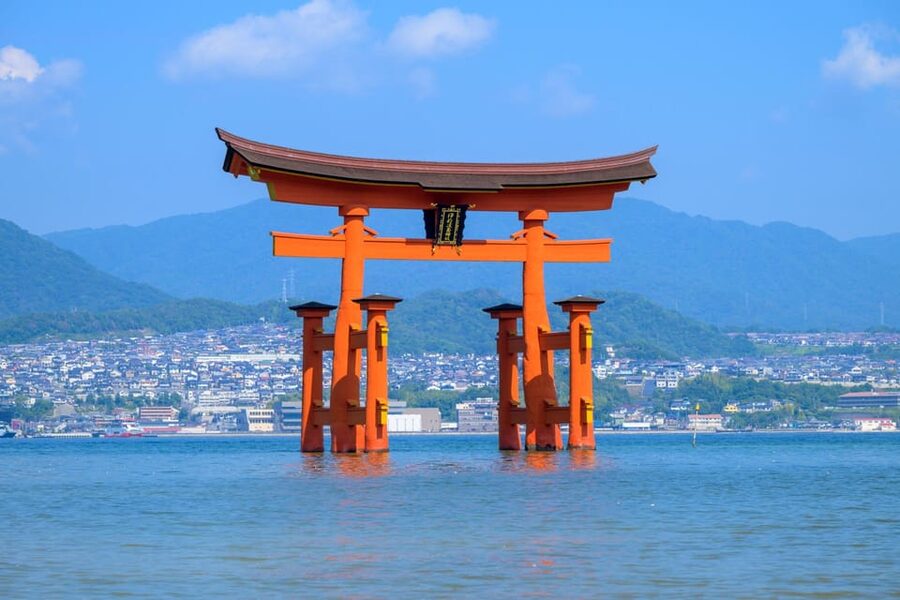
Miyajima gives you one of Japan’s great day-out scenes: the O-torii gate appears to float in the Seto Inland Sea, while forested Mount Misen rises behind the shrine. This tour ties the island’s major sights together by train, ferry, foot, and ropeway, so you spend less time sorting out transport and more time looking around.
I like the way the day combines Itsukushima Shrine and Daisho-in with the mountain ride. I also like the small-group format, capped at 15 people. Guides including Isabella, Miki, Samar, and Simarjeet have been praised for clear English, good timekeeping, and adjusting the pace to the group.
The catch is the physical demand. You will walk for much of the day, and the optional hike from the ropeway station to Mount Misen’s summit is steep. The nine-hour schedule can also feel full, especially if you want a slow lunch and plenty of shopping time.
Key points to know before you book
- The ferry crossing is part of the experience: You travel from Hiroshima by train and ferry, with transportation included.
- The tide changes the torii view: Your guide tries to arrange a low-tide walk to the O-torii gate, but timing depends on the day.
- Mount Misen offers two levels of effort: You can stay near Shishiiwa Observatory or hike onward to the summit observatory.
- Two hours of free time matter: Use it for lunch, local treats, shopping, or a slower look at Omotesando Street.
- Small groups make a difference: A group of no more than 15 can move through busy areas more easily.
- Good shoes are essential: This is not a sit-back sightseeing day, especially if you choose the summit walk.
From Hiroshima Station to Miyajima by train and ferry
Your morning begins beneath the Tourist Information sign outside the Shinkansen gates at Hiroshima Station. This station is under heavy construction, so arriving early is sensible. If you arrive by Shinkansen, the meeting point is directly to your left as you leave the gates. From the local JR lines, follow the signs toward the Shinkansen gates.
The tour then uses public transportation to reach Miyajima. Your guide accompanies you on the train and ferry, which removes one of the day’s small but annoying tasks: working out which platform, pier, or ferry connection comes next.
The ferry crossing also gives you your first broad view of the island. Miyajima, formally called Itsukushima, is known for its shrine, wooded hills, and position in the Seto Inland Sea. The approach helps you understand why the water gate is such a powerful image. It is not simply a gate placed beside the water. Its appearance changes with the tide and the light.
The included transport is useful value at $180 per person. You are paying for the guide, admission fees, ropeway tickets, train, and ferry, not just a walk around the island. Lunch and personal purchases are extra, but the main costs of the day are covered.
A few more Hiroshima half-days to weigh up
- Peaceful Hiroshima & Miyajima UNESCO 1 Day Bus Tour
★ 5.0 · 5,309 reviews - Hiroshima: Hiroshima and Miyajima UNESCO Sites 1-Day Tour
★ 4.9 · 2,330 reviews - From Hiroshima: Hiroshima & Miyajima 1 Day Tour with Lunch
★ 4.7 · 395 reviews
Senjokaku Pavilion, an unfinished wooden hall
One of the first stops is Senjokaku Pavilion, a large wooden hall connected with Toyotomi Hideyoshi. Construction was never completed, and the unfinished state is part of its character.
This is a good early stop because it offers a quiet contrast to the formal shrine buildings. You can look across the open wooden floor, study the huge scale of the hall, and learn how religious buildings and political power overlapped in Japan’s past.
The pavilion sits near a five-story pagoda, adding another memorable architectural view. Your guide explains the site rather than leaving you to guess at its purpose, symbols, and unfinished details. That context is one reason this tour works better than simply arriving on the island with a map.
You should still expect plenty of walking between stops. The path from Senjokaku to the main shrine area is manageable for most people who are comfortable on their feet, but the day gradually builds toward the more demanding Mount Misen section.
Itsukushima Shrine and the changing view of the O-torii
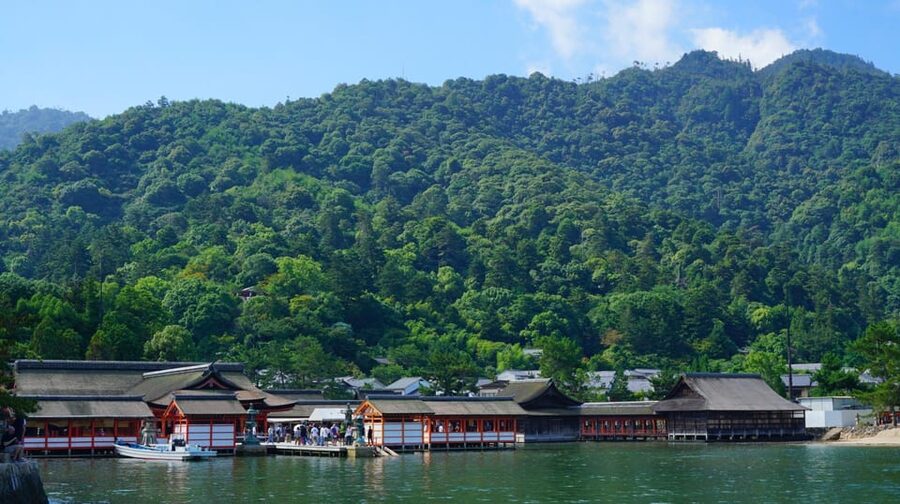
Itsukushima Shrine is the centerpiece of Miyajima. Its worship halls, corridors, and red-painted structures sit along the shore, creating the famous impression of a shrine floating above the sea at high tide.
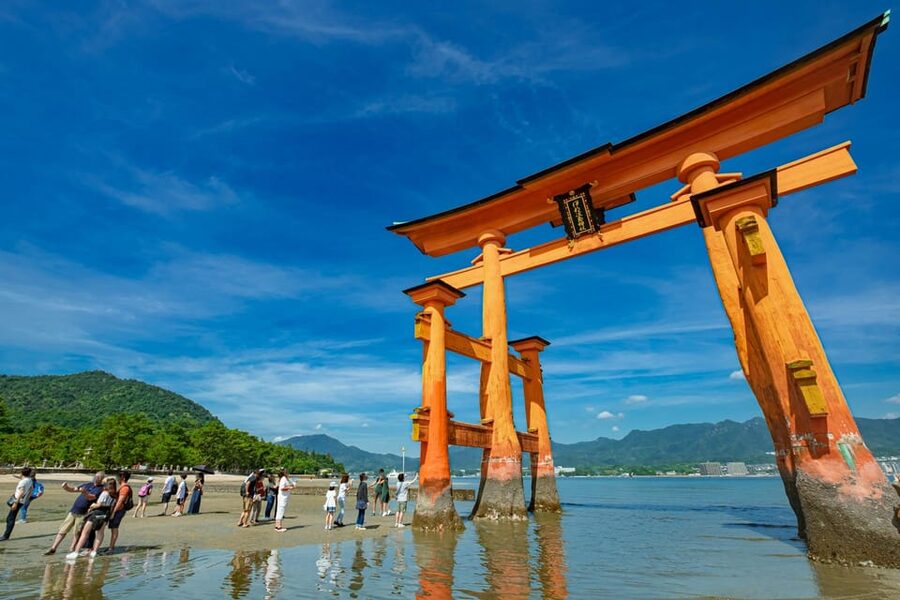
Your guide discusses Shinto, Japan’s indigenous religion, and explains how the shrine’s design relates to the water around it. That matters because the buildings can look quite different depending on the tide. At high water, the shrine feels separate from the shore. At low water, the seabed opens up and you can walk toward the O-torii gate.
The gate itself is one of the day’s most flexible sights. The schedule tries to include a walk out to it at low tide, but tide times vary substantially. Do not book this tour expecting a guaranteed exact moment at the gate. You may see it from the water, from the shrine, and, if timing allows, close up from the exposed shore.
That changing view is part of the fun. A guide can help you understand what you are seeing, but nature controls the clock. If the tide does not match the preferred schedule, you may need to settle for photographs from a distance.
The shrine can also be busy. The advantage of a small group is practical rather than glamorous: your guide can keep everyone together, explain details as you move, and avoid losing time at every bottleneck. One strong day reported less than an hour in lines during a holiday weekend, which shows what an efficient guide can do when the group stays together.
Daisho-in, Miyajima’s quieter religious stop
From Itsukushima Shrine, you walk to Daisho-in, a Shingon Buddhist temple. The change in atmosphere is welcome. Itsukushima is the island’s most famous religious site, but Daisho-in gives you more room to notice small details.
The temple grounds contain many Buddhist figures, with statues appearing along paths and around the buildings. Instead of one grand view, Daisho-in rewards a slower look at the variety of images, gestures, and expressions.
This is also where the guide’s explanations become especially useful. Shinto and Buddhism have shaped Japanese culture side by side for centuries, and seeing both traditions on one compact island gives you a clearer picture than visiting either site alone.
Daisho-in is not a quick photo stop. You will want comfortable shoes and enough attention for steps, slopes, and uneven walking surfaces. The tour is designed to keep moving, though, so if you prefer long periods of quiet temple time, the schedule may feel brisk.
Same base, a completely different sort of day:
- Hiroshima / Miyajima Full-day Private Tour with Government Licensed Guide
★ 5.0 · 1,298 reviews - Hiroshima Historical Walking Tour – Why A-Bomb was Dropped
★ 4.8 · 893 reviews - Hiroshima Peace (Heiwa) Walking Tour at World Heritage Sites
★ 5.0 · 872 reviews - Hiroshima in a Nutshell: Morning Bike Adventure
★ 5.0 · 524 reviews
Two hours on Omotesando Shopping Street
The free-time section lasts about two hours, giving you a chance to choose your own version of Miyajima. You can sit down for lunch, browse souvenirs, or sample local food along Omotesando Shopping Street.
This pause is important. A full day of guided sightseeing can become tiring if every minute is programmed, and two hours lets you reset before the mountain section. It also means you are not forced into one particular restaurant or shopping stop.
Lunch is not included, so budget separately for it. The island is known for local delicacies, and the street is lined with restaurants and shops, but the available time may require a little discipline. If you want a relaxed meal, do that first. Shopping can come afterward.
You should also remember that this is the main chance to buy souvenirs without carrying them around for the entire day. Keep purchases modest if you plan to hike Mount Misen. A large bag becomes less charming once the path starts climbing.
Riding the Miyajima Ropeway toward Mount Misen
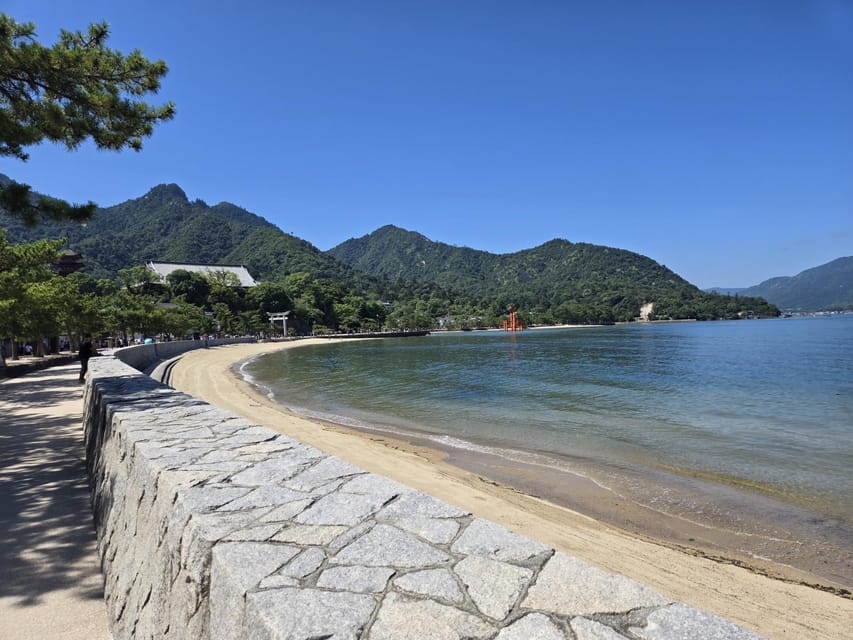
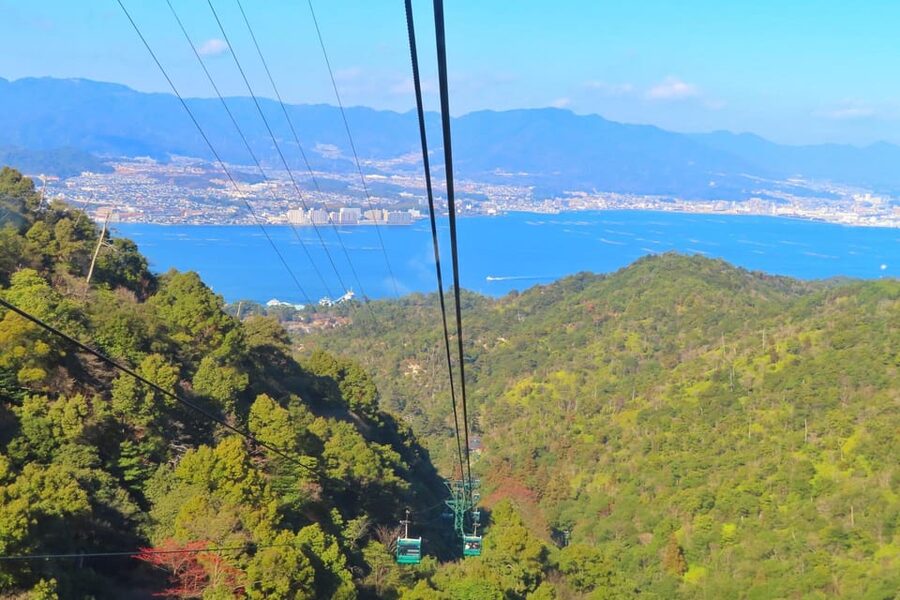
The Miyajima Ropeway changes the scale of the day. After walking through the shrine and temple areas, you rise above the island and get wide views across the Seto Inland Sea.
The cabins provide an aerial look at the wooded slopes and surrounding water. The ride is included in the tour price, so you do not need to arrange a separate ticket or guess how the route works. Your guide rides with the group and helps organize the next choice at the top.
The ropeway is also the point to consider your comfort level. The tour information specifically asks anyone with concerns about the ride to contact the operator in advance. The activity is not suitable for wheelchair users, and the mountain section is not a good match for anyone looking for an entirely easy-access day.
At the upper station, you have a choice. You can remain near Shishiiwa Observatory, close to the ropeway station, or continue on foot to the Mount Misen Observatory at the summit.
The Mount Misen summit walk
The hike to the summit is described as steep and arduous, so treat it as a real walk rather than a short stroll from the cable car. Close-toed shoes, such as sneakers, are recommended, along with comfortable clothing.
The reward is the summit view. From the Mount Misen Observatory, you get an unobstructed panorama of the island and the Seto Inland Sea. The extra walk makes sense for people who value a broad view more than a relaxed schedule.
You do not have to make the hike to enjoy the ropeway. Staying at Shishiiwa Observatory gives you a mountain viewpoint without committing to the full climb. This flexibility is one of the tour’s better features, since groups often contain people with different energy levels.
The guide’s pacing matters here. Several guides, including Isabella and Simarjeet, have been singled out for keeping an eye on slower members of the group and adjusting the day when needed. Still, you should be honest about your ability. A guide can manage time, but cannot turn a steep path into a flat one.
Summer makes this section harder. Temperatures can reach 32 C and higher, with heavy humidity. Light, airy clothing, sun protection, and careful attention to heat are sensible. Winter is cooler, with typical temperatures from 1 C to 10 C, so warm clothing and footwear suited to cold conditions are needed.
Returning through the island at the right pace
After the mountain visit, you take the ropeway back down and walk toward the pier. This final stretch gives you another chance for photographs, small purchases, or a second look at parts of the island you passed earlier.
The return timing can be especially useful if the tide has shifted during the day. One well-timed itinerary may let you see the O-torii from the water earlier and walk toward it later, even near sunset. That is not guaranteed, but the guide can make the best use of the available tide and ferry schedule.
You then return by ferry and train, ending at Hiroshima Station. The day lasts about nine hours, so you should avoid booking an evening activity that requires you to arrive at an exact minute.
What the $180 price really covers
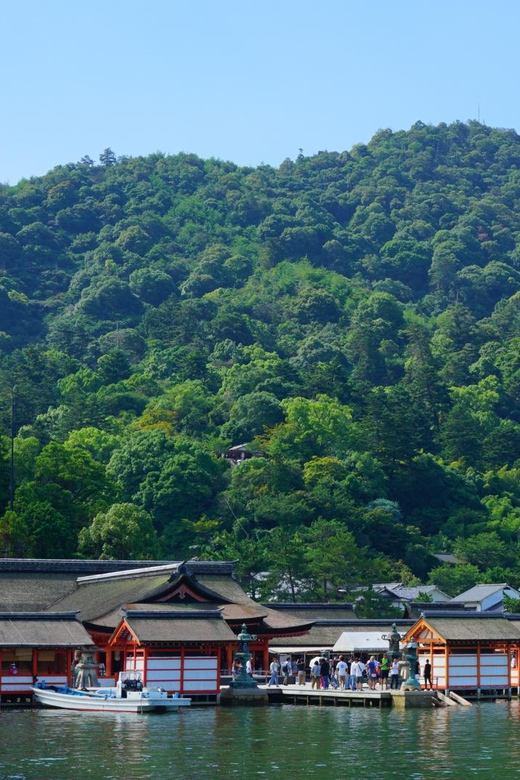
At $180, this is not a cheap independent day trip. You could reach Miyajima on your own for less, then pay individual admission and transport costs as needed.
The tour earns its price through convenience and structure. Your English-speaking guide handles the train, ferry, shrine and temple visits, ropeway tickets, and timing. You also get historical and religious context at places where signs alone may not explain much.
The small group improves the value. With a maximum of 15 people, the guide can usually keep the day moving without the long delays that come with a large coach group. It also leaves some room for personal attention. In one unusual case, a solo participant received a highly customized day, with time adjusted around personal interests.
The value is strongest if you want one organized day covering the island’s major sights. It is weaker if you already know Miyajima well, prefer to wander without a schedule, or want to spend several hours sitting by the water.
Cancellation is flexible up to 24 hours before departure for a full refund, and you can reserve now and pay later. Starting times vary, so check the available date before you commit.
Who should book this Miyajima day trip
I would choose this tour if you have limited time in Hiroshima and want the island’s main religious sites, ropeway, and summit option in one day.
It suits you particularly well if:
- You want an English-speaking guide to explain Shinto, Buddhism, and island history.
- You prefer public transportation but do not want to arrange every connection yourself.
- You are comfortable walking for much of a nine-hour day.
- You want the choice between a shorter mountain visit and a harder summit walk.
- You value a small group over the lowest possible price.
I would think twice if you use a wheelchair, dislike steep paths, or want a completely free-form day. The two-hour lunch and shopping break helps, but the itinerary still has a clear structure and several fixed transport points.
FAQ
How long does the Miyajima tour last?
The experience lasts about nine hours and begins and ends at Hiroshima Station.
Where is the meeting point in Hiroshima Station?
Meet beneath the Tourist Information sign outside the Shinkansen gates. If you arrive by Shinkansen, the sign is directly to your left after leaving the gates.
What transportation is included?
The tour includes the train and ferry to and from Miyajima, as well as the Miyajima Ropeway.
Is lunch included?
No. You receive about two hours of free time on Omotesando Shopping Street to choose and pay for your own lunch.
Can I walk to the O-torii gate?
Your guide will try to arrange a walk to the gate during low tide. The exact timing depends on the tide on your tour date, so the walk cannot be guaranteed at a particular time.
Do I have to hike to Mount Misen’s summit?
No. After riding the ropeway, you can stay near Shishiiwa Observatory or choose the steeper walk to the Mount Misen Observatory.
Is the tour suitable for wheelchair users?
No. The tour is not suitable for wheelchair users. Participants should wear comfortable clothing and shoes, with close-toed shoes recommended for the summit hike.
Should you book it?
Book this Miyajima trip if you want a well-organized first look at the island and would rather spend the day learning than managing tickets, ferry times, and mountain transport. The strongest reasons are the mix of Itsukushima Shrine, Daisho-in, the changing torii view, and the ropeway ride, all handled in one small group.
Skip it if you want a slow island day or are not comfortable with substantial walking. For most visitors with one free day from Hiroshima, though, the $180 cost is reasonable for the transport, admissions, guide, and careful timing. Just arrive early at the station, wear proper shoes, and treat Mount Misen as an optional challenge rather than a requirement.
Just added around Hiroshima
- The Peace Memorial to Miyajima : Icons of Peace and Beauty★ 4.5 · 31 reviews
- Shore Excursion from Hiroshima Port : Private Tour in Hiroshima★ 5.0 · 17 reviews
- Hiroshima Saijo Sake Tasting Tour with visit to 7 Breweries★ 5.0 · 104 reviews
- Hiroshima & Miyajima All-Inclusive Tour w/Licensed guide Pancho★ 5.0 · 54 reviews
- Hiroshima Country Cycling: Explore Rural Life 1 HR from City★ 5.0 · 22 reviews
- Okunoshima Rabbit Island Cycling Tour with Local Guide★ 4.5 · 17 reviews
- Private Full Day Hiroshima Tour★ 4.5 · 29 reviews
- Hiroshima Private Tour with a Local – Highlights & Hidden Gems★ 4.5 · 24 reviews
Hiroshima Tours, compared.

Peaceful Hiroshima & Miyajima UNESCO 1 Day Bus Tour
Read our review →
Hiroshima and Miyajima UNESCO Sites 1-Day Tour
Read our review →
Hiroshima Historical Walking Tour – Why A-Bomb was Dropped
Read our review →
Hiroshima Peace (Heiwa) Walking Tour at World Heritage Sites
Read our review →
Hiroshima in a Nutshell: Morning Bike Adventure
Read our review →
Hiroshima City 4hr Private Walking Tour with Licensed Guide
Read our review →

Japanesel Archery Experience HIROSHIMA CASTLE SHARAKU
Read our review →Browse the lists this tour appears in