
Reviewed · HIROSHIMA TOURS
From Hiroshima: Rabbit Island and Takehara Town Tour
Okunoshima is famous for friendly rabbits, but its most important story is far darker. This full-day trip pairs the island’s wartime ruins with Takehara’s preserved merchant quarter, giving you history before the cute-animal stop turns the day into something lighter.
I like the mix of guided visits and free time, especially the chance to feed rabbits with food supplied on the tour, then choose your own island pace. I also like the small group limit of 15 and the clear transport plan, since the day involves buses, a ferry, and plenty of walking.
The main drawback is the length: 570 minutes is about nine and a half hours, and summer heat can make the outdoor sections tiring. You also need comfortable shoes, sun protection, and enough mobility for a tour that is not suitable for wheelchair users, pregnant women, or people with animal allergies.
Key points at a glance

- Takehara before Okunoshima: Walk through an old town known for merchant houses, sake production, and preserved Edo-period architecture.
- A guided look at Rabbit Island’s past: See coastal ruins and learn about the island’s poison-gas history rather than treating it as only a place for animal photos.
- Small-group attention: The group is limited to 15, and guides such as Isabella have been praised for keeping the day informative and well organized.
- Free time with choices: Feed rabbits, rent a bicycle, visit the lighthouse, hike to the observation desk, soak in the hotel’s hot springs, or eat at the restaurant.
- Nearly everything important is covered: The $170 price includes the English-speaking guide, entry fees, rabbit food, public transport between stops, and both ferry rides.
- A demanding but rewarding day: Expect a full schedule, outdoor walking, and several transport changes, with lunch and the journey to Hiroshima Station not included.
Why this Hiroshima day trip works
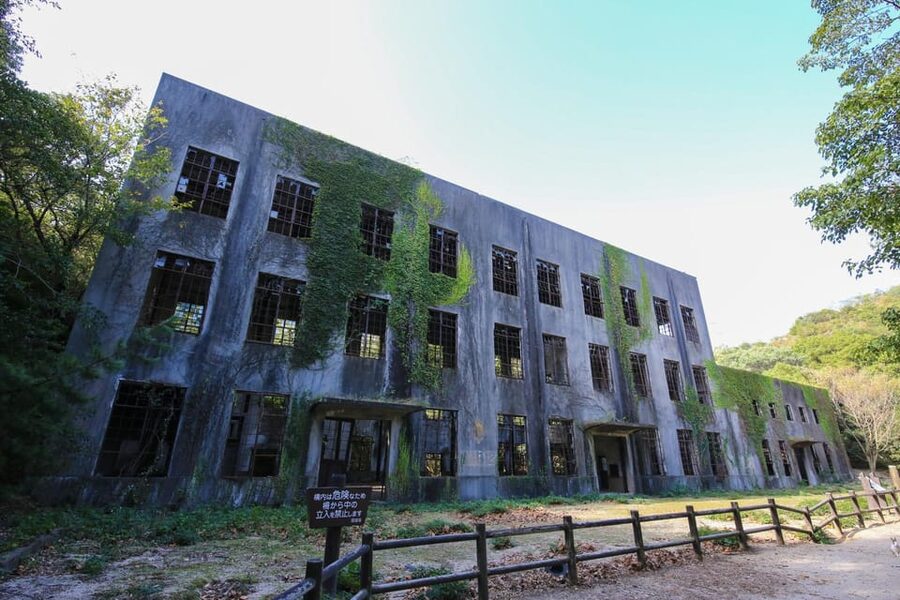
This is not simply a rabbit-feeding outing. The day has two distinct chapters: Takehara introduces you to a quiet old town shaped by merchants, salt, and sake, while Okunoshima confronts you with the remains of a military facility and Japan’s poison-gas past.
That contrast gives the trip more weight than a quick island visit. You get a guided framework for the serious history, then time to wander on your own once you understand what you are seeing.
The tour begins at Hiroshima Station, under the Tourist Information sign outside the Shinkansen gates. If you arrive by bullet train, the sign is directly to your left as you exit. Arriving early is wise because Hiroshima Station can feel confusing if you are approaching from a local JR platform, underground passage, streetcar, or taxi entrance.
Look for the guide holding a SNOW MONKEY RESORTS tour sign. The operator is Machinovate Japan Ltd., and the tour is conducted in English.
A few more Hiroshima half-days to weigh up
- Peaceful Hiroshima & Miyajima UNESCO 1 Day Bus Tour
★ 5.0 · 5,309 reviews - Hiroshima: Hiroshima and Miyajima UNESCO Sites 1-Day Tour
★ 4.9 · 2,330 reviews - Hiroshima / Miyajima Full-day Private Tour with Government Licensed Guide
★ 5.0 · 1,298 reviews
Takehara’s old streets and merchant houses
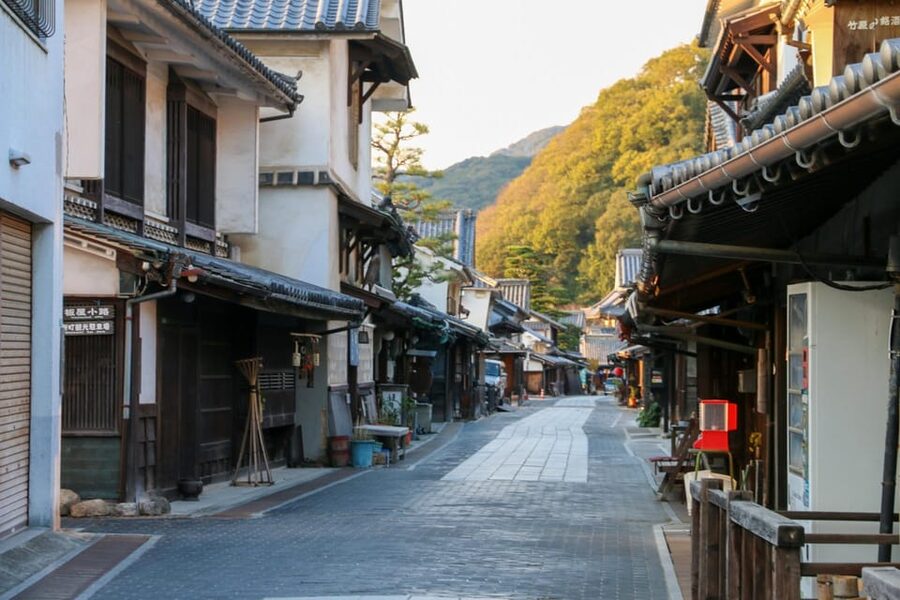
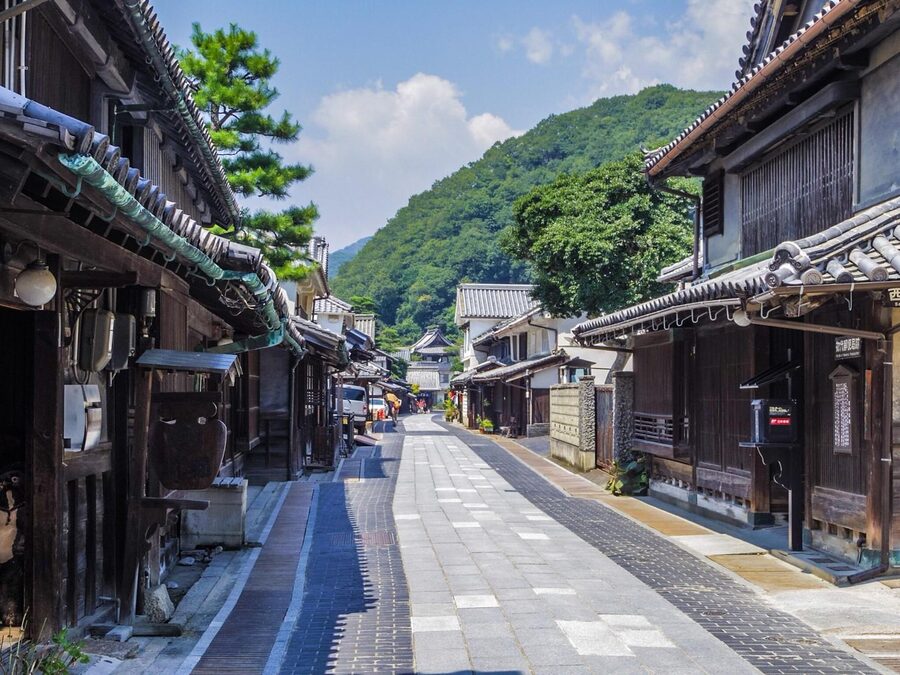
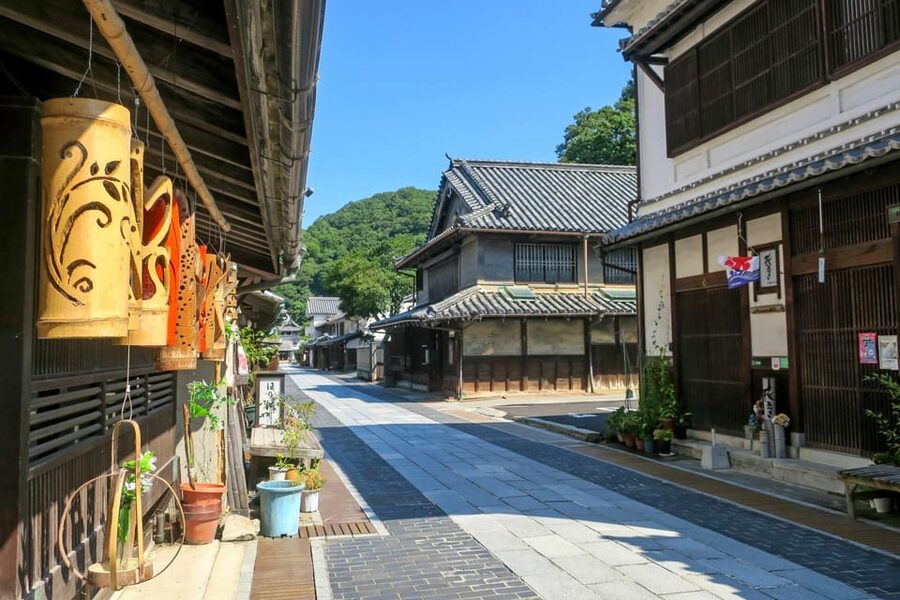
The first major stop is the Takehara Townscape Conservation Area. Takehara is a useful change of pace from Hiroshima’s larger urban setting, with old streets and buildings that help you picture commercial life in earlier Japan.
Your guide explains the town’s past and its connection to sake production. You also learn about salt, a subject that added an unexpected layer to the visit for one recent participant. These details matter because the preserved buildings are not just attractive backdrops. They reflect the work and wealth that supported the town.
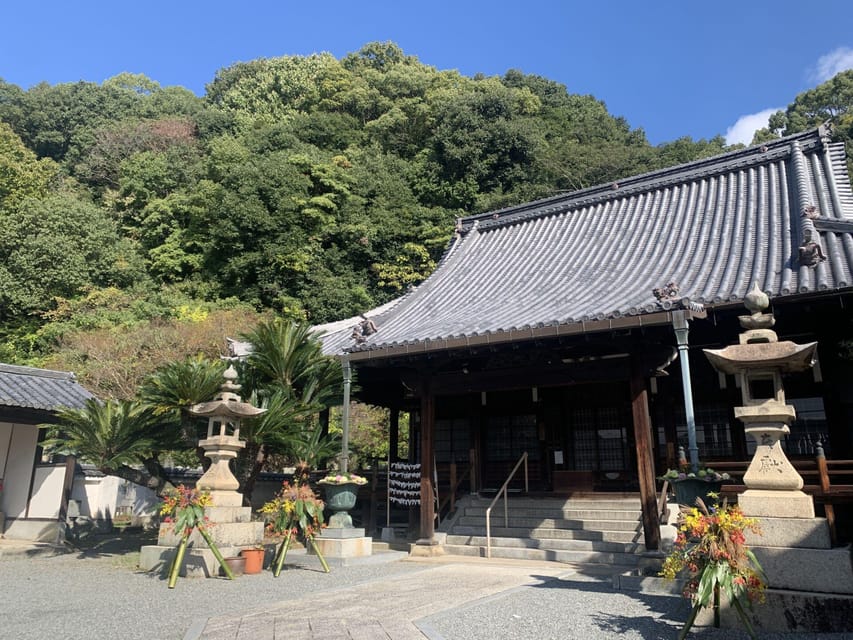
At Saihoji, you see a Buddhist temple with architecture dating from the mid-Edo period. The visit is not built around a long formal ceremony. Instead, it gives you a chance to notice the building’s age and design while your guide explains how it fits into the town.
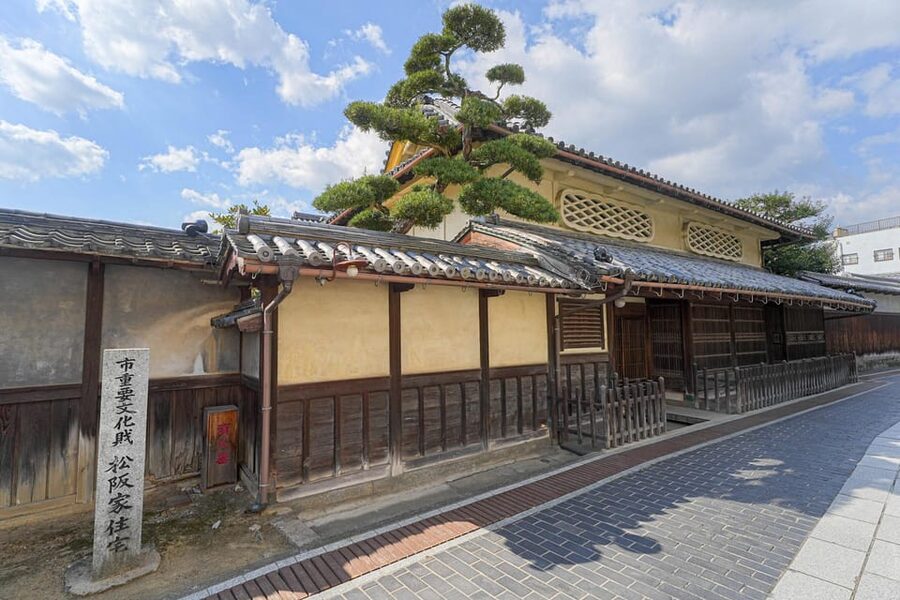
The former Matsusaka family residence is more revealing for daily-life details. This was the home of a wealthy merchant, and inside you can see household artifacts belonging to the people who lived there. I like this kind of stop because it moves history away from names and dates. You get a sense of how space, possessions, and status shaped a Japanese merchant household.
The house may be less exciting if you only want dramatic scenery or fast-moving activities. Give it time, though, and it becomes one of the day’s most useful visits. Takehara is unexpectedly engaging precisely because it is not as famous or crowded as Japan’s headline historic towns.
The small statue with a local test of luck
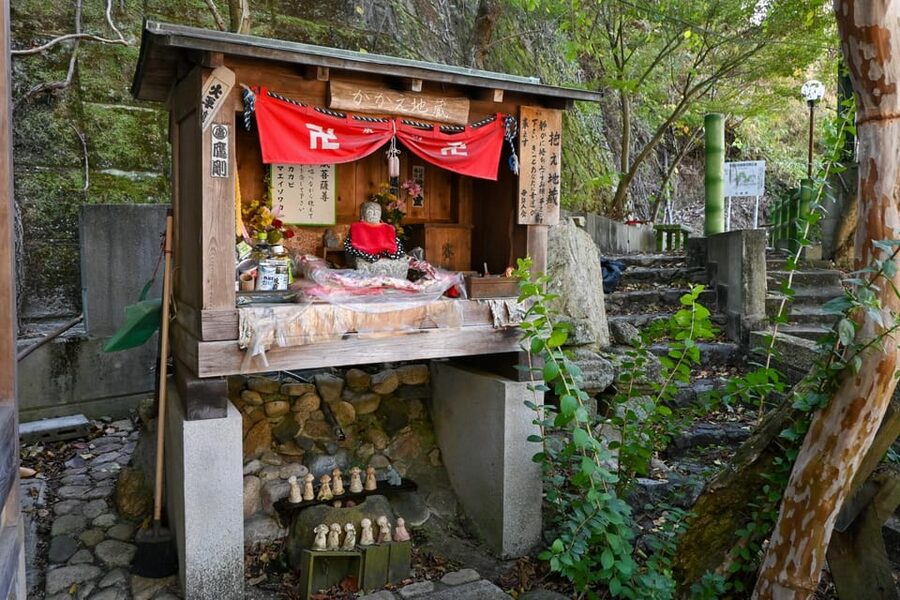
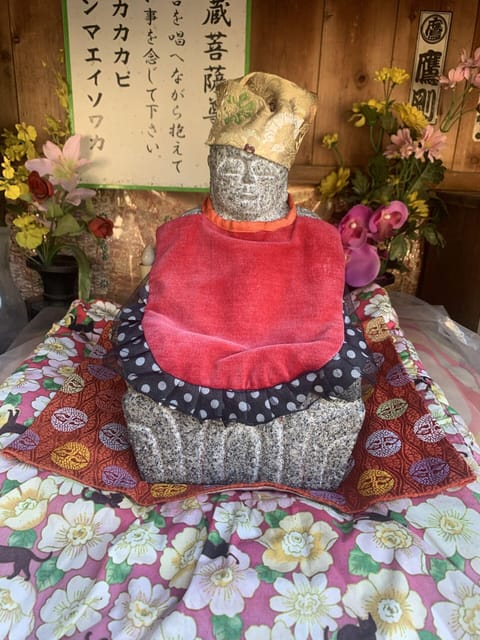
Near the merchant residence, the group visits the Okakae Jizo Statue in a small hut. Jizo statues are associated with protecting children and travelers, and this one has a local legend attached to it.
You make a wish while lifting the statue. If it feels lighter than expected, the wish is said to come true. It is a small moment, but it gives the walking tour a human touch. Instead of only looking at old architecture, you encounter a living folk belief tied to a particular place.
Do not expect a major shrine complex or a long stop here. The appeal is the story and the unusual custom. It is the kind of brief local detail that makes a guided walk more memorable than following a map alone.
Ferrying from Tadanoumi Port to Okunoshima
After Takehara, you continue to Tadanoumi Port and board the ferry for Okunoshima, also called Rabbit Island. Ferry tickets are included, as are the public transport connections between activities.
The crossing marks a clear change in the day. Takehara is about old streets and domestic life. Okunoshima is an island outing with open air, coastal walking, rabbits, and the remains of a painful chapter in modern Japanese history.
The schedule depends on transport and ferry timing, so this is not a trip where you can wander off whenever you like during the guided part. The advantage is that your guide manages the connections and keeps the group moving. The tradeoff is less independence before the free period begins.
Same base, a completely different sort of day:
- Hiroshima Historical Walking Tour – Why A-Bomb was Dropped
★ 4.8 · 893 reviews - Hiroshima Peace (Heiwa) Walking Tour at World Heritage Sites
★ 5.0 · 872 reviews - Hiroshima in a Nutshell: Morning Bike Adventure
★ 5.0 · 524 reviews - Hiroshima City 4hr Private Walking Tour with Licensed Guide
★ 5.0 · 437 reviews
Okunoshima’s rabbits and its poison-gas history
On arrival, the guide takes you along part of the coast and stops at different ruins. You learn about the island’s dark past, including its role in poison-gas production. A film at the Poison Gas Museum was part of one recent visit, and the tour’s entry fees cover the listed locations.
This context is essential. The rabbits are friendly and photogenic, but the island is not merely an animal park. The ruins and museum material ask you to hold two very different ideas together: the present-day pleasure of seeing animals up close and the serious history attached to the same ground.
Your guide’s role matters here. Isabella has led recent tours and was praised for explaining the area’s history with energy and humor while keeping the day on schedule. Shoh has also assisted as a guide in training. A good guide helps you shift tone without making the history feel like a footnote to the rabbit photos.
Rabbit food is provided. You can expect to spend time feeding the animals and taking pictures, but use common sense and follow any local instructions. If you have an animal allergy, this is not the right excursion, and pets are not allowed.
The island portion is outdoors, so bring sunscreen and a hat, especially in July and August. One recent group enjoyed the trip even in very hot weather, but heat will make the walking and waiting harder. Carry water, and remember that food and drinks can also be purchased on Rabbit Island.
Free time to choose your own island day
After the guided ruins walk, you get plenty of time to explore independently. This is one of the tour’s best features because you are not forced into one activity after the history portion.
Most people will walk around feeding rabbits and taking photographs. The animals are described as very tame, and you might find rabbits in several unusual colors. Still, the island offers more than close-up animal pictures.
You can choose from several options:
- Rent a bicycle and cover more of the island with less walking.
- Hike to the observation desk for a higher view.
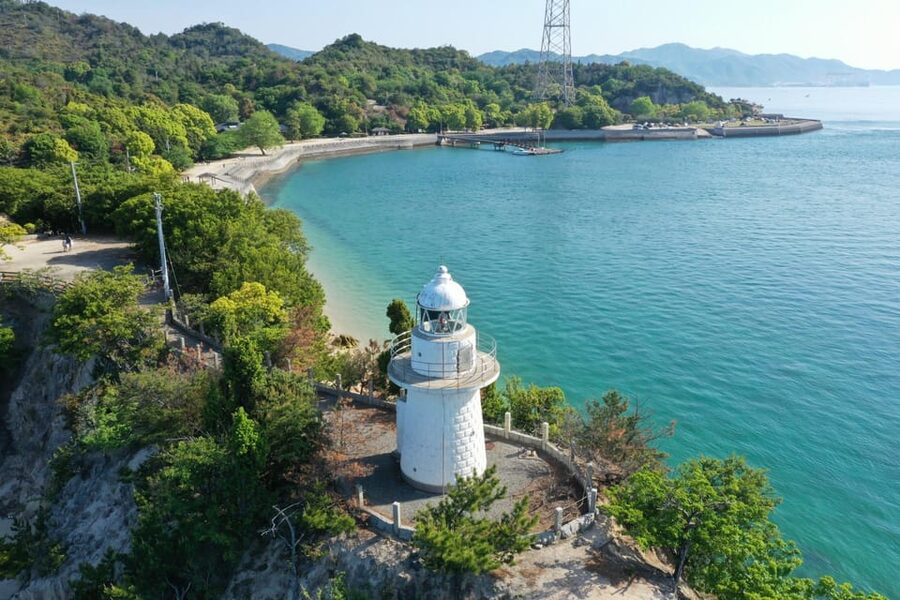
- Visit the lighthouse.
- Soak in the hot springs at the Kyukamura Okunoshima hotel.
- Eat at the hotel restaurant.
- Continue walking along the coast and look for additional ruins.
The free period works best if you decide ahead of time what matters most. If you want the hot springs, cycling, and a meal, time may pass quickly. If rabbits are your main goal, you can keep the plan simple and spend the period outdoors.
One caution: the supplied details do not promise that every optional activity will always be available. Cycling, hot springs, food service, and other island activities can depend on operating conditions and the day’s schedule. The tour provider may adjust parts of the program if a venue or activity cannot operate.
What the $170 price really covers
At $170 per person, this is not a cheap side trip. It is a long guided day with several moving parts, so the value depends on how much support you want.
The price includes the English-speaking guide, entry fees at tour locations, rabbit food, public transport between activities, and ferry tickets. That removes several costs that can otherwise add up on a day involving Takehara, Tadanoumi, Okunoshima, and Hiroshima.
Lunch is not included, and neither is your transportation to Hiroshima Station for the morning meeting. You should budget separately for a meal and drinks, although food and drinks can be purchased on the island. Accommodation is also not included, but that is not usually relevant for a day trip beginning and ending in Hiroshima.
I see the strongest value in the guide and transport coordination. You are not just paying to reach Rabbit Island. You are getting the Takehara walking tour, historical explanations, entry fees, ferry arrangements, and a guided introduction to the island’s ruins before your free time begins.
The price makes less sense if you only want to feed rabbits and take pictures. In that case, an independent visit may offer more control. It makes more sense if you want the island’s difficult history explained in English and would rather not piece together the rail, port, ferry, and local connections yourself.
Pace, group size, and physical demands
The tour lasts 570 minutes, or roughly nine and a half hours. That includes the morning meeting, the Takehara visits, travel to the port, the ferry rides, the guided island walk, free time, and the return to Hiroshima Station.
The small group limit of 15 is a practical advantage. You can hear explanations more easily than in a large coach group, and it is simpler to stay together through stations and ferry connections. Recent departures were described as smooth and well timed, with guides handling special needs kindly and professionally.
You should still expect a fairly active day. Comfortable walking shoes are essential. There are outdoor walks, historic buildings, port transfers, and time on your feet around the island.
The tour is not suitable for wheelchair users, pregnant women, or people with animal allergies. Smoking and pets are not allowed. If you are unsure about your mobility or medical needs, check before booking rather than assuming the small group format makes the day easy.
The guide can shape the whole experience
The strongest praise has gone to the guides, particularly Isabella. She has been described as funny, professional, energetic, and good at making historical facts easy to follow. That combination is useful on this tour because the subject matter changes sharply from sake and merchant homes to poison gas and wartime ruins.
A guide also helps with the practical side. You have several public transport steps and ferry rides, and the final return includes one more ferry and a bus ride to Hiroshima Station. The day ends in front of the Shinkansen gates, where the guide says goodbye.
The guide does not remove every uncertainty. Ferry and venue schedules can change, and free-time options may not all be available. But the small group, included transport, and English explanations make the day easier to manage than arranging every part independently.
Who should book this experience
I would recommend this trip to you if you want a full day away from central Hiroshima and prefer a guided historical experience over a single attraction. It suits first-time visitors who want help with transport and travelers who enjoy mixing architecture, local stories, difficult history, and outdoor time.
It is also a good fit if you like having a planned morning and an open afternoon. The Takehara section gives you structure, while the island lets you decide between rabbits, a bicycle, a hot spring, a lighthouse, a hike, or lunch.
Families and animal lovers may enjoy the rabbits, but the poison-gas history is serious and should not be skipped. The tour works best when you are comfortable treating Okunoshima as both a cute-animal destination and a memorial to a troubling past.
I would be more cautious if you dislike long days, organized transport, hot weather, or walking. The trip can feel rushed if you want to spend extensive time in every historic building and also complete several island activities.
Should you book the Takehara and Rabbit Island tour?
Book it if you want the fuller Okunoshima experience, not just the famous rabbits. The combination of Takehara’s merchant architecture, sake and salt stories, the Jizo legend, ferry travel, wartime ruins, and independent island time gives you a much broader day.
Skip it if you only want a quick animal visit or need a flexible schedule. For everyone else, the $170 cost is reasonable when you use the included transport, entry fees, rabbit food, and English guide. Bring water, sun protection, sturdy shoes, and a plan for your free time. That preparation will help you enjoy both sides of Okunoshima.
FAQ
How long does the tour last?
The tour lasts 570 minutes, which is about nine and a half hours. It begins at Hiroshima Station and ends there, in front of the Shinkansen gates.
Where is the meeting point in Hiroshima Station?
Meet under the Tourist Information sign outside the Shinkansen gates. If you arrive by Shinkansen, the sign is directly to your left as you exit the gates. Look for the guide holding a SNOW MONKEY RESORTS tour sign.
Is the tour conducted in English?
Yes. The tour includes a live English-speaking guide.
Are ferry tickets included?
Yes. Ferry tickets between Tadanoumi Port and Okunoshima are included in the tour price.
Is lunch included?
No. Lunch is not included, but food and drinks can be purchased on Rabbit Island, including at the restaurant in the Kyukamura Okunoshima hotel.
What can I do during free time on Rabbit Island?
You can feed rabbits with the provided food, walk around the island, rent a bicycle, hike to the observation desk, visit the lighthouse, use the hot springs at the Kyukamura Okunoshima hotel, or eat at the hotel restaurant.
Is the tour suitable for everyone?
No. The tour is not suitable for wheelchair users, pregnant women, or people with animal allergies. Comfortable walking shoes are recommended, and pets and smoking are not allowed.
Just added around Hiroshima
- The Peace Memorial to Miyajima : Icons of Peace and Beauty★ 4.5 · 31 reviews
- Shore Excursion from Hiroshima Port : Private Tour in Hiroshima★ 5.0 · 17 reviews
- Hiroshima Saijo Sake Tasting Tour with visit to 7 Breweries★ 5.0 · 104 reviews
- Hiroshima & Miyajima All-Inclusive Tour w/Licensed guide Pancho★ 5.0 · 54 reviews
- Hiroshima Country Cycling: Explore Rural Life 1 HR from City★ 5.0 · 22 reviews
- Okunoshima Rabbit Island Cycling Tour with Local Guide★ 4.5 · 17 reviews
- Private Full Day Hiroshima Tour★ 4.5 · 29 reviews
- Hiroshima Private Tour with a Local – Highlights & Hidden Gems★ 4.5 · 24 reviews
Hiroshima Tours, compared.

Peaceful Hiroshima & Miyajima UNESCO 1 Day Bus Tour
Read our review →
Hiroshima and Miyajima UNESCO Sites 1-Day Tour
Read our review →
Hiroshima Historical Walking Tour – Why A-Bomb was Dropped
Read our review →
Hiroshima Peace (Heiwa) Walking Tour at World Heritage Sites
Read our review →
Hiroshima in a Nutshell: Morning Bike Adventure
Read our review →
Hiroshima City 4hr Private Walking Tour with Licensed Guide
Read our review →

Japanesel Archery Experience HIROSHIMA CASTLE SHARAKU
Read our review →Browse the lists this tour appears in