
Reviewed · KYOTO TOURS
From Kyoto: Nara History Guided Half Day Bus Tour with lunch
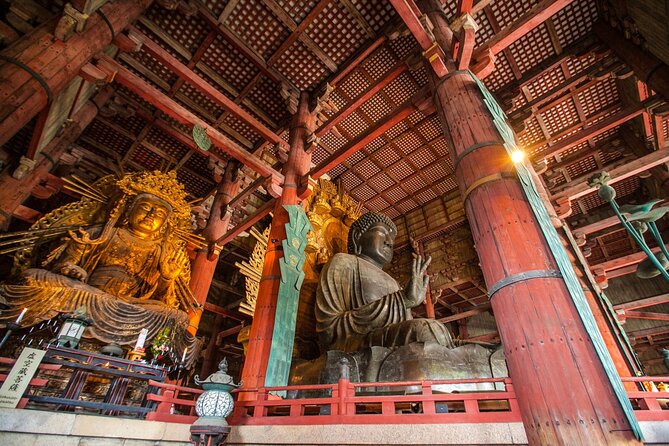
The Great Buddha at Todaiji Temple is the star here: a 15-meter bronze figure inside one of the world’s largest wooden buildings. Add Nara’s free-roaming deer, an old Shinto shrine, and a Japanese-style lunch, and you get a useful first look at Japan’s ancient capital without having to plan the transport yourself.
I like the English-speaking guide and the tidy half-day format. Guides such as Tammy and Mana have helped make the cultural details easier to follow, while Shelley has also received warm praise. I also like the mix of temple, shrine, animals, and food. The tradeoff is time: five and a half hours is efficient, but some visits can feel rushed, especially on crowded days or during a festival.
Key points at a glance

- See the 15-meter Great Buddha: Todaiji’s immense statue and vast wooden hall provide the tour’s most powerful visual moment.
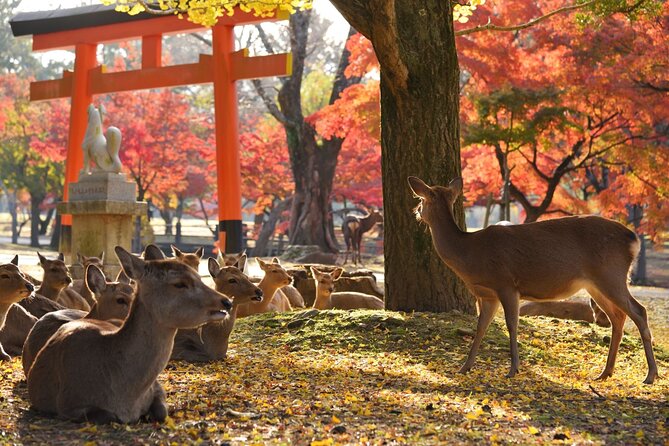
- Walk among Nara’s deer: Nara Park offers a close look at the city’s famous, friendly deer, though you may wish for more time with them.
- Visit two major sacred sites: Kasuga Taisha and Todaiji show different sides of Nara’s religious tradition.
- Start early at Kyoto Station: Meet at the Hachijo Entrance Square Sunken Garden by 7:30 a.m. for the 7:45 departure.
- Lunch is built in: A Japanese-style meal is included, with time afterward to browse the restaurant shop.
- Expect a group outing: The maximum group size is 40, and the route cannot be changed for personal requests.
Why this half-day trip works from Kyoto
Nara is close enough to visit from Kyoto, yet the day can become awkward if you are trying to match trains, buses, temple hours, and meal plans on your own. This tour removes much of that work. You meet at Kyoto Station, travel with a guide, visit three classic Nara sights, eat lunch, and return to the same meeting point.
The tour lasts about five hours and 30 minutes, making it a good fit if Nara is one part of a wider Japan trip. You will not have an entire day to wander, but you also will not lose a full day of Kyoto sightseeing. The price is $78.83 per person. That is not the cheapest way to reach Nara, since independent transport can cost less, but the value comes from the English guidance, organized transfers, entry to Todaiji, and included lunch.
The structure also suits people who prefer a clear route. You are not left to work out which path leads from Nara Park to Kasuga Taisha or how much time to allow for lunch. The downside is equally clear: this is a set group tour. The operator cannot add stops or adjust the route for individual requests, even if only a few people want something different.
More lunch stops in Kyoto:
- Bike Tour Exploring North Kyoto plus Lunch
★ 5.0 · 1,087 reviews - Osaka/Kyoto: Arashiyama, Nara & Fushimi Inari Shrine w/Lunch
★ 4.4 · 754 reviews - Kyoto Zen Meditation & Garden Tour at a Zen Temple with Lunch
★ 5.0 · 441 reviews
Meeting at Kyoto Station before 7:45 a.m.
The meeting point is the Kyoto Station Hachijo Entrance Square Sunken Garden, at Higashikujo Nishisannocho in Kyoto’s Minami Ward. The departure time is 7:45 a.m., and you should arrive by 7:30. This is not a suggestion to treat lightly. The bus leaves on schedule and does not wait for late arrivals.
Bring your mobile ticket and keep your morning simple. Large luggage is not allowed during the tour, so leave suitcases at your accommodation or use another storage option before meeting the group. The tour may use a bus, a train, or a combination of both, and traffic or other delays can alter the timing.
The group can contain up to 40 people. That size allows the price to stay reasonable, but it also means you should expect a shared pace rather than a private guide’s attention. The English-speaking guide is there to explain the places and keep the group moving. Guides named in the published comments include Tammy, Mana, and Shelley, though the specific guide for your date is not guaranteed.
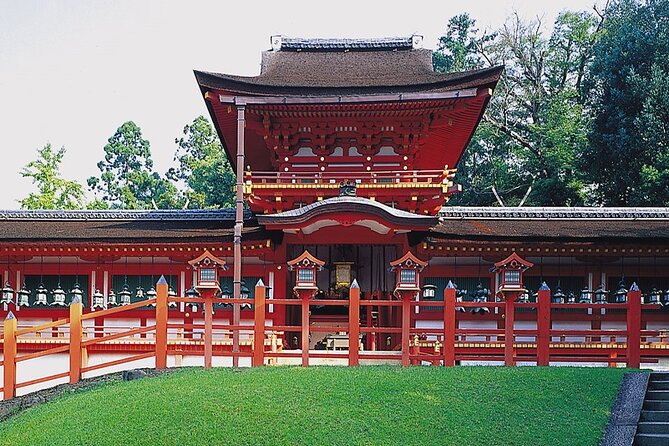
Kasuga Taisha, Nara’s lantern-lined shrine
The first scheduled visit is Kasuga Taisha, one of the key religious sites in ancient Nara. You visit the main sanctuary for general worship, with about 45 minutes set aside for the stop.
Kasuga Taisha is a Shinto shrine, so it gives you a useful contrast with the Buddhist Todaiji Temple later in the morning. The setting is known for its traditional character and rows of stone and bronze lanterns, though the supplied tour details do not promise access to every part of the grounds. The included visit covers general worship at the main sanctuary.
Several areas require separate admission and are not part of this experience. These include special worship at the main sanctuary, the Kasugataisha Museum, and the Botanical Garden. If you want a longer, more detailed visit to the shrine complex, this half-day route may leave you wishing for extra time.
Forty-five minutes is enough for an introduction, basic worship, and a look at the main area. It is not enough for slow photography, every side path, or a detailed study of the shrine’s art. Stay aware of the guide’s meeting instructions, since the group must continue to Todaiji on schedule.
Todaiji Temple and the Great Buddha
Todaiji receives about one hour and 15 minutes, including admission. This is the tour’s main cultural stop and the place where the half-day format earns its keep.
The Great Buddha is about 15 meters tall, an astonishing scale even if you have already seen large religious statues elsewhere. It sits inside Todaiji’s famous wooden hall, a structure recognized as the largest wooden building in the world. The combination of the statue, the dark interior, and the hall’s massive timber construction makes this a memorable visit rather than a quick photo stop.
Your guide can give the setting context and help you understand what you are seeing. That matters in a place where scale alone can distract you from the religious purpose of the temple. Take a moment to look beyond the Buddha’s face and notice how the building has been designed to hold a figure of this size.
The temple can be crowded, and construction may affect what you see. Some buildings or Buddha statues may look different from expected, or parts may be unavailable during restoration work. The schedule can also be shortened because of traffic or other conditions, so do not count on having every minute promised at each stop.
Still, one hour and 15 minutes gives you more breathing room than the shrine visit. You have time to enter, see the Great Buddha, listen to the guide, and move through the main area without needing to sprint. If Todaiji is your main reason for booking, this is the stop to protect by arriving on time and staying with the group.
More history-led days in Kyoto:
- Kyoto Gion: 2-Hour Geisha Culture & History Walking Tour
★ 5.0 · 1,186 reviews - Kyoto Gion Historical Walking Tour
★ 5.0 · 188 reviews - Historical Kyoto E-Bike Tour
★ 5.0 · 181 reviews - Kyoto: Nijo Castle World Heritage Guided Tour with Admission
★ 5.0 · 128 reviews
Nara Park and the famous deer

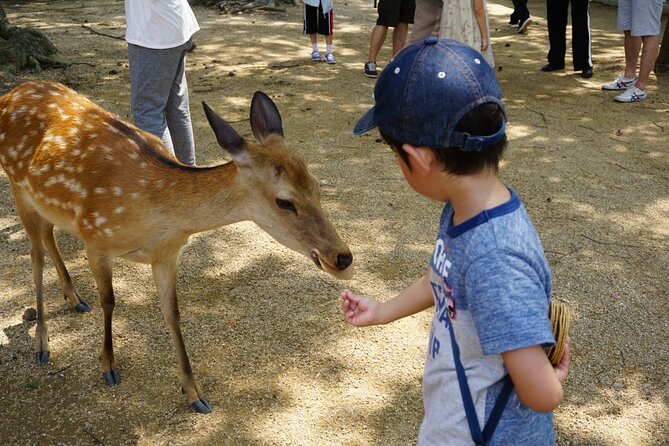
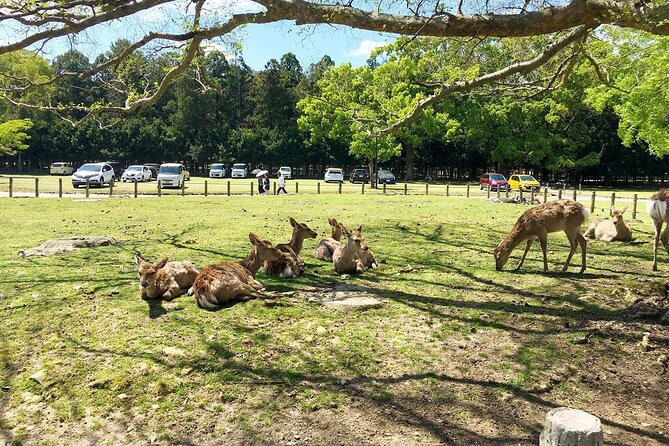
Nara Park is the tour’s most playful stop, although it is folded into the visits around the shrine and temple rather than listed as a long separate block. The deer are a major part of Nara’s appeal. You can see them close up and, where appropriate, feed them.
The animals are friendly and accustomed to people, which makes the encounter easy for families and first-time visitors. It is also one of the few moments on a structured cultural tour when you can simply pause and enjoy what is in front of you. Several people found the deer especially memorable, while one clear suggestion was to allow more time with them.
That is the main limitation. Do not book this tour expecting a leisurely morning in the park. The route has to fit Kasuga Taisha, Todaiji, lunch, and the return to Kyoto. On a crowded day, the space around the deer can feel busy, and a festival can make the whole visit slower. One person found the day fun but rushed because of festival crowds.
Keep your belongings secure and personally watch your valuables, as the operator places responsibility for them with you. If you want a quiet, unhurried encounter with the deer, an independent full-day visit would give you more control. If you want a quick and memorable introduction, this tour gives you the essential experience.
Japanese-style lunch and a little shopping
The tour includes a 45-minute stop in Nara for a Japanese-style lunch. The meal gives the morning a practical rhythm: after temples, shrine grounds, and deer, you sit down, eat, and take a short break before returning to Kyoto.
The restaurant also has a shop where you can buy local souvenirs. This is convenient if you want a small reminder of Nara without spending time searching for a store. It also gives you a chance to browse after lunch, though 45 minutes is not a long shopping session.
Tell the operator about allergies or dietary restrictions when you book, especially because lunch is included. Menu changes cannot be made on the day of the tour, so this is something to handle in advance. The supplied information does not specify the exact dishes, so you should not book expecting a particular meal.
The lunch is best viewed as part of the tour’s convenience rather than its main attraction. You are paying for a prepared stop that keeps the group together and avoids another decision during a short day. If food choice is central to your Nara plans, an independent visit would offer more freedom.
How the timing affects your day
The early start is both a strength and a demand. Leaving Kyoto at 7:45 a.m. gives you a useful morning in Nara and leaves the rest of the day available after returning to the station. It also means you must arrange breakfast and reach the meeting point early.
The advertised duration is approximate. Traffic, public transport conditions, crowds, construction, or other issues can delay the return and reduce time at a stop. The schedule can change without prior notice. Plan anything later that day with some space around it rather than booking a fixed appointment immediately after the tour.
The route ends back at the original meeting point. That is helpful if your hotel, train, or next activity is near Kyoto Station. It is less convenient if you hoped to finish elsewhere in Nara for independent sightseeing.
The group format keeps the route simple, but it requires cooperation. Late arrivals receive no refund, and the bus will not wait. The minimum group size is four people. If that number is not reached 14 days before the date, the operator may cancel the departure and offer another date, another experience, or a full refund.
Who will get the most from this tour
I would recommend this experience to you if you are staying in Kyoto, want the main sights of Nara, and prefer a guide to handle the route. It is especially practical for first-time visitors, families who want a clear morning plan, and anyone who values lunch and transport being arranged together.
It also suits you if the Great Buddha is the priority. Todaiji receives the longest visit, and the included admission removes one small task from the day. The English-speaking guide adds useful structure at places where the religious customs and history may otherwise pass in a blur.
You may want another plan if you are an independent visitor who likes to linger. The group cannot change the route, and the deer, Kasuga Taisha, and lunch all compete for a limited number of hours. Nara deserves more than a quick look if you want museums, gardens, extra shrine areas, or a slow walk through the park.
This is also not the right choice if you are carrying large bags or cannot comfortably manage a morning of walking. The information says most people can participate, but it does not promise a completely low-effort route. Expect time on foot between and around the major sites.
Price, group size, and practical value
At $78.83, the tour sits in the middle ground between a fully independent day and a private guided visit. You pay more than the bare cost of getting to Nara, but you receive an English-speaking guide, an organized route, Todaiji admission, and lunch.
The value is strongest when you would otherwise spend time arranging transport and deciding how to connect the main sights. It is weaker if you already know Nara well, want to choose your own restaurant, or plan to spend hours with the deer.
A maximum of 40 people is worth noting. The tour is not private, and the operator will not make additions for individual requests. You are buying efficiency and explanation, not flexibility. The high rating of 4.9 from 23 ratings and the 100 percent recommendation figure suggest that the core combination of guide, temples, deer, and lunch has worked very well for people booking this outing, though the sample is small.
Free cancellation is available up to 24 hours before the local start time. Changes or cancellations inside that window are not accepted for a refund. If poor weather cancels the experience, you are offered another date or a full refund. Natural disasters such as typhoons can also lead to cancellation with a full refund.
Should you book the Kyoto to Nara half-day tour?
Book it if you want the essential Nara experience in one organized morning: Todaiji’s Great Buddha, Nara’s deer, Kasuga Taisha, and lunch. The guide support and return to Kyoto make the $78.83 price reasonable for a visitor who values ease more than complete freedom.
Skip it if your ideal Nara day includes long shrine walks, museums, gardens, flexible meals, or a slow afternoon with the deer. The most honest warning is time. Crowds and festivals can make the route feel rushed, and even on a smooth day you are following a fixed schedule.
For a first visit from Kyoto, though, this is a well-shaped introduction. Arrive early, leave large luggage behind, tell the operator about food restrictions when booking, and keep your expectations focused on highlights rather than exhaustive sightseeing.
FAQ
Where does the tour begin?
It begins at Kyoto Station Hachijo Entrance Square Sunken Garden, at Higashikujo Nishisannocho in Kyoto’s Minami Ward.
What time should I arrive?
The tour departs at 7:45 a.m. You should arrive at the meeting point 15 minutes early, by 7:30 a.m.
Where does the tour end?
The experience ends back at the original meeting point at Kyoto Station.
How long does the tour last?
The planned duration is approximately five hours and 30 minutes.
Is the tour conducted in English?
Yes. The tour is conducted by an English-speaking guide only.
Is lunch included?
Yes. A Japanese-style lunch is included, with about 45 minutes set aside for the meal.
Can I buy souvenirs during the tour?
Yes. The restaurant has a shop where you can browse for local souvenirs after lunch.
Are admission tickets included?
Admission to Todaiji Temple is included. General worship at Kasuga Taisha is included without an admission ticket, but special worship, the Kasugataisha Museum, and the Botanical Garden are not included.
Can I bring large luggage?
No. Large luggage is not allowed during the tour.
What happens if the tour is canceled?
If poor weather or a natural disaster causes cancellation, you may receive another date or a full refund. If the minimum of four participants is not reached by 14 days before departure, the operator may also cancel and offer another date, another experience, or a full refund.
Just added around Kyoto
- Kyoto: Zen Meditation at a Private Temple with a Monk★ 5.0 · 25 reviews
- Kyoto: Gion Geisha District & Sake-in-Hand Walking Tour★ 5.0 · 37 reviews
- Private Pewter Sake Cup Experience with a Kyoto Artisan★ 5.0 · 31 reviews
- Your Private Vacation Photography Session In Kyoto★ 5.0 · 110 reviews
- Private Guided Traditional Buddhist Cooking in Japan★ 5.0 · 16 reviews
- Kyoto Wagashi(Japanese sweets) Cooking Class near Fushimiinari★ 5.0 · 60 reviews
- Kyoto:Family-Friendly Kimono & Yukata Experience at WARGO★ 5.0 · 147 reviews
- Private Cooking Class Udon in Kyoto Japan★ 5.0 · 23 reviews
Kyoto Tours, compared.


Fushimi Inari, Kinkakuji, Bamboo Grove 1 Day Bus Tour
Read our review →
Tea Ceremony in a Traditional Tea House in Kiyomizu
Read our review →
Kyoto Geisha Walking Tour: Gion District & Hidden Gems
Read our review →

Gion Magical Night Walking Tour with Geisha Trivia
Read our review →

Gion Geisha District Walking Tour – Stories of Geisha
Read our review →Browse the lists this tour appears in