
Reviewed · HIROSHIMA TOURS
Full Day Hiroshima and Miyajima Bus Tour from Hiroshima
Miyajima’s floating torii gate and Hiroshima’s Peace Memorial Park make a powerful pair, and this tour fits both into one carefully planned day. You’ll ride an air-conditioned bus, cross to Miyajima by ferry, then return to Hiroshima for the Atomic Bomb Dome and Peace Memorial Museum.
I like the simple transport plan and the fact that admission fees and the Miyajima visitor tax are included. I also like the range of guides, including Masako, Hikari, Takeshi, and Tomoko, who have been praised for clear explanations, personal stories, and thoughtful help with photos and train connections.
The main concern is the size of the group, which can reach 40 people. A soft-spoken guide may be hard to hear outdoors, and the free time on Miyajima may feel too long for some people while still being too short for the island’s ropeway.
Key points to know before booking
- Two major World Heritage sites in one day: You visit Itsukushima Shrine on Miyajima and Hiroshima’s Peace Memorial Park.
- The day begins at 10:10 am: Meet in the Hotel Granvia Hiroshima lobby, a handy location beside JR Hiroshima Station.
- Lunch is on your own: You get about an hour on Miyajima to eat oysters, Hiroshima-style okonomiyaki, conger eel rice, or something quick.
- The most moving section comes later: The Atomic Bomb Dome and Peace Memorial Museum require time, attention, and quiet reflection.
- The tour ends at Hiroshima Station: Return is expected around 6:00 to 6:30 pm, with no onward escort included.
- Group size affects the experience: The maximum is 40 people, though some departures may be smaller.
One day, two very different Hiroshima experiences
This is a useful tour if you have only one full day in Hiroshima and want help with the basic transport. Miyajima requires a combination of road travel and ferry travel, while the Peace Memorial Park is spread across a large central area. Having a guide manage the transfers lets you focus on the places themselves.
The contrast between the two stops is part of the day’s power. Miyajima offers sacred buildings, sea views, deer, food stalls, and a relaxed island setting. Hiroshima’s Peace Park asks you to slow down and consider the human cost of the atomic bombing in 1945.
You pay $152.54 per person, so this is not the cheapest way to see either place. You could arrange the train, ferry, local transport, and admissions yourself for less. The price makes more sense if you value an English-speaking guide, a planned route, included transportation, and the convenience of fitting both destinations into one day.
The tour lasts about 8 hours and 20 minutes. That sounds generous, but the bus and ferry connections take time, and Miyajima has more to offer than this schedule can cover. Think of the experience as a well-organized introduction, not a slow, in-depth exploration of the island.
A few more Hiroshima half-days to weigh up
- Hiroshima / Miyajima Full-day Private Tour with Government Licensed Guide
★ 5.0 · 1,298 reviews - Hiroshima & Miyajima: Full-Day Private Tour & Licensed Guide
★ 4.8 · 252 reviews - Hiroshima & Miyajima: Private Full-Day Tour with a Local Guide
★ 5.0 · 39 reviews
Meeting beside Hiroshima Station at 10:10 am
The start point is the lobby of Hotel Granvia Hiroshima, at 1-5 Matsubaracho in Minami Ward. It is beside JR Hiroshima Station, which makes it practical if you are staying nearby or arriving by train.
You need to arrive on time. If you are coming from Kyoto or Shin-Osaka with a Japan Rail Pass, take an early enough Shinkansen to reach the hotel lobby before 10:10 am. Missing the meeting time can mean missing the tour.
The return point is Hiroshima Station, usually around 6:00 to 6:30 pm. You make your own onward arrangements from there. This matters if you have a train reservation, dinner booking, or evening flight, since traffic can change the schedule.
The bus is air-conditioned, a real help during Hiroshima’s hot and humid months. One guide also arranged water bottles on a muggy day, but I would still carry your own water, snacks, sun protection, and an umbrella. The walking portions are outdoors, and the weather can change the feel of the day.
Crossing to Miyajima and Itsukushima Shrine
The first major stop is Miyajima, whose name means shrine island. You travel by coach toward the ferry terminal, then cross the water to the island. The ferry ride gives you a gradual approach to the sacred setting and Itsukushima Shrine.
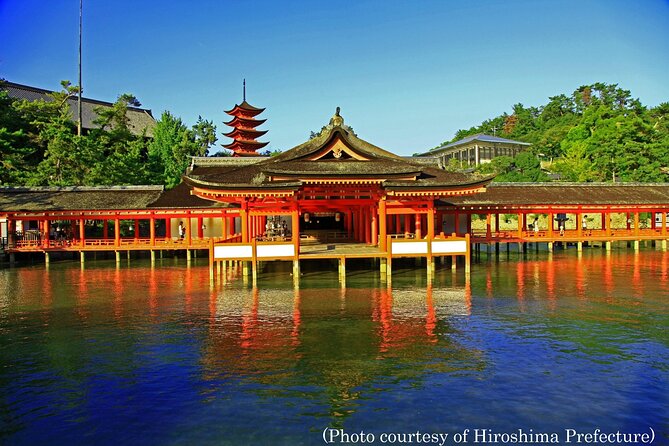
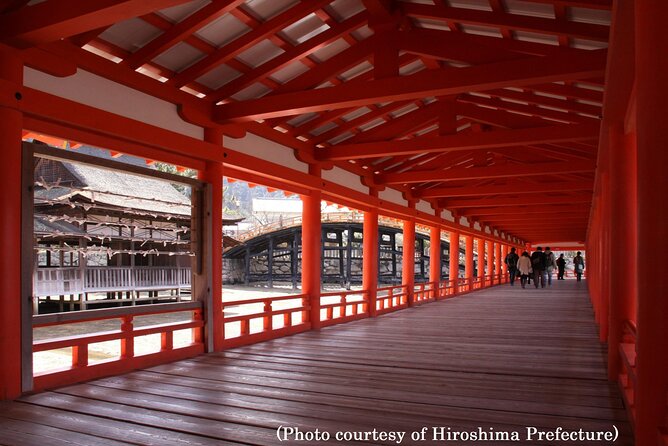
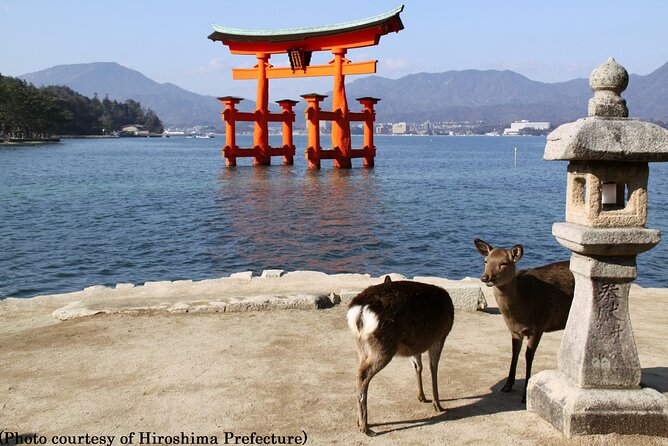
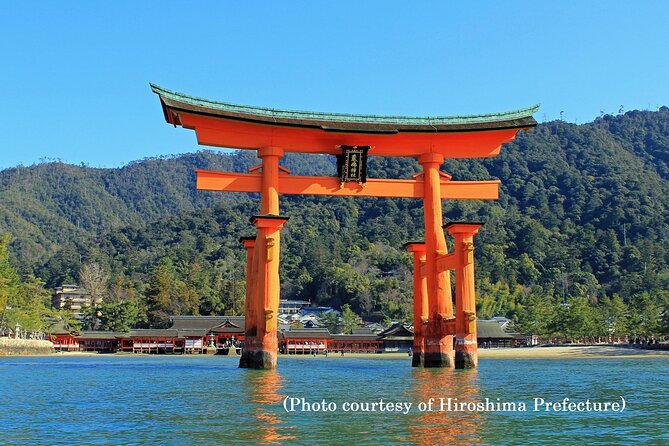
Itsukushima Shrine is the reason most people come to Miyajima. Founded in the sixth century, it is known for its Shinden-zukuri design, an architectural style associated with aristocratic residences. The shrine complex appears to float over the water, especially when the tide is high.
The famous torii gate is the island’s best-known sight. At high tide, it appears to rise from the sea. At low tide, the shoreline changes the view completely, and you may be able to see the muddy or sandy area around the gate. The exact appearance depends on the tide and weather, so do not expect the same picture in every season or at every hour.
You have about one hour inside the shrine area, with admission included. Your guide explains the religious and historical meaning of the buildings, which is useful because the architecture can otherwise look like a series of photogenic bridges, corridors, and red-painted structures without much context.
Miyajima is also home to wild deer, and the tour information notes monkeys in the area. Treat the animals as part of the setting rather than a guaranteed show. Keep food and paper items secure around deer, and pay attention to your guide while walking through crowded areas.
Guides such as Azusa have been praised for finding good photo angles, while Masako has been described as patient and helpful with pictures. Those small touches can matter on a busy day, when it is difficult to get a clear view of the shrine or torii gate.
One hour for Miyajima food and free time
After the shrine, you have time to eat lunch and look around Miyajima on your own. Lunch is not included, so budget separately for it.
The island is associated with several Hiroshima specialties:
- Oysters
- Hiroshima-style okonomiyaki
- Conger eel rice bowls
You can also use this hour for snacks, small shops, or another look at the shrine area. The free period gives you a break from following the guide and lets you choose your own pace.
This is also where the tour’s limits become clear. One hour is enough for a meal and a short wander, but it is not enough for every part of Miyajima. You probably will not have time for the ropeway unless you skip the group plan or move very quickly. The mountain and higher viewpoints require more time than this schedule allows.
Some people will appreciate the freedom. You can sit down, eat, and enjoy the island without being given a running commentary. Others may find the stop underused, especially if they do not want a long meal or much shopping. If your main aim is Mount Misen or the ropeway, plan a separate Miyajima visit.
Same base, a completely different sort of day:
- Peaceful Hiroshima & Miyajima UNESCO 1 Day Bus Tour
★ 5.0 · 5,309 reviews - Hiroshima: Hiroshima and Miyajima UNESCO Sites 1-Day Tour
★ 4.9 · 2,330 reviews - Hiroshima Historical Walking Tour – Why A-Bomb was Dropped
★ 4.8 · 893 reviews - Hiroshima Peace (Heiwa) Walking Tour at World Heritage Sites
★ 5.0 · 872 reviews
The Atomic Bomb Dome and the weight of Hiroshima
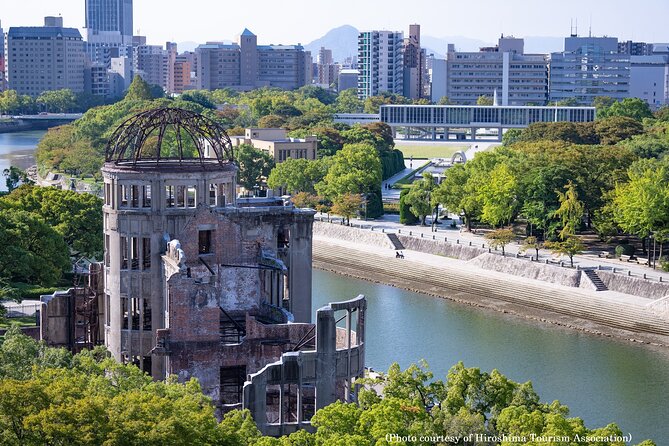
After Miyajima, the tour returns to Hiroshima for the city’s most important sites. The Atomic Bomb Dome is the first major stop, with about 40 minutes allowed.
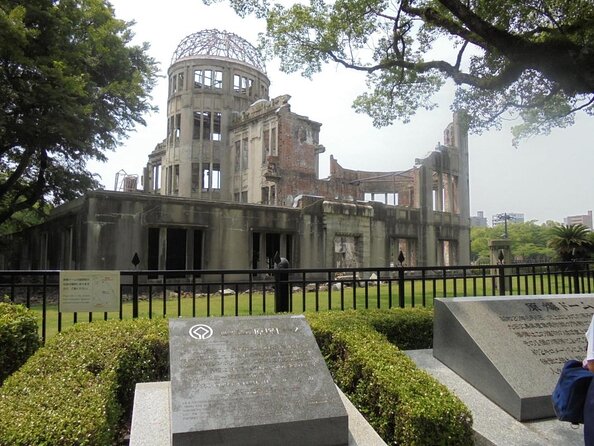
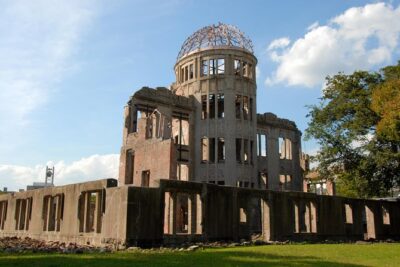
The building is a preserved remnant of the atomic bombing and the only remaining bomb-damaged structure in the immediate area. Its exposed framework gives the site a stark presence. You do not need a long explanation to understand why it has become a symbol of destruction and the call for peace, but a good guide can help place it in the wider story of Hiroshima.
Your guide may explain the building’s former use, its survival, and the decision to preserve it. The Dome is viewed from outside, so you have time to walk around it, take photographs, and consider the scale of the surrounding park.
This section can be crowded, and the group may spread out. Several people have found that it is difficult to hear a guide speaking outdoors when the group is large. Stay close, watch for visual signals, and do not hesitate to ask the guide to repeat a point if you miss it.
Peace Memorial Park and its many reminders
The Peace Memorial Park was created after the Pacific War and is now one of Hiroshima’s central places for remembrance. It includes open paths, memorials, the Peace Memorial Museum, and monuments dedicated to different groups affected by the bombing.
The park is not a quick sightseeing stop. You will see the Memorial Cenotaph for Atomic Bomb Victims, which holds the names of those who died as a result of the bombing. You can also visit the Cenotaph for Korean Victims, one of the monuments that broadens the story beyond a single national viewpoint.
The tour allows quiet time at the cenotaph and other memorials. This is a good reason to choose a guided day rather than simply rushing from one photo stop to the next. Guides including Hikari, Nikki, Taeko, and others have been praised for explaining the subject with care, while one Hiroshima-born guide added personal family context.
At the same time, the emotional effect is personal. The park and museum can be disturbing, and you should not treat this part of the day as ordinary sightseeing. The schedule gives you structure, but you decide how much time to spend reading, looking, and reflecting.
One hour inside the Peace Memorial Museum
Admission to the Hiroshima Peace Memorial Museum is included, and the planned visit lasts about one hour. The museum is housed within the park and presents material about the bombing, its victims, and its aftermath.
One hour gives you a serious introduction, but it is not enough to read every display at length. If you like museums and want to take in every document and testimony, you may prefer to visit independently and give it several hours.
The guided format still has value. Your guide can point out key memorials before or after the museum and explain customs, names, and local context. Akko Watanabe, for example, has been praised for explaining Japanese manners and customs alongside the main historical subject.
The museum portion is generally self-guided rather than a continuous private lecture. That gives you room to process difficult material at your own speed, but it also means the quality of the experience depends partly on how actively you use your hour.
How the guides shape the day
The strongest part of this tour is often the guide. A good guide turns a packed schedule into a coherent day, helps with ferry and meeting times, answers questions, and keeps a large group moving.
Masako has been praised for patience and for helping with train connections after the tour. Tomoko used visual reminders for meeting times and key instructions. Azusa helped with photographs and added humor, while Hikari received strong praise for clear explanations at both Miyajima and the Atomic Bomb Dome.
The experience is not completely consistent. A few departures have had guides who spoke too softly or read from notes while seated on the bus. In a group of up to 40 people, volume matters. If you are at the back, you may miss outdoor explanations, especially near the Dome or in a crowded shrine area.
I would try to stay near the guide during walking sections. A small audio receiver is mentioned in one account, but its performance was not always ideal. Bring your attention as well as your camera, and ask for clarification when needed.
Group size, pace, and practical comfort
The maximum group size is 40, although some departures have been smaller. A group of around 20 can feel much easier to manage, particularly during the walking sections and ferry transfers.
Seats on the bus may not be assigned. You should be prepared for a normal group-tour arrangement rather than a carefully chosen seat. The air-conditioning helps, but summer heat, rain, and long outdoor walks can still make the day tiring.
Children aged five and under may join free, but they do not receive a bus seat at that rate. If you need a seat for a young child, book the child rate. Participants under 18 need written parental permission, and anyone under 15 or not yet in middle school must be accompanied by a parent or guardian.
Most people can take part, and the tour is near public transportation. Still, the day involves ferry boarding, walking through a large park, and moving with a group. If you need a highly flexible pace, a private visit may suit you better.
Who gets the best value from this tour
I would choose this experience if you have one day in Hiroshima and want both Miyajima and the Peace Park without arranging every train, ferry, admission, and meeting time yourself.
It is especially useful for:
- First-time visitors to Hiroshima
- People who prefer an English-speaking guide
- Rail passengers arriving from Kyoto or Shin-Osaka
- Anyone who wants a planned introduction to both World Heritage sites
- People who value historical explanation and group support
I would hesitate if you want a long visit to the Peace Memorial Museum, a hike or ropeway ride on Miyajima, or a quiet private experience. You can see the principal sights independently for less money, and an independent schedule gives you more control.
The tour is also a good fit for people who want respectful historical context without arranging a separate local guide. The day handles the basic framework well, but your expectations should match the format: two major destinations, fixed timing, free lunch, and a group pace.
Cancellation and final booking advice
You can cancel for a full refund up to 24 hours before the local start time. Changes or cancellations made less than 24 hours ahead are not accepted for a refund.
I would book this tour if your priority is efficiency and clear access to Hiroshima’s two essential destinations. I would skip it if you have several days in the city and can comfortably arrange transport yourself.
The best reason to book is not simply convenience. It is the chance to hear local explanation at places that deserve more than a quick photograph, especially the Peace Park and museum. Just remember that guide quality and audibility can vary, and the fixed schedule leaves little room for Mount Misen or extended museum time.
FAQ
What time and where does the tour begin?
The tour begins at 10:10 am in the lobby of Hotel Granvia Hiroshima, located beside JR Hiroshima Station.
Where does the tour end?
The tour ends at Hiroshima Station, usually around 6:00 to 6:30 pm. You make your own onward arrangements from the station.
Is lunch included?
No. Lunch is not included, and you have time to eat on your own at Miyajima.
What food is available on Miyajima?
Miyajima is known for oysters, Hiroshima-style okonomiyaki, and conger eel rice bowls. These are available at shops on the island.
Are admission fees included?
Yes. The tour includes admission to Itsukushima Shrine, the Peace Memorial Museum, the Miyajima visitor tax, and other listed transportation and admission costs.
How large can the group be?
The tour can have a maximum of 40 participants. Seats on the bus may not be assigned.
Can I cancel the booking for a refund?
Yes. You can cancel at least 24 hours before the start time for a full refund. Cancellations or changes made less than 24 hours before the tour are not accepted for a refund.
Just added around Hiroshima
- The Peace Memorial to Miyajima : Icons of Peace and Beauty★ 4.5 · 31 reviews
- Shore Excursion from Hiroshima Port : Private Tour in Hiroshima★ 5.0 · 17 reviews
- Hiroshima Saijo Sake Tasting Tour with visit to 7 Breweries★ 5.0 · 104 reviews
- Hiroshima & Miyajima All-Inclusive Tour w/Licensed guide Pancho★ 5.0 · 54 reviews
- Hiroshima Country Cycling: Explore Rural Life 1 HR from City★ 5.0 · 22 reviews
- Okunoshima Rabbit Island Cycling Tour with Local Guide★ 4.5 · 17 reviews
- Private Full Day Hiroshima Tour★ 4.5 · 29 reviews
- Hiroshima Private Tour with a Local – Highlights & Hidden Gems★ 4.5 · 24 reviews
Hiroshima Tours, compared.
Peaceful Hiroshima & Miyajima UNESCO 1 Day Bus Tour
Read our review →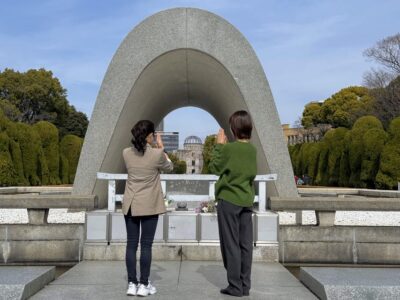
Hiroshima and Miyajima UNESCO Sites 1-Day Tour
Read our review →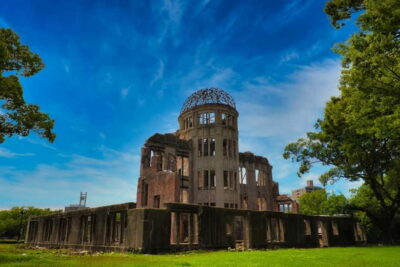
Hiroshima Historical Walking Tour – Why A-Bomb was Dropped
Read our review →
Hiroshima Peace (Heiwa) Walking Tour at World Heritage Sites
Read our review →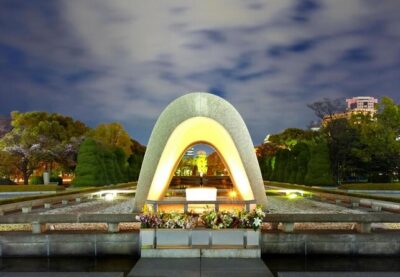
Hiroshima in a Nutshell: Morning Bike Adventure
Read our review →
Hiroshima City 4hr Private Walking Tour with Licensed Guide
Read our review →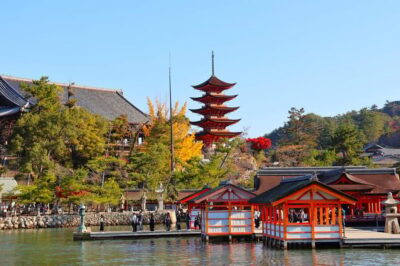

Japanesel Archery Experience HIROSHIMA CASTLE SHARAKU
Read our review →Browse the lists this tour appears in