
Reviewed · HIROSHIMA TOURS
Hiroshima & Miyajima 6.5h Guided Tour – Dome, Park & Shrine
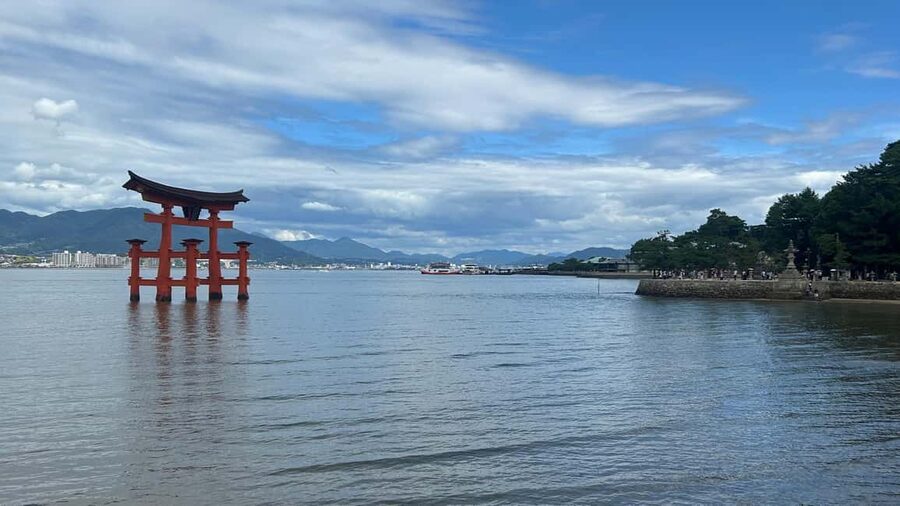
Miyajima’s red torii gate and Hiroshima’s Atomic Bomb Dome make an unusually powerful pair. One is a sacred island shrine reached by ferry; the other is a quiet reminder of August 6, 1945. This small-group tour of up to 10 people links both places in a single, well-planned day.
I like the easy mix of train, ferry, walking, and guided explanation. I also like the chance to hear Hiroshima through a local voice. Guides such as Shion, who has family ties to the bombing, have added a personal dimension that a printed guidebook cannot provide.
The tradeoff is time. Miyajima gets about two hours including the shrine and shopping street, while the Peace Memorial Museum gets about one hour. Crowds can also force a choice between entering Itsukushima Shrine and seeing other parts of the island.
Key points at a glance
- Two UNESCO World Heritage sites in one day: Visit Itsukushima Shrine and the Atomic Bomb Dome.
- Train and ferry are part of the route: Transportation fares are separate, and you should carry Japanese yen.
- A local English-speaking guide leads the day: Guides named Shion, Bo, Rie, Hayato, Lena, and others have led this experience.
- Miyajima includes more than the torii gate: You get time for Omotesando Street, island food, and a look at the local atmosphere.
- The Peace Memorial Museum needs your attention: One hour can feel short when the museum is crowded and emotionally demanding.
- Walking is continuous: Wear good shoes and expect rain-or-shine conditions.
Why this Hiroshima and Miyajima pairing works
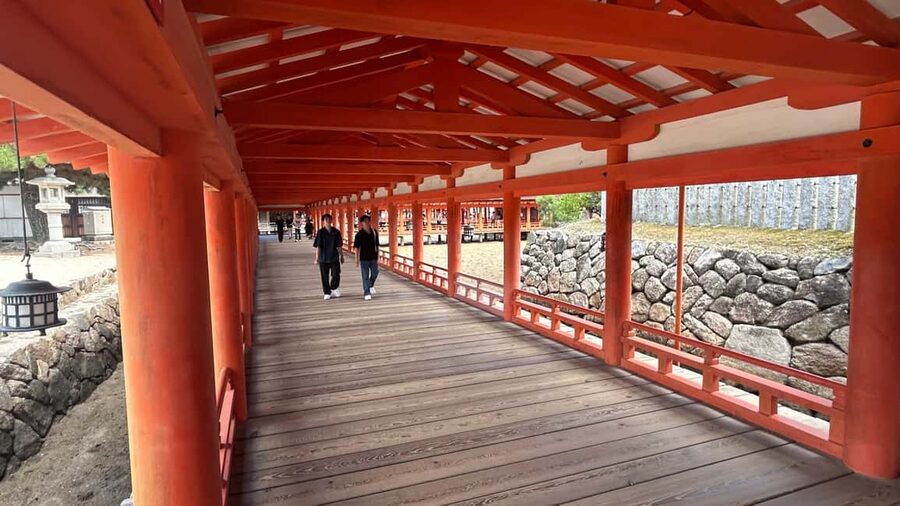
Hiroshima is not a one-theme destination. Miyajima brings religious tradition, sea views, old streets, and island food. Hiroshima city then asks you to slow down and face a painful chapter in modern history.
That contrast gives the day a useful shape. The morning on Miyajima feels open and scenic. The afternoon in the city is quiet and serious. You are not simply checking off two famous sights. You are seeing two very different sides of the area.
The tour lasts 390 minutes, or 6.5 hours. It costs $96 per person, before transportation and meals. For that price, you are paying mainly for a guide who handles the route and explains what you are seeing. If you already know Hiroshima well and are comfortable organizing trains, ferries, shrine tickets, and museum visits yourself, you may spend less independently. If you have only one day, the guidance can make the extra cost worthwhile.
The group limit of 10 matters here. Hiroshima and Miyajima both involve public transportation, busy platforms, and crowded paths. A small group is easier to keep together than a large coach party, and it gives you a fair chance to ask questions.
A few more Hiroshima half-days to weigh up
- Peaceful Hiroshima & Miyajima UNESCO 1 Day Bus Tour
★ 5.0 · 5,309 reviews - Hiroshima: Hiroshima and Miyajima UNESCO Sites 1-Day Tour
★ 4.9 · 2,330 reviews - Hiroshima / Miyajima Full-day Private Tour with Government Licensed Guide
★ 5.0 · 1,298 reviews
Meeting your guide at Hiroshima Station
The meeting point is precise, but the station has more than one side, so read the instructions carefully. Go to the North Exit at the Shinkansen Exit on the second floor. Do not go to the South Exit, which serves the tram and bus side.
Find the JR Green Ticket Office, called Midori no Madoguchi. Your guide waits on the benches between that ticket office and the Starbucks directly opposite it. Look for a bright fluorescent green band attached to the guide’s bag.
This is a good meeting arrangement because both the ticket office and Starbucks are easy landmarks. Still, allow enough time to find the correct exit. If you arrive by Shinkansen, follow signs for the North Exit rather than heading toward the city transportation area.
The route uses public trains and a ferry. Transportation is not included, so carry cash in Japanese yen for fares and for purchases on Miyajima. The tour information also asks you to bring cash, which is sensible for a day that includes small food stalls and shops.
Riding the train and ferry to Miyajima
The first train ride takes about 25 minutes. Then you board a ferry for roughly 15 minutes. The ferry is not just a transfer. It gives you the first broad view of Miyajima and sets up the arrival at a sacred island known for Itsukushima Shrine.
The route is practical rather than luxurious. You are using ordinary public transportation, so you need to stay alert as the group moves between train, ferry, streets, and attractions. Guides have been praised for keeping the pace moving and helping people catch later trains, an important service if you are continuing to Kyoto or another city.
There is no meal included and no dedicated lunch break in the schedule. You can buy food during the 45-minute stop on Omotesando Street, but do not expect a long sit-down meal unless the group’s timing allows it. A small snack before departure is a wise idea.
Itsukushima Shrine and the floating torii
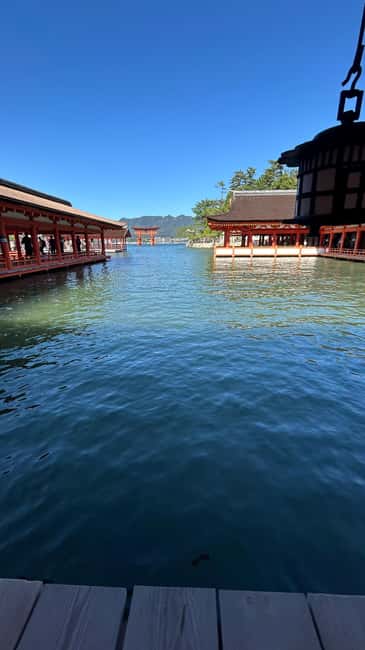
The main Miyajima visit lasts about 80 minutes. That includes a guided visit, sightseeing, and time for photographs at Itsukushima Shrine.
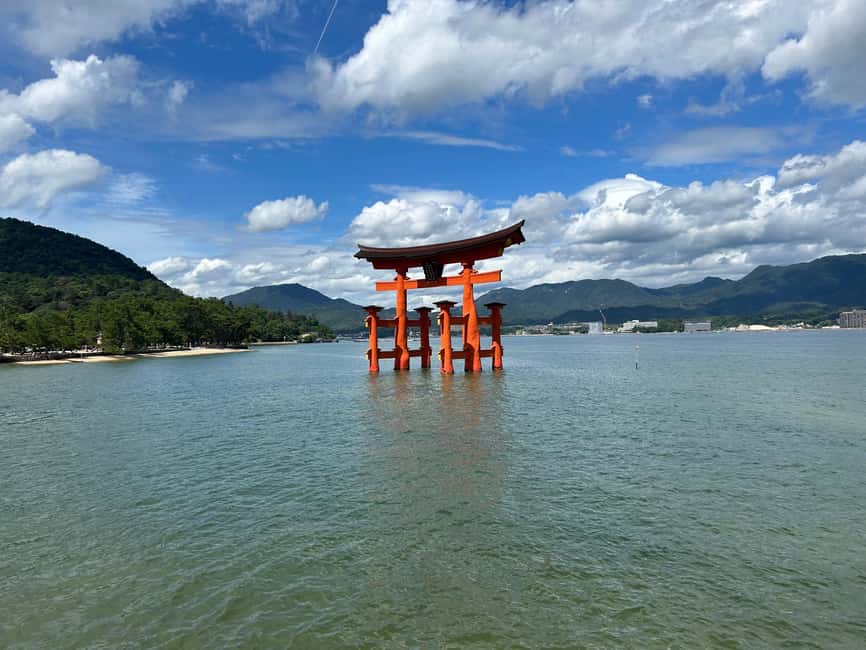
The shrine is famous for its large red torii gate, which can appear to float offshore. The effect depends on the tide, so the scene changes throughout the day. At higher water, the gate has the classic floating appearance. At lower water, the exposed shore changes the view and may allow a closer look from land.
That tide factor is worth knowing before you go. If your main reason for visiting Miyajima is the floating-gate photograph, you may not get exactly the image you have seen in guidebooks. The shrine remains important and beautiful, but the water level controls much of the visual drama.
Crowds are another practical concern. One group found the line for the temple area too long and chose to explore other sights instead. A good guide can adjust, point out alternatives, and keep the visit useful rather than wasting most of the morning in a queue.
The guides have also added details beyond the standard route. One group saw monks training and visited a dark tunnel beneath a temple with Shion. Those extras are not guaranteed, but they show why a local guide can make a familiar attraction feel less mechanical.
Same base, a completely different sort of day:
- Hiroshima Historical Walking Tour – Why A-Bomb was Dropped
★ 4.8 · 893 reviews - Hiroshima Peace (Heiwa) Walking Tour at World Heritage Sites
★ 5.0 · 872 reviews - Hiroshima in a Nutshell: Morning Bike Adventure
★ 5.0 · 524 reviews - Hiroshima City 4hr Private Walking Tour with Licensed Guide
★ 5.0 · 437 reviews
Omotesando Street, oysters, and momiji manju
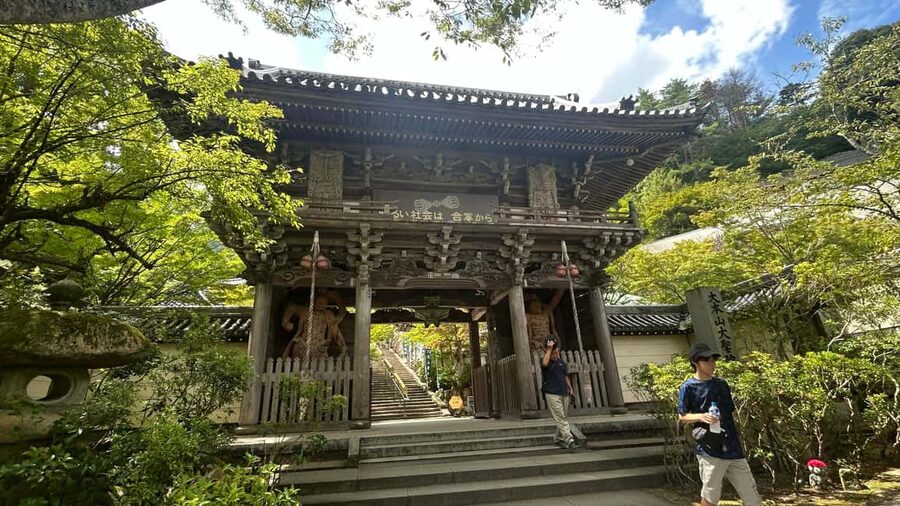
After the shrine, you get about 45 minutes on Miyajima Omotesando Shopping Street. This is your chance to browse, buy snacks, and see the island’s livelier side.
Look for local specialties such as oysters and momiji manju. Momiji manju is a maple-leaf-shaped cake commonly associated with Miyajima. The street also gives you room to make your own choices, which is useful after a guided shrine visit.
Forty-five minutes is enough for a quick snack and some browsing, but it is not enough for a relaxed meal, extensive shopping, and an additional major attraction. If you want the ropeway, mountain walks, or a longer look at the island, this tour does not leave room for them.
That limit is the main weakness of the Miyajima section. You get a clear first look, not a complete island day. I would choose this tour if Miyajima is one part of a wider Hiroshima visit. I would choose a longer island-focused plan if the shrine, food, and mountain scenery are your chief goals.
Returning to Hiroshima for the Atomic Bomb Dome
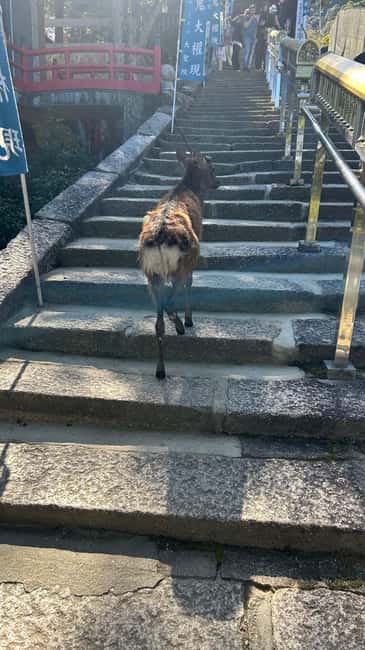
The ferry back takes about 15 minutes, followed by a train ride of roughly 45 minutes. The journey takes time, but it also gives you a pause before the city’s memorial sites.
The Atomic Bomb Dome receives about 30 minutes. You get a guided visit and time for photographs, though the mood is not casual sightseeing. The damaged building is one of the clearest physical reminders of the bombing, and its location beside the river makes the surrounding quiet especially noticeable.
Your guide’s role is important here. A list of dates gives you facts, but a local guide can explain the site in relation to Hiroshima’s people, streets, and families. Shion’s family connection to survivors and victims has made this part especially personal for some groups, while guides such as Bo, Rie, Hayato, and Lena have also been praised for clear explanations and steady organization.
You should expect the guide to set a respectful tone. This is not a place for loud conversation or rushed posing. The short visit works best when you listen, look closely, and let the site speak for itself.
Walking through Peace Memorial Park
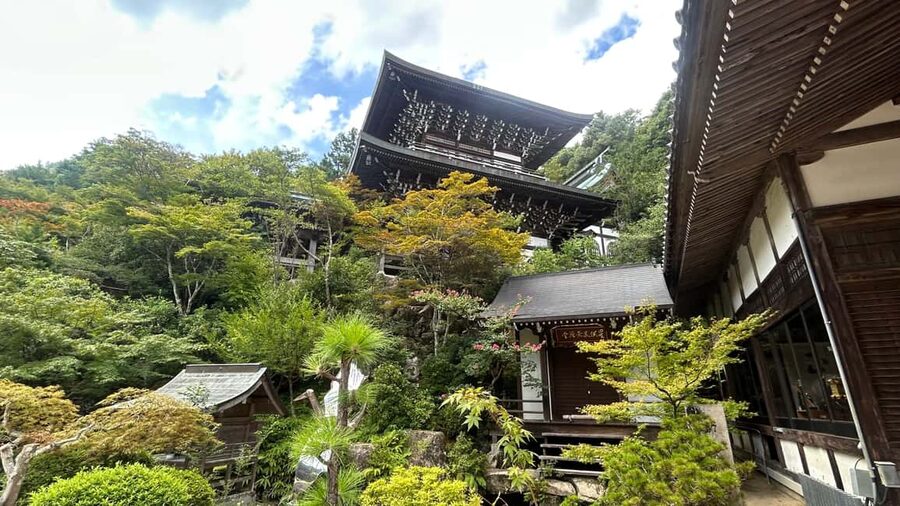
The Peace Memorial Park visit lasts about 40 minutes. You will pause at monuments dedicated to the victims and hear how the different memorials fit into Hiroshima’s story.
This section connects the Atomic Bomb Dome to the museum. It also gives you time outdoors between two indoor or highly focused visits. The park is not simply a green break. The monuments, riverfront setting, and paths create a physical sense of how the memorial area is organized.
The pace can feel brisk. You are moving from one important point to another, and the guide must balance explanation with the group’s schedule. If you want to read every plaque or spend long periods at each monument, you may want to return on your own later.
I like having the park explained rather than walking through it without context. It helps you understand why certain memorials matter and prevents the visit from becoming a series of unnamed statues.
One hour inside the Peace Memorial Museum
The final scheduled stop is the Hiroshima Peace Memorial Museum, with about 60 minutes for a guided visit. This is the emotional center of the city portion and, for many people, the most important stop of the day.
The exhibits provide insight into what happened in Hiroshima and how the bombing affected ordinary people. You should expect difficult material. This is not a light museum visit, and the shift from Miyajima’s food stalls and shrine views can be sharp.
One hour gives you a useful introduction, but it may not satisfy you if you read every display carefully. The museum can also be very busy. One practical suggestion is to return later if your schedule allows, especially if you want more time with the exhibits.
The tour finishes at the museum, not back at Hiroshima Station. That is convenient if you want to remain in the Peace Memorial area afterward, but you must plan your own return trip. It is also worth noting that the museum is closed from February 16 through 21. During those dates, the museum portion is skipped while the other stops continue.
Guides, language, and the value of local insight
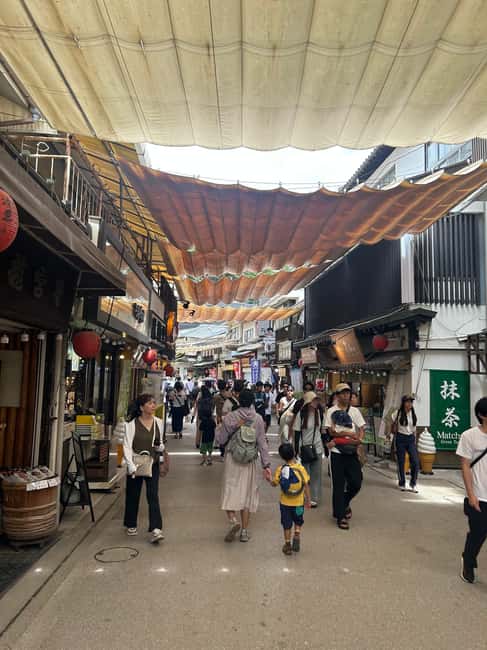
The tour is conducted in English with a live guide. The strongest praise has gone to guides who combine clear language with personal warmth.
Shion is a Hiroshima local with family connections to people who survived and people who died in the bombing. Bo has been described as fluent in English, Chinese, and Japanese. Rie, Lena, Hayato, Angel, Kana, and others have also led the tour, with particular praise for friendliness, organization, and useful explanations.
Guide quality can vary from person to person. One recent guest found the English a little difficult to follow, although the tour remained informative and well paced. That is a fair reminder that no group tour can guarantee the same guide or exactly the same style each day.
Still, the small group helps. You can ask questions about the shrine, the island’s customs, the memorial sites, or practical matters such as food and train connections. One guide even helped a guest find a pharmacy, and Shion went out of his way to help a participant catch a train back to Kyoto.
Walking, weather, and who should book
Wear comfortable walking shoes. The day includes station transfers, streets, shrine grounds, park paths, and museum walking, with little chance to sit for long stretches.
The tour operates rain or shine. Bring suitable clothing and rain gear if the forecast is poor. Bad weather may also change how attractive the torii gate looks, so keep your expectations flexible.
This tour suits you best if:
- You have one day for Hiroshima and want both Miyajima and the Peace Memorial sites.
- You prefer public transportation to a private vehicle.
- You want history explained in English as you go.
- You enjoy a full schedule and steady walking.
- You are comfortable buying your own food and transport fares.
- You want a small group rather than a large coach.
It is not suitable for children under six, wheelchair users, people with mobility impairments, or anyone bringing large bags or oversize luggage. Electric wheelchairs are also not permitted.
Is the $96 price fair?
At $96, this is not the cheapest way to see Hiroshima. Transportation and meals are extra, so add those costs before comparing it with a self-guided day.
The value comes from the structure. You get a guide, admission fees, the ferry-and-train route organized for you, and explanations at four major stops. You also avoid spending part of your day figuring out how Miyajima and the Peace Memorial area fit together.
I think the price is fair for a first visit, especially if you are short on time or uneasy about navigating Japanese public transportation. It is less compelling for independent visitors who want to set their own pace, spend several hours in the museum, or devote a full day to Miyajima.
Free cancellation up to 24 hours before departure and reserve-now, pay-later booking add useful flexibility. Starting times vary, so check availability before planning trains to or from Hiroshima.
Should you book this Hiroshima tour?
Book it if you want a carefully paced first look at both Miyajima and Hiroshima’s memorial district. The local guide is the real reason to choose it, particularly if you are assigned someone with strong local knowledge and clear English, such as Shion, Bo, Rie, or Hayato.
Skip it if you want a slow Miyajima day, a long museum visit, or complete control over every stop. For most first-time visitors with only one day, though, the combination is hard to beat. Bring yen, wear good shoes, allow for crowds, and treat the Peace Memorial sites with the attention they deserve.
FAQ
How long does the Hiroshima and Miyajima tour last?
The tour lasts 390 minutes, or 6.5 hours.
Where do I meet the guide?
Meet at Hiroshima Station’s North Exit, at the Shinkansen Exit on the second floor. Wait on the benches between the Midori no Madoguchi JR Green Ticket Office and the Starbucks opposite it.
How will I recognize the guide?
The guide will have a bright fluorescent green band attached to their bag.
Is transportation included in the price?
No. Train and ferry transportation are used during the tour, but fares are not included. Bring Japanese yen in cash.
Are meals included?
No. Meals are not included. You have free time on Omotesando Shopping Street where you can buy food and local specialties.
What language is the tour conducted in?
The tour has a live English-speaking guide.
How large is the group?
The tour is limited to 10 participants.
Is the Peace Memorial Museum always included?
The museum is included in the normal itinerary, but it is closed from February 16 through 21. During that period, the museum visit is skipped and the rest of the tour continues.
Is the tour suitable for people with mobility limitations?
No. The tour is not suitable for people with mobility impairments, wheelchair users, or users of electric wheelchairs. Children under six are also not permitted.
Just added around Hiroshima
- The Peace Memorial to Miyajima : Icons of Peace and Beauty★ 4.5 · 31 reviews
- Shore Excursion from Hiroshima Port : Private Tour in Hiroshima★ 5.0 · 17 reviews
- Hiroshima Saijo Sake Tasting Tour with visit to 7 Breweries★ 5.0 · 104 reviews
- Hiroshima & Miyajima All-Inclusive Tour w/Licensed guide Pancho★ 5.0 · 54 reviews
- Hiroshima Country Cycling: Explore Rural Life 1 HR from City★ 5.0 · 22 reviews
- Okunoshima Rabbit Island Cycling Tour with Local Guide★ 4.5 · 17 reviews
- Private Full Day Hiroshima Tour★ 4.5 · 29 reviews
- Hiroshima Private Tour with a Local – Highlights & Hidden Gems★ 4.5 · 24 reviews
Hiroshima Tours, compared.

Peaceful Hiroshima & Miyajima UNESCO 1 Day Bus Tour
Read our review →
Hiroshima and Miyajima UNESCO Sites 1-Day Tour
Read our review →
Hiroshima Historical Walking Tour – Why A-Bomb was Dropped
Read our review →
Hiroshima Peace (Heiwa) Walking Tour at World Heritage Sites
Read our review →
Hiroshima in a Nutshell: Morning Bike Adventure
Read our review →
Hiroshima City 4hr Private Walking Tour with Licensed Guide
Read our review →

Japanesel Archery Experience HIROSHIMA CASTLE SHARAKU
Read our review →Browse the lists this tour appears in