
Reviewed · HIROSHIMA TOURS
Hiroshima Peace Memorial Park: A Guided Tour
Hiroshima Peace Memorial Park is not a sightseeing stop you simply tick off. It asks you to slow down, listen, and face the human cost of war. This two-hour walking tour links the park’s major memorials in a clear order, from the Atomic Bomb Dome to the Gates of Peace.
I like the small group of up to 10 and the way the tour gives each site a short explanation instead of leaving you to read every sign alone. I also like the guide’s reported balance of information and quiet time, especially Shera Alvi’s habit of giving visitors room to absorb what they have heard. The main drawback is the tight schedule: the listed museum visit lasts only 10 minutes, so you should not expect a full museum visit during the guided portion.
Key points to know before you book
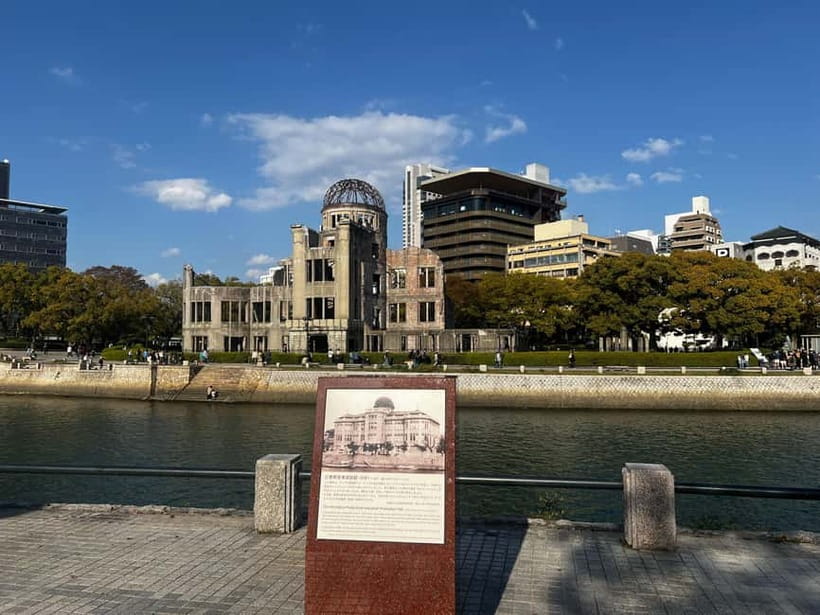
- The Atomic Bomb Dome is the emotional starting point: You begin beside Hiroshima’s most recognizable reminder of August 6, 1945.
- Shera Alvi leads an English-language tour: Feedback describes Shera, also called Sheraz in some comments, as attentive, warm, and good at explaining difficult subjects.
- You visit many memorials in two hours: The route includes the Korean Atomic Bomb Victims Memorial, Children’s Peace Monument, Cenotaph, Peace Flame, Prayer Fountain, and Gates of Peace.
- The pace is walking-focused: Comfortable shoes and water matter, and the tour may not suit anyone with heart problems.
- The museum stop is brief: Use the tour to understand the park’s layout and meaning, then return on your own if you want more time inside.
- The price is modest for a guided introduction: At $19 per person, you are paying for structure, context, and access to places you might otherwise pass without understanding.
Starting beneath the Atomic Bomb Dome
The meeting point is the Atomic Bomb Dome, at coordinates 34.395483, 132.453592. This is a practical place to begin because you are immediately beside the most powerful visual symbol in the park.
The former building survived the atomic blast in damaged form, while much of the surrounding area was destroyed. The tour begins with about 20 minutes here, giving Shera time to explain why the building was preserved and how it came to represent both destruction and remembrance.
You will want to arrive with a little time to spare. The meeting point is specific, and the tour moves through a busy public park rather than from one enclosed attraction to another. Having the exact location ready on your phone should make the start less stressful.
The Dome is also a reminder that this tour is not about collecting attractive photographs. Photography is allowed, but respectful behavior is expected. You can take pictures, yet the setting calls for restraint.
A few more Hiroshima half-days to weigh up
- Peaceful Hiroshima & Miyajima UNESCO 1 Day Bus Tour
★ 5.0 · 5,309 reviews - Hiroshima: Hiroshima and Miyajima UNESCO Sites 1-Day Tour
★ 4.9 · 2,330 reviews - Hiroshima / Miyajima Full-day Private Tour with Government Licensed Guide
★ 5.0 · 1,298 reviews
The Clock Tower and Bell of Peace
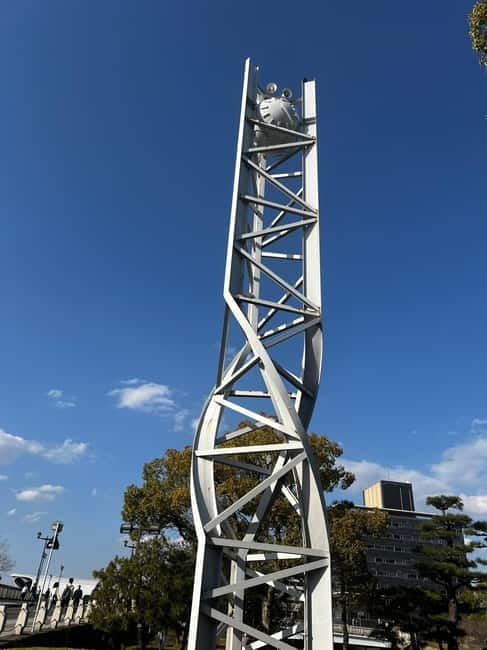
From the Atomic Bomb Dome, the route continues to the Clock Tower of Peace, with about 10 minutes of guided attention. This is a short stop, but it helps broaden the experience beyond the Dome itself.
Next comes the Bell of Peace. The bell is connected to the park’s wider message of peace, and the guide’s role here is useful because memorials can blur together when you visit them alone. A short explanation gives each place its own purpose.
The 10-minute format means you should expect a focused introduction rather than a long lecture. That works well for anyone who wants a clear first look at the park. If you prefer to read every plaque and spend several minutes in silence at each site, the group schedule may feel brisk.
One strength of this route is its rhythm. You move, stop, listen, and then have a little space to think before walking on. Feedback about Shera repeatedly points to an easy pace and the right amount of information, which matters in a place where too much talking can feel intrusive.
Remembering Korean victims of the bombing
The Korean Atomic Bomb Victims Cenotaph is one of the stops that can be easy to overlook if you explore without a guide. Its presence broadens the story beyond a single national viewpoint and directs attention to Korean people who were also affected by the bombing.
The tour allows about 10 minutes here. That is enough for an introduction to the memorial and its place within the park, though you may want to return later if this subject matters especially to you.
This stop is one reason the guided format offers more than a simple walk through attractive public grounds. A sign may identify a memorial, but a guide can point out why it was built and how it fits into the larger pattern of remembrance.
The Children’s Peace Monument and the human cost of war
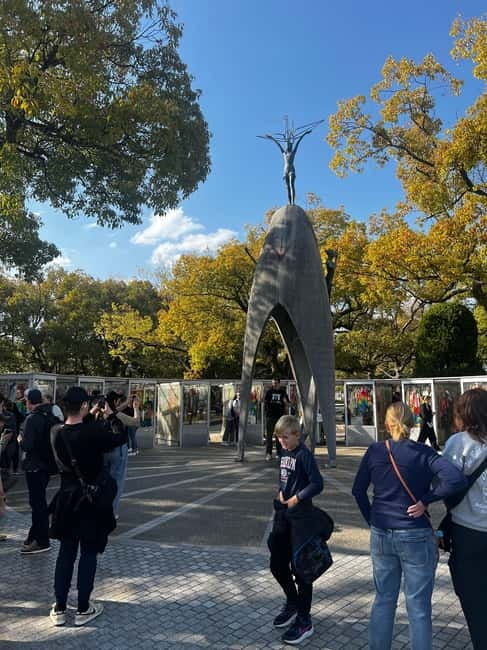
The Children’s Peace Monument is dedicated to young victims. It is among the park’s most affecting stops because it brings the story down to the level of children and families rather than leaving it as a distant military event.
You receive roughly 10 minutes here. The best approach is to listen carefully, then allow yourself a quiet moment. You do not need to rush to the next photograph or discussion.
The route’s attention to children is especially useful for families with older children, teenagers, and adults who want to understand the personal cost of the bombing. Still, the activity is not suitable for children under six, and the subject matter may be difficult for very young visitors even if they could manage the walking.
Same base, a completely different sort of day:
- Hiroshima Historical Walking Tour – Why A-Bomb was Dropped
★ 4.8 · 893 reviews - Hiroshima Peace (Heiwa) Walking Tour at World Heritage Sites
★ 5.0 · 872 reviews - Hiroshima in a Nutshell: Morning Bike Adventure
★ 5.0 · 524 reviews - Hiroshima City 4hr Private Walking Tour with Licensed Guide
★ 5.0 · 437 reviews
Hiroshima National Peace Memorial Hall
The Hiroshima National Peace Memorial Hall receives about 20 minutes, making it one of the longer stops. This gives the guide more room to explain its purpose and the way the city remembers those who died.
Compared with the open-air monuments, the hall offers a quieter, more contained part of the visit. It helps shift the focus from the famous Dome to the individual people behind the numbers.
A guided visit is particularly useful here because you may not immediately know what deserves your attention. Shera’s role is to provide an introduction without turning the stop into a long classroom session. Feedback describes the explanations as informative and the interaction as friendly, with the guide taking an interest in the people in the group.
That personal approach can make a difference. The subject is heavy, but a guide who checks the group’s pace and responds to questions helps keep the experience human rather than purely factual.
The Cenotaph for the A-bomb Victims
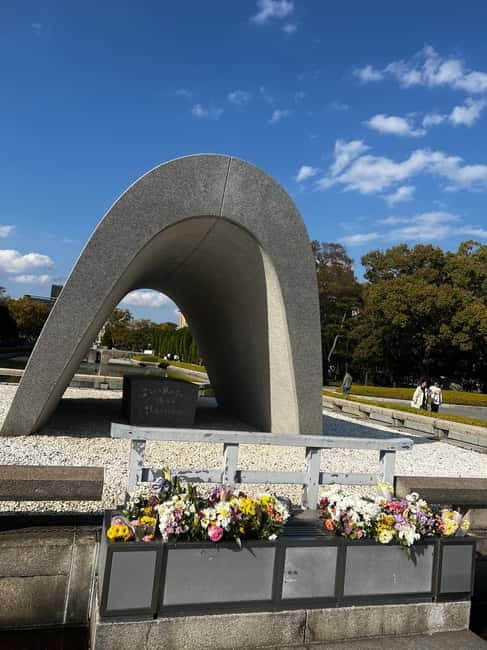
The Hiroshima Victims Memorial Cenotaph is another central stop, with about 10 minutes of guided explanation. This is a place for quiet reflection, and the tour gives you a framework for understanding the memorial before moving on.
The Cenotaph is closely tied to the park’s purpose. You are not just looking at a monument. You are being asked to remember the people who died and to consider the consequences of nuclear weapons.
Expect the guide to keep the tone serious. The best value here is not entertainment or a fast collection of facts. It is the chance to understand why this particular site matters and how it connects to the Peace Flame, the museum, and the park’s other memorials.
A short museum stop, then the Prayer Fountain
The itinerary includes the Hiroshima Peace Memorial Museum, but the guided portion lists about 10 minutes here. This is the clearest limitation of the experience.
Ten minutes can introduce the museum and help you decide what to see later, but it is not enough for a full examination of the exhibits. If you want to read personal accounts, study displays, and give the subject the time it deserves, plan a separate museum visit. The tour still adds value by placing the museum within the park’s wider story and helping you reach it with context.
Afterward, the route reaches the Prayer Fountain, another 10-minute stop. The fountain offers a quieter change of pace after the museum and major cenotaphs. As with the other sites, the guide helps explain why it belongs in the park’s network of remembrance.
You should not expect every stop to feel equally dramatic. That is part of the point. Some places confront you directly, while others encourage a slower, less immediate kind of reflection.
The Peace Flame and Gates of Peace
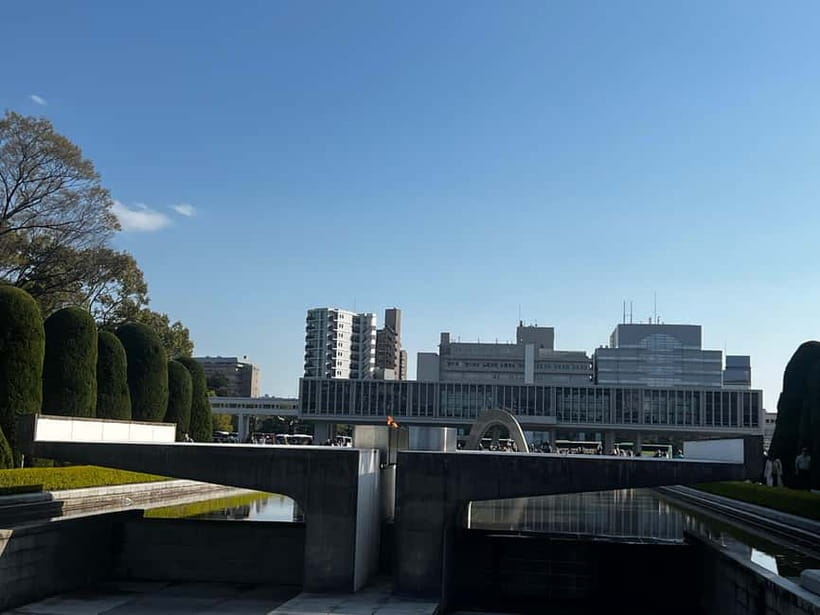
The Peace Flame is included in the tour, even though the timing lists the final section through the Prayer Fountain and Gates of Peace. The flame represents hope for a world without nuclear weapons, giving the route a forward-looking note after so much attention to loss.
The tour finishes at the Gates of Peace. Ending there makes practical sense. You have moved from the Dome and the destruction it represents through memorials for victims, children, and people from different backgrounds, then toward a message of peace.
The Gates also give you a clear ending point rather than leaving you somewhere in the middle of the park. From there, you can decide if you want to continue exploring independently, return to the museum, or move on to another part of Hiroshima.
Why the $19 price can be good value
At $19 per person, this is an affordable introduction to one of Japan’s most important sites. The value is not in admission to a long list of paid attractions. It comes from having an English-speaking guide organize the route and explain memorials that you might otherwise pass without context.
A two-hour walk can save you time and prevent the park from feeling like a series of disconnected monuments. The small group size, capped at 10, should also make it easier to hear the guide and ask questions than on a large coach-style tour.
The price is less compelling if you already know the park well or want to spend long stretches reading inside the museum. In that case, you may prefer to explore independently and set your own pace.
For a first visit, though, $19 is a reasonable price for orientation. You can use the guided tour as your introduction, then return to the museum or the memorials that affected you most.
Pace, comfort, and who should book
This is a walking tour through the park, so comfortable shoes are essential. Bring water, especially if you are visiting in warm weather. Food is not allowed as part of the activity, and respectful conduct is expected at every memorial site.
The tour is wheelchair accessible, which is important in a broad public park with several memorial stops. You should still check the meeting details and route conditions when booking if you have specific mobility needs, since the supplied information does not describe every surface or restroom arrangement.
The activity is not suitable for children under six or people with heart problems. Its subject matter also calls for a certain level of emotional readiness. This is not a light city walk with a few historical facts added on.
The best fit is someone visiting Hiroshima for the first time who wants a guided foundation in English. It also suits solo visitors and couples who prefer a small group, and anyone who wants a guide to point out memorials they might miss alone.
Shera Alvi receives especially strong praise for being attentive at the meeting point, explaining the route clearly, keeping a comfortable pace, and showing interest in the group. You should expect an informed, personable style rather than a silent escort.
Flexible booking for a serious subject
The tour offers free cancellation up to 24 hours before the start time, with a full refund, and you can reserve now and pay later. That flexibility is useful when your Hiroshima schedule depends on trains, weather, or a packed Japan itinerary.
Starting times vary, so you need to check availability before booking. The tour lasts two hours, and the meeting point is at the Atomic Bomb Dome, with the finish at the Gates of Peace.
You should bring a camera if you want photographs, but remember that the park calls for sensitivity. A camera is useful for recording the architecture and memorial details, not for treating the site like a casual photo stop.
Should you book this Hiroshima tour?
Book it if you want a short, structured introduction to Hiroshima Peace Memorial Park, especially if you are visiting for the first time. The $19 cost is fair, the group is limited to 10, and Shera Alvi’s reported style combines clear explanations with time to take in the subject.
Do not book it expecting a complete museum visit or a leisurely, self-directed morning. The museum stop is brief, and the route covers many sites in two hours.
My practical advice is to use this tour as your foundation. Let the guide explain the park’s major memorials, then return on your own to the museum or any stop that deserves more time. That gives you both structure and space, which is the best way to approach Hiroshima.
FAQ
Where does the Hiroshima Peace Memorial Park tour begin?
The tour begins at the Atomic Bomb Dome in Hiroshima Peace Memorial Park. The meeting coordinates are 34.395483, 132.453592.
Where does the tour finish?
The tour finishes at the Gates of Peace.
How long does the guided tour last?
The tour lasts two hours.
Is the tour conducted in English?
Yes. The tour has a live English-speaking guide, listed as Shera Alvi.
Is the tour wheelchair accessible?
Yes, the activity is described as wheelchair accessible.
What should I bring, and what is not allowed?
Bring comfortable shoes, water, and a camera. Food is not allowed during the activity.
Just added around Hiroshima
- The Peace Memorial to Miyajima : Icons of Peace and Beauty★ 4.5 · 31 reviews
- Shore Excursion from Hiroshima Port : Private Tour in Hiroshima★ 5.0 · 17 reviews
- Hiroshima Saijo Sake Tasting Tour with visit to 7 Breweries★ 5.0 · 104 reviews
- Hiroshima & Miyajima All-Inclusive Tour w/Licensed guide Pancho★ 5.0 · 54 reviews
- Okunoshima Rabbit Island Cycling Tour with Local Guide★ 4.5 · 17 reviews
- Private Full Day Hiroshima Tour★ 4.5 · 29 reviews
- Hiroshima Country Cycling: Explore Rural Life 1 HR from City★ 5.0 · 22 reviews
- Hiroshima Private Tour with a Local – Highlights & Hidden Gems★ 4.5 · 24 reviews
Hiroshima Tours, compared.

Peaceful Hiroshima & Miyajima UNESCO 1 Day Bus Tour
Read our review →
Hiroshima and Miyajima UNESCO Sites 1-Day Tour
Read our review →
Hiroshima Historical Walking Tour – Why A-Bomb was Dropped
Read our review →
Hiroshima Peace (Heiwa) Walking Tour at World Heritage Sites
Read our review →
Hiroshima in a Nutshell: Morning Bike Adventure
Read our review →
Hiroshima City 4hr Private Walking Tour with Licensed Guide
Read our review →

Japanesel Archery Experience HIROSHIMA CASTLE SHARAKU
Read our review →Browse the lists this tour appears in