
Reviewed · HIROSHIMA TOURS
Hiroshima: Private City Highlights Walking Tour
Hiroshima’s story is best understood on foot, where memorials, surviving structures, and the rebuilt city fit into one moving route. This private tour takes you from the Peace Memorial Museum and its difficult exhibits to the Atomic Bomb Dome, then onward to Hiroshima Castle and lesser-known places beyond the park.
I like the one-to-one format, since you can ask questions without holding back a larger group. I also like the guides’ flexibility. Maria, Ihsan, Ali, Wajid, and others are praised for adjusting the pace, adding local food stops, and explaining places that many first-time visitors would miss.
The main drawback is the schedule. Four hours is enough for a serious introduction, but the walk can feel long, especially in Hiroshima’s heat, humidity, or rain. The museum itself can also be emotionally heavy, so this is not a light sightseeing stroll.
Key points to know before booking
- The route links Hiroshima’s essential sights: Peace Memorial Park, the museum, Atomic Bomb Dome, and Hiroshima Castle all fit into one guided walk.
- A private guide changes the experience: You can ask detailed questions, choose what to prioritize, and request a slower or faster pace.
- The museum visit lasts about one hour: Your guide can provide context, but much of the museum is a quiet, self-guided experience.
- The best details may be outside the main park: Guides have taken visitors to places such as a school and a bank linked to the bombing.
- The tour includes admission: Tickets for the Peace Memorial Museum, Atomic Bomb Dome, and Peace Memorial Park are included in the $90 price.
- Plan for weather and walking: Transportation, food, and drinks are not included, though guides have sometimes stopped for juice, ice cream, or local food.
Why this Hiroshima walk works
Hiroshima can be difficult to organize on your own. The Peace Memorial Park contains many monuments, each with a different purpose, and the museum presents a large amount of painful material in a short visit. A good guide helps you connect the names, dates, buildings, and personal stories without turning the morning into a rushed checklist.
This is a private group tour, so the guide can respond to your interests. If you want more background on the Second World War, you can ask for it. If your family needs regular breaks, the pace can be softened. If you have teenagers who need movement and variety, the route continues beyond the museum to the Atomic Bomb Dome and Hiroshima Castle.
The tour is also useful for understanding Hiroshima as a living city, not only as the site of a historic tragedy. Guides have added nearby schools, banks, gardens, food stops, and other places with links to the events of August 6, 1945. Those additions give the tour a human scale.
At $90 per person, this is not the cheapest way to see Hiroshima. The value rests in the private attention, the included admissions, and the time saved working out the route. For a first visit, especially if you want a thoughtful explanation rather than a quick look at monuments, the price is reasonable. If you are happy reading signs and moving independently, you may prefer to visit the park and museum on your own.
More walking tours in Hiroshima:
- Hiroshima Historical Walking Tour – Why A-Bomb was Dropped
★ 4.8 · 893 reviews - Hiroshima Peace (Heiwa) Walking Tour at World Heritage Sites
★ 5.0 · 872 reviews - Hiroshima City 4hr Private Walking Tour with Licensed Guide
★ 5.0 · 437 reviews
Starting at 1-2 Nakajimachō
You meet the guide at 1-2 Nakajimachō in Naka Ward, close to the Peace Memorial Park. The tour ends back at the same meeting point, which makes the activity easy to fit into a day in central Hiroshima.
There is no transport included. The experience is built around walking, so wear comfortable shoes and bring water. The route is wheelchair accessible, a useful point for visitors who need step-free access, though the four-hour duration still deserves some thought.
The available guide languages are English, Malay, Urdu, Hindi, and Punjabi. English-language guides named in the feedback include Maria, Ihsan, Ali, and Wajid, though you should check the current guide assignment when booking.
Gates of Peace and the Prayer Fountain
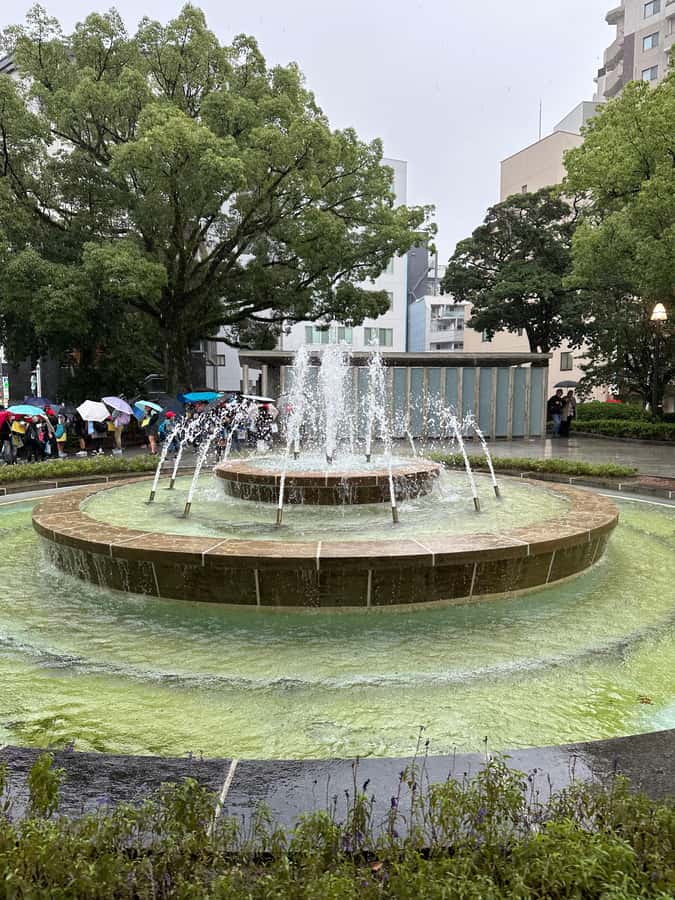
The first stops are the Gates of Peace and the Prayer Fountain. The Gates of Peace make a fitting introduction, placing you in the memorial area before you begin the museum visit.
The Prayer Fountain follows, with about ten minutes for a visit and explanation. This early part of the tour is brief, but it sets the tone. You are not simply walking toward a building. You are moving through a park designed around remembrance, prayer, and peace.
These stops are mainly photo and explanation points. If photography matters to you, this is a good time to ask the guide where to pause without interrupting the quiet atmosphere of the park.
One hour inside the Peace Memorial Museum
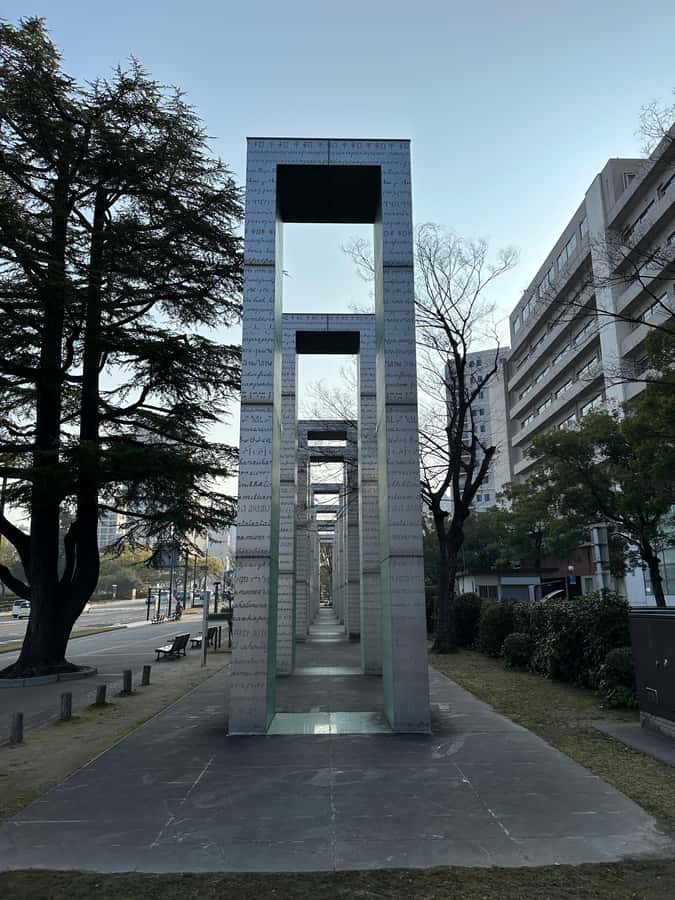
The Hiroshima Peace Memorial Museum is the emotional center of the tour. You have about one hour inside, and admission is included.
The museum holds objects and displays connected to the atomic bombing of August 6, 1945. You will see the event through personal belongings, records, and accounts of what happened to Hiroshima and its people. The material is difficult, and the experience calls for time and attention.
Your guide can explain the broader setting and answer questions, but do not expect a running commentary beside every exhibit. Much of the museum is quiet and personal. One useful advantage of a private guide is the chance to discuss what you have seen immediately afterward, rather than trying to process it alone.
I would not schedule a demanding activity straight after this tour if you know museums of war and loss affect you strongly. The museum is important, but it is not easy viewing.
A few more Hiroshima half-days to weigh up
- Peaceful Hiroshima & Miyajima UNESCO 1 Day Bus Tour
★ 5.0 · 5,309 reviews - Hiroshima: Hiroshima and Miyajima UNESCO Sites 1-Day Tour
★ 4.9 · 2,330 reviews - Hiroshima / Miyajima Full-day Private Tour with Government Licensed Guide
★ 5.0 · 1,298 reviews - Hiroshima in a Nutshell: Morning Bike Adventure
★ 5.0 · 524 reviews
Memorials across Peace Memorial Park
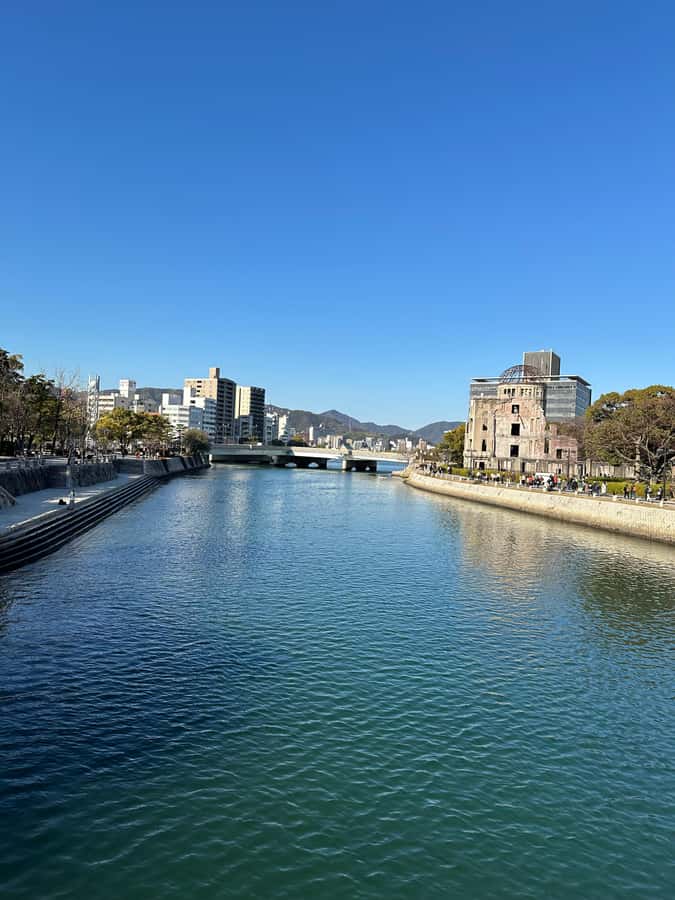
After the museum, the route continues through several of the park’s key monuments. Each stop is short, usually between five and fifteen minutes, so the guide’s explanation matters.
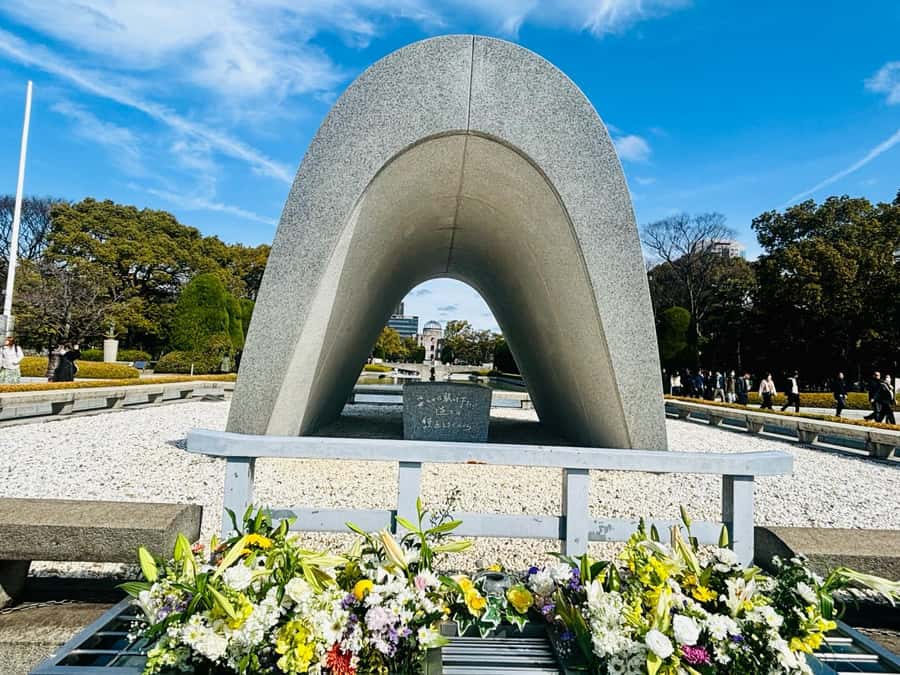
The Victims Memorial Cenotaph honors those who died. The Flame of Peace is another central symbol of remembrance. The guide can explain how these sites fit together and why their placement matters within the park.
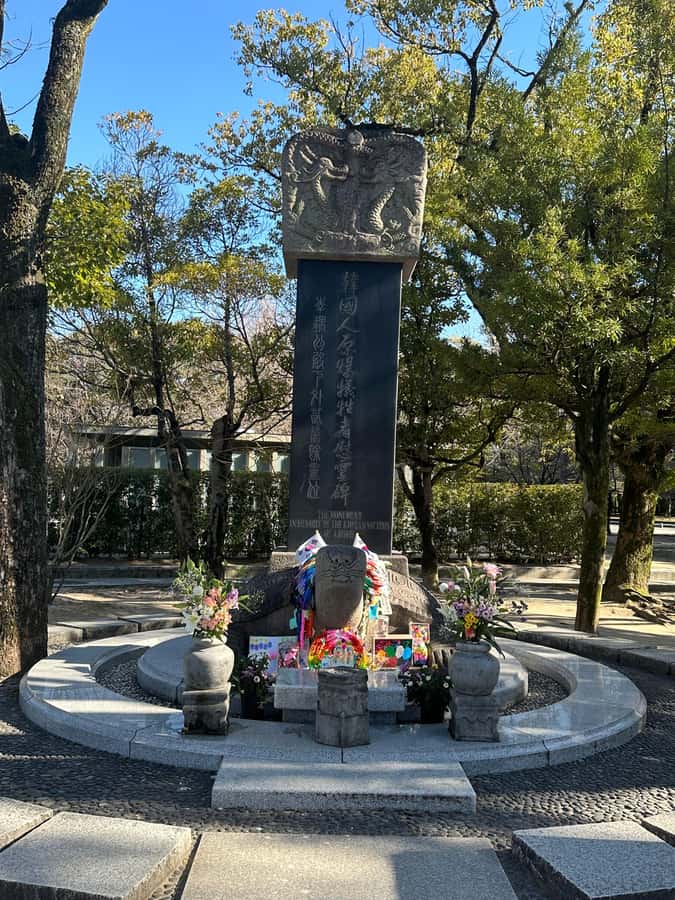
The Korean Atomic Bomb Victims Cenotaph broadens the story beyond the most familiar memorials. Its inclusion is one of the strengths of the route, since it points to people affected by the bombing whose experiences can be overlooked during a quick visit.
At the Bell of Peace, you will have another short stop and guided explanation. The Children’s Peace Monument brings a particularly personal focus to the park. Guides have been praised for explaining the meaning of the monument and for giving families the time to take it in.
You should expect frequent pauses, but not long periods at every monument. If one site matters especially to you, tell the guide. A private tour gives you more room to linger than a fixed group outing.
The Atomic Bomb Dome and Hiroshima before and after 1945
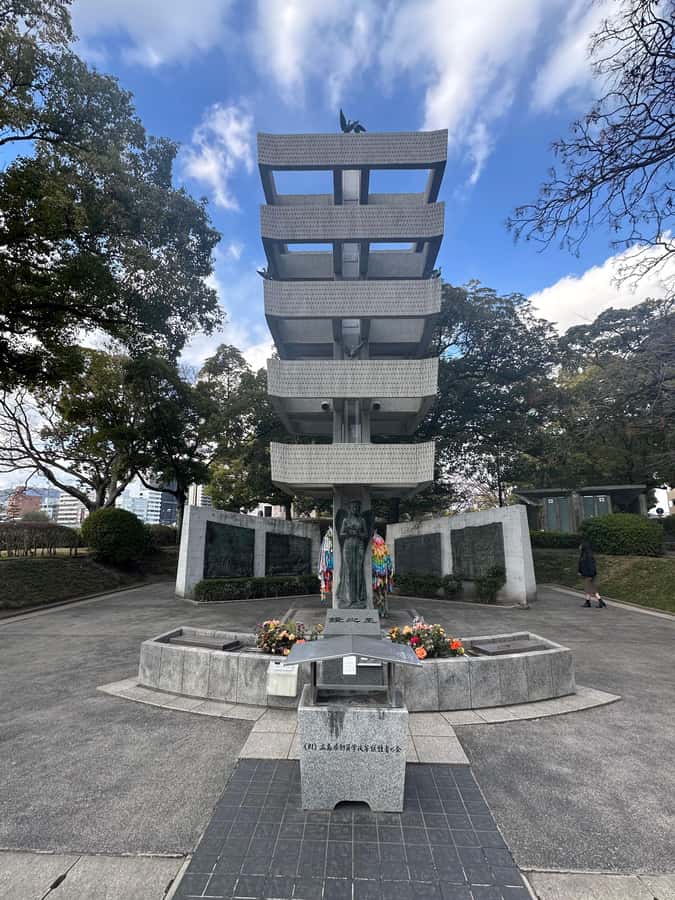
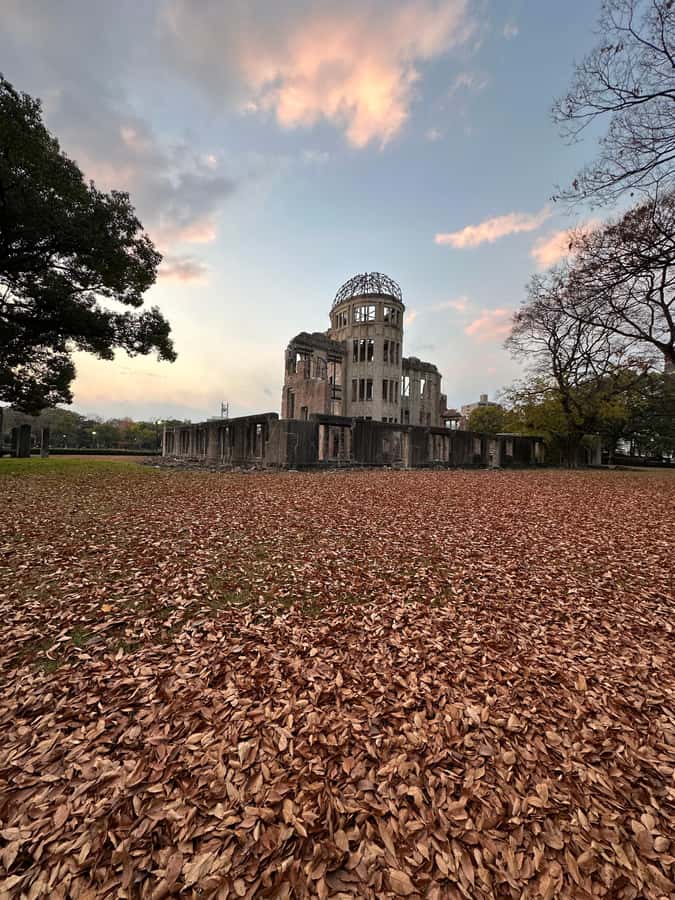
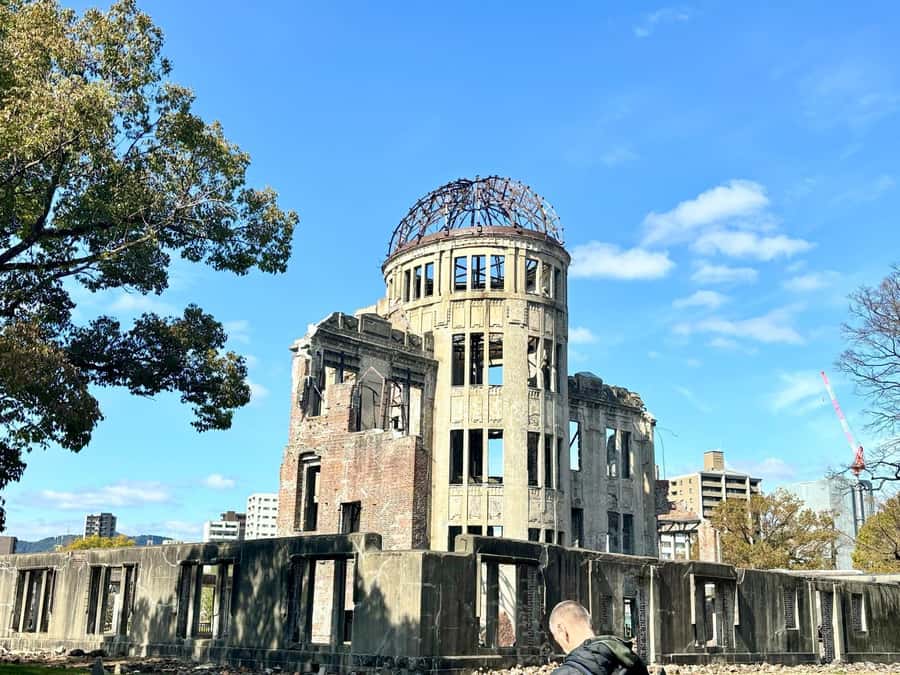
The Atomic Bomb Dome is scheduled for about twenty minutes. It is one of Hiroshima’s most recognizable sights, but its power comes from seeing it in relation to the surrounding city.
The building’s damaged frame remains as a physical reminder of the blast. Your guide helps explain what the structure represented before the bombing and why it was preserved afterward. This is also where the tour’s promise to show Hiroshima before and after the bombing becomes especially useful. You are looking at a surviving building in a city that has otherwise been rebuilt.
The Dome is an exterior sight, so this stop is shorter than the museum visit. That is not a weakness. The building is best viewed from several angles, with time to listen and reflect, rather than treated as another indoor attraction.
Guides have also taken visitors beyond the main park to other landmarks connected to August 6, including a school and a bank. These extra places are not listed as fixed stops, so you should not assume every group will visit them. Still, they show the sort of local context that can make a private route more meaningful.
Walking toward Hiroshima Castle
The walk to Hiroshima Castle changes the mood. After the concentrated memorial sites, you move into another part of the city and look further back into Hiroshima’s past.
Hiroshima Castle is described as a sixteenth-century castle. The tour allows about forty minutes for a guided visit, photo stop, and walk. The castle adds a longer historical view, reminding you that Hiroshima was a regional center long before the twentieth century.
This part also gives the experience more variety. Four hours focused only on the Peace Park could feel intense, while the castle offers a different setting and a chance to consider the city’s earlier political and cultural life.
There is an important practical point here: the stated route includes Hiroshima Castle, but the exact time available inside may depend on the day’s pace. One group missed the castle interior after a delayed train, although the guide still explained its history and adjusted the ending. If seeing the inside is essential to you, say so at the beginning and keep the earlier stops moving.
The value of a private guide
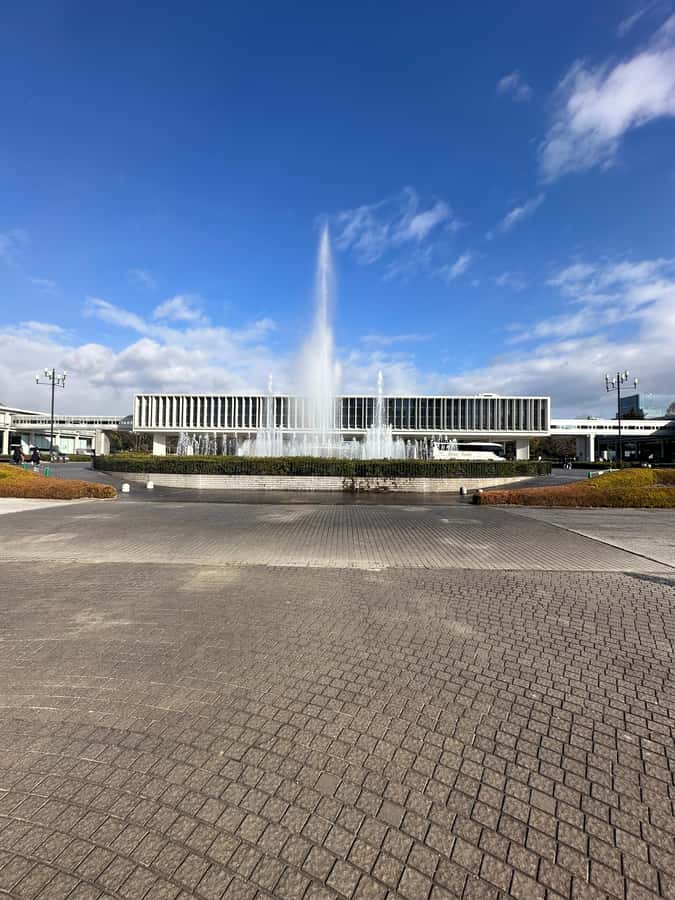
The strongest reason to choose this tour is not simply the number of sights. It is the ability to shape the conversation.
Maria has been described as warm, clear, and especially good at adapting the tour to individual interests. Ihsan is praised for enthusiasm, humor, and detailed answers about Hiroshima, Japan, and local culture. Ali is noted for going beyond the expected route, while Wajid has added information about Hiroshima’s food and stayed longer to help visitors find a favorite restaurant.
Those differences matter because Hiroshima needs a sensitive guide. A guide who only recites dates can make the park feel distant. A guide who explains the monuments, listens to your questions, and gives you room to pause can help you understand the city without flattening its story.
The private format is also handy for families. One guide kept teenagers engaged despite heat and humidity, while another adjusted the pace and stopped for ice cream. These are small choices, but they can make four hours manageable.
Do keep expectations sensible. The tour has a planned route and a fixed duration. Flexibility does not mean every stop can become a half-hour discussion. One person found four hours a little long, which is fair if you prefer short museum visits and independent wandering.
Weather, walking, and what to bring
Hiroshima’s weather can affect the experience. Guides have continued tours in rain, and feedback also refers to difficult heat and humidity. Bring water, sun protection, and rain gear according to the forecast.
Food and drinks are not included. However, guides have sometimes arranged a cold juice, fresh orange juice, ice cream, or a recommendation for Hiroshimayaki, the local style of okonomiyaki. Treat these as possible personal touches, not guaranteed parts of the itinerary.
Because the walk covers many stops, comfortable footwear is more important than stylish footwear. You will want enough energy for the park, museum, Atomic Bomb Dome, and castle without turning the final hour into a slog.
Who should book this tour?
I would choose this tour if you are visiting Hiroshima for the first time and want the main memorial sites explained in a clear order. It also suits families, couples, and small private groups who want to ask questions freely.
It is a good match if you care about personal stories and local context, not just photographs. The guides can help you notice monuments such as the Korean Victims Cenotaph and Children’s Peace Monument, then connect the memorial area with Hiroshima Castle and the modern city.
You may not need it if you have already studied Hiroshima, prefer long unstructured museum visits, or want to spend the entire day at your own speed. The museum’s one-hour slot may feel short to serious history readers, and four hours of walking is a commitment.
The cancellation policy gives you a practical safety net: you can cancel up to 24 hours ahead for a full refund. You can also reserve now and pay later, which helps if your Japan itinerary is still changing.
Should you book the Hiroshima City Highlights Walking Tour?
Book it if you want a well-shaped first look at Hiroshima, with admission covered and a guide beside you to explain the difficult parts. The combination of Peace Memorial Park, the museum, Atomic Bomb Dome, and Hiroshima Castle gives you a broad introduction in four hours.
I would especially recommend it for visitors who value conversation and flexibility. Ask for the guide to include extra sites outside the park if time allows, and mention any priorities at the start. If you need a slower pace, say so early.
Skip it if you prefer to explore quietly and spend as long as you like in the museum. For everyone else, $90 buys more than a list of stops. It buys structure, context, and a human guide through one of Japan’s most important places.
FAQ
How long does the Hiroshima walking tour last?
The tour lasts four hours. Starting times vary, so check availability when booking.
Where does the tour start?
You meet the guide at 1-2 Nakajimachō, Naka Ward, Hiroshima.
Where does the tour end?
The tour ends back at the meeting point.
Is the tour private?
Yes. It is offered as a private group experience.
Which sights are included?
The route includes the Gates of Peace, Prayer Fountain, Hiroshima Peace Memorial Museum, Victims Memorial Cenotaph, Flame of Peace, Korean Atomic Bomb Victims Cenotaph, Bell of Peace, Children’s Peace Monument, Atomic Bomb Dome, and Hiroshima Castle.
Is admission included?
Yes. Admission to the Hiroshima Peace Memorial Museum, Atomic Bomb Dome, and Hiroshima Peace Memorial Park is included.
What languages are available?
Live guides are available in English, Malay, Urdu, Hindi, and Punjabi.
Is the tour wheelchair accessible?
Yes, the activity is listed as wheelchair accessible. Food, drinks, and transportation are not included.
Just added around Hiroshima
- The Peace Memorial to Miyajima : Icons of Peace and Beauty★ 4.5 · 31 reviews
- Shore Excursion from Hiroshima Port : Private Tour in Hiroshima★ 5.0 · 17 reviews
- Hiroshima Saijo Sake Tasting Tour with visit to 7 Breweries★ 5.0 · 104 reviews
- Hiroshima & Miyajima All-Inclusive Tour w/Licensed guide Pancho★ 5.0 · 54 reviews
- Hiroshima Country Cycling: Explore Rural Life 1 HR from City★ 5.0 · 22 reviews
- Okunoshima Rabbit Island Cycling Tour with Local Guide★ 4.5 · 17 reviews
- Private Full Day Hiroshima Tour★ 4.5 · 29 reviews
- Hiroshima Private Tour with a Local – Highlights & Hidden Gems★ 4.5 · 24 reviews
Hiroshima Tours, compared.

Peaceful Hiroshima & Miyajima UNESCO 1 Day Bus Tour
Read our review →
Hiroshima and Miyajima UNESCO Sites 1-Day Tour
Read our review →
Hiroshima Historical Walking Tour – Why A-Bomb was Dropped
Read our review →
Hiroshima Peace (Heiwa) Walking Tour at World Heritage Sites
Read our review →
Hiroshima in a Nutshell: Morning Bike Adventure
Read our review →
Hiroshima City 4hr Private Walking Tour with Licensed Guide
Read our review →

Japanesel Archery Experience HIROSHIMA CASTLE SHARAKU
Read our review →Browse the lists this tour appears in