
Reviewed · KYOTO TOURS
Kimono and Yukata Experience in Kyoto
Dressing in a kimono turns a walk through Kyoto’s old streets into a small cultural event. At Kyoto Kimono Rental Rei, you choose from the shop’s selection, get professionally fitted, and then head into Gion for photos near Yasaka Shrine, Kiyomizu-dera, or Heianjingu Shrine.
I like the efficient fitting process and the freedom to keep the outfit for most of the day. I also like that you can add hair styling or makeup only if you want it. The catch is that the low advertised price covers the basic range, while nicer garments, accessories, hair, makeup, and some payment methods can cost extra.
Key points to know before you book
- Your rental is more than a quick photo session: You can generally wear the kimono or yukata while exploring until late afternoon, as long as you return to the shop before its stated closing time.
- Professional fitting is included: Staff dress you properly, which matters because a kimono has several layers and is not something most visitors can put on correctly alone.
- The best nearby photo spots are walkable: Yasaka Shrine and the traditional streets of Gion are close, with Kiyomizu-dera and Heianjingu Shrine also listed among the nearby places to visit.
- Hair and makeup are optional extras: Hair styling is listed at 1,650 yen and makeup at 5,500 yen. Hair ornaments and better accessories may also cost more.
- The basic booking has limits: Your included kimono selection may be smaller or plainer than the garments shown in promotional photos.
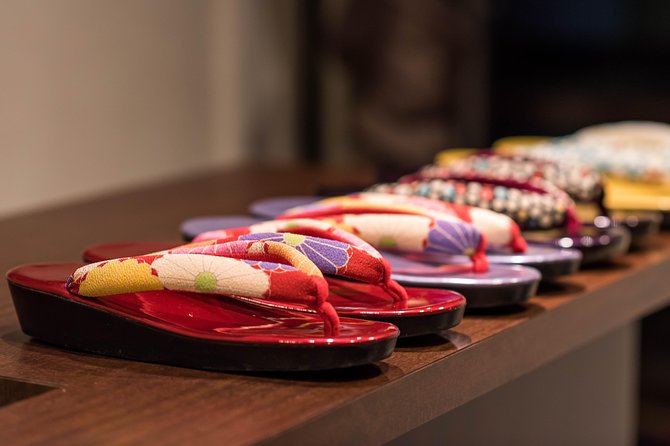
- Plan for heat, stairs, and sandals: Traditional dressing can feel warm, and the footwear may not be comfortable for a long walk.
Choosing between a kimono and a yukata in Gion
The experience begins at Kyoto Kimono Rental Rei in Gion, in Kyoto’s Higashiyama Ward. You make your own way to the shop, choose your outfit, and then spend the rest of the rental period exploring independently.
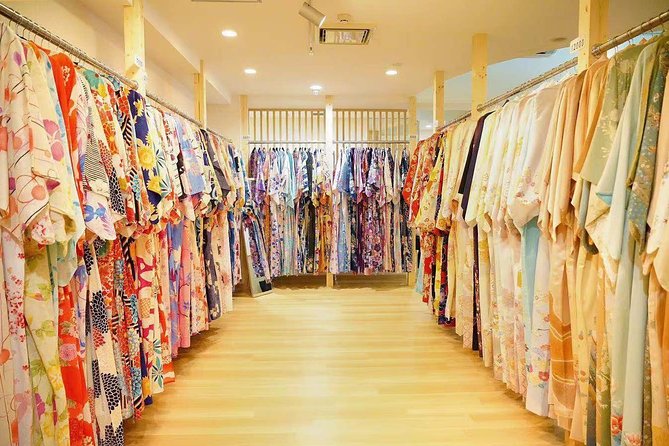
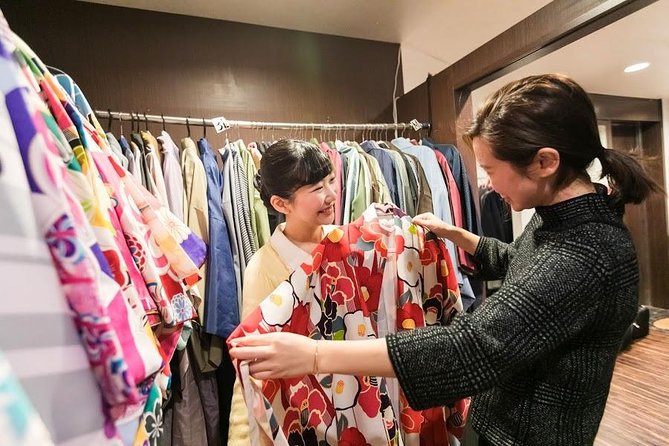
A kimono is the more formal option. It usually involves several layers, a sash, and careful tying, so the fitting is part of the experience rather than a minor bit of preparation. A yukata is lighter and more casual, making it especially appealing in hot weather. The exact selection depends on what is available in your size and on the range included with your reservation.
The shop’s basic choices are described as attractive but relatively simple. Several bookings include roughly a few dozen standard garments to choose from, though the exact number can vary. If you want the most elaborate pattern, a samurai-style outfit, a more formal look, or a better purse, you may be asked to pay an upgrade.
That pricing structure is worth understanding before you arrive. The base price of about $25.43 per person is excellent for a professionally fitted traditional outfit that you can wear for much of the day. It is less of a bargain if you expect the most ornate garment, elaborate accessories, hair, and makeup to be included.
More Kimono Experiences in Kyoto
- Kimono Tea Ceremony at Kyoto Maikoya, NISHIKI
★ 5.0 · 911 reviews - Kyoto: Kimono Rental with Hairstyling and Accessories
★ 4.8 · 653 reviews - Kyoto: Kimono Tea Ceremony at Orizuruya Gion
★ 4.9 · 618 reviews
What happens during the fitting
The first step is choosing your kimono or yukata. Allow about 10 minutes for this, though the real time depends on how busy the shop is and how quickly you decide.
Next comes the fitting, listed at about 10 minutes. The staff handle the difficult part, arranging the layers and securing the clothing so it looks right and stays in place. This is a useful service for first-time wearers. A poorly fitted kimono can feel awkward, while a professional fitting lets you focus on walking and enjoying the setting.
The entire visit may take around an hour when hair and makeup are added. Some appointments move faster, while busy periods can take longer than the suggested 30 minutes. A reserved time slot helps, but it does not guarantee that every step will happen immediately, particularly when several people are being dressed at once.
Wear sensible underclothing. You may need to undress to your underwear during the fitting, so shorts, leggings, or another comfortable layer can help you feel more at ease. For winter, bring suitable warm layers beneath the outfit. For summer, remember that a formal kimono can become hot, especially while walking in the sun.
Optional hair and makeup can change the look
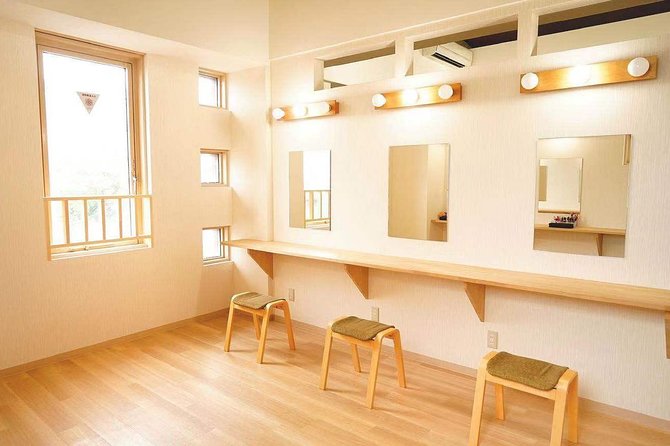
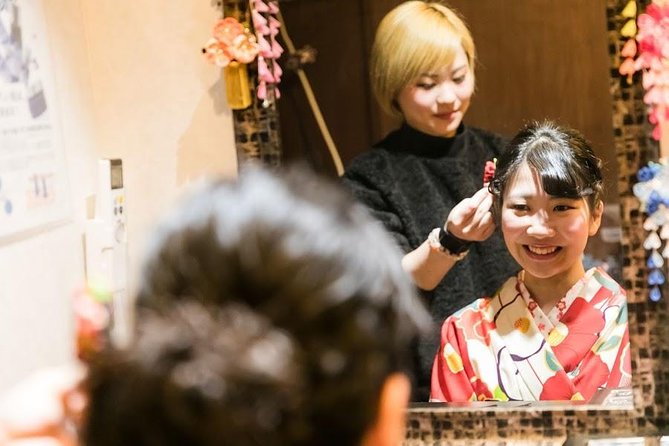
Hair styling is the most popular add-on because it completes the outfit in a way that a rented kimono alone cannot. Staff can arrange your hair and add flowers or other ornaments, depending on the package and the accessories you select.
The listed price for hair styling is 1,650 yen. Some bookings also mention additional charges for hair ornaments, fans, purses, or other accessories. Makeup is listed at 5,500 yen, so it is a much larger extra than hair styling.
If you want these services, book enough time for them and confirm the cost before work begins. One practical problem is that a basic reservation may not automatically include time for makeup. Asking for it after you arrive can be difficult if the staff are fully booked or your return schedule is tight.
I would choose hair styling if photographs matter to you. I would treat makeup as optional, especially if you are comfortable doing your own. The hair service takes about 10 minutes in the stated schedule, while makeup takes about 20 minutes.
Exploring Yasaka Shrine and Kyoto’s old streets
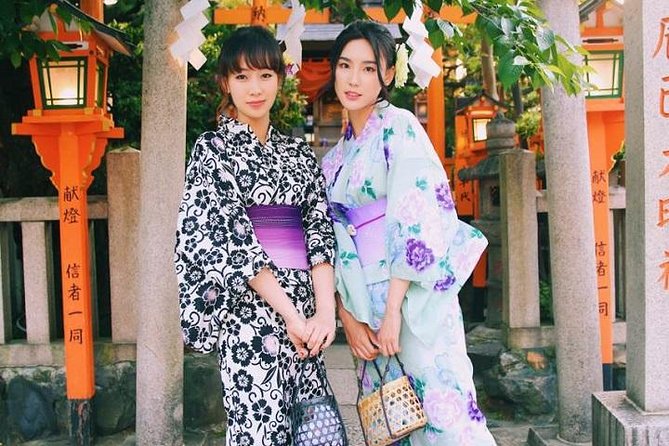
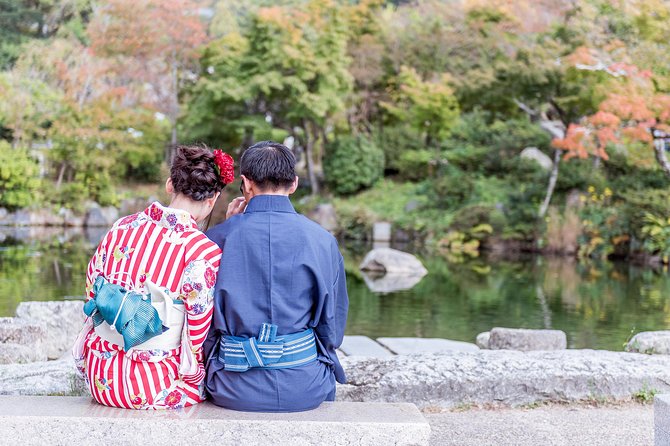
Once dressed, you are free to explore. Yasaka Shrine, also called Gion Shrine, is the easiest nearby target and a natural first stop. Its traditional setting gives you a strong Kyoto backdrop without requiring a complicated journey.
Gion’s lanes and nearby streets offer plenty of chances for photographs. You might find quiet corners, wooden buildings, shrine entrances, and small details that suit the clothing better than a hurried snapshot outside the rental shop. A clear umbrella can also be useful in light rain. It protects the kimono and lets light reach your face in photographs.
Kiyomizu-dera and Heianjingu Shrine are named as places to visit, but this is not a guided sightseeing tour. No guide, transportation, or hotel pickup is included. You decide how far to walk and how much time to spend at each location.
That distinction matters. If you want a history lesson, a planned route, and someone explaining each shrine, this experience will feel incomplete. If you want the pleasure of wearing traditional clothing while making your own Kyoto route, the flexibility works well.
You should also remember that a kimono changes the pace of a sightseeing day. Sandals can become uncomfortable on a long walk, and layers can make hills or stairs tiring. A short route through Gion and Yasaka Shrine may be more enjoyable than trying to cover every listed sight.
More kimono rentals in Kyoto:
- KYOTO Tea Ceremony with kimono near by Imamiya Jinjya Shrine
★ 5.0 · 343 reviews - Kyoto: Kimono and Tea Ceremony Experience at Cultural Asset
★ 4.3 · 306 reviews - Kyoto: Traditional Kimono Rental
★ 4.7 · 265 reviews - Kyoto: Kimono Tea Ceremony with Matcha and Sweet
★ 4.9 · 249 reviews
Timing, return rules, and the one-day advantage
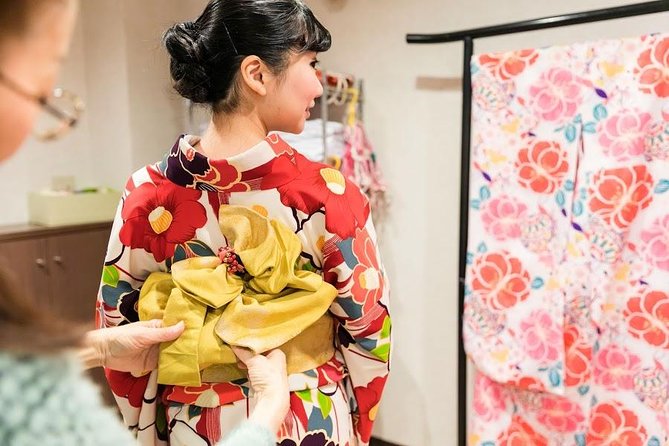
The strongest practical feature is the length of the rental. The experience is listed as lasting from one to nine hours, and several booking details indicate that you can keep the outfit until around 5:00, 5:30, or before 6:00 pm, depending on the shop’s instructions that day.
This gives you far more freedom than a fixed 30-minute dressing-up session. You can visit a shrine, stop for food, take photographs, and enjoy the atmosphere at your own pace. Arriving early may help, and the staff have sometimes accepted people before their scheduled time when space allowed.
Pay close attention to the return time given at check-in. Closing times can vary by day, and one booking had an earlier Saturday return request. Bring the shop’s instructions with you and do not plan a distant excursion unless you are sure you have enough time to return.
At the end, you go back to Kyoto Kimono Rental Rei, change into your own clothes, and finish at the same meeting point. The changing portion is listed at about 30 minutes, so leave room for it rather than arriving at the last minute.
Price, upgrades, and what counts as good value
At about $25.43 per person, the base experience is inexpensive by Kyoto standards for a full traditional outfit and professional fitting. It becomes especially good value if you want several hours for photographs and a relaxed walk through Gion.
The main issue is the difference between the entry package and the finished look shown in advertising. The standard reservation may cover only a basic group of kimonos. Nicer patterns, formal garments, samurai outfits, upgraded bags, better accessories, and other choices can raise the total sharply.
One booking described a samurai-style upgrade at roughly 150 percent of the original price. That is not a small supplement, so decide in advance how much you are willing to spend. The staff may suggest upgrades, and you should ask for the price of each item before agreeing.
Hair styling at 1,650 yen is relatively easy to justify if you want the traditional appearance. Makeup at 5,500 yen requires more thought. You may prefer to spend that money on food, transport, or another Kyoto activity.
Carry cash. One booking reported a 10 percent credit card surcharge at the shop. That fee may not apply in every situation, but cash helps you avoid an unexpected payment charge and makes small add-ons easier to track.
Service, languages, and group size
The shop can serve English-speaking, Chinese-speaking, and Japanese-speaking customers. Clear instructions are available in English, and many appointments are completed efficiently.
Service can feel uneven when the shop is crowded. Some appointments are quick and friendly, while others take longer and feel chaotic. If you have a train, dinner reservation, or timed attraction afterward, give yourself more than the minimum fitting estimate.
The maximum group size is 14 people. That is small enough for a personal activity, but it can still feel busy if several appointments overlap. Booking ahead is sensible, especially during popular sightseeing hours.
The best experiences come when you arrive with realistic expectations. Staff are there to fit the clothes and provide optional styling, not to act as personal photographers or tour guides. Solo visitors may need to use a phone timer, selfie stick, or ask someone nearby for a picture.
Comfort, sizing, and practical limits
Women’s sizes are listed for heights from about 140 to 175 centimeters. Men’s sizes are listed from about 170 to 185 centimeters, and children’s sizing begins around 100 centimeters. If you are outside these ranges, ask the provider about fit before paying.
Shoe sizing can be more limited than clothing sizing. One booking noted few options for larger feet, even though a man around 186 centimeters tall was fitted successfully. If footwear is important to you, check the available size before the appointment.
The clothing can be warm, especially in summer. An umbrella is useful in heat as well as rain, and a clear umbrella can make better photographs in damp weather. In winter, wear warm underlayers because the kimono alone may not provide enough protection.
Rain creates a special concern because you are wearing rental clothing. The experience requires good weather, and poor conditions may lead to a new date or a full refund. If light rain appears during the day, the shop may sometimes allow a change of date, but you should confirm this directly rather than assume it.
Who will enjoy this Kyoto experience most
This is a good fit if you want:
- A first introduction to wearing a kimono or yukata
- Several hours for photographs in Gion
- A flexible, self-guided activity
- Professional help with traditional dressing
- A family activity suitable for different generations
- A low base price with optional extras
It is less suitable if you want a private guide, a photographer included in the price, guaranteed access to luxury garments, or a carefully timed sightseeing route.
Families can make good use of it. Children, parents, and grandparents can dress together, and the staff have been able to prepare different generations in the same visit. Keep the walking route modest for older family members, since sandals, heat, and layers can take a toll.
Couples and friends will get the most from it if they plan a few nearby photo stops. Solo visitors can still enjoy the clothing, but arranging photographs takes more effort.
Should you book Kyoto Kimono Rental Rei?
I would book this experience if your main goal is to spend a few hours dressed in traditional Japanese clothing while exploring Gion. The low starting price, professional fitting, optional hair styling, and long rental period make it a practical way to add a cultural activity to a Kyoto day.
I would not book it without checking the upgrade prices first. Expect the base package to offer a more limited selection, and budget separately for hair, makeup, accessories, or a better garment. Arrive with suitable underclothing, carry cash, confirm the return time, and keep your route close to Gion.
For the best balance of cost and enjoyment, choose a standard kimono or yukata, add hair styling if photographs matter, and spend the day around Yasaka Shrine and the old streets. That keeps the experience comfortable, flexible, and within the price you expected.
FAQ
Where does the kimono and yukata experience begin?
It begins at Kyoto Kimono Rental Rei in Gion, at 270 Umemotocho, Higashiyama Ward, Kyoto, 605-0064. You make your own way to the meeting point.
What is included in the booking?
The booking includes a kimono or yukata rental and professional kimono fitting. A guide, hotel pickup, and hotel drop-off are not included.
Are hair styling and makeup included?
No. Hair styling is an optional extra listed at 1,650 yen, and makeup is listed at 5,500 yen. Accessories may also have additional charges.
How long can I wear the kimono?
The rental can last for much of the day, but you must return to the shop before its closing time. The stated return times vary by day, with examples around 5:00, 5:30, or before 6:00 pm.
Which places can I visit while wearing the kimono?
You can walk around Gion and visit nearby locations such as Yasaka Shrine. Kiyomizu-dera and Heianjingu Shrine are also listed among the places to visit, but the experience is self-guided and does not include transportation.
What sizes are available?
Women’s sizes are listed for heights from 140 to 175 centimeters, men’s sizes from 170 to 185 centimeters, and children’s sizing from about 100 centimeters. Shoe options may be limited for larger feet.
Can I cancel the experience?
You can cancel at least 24 hours before the start time for a full refund. Changes or cancellations made less than 24 hours before the start time are not accepted for a refund. If poor weather causes the activity to be canceled, you can be offered another date or a full refund.
Just added around Kyoto
- Kyoto: Zen Meditation at a Private Temple with a Monk★ 5.0 · 25 reviews
- Kyoto: Gion Geisha District & Sake-in-Hand Walking Tour★ 5.0 · 37 reviews
- Private Pewter Sake Cup Experience with a Kyoto Artisan★ 5.0 · 31 reviews
- Your Private Vacation Photography Session In Kyoto★ 5.0 · 110 reviews
- Kyoto Wagashi(Japanese sweets) Cooking Class near Fushimiinari★ 5.0 · 60 reviews
- Private Guided Traditional Buddhist Cooking in Japan★ 5.0 · 16 reviews
- Traditional Japanese Music show & Experience Tour in Kyoto★ 5.0 · 57 reviews
- Kyoto:Family-Friendly Kimono & Yukata Experience at WARGO★ 5.0 · 147 reviews
Kyoto Tours, compared.


Fushimi Inari, Kinkakuji, Bamboo Grove 1 Day Bus Tour
Read our review →
Tea Ceremony in a Traditional Tea House in Kiyomizu
Read our review →
Kyoto Geisha Walking Tour: Gion District & Hidden Gems
Read our review →

Gion Magical Night Walking Tour with Geisha Trivia
Read our review →

Gion Geisha District Walking Tour – Stories of Geisha
Read our review →Browse the lists this tour appears in