
Reviewed · KYOTO TOURS
One Hour Geisha Show in Kyoto
A real Maiko appears only a few steps away, dressed in formal kimono, elaborate hair ornaments, and white makeup. She performs traditional dances, answers questions through an English or Korean-speaking guide, plays a Japanese game with you, and poses for photographs. With only about 40 Maikos said to remain in Kyoto, this is a rare look at a living cultural tradition.
I like the small, personal format of the tea house option, where tea and Japanese snacks set the mood before the performance. I also like the open Q&A and photo time, since you learn what the clothing and accessories mean instead of simply watching from a distance. The main thing to understand is that the Maiko does not dance continuously for an hour. The formal dances are short by design, so anyone expecting a nonstop stage show may feel the advertised duration is misleading.
Key points to know before booking
- Two short dances: The Maiko usually performs two dances of about five minutes each, sometimes presenting them from different sides of the room.
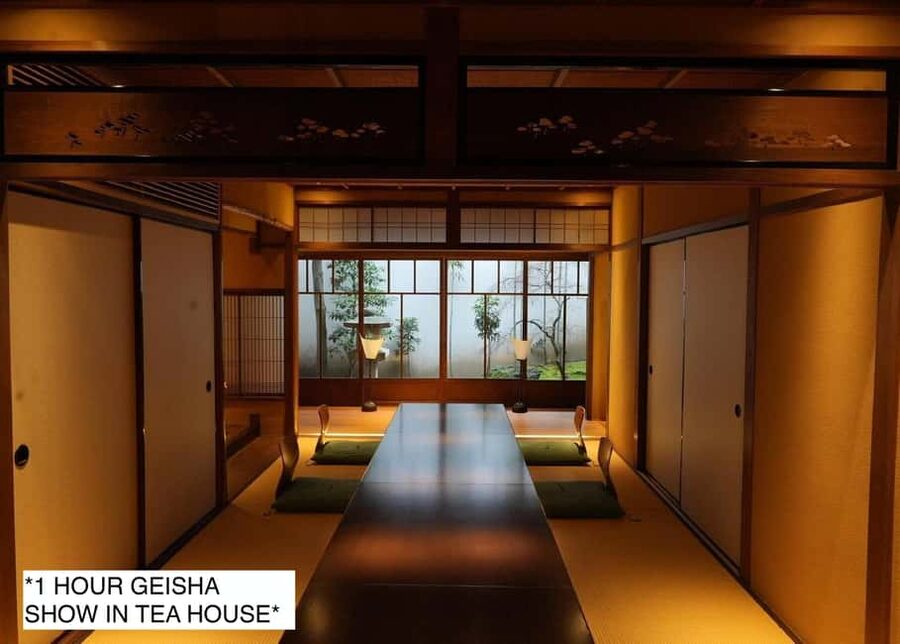
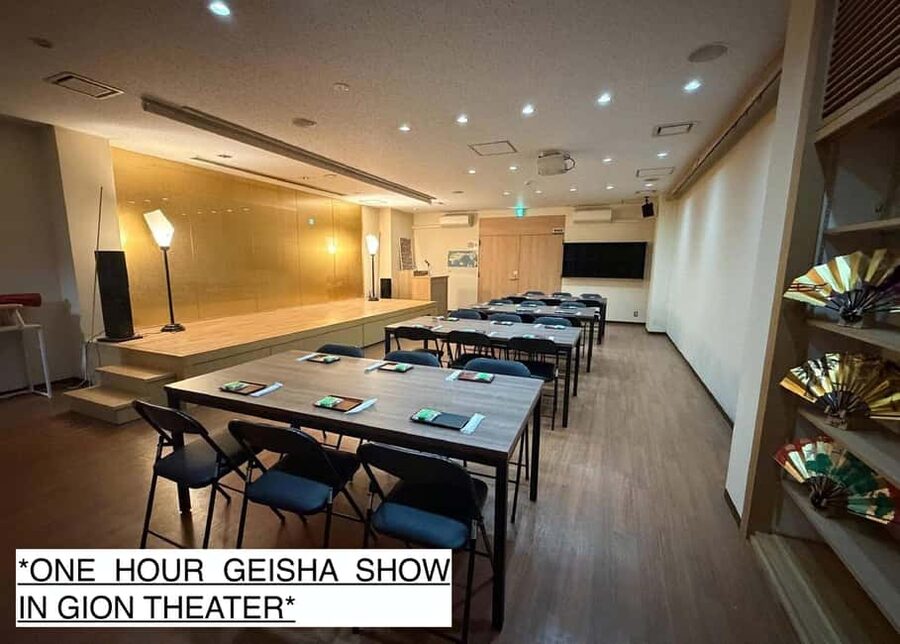
- Tea house or theater: The Kyo-Machi-ya tea house option includes tea, snacks, and a 30-minute Kitano Tenmangu Shrine visit. The Gion Theater option takes place in a showhouse.
- Real conversation: A guide translates questions and explanations about Maiko life, dress, makeup, dance, and customs.
- Photos and video welcome: You can take pictures and record during the experience, with a personal photo opportunity at the end.
- Traditional game included: You may play Konpira Fune Fune, a quick rhythm game that is harder than it looks.
- Bring socks: Bare feet are not allowed. The tea house option is not wheelchair accessible, while the Gion Theater option is.
What the one-hour Maiko show really offers
This experience works best when you see it as a cultural meeting with a short performance, not as a one-hour concert. The actual dancing takes roughly 10 minutes in total, followed by explanations, questions, a game, and photographs. That structure reflects the tradition: Maiko performances are intentionally brief, graceful, and limited.
The Maiko is an apprentice Geisha, known in Kyoto as a performer trained in dance, music, conversation, and traditional arts. The presentation gives you a close view of that work without requiring a formal evening appointment at an exclusive entertainment house. You get a clear introduction to the clothing and customs, then a chance to ask questions while the details are fresh.
I especially appreciate the distance, or lack of it. You are not watching a tiny figure across a large theater. In the tea house setting, you sit close enough to see the movement of the sleeves, the arrangement of the hair, and the careful posture used during the dance. That closeness makes the short performance feel purposeful rather than incomplete.
The show is led by GuideMe Japan and promoted by @guidemejapan on Instagram. Guides vary by date. Genki, Rin, Ai, Chihiro, and Taira Yoshino have all led sessions, and the guide’s role matters because the Maiko’s answers are translated for the group. English and Korean are offered.
More geisha-district evenings:
- Kyoto Geisha Walking Tour: Gion District & Hidden Gems
★ 4.7 · 3,273 reviews - Kyoto: Gion Magical Night Walking Tour with Geisha Trivia
★ 4.9 · 2,393 reviews - Kyoto: Gion Geisha District Walking Tour – Stories of Geisha
★ 4.7 · 2,187 reviews
Choosing between the tea house and Gion Theater
The two versions are not simply different meeting points. They are separate experiences, so read the option name carefully when booking.
The Tea House option takes place inside a Japanese Kyo-Machi-ya, a traditional Kyoto-style house. It includes tea and Japanese snacks, and it is the only version connected with the 30-minute guided visit to Kitano Tenmangu Shrine. This choice gives you a more residential, traditional setting and a little more time around the Maiko beyond the dance itself.
The tea house setting also comes with practical limits. It is not wheelchair accessible, baby strollers are not allowed, and you must wear socks. You may sit on the floor or use traditional seating, although the exact arrangement can vary. If you have mobility concerns, confirm that this option works for you before paying.
The Gion Theater option is held in a showhouse rather than a traditional tea house. Its main practical advantage is wheelchair accessibility. It does not include the shrine walk, so you are choosing a more straightforward performance setting rather than the longer cultural visit.
Group size matters here. The tea house option allows up to 23 people, while the Gion Theater option allows up to 30. Neither is a private appointment. The tea house group is smaller, though the guide may still need to manage several languages at once.
One useful point came up in a session with English, Chinese, and other language groups: explanations can take longer and become harder to follow when several translations are needed. If clear English instruction is important to you, listen closely and ask the guide to repeat anything you miss.
The opening introduction: clothing, makeup, and meaning
The session begins with an introduction to the Maiko and her appearance. This is more useful than simply being told that the outfit is beautiful. You learn about the meaning of the kimono, hair, makeup, and accessories, and you begin to understand how much training and care go into the presentation.
The styling is part of the performance. The long sleeves, formal hair ornaments, and layered clothing affect the way the Maiko moves. The dance is not casual entertainment in a costume. Every gesture is controlled, and the quiet pauses are as important as the larger movements.
This is also the right moment to ask respectful questions. The Maiko does not speak directly to every visitor in English, so your guide acts as the bridge. Guides such as Genki, Ai, Rin, and Chihiro have been praised for keeping that exchange friendly and easy to follow.
You may have questions about daily life, training, the difference between a Maiko and a Geiko, or the history of the profession. Ask plainly and politely. The Q&A is one of the best reasons to choose this experience over a performance you simply watch and leave.
Two dances, each about five minutes
The formal dancing is the heart of the session. You see two short dances, generally about five minutes each. In at least one presentation, the Maiko performed once on each side of the table so that both sides of the group had a good view.
Expect slow, precise movement rather than a busy stage routine. The Maiko’s hands, fan, sleeves, and eyes carry much of the expression. The short length allows her to maintain the formal style without turning the performance into a repeated show for tourists.
The dance may feel over quickly, but that is part of the tradition. The organizers explain that Maiko performances are kept short to preserve their grace and exclusivity. If you arrive expecting 60 minutes of continuous movement, adjust that expectation before you enter.
I would give the dance your full attention and save most photography for the later photo period. You can take pictures and video, but constantly checking a phone can distract you from small gestures that are easy to miss. The formal performance is brief enough that you can watch first and photograph afterward.
More shows in Kyoto:
- Kyoto Gion Cultural Walk & Geisha Show with Dining Options
★ 5.0 · 518 reviews - Kyoto Gion Cultural Walk & Geisha Show with Dining Options
★ 5.0 · 483 reviews - 1 Hour Geisha Show in Kyoto
★ 5.0 · 452 reviews - Kyoto: Samurai Kenbu Traditional Sword Dancing Show
★ 4.5 · 426 reviews
Q&A, the Japanese game, and your photograph
After the dances, the pace becomes more social. The guide translates questions, and the Maiko responds through that exchange. This is where the show becomes a meeting rather than a staged display.
You also get to play a traditional Japanese game, often identified as Konpira Fune Fune. It is a quick hand and rhythm game played with the Maiko. The rules sound simple, but timing becomes difficult once the pace picks up. Many people lose, which is part of the fun, and the game gives the group a relaxed way to interact with her.
Photographs and videos are welcome, and everyone has a chance to take a picture with the Maiko. Some sessions also include a small name sticker as a good-luck gift. These details vary by presentation, so treat them as possible extras rather than guaranteed inclusions.
The photo time is valuable because it lets you remember the details that are hard to absorb during the dance: the fabric, ornaments, makeup, and calm expression. Be respectful with your camera, follow the guide’s instructions, and avoid treating the Maiko like a costumed prop.
Tea, snacks, and the Kitano Tenmangu visit
Tea and traditional Japanese snacks are included with the tea house option. You may be offered hot matcha or water, depending on your choice. Additional food and drinks are not included, so budget separately if you want anything beyond what is provided.
The tea is a modest part of the cost, but it helps frame the event. Sitting in a Kyo-Machi-ya with tea before or after the dance feels more connected to Kyoto’s traditional arts than a quick photo stop outside a major attraction. Do not book this option solely for the refreshments, though. The Maiko meeting is the main value.
The tea house version also includes about 30 minutes at Kitano Tenmangu Shrine with the Maiko. The shrine visit adds a second setting and gives you time to see the Maiko outside the formal performance space. It is a guided session, not simply a drop-off at the shrine.
This extra stop makes the tea house option last closer to 105 minutes rather than a strict hour. If you have a tightly packed Kyoto schedule, allow enough time for the full experience, the walk, and the return to the stated drop-off point.
The published starting and ending locations can include Umeyno, Kitano Tenmangu Shrine, and 302-2 Daikokucho near KOHYO Kamishichikenten. The exact meeting point depends on the option you book, so check your confirmation carefully and keep your phone reachable in Japan.
Is $50 a fair price?
At $50 per person, this is not a cheap photo stop, but the price is reasonable if you want a close cultural presentation with live interpretation. You are paying for the Maiko’s appearance, the guide, the dances, the Q&A, the game, photography time, tea and snacks, and, with the tea house option, the shrine session.
The value depends on what you want from Kyoto. If you mainly want a long dance performance, this may disappoint because the formal dancing is only about 10 minutes. If you want context, direct questions, a traditional setting, and the chance to meet a Maiko face to face, the hour offers more than a standard stage ticket.
The group size also affects value. A maximum of 23 people at the tea house is fairly manageable, while 30 at the theater is larger. You should not expect a private conversation, but the Q&A and personal photograph keep the experience from feeling like a distant auditorium show.
The full refund policy also reduces the risk of booking far ahead: you can cancel up to 24 hours before the start time. Reserve-and-pay-later is available, so you can hold a place without paying immediately.
Who will enjoy this, and who may not
I would recommend this for anyone with a serious interest in Kyoto’s traditional arts, especially if you want something more personal than a museum display. It suits first-time visitors, photographers, culture-minded families with older children, and anyone who values a good explanation as much as a performance.
It is also a strong choice after visiting the Gion Kagai Art Museum or spending time in the Gion district. The show gives a live example of the world you may have just read about or seen in exhibits.
You may want to skip it if you dislike guided group activities, have no interest in photography or questions, or need a long, continuous stage performance. The short dances require patience and attention to detail.
The tea house option is not right for wheelchair users, and strollers are not permitted. The theater option is wheelchair accessible, but it does not include the tea house setting or the Kitano Tenmangu Shrine visit. Visitors over 95 are listed as unsuitable for the activity.
Wear socks. Bare feet are not allowed, and this small rule can become an awkward surprise if you are wearing sandals. Alcohol and drugs are prohibited, and baby strollers cannot enter.
Booking details that matter in Kyoto
Give a phone number that works during your stay in Japan and is available on WhatsApp. This lets the organizer send clear instructions and contact you before the meeting. If you are booking for someone else, use the actual participant’s number, not an agency or office number.
The meeting point changes by option, so do not assume that every booking begins in Gion. The tea house route may involve the shrine and several listed locations, while the theater option follows its own arrangement.
English and Korean guides are available. Because interpretation can take time in a mixed-language group, keep your questions short and clear. A good guide can make the difference between understanding the cultural points and merely watching a pretty dance.
Should you book the Maiko experience?
Book it if you want a rare, close look at Kyoto’s Maiko tradition and understand that the performance is deliberately short. The strongest parts are the graceful dances, the translated conversation, the chance to ask about the outfit and profession, and the playful game that breaks the formality.
Choose the tea house option if the traditional setting, tea, snacks, and Kitano Tenmangu visit matter most. Choose Gion Theater if wheelchair access is essential or you prefer a simpler showhouse setting.
I would not choose this as your only cultural event in Kyoto, and I would not buy it expecting an hour of dancing. But at $50, it is a fair buy for a carefully framed introduction to a rare tradition, especially if you value meeting the performer and leaving with a better understanding of what you saw.
FAQ
How long does the Maiko experience last?
The activity is listed as lasting from one hour to 105 minutes, depending on the option. The tea house version includes a 30-minute Kitano Tenmangu Shrine session and may take longer.
Does the Maiko dance for the entire hour?
No. The Maiko usually performs two dances of about five minutes each. The rest of the time is used for introductions, questions, a traditional game, photographs, tea, snacks, and, with the tea house option, the shrine visit.
Can I take photos and videos?
Yes. Photography and video are welcome during the activity, and you also have a chance to take a personal photograph with the Maiko.
Which option includes Kitano Tenmangu Shrine?
Only the tea house option includes the 30-minute guided Kitano Tenmangu Shrine session with the Maiko.
Is the activity wheelchair accessible?
The Gion Theater option is wheelchair accessible. The Tea House option is not wheelchair accessible.
What should I bring or wear?
You must wear or bring socks because bare feet are not allowed. Baby strollers, alcohol, and drugs are not permitted.
More 1-Hour Experiences in Kyoto
- Ninja 1-hour Hands-on Lesson by Japanese master in Kyoto -Entry
★ 5.0 · 489 reviews - One Hour Geisha Show in Gion Kyoto
★ 5.0 · 59 reviews - Kyoto: Hands-on Takoyaki and Okonomiyaki Cooking (1 Hour)
★ 4.7 · 25 reviews - Ring making experience Completed in about 1 hour!
★ 5.0 · 141 reviews
Just added around Kyoto
- Kyoto: Zen Meditation at a Private Temple with a Monk★ 5.0 · 25 reviews
- Your Private Vacation Photography Session In Kyoto★ 5.0 · 110 reviews
- Kyoto: Gion Geisha District & Sake-in-Hand Walking Tour★ 5.0 · 37 reviews
- Private Pewter Sake Cup Experience with a Kyoto Artisan★ 5.0 · 31 reviews
- Private Guided Traditional Buddhist Cooking in Japan★ 5.0 · 16 reviews
- Kyoto Wagashi(Japanese sweets) Cooking Class near Fushimiinari★ 5.0 · 60 reviews
- Traditional Japanese Music show & Experience Tour in Kyoto★ 5.0 · 57 reviews
- Kyoto:Family-Friendly Kimono & Yukata Experience at WARGO★ 5.0 · 147 reviews
Kyoto Tours, compared.


Fushimi Inari, Kinkakuji, Bamboo Grove 1 Day Bus Tour
Read our review →
Tea Ceremony in a Traditional Tea House in Kiyomizu
Read our review →
Kyoto Geisha Walking Tour: Gion District & Hidden Gems
Read our review →

Gion Magical Night Walking Tour with Geisha Trivia
Read our review →

Gion Geisha District Walking Tour – Stories of Geisha
Read our review →Browse the lists this tour appears in