
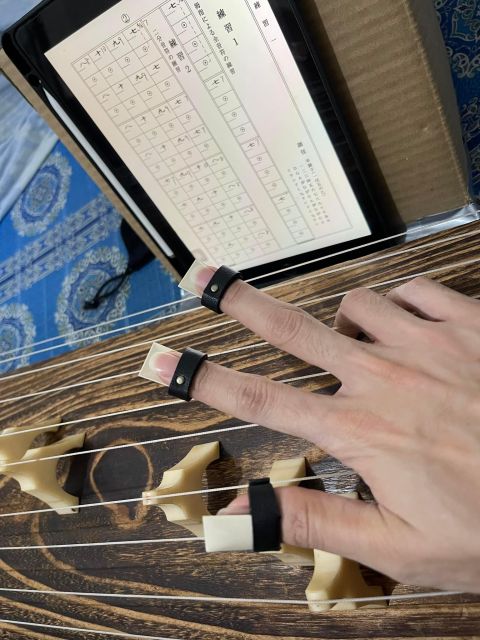
Reviewed · HIROSHIMA TOURS
Experience the Soul of Hiroshima: A Peaceful Koto Workshop
The most moving part of this Hiroshima experience is not simply learning to pluck a Japanese instrument. You play a peace-themed composition called Echo of Serenity in a small studio near Peace Memorial Park, turning a music lesson into a quiet act of remembrance. The koto gives the session a gentle, serious mood, without making it feel like a formal memorial ceremony.
I especially like two things here: the English instruction makes the koto approachable, and the lesson gets you to a complete piece rather than stopping at a few basic notes. The connection to Fukuyama City, where more than 70 percent of Japan’s kotos are made, adds useful local context. The main drawback is time. Ninety minutes is enough for a satisfying first try, but some people will want a longer class to become more comfortable with the instrument.
Key points to know before booking
- You play a complete piece in 90 minutes: The lesson builds from posture and plucking to a group performance.
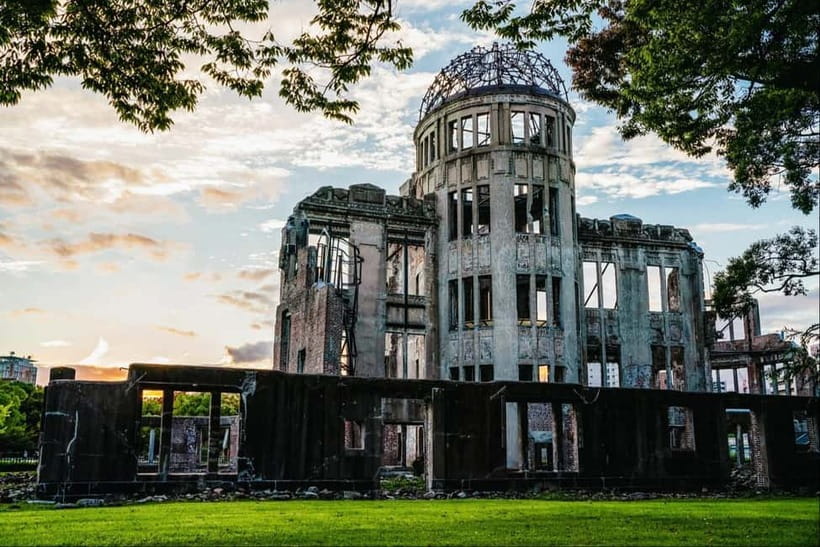
- The music has a Hiroshima connection: Echo of Serenity honors atomic bomb victims and expresses peace through sound.
- The instruments come from Fukuyama: This nearby city is Japan’s main koto-making center, known for careful construction and sound.
- English instruction keeps things simple: You do not need Japanese or previous musical training.
- The group is small: With a maximum of six participants, the instructor can give personal help.
- You receive two meaningful keepsakes: A video of the final performance and a hand-folded origami crane.
A koto lesson with a distinctly Hiroshima purpose
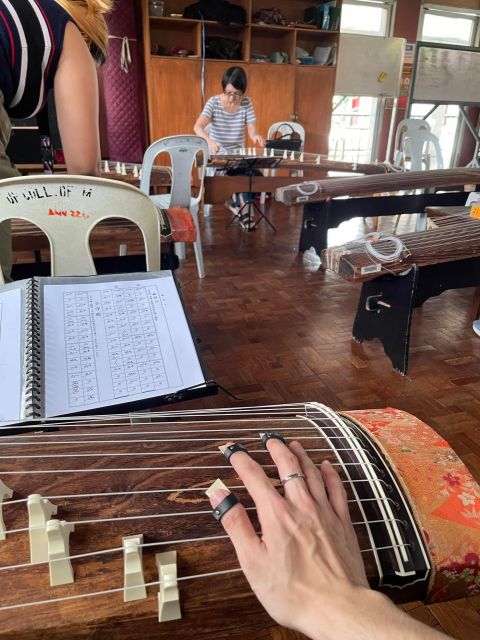
Many Japanese cultural activities teach you how to make, wear, taste, or play something. This one asks you to listen as well. The koto has a soft but resonant sound, and the workshop uses that sound to connect traditional Japanese music with Hiroshima’s message of peace.
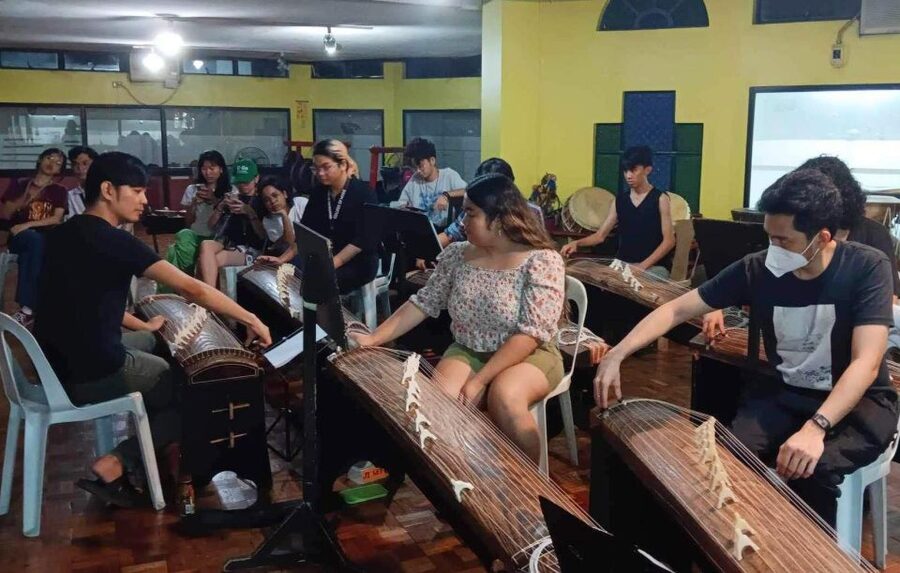
The instrument itself is a long, elegant zither with 13 strings. You place it horizontally and pluck the strings with picks worn on the fingers. The basic action is not difficult to understand, but producing a clean tone takes care. That makes the first notes feel earned without making the activity frustrating.
The session begins with the koto’s long story, said to reach back about 1,300 years. You also learn why Fukuyama City matters. More than 70 percent of Japan’s kotos are made there, so the instruments in this class offer a direct link to a major Japanese craft center rather than being anonymous classroom props.
The instructor also explains the meaning behind parts of the koto’s design. That detail matters because it changes the instrument from a large wooden object into a piece of Japanese culture with form, function, and symbolism. You leave with more than a tune in your head.
More hands-on workshops in Hiroshima:
- Private Japanese Cooking Class in Hiroshima with Machiko’s Family
★ 5.0 · 35 reviews - Calligraphy Workshop at Traditional Folk Craft Shop in Hiroshima
★ 5.0 · 26 reviews - Hiroshima:Private lacquer workshop experience tour(gift included)
★ 5.0 · 13 reviews
What happens during the 90-minute class
The itinerary is simple: arrive at the studio, take part in a 90-minute class, and finish with a group performance. The compact format works well in Hiroshima, where most people are also fitting in the Peace Memorial Museum, the A-Bomb Dome, and other sights.
First comes an introduction to the instrument and its background. You learn the basic layout, how to sit, how to position your hands, and how to pluck. The instructor guides you through the motions in English, so you are not trying to copy an explanation you cannot understand.
Next, the lesson turns practical. You work through exercises that build toward a full piece. Past participants have learned Sakura, while the current program centers on Echo of Serenity, so the exact selection may depend on the session. Either way, the important feature is the progression: you are not just shown the koto, you are given a realistic chance to play music on it.
The final section brings the group together. You perform with the other participants and instructor accompaniment. With only six places, the ensemble should feel manageable rather than crowded, though your part may still require concentration. If you have never read music or handled a koto, expect to make mistakes. That is part of the appeal, and the instructors are described as patient, clear, encouraging, and good-humored.
One useful detail from past sessions is that instructors have included Vincent and Nicholas. The teaching style can vary by person, but the consistent focus is basic technique, cultural background, and a finished piece. The class is designed for beginners, not trained musicians.
Why Echo of Serenity changes the mood
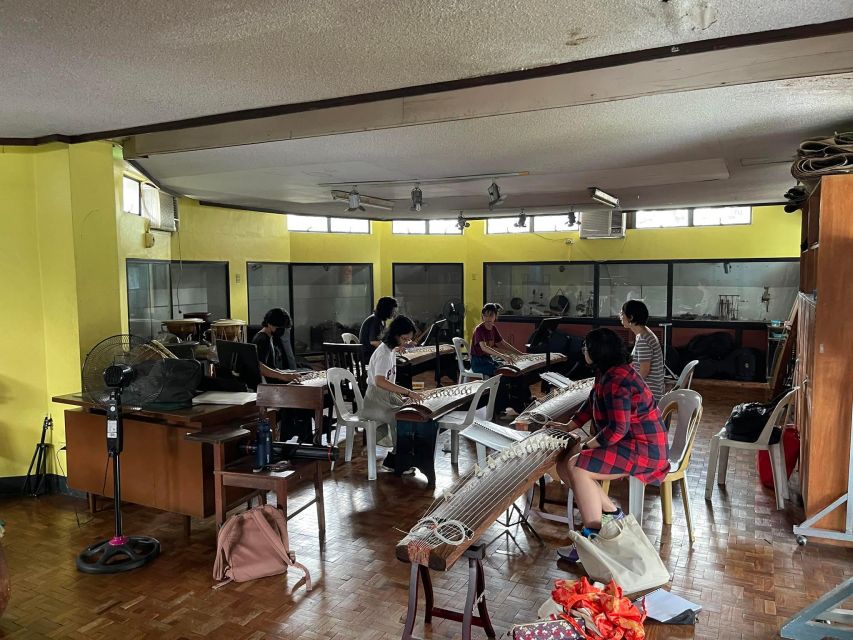
The peace theme is not a last-minute decoration. The class gives the music a specific role in Hiroshima, where the past is present in the city’s museums, monuments, and public spaces.
Echo of Serenity was composed to honor people who died in the atomic bombing. The koto’s long, resonant notes let the piece communicate grief and hope without relying on a spoken explanation. You are not being asked to act out a memorial. You are simply learning and playing a piece whose purpose has been explained to you.
That distinction is important. Some visitors may want a light cultural activity after a full morning at the Peace Memorial Park. This workshop has a calm, reflective quality, so it may suit you if you want something thoughtful rather than purely playful. It also gives families and friends a way to discuss Hiroshima through art instead of only through exhibits and written accounts.
The group performance is the emotional center. You have spent the earlier part of the class learning separate movements, then suddenly hear several kotos sounding together. The result will not be a concert-hall performance, and no one expects it to be. The value is in taking part.
Fukuyama craftsmanship under your hands
The connection to Fukuyama is one of the strongest practical reasons to choose this activity. Fukuyama City is described as the heartland of Japanese koto production, with more than 70 percent of the country’s instruments made there.
That gives the lesson a useful sense of place. You are in Hiroshima Prefecture, playing instruments linked to a nearby center of Japanese craftsmanship. The instructor explains differences in the instruments and the care behind their construction, giving you a better ear for the sound you are producing.
You should not expect a full craft demonstration or a tour of a workshop. The focus is playing, not instrument manufacture. Still, the Fukuyama connection prevents the history section from becoming a generic introduction to a famous Japanese instrument.
If you become attached to the koto, you can ask about purchasing one at the studio. The provider also offers online lessons after you return home. That option will appeal mainly to serious enthusiasts, since a koto is a substantial instrument to bring into your life, but it is unusual to find a beginner session that offers a path beyond one afternoon.
A few more Hiroshima half-days to weigh up
- Peaceful Hiroshima & Miyajima UNESCO 1 Day Bus Tour
★ 5.0 · 5,309 reviews - Hiroshima: Hiroshima and Miyajima UNESCO Sites 1-Day Tour
★ 4.9 · 2,330 reviews - Hiroshima / Miyajima Full-day Private Tour with Government Licensed Guide
★ 5.0 · 1,298 reviews - Hiroshima Historical Walking Tour – Why A-Bomb was Dropped
★ 4.8 · 893 reviews
The small group is a real advantage
The maximum group size is six. That number matters more here than it would on a walking tour because your hand position, plucking angle, and posture affect the sound.
A large class could leave you waiting for help or feeling lost among other beginners. In a group of six, the instructor has a better chance of correcting small problems before they become habits. You also get enough room to hear your own instrument and take part in the final ensemble.
The small size makes this a good choice for couples, families with children aged 10 and above, friends, and solo visitors. A solo participant may feel comfortable because the class is built around shared music, not conversation. A family should note the minimum age. Children under 10 cannot take part.
You may also want to think about your preferred pace. The class covers history, technique, reading the music, practice, and a performance in only 90 minutes. Several participants were impressed by how quickly they learned, but one clear limitation remains: you will only begin to know the koto by the end. If your goal is a relaxed introduction, that pace is fine. If you want detailed technical coaching, book with modest expectations or ask about further lessons.
Finding the studio near Tatemachi
The starting point is Ishida Dai 2 Building, written in Japanese as 石田第2ビル. The easiest route described is by streetcar. Get off at Tatemachi Station, then walk toward the YMCA.
At the corner, use Tully’s Coffee as your landmark. Continue straight until you see the okonomiyaki restaurant Gokku, written 悟空. Turn right there and look for the workshop sign. The studio is on the second floor.
This is a useful meeting point because it is within walking distance of Peace Memorial Park, but you should not assume the class takes place inside the park or at a memorial site. It is held in a peaceful studio in the surrounding city area. Allow enough time to find the building, especially if you are coming directly from another attraction.
The location also makes the workshop easy to pair with a day focused on Hiroshima’s central sights. You can schedule it before or after the Peace Memorial Park, but the reflective music may feel more meaningful after you have visited the memorial sites. That is a personal choice. Some people may prefer the class first, then carry its peaceful tone into the rest of the day.
The video and origami crane are useful keepsakes
At the end, you receive a video recording of the group performance with instructor accompaniment. This is more useful than a standard souvenir photograph because it preserves the sound of the activity and your role in it. You can share it with family or friends who were not there.
Do not expect a polished professional recording. The purpose is to capture your personal moment, including the fact that you learned the piece during the session. That makes it a good memory of the experience, not a substitute for a concert recording.
You also take home a hand-folded origami crane. In Hiroshima, the crane carries a clear association with peace and hope. It is a small item, but it reinforces the workshop’s central idea and gives you something tangible to explain when you return home.
The free drink after the class is a modest but welcome touch. Coffee, tea, juice, and a soft drink are available, including pineapple juice, which one participant particularly enjoyed. It does not change the value of the activity, but it gives the session a pleasant pause after the concentration of the performance.
Is the $50 price fair?
At $50 per person, this is not the cheapest cultural activity in Hiroshima. The price makes more sense when you consider what is included: a 90-minute English-language lesson, access to traditional kotos, historical and craft context, guided practice, a group performance, a video recording, a crane, and a drink afterward.
The strongest value comes from participation. You are not sitting in an audience watching a professional musician. You are learning enough to create a complete piece yourself, which is difficult to find in a short Japanese cultural class.
The value is also better for people who care about Hiroshima’s peace message or Japanese music. If you only want a quick novelty activity, the price may feel high for an hour and a half. If you want a personal connection to the city, the cost is easier to justify.
The reserve-now, pay-later option can help if your schedule is still shifting, and free cancellation is available up to 24 hours before the class for a full refund. Confirm the available start time when booking, since the class runs at set times rather than whenever you walk in.
Who should book this experience?
I would choose this workshop for anyone who wants a cultural activity with a clear local connection. It suits you especially well if you enjoy music, crafts, Japanese history, or quiet hands-on activities.
It is also a smart option for a mixed-interest group. One person does not need to be a musician, and another does not need to know much about Hiroshima beforehand. The class gives everyone a common task, then adds enough context to make the music meaningful.
Families should book only if all children are at least 10. Couples and friends may appreciate the shared performance, while solo visitors can join a small group without needing to arrange a private class.
I would hesitate only if you want a long technical lesson, a formal concert, or a completely lighthearted activity. The 90-minute schedule moves quickly, and the peace theme gives the class a serious undertone. That is its strength, but it will not suit every mood.
FAQ
How long does the Hiroshima koto workshop last?
The workshop lasts 90 minutes, or one and a half hours. It includes an introduction to the koto, basic instruction, practice, and a final group performance.
Is the class taught in English?
Yes. All instruction is conducted in English, and no Japanese language ability is needed.
Do I need musical experience?
No. The lesson is designed for beginners and covers basic posture, plucking technique, and the steps needed to play a complete piece.
What is the minimum age?
The activity is suitable for ages 10 and above. Children under 10 are not permitted to participate.
Where does the class meet?
The meeting point is Ishida Dai 2 Building, 石田第2ビル. From Tatemachi streetcar station, walk toward the YMCA, continue past Tully’s Coffee, turn right at the Gokku okonomiyaki restaurant, and go to the second floor after finding the workshop sign.
What is included after the performance?
You receive a video recording of the final performance and a hand-folded origami crane. Coffee, tea, juice, and other soft drinks are also provided after the session.
Should you book the Hiroshima koto workshop?
Book it if you want to do something personal and reflective in Hiroshima, not just see another landmark. The combination of Fukuyama-made instruments, English instruction, a complete beginner-friendly piece, and a peace-focused finale gives the class a clear purpose.
At the same time, keep your expectations realistic. You will not become a koto expert in 90 minutes, and the pace may feel brisk. But you can learn the basics, play with a group, understand why the instrument matters, and leave with a recording and crane that carry the memory home. For $50, that is a fair exchange for a hands-on piece of Hiroshima’s cultural life.
Just added around Hiroshima
- The Peace Memorial to Miyajima : Icons of Peace and Beauty★ 4.5 · 31 reviews
- Shore Excursion from Hiroshima Port : Private Tour in Hiroshima★ 5.0 · 17 reviews
- Hiroshima Saijo Sake Tasting Tour with visit to 7 Breweries★ 5.0 · 104 reviews
- Hiroshima & Miyajima All-Inclusive Tour w/Licensed guide Pancho★ 5.0 · 54 reviews
- Okunoshima Rabbit Island Cycling Tour with Local Guide★ 4.5 · 17 reviews
- Private Full Day Hiroshima Tour★ 4.5 · 29 reviews
- Hiroshima Country Cycling: Explore Rural Life 1 HR from City★ 5.0 · 22 reviews
- Hiroshima Private Tour with a Local – Highlights & Hidden Gems★ 4.5 · 24 reviews
Hiroshima Tours, compared.

Peaceful Hiroshima & Miyajima UNESCO 1 Day Bus Tour
Read our review →
Hiroshima and Miyajima UNESCO Sites 1-Day Tour
Read our review →
Hiroshima Historical Walking Tour – Why A-Bomb was Dropped
Read our review →
Hiroshima Peace (Heiwa) Walking Tour at World Heritage Sites
Read our review →
Hiroshima in a Nutshell: Morning Bike Adventure
Read our review →
Hiroshima City 4hr Private Walking Tour with Licensed Guide
Read our review →

Japanesel Archery Experience HIROSHIMA CASTLE SHARAKU
Read our review →Browse the lists this tour appears in