
Reviewed · HIROSHIMA TOURS
Hiroshima:Private lacquer workshop experience tour(gift included)
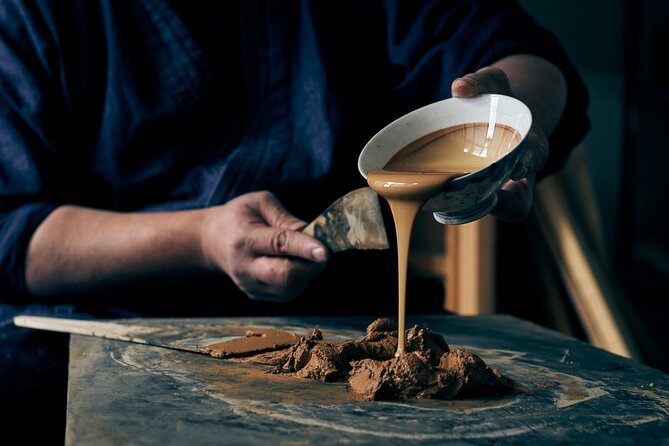
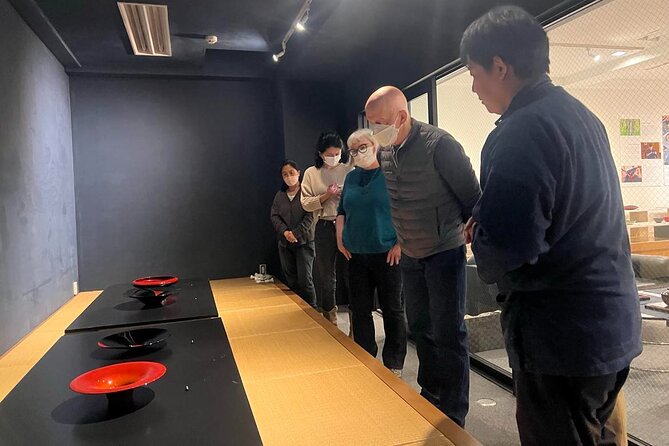
Hiroshima’s lacquer tradition gets a close-up in this small studio workshop, where artist Naoya Takayama explains the craft behind Buddhist altars and adapts it for tableware used today. You’ll watch the work, learn about natural lacquer, and try the painting process yourself.
I like the direct contact with a working artist, and I like that the experience does not treat tradition as a museum relic. You also receive a piece made by the instructor, which gives the lesson a useful, lasting reminder.
The main drawback is the price: $287.41 per person for about two hours is a serious spend. This makes the workshop best for art lovers and visitors who value personal instruction, not for anyone simply looking for a quick souvenir activity.
Key points to know before booking
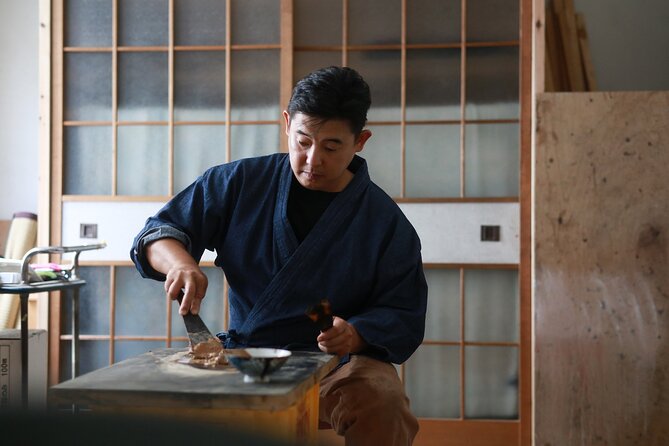
- Learn from Naoya Takayama: He trained in Kyoto lacquer painting and developed a highly personal style using the roiro, or wax color, technique.
- See Buddhist altar craftsmanship in a modern setting: The workshop connects Hiroshima’s traditional altar work with tableware for everyday use.
- Try lacquer painting yourself: The lesson is not only a demonstration. You get hands-on time with the craft.
- Small group size: A maximum of six people allows for a more personal studio visit.
- Take home an artisan-made gift: The included work is made by the instructor, not a generic mass-produced souvenir.
- Meet in central Hiroshima: The address is 2-17 Horikawachō, Naka Ward, near public transportation.
Why this Hiroshima workshop is different from a standard craft class
Many craft activities give you a simple object, a short set of instructions, and a few minutes to decorate it. This experience takes a wider view. You learn where Hiroshima lacquer work comes from, how it was used in Buddhist altar production, and why those skills are now under pressure.
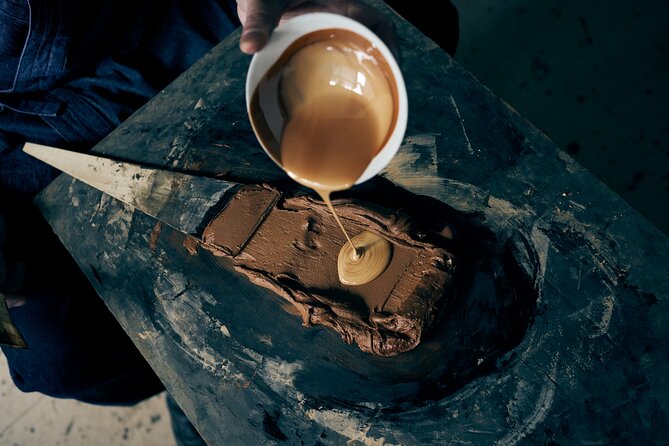
That context matters. Lacquerware can look simple at first glance: a smooth surface, a subtle shine, perhaps a restrained design. But the finish depends on careful technique and natural materials. The work is tied to a long chain of skills, and the workshop explains what is being lost as traditional crafts decline.
I like that the lesson also asks what comes next. Naoya Takayama’s approach is not to freeze the craft in the past. He applies methods developed for Buddhist altars to objects intended for daily life. That gives you a clearer reason to care about the work when you see it on a table rather than behind glass.
The mood is likely to be more personal than theatrical. With no more than six people, you should have a better chance to follow the demonstration, ask questions, and receive guidance during your own painting practice.
More hands-on workshops in Hiroshima:
- Private Japanese Cooking Class in Hiroshima with Machiko’s Family
★ 5.0 · 35 reviews - Experience the Soul of Hiroshima: A Peaceful Koto Workshop
★ 5.0 · 32 reviews - Calligraphy Workshop at Traditional Folk Craft Shop in Hiroshima
★ 5.0 · 26 reviews
Meeting Naoya Takayama and his lacquer tradition
Naoya Takayama is the key figure in this experience. He studied traditional Kyoto lacquer painting, then refined his technique and developed original work using roiro, described here as a wax color technique. His work has received awards and was selected as a gift for the G7 Summit.
That detail gives you a useful sense of the level of craftsmanship, but the workshop is not presented as a formal gallery viewing. The point is to see how a professional works and to understand the decisions behind the finish.
The Takayama name also carries a family connection. Naoya inherited traditional skills and the spirit of the company founded by Kiyoshi Takayama. The program identifies Kiyoshi Takayama in its explanation of Hiroshima Buddhist altar craftsmanship, so you hear about both the older foundation and Naoya’s current direction.
I find that combination especially valuable. You are not only hearing a general talk about Japanese art. You are being introduced to a particular family tradition, a specific Hiroshima craft, and one artist’s attempt to keep it useful in modern life.
What happens during the two-hour visit
The experience lasts about two hours, so the schedule is compact but substantial. The first part focuses on explanation. You learn the origins of Hiroshima Buddhist altars and the techniques used to make them.
This opening gives the hands-on portion some weight. Instead of painting without context, you understand that the surface you are working with comes from a demanding craft tradition. The explanation also covers the present condition of traditional crafts and ideas for keeping those skills alive.
Next comes an introduction to Naoya’s own lacquer work. His pieces use natural materials and aim for a refined texture rather than a loud, decorative effect. You might notice that the appeal lies in the surface itself: the smoothness, depth, and controlled finish.
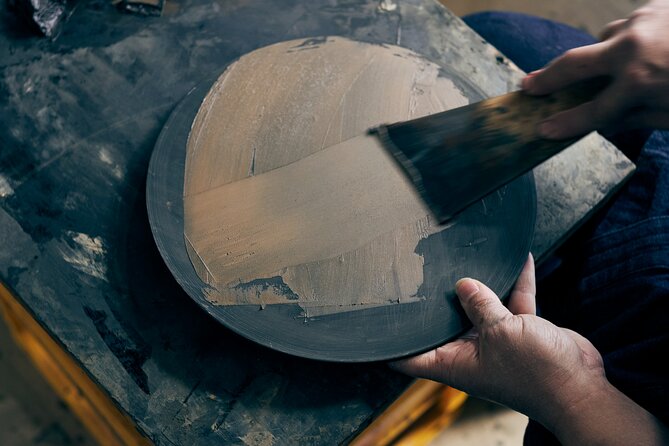
Then you try lacquer painting. The exact object and design process are not specified, so you should not expect a particular finished item unless the provider gives you more details after booking. What is clear is that the class includes practical instruction and a chance to use some of the techniques yourself.
That hands-on step is important. Watching a craftsperson can be fascinating, but trying the process gives you a better sense of how much control and patience the work requires. The studio setting also makes the experience feel less like a performance and more like an introduction to a working practice.
The visit ends back at the meeting point, and you receive a gift made by the instructor. That gift is one of the stronger parts of the value calculation. It is not just a memory card or a factory item. You take home a piece connected to the artist who taught you.
The lacquer painting lesson: what you should expect
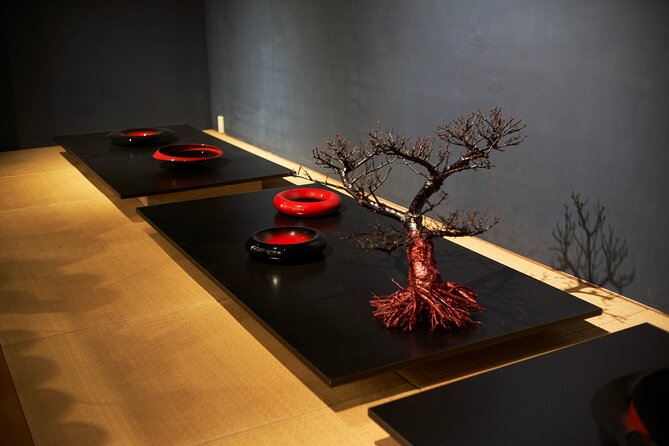
You should approach the practical section with curiosity rather than expectations of producing professional lacquerware in one sitting. Two hours is enough to learn about the technique and make a personal attempt, but not enough to master a craft with such a careful finish.
The point is the process. You see how the artist handles the material, listen to the reasoning behind the method, and then try it under instruction. Previous art training is not stated as a requirement, and most people can participate, so this is suited to beginners as well as people already interested in Japanese craft.
The work may also change how you look at ordinary tableware. The artist’s goal is to bring lacquer techniques into daily use. That idea helps bridge the gap between traditional art and practical objects. You are not only learning about something made for ceremonies or religious spaces. You are seeing how the same skills can shape items used at home.
Because natural materials are used, the finished surface has a character that differs from quick synthetic decoration. The description emphasizes refined texture, which is a useful clue for anyone who appreciates understated design more than bright, instant effects.
A few more Hiroshima half-days to weigh up
- Peaceful Hiroshima & Miyajima UNESCO 1 Day Bus Tour
★ 5.0 · 5,309 reviews - Hiroshima: Hiroshima and Miyajima UNESCO Sites 1-Day Tour
★ 4.9 · 2,330 reviews - Hiroshima / Miyajima Full-day Private Tour with Government Licensed Guide
★ 5.0 · 1,298 reviews - Hiroshima Historical Walking Tour – Why A-Bomb was Dropped
★ 4.8 · 893 reviews
Why the gift matters, and what it does not mean
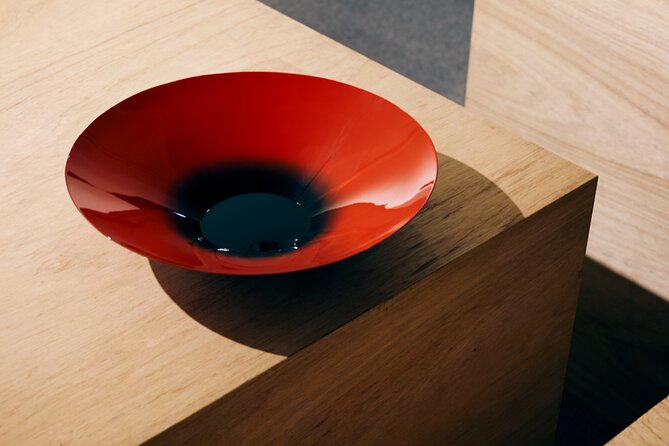
The included gift is made by the instructor, so it adds real meaning to the workshop. You leave with something connected to the studio, the artist, and the technique discussed during the lesson.
Still, I would not treat the gift alone as justification for the price. The value comes from the full package: a small-group explanation, access to an award-winning artist’s work, guided practice, and the handmade piece at the end.
You should also avoid assuming that your own practice item will be a finished work of the same quality as Naoya’s pieces. The experience is an introduction, not a professional apprenticeship. That distinction is worth keeping in mind when comparing the cost with shorter craft classes.
The guide and the small-group setting
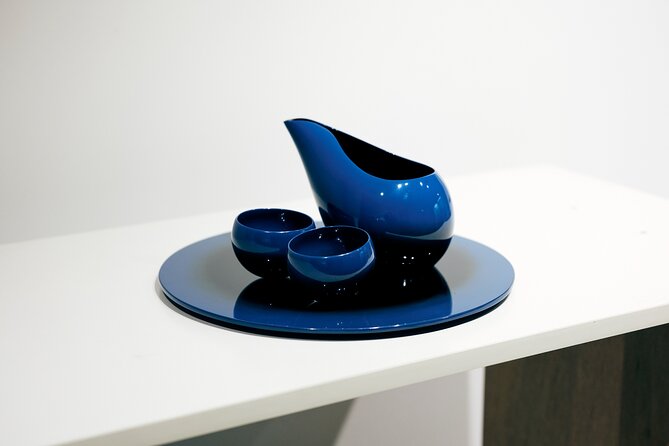
Naoya is the artist and craft instructor, while a guide named Michi has received specific praise for being kind and professional. That suggests the visit may include both craft instruction and visitor support, which can be helpful if you need clarification or assistance during the session.
A maximum of six people is a real advantage here. Small numbers matter in a studio because you can see the artist’s hands more clearly and may have a better opportunity to ask questions. You also avoid the distant, one-way feeling that can come with a large demonstration.
The tradeoff is that small capacity can make booking more important. This experience is booked, on average, 39 days ahead. That is not a guarantee that every date sells out, but it is a good reason to plan early if the workshop is central to your Hiroshima visit.
Is $287.41 a fair price?
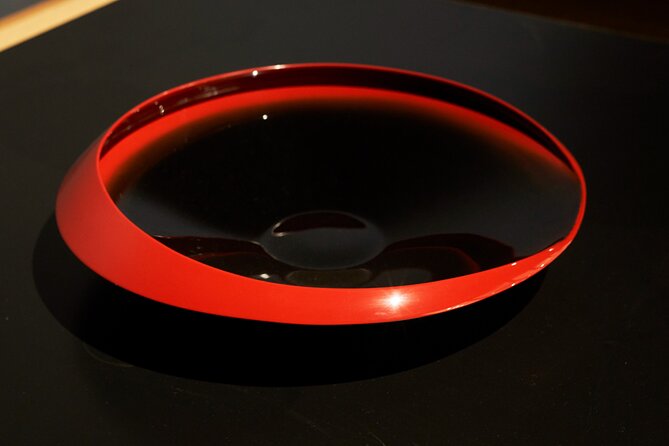
At $287.41 per person, this is not a budget activity. You are paying far more than you would for a casual souvenir-making class or a general cultural demonstration.
The price makes more sense if you value access and instruction. You receive about two hours with a specialist, a lesson on a declining traditional craft, hands-on lacquer painting, and an artisan-made gift. The group is capped at six, and Naoya’s work has earned awards and international recognition through the G7 Summit gift selection.
I would compare it with the cost of other special experiences rather than with the price of lacquerware in a shop. A store purchase gives you an object. This gives you the story, the technique, the studio setting, and a chance to try the work yourself.
Still, the expense may feel high for a family with several participants or for someone who is mainly interested in Hiroshima’s major historical sights. If you are watching your budget, you may prefer to spend the money on a broader activity. If Japanese art and traditional making are among your main interests, the personal scale helps defend the price.
Location, timing, and practical planning
The meeting point is 2-17 Horikawachō, Naka Ward, Hiroshima, postal code 730-0033. It is near public transportation, and the activity both starts and ends there.
The two-hour length fits neatly into a morning or afternoon. You can plan other Hiroshima sightseeing around it without giving up an entire day. Since the experience is in a studio and not a long walking tour, it may also be a good choice when you want a quieter break from city sightseeing.
A mobile ticket is provided, and booking confirmation is received at the time of booking. The activity is limited to six people, so check your confirmation carefully for the meeting instructions and start time.
Free cancellation is available until 24 hours before the start time for a full refund. Cancellations or changes made less than 24 hours before the experience are not accepted for a refund, and the cut-off follows Hiroshima local time.
Who will appreciate this experience most
I would recommend this workshop most strongly to you if you enjoy:
- Japanese material culture and traditional craft
- Small-group activities with direct instruction
- Learning how older skills are adapted for present-day use
- Quiet, focused experiences rather than large sightseeing programs
- Taking home a handmade object with a clear connection to its maker
It is also a good fit for art students, designers, collectors, and anyone who prefers meeting craftspeople to simply buying finished goods.
You may want to skip it if you want a fast, inexpensive activity, a large historical tour, or a guaranteed polished object made entirely by you. The experience is about understanding lacquer work and making a guided attempt, not leaving with a master-level creation.
My booking advice for Hiroshima
I would book this if traditional Japanese craft is high on your list and the price fits your budget. The combination of Naoya Takayama’s instruction, the family connection to Hiroshima Buddhist altar work, the hands-on lesson, and the included gift gives the experience more substance than a basic painting class.
I would also book early. The small capacity and average advance booking time suggest that waiting until the last few days may limit your choices.
If you have only one free morning in Hiroshima, compare this with the city’s major historical sites before committing. If you have already planned those sights and want a personal cultural experience, this workshop offers a thoughtful change of pace. It gives you something many sightseeing stops cannot: a clearer sense of how a living craft survives by adapting.
FAQ
Where does the lacquer workshop take place?
The meeting point is 2-17 Horikawachō, Naka Ward, Hiroshima, 730-0033, Japan.
How long does the experience last?
The workshop lasts approximately two hours.
Where does the activity end?
The activity ends back at the meeting point.
How much does the experience cost?
The listed price is $287.41 per person.
Who teaches the lacquer experience?
The workshop is presented with Hiroshima artist Naoya Takayama. The program also explains the traditional techniques connected with Kiyoshi Takayama, the company founder.
What will I learn?
You will learn about the origins and techniques of Hiroshima Buddhist altar craftsmanship, the current decline of traditional crafts, and ideas for sustaining those skills.
Do I get to try lacquer painting?
Yes. The experience includes a lacquer painting activity with instruction.
Is a gift included?
Yes. You receive a gift made by the instructor.
How many people can join?
The activity has a maximum of six participants.
Can I cancel for a full refund?
Yes, if you cancel at least 24 hours before the experience start time. Cancellations or changes made less than 24 hours before the start time are not accepted for a refund.
Just added around Hiroshima
- The Peace Memorial to Miyajima : Icons of Peace and Beauty★ 4.5 · 31 reviews
- Shore Excursion from Hiroshima Port : Private Tour in Hiroshima★ 5.0 · 17 reviews
- Hiroshima Saijo Sake Tasting Tour with visit to 7 Breweries★ 5.0 · 104 reviews
- Hiroshima & Miyajima All-Inclusive Tour w/Licensed guide Pancho★ 5.0 · 54 reviews
- Hiroshima Country Cycling: Explore Rural Life 1 HR from City★ 5.0 · 22 reviews
- Okunoshima Rabbit Island Cycling Tour with Local Guide★ 4.5 · 17 reviews
- Private Full Day Hiroshima Tour★ 4.5 · 29 reviews
- Hiroshima Private Tour with a Local – Highlights & Hidden Gems★ 4.5 · 24 reviews
Hiroshima Tours, compared.

Peaceful Hiroshima & Miyajima UNESCO 1 Day Bus Tour
Read our review →
Hiroshima and Miyajima UNESCO Sites 1-Day Tour
Read our review →
Hiroshima Historical Walking Tour – Why A-Bomb was Dropped
Read our review →
Hiroshima Peace (Heiwa) Walking Tour at World Heritage Sites
Read our review →
Hiroshima in a Nutshell: Morning Bike Adventure
Read our review →
Hiroshima City 4hr Private Walking Tour with Licensed Guide
Read our review →

Japanesel Archery Experience HIROSHIMA CASTLE SHARAKU
Read our review →Browse the lists this tour appears in