
Reviewed · FUSHIMI INARI TOURS
Crowd-Free Kyoto: Fushimi Inari, Nijo Castle & Kinkaku-ji
Kyoto’s famous sights are much easier to handle when someone else sets the pace. This private five-hour tour begins at Kyoto Station and links Fushimi Inari, Nijo Castle, and Kinkaku-ji, with early timing aimed at avoiding the worst crowds at the red torii gates. I like the efficient route and the chance to ask questions as you go.
I also like the human touch. Guides named Tom, Ryu, Kazuya, and Maki have been praised for clear explanations, warmth, and local stories that add meaning to each stop. The main drawback is the tight schedule: one hour at each attraction gives you a useful first look, but not much room for wandering or a leisurely meal.
Key points at a glance
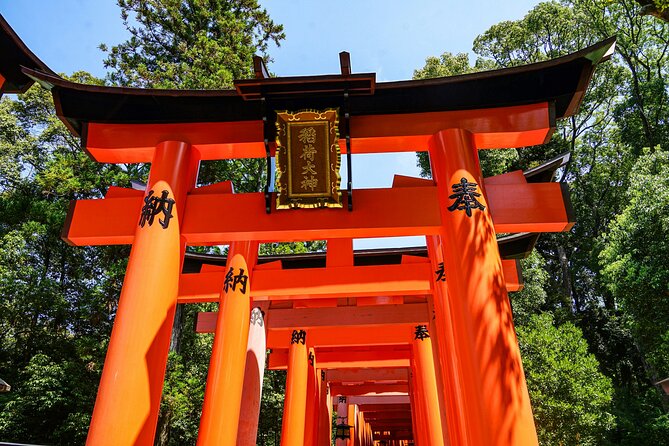
- Early Fushimi Inari visit: See the famous Senbon Torii before the shrine becomes harder to enjoy.
- Three major Kyoto sights in five hours: A smart choice if your time in the city is limited.
- Private guide and private group: You are not folded into a large shared tour, so the pace can feel calmer.
- Admission costs are separate: Fushimi Inari is free, but Nijo Castle and Kinkaku-ji tickets are not included.
- Strong guide focus: Tom, Ryu, Kazuya, and Maki are named in the feedback, with praise for their stories and friendly manner.
- Convenient finish: The tour ends at Kinkaku-ji, useful if you want to continue sightseeing in northwest Kyoto.
Why this route works for a first Kyoto day
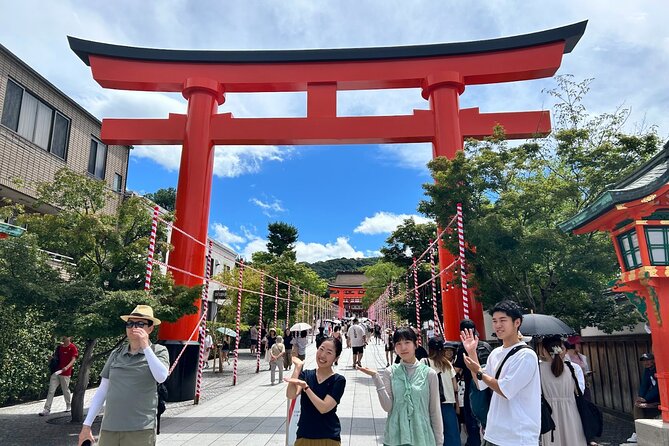
This tour brings together three very different sides of Kyoto. Fushimi Inari is a working Shinto shrine with a mountain path of red torii gates. Nijo Castle gives you samurai-era architecture and shogun history. Kinkaku-ji offers the polished, picture-book beauty of the Golden Pavilion.
That variety is the route’s biggest strength. You are not spending five hours looking at similar temples. Instead, the morning moves from a sacred hillside path to a formal castle complex and then to one of Japan’s most recognizable buildings.
I would consider it especially useful on a first visit, or on a short stay when you want the essential sights without spending half a day studying train routes and opening times. A private guide also gives you a chance to ask the questions that often get lost on a standard group outing.
The tradeoff is depth. The tour allows about an hour at each main stop, and the full experience lasts around five hours. That is enough for orientation and the key views, but not enough to explore every corner of Nijo Castle or climb all of Fushimi Inari’s mountain trail at a slow pace.
More ways to walk Fushimi Inari:
- Kyoto: Fushimi Inari, Kinkakuji, Bamboo Grove 1 Day Bus Tour
★ 4.8 · 4,316 reviews - Fushimi Inari Hidden Hiking Tour (Private Option Available)
★ 5.0 · 1,750 reviews - Kyoto/Osaka: Nara, Fushimi Inari Taisha, Arashiyama Bus Tour
★ 4.7 · 1,275 reviews
Fushimi Inari and the Senbon Torii
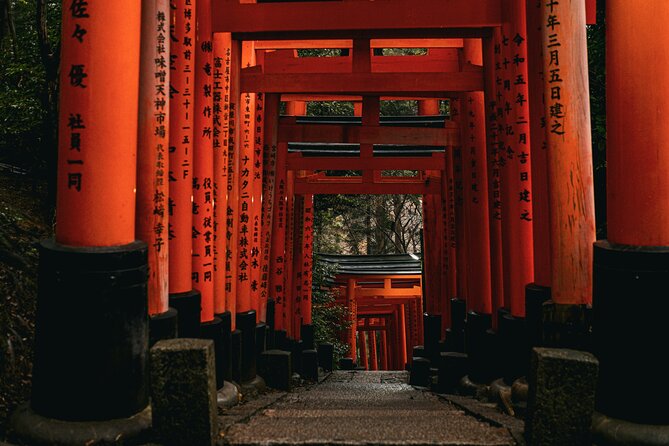
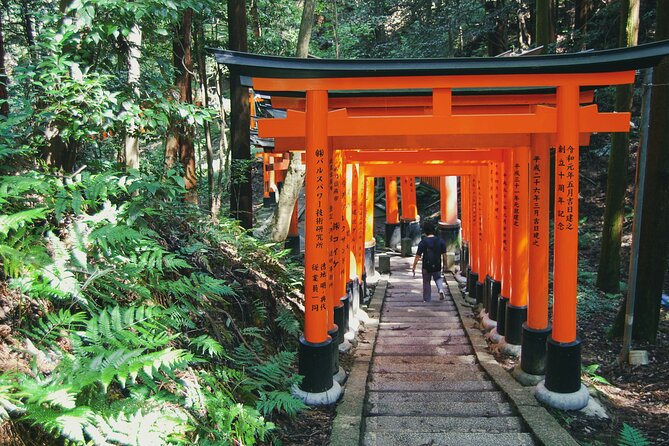
The tour starts with Kyoto’s most memorable walk: the rows of orange-red torii gates at Fushimi Inari-taisha Shrine. The gates form the famous Senbon Torii, a pathway that rises into the wooded slopes of Mount Inari.
The first stretch is the part most people picture. Gates stand close together, creating a tunnel of color and shadow. It is striking even in a crowd, but the experience improves greatly when the path is quieter. That is why the early start matters here more than at the other stops.
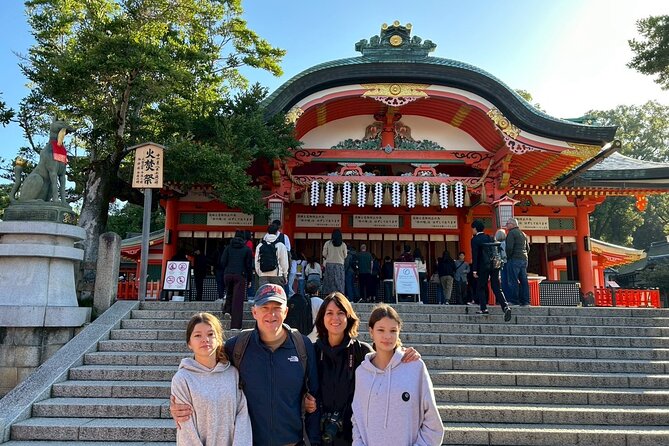
You receive about one hour at the shrine, and admission is free. That keeps the first stop simple, but do not mistake free entry for a quick photo stop. The shrine grounds extend well beyond the first torii, and the route can become a real uphill walk if you continue toward the higher viewpoints.
One useful lesson from the tour’s feedback is that some people push all the way toward the top and find the climb rewarding, but it takes effort. You should wear shoes suited to stairs and uneven paths, and bring water. One past participant even joked about paying 300 yen for water after the climb, a small reminder that a mountain shrine is not the same as a flat city temple.
Your guide can help you judge how far to go within the allotted hour. That is valuable because many people either stop too soon at the busiest entrance area or spend too long climbing and then feel rushed later.
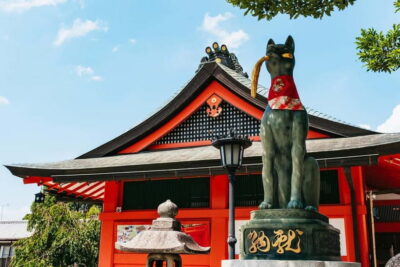
Fushimi Inari is also a place where a guide can explain more than the basic photo opportunity. The torii are connected with devotion and offerings, and the shrine has a different feel from Kyoto’s Buddhist temples. The supplied tour details promise stories and cultural context, though the exact explanation will depend on your guide.
Tom, Ryu, Kazuya, and Maki are all praised in the feedback for making historical and cultural points easy to follow. You should still confirm your guide’s name after booking, since the available guide may vary.
Nijo Castle and the world of the shogun
Nijo Castle changes the mood completely. Instead of a mountain path, you enter a broad castle compound linked with the Tokugawa shoguns, the military rulers who governed Japan for centuries.
The main focus is Ninomaru Palace, the former residence of the Tokugawa Shogun. Its rooms, decoration, and formal layout give you a sense of how power was displayed in Japan. The appeal here is not only the exterior walls and gates. It is the chance to see an elite residence built for ceremony, control, and political life.
You have about one hour at Nijo Castle. That is enough to take in the main palace areas and grounds with a guide, but you should not expect a slow architectural study. The castle is one of the places where a private guide earns the price by helping you notice what you might otherwise pass without understanding.
One guide named Maki received particular praise for making Nijo Castle the best part of the tour. That fits the site’s character. Kinkaku-ji is instantly beautiful, and Fushimi Inari is visually unforgettable, but Nijo Castle rewards explanation. Its importance is easier to appreciate when someone connects the rooms and grounds with the samurai rulers who used them.
Admission to Nijo Castle is not included, so budget for that separately. The tour price is not an all-in ticket. You should also remember that food and drinks are excluded, and the schedule does not describe a dedicated meal break.
The exact travel method between stops is not specified in the provided details. Since the tour begins at Kyoto Station and ends at Kinkaku-ji, you should ask the operator how transfers are handled if that affects your planning. The guide is included, but the price information does not state that transportation or entry fees are covered.
Kinkaku-ji and the Golden Pavilion
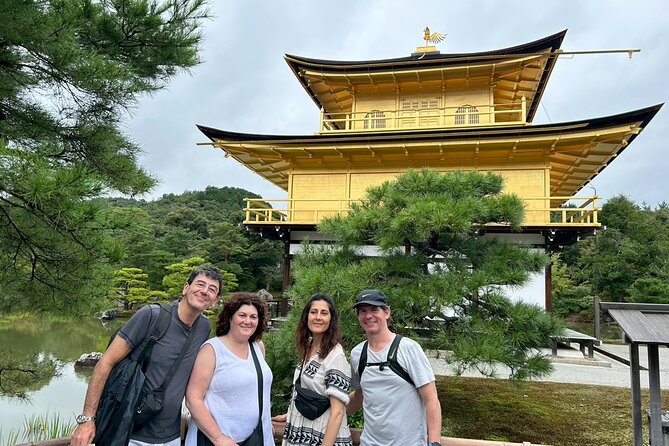
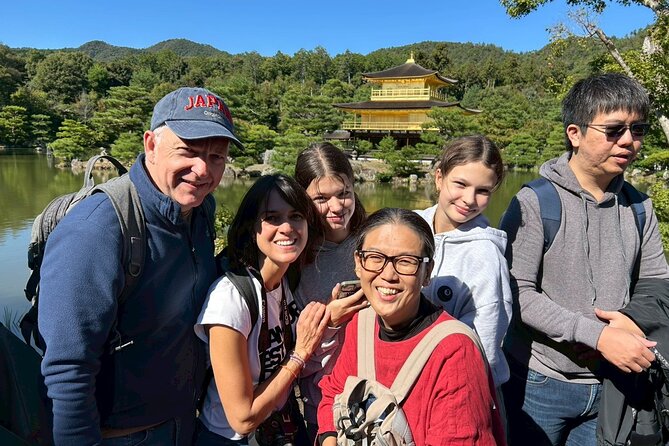
Kinkaku-ji, also called the Golden Pavilion, is the grand finale. The Zen Buddhist temple is covered in gold leaf and set beside a pond, creating the classic Kyoto scene seen in countless photographs.
The one-hour visit is built around the main view and the temple grounds. Weather matters here because the pavilion’s appearance depends heavily on light, reflections, and the condition of the sky. The activity requires good weather, and if poor conditions force a cancellation, you are offered another date or a full refund.
Kinkaku-ji is the stop most likely to feel like a visual reward after the earlier walking and castle visit. One person joined mainly to see this temple and considered it the highlight, praising guide Tom for answering questions and explaining the setting.
Still, I would keep expectations sensible. Kinkaku-ji is a major attraction, not a quiet secret. The early strategy is emphasized for Fushimi Inari, but it does not mean every part of the day will be empty. Your guide can help you move through the grounds with less confusion, yet the pavilion itself remains one of Kyoto’s busiest sights.
Admission is not included here either. The tour ends at Kinkaku-ji, which is convenient if this is your final major stop for the day. It also means you are free to continue exploring northwest Kyoto afterward, though the tour does not provide a return to Kyoto Station in the stated details.
A few more Kyoto half-days to weigh up
- PERFECT KYOTO 1-Day Bus Tour
★ 5.0 · 13,518 reviews - Kyoto: Tea Ceremony in a Traditional Tea House in Kiyomizu
★ 4.9 · 3,519 reviews - Kyoto Geisha Walking Tour: Gion District & Hidden Gems
★ 4.7 · 3,273 reviews - Kyoto: Tea Ceremony Ju-An at Jotokuji Temple
★ 4.9 · 3,207 reviews
The value of a $91.96 private tour
At $91.96 per person, this is not the cheapest way to see Kyoto. You still pay separately for Nijo Castle and Kinkaku-ji, and food and drinks are your responsibility.
The price makes more sense if you are traveling with family or friends who can share the private experience. Group discounts are available, though the exact discount is not stated. A private tour can be especially useful when different people in your group have different interests. You can ask for more explanation at Nijo Castle, move along at Fushimi Inari, or pause for questions without holding up a busload of strangers.
For a solo visitor, the value is less obvious. You are paying for personalized guiding rather than for a long list of inclusions. If you are comfortable using Kyoto’s public transport and reading up before you go, you can visit these three places independently for less.
What you gain is time and interpretation. The route is already arranged, the meeting point is easy to identify, and a local guide helps connect the sights. The feedback repeatedly highlights friendly guides and useful cultural explanations. Kazuya, for example, was praised for showing small details and creating an unusually personal connection. That kind of experience is difficult to measure in yen, but it matters if you want more than quick photographs.
The five-hour format also has value. You can see three headline attractions in one efficient block rather than scattering them across several days. The downside is that efficiency can feel like a race if Fushimi Inari’s climb takes longer than expected or if you want extended time inside Nijo Castle.
Guides make the difference
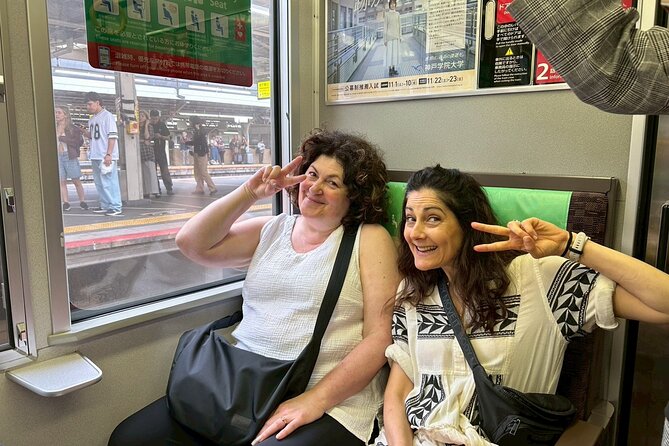
This experience depends heavily on the person leading it. The names attached to the feedback are Tom, Ryu, Kazuya, and Maki. Tom is praised for cultural explanations and for answering questions at Kinkaku-ji. Ryu is described as friendly and entertaining. Kazuya is remembered for kindness and attention to detail, while Maki helped make Nijo Castle a highlight.
Those comments point to the tour’s main strength: the guide is not just a person who leads you from gate to gate. The stated aim is to share stories you might miss on your own, and the strongest feedback focuses on exactly that.
You should use the private setting. Ask why a building matters, what a symbol means, or how the three sites differ. If you prefer a quiet walk with minimal commentary, say so. If you want a history lesson, make that clear early. The private format gives you more room to shape the experience than a shared group outing.
The tour is also described as suitable for most people, but the Fushimi Inari portion deserves a practical warning. The first section is accessible to many visitors, while the full climb is more demanding. Your guide can help you choose how far to continue, but the supplied details do not promise a specific accessibility arrangement.
Meeting in Kyoto and ending at Kinkaku-ji
The meeting point is South Square in the Kyoto Station Building, at Higashishiokoji in Shimogyo Ward. This is a central starting point, but Kyoto Station is large, so give yourself time to find the correct square rather than arriving at the last minute.
The tour ends at Kinkaku-ji, at 1 Kinkakujicho in Kita Ward. That one-way finish is worth planning around. If you are staying near Kyoto Station, you will need to arrange your own return after the tour. On the other hand, ending at Kinkaku-ji works well if you plan to continue seeing sights in northern Kyoto.
A mobile ticket is provided, and confirmation arrives at booking. The activity is private, meaning only your group participates. Food and drinks are not included, so carry what you need for a five-hour outing, especially if you expect to climb farther at Fushimi Inari.
You can cancel for a full refund up to 24 hours before the start time. Changes or cancellations inside that window are not accepted, except that poor weather may lead to a different date or a full refund.
Who should book this Kyoto experience
I would recommend this tour to first-time visitors who want Kyoto’s major sights explained without spending hours planning every transfer. It also suits families, couples, and small groups who value a private pace and can make good use of the group discount.
It is a strong fit if you want Fushimi Inari early, care about local stories, or have only a short stay in Kyoto. The guide names and feedback suggest that the human side of the tour is a major part of its appeal, especially if you enjoy asking questions and talking with a local.
I would think twice if you want a slow, all-day exploration of each site. One hour per stop is efficient, not leisurely. Independent visitors who already know Kyoto, or who are watching every expense, may prefer to arrange the route themselves and pay only the entrance fees.
Should you book it?
Book this private tour if your priority is seeing three essential Kyoto sights in one organized morning and understanding what you are looking at. The early approach to Fushimi Inari, the private guide, and the strong focus on local stories give it real value beyond simple transportation between attractions.
Skip it if you want long visits, included admission, or a flexible food stop. For everyone else, $91.96 per person is reasonable when shared across a small group, especially if a guide such as Tom, Ryu, Kazuya, or Maki brings the same warmth and detail praised in the available feedback.
FAQ
How long does the Kyoto tour last?
The tour lasts approximately five hours, with about one hour planned at Fushimi Inari, one hour at Nijo Castle, and one hour at Kinkaku-ji.
Is this a private tour?
Yes. Only your group participates, and a local guide is included.
Where does the tour begin?
It begins at South Square in the Kyoto Station Building, Higashishiokoji, Shimogyo Ward, Kyoto.
Where does the tour end?
The tour ends at Kinkaku-ji, 1 Kinkakujicho, Kita Ward, Kyoto.
Are entrance fees included?
Admission to Fushimi Inari is free. Admission to Nijo Castle and Kinkaku-ji is not included in the tour price.
Can I cancel for a full refund?
Yes. You can cancel at least 24 hours before the experience start time for a full refund. Poor-weather cancellations may also result in a different date or a full refund.
Just added around Kyoto
- Kyoto: Zen Meditation at a Private Temple with a Monk★ 5.0 · 25 reviews
- Kyoto: Gion Geisha District & Sake-in-Hand Walking Tour★ 5.0 · 37 reviews
- Private Pewter Sake Cup Experience with a Kyoto Artisan★ 5.0 · 31 reviews
- Your Private Vacation Photography Session In Kyoto★ 5.0 · 110 reviews
- Private Guided Traditional Buddhist Cooking in Japan★ 5.0 · 16 reviews
- Kyoto Wagashi(Japanese sweets) Cooking Class near Fushimiinari★ 5.0 · 60 reviews
- Traditional Japanese Music show & Experience Tour in Kyoto★ 5.0 · 57 reviews
- Kyoto:Family-Friendly Kimono & Yukata Experience at WARGO★ 5.0 · 147 reviews
Fushimi Inari Tours, compared.

Fushimi Inari, Kinkakuji, Bamboo Grove 1 Day Bus Tour
Read our review →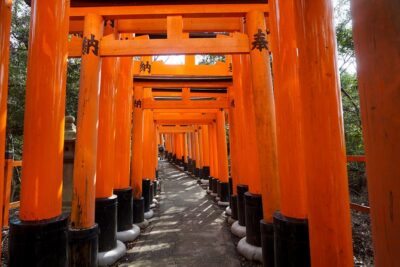
Fushimi Inari Hidden Hiking Tour (Private Option Available)
Read our review →
Kyoto/Osaka: Nara, Fushimi Inari Taisha, Arashiyama Bus Tour
Read our review →
Osaka/Kyoto: Arashiyama, Nara & Fushimi Inari Shrine w/Lunch
Read our review →
Nijo Castle, Kiyomizu & Fushimi Inari Guided Tour
Read our review →
Nijo, Kinkaku-ji, Arashiyama, Kiyomizu & Fushimi Inari
Read our review →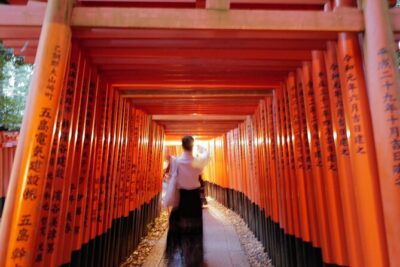
Browse the lists this tour appears in