
Reviewed · KYOTO TOURS
KIYOTO’s Kyoto Private E-Cycling Tour: Highlights & Hidden Gems
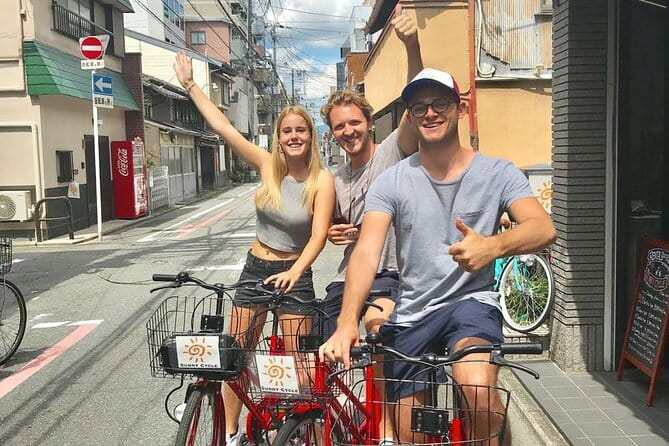
Kyoto’s great strength is its spread-out collection of temples, shrines, canals, and old streets. This private e-bike tour gives you a practical way to connect them in one long outing, from Fushimi Inari’s red torii gates to Gion, Nanzen-ji, the Philosopher’s Walk, and the Kamogawa Delta. You cover far more ground than on foot, without spending your day changing trains and buses.
I like two things here. First, the private format lets your guide shape the ride around your interests and energy. Second, the guides bring more than directions: Yonnie, Yuhey, Yuichi, Mana, Kiyoto, Kento, Takuma, and Polina are all named in past feedback, with repeated praise for their warmth, local stories, family-friendly approach, and safe riding. The main consideration is stamina. Four to eight hours on a bicycle is a serious outing, and several temple visits are brief look-ins rather than full explorations.
Key points at a glance
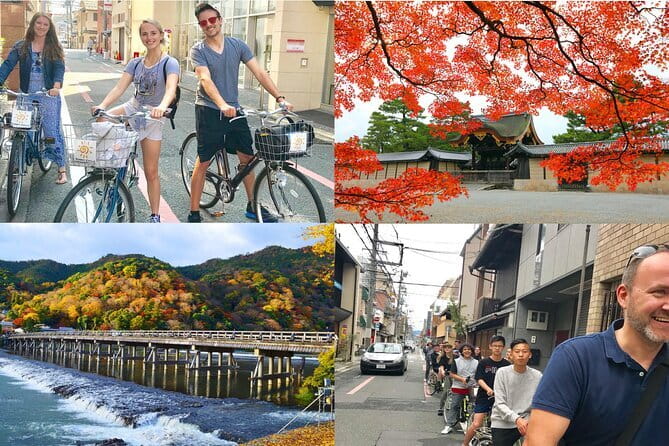
- One ride links southern, eastern, and northern Kyoto: Fushimi Inari, Tofuku-ji, Higashiyama, Gion, Nanzen-ji, the Philosopher’s Walk, Shimogamo, and central Kyoto can all fit into one private route.
- Electric bikes save effort, not sightseeing: You still pedal, but the motor helps make a long day across Kyoto more manageable.
- The route mixes famous sights with quieter corners: Komyo-in, Honen-in, Tatsumi Bridge, the Shirakawa Canal, and neighborhood streets add a more local feel.
- Your guide can adjust the pace: Families and repeat visitors can ask to focus on places they have not yet seen.
- The ride includes useful cultural context: Guides explain history, customs, daily life, and the character of each neighborhood.
- Plan for paid temple admission: Bike rental and guiding are included, but food, drinks, and entrance fees are not.
Why an e-bike makes sense in Kyoto
Kyoto looks compact on a map, but its main sights stretch across the city. Fushimi Inari is in the south, Nanzen-ji and the Philosopher’s Walk sit east of the center, Shimogamo is farther north, and Gion and Teramachi occupy the middle ground. Walking between all of these would take much of a day, and public transport does not always bring you neatly from one temple gate to the next.
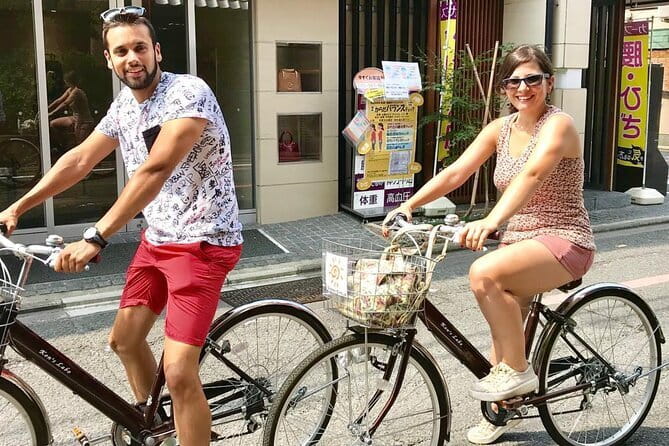
An electric bike gives you a middle path. You move faster than a walking tour, but you remain outdoors and see the smaller streets between major stops. The tour includes an e-bike, with a standard bicycle available too. You must be able to ride a bicycle, and the activity calls for moderate physical fitness.
The private format matters more than it might at first seem. You can ask for a slower pace, spend more time at a favorite shrine, or adjust the route around places you have already visited. Past outings have been tailored to families, repeat visitors, and groups seeking local neighborhoods instead of only headline sights.
The stated duration is approximately four to eight hours. That is a wide range, so confirm the length you want when booking. A four-hour ride will need to move briskly through the long route, while an eight-hour version allows more stops and breathing room.
More Hidden Gems Walks in Kyoto
- Kyoto Geisha Walking Tour: Gion District & Hidden Gems
★ 4.7 · 3,273 reviews - Private Kyoto Tour with a Local, Highlights & Hidden Gems, Personalised
★ 5.0 · 1,543 reviews - Arashiyama Bamboo Forest & Hidden Gems Bike Tour (Early Bird)
★ 5.0 · 613 reviews
Starting at Sunny CycleJapan
The ride begins at Sunny CycleJapan in Kyoto’s Shimogyo Ward, at 477 Ōhorichō, 1F, postal code 600-8419. The meeting point is near public transportation, and the activity returns there at the end.
The practical work is handled for you. You do not need to find a separate bike rental shop, compare equipment, or arrange a second-way return. Kids’ non-electric bikes are available in limited numbers, and children who cannot ride alone may use a limited number of child seats. Request either option when booking.
Food and drinks are not included. For a longer ride, plan this point carefully with your guide. The supplied information does not specify a meal stop, so you should ask how breaks will work for your chosen duration.
Fushimi Inari and the Tofuku-ji area
The route begins its temple-and-shrine story at Higashi Hongan-ji, a major Jodo Shinshu Buddhist temple in central Kyoto. Founded in 1602, it has broad grounds and the large Goeido main hall. It is a useful introduction to Kyoto’s temple scale before the ride heads south.
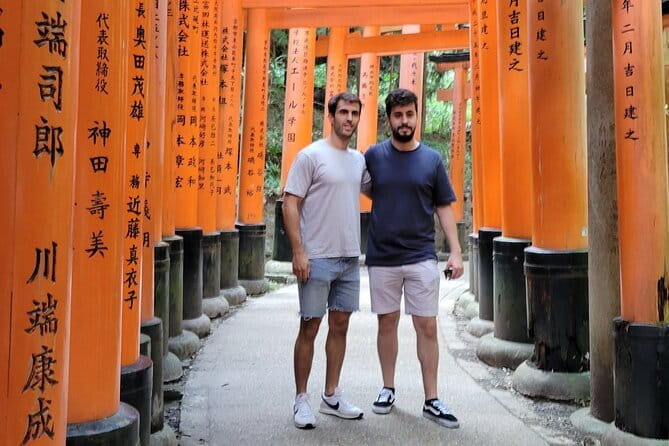
At Fushimi Inari-taisha, you get about 40 minutes. This is the head shrine of more than 30,000 Inari shrines in Japan, known for its thousands of bright red torii gates climbing the mountain trails. The stop is free, but the famous torii route continues uphill well beyond the time allowed here.
That short visit is both a strength and a limitation. You can see the shrine and walk into the gate tunnel without giving up half the day, but you will not explore the entire mountain trail. If Fushimi Inari is a top priority, tell your guide early and ask how much walking time can be added.
Next comes Komyo-in, a sub-temple of Tofuku-ji, with about 20 minutes. Its garden is known for moss and seasonal color, especially in autumn. Admission is not included, so ask about the current fee before entering. This quiet stop provides a useful change of mood after Fushimi Inari’s famous gate corridor.
Tofuku-ji itself receives about 10 minutes, with attention to the Tsutenkyo Bridge and its valley views. Autumn maple color makes this one of Kyoto’s best-known seasonal places. Ten minutes is enough for a photo and a quick look, not a full temple visit, so consider the stop a preview unless your schedule allows more time.
Yasaka Pagoda, Gion, and the Shirakawa waterway
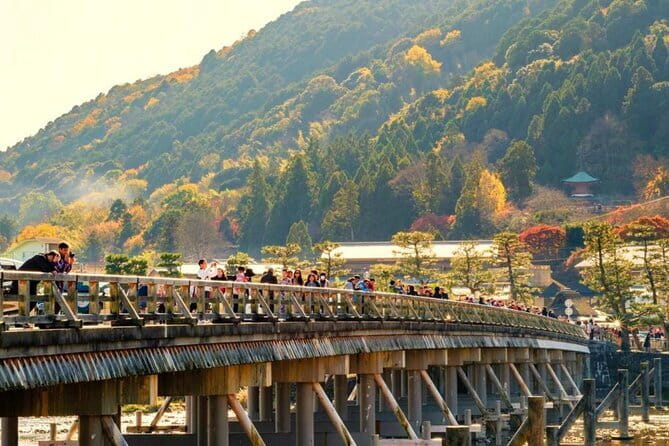
The ride then moves into eastern Kyoto, where Hōkan-ji Temple’s Yasaka Pagoda gives you one of the city’s most recognizable views. The pagoda rises above the old streets of Higashiyama and creates the classic Kyoto scene many people hope to photograph.
At Yasui-Konpiragu, you see a shrine associated with ending unwanted relationships and welcoming better ones. Its stone monument has a hole through which people pass as part of their prayers. The planned stop is only about 10 minutes, but the guide can explain the custom and help you understand why the place matters beyond its unusual appearance.
Hanamikoji Street, in Gion, receives another 10 minutes. Traditional tea houses and restaurants line this historic street, offering a glimpse of the district associated with geisha culture. Please keep your camera respectful and follow your guide’s advice around private entrances and people going about their work.
Tatsumi Bridge and the Shirakawa Canal slow the ride down. Tatsumi is a small wooden bridge beside the Shirakawa River, while Gion Shirakawa has machiya houses, willow-lined water, and a quieter old-Kyoto atmosphere. The two stops together take about 25 minutes.
The River Terrace adds another 15 minutes beside the Shirakawa River. Stone paths, benches, and flowing water make this a welcome pause after riding through the city. These short neighborhood stops are part of what makes the tour different from a checklist of major temples. You see how Kyoto’s historic districts fit into ordinary streets and waterways.
More off-the-list walks in Kyoto:
- Kyoto: Hidden Gems E-Bike Tour with Local Japanese Guide
★ 4.9 · 189 reviews - Kyoto: Gion Hidden Gems & Geisha Culture Tour
★ 4.9 · 126 reviews - Highlights & Hidden Gems With Locals: Best of Kyoto Private Tour
★ 5.0 · 121 reviews - Kyoto: Hidden Gems E-Bike Tour Through Backstreets & Temples
★ 4.9 · 54 reviews
Heian Jingu and Nanzen-ji’s old aqueduct
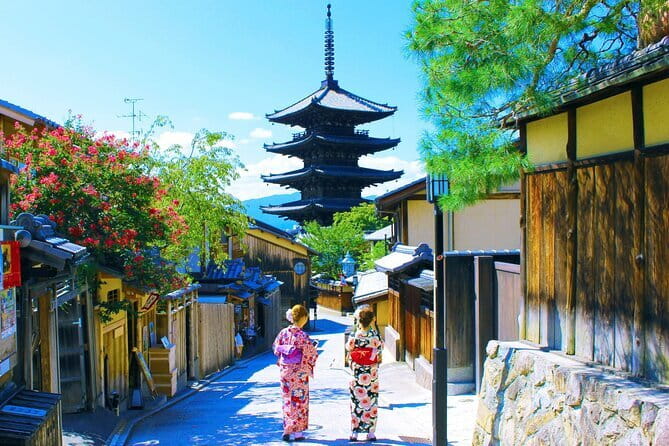
The huge vermilion torii of Heian Jingu is a roadside-scale sight. At 24.2 meters tall, it was built in 1929 to mark the enthronement of Emperor Showa. The tour stops for about 15 minutes, giving you time for photographs and a short explanation from your guide.
Nanzen-ji follows with another 15-minute visit. Founded in 1291 by Emperor Kameyama, this Rinzai Zen temple is known for its gardens and major religious importance. The brief timing lets you see the setting and main character of the temple, but it is not enough for a detailed tour of every garden or building.
The Nanzen-ji Aqueduct, or Suirakukaku, gets about 10 minutes. Completed in 1888, the brick structure carried water from Lake Biwa and remains one of Kyoto’s most surprising pieces of industrial history. Its arches create a striking contrast with the surrounding temple grounds.
This section works well by bicycle because the stops are close enough to connect efficiently, yet different enough to keep the ride varied. You move from a massive modern-era torii to a Zen temple and then to a brick waterway built during Japan’s rapid modernization.
The Philosopher’s Walk and Honen-in
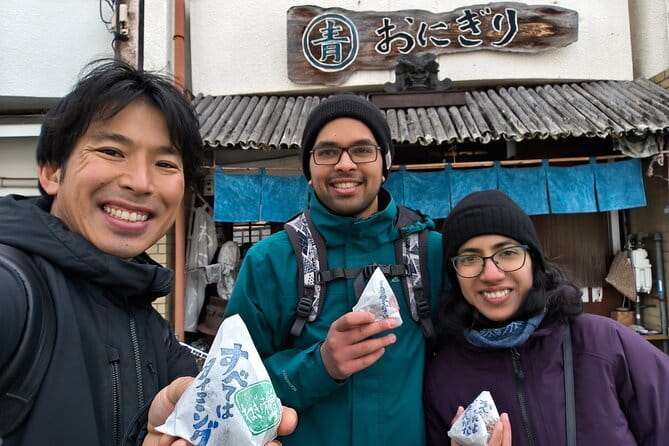
The Philosopher’s Walk runs for roughly two kilometers along the Biwa Canal. The tour allows about 30 minutes, so you will experience part of this scenic route rather than linger over every section. The canal, trees, and narrow path make it a calmer stretch after the traffic and commercial streets.
Honen-in is given about 15 minutes. This peaceful Zen temple sits among trees and is associated with Honen Shonin, who is said to have founded it in the 13th century. Its quiet grounds offer a welcome pause, especially if you have had a busy first half of the ride.
You should ask your guide how bicycles are handled on the Philosopher’s Walk. The supplied details describe it as a walkway, and the exact riding or walking arrangement is not specified. A good guide will make clear where you should dismount and walk the bikes.
Shimogamo, the river junction, and Kyoto’s local side
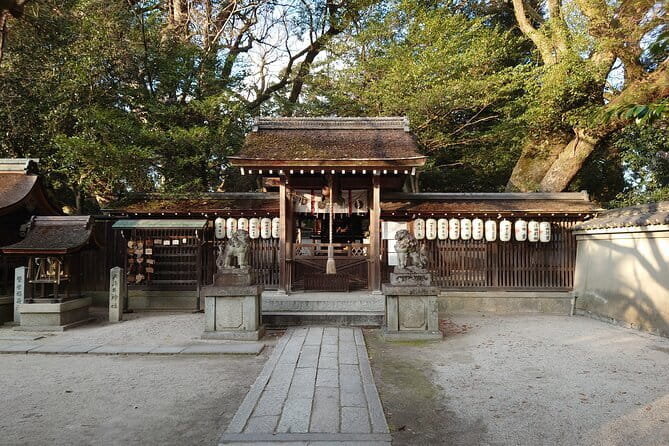
Shimogamo Jinja is one of Kyoto’s oldest Shinto shrines, with roots reaching back to around 90 BC. The stop lasts about 30 minutes, making it one of the longer visits on the route. Its age and sacred setting give your guide room to explain Shinto customs, shrine architecture, and the place’s role in Kyoto.
The Kamogawa Delta is where the Kamo and Takano Rivers meet. Its stepping stones, shaped like turtles and birds, make it a popular place for a short hop across the water and a relaxed photo stop. Fifteen minutes is enough to enjoy the meeting point of the rivers without turning the ride into a long rest break.
Kyoto Gyoen, the park around the old Imperial Palace, appears as another open green space along the route. Its grounds include historic buildings and offer a chance to see how central Kyoto residents use the city’s large public spaces. The exact stop length is not provided, so your guide will likely fit it into the chosen tour length.
The Ebisugawa stepping stones, also called Ebisugawa Tobiishi, provide another small local experience. You cross the Ebisugawa, a tributary of the Kamo River, by hopping across stones set in the water. At 10 minutes, this is a quick, playful pause, not a major attraction, but it helps break up the temple sequence.
Teramachi, Sanjo, and the ride back
Teramachi-dori brings the tour into central Kyoto. The north-south shopping street has traditional Japanese goods, cafes, fashion shops, and everyday city life. The 10-minute stop is short, but it gives you a taste of Kyoto beyond shrines and gardens.
Sanjo Street is another central corridor, lined with restaurants, cafes, and older buildings near Kawaramachi and the Kamo River. The information provided does not give a fixed stop time, so treat it as a route connection or brief look rather than a guaranteed shopping visit.
This final section makes sense for first-time visitors who want to understand Kyoto as a living city, not only an open-air museum. You see religious sites, old neighborhoods, river paths, shopping streets, and modern urban movement in one continuous outing.
What the guides add
The strongest part of the experience is the human guidance. The named guides include Yonnie, Yuhey, Yuichi, Mana, Kiyoto, Kento, Takuma, and Polina. Your exact guide is assigned by the operator, so a particular name cannot be promised.
The guiding style described in the feedback is friendly, flexible, and attentive to families. Yuhey is praised for keeping children engaged, while Mana is noted for answering questions before the ride and offering advice about Kyoto and Kobe. Yonnie receives repeated praise for explaining history and culture while navigating crowded streets safely.
Yuichi is described as fun and full of information, and Polina is associated with an easy pace, narrow backstreets, and good anecdotes. Kiyoto and Kento have also tailored rides around places a group had not yet visited. The common thread is not a formal lecture. It is local explanation delivered while you move.
Photo help is included too. The guide is described as someone who enjoys taking good pictures, a small benefit that matters when your group wants a record of the day without handing a phone to strangers.
Price, timing, and overall value
At $198.15 per person, this is not a cheap bike rental. It is a private guided day, with the bike, guide, route planning, cultural explanation, and photo help built into the price. For a group that would otherwise pay for several separate taxis, rentals, or guided visits, the cost can make sense.
The value is best when you want to see many parts of Kyoto in one day and do not want to plan every connection yourself. It is also useful for families, first-time visitors, and people who have already seen the major central sights and want a more personal route.
The value is weaker if you prefer long temple visits. Many stops last 10 to 20 minutes, and paid entrance is extra. You are paying for coverage and flexibility, not a slow study of each garden, hall, or shrine.
Free cancellation is available up to 24 hours before the start time for a full refund. Changes or cancellations inside that window are not accepted for a refund. The activity is private, and only your group participates.
Who should book this ride
I would choose this tour if you can ride confidently, want an active day outdoors, and care about seeing Kyoto’s major districts in one sweep. It suits families especially well when kids can manage the bicycle or when a limited child seat or children’s bike is arranged in advance.
It is also a smart choice for repeat visitors. Ask to skip places you already know and spend more time in neighborhoods, smaller temples, or local streets. The private format gives you a better chance of doing that than a fixed group ride.
I would think twice if you dislike cycling, tire easily, or want to spend an hour at each temple. The length, traffic, brief stops, and moderate physical demand may feel rushed. Kyoto’s weather can also affect any long outdoor activity, though no specific weather policy is provided.
FAQ
How much does the private Kyoto e-cycling tour cost?
The listed price is $198.15 per person. Group discounts are available.
How long does the tour last?
The tour lasts approximately four to eight hours, depending on the selected format and route.
Is the tour private?
Yes. Only your group participates in the activity.
Is an electric bicycle included?
Yes. An electric bike is included, and a standard bicycle is available as an alternative.
Can children join the tour?
Yes. Kids’ non-electric bicycles are available in limited numbers. Child seats are also available in limited numbers for children who cannot ride independently. Request these when booking.
Do I need to know how to ride a bicycle?
Yes. Participants must be able to ride a bicycle, and a moderate level of physical fitness is required.
Are temple and shrine entrance fees included?
No. Paid entrance fees are not included. Food and drinks are also extra.
Where does the tour begin?
It begins at Sunny CycleJapan, 477 Ōhorichō, 1F, Shimogyo Ward, Kyoto, postal code 600-8419.
Where does the tour end?
The activity ends back at the meeting point.
Can I cancel for a full refund?
Yes, if you cancel at least 24 hours before the experience start time. Cancellations or changes made less than 24 hours in advance are not refunded or accepted.
Should you book it?
Book this tour if you want a broad, active introduction to Kyoto and like the idea of moving between famous sights and quieter corners with a guide who can adjust the day. The combination of Fushimi Inari, Gion, Nanzen-ji, the Philosopher’s Walk, Shimogamo, riverside paths, and central shopping streets gives you a strong sense of the city’s range.
Before paying, decide how much time you want, ask about the exact route, and request any child equipment early. If your ideal Kyoto day means lingering quietly in two or three temples, choose something slower. If you want to cover a lot of ground, hear local stories, and let someone else manage the route, this private e-bike ride offers solid value.
More Bike Tours in Kyoto
- Hidden Kyoto E-Biking tour
★ 5.0 · 1,843 reviews - Bike Tour Exploring North Kyoto plus Lunch
★ 5.0 · 1,087 reviews - 5 Top Highlights of Kyoto Full Day Bike Tour (E-bike option)
★ 5.0 · 511 reviews - Full Day Biking Tour Exploring the Best of Kyoto
★ 5.0 · 498 reviews
Just added around Kyoto
- Kyoto: Zen Meditation at a Private Temple with a Monk★ 5.0 · 25 reviews
- Kyoto: Gion Geisha District & Sake-in-Hand Walking Tour★ 5.0 · 37 reviews
- Private Pewter Sake Cup Experience with a Kyoto Artisan★ 5.0 · 31 reviews
- Your Private Vacation Photography Session In Kyoto★ 5.0 · 110 reviews
- Private Guided Traditional Buddhist Cooking in Japan★ 5.0 · 16 reviews
- Kyoto Wagashi(Japanese sweets) Cooking Class near Fushimiinari★ 5.0 · 60 reviews
- Traditional Japanese Music show & Experience Tour in Kyoto★ 5.0 · 57 reviews
- Kyoto:Family-Friendly Kimono & Yukata Experience at WARGO★ 5.0 · 147 reviews
Kyoto Tours, compared.


Fushimi Inari, Kinkakuji, Bamboo Grove 1 Day Bus Tour
Read our review →
Tea Ceremony in a Traditional Tea House in Kiyomizu
Read our review →
Kyoto Geisha Walking Tour: Gion District & Hidden Gems
Read our review →

Gion Magical Night Walking Tour with Geisha Trivia
Read our review →

Gion Geisha District Walking Tour – Stories of Geisha
Read our review →Browse the lists this tour appears in