
Reviewed · KYOTO TOURS
The Art of Geisha: Exclusive Show & Gion Walking Tour
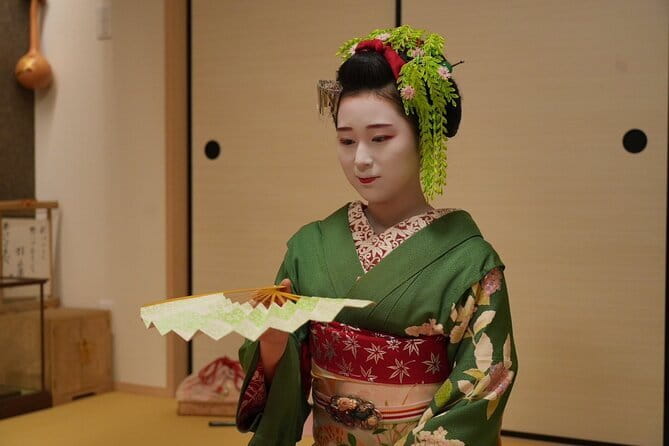
Kyoto’s geisha world is usually glimpsed from a distance, if at all. This experience gives you a much closer look: a walk through Gion followed by a maiko performance, tea, snacks, questions, and a traditional Japanese game. The small group, capped at six, makes the meeting feel personal rather than staged for a crowd.
I like the direct conversation with the maiko, and I like that the guide explains the customs before and during the performance. The chance to play a game with her is another welcome touch. The main drawback is the short running time, about one to two hours, and the $124.21 price is a serious spend for a compact afternoon activity.
Key points to know before booking
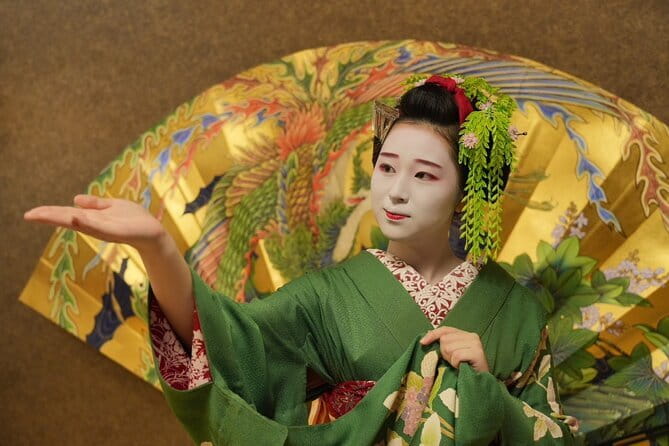
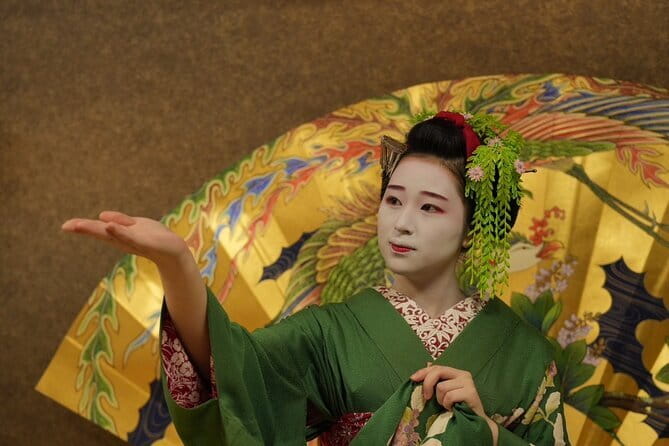
- A maiko performs traditional arts: You watch an apprentice geisha dance and can learn about the years of training behind the performance.
- The group is limited to six people: This gives you a better chance to ask questions and take part in the game.
- The experience includes tea and snacks: These are served during the maiko presentation.
- English-speaking guides add context: Guides named Ai and Yoshino have helped explain Gion, maiko customs, and geisha culture.
- You begin with a Gion walk: Meet at the Statue of Izumo-no-Okuni at 3:00 pm before continuing to the tea house.
- Children under six cannot join: The experience is best suited to older children and adults who can sit quietly and take part respectfully.
Why this Gion experience feels different
A visit to Gion can leave you with more questions than answers. You may see a beautifully dressed maiko hurrying along a street, but you will not necessarily know what you are seeing or understand the work behind the makeup, kimono, music, and formal manners.
This experience gives you a planned introduction instead of asking you to hope for a chance encounter. You walk through Gion with an English-speaking guide, then enter a setting where a maiko performs and speaks with the group. That combination matters. The performance gives you something to watch, while the conversation helps explain what you have seen.
The focus is on the maiko, an apprentice geisha. You can ask questions about her training and daily culture through the guide, then join a traditional Japanese game. It is a more active format than simply sitting through a dance and leaving.
The mood is intimate. With no more than six people, the room is not filled with a tour group or a large audience. A group of four once had a particularly close experience, and a group that ended up being just two people had plenty of time with the guide and maiko. Group size can affect the feel of the visit, but the six-person limit sets a useful ceiling.
More geisha-district evenings:
- Kyoto Geisha Walking Tour: Gion District & Hidden Gems
★ 4.7 · 3,273 reviews - Kyoto: Gion Magical Night Walking Tour with Geisha Trivia
★ 4.9 · 2,393 reviews - Kyoto: Gion Geisha District Walking Tour – Stories of Geisha
★ 4.7 · 2,187 reviews
Starting near the Izumo-no-Okuni Statue
The meeting point is the Statue of Izumo-no-Okuni in Kawabatacho, Higashiyama Ward. The start time is 3:00 pm, so plan to arrive early enough to find the statue and gather without rushing.
The first part takes place in Gion. Your guide introduces the district and points out several geisha-related neighborhoods before the show. This walk is important because it gives the performance a sense of place. You are not simply being taken into a room for a cultural presentation. You are first shown the district where this tradition continues.
The walk is listed as about one hour, though the full experience is described as lasting roughly one to two hours. That difference suggests that the precise timing may depend on the walk, the questions, and the interaction with the maiko. Keep the rest of your afternoon flexible rather than scheduling a tight dinner reservation immediately afterward.
Guides named Ai and Yoshino have been especially helpful for this type of visit. Ai is described as friendly and well informed about Kyoto, while Yoshino has guided visitors through Gion and interpreted questions for the maiko. The guide’s role is not just to lead you from one address to another. The guide explains what you are seeing and helps the conversation work across languages.
What you see in Gion before the show
Gion is best approached with patience. The point is not to rush from one photo stop to the next, but to notice the district’s narrow streets, traditional buildings, and quiet entrances. Your guide uses the walk to explain the difference between maiko and geiko, as well as the training connected to these roles.
The walk also sets reasonable expectations. You are not promised a chance to spot a maiko in the street. In fact, random sightings can be difficult, and chasing performers for photographs is not a respectful way to experience the district. Here, the meeting is arranged in a controlled setting, which gives you a more thoughtful way to learn.
This part is likely to appeal most if you want cultural context rather than only a performance. If you have already spent days in Gion, the walk may feel familiar in places. Still, the guide’s explanation can connect the streets to the customs you will see later.
The route ends at Hangesho, at 535 Morishitacho in Higashiyama Ward. The supplied details identify this as the ending point, so you should expect to finish away from the original statue. That is useful when planning your next stop. Check the location before booking a restaurant or arranging a pickup.
Meeting the maiko over tea and snacks
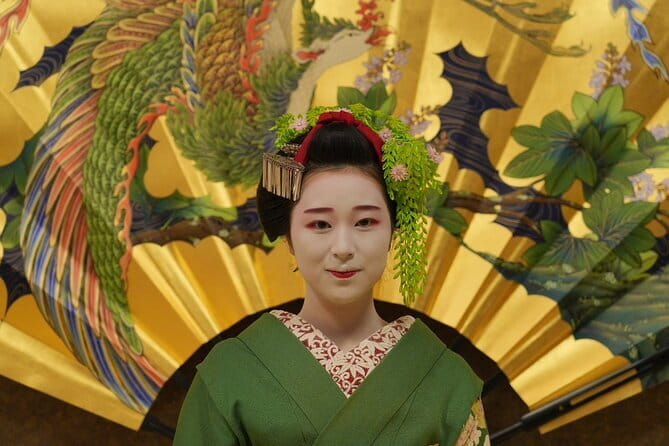
The central part of the experience is the maiko show. You sit down with Japanese tea and snacks while watching her perform traditional arts. The format gives you time to observe the details of the dance and presentation instead of treating the show as a quick photo opportunity.
A maiko is an apprentice geisha, and the training behind the role is one of the subjects explained during the visit. You will hear about the years of practice needed to learn the arts, manners, and presentation. That background changes how you watch the performance. Movements that may seem simple at first are part of a disciplined artistic tradition.
The tea and snacks make the setting more relaxed, but this is still a cultural meeting, not a casual entertainment show. You should pay attention to the guide’s instructions and behave with the same courtesy you would bring to a temple, tea ceremony, or theater. The experience is designed to let you see a less public side of geisha culture, not to turn the maiko into a photo prop.
The small group helps here. When there are only a few people in the room, you can see the performance clearly and listen to the explanation without a large crowd between you and the performer. Some groups have had front-row seating, though seating arrangements are not guaranteed in the details provided.
More walking tours in Kyoto:
- Night Walk in Gion: Kyoto’s Geisha District
★ 4.5 · 2,003 reviews - Kyoto Gion Geisha District Walking Tour – The Stories of Geisha
★ 5.0 · 1,441 reviews - Nishiki Market Brunch Walking Tour (7 Tastings + Brunch)
★ 5.0 · 1,355 reviews - Kyoto Arashiyama Walking Tour: Bamboo, Monkeys, Gardens & Secrets
★ 5.0 · 1,216 reviews
The question period is a major part of the value
After the performance, you have the chance to chat with the maiko and ask questions. This is where the experience becomes more than a short dance show. You can ask about maiko culture, training, and the meaning of what you have just watched.
Your English-speaking guide serves as an interpreter when needed. That support is important because a question period can lose its value if communication is difficult. Guides such as Ai and Yoshino have helped visitors ask many questions and understand the answers.
You should think about what you want to ask before arriving. Questions about the performance, training, clothing, daily life, and the difference between a maiko and a geiko may lead to a more useful conversation than a string of requests for photographs. The supplied information does not promise a specific number of questions or a fixed conversation length, so the exact amount of time will depend on the schedule and group.
The meeting can feel personal, but it is still a professional cultural activity. Be considerate about personal questions and follow the guide’s lead. A respectful exchange is likely to be more rewarding for you and more comfortable for the maiko.
Playing a traditional Japanese game
The interactive game is one of the experience’s most memorable features. You may be invited to challenge the maiko in a traditional Japanese game, adding a playful moment after the more formal performance.
This works well because it gives you a way to participate without requiring special skill. You watch first, then try something yourself. One visitor even managed to beat the maiko, which gives you an idea of the lighthearted mood this part can bring.
The game also breaks up the sitting and listening. If you are traveling with children over the minimum age, this may help hold their attention, though the activity is still cultural in tone rather than a children’s attraction. Children under six and younger cannot join.
Do not book this expecting a long series of hands-on activities. The information specifies one traditional game, not a full workshop. Its value is the personal exchange and change of pace, not the amount of playtime.
How the $124.21 price measures up
At $124.21 per person, this is not a bargain sightseeing stop. The experience lasts about one to two hours and includes a geisha show, Japanese tea and snacks, and an English-speaking guide. You are paying mainly for access to a small, arranged cultural meeting that would be difficult to organize on your own.
The group limit helps explain the cost. A six-person maximum requires more careful planning than a large bus tour, and the guide must support conversation between international visitors and the maiko. If your main goal is to see a dance for the lowest possible price, this will seem expensive.
I think the price makes more sense for a special occasion, a first visit to Kyoto, or anyone who has long wanted to understand the geisha tradition in a respectful setting. The interactive game and question period add value because you are not only watching a performance. You are also given a chance to connect it with the district and ask about the culture directly.
The value depends on your interests. If you prefer temples, gardens, or long walking tours, you may find the short duration and high per-hour cost hard to justify. If this is a bucket-list experience, the limited group and direct contact may make the expense worthwhile.
Timing, transport, and practical planning
The tour begins at 3:00 pm and is near public transportation. You should still allow extra time to locate the Statue of Izumo-no-Okuni, especially if you are unfamiliar with the Kawabatacho area.
You finish at Hangesho, 535 Morishitacho, so the activity does not return you to the start. That is not a major problem, but it affects your evening plans. Gion and nearby Higashiyama have plenty to keep you occupied, yet you should use the ending address when choosing your next destination.
A mobile ticket is provided, and booking confirmation is received at the time of booking. Most people can participate, but the experience requires attention, courtesy, and the ability to take part in a guided walk and seated cultural presentation.
Free cancellation is available if you cancel at least 24 hours before the 3:00 pm start time. Changes or cancellations inside that window are not accepted for a refund, so do not wait until the afternoon of the tour if your plans are uncertain.
Who will get the most from this experience
This is a strong choice for you if you want:
- A first introduction to maiko and geisha culture
- A small group rather than a large scheduled show
- Time to ask questions through an English-speaking guide
- A cultural activity that combines walking, performance, tea, and participation
- A special afternoon experience in Kyoto
- A respectful alternative to trying to spot geisha on the street
It suits couples, solo visitors, friends, and families with children aged over six. The small group can also work well for solo travelers because the guide helps create conversation rather than leaving you to watch quietly by yourself.
You may want to skip it if you dislike staged cultural presentations, want a full-day activity, or are mainly looking for free sightseeing. The experience is arranged and guided, and the performance takes place for your group. That is part of its appeal, but it is not the same as encountering a maiko by chance in Gion.
Should you book The Art of Geisha experience?
Book it if meeting a maiko is high on your Kyoto wish list and you value personal conversation as much as the performance. The strongest features are the six-person limit, the English-speaking guide, the tea and snacks, and the chance to join the traditional game.
The $124.21 price is easiest to justify when you see this as a rare cultural appointment, not a standard walking tour. Ai and Yoshino are examples of the kind of guide support that can make the afternoon more useful, especially when you want to ask detailed questions.
I would not choose it for a packed sightseeing day where you only have room for a quick stop. I would choose it for a slower afternoon in Gion, particularly if you want to understand the people and training behind the elegant public image. For the right visitor, this can become one of the most personal memories of a Kyoto stay.
FAQ
How long does the Art of Geisha experience last?
The experience lasts approximately one to two hours. The Gion portion is listed as about one hour, but the total timing can vary with the performance and conversation.
Where does the tour begin?
It begins at the Statue of Izumo-no-Okuni in Kawabatacho, Higashiyama Ward, Kyoto. The start time is 3:00 pm.
Where does the tour end?
The listed ending point is Hangesho, 535 Morishitacho, Higashiyama Ward, Kyoto.
How many people can join?
The group has a maximum of six participants.
What is included in the price?
The price includes a geisha show, Japanese tea and snacks, and an English-speaking tour guide.
Can children join the experience?
Children under six cannot join. The supplied information says most travelers can participate, but it does not provide a more detailed age policy for older children.
More Shows in Kyoto
- Kyoto Gion Cultural Walk & Geisha Show with Dining Options
★ 5.0 · 518 reviews - Kyoto Gion Cultural Walk & Geisha Show with Dining Options
★ 5.0 · 483 reviews - 1 Hour Geisha Show in Kyoto
★ 5.0 · 452 reviews - Kyoto: Samurai Kenbu Traditional Sword Dancing Show
★ 4.5 · 426 reviews
Just added around Kyoto
- Kyoto: Zen Meditation at a Private Temple with a Monk★ 5.0 · 25 reviews
- Kyoto: Gion Geisha District & Sake-in-Hand Walking Tour★ 5.0 · 37 reviews
- Private Pewter Sake Cup Experience with a Kyoto Artisan★ 5.0 · 31 reviews
- Your Private Vacation Photography Session In Kyoto★ 5.0 · 110 reviews
- Private Guided Traditional Buddhist Cooking in Japan★ 5.0 · 16 reviews
- Kyoto Wagashi(Japanese sweets) Cooking Class near Fushimiinari★ 5.0 · 60 reviews
- Traditional Japanese Music show & Experience Tour in Kyoto★ 5.0 · 57 reviews
- Kyoto:Family-Friendly Kimono & Yukata Experience at WARGO★ 5.0 · 147 reviews
Kyoto Tours, compared.


Fushimi Inari, Kinkakuji, Bamboo Grove 1 Day Bus Tour
Read our review →
Tea Ceremony in a Traditional Tea House in Kiyomizu
Read our review →
Kyoto Geisha Walking Tour: Gion District & Hidden Gems
Read our review →

Gion Magical Night Walking Tour with Geisha Trivia
Read our review →

Gion Geisha District Walking Tour – Stories of Geisha
Read our review →Browse the lists this tour appears in