
Reviewed · KYOTO TOURS
Golden Pavilion, Nijo Castle, & Nishiki Market Half day tour
The most useful feature of this Kyoto tour is its story line. You move from the gold-covered villa of a shogun to Nijo Castle, where military power shaped daily life, then finish at Nishiki Market, where Kyoto’s food culture takes over. Guide Roberto uses an iPad with his own images and explanations, which helps turn grand sights into understandable places.
I like two things in particular: the private-group format gives you room to ask questions, and the tour connects the Edo Period, the shogun, the samurai, and Japan’s modernization instead of treating each sight as an isolated photo stop. I also like ending at Nishiki Market at lunchtime, when you can choose what to eat rather than being sent to a fixed restaurant.
The main consideration is pace. Four hours covers three major stops, with bus and subway rides between them, so this is a sightseeing walk rather than a leisurely morning. You will also pay the two entrance fees and your own transport costs on top of the $90 tour price.
Key points to know before booking
- Three very different Kyoto sights: Kinkaku-ji, Nijo Castle, and Nishiki Market give you temples, political history, architecture, and food in one morning.
- A certified local guide: Roberto is a Kyoto City Certified Tourist Guide and leads in English or Spanish.
- Useful visual explanations: The guide’s iPad images are designed to make names, events, and architectural details easier to follow.
- Public transport is part of the experience: Expect a 35-minute bus ride, a 20-minute subway trip, and another 15-minute subway ride.
- A practical finish: The tour ends at Nishiki Market, where you can select your own lunch from many food stalls and shops.
- Private, but not effortless: You get personal attention, yet you still need comfortable shoes and enough mobility for walking, stations, and temple grounds.
Why this four-hour route works
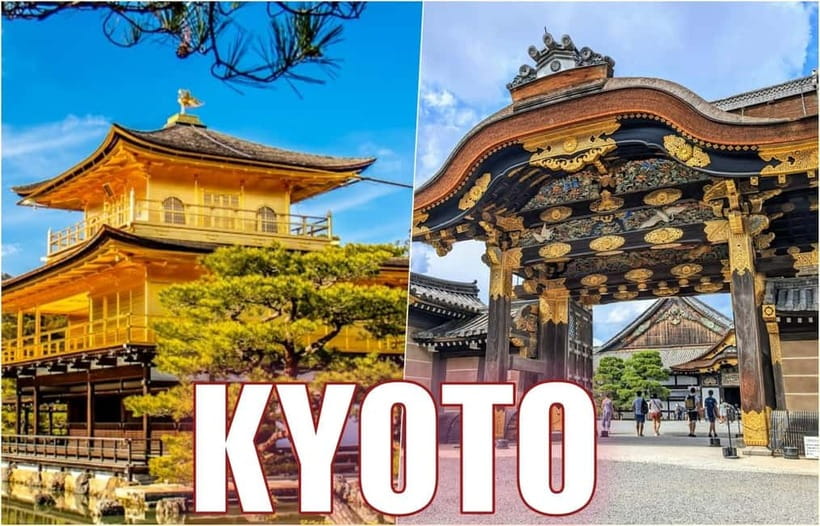
Kyoto can feel scattered at first. Its famous sights sit in different parts of the city, and a first visit can lose a lot of time simply figuring out buses, subway lines, entrances, and the order of stops. This tour solves part of that problem by grouping three major attractions into a clear morning route.
You meet at 8:30 a.m. in front of the 7-Eleven at the JR Kyoto Station building, on the Kyoto Tower side of the station. Roberto holds an iPad and a red card marked RBRT, which makes the meeting point easier to identify in a large station complex.
The route begins with a 35-minute bus ride to Kinkaku-ji. From there, you spend about 90 minutes at the Golden Pavilion, travel by subway for roughly 20 minutes, and spend about 95 minutes at Nijo Castle. A further subway ride of about 15 minutes and a 10-minute walk bring you to Nishiki Market. The tour finishes around 12:30 p.m.
That schedule gives you a solid introduction to Kyoto before the afternoon crowds and heat become a bigger concern. It also means you should not expect long unplanned breaks. If your ideal tour includes slow photography, extended shopping, or sitting down for tea at each stop, this route may feel brisk.
More market mornings in Kyoto:
- Nishiki Market Brunch Walking Tour (7 Tastings + Brunch)
★ 5.0 · 1,355 reviews - Kyoto Nishiki Market Food and Culture Walking Tour
★ 5.0 · 412 reviews - Kyoto: Nishiki Market Tea Ceremony with Koto Performance
★ 4.8 · 294 reviews
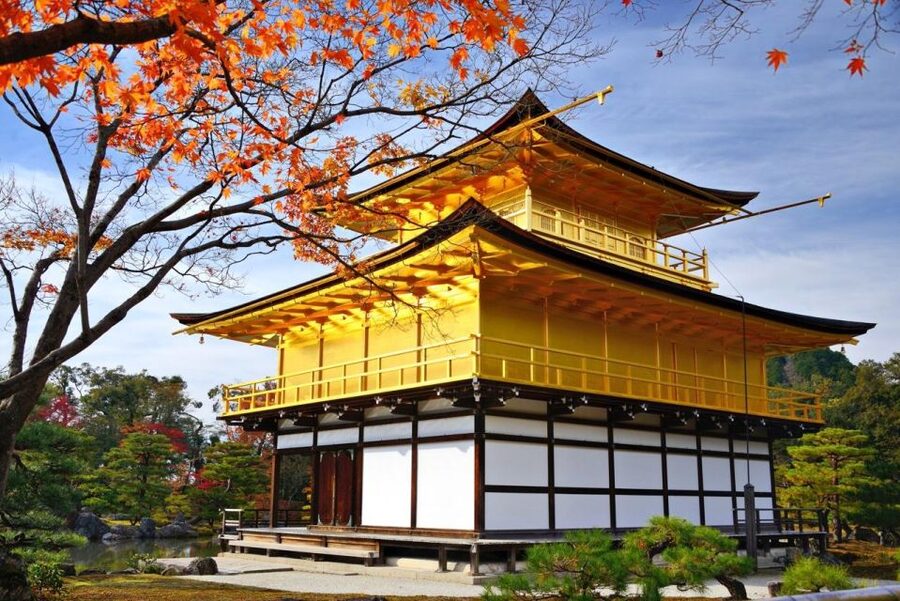
Kinkaku-ji, where gold reflects in the pond
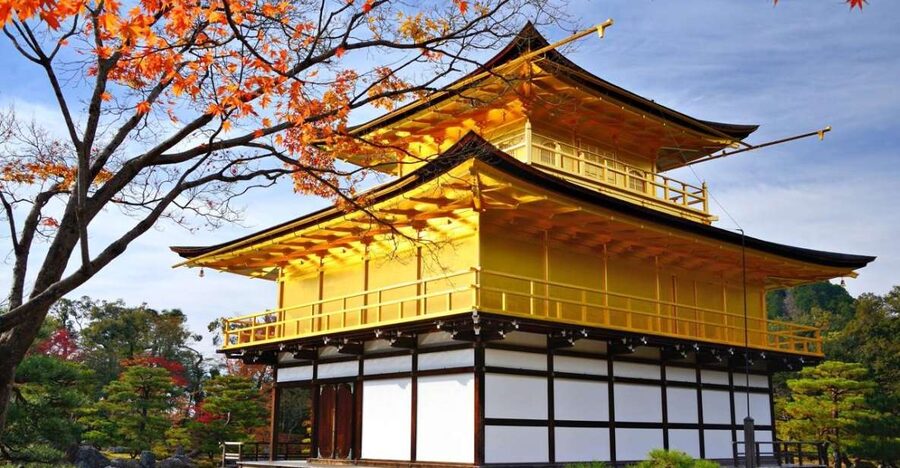
Kinkaku-ji, also called the Golden Pavilion, is Kyoto’s most instantly recognizable temple sight. The top two floors are covered in real gold leaf, and the building is reflected in the pond in front of it. The effect is carefully framed and undeniably striking, even for visitors who normally prefer quieter temples.
The pavilion began as a villa for Ashikaga Yoshimitsu, a 14th-century shogun. After his death, it became a Zen Buddhist temple. That change from private residence to religious site gives Roberto a useful way to explain the relationship between political power, personal wealth, and Buddhist devotion.
The gold was not used merely for decoration. It signaled wealth, authority, and religious commitment. With the iPad, Roberto can add visual context that is difficult to get from a small sign or an audio guide. Names and historical connections can be hard to retain in Kyoto, especially when you are seeing several places in one day, so the visual aid should help.
You will have about an hour and a half here for the guided visit. That is enough time to see the pavilion, hear its background, and walk through the grounds without turning the stop into an all-morning visit. You should bring your camera, but remember that some temple areas do not allow photography.
Kinkaku-ji is also the most crowded and photograph-driven stop on this route. The pavilion itself is a showpiece, but you should not expect a quiet private encounter with it. The value of a guide here lies less in gaining special access and more in understanding why this building looks the way it does and what it tells you about Yoshimitsu’s era.
Nijo Castle and the sound of the shogun’s security system
Nijo Castle changes the mood completely. Kinkaku-ji presents the power of a shogun through beauty and display. Nijo Castle shows how that power operated inside a fortified residence.
The castle is tied to the Tokugawa shoguns and the Edo Period. Roberto explains the struggles among samurai, feudal lords, and the shogun, who held the country’s military authority. The tour also covers the end of the samurai era and the beginning of Japan’s modernization. That broad arc gives the stop real purpose: you are not only looking at old rooms, but following the shift from feudal rule toward modern Japan.
The architecture is another reason to spend time here. Nijo Castle is known for Edo Period woodwork, detailed designs, and formal interiors. The buildings and grounds show how status was expressed through space, movement, and decoration.
Then there are the famous nightingale floors. These wooden floors chirp when walked on, creating an early warning system against unwanted movement inside the castle. It is one of those small physical details that makes history tangible. You do not need a long lecture to understand the idea. Your feet and ears do much of the work.
The planned visit lasts about 95 minutes, making Nijo Castle the longest stop of the morning. That extra time is worthwhile because there is more to take in than one view or single building. Still, the castle involves walking through historic spaces, and some surfaces, stairs, and passages may be demanding for anyone with limited mobility.
Nishiki Market, Kyoto’s kitchen at the end of the morning
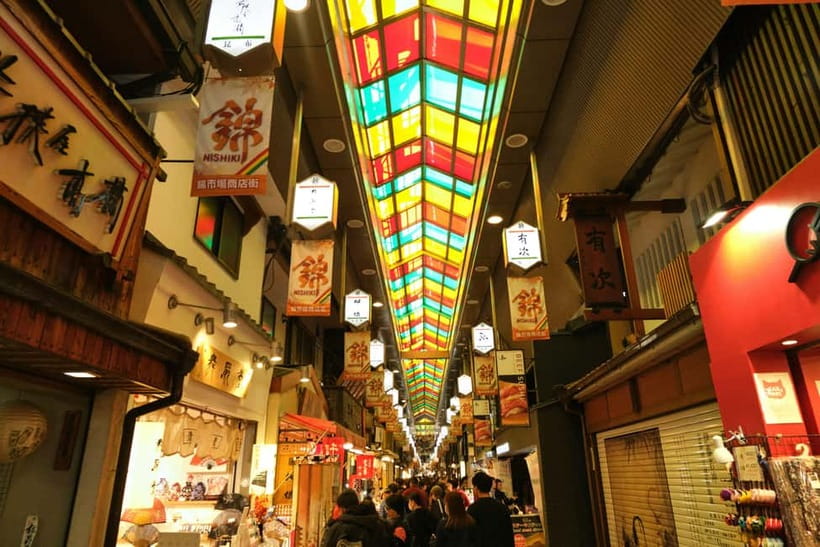
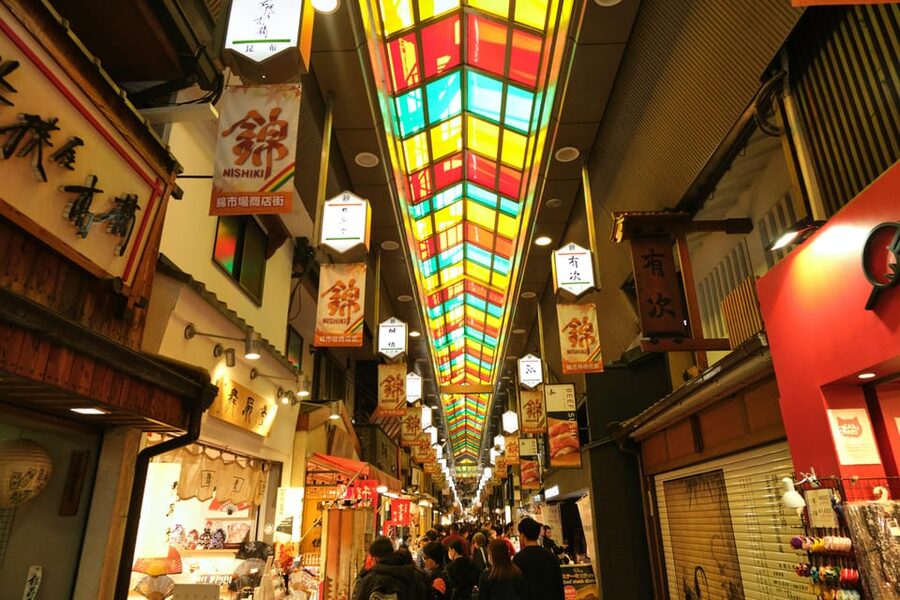
Nishiki Market is a five-block shopping street lined with more than 100 shops and restaurants. It is often called Kyoto’s Kitchen, and the nickname makes sense once you see the concentration of food businesses in one narrow corridor.
You can find fresh seafood, produce, knives, cookware, and other food-related goods. The market is a useful place to see how Kyoto’s culinary life works at street level, not just through formal restaurant meals. It is also a practical place to eat because you can choose according to your appetite and budget.
The tour ends at the market entrance. Roberto explains the origins of the market, then leaves you free to decide what you want for lunch among the many choices. I consider this one of the strongest design choices in the tour. Lunch preferences vary widely, and a fixed meal would limit you. Here, you can browse first and choose later.
Nishiki Market can feel lively and hectic, particularly when the narrow street fills with people. Keep your bag close, move with the flow, and be considerate about where you stop for photographs. The market is not simply a final attraction to check off. It is also where the formal stories of temples and castles give way to everyday food, shopping, and local commerce.
Because many foreign visitors come here, explanations and signs are available in English in much of the market area. The guide’s introduction helps you understand what you are seeing, but you will have the freedom to continue exploring after the official tour ends.
More shopping runs in Kyoto:
- Kyoto: Nishiki Market Brunch Walking Tour-7 Tastings+Brunch
★ 4.8 · 197 reviews - Kyoto: Local Food Tasting Tour at the Nishiki Market
★ 4.7 · 135 reviews - Kyoto: Nishiki Market and Depachika Food Tour with a Local
★ 4.7 · 76 reviews - Kyoto: Nishiki Market Tour with a Local Foodie & Tastings
★ 4.5 · 67 reviews
Roberto’s guiding approach
Roberto is a Kyoto City Certified Tourist Guide, and the tour is available in English or Spanish. His approach combines spoken explanations with images on an iPad that he created himself. That matters in Kyoto, where historical names, religious terms, and political titles can quickly blur together.
The private-group format is another advantage. You can ask why Yoshimitsu mattered, how the shogun controlled the feudal lords, or why a castle floor makes a sound without worrying about holding up a large group. Roberto can also take as many pictures of you as you wish, a simple service that is helpful when you are traveling as a couple or family and do not want to rely on strangers.
Personal attention is especially useful on a four-hour route. The morning is short, and a guide who can keep the explanation focused will help you get more from each stop. The strongest praise associated with Roberto centers on his friendly manner, clear historical insight, and willingness to pay attention to individual needs. A short video has also been made for some groups, though you should not treat that as a guaranteed part of every booking.
One useful extra is Roberto’s willingness to recommend places for the rest of your Kyoto stay. Ask him about that early in the morning if you have specific interests. Since the tour covers history, food, and transport, it is a good time to ask for help planning later visits.
What the $90 price really covers
The tour costs $90 per person. That is not the total cost of the morning because you must also pay the entrance fees and transportation. Admission is listed as 500 yen for Kinkaku-ji and 1,300 yen for Nijo Castle, for a combined 1,800 yen, or approximately $11.25 based on the supplied estimates.
Your bus and subway fares are also extra. The guide’s own entrance fees and transport do not need to be covered by you, but your personal fares still do. Food and drinks at Nishiki Market are not included.
The price makes the most sense for visitors who value context and convenience over the lowest possible cost. If you only want photographs of Kinkaku-ji and Nijo Castle, public transport and a guidebook will cost less. If you want someone to handle the route, explain the political background, translate the significance of details, take photos, and offer ideas for later days, the private format gives the fee a clearer purpose.
It is also worth considering the time savings. A half-day tour that handles three major stops can leave your afternoon open for another neighborhood or a rest. That is useful in Kyoto, where distances between sights can make independent planning slower than expected.
Practical details that affect your morning
Wear comfortable shoes. The tour uses buses, subways, and walking, and you need to be in reasonable walking condition. It does not involve mountain climbing or very long stairs, but it is not a seated coach tour.
The experience runs rain or shine, so bring suitable weather protection. Large bags and luggage are not allowed, and baby strollers are not suitable for this activity. The tour is not designed for wheelchair users, pregnant women, people with back problems, or people with a low level of fitness.
The meeting point is specific: the 7-Eleven in the JR Kyoto Station building, 1F, near the Kyoto Tower side exit. Kyoto Station has several exits and a confusing layout, so allow time to find the correct side. Look for Roberto with the iPad and red RBRT card.
You can cancel up to 24 hours before the start for a full refund, and the reserve-now, pay-later option keeps your plans flexible. Check the available starting time when booking, since the advertised schedule is 8:30 a.m. to 12:30 p.m.
Who should book this Kyoto tour
I would choose this tour for a first visit to Kyoto when you want a strong historical foundation without spending a full day on formal sightseeing. It suits couples, families with older children, and small private groups who prefer to ask questions as they go.
It is especially useful if you want to understand the shogun and samurai period rather than simply photograph famous buildings. The mix of an elegant temple, a political castle, and a food market also gives you a broader sense of Kyoto than a route made up of temples alone.
I would hesitate if you need a slow pace, have serious mobility concerns, or dislike public transport. You also need to budget for about 1,800 yen in admissions, transport fares, and lunch. And while Nishiki Market is a good place to finish, the narrow shopping street can feel crowded.
Should you book it?
Book this tour if you want three major Kyoto experiences tied together by one clear historical story. Roberto’s iPad explanations, private-group format, photo help, and local recommendations add value beyond simply reaching the sights.
Skip it if you already know Kyoto’s history, prefer to explore at your own pace, or want a full meal and extended shopping time at Nishiki Market. For a first morning in the city, though, the route is efficient, educational, and easy to build the rest of your trip around.
FAQ
How long does the tour last?
The tour lasts approximately four hours, from 8:30 a.m. to 12:30 p.m.
Where does the tour begin?
It begins in front of the 7-Eleven at the JR Kyoto Station building, 1F. Use the Kyoto Tower side exit.
How will I recognize the guide?
Roberto will hold an iPad and a red card marked RBRT.
Which languages are available?
The live guide is available in English and Spanish.
Are transportation costs included?
No. Your own bus and subway fares are not included. The guide’s entrance fees and transportation do not need to be paid by you.
Are entrance fees included?
No. Kinkaku-ji costs 500 yen and Nijo Castle costs 1,300 yen, according to the supplied prices.
Can I cancel the booking?
Yes. You can cancel up to 24 hours in advance for a full refund. A reserve-now, pay-later option is also available.
Just added around Kyoto
- Kyoto: Zen Meditation at a Private Temple with a Monk★ 5.0 · 25 reviews
- Kyoto: Gion Geisha District & Sake-in-Hand Walking Tour★ 5.0 · 37 reviews
- Private Pewter Sake Cup Experience with a Kyoto Artisan★ 5.0 · 31 reviews
- Your Private Vacation Photography Session In Kyoto★ 5.0 · 110 reviews
- Private Guided Traditional Buddhist Cooking in Japan★ 5.0 · 16 reviews
- Kyoto Wagashi(Japanese sweets) Cooking Class near Fushimiinari★ 5.0 · 60 reviews
- Traditional Japanese Music show & Experience Tour in Kyoto★ 5.0 · 57 reviews
- Kyoto:Family-Friendly Kimono & Yukata Experience at WARGO★ 5.0 · 147 reviews
Kyoto Tours, compared.


Fushimi Inari, Kinkakuji, Bamboo Grove 1 Day Bus Tour
Read our review →
Tea Ceremony in a Traditional Tea House in Kiyomizu
Read our review →
Kyoto Geisha Walking Tour: Gion District & Hidden Gems
Read our review →

Gion Magical Night Walking Tour with Geisha Trivia
Read our review →

Gion Geisha District Walking Tour – Stories of Geisha
Read our review →Browse the lists this tour appears in