
Reviewed · KYOTO TOURS
Kyoto: Nishiki Market and Depachika Food Tour with a Local
Kyoto’s best food lesson may happen below street level, then continue under a covered arcade. This tour pairs Daimaru’s Depachika food hall with Nishiki Market, so you see both polished department-store specialties and the everyday ingredients of Kyoto’s Kitchen. I like the small groups, limited to nine, and the set tastings of yuba sashimi, soy milk doughnuts, Nishiki gyoza, and tempura hamo.
I also like the way the tour adds Nishiki-Tenmangu Shrine, giving you a quiet cultural pause between food stops. The main caution is timing: the experience is sold as two hours, but the stated stop estimates add up to three hours, so confirm the exact schedule before booking.
Key points at a glance
- Two very different food stops: Compare Daimaru’s refined basement food hall with Nishiki Market’s narrow row of specialty stalls.
- Four named tastings: Expect tofu skin sashimi, a soy milk doughnut, Nishiki gyoza, and tempura hamo fish tempura.
- Small English-speaking groups: With no more than nine people, it is easier to ask questions and stay close to the guide.
- A shrine between the bites: Nishiki-Tenmangu offers a short look at Shinto customs, including the hand-washing fountain.
- Useful for first-time visitors: Guides such as Mao, Jasmine, Ai, Boris, and Kats have helped explain unfamiliar foods and local customs.
- Plan for walking and crowds: Comfortable shoes, cash, and an early arrival at Apple Kyoto matter more than fancy gear.
Why the Daimaru basement is a smart first stop
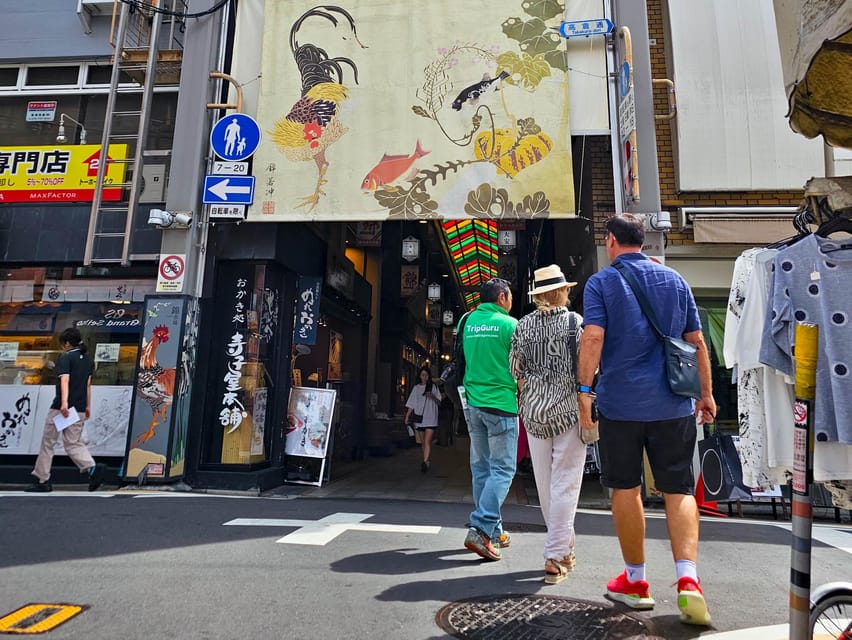
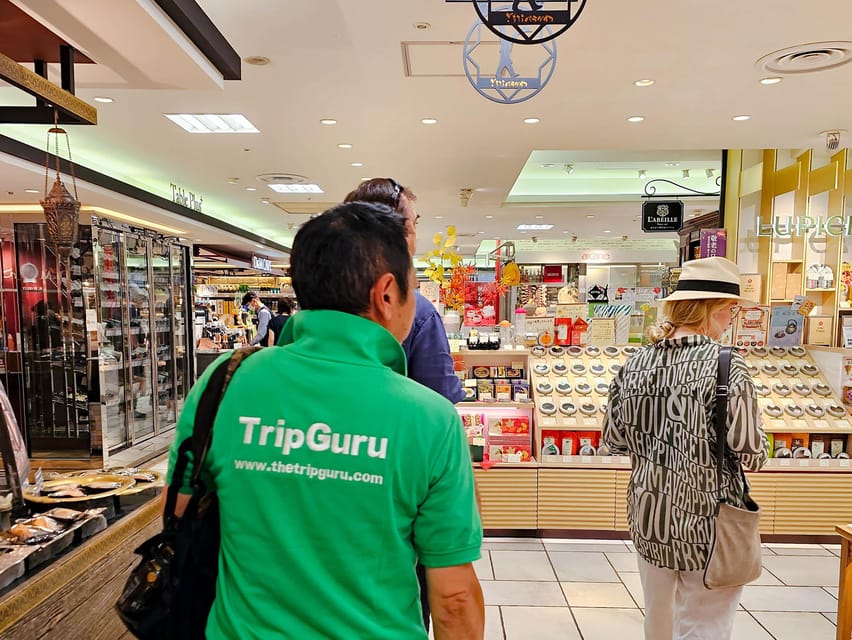
Meet your guide at Apple Kyoto, where the guide will wear a TripGuru shirt or carry a TripGuru sign. Arrive at least 10 minutes early. The guide may wait only 10 minutes, and Kyoto traffic can take longer than a navigation app suggests.
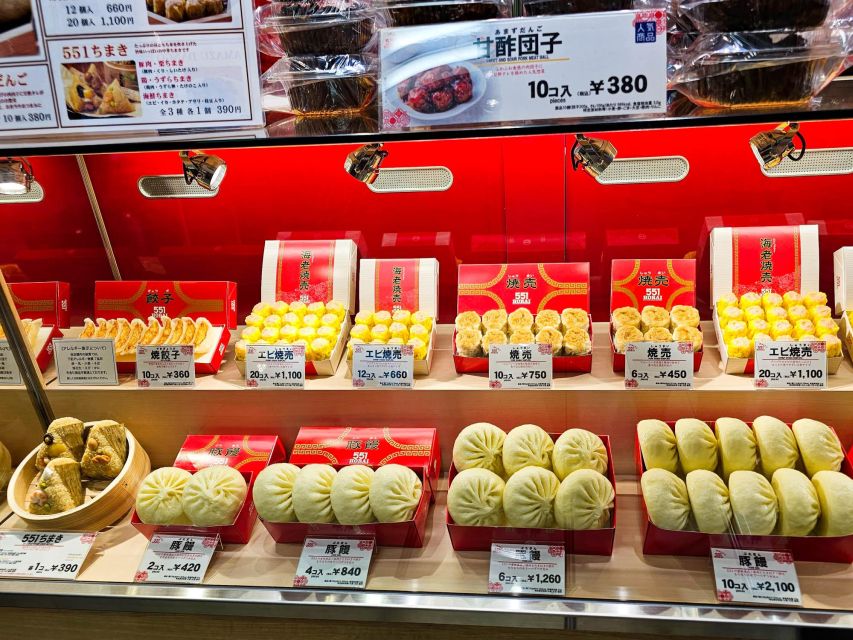
From there, you head to Daimaru Kyoto. Its Depachika is a basement food hall found beneath a department store, but it feels far removed from a simple supermarket. You might find carefully presented Japanese sweets, prepared foods, regional specialties, drinks, and imported gourmet goods arranged with great care.
This stop gives you a useful introduction to Japanese food culture because it shows how presentation and quality matter even in a city department store. It is also a good place to ask questions before entering Nishiki Market, where the signs and ingredients can feel less familiar.
The listed tasting menu begins with yuba sashimi, made from tofu skin. Yuba is closely associated with Kyoto’s vegetarian food traditions, and its soft texture can surprise people expecting something more like raw fish. You also receive a soy milk doughnut, a sweeter and more accessible counterpoint.
The tasting portions are not meant to replace lunch. Think of them as guided samples that help you decide what deserves a second look later. If you have a sweet tooth, or if your group includes someone cautious about unfamiliar food, the doughnut offers an easy starting point.
Daimaru also gives you time to look around and shop. One useful tip from the tour experience is that not everything with a high price tag is a wise purchase. A guide such as Ai has helped visitors understand what to consider when comparing items such as boxed foods, fruit, and prepared dishes.
This is where the value of a local guide becomes clear. You can walk through a food hall alone, but you may not know which displays are everyday choices, which are gifts, and which are priced for luxury presentation. A guide can also help you ask questions without the awkwardness of pointing at a package and hoping for the best.
More Food Tours in Kyoto
- Kyoto Night Foodie Tour in Gion (9+ dishes + 6 Sake tastings)
★ 5.0 · 1,762 reviews - Kyoto: Gion Food Tour 13 Dishes at 4 Eateries
★ 5.0 · 408 reviews - Kyoto: Gion & Pontocho Food Tour with 13 Dishes
★ 4.9 · 235 reviews
Walking through Nishiki Market, Kyoto’s Kitchen
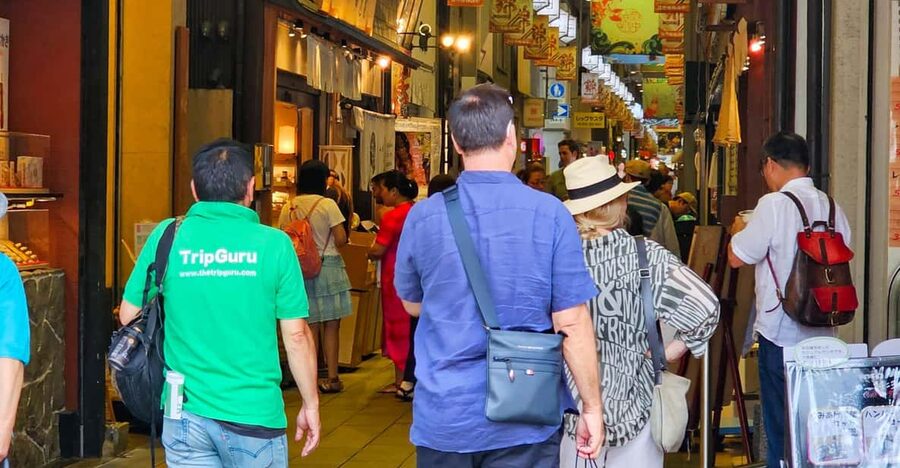
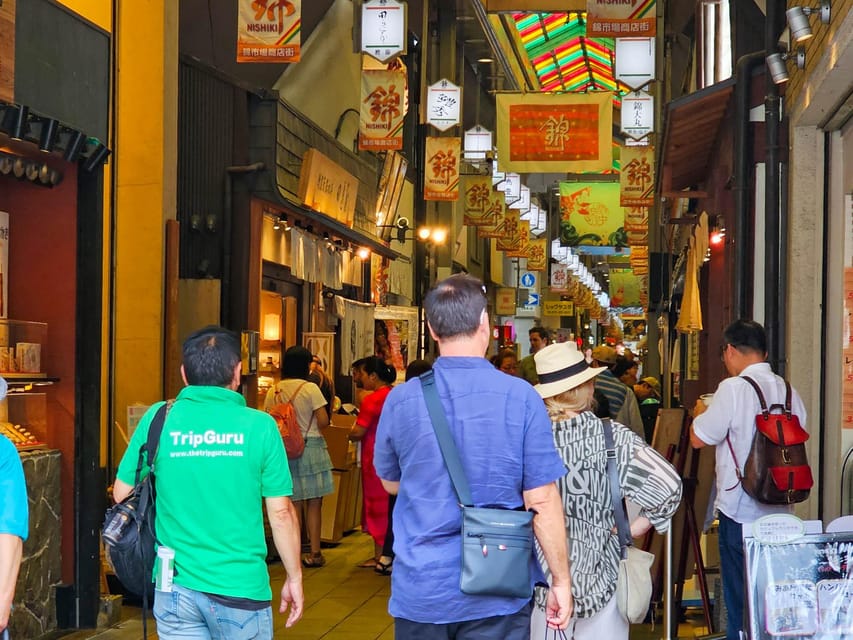
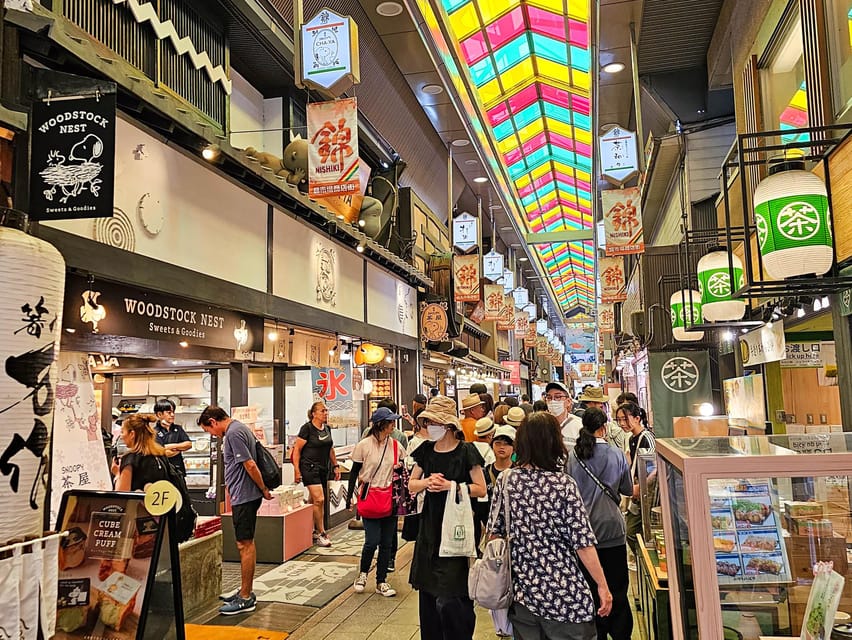
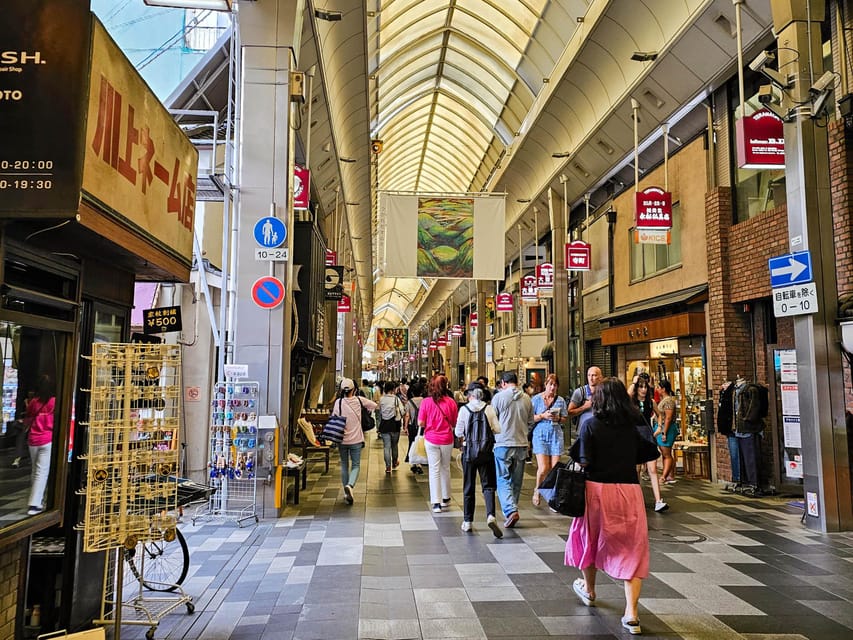
The tour then moves into Nishiki Market, a covered food street filled with vendors selling seasonal products, Kyoto specialties, produce, knives, cookware, and ready-to-eat snacks. The passage can be crowded, so keep your group in sight and avoid stopping in the middle of the walkway.
Nishiki is not simply a place to collect samples. It is a working market with family-run shops, and some businesses have been operated by the same families for generations. That continuity helps explain why the market feels tied to Kyoto’s cooking rather than built only for sightseeing.
Your guide points out ingredients and explains how different foods fit into Japanese meals. You might hear about preparation methods, local customs, or the traditional way to eat a particular item. The best guides, including Boris, Jasmine, and Yoku in past tours, have made room for questions about ingredients, etiquette, and Kyoto’s food traditions.
The included market tastings are Nishiki gyoza and tempura hamo fish. Gyoza will be familiar to many people, but the Nishiki version gives you a chance to compare a local shop’s style with what you may have eaten elsewhere. Hamo, or pike conger, is a fish associated with Kyoto cuisine and is often prepared with careful attention to its many fine bones.
That fish is a good example of why a guided tasting helps. You are not just trying a random fried snack. You are getting a small lesson in a regional ingredient and the skill involved in preparing it. If you are willing to try something new, hamo may be one of the more memorable bites of the tour.
The market also leaves room for shopping. You are not required to buy from the stalls, and the guide can point out items worth returning for after the organized tasting ends. Bring cash, since it is specifically recommended for the activity and may be useful for personal purchases.
Do not expect to eat every interesting thing you see. The market is full of possibilities, but the tour includes only the stated tasting items. Additional food and drinks are not included, so budget extra if you want to sample more, buy gifts, or turn the walk into a full meal.
One past participant found the tasting arrangements unclear, waiting for the guide to suggest food while the guide waited for the participant to ask. I would handle this simply: at the start, ask what is included, when each sample will be served, and how much time is available for extra purchases. That small conversation can prevent disappointment.
Nishiki-Tenmangu Shrine adds a welcome pause
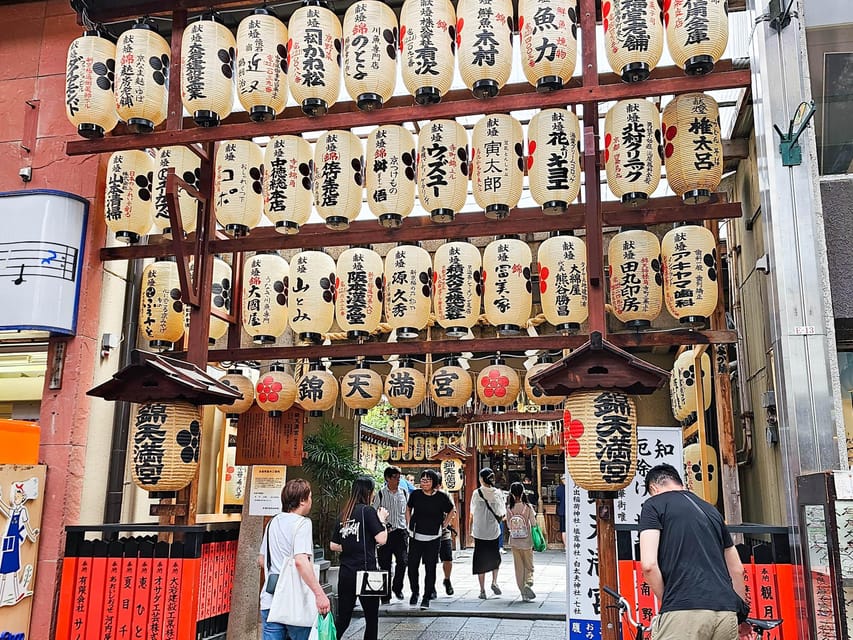
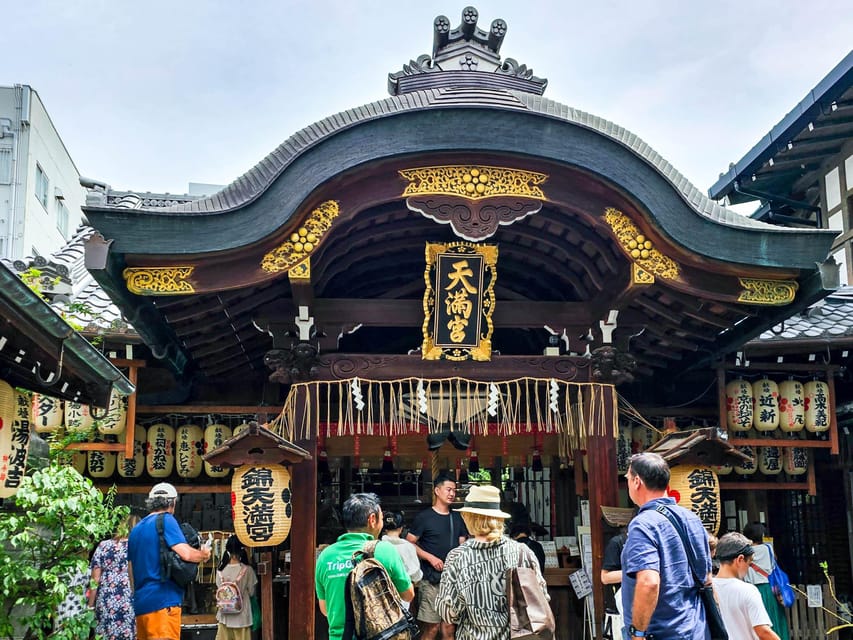
After the market, the route includes Nishiki-Tenmangu Shrine. This Shinto shrine is dedicated to the deity of learning and sits close to the food stalls, yet it offers a calmer setting.
You will have time to look at the architecture, learn about the shrine, and cleanse your hands at the sacred water fountain. The hand-washing ritual is not a bath or a casual rinse. Your guide can show you the proper sequence and explain why the act matters before you approach the shrine.
I like this stop because it changes the pace. Two hours of market browsing can become a blur of signs, smells, and small bites. A short shrine visit gives you time to notice the religious customs that remain part of daily life in Japan.
The shrine visit is not a major sightseeing stop, and you should not book this tour expecting a full temple or shrine history lesson. It is a compact cultural addition that fits well into a food walk. The finish is at Kyoto-Kawaramachi Station, which makes it practical if you want to continue shopping, sightseeing, or finding a later meal nearby.
What the guide adds to the food
The guide is the heart of this experience. The tour is offered in English, and past guides have included Mao, Jasmine, Ai, Kats, Boris, Vincent, Yoku, Richard, Brook, Simon, Miya, and Katz. The assigned guide can vary, so do not book based on one particular person unless the provider confirms that name.
The strongest guide style here is conversational rather than scripted. Boris has been praised for explaining the culture and history behind the food, while Richard has offered recommendations for places to eat and drink after the tour. Kats, who was born and raised in Kyoto, has also helped connect the market to the wider city.
A good guide should explain what you are eating before you taste it, then let you decide how adventurous you want to be. That matters if you are new to Japanese food or traveling with a child who has a limited palate. One guide successfully adjusted the experience for a child while still offering more adventurous choices to the adults.
You should also feel free to ask direct questions. Ask how a food is made, what to buy for a gift, where to return later, or how to recognize a good sake. The small group format makes this much easier than a large tour where every answer must serve dozens of people.
The personal touch can be substantial. Past guides have accommodated minor scheduling mix-ups, waited patiently when people wanted a longer look at Daimaru, and offered suggestions for the rest of a Kyoto visit. That flexibility is useful, but it also means the exact rhythm may depend on your guide and group.
Same base, a completely different sort of day:
- PERFECT KYOTO 1-Day Bus Tour
★ 5.0 · 13,518 reviews - Kyoto: Fushimi Inari, Kinkakuji, Bamboo Grove 1 Day Bus Tour
★ 4.8 · 4,316 reviews - Kyoto: Tea Ceremony in a Traditional Tea House in Kiyomizu
★ 4.9 · 3,519 reviews - Kyoto Geisha Walking Tour: Gion District & Hidden Gems
★ 4.7 · 3,273 reviews
Is $42 good value for two hours?
At $42 per person, this is not a cheap way to eat in Kyoto. You could buy several snacks at Nishiki Market for less money, especially if you already know what you want and can read the signs.
The price pays for more than the food itself. You receive an English-speaking guide, four listed tastings, explanations of Japanese food and customs, an introduction to a Depachika, time in Nishiki Market, and a short shrine visit. For a first visit, that guidance can save you from spending your limited time guessing what to order.
The value is strongest if you are curious but unsure where to begin. A person who already knows Kyoto’s markets, speaks Japanese, and enjoys choosing independently may find the cost harder to justify. A first-time visitor who wants context and a manageable introduction will likely get more from it.
The tour also suits a short Kyoto stay. A two-hour food walk can fit into a busy day, and multiple start times make it easier to place around other plans. Still, the published timing needs attention: Daimaru is listed at 1.5 hours, Nishiki Market at 1 hour, and the shrine at 30 minutes, which totals three hours. Since the overall duration is stated as two hours, check the chosen departure time and expected finish before making a tight reservation afterward.
Practical advice before you go
Wear comfortable shoes. You will walk through department-store corridors, a covered market, and nearby streets, and standing time may be significant.
Bring cash and a camera, as requested. Cash is especially useful for extra food and personal purchases, since those costs are not covered. The included tasting items are set, so ask about any additions before buying.
Be punctual at Apple Kyoto. The meeting point is specific, and the guide may move on after 10 minutes. Give yourself a generous margin in the morning or during busy traffic periods.
This experience is not suitable for pregnant women or people with mobility, heart, or respiratory problems. The provider does not describe hotel pickup or drop-off, so you need to reach Apple Kyoto and make your own way from Kyoto-Kawaramachi Station at the end.
The group is limited to nine, which is a useful middle ground. You get more personal attention than on a large bus tour, but you may still need to share tasting time and aisle space with others. If your party wants a private, slow shopping experience, this is not that kind of tour.
Free cancellation is available up to 24 hours before the activity for a full refund. You can also reserve and pay later, which helps if your Kyoto schedule is still changing.
Who will enjoy this food walk most?
I would recommend it to first-time Kyoto visitors who want a friendly introduction to local food without committing to a full-day food tour. It is also a good fit for families with older children, couples, solo visitors, and anyone who wants a guide to explain unfamiliar dishes.
Food lovers will appreciate the contrast between polished Daimaru displays and the traditional market stalls. People interested in culture will like the shrine visit and the explanations of eating customs.
I would be more cautious if you dislike crowded indoor markets, need frequent seating, or want a large number of tastings. The tour is short, and the four specified samples may feel light if you expect a full lunch.
Should you book the Nishiki Market food tour?
Book this tour if you want structured first steps into Kyoto’s food scene, especially if you would otherwise wander past unfamiliar stalls without knowing what to try. The small group, English guidance, and mix of Daimaru, Nishiki Market, and Nishiki-Tenmangu Shrine give the experience more range than a simple snack crawl.
Skip it if you are confident exploring on your own or want complete control over every purchase. Before booking, confirm the real duration, ask how the tastings will be organized, and leave room afterward for additional food. For the right visitor, $42 is a fair price for a compact introduction to Kyoto’s flavors and customs.
FAQ
How long does the tour last?
The activity is advertised as two hours. The stated stop estimates add up to three hours, with 1.5 hours at Daimaru, one hour at Nishiki Market, and 30 minutes at Nishiki-Tenmangu Shrine, so confirm the exact timing before booking.
Where does the tour start?
The meeting point is Apple Kyoto. Your guide will be wearing a TripGuru shirt or holding a TripGuru sign.
Where does the tour finish?
The tour finishes at Kyoto-Kawaramachi Station.
What food tastings are included?
The included tastings are yuba sashimi, also called tofu skin, a soy milk doughnut, Nishiki gyoza, and tempura hamo fish.
Is the tour conducted in English?
Yes. The tour includes a live English-speaking guide.
How large is the group?
The activity is a small-group tour limited to nine participants.
Are extra food and drinks included?
No. The listed tastings are included, but additional food, drinks, and personal purchases cost extra.
What should I bring?
Bring comfortable shoes, a camera, and cash. You should also arrive at least 10 minutes before the stated meeting time.
More Shopping in Kyoto
- Kyoto: Local Food Tasting Tour at the Nishiki Market
★ 4.7 · 135 reviews - Kyoto: Nishiki Market Tour with a Local Foodie & Tastings
★ 4.5 · 67 reviews - Nishiki Market Lunch Tour
★ 5.0 · 47 reviews - Nishiki Market Food Tour with Cooking Class
★ 4.9 · 42 reviews
More Markets in Kyoto
- Nishiki Market Brunch Walking Tour (7 Tastings + Brunch)
★ 5.0 · 1,355 reviews - Kyoto Nishiki Market Food and Culture Walking Tour
★ 5.0 · 412 reviews - Kyoto: Nishiki Market Tea Ceremony with Koto Performance
★ 4.8 · 294 reviews - Kyoto: Nishiki Market Brunch Walking Tour-7 Tastings+Brunch
★ 4.8 · 197 reviews
Just added around Kyoto
- Kyoto: Zen Meditation at a Private Temple with a Monk★ 5.0 · 25 reviews
- Kyoto: Gion Geisha District & Sake-in-Hand Walking Tour★ 5.0 · 37 reviews
- Private Pewter Sake Cup Experience with a Kyoto Artisan★ 5.0 · 31 reviews
- Your Private Vacation Photography Session In Kyoto★ 5.0 · 110 reviews
- Private Guided Traditional Buddhist Cooking in Japan★ 5.0 · 16 reviews
- Kyoto Wagashi(Japanese sweets) Cooking Class near Fushimiinari★ 5.0 · 60 reviews
- Traditional Japanese Music show & Experience Tour in Kyoto★ 5.0 · 57 reviews
- Kyoto:Family-Friendly Kimono & Yukata Experience at WARGO★ 5.0 · 147 reviews
Kyoto Tours, compared.


Fushimi Inari, Kinkakuji, Bamboo Grove 1 Day Bus Tour
Read our review →
Tea Ceremony in a Traditional Tea House in Kiyomizu
Read our review →
Kyoto Geisha Walking Tour: Gion District & Hidden Gems
Read our review →

Gion Magical Night Walking Tour with Geisha Trivia
Read our review →

Gion Geisha District Walking Tour – Stories of Geisha
Read our review →Browse the lists this tour appears in