
Reviewed · KYOTO TOURS
Kyoto: Nishiki Market Brunch Walking Tour-7 Tastings+Brunch
Nishiki Market is the star here, but the best part is getting there slowly. You begin in quiet morning Gion, cross Shijo-ohashi Bridge, wander through Pontocho, and arrive hungry at Kyoto’s long-running food market. Seven tastings and a sit-down brunch make this more than a look-and-leave market visit.
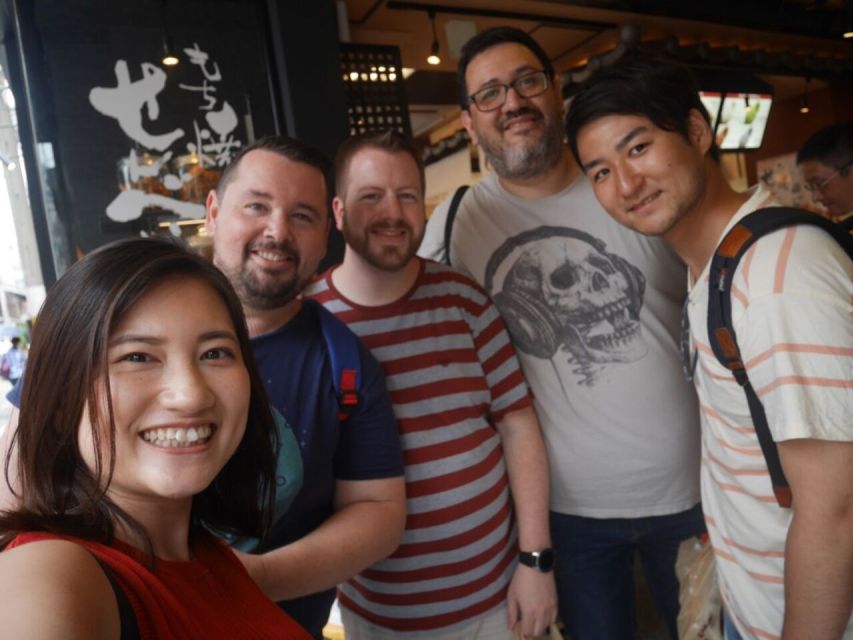
I like two things right away: the small group, capped at seven, makes it easier to hear your guide and move through tight market lanes; and the morning timing lets you see central Kyoto before the day reaches full speed. Guides such as Chie, Yutaka, Hikaru, Yuma, and Takaya have been praised for clear English, local food advice, and taking useful group photos.
The main caution is food flexibility. Vegan and gluten-free requests cannot be accommodated, and allergy-free food is not guaranteed. You’ll also walk through areas that are not suited to wheelchairs or strollers, so this tour works best for visitors who can manage several hours on foot.
Key points to know before you book
- Seven food stops plus brunch: You receive four or five market tastings along with a proper restaurant meal, not just a few token bites.
- A calm start in central Kyoto: The route shows Gion and Pontocho in the morning, when the streets feel quieter than they do at night.
- A shrine visit adds context: Nishiki-Tenmangu Shrine gives you a short cultural stop before the food portion takes over.
- Small groups matter here: With no more than seven people, your guide can answer questions and keep the group together in narrow market lanes.
- Bring cash: Extra snacks and drinks are not included, so carry yen if you want to buy more at Nishiki Market.
- The route is not fully accessible: Wheelchair users and people with gluten intolerance should choose another experience.
Why this Kyoto food walk works so well
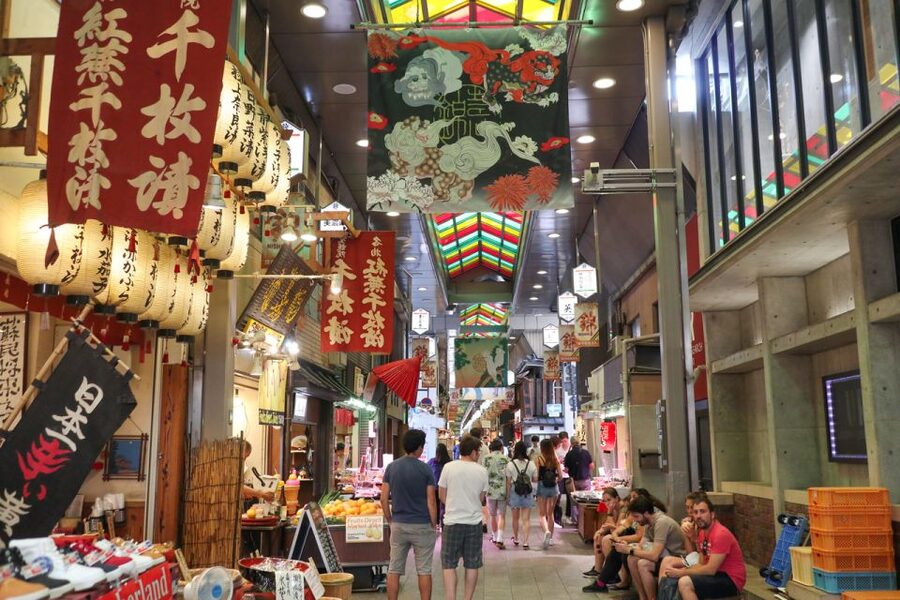
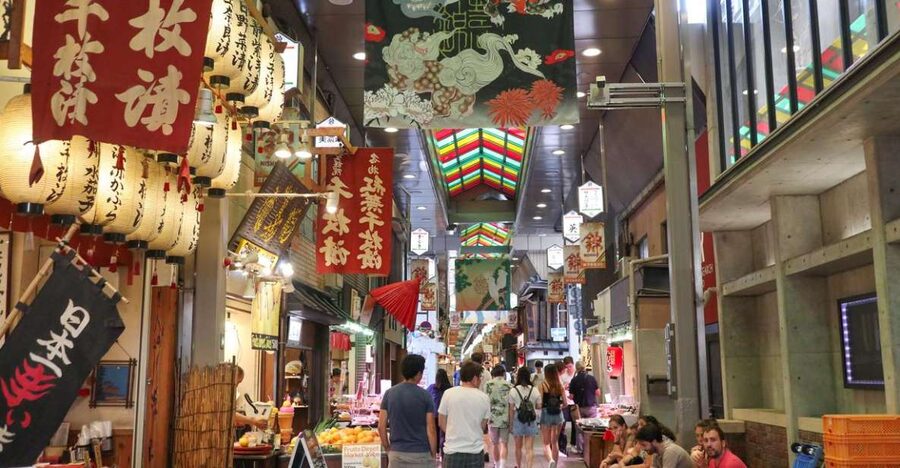
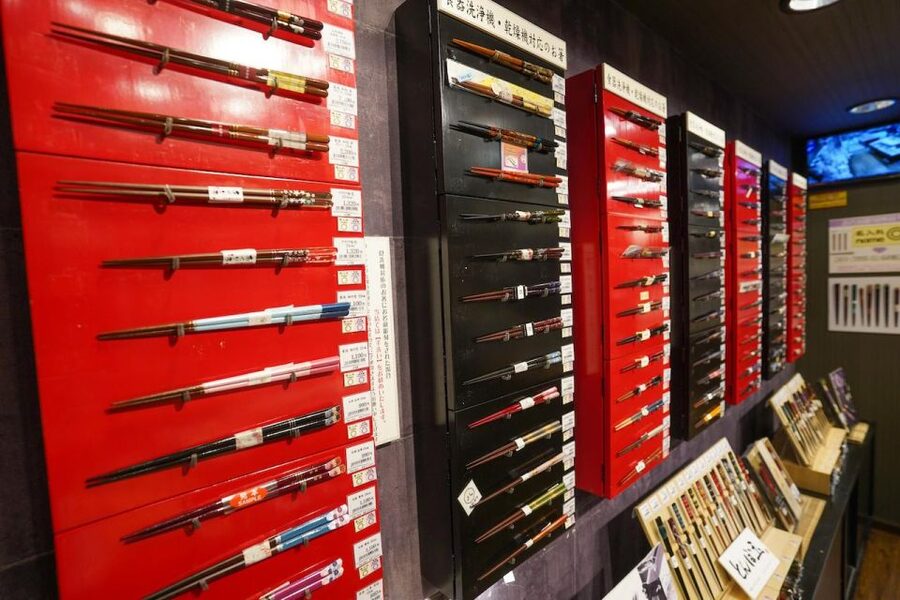
Nishiki Market can be confusing on a first visit. Its covered passage is easy to walk through, but the food shops sit among stores selling soap, honey, kitchen goods, souvenirs, and other everyday items. Without some local help, you may pass an interesting stall without knowing what it is or how to eat it.
This tour gives you a reason to slow down. Your guide explains the foods, points out local customs, and handles much of the ordering and payment process at the included stops. That is useful if you do not speak Japanese or feel unsure about trying unfamiliar dishes.
The food is only half the point. You also get a gentle introduction to central Kyoto, including the Gion area, Pontocho Alley, and Nishiki-Tenmangu Shrine. Guides have explained how to tell a shrine from a temple, how to pray at a shrine, and how Kyoto’s food customs connect with daily life.
I especially like the way the walking builds an appetite. You do not start with a heavy meal. Instead, the morning opens with a stroll, then moves into small bites, followed by brunch. It gives the three-hour experience a natural rhythm rather than making it feel like a rushed list of stops.
More market mornings in Kyoto:
- Nishiki Market Brunch Walking Tour (7 Tastings + Brunch)
★ 5.0 · 1,355 reviews - Kyoto Nishiki Market Food and Culture Walking Tour
★ 5.0 · 412 reviews - Kyoto: Nishiki Market Tea Ceremony with Koto Performance
★ 4.8 · 294 reviews
Meeting at Gion Shijo and crossing Shijo-ohashi Bridge
The tour begins outside Exit 5 at Gion Shijo Station. Look for a guide holding a MagicalTrip sign. This is a practical meeting point near the heart of Kyoto’s Gion and Pontocho districts, but station areas can be busy, so arrive with enough time to find the correct exit.
The first stop is Shijo-ohashi Bridge, where you spend about five minutes. It is a short pause, not a long sightseeing visit. Your guide may use the bridge and surrounding streets to explain how this part of Kyoto fits together before the group heads toward Pontocho.
That short walking start matters. You are not being dropped directly into the market at the busiest part of the morning. Instead, you get your bearings while walking through central streets, which makes the later market visit easier to understand.
Pontocho in the quiet morning
The route continues through Pontocho for roughly 15 minutes. This narrow area is closely linked with Kyoto’s traditional entertainment districts, and the morning atmosphere is far calmer than the evening scene.
You should set your expectations correctly. The route begins in the Gion area, but one useful detail is that it does not take you along the famous Gion street itself. You still receive local background about Gion and Pontocho, but this is primarily a food and market walk, not a full geisha-district tour.
This short section is valuable because it gives the market visit some place and history. Guides have shared stories about the district, Kyoto customs, and the difference between temples and shrines while walking. If you ask questions, this is a good time to bring them up, before the group reaches the tighter market lanes.
Nishiki-Tenmangu Shrine before the food
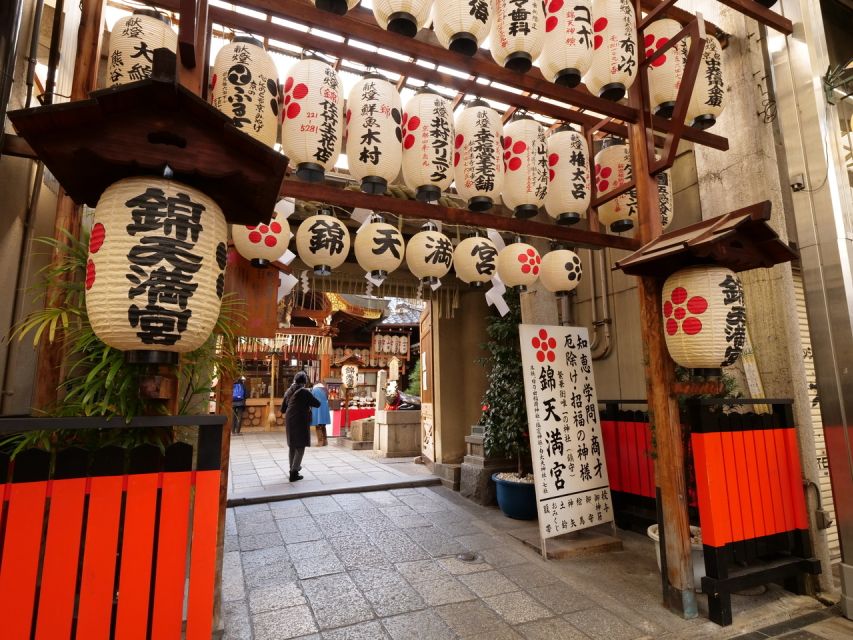
The next stop is Nishiki-Tenmangu Shrine, where the group spends about 15 minutes. It is a peaceful contrast to the food stalls ahead and a chance to learn basic shrine etiquette.
You can ask your guide how to recognize a shrine, how to approach the grounds, and how to pray properly. Several guides have made this part especially useful for first-time visitors who know the broad difference between Japanese temples and shrines but want practical help with the rituals.
The shrine also makes the walk feel less like a simple eating trip. You are seeing a small piece of local religious life before entering Nishiki Market, and the quiet pause helps break up the morning.
More shopping runs in Kyoto:
- Kyoto: Local Food Tasting Tour at the Nishiki Market
★ 4.7 · 135 reviews - Kyoto: Nishiki Market and Depachika Food Tour with a Local
★ 4.7 · 76 reviews - Kyoto: Nishiki Market Tour with a Local Foodie & Tastings
★ 4.5 · 67 reviews - Nishiki Market Lunch Tour
★ 5.0 · 47 reviews
Two and a quarter hours inside Nishiki Market
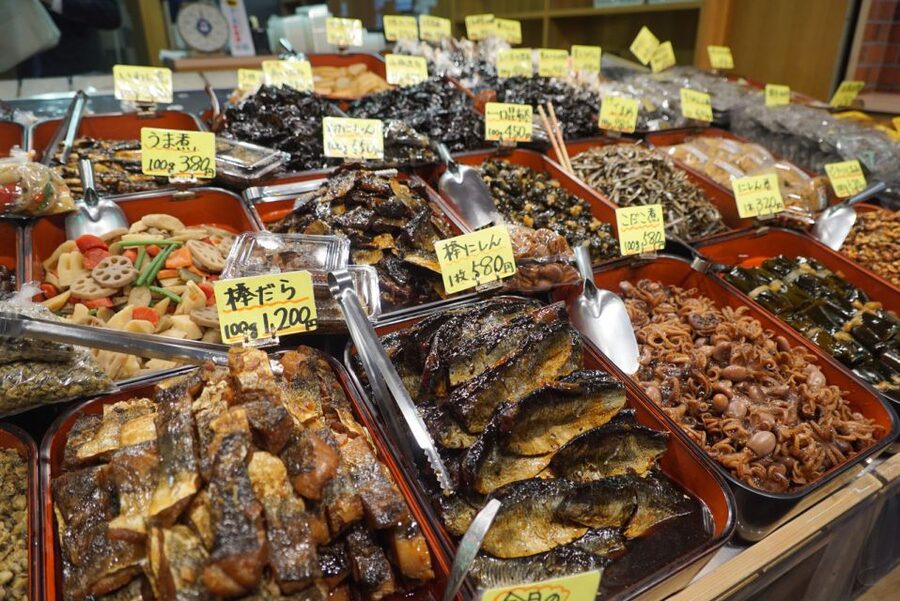
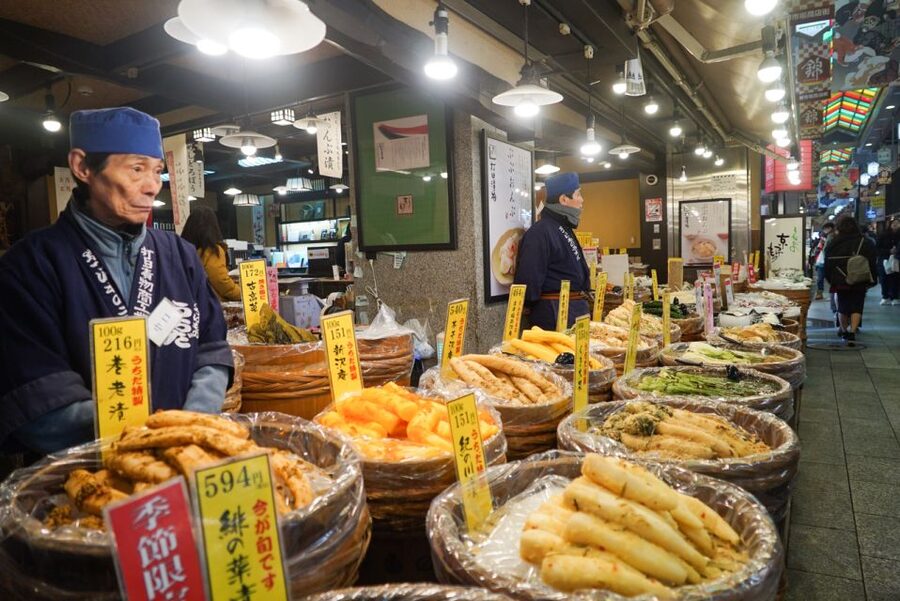
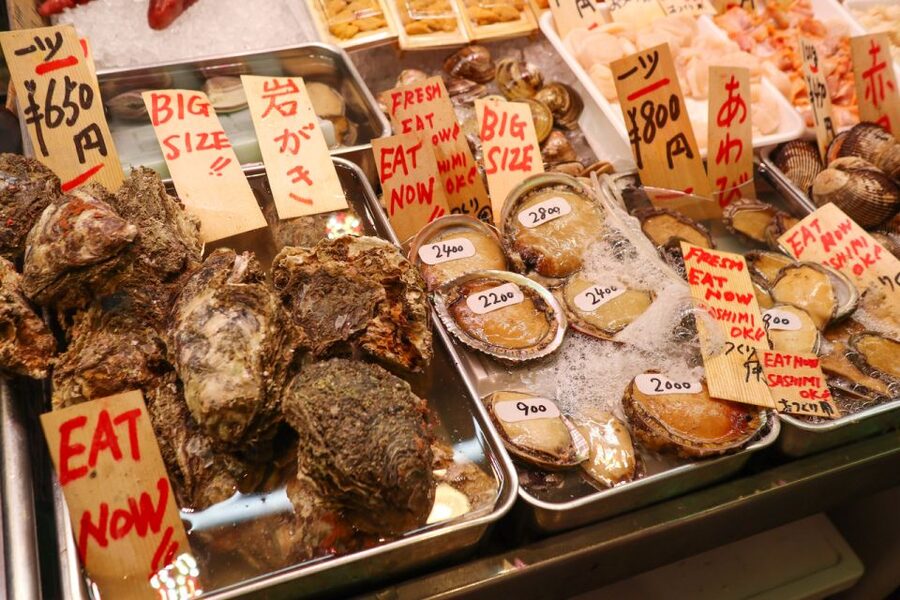
Most of the tour, about two hours and 15 minutes, takes place at Nishiki Market. The market has more than 400 years of history and is widely known as the Kitchen of Kyoto. That name is not just a tourist label. The passage is tied to Kyoto’s food traditions, with shops selling ingredients, prepared foods, sweets, drinks, and useful household goods.
The market is long and fairly narrow. It is not a giant maze, but it can feel crowded, especially later in the day. A group of seven or fewer is a sensible size here. Your guide can keep everyone together without turning the walk into a slow-moving crowd of its own.
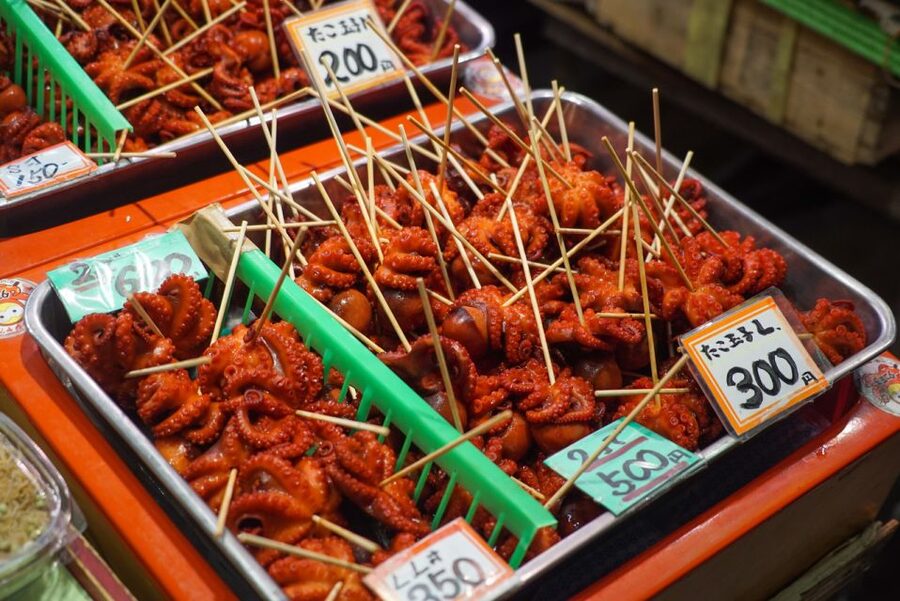
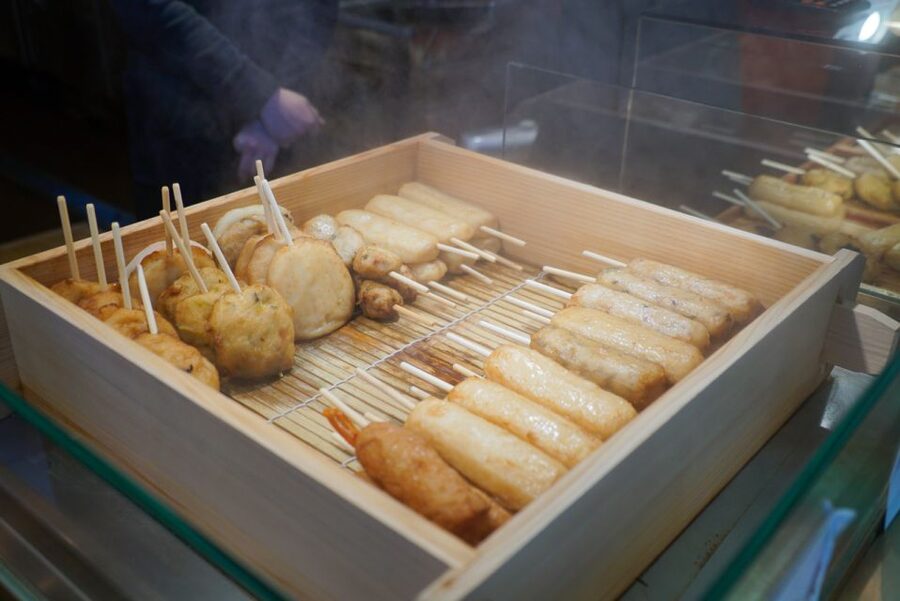
Expect to sample several foods selected by your guide. The experience includes seven kinds of tastings in total, generally described as four or five market dishes plus other snacks or sweets, along with brunch. Exact items can change, so you should think of the format as a guided selection of Kyoto foods rather than a fixed tasting menu.
This flexibility is one of the tour’s strengths. Guides have adjusted choices to suit the group’s interests when possible, and they can point out foods that catch your eye. You might try something you would have ignored on your own simply because you did not know what it was or how it fit into Kyoto’s food culture.
The tastings are also a practical introduction to the market. Instead of buying a full portion at every shop, you can try several smaller items and decide what you would like to purchase later. One smart tip is to save room. The tour includes enough food that a full breakfast before meeting the guide is likely to be unnecessary.
Do remember that extra food and drinks cost more. Bring cash for anything beyond the included tastings and brunch. The market is a good place to return later in your trip if you find a snack, seasoning, sweet, or souvenir you want to buy in a larger amount.
Brunch gives the tour a proper finish
The included brunch takes place at a restaurant during the market portion. It is more substantial than the tastings and gives you time to sit, eat, and talk with your guide and the other participants.
The precise restaurant and meal choices can vary, but the experience has included several options, with past meals such as a traditional Kyoto-style lunch and yuba dishes. The point is to finish with a complete local meal after sampling small portions around the market.
I see real value in this arrangement. A market tasting alone can leave you full of random bites but still looking for lunch. Here, the meal gives the morning a clear ending and lets your guide explain the restaurant and its place in local food culture.
It is also a social part of the tour. You can ask follow-up questions, compare the foods you tried, and get recommendations for the rest of your stay. Guides have offered suggestions for additional restaurants, market purchases, and sightseeing stops, which can be more useful than a generic list in a guidebook.
The guides are a major part of the experience
The food is the reason many people book, but the guide determines how much you get from it. MagicalTrip provides a certified local guide in English, and the strongest guide experiences have been warm, conversational, and attentive.
Chie has been praised for her history knowledge, welcoming energy, flexibility with food choices, and excellent photos. Yutaka has been noted for his easygoing manner, clear English, local food customs, and practical help getting to a next activity. Hikaru has helped visitors understand shrine rituals, Pontocho, and market foods while also offering useful Kyoto recommendations.
Other guides named by participants include Yuma, Nori, Aki, Yuki, Takaya, Reiko, Peco, Yuna, Nobu, and Aina. You cannot choose a specific guide from the information provided, but the repeated pattern is clear: the human side of the tour is central.
Photos are included, and guides commonly take pictures during the walk. That is a small but worthwhile benefit, especially when you are traveling as a family or couple and do not want to rely on strangers for every group shot.
The real value at $66
At $66 per person, this is not the cheapest way to walk through Nishiki Market. You could enter the market for free and buy a few snacks on your own for less.
The comparison changes when you count what is included: three hours with a local English-speaking guide, seven tastings, a restaurant brunch, cultural explanations, and photos. You are also paying for the convenience of having someone choose stops, explain unfamiliar foods, and help you use your time well.
I think the price is reasonable if you want an organized first look at Nishiki Market. It is particularly useful early in your Kyoto stay, since the guide can help you identify foods and shops you may want to revisit later.
The value is weaker if you already know Nishiki Market well, prefer to browse alone, or want a focused high-end food tour with a set menu. This experience is social and educational, not a formal restaurant crawl. It gives you variety and local context rather than luxury dining.
Weather, walking, and food restrictions
Plan for three hours on foot, with time standing in market lanes and moving between stops. The route includes areas that are not accessible to wheelchairs or strollers, so it is not suitable for wheelchair users.
Kyoto’s weather can be severe. Summer temperatures may reach 40°C, while winter temperatures can fall to minus 5°C. Wear shoes you can walk in, dress for the forecast, and carry water as needed, although additional drinks are your responsibility.
Food restrictions require careful thought. Vegan and gluten-free requests cannot be accommodated for this tour, and the operator cannot guarantee food without allergens because the dishes are prepared in kitchens outside MagicalTrip’s control.
You should report allergies or dietary requests at least one day ahead. The guide will make reasonable efforts to find substitutions or compensate with choices at other stops, but substitutions are not guaranteed. People with gluten intolerance should not book this experience.
Who should book this morning walk?
I would recommend it to first-time Kyoto visitors who want food, neighborhood history, and a gentle introduction to central Kyoto in one morning. It also suits families with older children and teenagers, since the small bites, shrine visit, and market setting keep the pace varied.
It is a good fit if you like asking questions and learning why a food matters, not just taking a photograph of it. The guide can also help if you are nervous about ordering in Japanese or unsure which market foods are worth trying.
Couples and solo visitors may enjoy the social format, while low-season bookings may feel especially personal if the group is small. The stated limit is seven participants, and some departures may be smaller.
I would skip it if you need a wheelchair or stroller-friendly route, require vegan or gluten-free food, or want to spend the entire morning at your own pace. I would also avoid eating a large breakfast first. The tasting stops and brunch are meant to carry you through the morning.
Should you book the Nishiki Market brunch tour?
Book this tour if you want a well-paced introduction to Kyoto food culture, with enough tasting to make Nishiki Market more than a quick photo stop. The quiet walk through Gion and Pontocho, the shrine visit, and the sit-down brunch give the morning more shape than a simple market browse.
At $66, the strongest value comes from the guide, included food, and practical local advice. If those matter to you, this is a smart first or second morning in Kyoto. If you are confident navigating markets alone, have strict dietary needs, or prefer independent eating, save your money and explore Nishiki on your own.
FAQ
Where does the tour meet?
Meet your guide outside Exit 5 of Gion Shijo Station. The guide will hold a sign saying MagicalTrip.
Where does the tour finish?
The tour finishes at Nishiki Market.
How long does the experience last?
The tour lasts three hours. Starting times vary, so check availability when booking.
What language is the tour offered in?
The live tour guide speaks English.
How large is the group?
The group is limited to seven participants.
What food is included?
You receive seven kinds of tastings and brunch at a restaurant. Additional food and drinks are not included.
Should I bring cash?
Yes. Cash is listed as something to bring, and you will need to pay separately for any extra food or drinks.
Can the tour accommodate vegan or gluten-free diets?
No. Vegan and gluten-free requests cannot be accommodated, and the tour is not suitable for people with gluten intolerance.
Is the tour accessible to wheelchair users and strollers?
No. Parts of the route are not accessible to wheelchairs or strollers, and wheelchair users are not considered suitable for this activity.
More Walking Tours in Kyoto
- Kyoto Geisha Walking Tour: Gion District & Hidden Gems
★ 4.7 · 3,273 reviews - Kyoto: Gion Magical Night Walking Tour with Geisha Trivia
★ 4.9 · 2,393 reviews - Kyoto: Gion Geisha District Walking Tour – Stories of Geisha
★ 4.7 · 2,187 reviews - Night Walk in Gion: Kyoto’s Geisha District
★ 4.5 · 2,003 reviews
Just added around Kyoto
- Kyoto: Zen Meditation at a Private Temple with a Monk★ 5.0 · 25 reviews
- Kyoto: Gion Geisha District & Sake-in-Hand Walking Tour★ 5.0 · 37 reviews
- Private Pewter Sake Cup Experience with a Kyoto Artisan★ 5.0 · 31 reviews
- Your Private Vacation Photography Session In Kyoto★ 5.0 · 110 reviews
- Private Guided Traditional Buddhist Cooking in Japan★ 5.0 · 16 reviews
- Kyoto Wagashi(Japanese sweets) Cooking Class near Fushimiinari★ 5.0 · 60 reviews
- Traditional Japanese Music show & Experience Tour in Kyoto★ 5.0 · 57 reviews
- Kyoto:Family-Friendly Kimono & Yukata Experience at WARGO★ 5.0 · 147 reviews
Kyoto Tours, compared.


Fushimi Inari, Kinkakuji, Bamboo Grove 1 Day Bus Tour
Read our review →
Tea Ceremony in a Traditional Tea House in Kiyomizu
Read our review →
Kyoto Geisha Walking Tour: Gion District & Hidden Gems
Read our review →

Gion Magical Night Walking Tour with Geisha Trivia
Read our review →

Gion Geisha District Walking Tour – Stories of Geisha
Read our review →Browse the lists this tour appears in