
Reviewed · HIROSHIMA TOURS
Hiroshima; Hiroshima Peace Memorial Museum and Castle Tour
Hiroshima’s story is most powerful when you connect the museum’s personal accounts with the actual places where the bombing happened. This three-hour walking tour does that, moving from the Peace Memorial Museum and Park to the Atomic Bomb Dome, hypocenter, surviving bomb-damaged buildings, and Hiroshima Castle.
I like the way a live guide gives the monuments context instead of leaving you to piece everything together alone. I also like the human scale of the experience: guides such as Maria, Ihsan, Leo, and Mehak have adjusted the pace for families, answered difficult questions, and pointed out less-visited places such as a school, bank, and hospital linked to the bombing.
The main drawback is the tight schedule. One hour at the museum, one hour in the park, ten minutes at the Dome, and forty minutes at the castle can feel hurried, especially if you read every display. Castle admission is extra, and the booking information gives conflicting accessibility advice, so wheelchair users should confirm details before paying.
Key points to know before booking
- The museum comes first: You receive admission and skip the ticket line, with about one hour for the exhibits.
- The park gets proper walking time: A specialist guide explains memorials, monuments, World War II, and Hiroshima’s message of peace.
- The route reaches the hypocenter: You visit the Atomic Bomb Dome and learn where the blast began.
- Surviving buildings add a personal scale: Depending on the guide and timing, you may see a school, bank, hospital, or other bombed structures.
- The castle changes the subject: Hiroshima’s samurai past, swords, and helmets provide a useful contrast to the modern city’s wartime story.
- The value comes from interpretation: At $67 per person, the tour costs more than admission alone, but the guide links difficult material into a clear story.
Why this three-hour route works
Hiroshima is not a place to rush through with a checklist. The key sites are easy to locate, but the meaning behind them is harder to grasp. A memorial, a ruined building, and a museum display can blur together when you are reading maps and translating historical terms at the same time.
This tour gives you a person to ask. You can stop when an exhibit needs more thought, ask about the events leading to the bombing, or shift the conversation toward Japanese culture and Hiroshima’s recovery. Several guides have been praised for changing the pace and content around the people in the group, including families with children aged 8, 13, and 16.
The listed duration is three hours, and that is a sensible first visit. It gives you a serious introduction without using your whole day. Still, some groups have spent longer with their guide when there was extra time or when the conversation required it. You should plan on three hours, not count on an extension.
The meeting point is a taxi stand near the Peace Memorial Museum, at 1-2 Nakajimacho. Arrive ready to walk. Comfortable shoes matter more than smart clothes here, and the route includes outdoor paths between indoor visits.
More museums and galleries in Hiroshima:
- Hiroshima: Atomic Bomb Dome and Peace Memorial Museum 3 hours
★ 5.0 · 20 reviews - Hiroshima: Tour of Atomic Bomb Dome & Peace Memorial Museum
★ 5.0 · 20 reviews - Tokyo: teamLab Planets TOKYO Digital Art Museum Entry Ticket
★ 4.6 · 9,779 reviews
Inside the Peace Memorial Museum
The museum is the emotional center of the experience. Your ticket is included, and the tour allows you to skip the ticket line, which matters during busy periods. The scheduled museum visit lasts about one hour.
You will see exhibits showing the human cost of the atomic bomb, including the immediate destruction, the injuries, and the long aftermath. Some displays are shocking and graphic. This is not a light sightseeing stop, and you should prepare younger family members before entering.
A guide can help you understand the exhibits without turning the visit into a lecture. Maria, who has led many of these tours, is often praised for giving people time to read and for checking that the group is coping with the material. That is important. You do not want someone rushing you past a difficult display, but you also may not want a long explanation while you are trying to process what you have seen.
The optional audio guide is not included. In my view, that is less of a problem when you have a live guide, though people who prefer to move independently may still want it. Ask your guide about the points you most want explained rather than trying to absorb every label in one hour.
The museum’s value is not just factual. It moves the story away from dates and military decisions and toward ordinary lives. You learn about the town, families, workers, students, and the sudden loss of daily routines. That focus prepares you for the outdoor stops, where the damage is tied to specific streets and buildings.
Walking through Peace Memorial Park
After the museum, the tour continues through Peace Memorial Park for about an hour. This is where the guide’s role becomes especially useful. The park contains several memorials and monuments, and each carries its own purpose and symbolism.
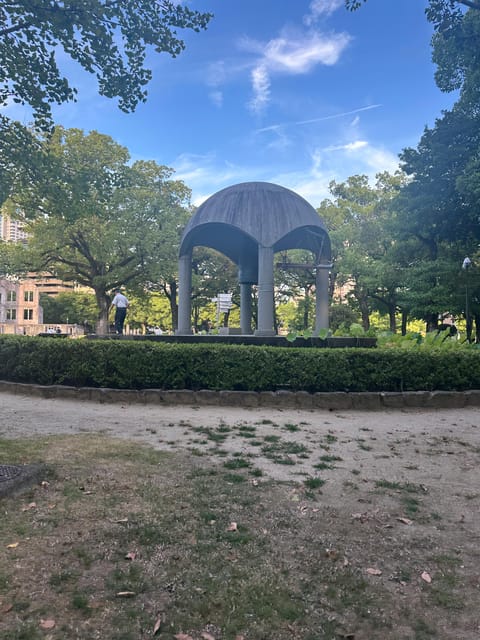
You will hear about World War II, the bombing, the people remembered here, and the ideas behind the memorials. The guide also explains Hiroshima’s message of peace, helping you see the park as more than a pleasant open space beside the river.
Give yourself room to pause. The park is a place for quiet attention, not just photographs. You will have photo opportunities, but the strongest part of the visit is the connection between the museum’s evidence and the memorials outside.
Guides have also added nearby sites that are easy to miss. Examples mentioned during past tours include a school that was nearly destroyed, a bank where only one employee survived inside, and a hospital connected to the bombing. These stops bring the event closer to ordinary life. A monument can feel abstract. A building where people worked, studied, or sought treatment gives the story a more immediate scale.
The exact side stops may depend on your guide, your pace, and available time. If you are especially interested in bomb-damaged buildings, tell your guide at the start. The tour is described as flexible, and several guides have shaped the route around specific questions and interests.
The Atomic Bomb Dome and the hypocenter
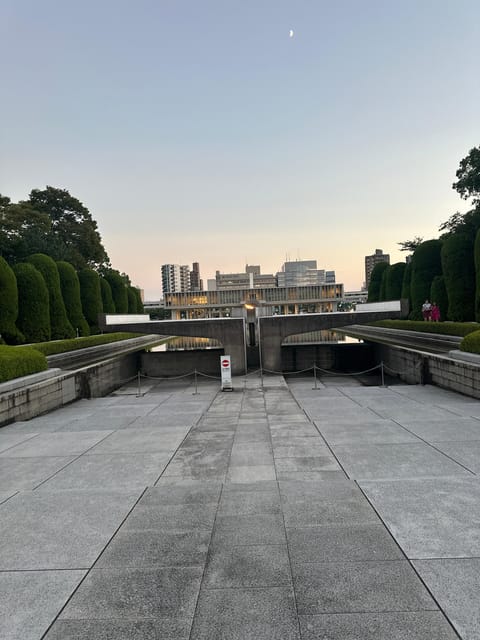
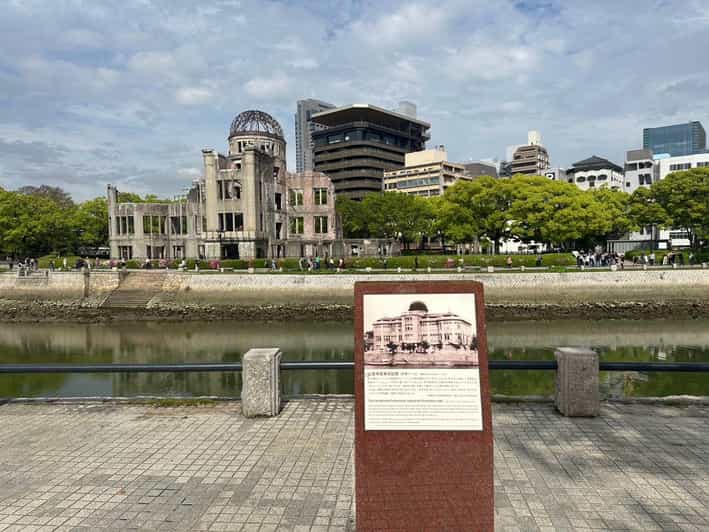
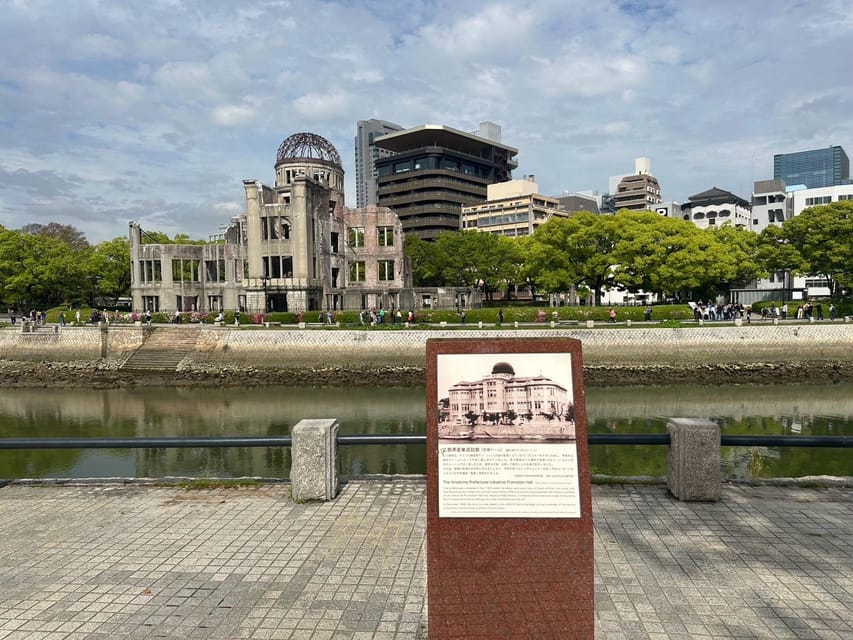
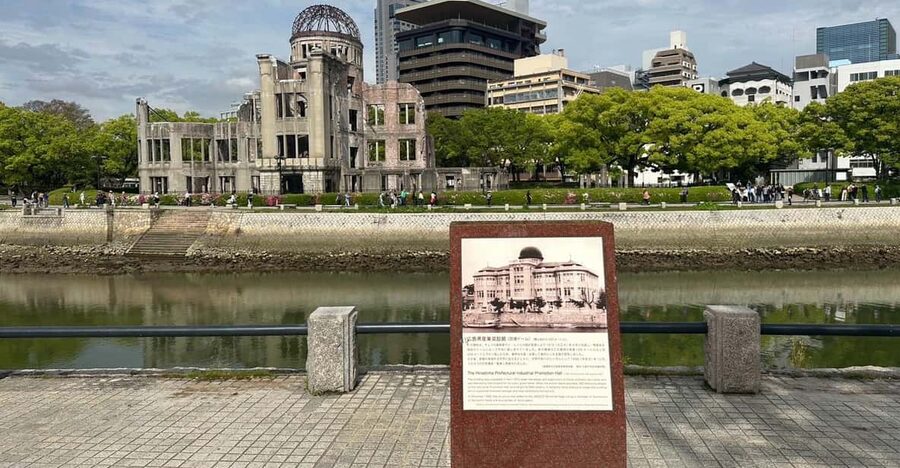
The Atomic Bomb Dome receives about ten minutes on the schedule, including a guided visit and time for photographs. That may sound brief, but the Dome is visually powerful and easy to understand once you know what you are looking at.
The building remains as a reminder of the blast and of the city that was destroyed around it. Your guide explains its place in Hiroshima’s story and connects it to the nearby park and museum.
The tour also takes you to the hypocenter, the point associated with the center of the explosion. This is a crucial part of the route because it anchors the history to a real location. You are no longer thinking about the bombing as something that happened somewhere in Hiroshima. You are standing in the area where the event began.
There is a ten-minute walk between part of the route and Hiroshima Castle. That short walk is easy for most people who are comfortable on foot, but the total experience includes repeated standing and walking outdoors. In summer, heat can make the schedule feel more demanding. In wet weather, bring suitable shoes and clothing.
A few more Hiroshima half-days to weigh up
- Peaceful Hiroshima & Miyajima UNESCO 1 Day Bus Tour
★ 5.0 · 5,309 reviews - Hiroshima: Hiroshima and Miyajima UNESCO Sites 1-Day Tour
★ 4.9 · 2,330 reviews - Hiroshima / Miyajima Full-day Private Tour with Government Licensed Guide
★ 5.0 · 1,298 reviews - Hiroshima Historical Walking Tour – Why A-Bomb was Dropped
★ 4.8 · 893 reviews
Hiroshima Castle and the city before 1945
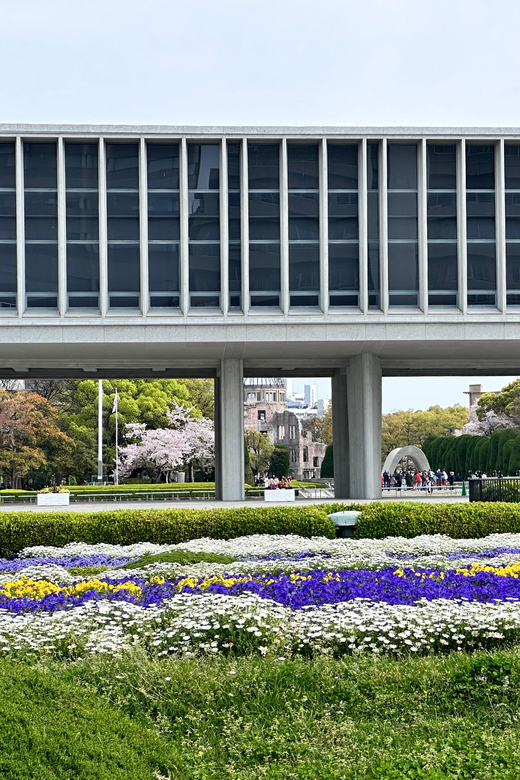
The tour then shifts from the atomic bombing to Hiroshima’s older identity. Hiroshima Castle receives about forty minutes, with a guided visit and sightseeing time.
Here you learn about samurai life and see objects such as swords and helmets. The castle stop gives you a glimpse of the city before the twentieth-century catastrophe, which helps prevent Hiroshima from being defined only by the bomb.
This part is also the most debated element of the route. One recent participant felt the castle offered little of interest compared with the memorial sites. I would treat the castle as a short historical counterpoint rather than the main reason to book. If your priority is military history, traditional Japan, or samurai culture, you may appreciate it more than someone focused solely on the Peace Park.
Castle tickets are not included in the $67 price. Check the current admission cost when you book, since the tour information does not state it. You should also remember that the castle is not a second museum of the atomic bombing. It changes the subject, and that can be either a welcome pause or a distraction.
Hiroshima Gokoku Shrine is also included in the described experience. The shrine adds another layer of local culture and gives the tour a chance to discuss Japan beyond the events of 1945.
What the guides add to the experience
The strongest feature here is the guide, not a special vehicle or elaborate equipment. English, Hindi, Malay, and Urdu are offered, and named guides who have led the experience include Maria, Ihsan, Leo, Mehak, Bilal, Ali, James, and Waleed.
The guides bring different backgrounds and personalities. Maria has been described as a university student living in Hiroshima, with a strong interest in Japanese culture and the city around her. She has also helped people choose restaurants, local foods, shops, and other ways to use their remaining time.
Ihsan has been praised for keeping people engaged and adapting his explanations to the questions being asked. Leo has tailored visits to individual interests, while Mehak has been noted for her warm manner and clear explanations of the bombing and its aftermath.
That flexibility matters. Hiroshima’s history involves military strategy, civilian life, Japanese politics, American decision-making, the aftermath of radiation, and the city’s reconstruction. You may have questions that a standard audio guide cannot answer. A live guide can explain a point in simpler language, add context, or slow down when the subject becomes difficult.
The tour also appears to work well for families. One guide adjusted the material for three children of different ages, while another helped a teenager connect with the history through conversation. I would still speak with your children beforehand about the museum’s graphic content. A guide can make the material easier to understand, but cannot make it gentle.
Price, pace, and what you receive
At $67 per person, this is not the cheapest way to see Hiroshima’s main memorial area. The Peace Memorial Museum admission is included, as are the walking tour, guide, and traditional Hiroshima snacks. Castle admission, food, drinks, and the optional audio guide cost extra.
The value depends on how much help you want with the history. If you are comfortable reading museum panels, navigating the park, and researching the memorials yourself, you can spend less by visiting independently. You will also control the pace and can stay longer at the Dome or museum.
I think the price is easier to justify if this is your first visit to Hiroshima or if you have only a half-day. The guide links the indoor exhibits to the outdoor sites and can show buildings you might otherwise pass without noticing. That connection is the heart of the tour.
A private or small-group feel has also been important to many people who booked it. Smaller groups make it easier to ask questions, take breaks, and keep children involved. The exact group arrangement is not specified, so confirm whether your booking is private or shared if that affects your decision.
Free cancellation is available up to 24 hours before the start time, and you can reserve now and pay later. Starting times vary, so check availability for your date.
Who should book this Hiroshima tour?
I would choose this experience if you want a guided introduction to Hiroshima’s wartime past and do not want to handle the museum and memorial park alone. It suits first-time visitors, families seeking a clear explanation, and anyone who wants local suggestions for food and the rest of the city.
It is also a good choice if you have questions about the bombing’s causes, its effects on daily life, and Hiroshima’s recovery. The guides have shown a willingness to discuss difficult subjects with care rather than recite a fixed script.
You may prefer an independent visit if you need several hours in the museum, want to move slowly, or find a three-hour schedule too structured. The castle may also feel less important to you than additional time at the Peace Memorial Museum.
The activity is wheelchair accessible according to one part of the booking information, but another section says it is not suitable for wheelchair users. Do not rely on either statement without confirmation. Ask the provider about the exact route, museum access, castle access, and walking requirements before booking.
People over 95 are listed as not suitable for the activity. Comfortable clothes and shoes are recommended for everyone.
Should you book it?
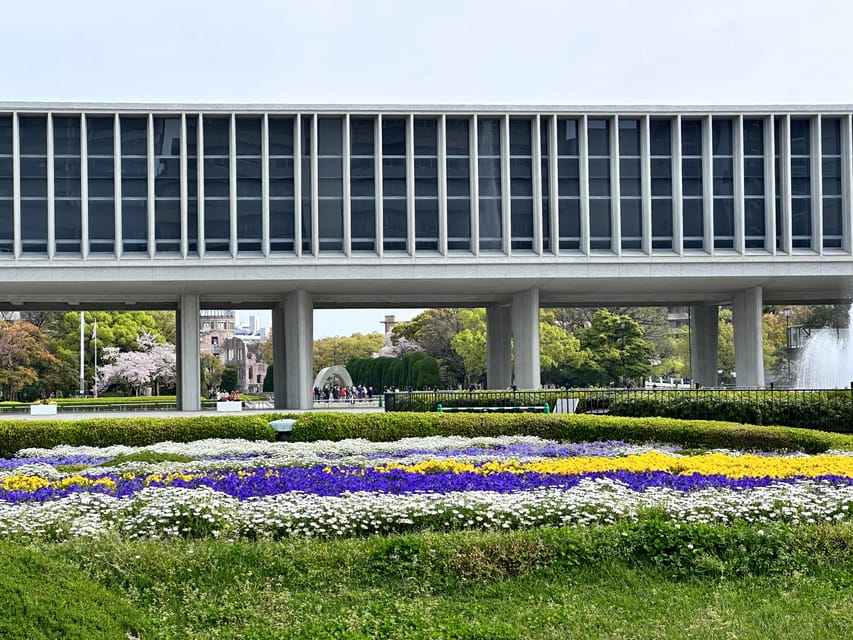
Book this tour if you want Hiroshima explained by a person who can connect the museum, park, hypocenter, Dome, surviving buildings, shrine, and castle into one readable story. The guide’s ability to adjust the pace and add places such as the school, bank, and hospital gives the route more meaning than a simple monument walk.
Skip it if you prefer complete independence or want to spend the full day reading at the museum. For most first-time visitors, though, $67 is a fair price for the museum ticket, a live guide, local context, and a thoughtful route through one of Japan’s most important cities. Go prepared for difficult images, allow yourself quiet time, and tell your guide what you most want to understand.
FAQ
How long does the Hiroshima tour last?
The scheduled duration is three hours. The route includes about one hour at the Peace Memorial Museum, one hour in Peace Memorial Park, ten minutes at the Atomic Bomb Dome, and about forty minutes at Hiroshima Castle.
What places are included?
The experience includes the Peace Memorial Museum, Peace Memorial Park, the Atomic Bomb Dome, the hypocenter, remaining atomic bomb buildings, Hiroshima Gokoku Shrine, and Hiroshima Castle.
Is the Peace Memorial Museum ticket included?
Yes. The Peace Memorial Museum ticket is included, and the activity includes skip-the-ticket-line access.
Are Hiroshima Castle tickets included?
No. Castle admission is not included in the tour price.
Is the optional museum audio guide included?
No. The optional Peace Memorial Museum audio guide costs extra.
What languages are available?
Live guides are offered in English, Hindi, Malay, and Urdu.
Where does the tour meet?
The meeting point is the taxi stand near the Peace Memorial Museum. The supplied address is 1-2 Nakajimacho.
Is the tour suitable for wheelchair users?
The activity information is inconsistent. One section says it is wheelchair accessible, while another says it is not suitable for wheelchair users. Contact the provider before booking to confirm the route and access arrangements.
What should I wear and bring?
Wear comfortable clothes and walking shoes. Be aware that some museum exhibits show the shocking and graphic effects of the atomic bomb, so you should ask about the content in advance if that is a concern.
Just added around Hiroshima
- The Peace Memorial to Miyajima : Icons of Peace and Beauty★ 4.5 · 31 reviews
- Shore Excursion from Hiroshima Port : Private Tour in Hiroshima★ 5.0 · 17 reviews
- Hiroshima Saijo Sake Tasting Tour with visit to 7 Breweries★ 5.0 · 104 reviews
- Hiroshima & Miyajima All-Inclusive Tour w/Licensed guide Pancho★ 5.0 · 54 reviews
- Hiroshima Country Cycling: Explore Rural Life 1 HR from City★ 5.0 · 22 reviews
- Okunoshima Rabbit Island Cycling Tour with Local Guide★ 4.5 · 17 reviews
- Private Full Day Hiroshima Tour★ 4.5 · 29 reviews
- Hiroshima Private Tour with a Local – Highlights & Hidden Gems★ 4.5 · 24 reviews
Hiroshima Tours, compared.

Peaceful Hiroshima & Miyajima UNESCO 1 Day Bus Tour
Read our review →
Hiroshima and Miyajima UNESCO Sites 1-Day Tour
Read our review →
Hiroshima Historical Walking Tour – Why A-Bomb was Dropped
Read our review →
Hiroshima Peace (Heiwa) Walking Tour at World Heritage Sites
Read our review →
Hiroshima in a Nutshell: Morning Bike Adventure
Read our review →
Hiroshima City 4hr Private Walking Tour with Licensed Guide
Read our review →

Japanesel Archery Experience HIROSHIMA CASTLE SHARAKU
Read our review →Browse the lists this tour appears in