
Reviewed · HIROSHIMA TOURS
Hiroshima: Atomic Bomb Dome and Peace Memorial Museum 3 hours
The most powerful part of this Hiroshima tour is the contrast between the ruined Atomic Bomb Dome and the carefully preserved city around it. You move from the riverfront remains to the cenotaph in Peace Memorial Park, then spend two quiet hours with the museum’s difficult, essential exhibits.
I like that a local guide gives the outdoor monuments a human story instead of leaving you to read plaques alone. I also like the private format, which lets your group ask questions and set the pace within the three-hour schedule. The main consideration is emotional: the museum is graphic and solemn, and the guide normally speaks in a whisper while walking without stopping.
Key points at a glance
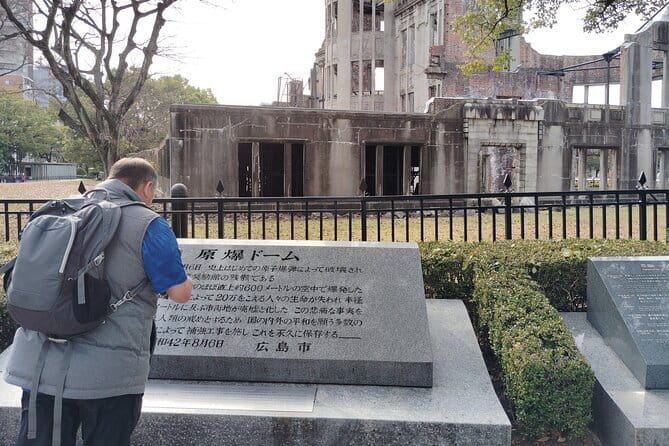
- See the Atomic Bomb Dome up close, with about 30 minutes to understand why the ruined building was preserved.
- Pause at the Peace Memorial Park cenotaph, a short but meaningful stop overlooking the Dome.
- Spend two hours inside the Peace Memorial Museum, with admission included.
- Receive a private tour for your own group, rather than joining strangers.
- Meet and finish at the museum, which keeps the route simple and avoids a long transfer.
- Benefit from a guide who may add family connections, as guides such as Naoka, Naomi, Takashi, and Hiroyuki have done on past departures.
Why this three-hour Hiroshima tour matters
Hiroshima is not a sightseeing stop you simply check off between train connections. The Atomic Bomb Dome and Peace Memorial Museum ask you to slow down and think about civilians, loss, memory, and the choices that led to August 6, 1945.
You can visit the park on your own, but the sequence of this tour is sensible. First, you see the Dome as a physical object. Then you stand at the cenotaph and look back across the park. Finally, you enter the museum, where the event is explained through Hiroshima’s people and the city they lived in before the bombing.
That order gives the museum more weight. You are not walking into a history lesson with no sense of place. You have already seen the building that survived the blast, stood in the park, and looked across the river toward the center of the tragedy.
The experience is listed at $94.26 per person. That is not a bargain-basement price for a three-hour city visit, but admission to the Peace Memorial Museum is included, and the fee covers a private guide. The value depends on how much context you want. If you are comfortable reading displays alone, a self-guided visit costs less. If you want questions answered, the sites explained in order, and room for personal interpretation, the price is easier to justify.
More museums and galleries in Hiroshima:
- Hiroshima; Hiroshima Peace Memorial Museum and Castle Tour
★ 5.0 · 89 reviews - Hiroshima: Tour of Atomic Bomb Dome & Peace Memorial Museum
★ 5.0 · 20 reviews - Tokyo: teamLab Planets TOKYO Digital Art Museum Entry Ticket
★ 4.6 · 9,779 reviews
Starting at the Atomic Bomb Dome
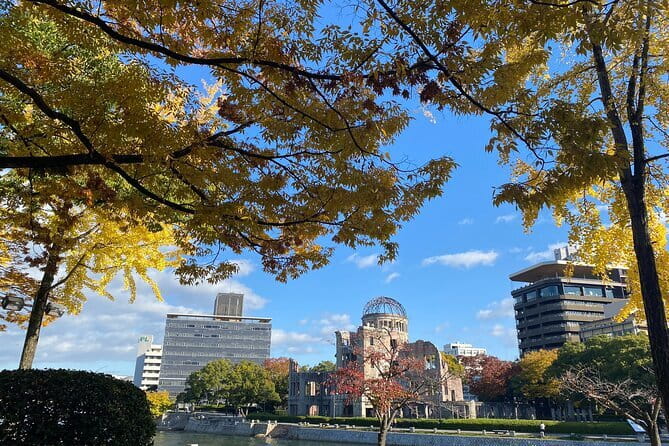
The tour begins at the Hiroshima Peace Memorial Museum, but the first major stop is the Atomic Bomb Dome. Allow about 30 minutes here.
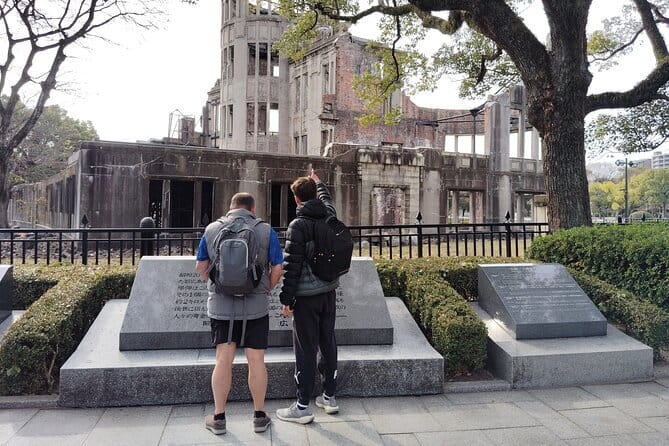
The Dome was once a graceful public building. The atomic bomb’s heat rays and shock waves left it in ruins, yet parts of the structure remained standing. During Hiroshima’s postwar rebuilding, some people wanted the remains demolished. The decision to preserve them changed the site from a dangerous ruin into a memorial.
Your guide can help you look beyond the familiar photograph. The Dome is not preserved because it is beautiful in the usual sense. Its value lies in the fact that it makes the scale of the bombing physical. Bent materials, exposed brick, and the bare outline of the structure show that this was once an ordinary working building in an ordinary city.
The short stop is enough for an introduction, but it is not enough for a long architectural discussion. The real benefit comes from hearing how the building fits into the city’s memory and why its preservation mattered. Guides have been praised for explaining several points around the Peace Memorial area, rather than treating the Dome as a quick photo stop.
Take the time to look carefully, but keep your expectations realistic. You are viewing the building from the outside, and admission is free. The tour does not turn this into a lengthy stop because the museum requires most of the available time.
A quiet pause at the Peace Memorial Park
The next stop lasts about 20 minutes. That may sound brief, yet it gives you a necessary pause between the Dome and museum.
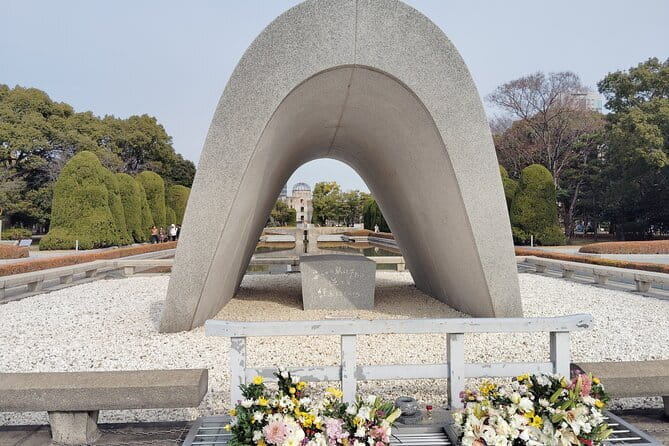
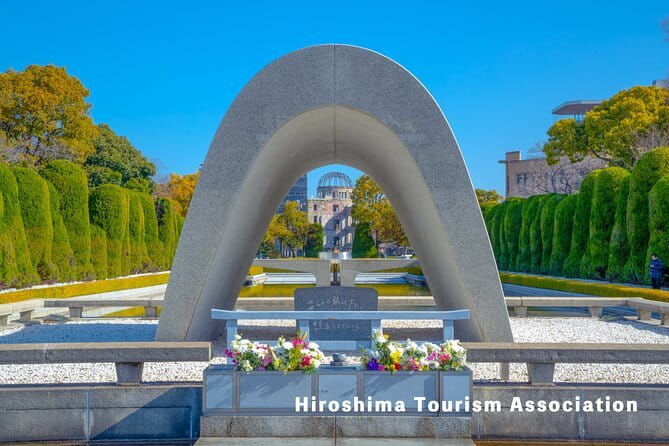
The park includes a cenotaph intended to comfort the spirits of those affected by the atomic bombing. It is positioned so that the Atomic Bomb Dome can be seen beyond it. Your guide will explain the memorial’s purpose and the meaning of the setting, then give you time to take in the view.
This is where the tour’s tone often changes. At the Dome, you are studying a ruined structure. At the cenotaph, you are standing in a place designed for remembrance. A good guide will not fill every second with facts. Some space for silence is part of the experience.
The outdoor portion is also useful for orientation. You begin to understand the layout of the park and how the memorials relate to one another. A guide named Gordon, for example, has been especially effective at linking the park’s individual sites with the wider story of Hiroshima’s past and present. Guide assignments vary, so you should not book on the assumption that a particular person will lead your visit.
The 20-minute timing keeps the tour moving. If you want to inspect every monument in the park, read every plaque, or spend a long time by the river, you will need to return later. That is not a flaw so much as a tradeoff built into a three-hour experience.
Two serious hours inside the Peace Memorial Museum
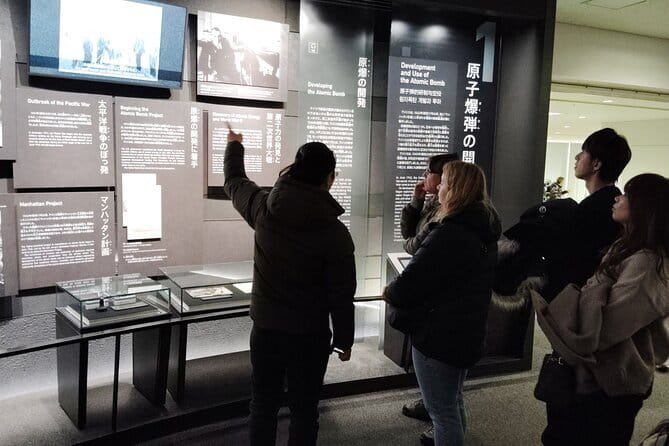
The museum receives the largest share of the tour, with about two hours and admission included. This is the core of the experience.
The exhibits tell Hiroshima’s story before the bombing, then show what happened to the city and its people afterward. The focus is not only on military events or political decisions. The museum also presents the impact on ordinary residents, which makes the subject immediate and personal.
Expect a quiet visit. Guides generally speak in a whisper and keep moving rather than stopping at length in every gallery. You are asked to remain quiet inside the museum. This approach suits the setting, but it also means you should ask your guide questions when there is a suitable moment, such as while moving between sections or after the museum visit.
The museum can be emotionally hard. Displays about injury, death, and the aftermath of the bombing are not easy to see. The tour does not soften that reality, and it should not. At the same time, the guide can help you place individual displays within the broader story of Hiroshima, so the visit does not become a series of shocking objects without context.
You may find that the two hours pass quickly. The museum covers the city before August 6, 1945, the bombing itself, and the long consequences for survivors and families. If you tend to read every label closely, you might want to return on your own after the tour.
The museum is where guide quality matters most. Past guide assignments have included Naoka, Naomi, Takashi, Yumi, Ami, Hiroyuki, and Gordon. Some have shared family connections to the bombing, including second-generation survivor experiences or stories passed down within their families. That personal link can add a human layer that a standard audio guide cannot provide, though it is not guaranteed with every booking.
A few more Hiroshima half-days to weigh up
- 3-Hour Kyoto Insider Sake Brewery Tour with Tastings & Pairings
★ 5.0 · 917 reviews - Tokyo Top Highlights 3h Guided E-bike Tour
★ 5.0 · 714 reviews - 3h Tokyo E-Bike Tour: Hidden Gems, and Local Life with guide
★ 5.0 · 670 reviews - Tokyo: 3-Hour Bike or E-Bike City Highlights Tour
★ 4.8 · 435 reviews
The value of a private guide

This is a private activity, so only your own group participates. That makes a real difference at a site where questions may be personal, detailed, or difficult to ask in front of strangers.
You can ask about a memorial’s purpose, the museum’s presentation, or the city’s rebuilding without worrying about holding up a large group. Several guides have been described as patient and willing to answer questions, while others have been praised for adding photographs and family stories.
The private format does not mean the tour can ignore the schedule. The total time remains about three hours, and the museum portion is conducted quietly. You are also not promised a long, formal lecture at every stop. The experience works best if you want a guided framework and conversation, not a nonstop history seminar.
There has been at least one weaker guide match, with too little historical explanation and a late arrival at the meeting point. The provider apologized and stated that guides are expected to arrive at least 10 minutes early. I would still arrive a little ahead of time yourself, especially because the meeting point is at the museum and you may want to confirm you are in the right place.
Guides who bring more than dates and facts
The strongest guide stories from this experience come from personal connection and careful tone.
Naoka has been described as a second-generation survivor and as a warm, hospitable guide. Naomi has shared her family’s story of the attack. Takashi has also brought a personal connection to the event, while Yumi has been praised for making the visit a lasting part of a Hiroshima trip.
Other guides, including Gordon, Ami, Emiko, and Hiroyuki, have been valued for clear explanations, patience, and help beyond the basic route. Gordon in particular has been described as combining history, storytelling, and compassion while also explaining Hiroshima’s recovery and present-day identity.
Those details matter because Hiroshima is not just a collection of wartime exhibits. You are trying to understand how a city remembers, how families carry the past, and how a place associated with destruction became a center for peace education. A guide with a family story can help, but a guide without one can still lead a strong visit if they explain the sites clearly and give you room to reflect.
When you meet your guide, ask early how the three hours will be divided. You can also say if you want more historical background, more time for questions, or a quieter visit. The private setting makes that kind of conversation possible.
Meeting point, timing, and what is included
You meet at Hiroshima Peace Memorial Museum, 1-2 Nakajimacho, Naka Ward, Hiroshima. The tour also ends there, which is convenient if you plan to continue exploring the museum area afterward.
The meeting point is near public transportation. Since the Dome and Peace Memorial Park are part of the same central memorial area, the tour does not require a separate sightseeing transfer. You should still allow enough time to reach the museum and locate the meeting spot before the start.
The tour includes:
- Guide fee
- Admission to Hiroshima Peace Memorial Museum
Lunch, coffee, and tea are not included. The schedule is tightly focused on the memorial sites, so do not expect a meal break during the three hours. If you need food or a drink afterward, ask your guide for a nearby suggestion. One guide has helped with a lunch recommendation, but no restaurant is part of the booking.
Most people can participate. The available information does not promise a particular route for every mobility need, so anyone requiring specific assistance should confirm details before booking.
Is $94.26 per person fair?
At $94.26 per person, this is a premium visit compared with simply entering the museum by yourself. The included museum admission accounts for only part of the fee. You are mainly paying for the guide’s time, the private arrangement, and the added context at the outdoor memorials.
The price makes more sense for a first visit to Hiroshima, a family group, or anyone who wants to discuss the material rather than read it alone. Group discounts may improve the value for larger parties. Since only your group takes part, the cost can also feel more reasonable when divided across family or friends who would otherwise book separate guidance.
The price is harder to justify if you have already visited the museum, prefer to explore slowly, or want a broad tour of Hiroshima beyond the Peace Memorial area. This experience is focused. It does not include lunch, other city attractions, or a general overview of Hiroshima’s neighborhoods.
The rating is 4.8 from 20 reviews, with 95 percent recommending the experience. That points to a consistently strong product, but the smaller number of reviews means you should still think about the guide match and the emotional nature of the subject.
Who should book this experience?
I would recommend it to a first-time visitor who wants the memorial area explained with care. It also suits parents introducing older children to Hiroshima, couples looking for a serious cultural experience, and small groups who value privacy.
You should book it if you want:
- A clear route through the three most important sites
- A local person to explain the Dome and park
- Two planned hours in the museum
- Help connecting the exhibits to Hiroshima’s people
- A chance to ask questions in a private setting
You might skip it if you want a casual sightseeing walk, dislike guided schedules, or know that graphic wartime material will be too upsetting. You can still visit the park and museum independently, but you will give up the personal explanations and family perspectives that make this tour more than a standard museum entry.
Should you book the Hiroshima Atomic Bomb Dome tour?
Book this tour if you want a respectful, tightly organized introduction to Hiroshima’s Peace Memorial area and prefer a guide beside you rather than a self-guided visit. The strongest feature is the combination of the Dome, cenotaph, and two-hour museum visit, with a private guide to connect the pieces.
Before booking, accept two limits: the visit is emotionally demanding, and the museum portion is quiet and fairly structured. Also remember that guide assignments vary. If you need a particular guide, such as Gordon, Naoka, Naomi, or Yumi, ask the provider directly rather than assuming that person will be available.
For most first visits, the tour offers good value because it gives you the right order, the right amount of museum time, and a human voice at a place where context matters. You can cancel free of charge up to 24 hours before the start time, which gives you some flexibility while planning your Hiroshima stay.
FAQ
How long is the Hiroshima Atomic Bomb Dome and Peace Memorial Museum tour?
The experience lasts approximately three hours.
Where does the tour start?
It starts at Hiroshima Peace Memorial Museum, 1-2 Nakajimacho, Naka Ward, Hiroshima.
Where does the tour end?
The tour ends at Hiroshima Peace Memorial Museum, the same place where it begins.
Is the tour private?
Yes. Only your own group participates in the activity.
Is admission to the Peace Memorial Museum included?
Yes. Admission to the Hiroshima Peace Memorial Museum is included.
Is admission to the Atomic Bomb Dome included?
The outdoor Atomic Bomb Dome stop has no admission charge.
How much time is spent at the Atomic Bomb Dome?
The tour allows about 30 minutes at the Atomic Bomb Dome.
How long is the Peace Memorial Park visit?
The Peace Memorial Park stop lasts about 20 minutes.
How long do you spend in the museum?
The museum visit takes about two hours.
Are lunch, coffee, or tea included?
No. Lunch, coffee, and tea are not included.
Can most people participate?
Yes. The activity information says most people can participate and that the tour is near public transportation.
How does the guide speak inside the museum?
Guides generally speak in a whisper and continue walking without stopping. Visitors are asked to remain quiet inside the museum.
Can you cancel for a full refund?
Yes, if you cancel at least 24 hours before the experience start time. Cancellations made less than 24 hours before the start are not refunded.
Just added around Hiroshima
- The Peace Memorial to Miyajima : Icons of Peace and Beauty★ 4.5 · 31 reviews
- Shore Excursion from Hiroshima Port : Private Tour in Hiroshima★ 5.0 · 17 reviews
- Hiroshima Saijo Sake Tasting Tour with visit to 7 Breweries★ 5.0 · 104 reviews
- Hiroshima & Miyajima All-Inclusive Tour w/Licensed guide Pancho★ 5.0 · 54 reviews
- Hiroshima Country Cycling: Explore Rural Life 1 HR from City★ 5.0 · 22 reviews
- Okunoshima Rabbit Island Cycling Tour with Local Guide★ 4.5 · 17 reviews
- Private Full Day Hiroshima Tour★ 4.5 · 29 reviews
- Hiroshima Private Tour with a Local – Highlights & Hidden Gems★ 4.5 · 24 reviews
Hiroshima Tours, compared.

Peaceful Hiroshima & Miyajima UNESCO 1 Day Bus Tour
Read our review →
Hiroshima and Miyajima UNESCO Sites 1-Day Tour
Read our review →
Hiroshima Historical Walking Tour – Why A-Bomb was Dropped
Read our review →
Hiroshima Peace (Heiwa) Walking Tour at World Heritage Sites
Read our review →
Hiroshima in a Nutshell: Morning Bike Adventure
Read our review →
Hiroshima City 4hr Private Walking Tour with Licensed Guide
Read our review →

Japanesel Archery Experience HIROSHIMA CASTLE SHARAKU
Read our review →Browse the lists this tour appears in