
Reviewed · HIROSHIMA TOURS
Hiroshima History Tour : A-Bomb Dome, Peace Memorial & City
Hiroshima is best understood on foot, where the A-Bomb Dome, Peace Memorial Park, and Hypocenter form a powerful path through the city’s past. This private tour adds something a museum label cannot: a local guide’s family memories, hometown perspective, and understanding of how Hiroshima rebuilt itself.
I like the custom itinerary, which lets you spend more time at the museum, add Hiroshima Castle, or slow down in Shukkeien Garden. I also like that the guides, including Masa, Yuka, Yuta, and Ally, bring personal connections to Hiroshima rather than repeating a single fixed speech.
The main drawback is that this is a walking tour, and the route can cover a lot of ground. At $105.42 per person, it is not a cheap sightseeing stroll, and public transportation costs ¥240 per person are extra. Still, the private format and included admissions make the price easier to justify for families and small groups.
Key points to know before booking
- Personal Hiroshima perspective: Some guides are second-generation atomic bomb survivors, while others grew up in Hiroshima or have family members affected by the bombing.
- Skip-line museum entry: Admission to the Peace Memorial Museum is included, helping you use the three or four hours well.
- A flexible private route: You can shape the time around the museum, memorials, castle, garden, family needs, or walking pace.
- Seven possible sights: The route can include the Peace Memorial Museum, Peace Memorial Park, Children’s Peace Monument, A-Bomb Dome, Hypocenter, Hiroshima Castle, and Shukkeien.
- Shukkeien adds a welcome change of pace: The historic garden offers ponds, trees, and quiet paths after the difficult subject of the memorial district.
- A true small-group experience: Only your own party takes part, with English or Japanese guiding available.
Why a local guide changes the Hiroshima experience
The main value here is not simply seeing Hiroshima’s famous sites. You can reach the A-Bomb Dome and Peace Memorial Museum on your own. The difference is having someone beside you who can explain how the city remembers the bombing in daily life.
Some guides have direct family ties to atomic bomb survivors. Others were born and raised in Hiroshima and learned about the bombing through family stories, local customs, and the memories of older residents. That can give the tour a quieter, more personal tone than a standard sightseeing route.
You should not expect a theatrical performance. The appeal is thoughtful conversation and context. A guide may explain what a monument means, point out how the city recovered, or share a family connection that makes the historical facts feel less remote.
The private format is especially useful here. The subject can be heavy, and you may want to pause, ask questions, or move at a slower pace. With only your own group, you do not have to match the rhythm of a large party.
More history-led days in Hiroshima:
- Hiroshima Historical Walking Tour – Why A-Bomb was Dropped
★ 4.8 · 893 reviews - Hiroshima Peace (Heiwa) Walking Tour at World Heritage Sites
★ 5.0 · 872 reviews - Miyajima Half-day Trip Historical Walking Tour
★ 5.0 · 284 reviews
Starting at the Peace Memorial Museum
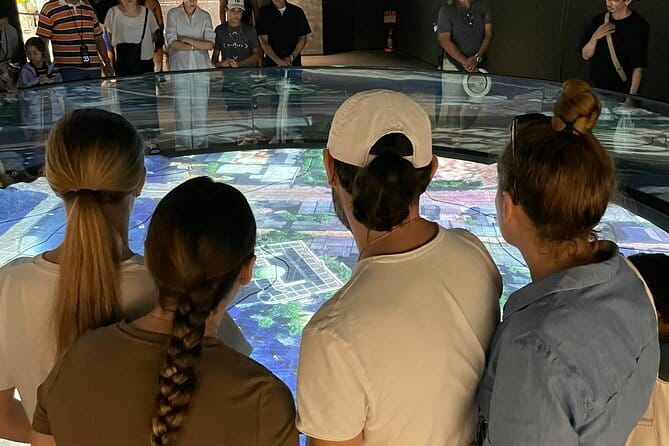
The Peace Memorial Museum is the emotional center of the tour. About an hour is planned here, with admission included and skip-line access provided.
The museum presents documents, data, paintings by atomic bomb survivors, and personal objects connected to the bombing. Its purpose is not just to explain what happened on August 6, 1945, but to show the human cost of the event and its effect on Hiroshima.
An hour gives you a useful introduction, though it is not enough for every display. If you are particularly interested in the museum, ask in advance for the route to give it more time. The tour can be adjusted, but extending one stop may mean shortening or dropping another.
A guide can help you understand the exhibits without turning the visit into a rushed checklist. That matters in a museum where you may need a quiet moment between sections. I would plan to enter with an open schedule and avoid booking another tight appointment immediately afterward.
The museum is also where the guides’ personal backgrounds can matter most. Masa, one of the guides, has shared a family connection to the bombing. That kind of perspective can add meaning, but you should also be prepared for a serious and sometimes upsetting visit.
Walking through Peace Memorial Park
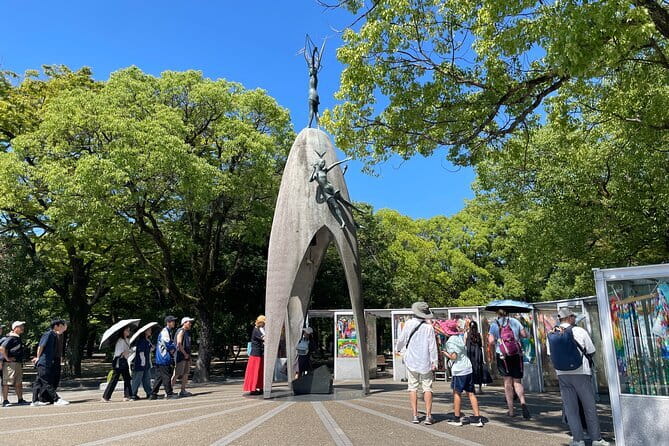
After the museum, the route moves through Peace Memorial Park. The planned park visit lasts about 20 minutes, with several monuments included along the way.
The park is more than a green setting around the museum. Its memorials ask you to consider the victims, the survivors, and Hiroshima’s message for the future. The city’s recovery is part of the story too. The peaceful appearance of the park today contrasts sharply with what happened here in 1945.
Your guide can explain the meaning of individual monuments and share local thoughts that are not always obvious from a sign. This is one of the strongest reasons to choose a private guide rather than simply walking through the park alone.
Twenty minutes is enough for an introduction, but not a long, leisurely visit. If you want time for photographs, personal reflection, or a slower walk, tell the guide before the tour begins. The schedule is flexible, but the tour still has to fit several major stops.
Sadako and the Children’s Peace Monument
The Children’s Peace Monument receives a short stop of about five minutes. It is connected with Sadako Sasaki, the young girl whose story became linked with folded paper cranes and the wider message of peace.
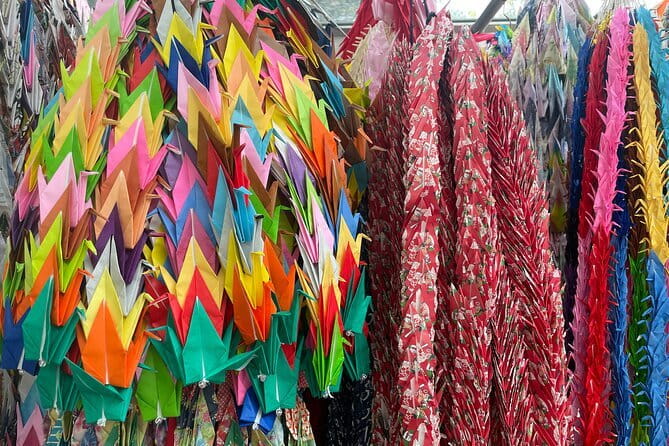
You will see many origami cranes at the monument. They are a small, colorful detail within a solemn part of the park, and they help connect a broad historical event with the life of one child.
The stop is brief, so it works best as part of the larger park walk rather than as a full visit on its own. If you already know Sadako’s story, you may want to ask your guide about its place in Hiroshima’s public memory. If you do not know it, this is a useful point to pause and listen.
A few more Hiroshima half-days to weigh up
- Peaceful Hiroshima & Miyajima UNESCO 1 Day Bus Tour
★ 5.0 · 5,309 reviews - Hiroshima: Hiroshima and Miyajima UNESCO Sites 1-Day Tour
★ 4.9 · 2,330 reviews - Hiroshima / Miyajima Full-day Private Tour with Government Licensed Guide
★ 5.0 · 1,298 reviews - Hiroshima in a Nutshell: Morning Bike Adventure
★ 5.0 · 524 reviews
The A-Bomb Dome and the Hypocenter
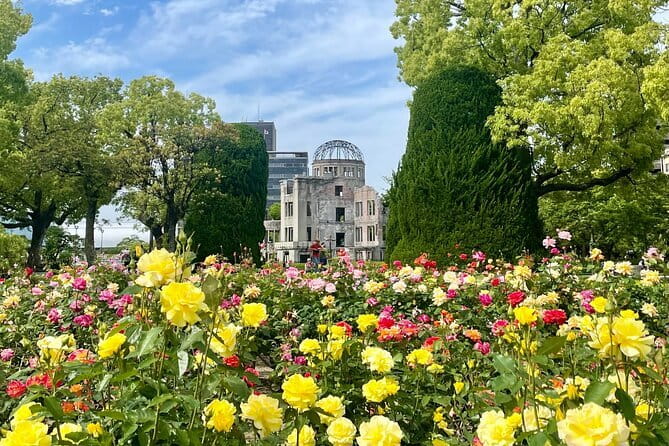
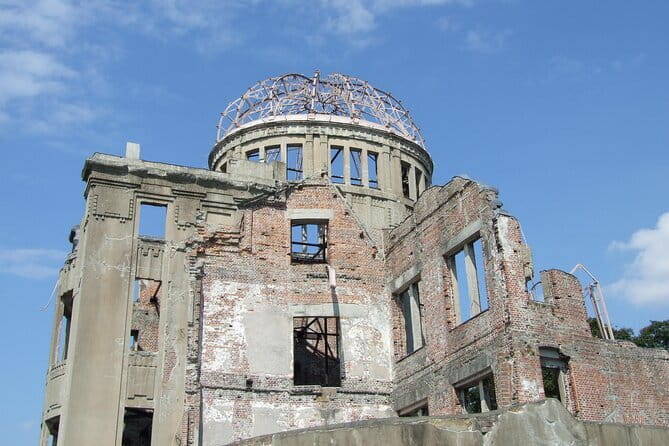
The Atomic Bomb Dome is the image most closely linked with Hiroshima. The building retained much of its appearance because it was almost directly below the atomic bomb’s hypocenter. Today, the UNESCO World Heritage site symbolizes both the destruction of war and the city’s continuing call for peace.
The planned stop lasts about 20 minutes. That gives you time to see the structure from different angles, take photographs, and hear how it fits into the surrounding memorial district.
The Hypocenter monument follows, with about 10 minutes planned there. This marks the location directly above the Shima hospital where the bomb exploded. Standing at that point gives the event a precise physical location, rather than leaving it as an abstract date in a history book.
These two stops work well together. The Dome offers a visible structure and a wide public symbol. The Hypocenter is more exact and personal. I find that the contrast helps you understand the scale of the bombing while keeping attention on the people who were present at ground level.
The short timings may feel quick if you want extended reflection. The guide can adjust the pace, but adding time here will likely reduce time at the castle or garden.
Hiroshima Castle and the city beyond the memorial district
Hiroshima Castle provides a change of subject. The original castle was built in the 16th century and destroyed by the atomic bomb. The current structure is a replica, and the standard plan usually treats it as an exterior photo stop lasting about 15 minutes.
That limitation is worth noting. The castle is included as a city sight, but the full museum visit inside is optional and admission is not included. If you care more about samurai-era Hiroshima than modern history, ask to enter the museum and allow extra time.
The castle also helps place the memorial district within the wider city. Hiroshima is not only a site of wartime remembrance. It was a samurai city, a regional center, and a living place that rebuilt after catastrophe.
A guide can help connect these different chapters. The tour is at its best when the historical shift feels natural, rather than like a series of unrelated stops. Keep in mind that adding the castle interior may make the route more demanding within the three-hour version.
Shukkeien Garden offers a quiet final chapter
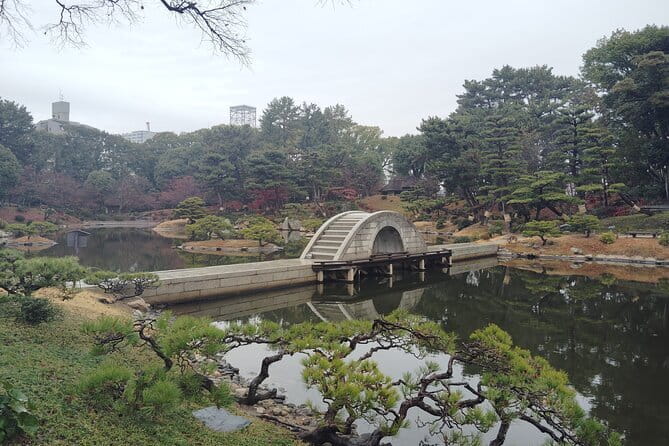
Shukkeien is one of the most attractive parts of the route. Created in 1620, the garden belonged to a samurai who settled in the area. Its design uses a pond, trees, winding paths, and small changes in elevation to create a calm, carefully arranged setting.
About 45 minutes is planned here, and admission is included. That makes Shukkeien more than a quick photo stop. You have time to walk, look across the pond, and let the emotional weight of the memorial district settle.
The garden is particularly useful as the final stop. Hiroshima’s past remains present, but the peaceful setting also shows the city as it is now. One guide, Yuka, took a couple to Shukkeien during the Momiji Festival, when autumn color made the garden especially striking. Festival conditions are seasonal and cannot be promised, but the example shows why timing can affect this stop.
If gardens are not a priority, you could ask to use that time elsewhere. For most people, though, Shukkeien gives the tour a more balanced shape. You move from tragedy and remembrance toward beauty, continuity, and ordinary city life.
A three-hour route or a fuller four-hour outing
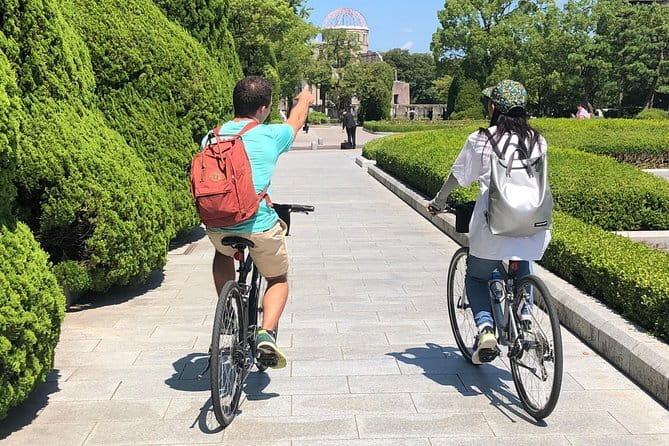
The experience is offered as a private three- or four-hour walking tour. The difference matters because the listed stops add up to more than a brisk visit. The museum alone takes about an hour, while Shukkeien is planned for 45 minutes.
A three-hour version is likely best if your main goal is the Peace Memorial Museum, the Dome, and the central memorials. You can still add local streets or another short stop, but you will need to keep moving.
The four-hour option gives you more breathing room. It is the better choice if you want the museum, memorial park, castle, and garden without treating every stop as a photo opportunity. It also gives you more time to ask questions and adjust the pace.
This is not a fully transported city tour. Private transportation is not included, and public transportation costs ¥240 per person. The tour takes place near public transportation, so you should expect to walk between sights and use local transit when needed.
A previous family group covered many of the major sights and also stopped for lunch at a restaurant arranged during the day. Food and drinks are not included, so consider lunch an extra cost and confirm the plan with your guide before setting out.
What the $105.42 price includes
At $105.42 per person, this experience costs more than joining a standard group walk. You are paying for a private guide, advance customization, English or Japanese service, the Peace Memorial Museum admission with skip-line access, Shukkeien admission, and photo data from the tour.
The private setup makes the price more reasonable for a family, couple, or group that wants control over the route. A solo visitor pays more per person, but may still value the ability to ask direct questions about a difficult subject.
The included museum entry is useful because the museum is the main reason many people come to Hiroshima. Shukkeien admission adds value too, especially if you would otherwise pay separately to visit the garden.
You still need to budget for transport, food, and optional Hiroshima Castle admission. Tips are also not included. Be clear about your priorities before booking so you know what the guide should protect if time becomes short.
Who will get the most from this private tour
I would recommend this tour to anyone visiting Hiroshima for the first time who wants help making sense of the memorial district. It suits families particularly well because the route can be adapted to children, older relatives, or different walking speeds.
It also fits people who want a conversation rather than a recorded audio guide. The guides’ local and family connections give the experience a human focus, and the private format lets you ask sensitive questions in a more comfortable setting.
History-minded visitors will appreciate the combination of modern Hiroshima, the atomic bombing, the samurai-era castle, and the 1620 garden. That mix gives you a fuller picture of the city than a memorial-only visit.
You should think twice if you dislike walking, prefer a large group at a lower cost, or want to spend several hours inside the museum alone. The subject matter is serious, and the pace can feel full if you try to include every stop.
Guides have received especially strong praise for warmth, flexibility, and clear explanations. Masa has been singled out for making the history feel human through her family connection. Yuka was praised for adapting the route to include Shukkeien during the Momiji Festival, while Ally was noted for meeting a family at its hotel and building the route around its needs. Those details suggest that communication before the tour is worthwhile.
Practical details that affect your day
Pickup is offered, and the tour can be customized in advance. Confirm your hotel or meeting point and the sights you care about before arrival, especially if you want Hiroshima Castle’s interior or extra museum time.
The tour is available in English or Japanese. Most people can participate, and service animals are allowed. You should not join if you have cold symptoms.
The activity requires good weather. If poor weather causes cancellation, you can choose another date or receive a full refund. Otherwise, cancellation is free up to 24 hours before the local start time, while cancellations or changes made inside that window are not refunded or accepted.
Should you book this Hiroshima tour?
Book it if you want personal guidance through Hiroshima’s hardest history, especially if this is your first visit or you are traveling with family. The strongest features are the private format, the guides’ local and family connections, skip-line museum entry, and the thoughtful shift from memorial sites to Hiroshima Castle and Shukkeien Garden.
Choose the four-hour option if you want to see most of the route without rushing. Choose three hours if the Peace Memorial Museum and memorial district matter most.
At $105.42 per person, the tour is best value for a small group that will use the customization. If you only want to photograph the A-Bomb Dome, you can spend much less on your own. If you want to understand what you are seeing and hear how Hiroshima remembers, this private walk earns its higher price.
FAQ
How long is the Hiroshima history tour?
The tour lasts approximately three or four hours, depending on the option you choose and how the route is customized.
Is the tour private?
Yes. Only your group participates in the activity.
Is hotel pickup available?
Pickup is offered. You can also meet the guide near public transportation.
Which languages are available?
Guiding is available in English and Japanese.
Is admission to the Peace Memorial Museum included?
Yes. The entry fee is included, with skip-line access.
Is admission to Shukkeien Garden included?
Yes. Shukkeien admission is included in the tour price.
Is Hiroshima Castle admission included?
No. The usual visit is an exterior photo stop. Entry to the museum inside the replica castle is optional and costs extra.
Is transportation included?
Private transportation is not included. Public transportation costs ¥240 per person and is also separate.
Are food and drinks included?
No. Lunch, food, and drinks are not included.
Can I cancel for a full refund?
Yes, if you cancel at least 24 hours before the experience start time. Cancellations made less than 24 hours before the start time are not refunded. If poor weather cancels the tour, you will be offered another date or a full refund.
Just added around Hiroshima
- The Peace Memorial to Miyajima : Icons of Peace and Beauty★ 4.5 · 31 reviews
- Shore Excursion from Hiroshima Port : Private Tour in Hiroshima★ 5.0 · 17 reviews
- Hiroshima Saijo Sake Tasting Tour with visit to 7 Breweries★ 5.0 · 104 reviews
- Hiroshima & Miyajima All-Inclusive Tour w/Licensed guide Pancho★ 5.0 · 54 reviews
- Hiroshima Country Cycling: Explore Rural Life 1 HR from City★ 5.0 · 22 reviews
- Okunoshima Rabbit Island Cycling Tour with Local Guide★ 4.5 · 17 reviews
- Private Full Day Hiroshima Tour★ 4.5 · 29 reviews
- Hiroshima Private Tour with a Local – Highlights & Hidden Gems★ 4.5 · 24 reviews
Hiroshima Tours, compared.

Peaceful Hiroshima & Miyajima UNESCO 1 Day Bus Tour
Read our review →
Hiroshima and Miyajima UNESCO Sites 1-Day Tour
Read our review →
Hiroshima Historical Walking Tour – Why A-Bomb was Dropped
Read our review →
Hiroshima Peace (Heiwa) Walking Tour at World Heritage Sites
Read our review →
Hiroshima in a Nutshell: Morning Bike Adventure
Read our review →
Hiroshima City 4hr Private Walking Tour with Licensed Guide
Read our review →

Japanesel Archery Experience HIROSHIMA CASTLE SHARAKU
Read our review →Browse the lists this tour appears in