
Reviewed · HIROSHIMA TOURS
HIROSHIMA ORIZURU TOWER Admission Ticket
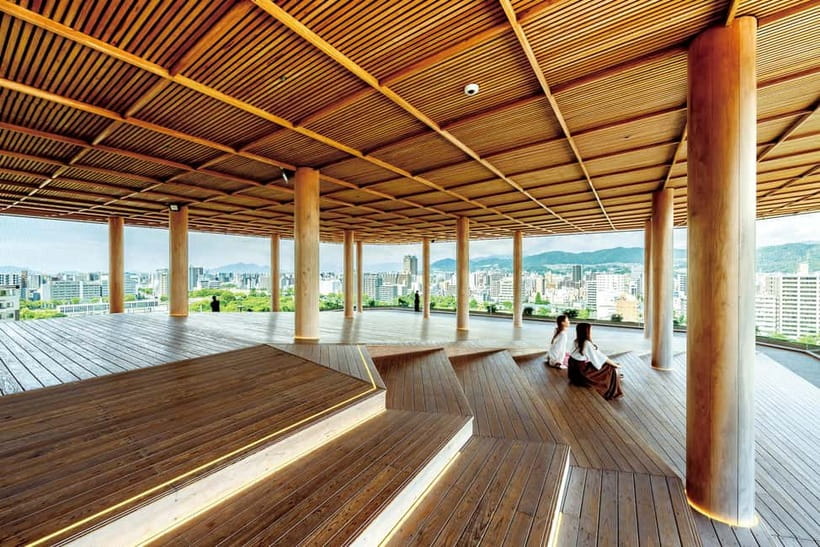
Hiroshima Orizuru Tower gives you two very different ways to see the city: from the open rooftop of HIROSHIMA HILLS, and through a hands-on origami activity tied to Hiroshima’s message of peace. The view reaches from Peace Memorial Park toward Miyajima, while the Orizuru Wall lets you add your own paper crane to a shared display.
I like the simple mix of city views and local meaning, and I like that the visit is self-paced rather than built around a tight guided schedule. The main drawback is clear: if you want a long list of exhibits or a full museum visit, the tower may feel light for the price.
Key points
- Rooftop views: Look across Peace Memorial Park, central Hiroshima, and toward the shores of Miyajima from HIROSHIMA HILLS.
- Origami with a purpose: Fold a paper crane and place it in the Orizuru Wall as part of the admission.
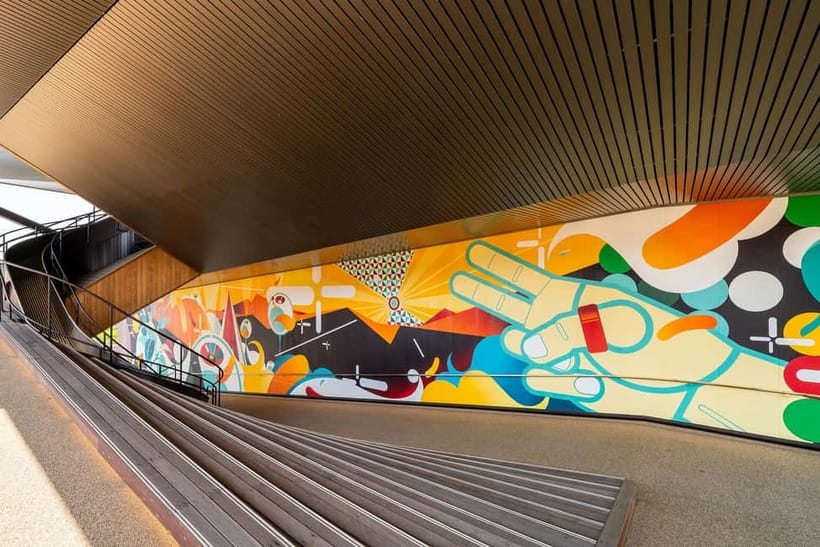
- Art on the way down: The Spiral Slope features 2045 Nine Hopes, a wall art project focused on hopes for the centennial of the war’s end.
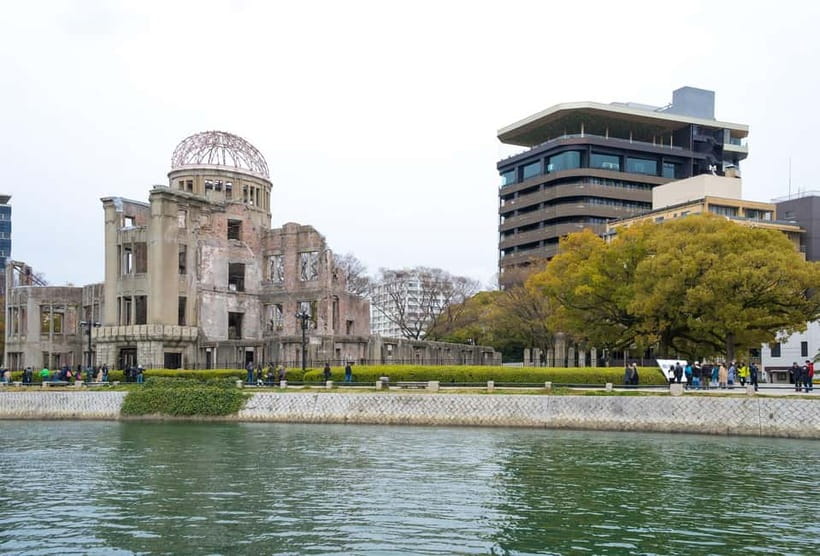
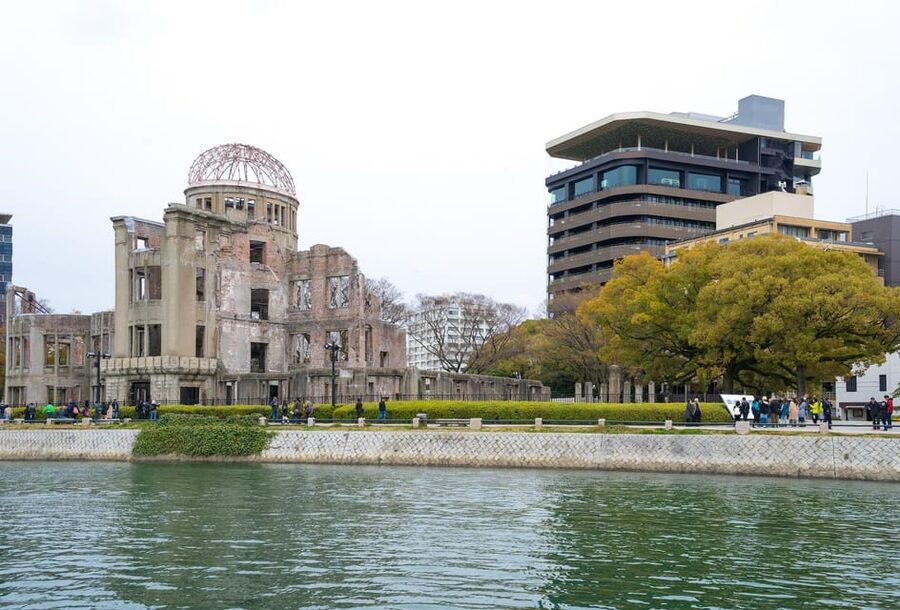
- Easy pairing: The tower sits beside the Atomic Bomb Dome, making it practical to visit around the Peace Memorial Park.
- Food and shopping: The café focuses on handmade drinks using mainly local fruit, while the shop carries Hiroshima specialties.
- Good for a flexible stop: Your ticket is valid for one day, and cancellation is free up to 24 hours before the visit.
A rooftop view with Hiroshima in full context
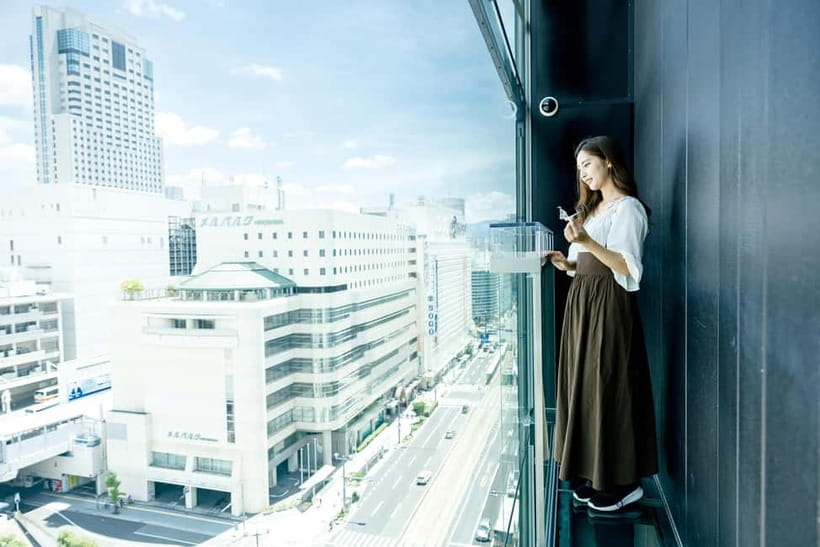
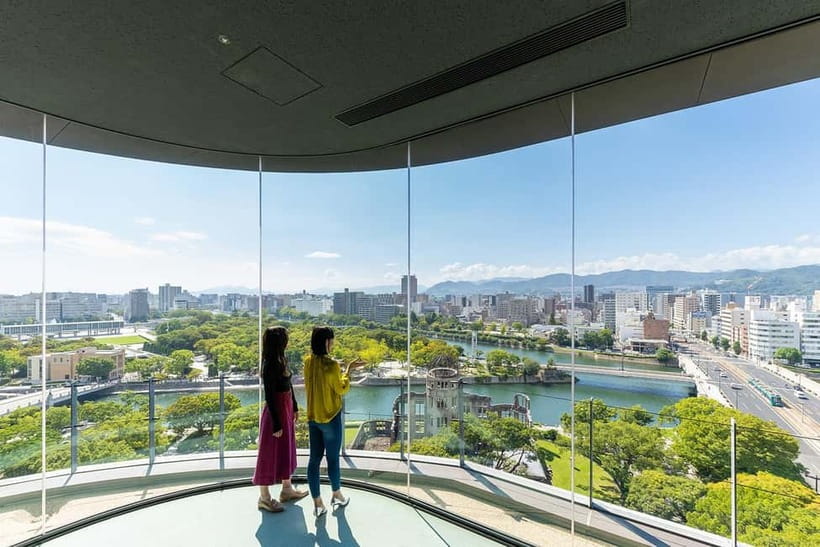
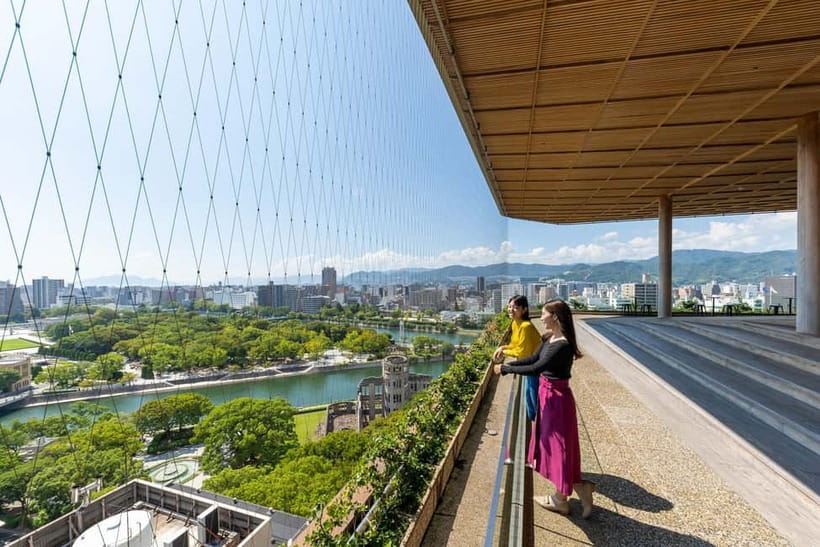
The best reason to visit Hiroshima Orizuru Tower is the rooftop. From HIROSHIMA HILLS, you can look over the Peace Memorial Park and then out toward the water and Miyajima. That gives you a useful first sense of Hiroshima’s layout, linking the city’s central peace sites with the wider natural setting beyond them.
The view is not only about height. From above, the Atomic Bomb Dome and the park become part of a larger picture. You can place the central memorial area within the city rather than seeing it as an isolated stop on a walking route.
I would plan this visit early in your Hiroshima sightseeing, especially if you are still getting your bearings. The rooftop can help you understand the direction of the river, the park, and the distant shore before you continue on foot.
The tower was built in 2016, so its design is modern and deliberately different from the historic structure beside it. That contrast is one of the more interesting parts of the visit. The Atomic Bomb Dome carries the weight of the past, while the tower uses views, design, and contemporary art to point toward the future.
Do not expect a traditional observation tower with a huge number of attractions. The experience is compact. Its value comes from combining the view with the origami and art rather than offering an all-day sequence of major exhibits.
A few more Hiroshima half-days to weigh up
- Peaceful Hiroshima & Miyajima UNESCO 1 Day Bus Tour
★ 5.0 · 5,309 reviews - Hiroshima: Hiroshima and Miyajima UNESCO Sites 1-Day Tour
★ 4.9 · 2,330 reviews - Hiroshima / Miyajima Full-day Private Tour with Government Licensed Guide
★ 5.0 · 1,298 reviews
Starting at the first-floor information counter
When you arrive, show your QR code at the information counter on the first floor. The staff exchange it for your voucher, and the admission includes the observatory fee and the chance to post a folded crane on the Orizuru Wall.
The stated location is 34.3956868, 132.4547167, which makes it easy to save the coordinates before you set out. The tower is in Hiroshima’s Chugoku Region and is positioned close to the Atomic Bomb Dome.
The ticket is valid for one day, but the activity information asks you to check availability for starting times. That means you should confirm the time offered when booking, even though the visit itself is not presented as a tightly guided tour.
The facility is wheelchair accessible. That is useful for visitors who need step-free access, though the supplied information does not provide detailed notes about every part of the route. If a particular area matters to you, ask at the information counter when you arrive.
HIROSHIMA HILLS and the view toward Miyajima
The rooftop observatory is the natural first stop. You can see across the Peace Memorial Park and toward the distant shores of Miyajima, creating a visual link between two of the area’s best-known sights.
The phrase two World Heritage Sites is important here. The tower itself is not the historic site. Instead, the view helps you see Hiroshima’s Atomic Bomb Dome and the wider Miyajima area from one modern vantage point.
This makes the rooftop useful for more than photos. It gives you a pause between visits to ground-level memorials. After walking through the Peace Memorial Park, a high view can help you process the city at a slower pace.
The strongest praise in the available feedback centers on the view. One person called the experience mindblowing, while another simply highlighted the vista. A separate comment described the tower as a great building with an excellent overview. Those reactions make sense if your main goal is to see Hiroshima from above.
At the same time, the view is dependent on conditions. The supplied information does not promise clear weather or a specific sunset schedule, so avoid buying the ticket only for a guaranteed distant view. On a hazy day, the rooftop may still help with orientation, but Miyajima could be less distinct.
Folding a crane at ORIZURU SQUARE
The origami section gives the visit its human element. At ORIZURU SQUARE, you can fold a paper crane and take part in a Japanese tradition that has become closely connected with Hiroshima’s peace message.
You do not simply look at a display. You make something yourself, then add it to the Orizuru Wall. That small action changes the tone of the visit. The tower becomes less about taking in a view and more about leaving a personal contribution behind.
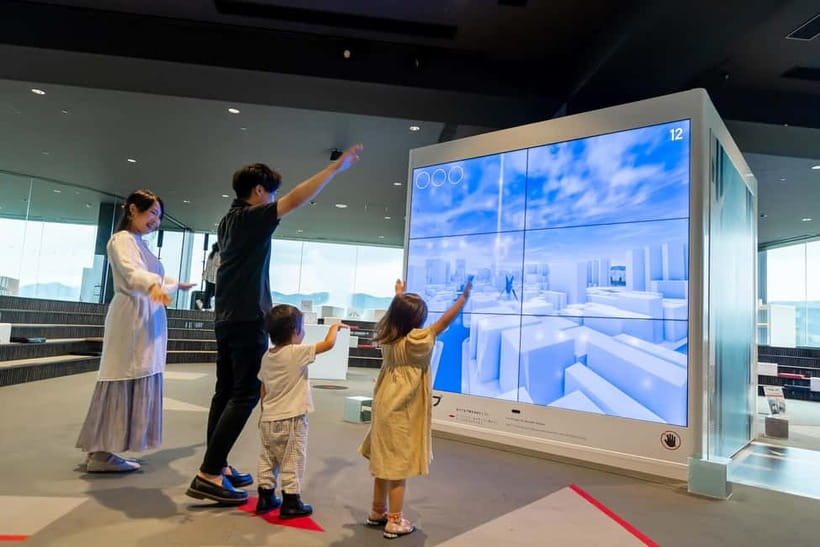
Digital content themed around the orizuru supports the activity. The information provided does not name a guide or describe a formal lesson, so you should expect an interactive visitor experience rather than a scheduled workshop led by a named instructor.
If you have never folded origami, this can be a pleasant hands-on break from sightseeing. It also suits families, since the activity gives children something concrete to do. Allow a little patience for the folding, as a paper crane can be more fiddly than it first appears.
The activity is meaningful, but keep your expectations measured. The feedback includes a four-star assessment describing the visit as fun, while also noting that there is not a great deal to see beyond the origami and the view. That is a fair way to frame it. The crane activity is a highlight, not a full craft course.
Same base, a completely different sort of day:
- Hiroshima Historical Walking Tour – Why A-Bomb was Dropped
★ 4.8 · 893 reviews - Hiroshima Peace (Heiwa) Walking Tour at World Heritage Sites
★ 5.0 · 872 reviews - Hiroshima in a Nutshell: Morning Bike Adventure
★ 5.0 · 524 reviews - Hiroshima City 4hr Private Walking Tour with Licensed Guide
★ 5.0 · 437 reviews
Adding your crane to the Orizuru Wall
Posting your crane is included in the ticket. This is one of the clearest reasons to choose the tower instead of visiting only a standard observation deck.
The Orizuru Wall gathers paper cranes from people from around the world. Your contribution is small, but the shared display gives the act more weight than folding a crane and taking it home.
The connection to peace is direct without requiring a long lecture. You fold, carry, and place the crane yourself. For many people, that simple sequence will be more memorable than another panel of text.
I would treat this as a quiet moment rather than rushing through it. You can take time to look at the digital material, finish the crane carefully, and understand that the wall is part of the tower’s larger message.
The activity may be less appealing if you prefer sightseeing with no participatory element. Some people want a quick lookout and nothing else. In that case, the admission price may feel high for the amount of material you plan to use.
Walking the Spiral Slope and 2045 Nine Hopes

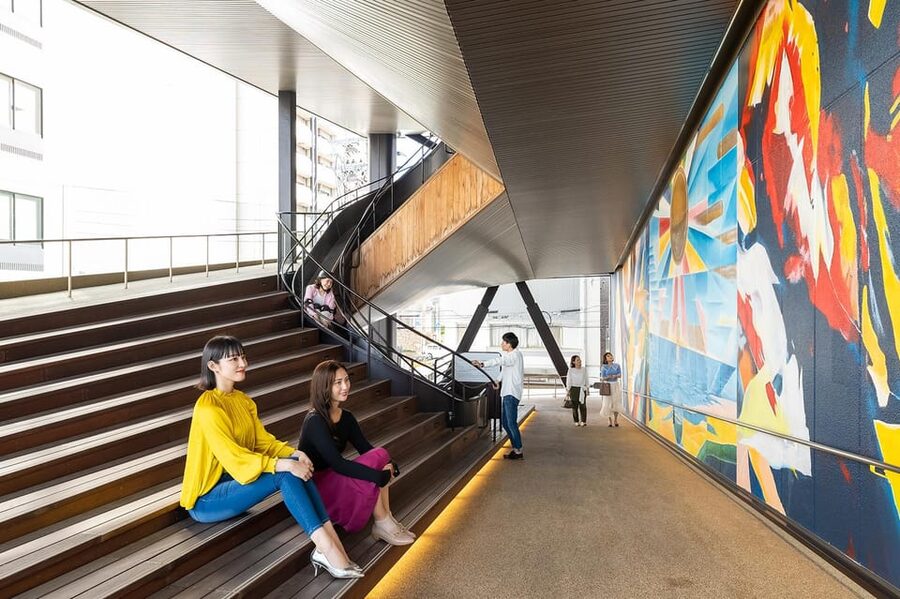
The Spiral Slope, called Sampo, gives you a route through the building rather than sending you straight back by elevator. Along the ascent, you encounter the wall art project 2045 Nine Hopes.
The project features artists with connections to Hiroshima and focuses on their hopes for the centennial of the war’s end. That future-facing idea fits the tower’s role beside the Atomic Bomb Dome. The nearby historic site looks back at what happened, while the wall art asks what kind of future people want to build.
This section adds visual interest and gives the building a sense of movement. You are not only standing at a lookout. You are passing through a sequence of art and ideas as you move along the slope.
The information does not provide the names of the artists or state how long the walk takes. You should therefore see it as a self-guided art route, not a detailed gallery tour with a fixed interpretation program.
For visitors who enjoy modern design and public art, this may be the most distinctive part of the tower. For those focused only on the rooftop, it could feel like a longer way down. The benefit is that it gives you more to notice after the main view, without turning the visit into a formal museum experience.
Hiroshima flavors at the café and shop
The on-site café follows the principle of seasonal foods that offer peace of mind. Its handmade, healthy drinks use mainly local fruit, giving you a chance to sample a small part of Hiroshima’s food culture without leaving the tower.
The available information does not list individual drinks, prices, or a full menu. I would treat the café as a useful refreshment stop rather than booking the tower specifically for a meal.
The permanent shop focuses on Hiroshima specialty products. This is convenient if you want a souvenir connected to the city but do not have time to search through several stores.
A shop inside a sightseeing attraction can sometimes feel generic. Here, the focus on local products gives it a clearer purpose. You might find something edible to take home, or a small reminder of the visit that is more connected to Hiroshima than a standard tower souvenir.
The café and shop also help round out the visit. The rooftop supplies the view, the Orizuru Square supplies the hands-on activity, and the lower areas give you a chance to pause or shop before leaving.
Is the $14 ticket good value?
At $14 per person, this is not the cheapest way to get a city view. The value depends on how many parts of the experience you will actually use.
If you only want a high viewpoint, you may judge the price against other observation decks and feel that the visit is brief. One comment specifically suggested there was little to see beyond the origami activity and the view. That is the key caution.
I think the price works better when you treat the ticket as four experiences in one:
- A rooftop view toward Peace Memorial Park and Miyajima
- An origami activity with a place on the Orizuru Wall
- A modern art route along the Spiral Slope
- Access to a café and shop featuring Hiroshima products
The one-day validity also helps. You do not need to force every part into a rushed visit, provided the available starting time works with your plans. You can fit the tower around a day at the Peace Memorial Park rather than arranging your entire schedule around it.
The ticket is especially reasonable for first-time visitors who want a quick orientation and a small cultural activity. It is less convincing for repeat visitors who have already seen Hiroshima from above and are looking for a substantial museum or guided tour.
The overall score provided is 4.6 from 75 reviews, with the strongest praise aimed at the views and the building itself. The range of individual ratings also matters. A five-star response described the view as the main appeal, while a three-star response found the tower useful for getting a look at the city from above. That pattern suggests a good but focused attraction, not a full-day blockbuster.
Who should book this Hiroshima stop?
I would recommend the tower to you if you want a short, flexible activity close to the Atomic Bomb Dome, especially if you like taking city photographs, folding origami, or seeing public art.
Families may appreciate the crane activity because it breaks up a day of memorial visits with something hands-on. Couples and solo visitors can also enjoy the quiet message of adding a crane to the wall.
The tower is a particularly good fit for:
- First visits to Hiroshima
- People who want a city overview before sightseeing
- Visitors interested in peace-themed cultural experiences
- Anyone looking for a modern contrast to the Atomic Bomb Dome
- Shoppers seeking Hiroshima food products or souvenirs
- Visitors who prefer self-paced attractions
I would be more cautious if you expect a large museum, a named guide, or hours of detailed interpretation. No guide names or formal tour commentary are provided, and the main activities are the view, origami, art, café, and shop.
Book with realistic expectations, and the tower can be a rewarding addition to your Peace Memorial Park day. Think of it as a compact viewpoint and cultural stop, not a replacement for the park, museum, or Atomic Bomb Dome.
Booking details worth knowing
The price is listed at $14 per person, with the observatory admission and Orizuru Wall posting included. You reserve a starting time based on availability, and the ticket is valid for one day.
You can cancel up to 24 hours in advance for a full refund. The reserve-now, pay-later option lets you hold a place without paying immediately, which is useful when your Hiroshima schedule may change.
At the first-floor information counter, show your QR code and exchange it for a voucher. Keep the code easy to reach on your phone.
The experience is wheelchair accessible. Language information is not clearly specified in the supplied details, so do not assume that a particular language service or named guide will be available.
Should you book Hiroshima Orizuru Tower?
Book it if you value a strong city view, a simple origami activity with a peace message, and an easy stop beside the Atomic Bomb Dome. The best visit combines HIROSHIMA HILLS with the Orizuru Wall, then takes time for the Spiral Slope art and a local drink.
Skip it if you want a long, information-heavy attraction or if you are paying only for an observation deck. At $14, the tower earns its price through the combination of view, craft, art, and local products. Used that way, it is a thoughtful and practical addition to a Hiroshima day.
FAQ
Where is HIROSHIMA ORIZURU TOWER located?
The tower is in Hiroshima in Japan’s Chugoku Region. The listed coordinates are 34.3956868, 132.4547167, and the tower is located beside the Atomic Bomb Dome area.
How much does admission cost?
The listed price is $14 per person.
How long is the ticket valid?
The ticket is valid for one day.
What is included with admission?
Admission includes the observatory fee and the opportunity to post an origami crane on the Orizuru Wall.
Can I see Miyajima from the tower?
From the HIROSHIMA HILLS observatory, the views extend toward the distant shores of Miyajima.
Can I fold an origami crane at the tower?
Yes. ORIZURU SQUARE provides an origami activity, and you can add your folded crane to the Orizuru Wall.
What is 2045 Nine Hopes?
2045 Nine Hopes is a wall art project along the Spiral Slope. It presents hopes for the centennial of the war’s end through artists connected with Hiroshima.
Where do I exchange my QR code?
Show your QR code at the information counter on the first floor to exchange it for a voucher.
Is the tower wheelchair accessible?
Yes, the activity is listed as wheelchair accessible.
What is the cancellation policy?
You can cancel up to 24 hours before the visit for a full refund. A reserve-now, pay-later option is also available.
Just added around Hiroshima
- The Peace Memorial to Miyajima : Icons of Peace and Beauty★ 4.5 · 31 reviews
- Shore Excursion from Hiroshima Port : Private Tour in Hiroshima★ 5.0 · 17 reviews
- Hiroshima Saijo Sake Tasting Tour with visit to 7 Breweries★ 5.0 · 104 reviews
- Hiroshima & Miyajima All-Inclusive Tour w/Licensed guide Pancho★ 5.0 · 54 reviews
- Hiroshima Country Cycling: Explore Rural Life 1 HR from City★ 5.0 · 22 reviews
- Okunoshima Rabbit Island Cycling Tour with Local Guide★ 4.5 · 17 reviews
- Private Full Day Hiroshima Tour★ 4.5 · 29 reviews
- Cultural Activities :Kimono, tea ceremony, Calligraphy and Amulet★ 5.0 · 44 reviews
Hiroshima Tours, compared.

Peaceful Hiroshima & Miyajima UNESCO 1 Day Bus Tour
Read our review →
Hiroshima and Miyajima UNESCO Sites 1-Day Tour
Read our review →
Hiroshima Historical Walking Tour – Why A-Bomb was Dropped
Read our review →
Hiroshima Peace (Heiwa) Walking Tour at World Heritage Sites
Read our review →
Hiroshima in a Nutshell: Morning Bike Adventure
Read our review →
Hiroshima City 4hr Private Walking Tour with Licensed Guide
Read our review →

Japanesel Archery Experience HIROSHIMA CASTLE SHARAKU
Read our review →Browse the lists this tour appears in