
Reviewed · FUSHIMI INARI TOURS
Kyoto Early Bird English Tour: Fushimi Inari & Gion(Private opt)
Kyoto’s best-known sights are far more enjoyable before the crowds arrive. This early start takes you from the red torii gates of Fushimi Inari to Kiyomizu-dera and the old lanes of Gion, with an English-speaking local guide to explain what you are seeing.
I like two things right away: the route packs several major sights into one morning, and the guide also takes professional photos for you. Ikki is especially praised for fluent English, warm manners, local knowledge, and practical food suggestions.
The main consideration is the pace and the stated duration. The tour is advertised at four to five hours, but one account describes a much shorter outing, so confirm the schedule when booking and allow plenty of walking time.
Key points at a glance
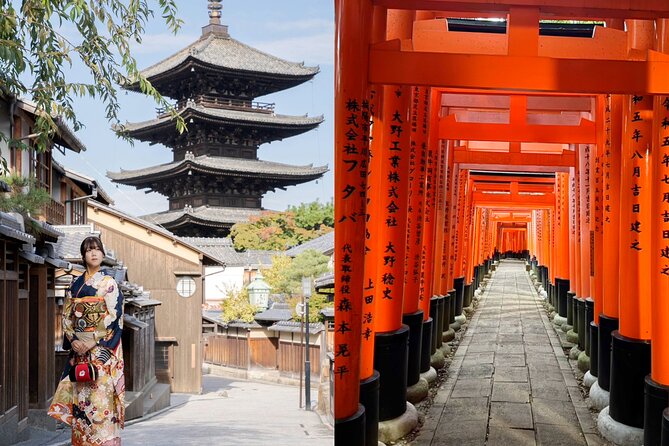
- Early access to Fushimi Inari: Begin with the shrine’s famous red torii paths before the busiest part of the day.
- Seven major stops in one route: See Fushimi Inari, Kiyomizu-dera, Sannenzaka, Ninenzaka, Yasaka Pagoda, Gion, and Yasaka Shrine.
- A guide who doubles as photographer: Ikki is praised for taking many well-composed photos and sending them after the tour.
- Useful cultural explanations: Expect help with shrine and temple customs, Japanese words, religious symbolism, and Kyoto history.
- Private group format: Only your party participates, which makes questions, pacing, and family needs easier to manage.
- Extra costs are clear: Add ¥390 for public transportation and ¥500 for Kiyomizu-dera, plus any food or drinks.
Why the early start matters at Fushimi Inari
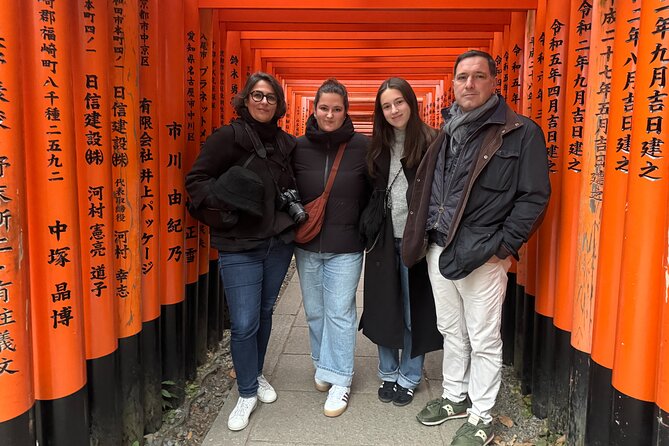
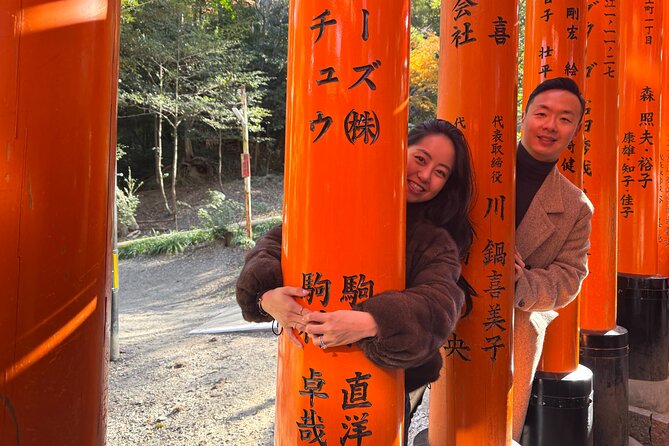
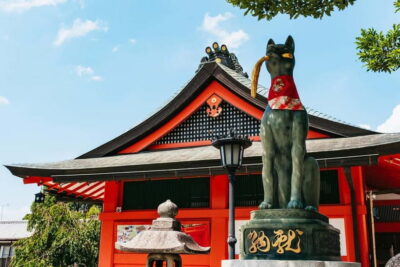
Fushimi Inari-taisha is the natural first stop. Its famous torii gates form long orange-red corridors through the wooded slopes of Mount Inari. The shrine is dedicated to Inari, associated with rice, prosperity, and business success, and fox figures appear throughout the grounds as messengers.
The early timing is the real advantage here. Fushimi Inari is one of Kyoto’s most photographed places, and the narrow gate paths can feel crowded later in the day. Starting here gives you a better chance to enjoy the quiet mood of the shrine and take clear photographs without constantly waiting for gaps in the crowd.
You should also set sensible expectations. The schedule allows about one hour, which is enough to see the lower shrine area and walk through a good stretch of torii gates. It is not enough to explore every path on Mount Inari or complete the full mountain route at a leisurely pace.
Wear shoes you can walk in comfortably. The tour is not a drive-by sightseeing trip. You will be on your feet, and the slope at Fushimi Inari is only the beginning of the walking.
More ways to walk Fushimi Inari:
- Kyoto: Fushimi Inari, Kinkakuji, Bamboo Grove 1 Day Bus Tour
★ 4.8 · 4,316 reviews - Fushimi Inari Hidden Hiking Tour (Private Option Available)
★ 5.0 · 1,750 reviews - Kyoto/Osaka: Nara, Fushimi Inari Taisha, Arashiyama Bus Tour
★ 4.7 · 1,275 reviews
Kiyomizu-dera gives you Kyoto from above
From Fushimi Inari, the route continues by public transportation toward Kiyomizu-dera. Transportation costs are not included, and the stated fare is ¥390 per person. Your guide handles the route, but you should still budget this amount in addition to the tour price.
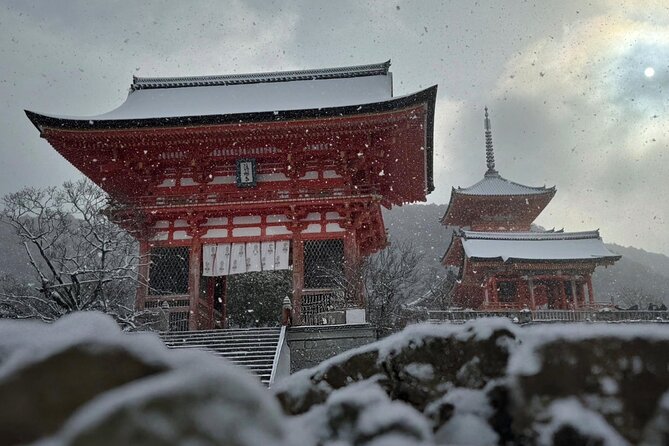
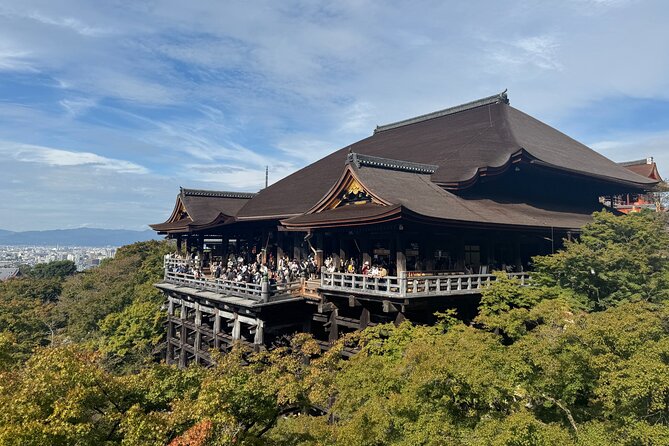
Kiyomizu-dera is one of Kyoto’s essential temple visits. Built on a mountainside, it looks out across Kyoto and gives you a broad city view from its elevated grounds. The temple is also famous for its large wooden stage and long connection to Kyoto’s religious and cultural life.
The admission fee is ¥500 per person and is paid separately. That small extra cost is easy to overlook when comparing tours, so include it in your calculation. With transportation, the listed add-ons come to ¥890 per person before food or drinks.
One hour here gives you enough time to appreciate the main setting, hear the guide’s explanation, and take photographs. It may feel short if you want to examine every building or shop along the approach. That is the trade-off for seeing so many places in one morning.
Kiyomizu-dera can also be one of the more physically demanding sections. You will walk uphill through the historic Higashiyama area, then continue along stone-paved streets. Anyone with moderate fitness should be prepared for a steady morning rather than a relaxed temple visit.
Sannenzaka and Ninenzaka slow the pace
After the temple, you enter Sannenzaka and Ninenzaka, two attractive old streets lined with wooden buildings, shops, and restaurants. Their stone paving and traditional architecture give you a strong sense of old Kyoto, even though these lanes are also popular shopping areas.
The scheduled time here is only 15 minutes. Treat this as a guided introduction, not a full shopping stop. You can learn where the streets fit into the area and take a few photographs, but you may not have time to browse every shop or sit down for a meal.
That short stop can be useful early in a Kyoto visit. Your guide can point out places worth returning to later, when you have more time. If you already know you want souvenirs, sweets, ceramics, or other local goods, plan to come back after the tour rather than trying to shop in a hurry.
Yasaka Pagoda and Yasaka Koshin-do add visual variety
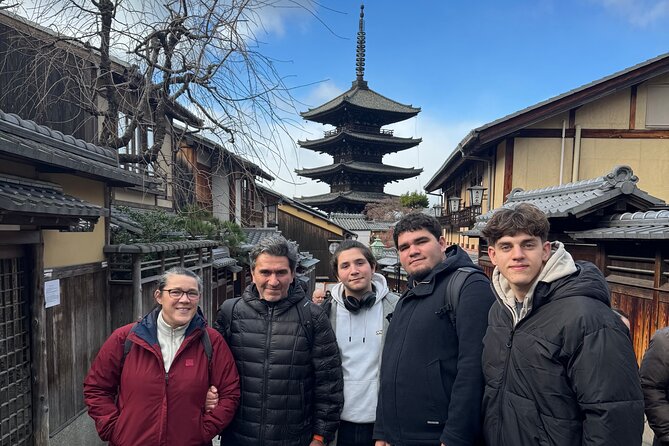
The next two stops are brief but distinctive. Yasakanoto, better known as Yasaka Pagoda or Hokanji Temple, is a powerful landmark in the Higashiyama streets. Its wooden structure is traditionally described as having been built without nails, and its scale makes it easy to spot above the surrounding buildings.
You have about 15 minutes here. That is enough for an explanation and photographs from the street area, but the schedule does not promise a long interior visit. The pagoda works best as a quick architectural stop within the larger walking route.
Yasaka Koshin-do offers a very different mood. Its colorful decorations contrast with the more restrained colors often associated with Japanese temples. The temple’s construction date is not known, which adds an unusual note to the guide’s explanation.
Again, the visit lasts about 15 minutes. The appeal is visual and cultural rather than a long formal temple tour. I like this pairing because it keeps the morning from becoming a sequence of similar large temple grounds. One stop focuses on a famous structure, and the next introduces a smaller, more unusual religious site.
More geisha-district evenings:
- Kyoto Geisha Walking Tour: Gion District & Hidden Gems
★ 4.7 · 3,273 reviews - Kyoto: Gion Magical Night Walking Tour with Geisha Trivia
★ 4.9 · 2,393 reviews - Kyoto: Gion Geisha District Walking Tour – Stories of Geisha
★ 4.7 · 2,187 reviews - Best of Kyoto: Gion, Geisha, Pagodas & Cobblestones
★ 4.9 · 2,058 reviews
Gion shows you Kyoto’s old entertainment district
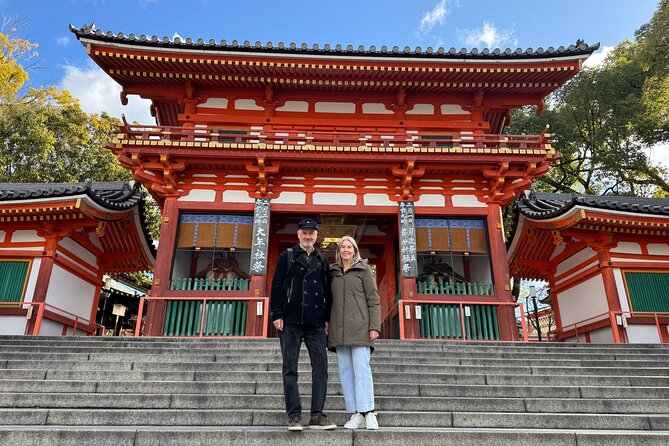
Gion is Kyoto’s best-known geisha district, with traditional machiya houses, teahouses, and preserved streets. The area is closely linked with geiko and maiko culture, though you should approach it with respect. This is a living neighborhood, not a stage set built only for sightseeing.
The planned time is 15 minutes, so expect a short walk and orientation rather than an extended search through every lane. Your guide can explain the character of the district and help you understand what makes its wooden architecture and narrow streets special.
This is one point where a local guide adds real value. Without context, Gion can look like a pretty street of old houses. With an explanation of the district’s role in Kyoto, its customs become easier to understand.
Be considerate with photography. The information provided does not promise encounters with geiko or maiko, and you should never treat people working in the district as automatic photo subjects. Enjoy the architecture, listen to your guide, and follow local signs and directions.
Yasaka Shrine provides a useful finish
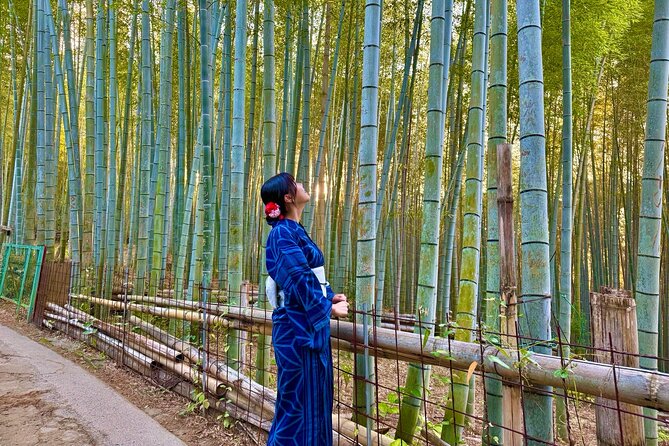
The tour ends at Yasaka Shrine, a major Shinto shrine associated with prosperity and protection. It is described as the headquarters of about 2,300 related shrines across Japan, giving the final stop national importance beyond its location in Gion.
The shrine visit is scheduled for 30 minutes, longer than the short stops at the pagoda, Koshin-do, and Gion. That gives you time to see the grounds, ask final questions, and learn how the shrine fits into Kyoto’s religious life.
Ending here is practical. Yasaka Shrine sits in the historic Gion area, where you can continue sightseeing, find food, or take public transportation to another part of the city. Tell your guide what you plan to do next, and the tour information says they can direct you toward a suitable route.
The finish also makes sense geographically. Rather than returning you to Kyoto Station, the tour leaves you in one of the city’s most useful sightseeing districts. That is convenient if Gion and Higashiyama are on your day’s plan, but less convenient if you need to retrieve luggage or return directly to the station.
What the guide adds beyond a sightseeing checklist
The advertised guide is a passionate local English speaker, and the strongest praise centers on Ikki. He is described as having been born and raised in Kyoto, speaking clear English, answering questions patiently, and explaining local religion and customs in a way that is easy to follow.
That matters on a route filled with shrines and temples. You can walk through a torii tunnel or admire a pagoda on your own, but it is harder to understand the meaning of fox images, prayer customs, shrine etiquette, and the difference between Shinto and Buddhist sites without help.
Ikki is also known for preparing support material, including a booklet with pictures, Japanese language information, and explanations of how to participate in prayers. That can be especially helpful if this is your first visit to Japan or if you want more than postcard views.
Food advice is another useful extra. Specific accounts describe recommendations for sushi and other places to eat, and one guide even walked a party to a conveyor-belt sushi restaurant after the tour. Treat that as a helpful possibility, not a guaranteed extension, but do ask for suggestions before you part ways.
The photography service may be the most practical perk. The guide takes photos throughout the morning, including at Fushimi Inari, Kiyomizu-dera, and the other stops, then sends them to you afterward. That means you can appear in your own travel pictures instead of relying only on selfies or asking strangers.
Private format, walking demands, and timing
This is described as a private activity, with only your group participating. That is a major difference from a large coach or walking group. You can ask more questions, adjust the conversation for children or older relatives, and avoid spending the morning listening to explanations that do not interest you.
The tour still follows a set route and timing. Private does not mean leisurely. Seven stops in four to five hours requires steady movement, public transportation, and careful attention to meeting times.
The meeting point is Kyoto Station, at Higashishiokoji Kamadonocho in Shimogyo Ward. Arrive early. The late-arrival rule is strict: if you miss the meeting time, you cannot join the tour or receive a refund.
The end point is Yasaka Shrine at 625 Gionmachi Kitagawa, Higashiyama Ward. The experience is specifically designed as a walking tour using public transportation, and a moderate level of physical fitness is recommended.
There is one timing issue worth taking seriously. The published duration is approximately four to five hours, but one detailed account describes a tour lasting about two and a half hours. I would ask the operator to confirm the expected length before paying, especially if you have a train, restaurant booking, or another timed activity afterward.
Is $99.10 a fair price?
At $99.10 per person, the tour is not the cheapest way to walk around Kyoto. You can reach Fushimi Inari and many of these areas on your own for far less. The price makes more sense if you value private guiding, clear English explanations, local recommendations, and a set of professional photos.
The route also saves planning time. You do not need to work out how to connect Fushimi Inari, Kiyomizu-dera, Higashiyama, Gion, and Yasaka Shrine in the right order. You start at Kyoto Station and finish in a central sightseeing district, with public transport built into the plan.
Group discounts may improve the value for families or larger parties. Since the activity is private, the cost can feel more reasonable when spread across several people who want the same experience.
Still, remember the extras. Public transportation costs ¥390 per person, Kiyomizu-dera admission is ¥500 per person, and food and drinks are not included. The practical total is therefore the tour price plus at least ¥890 per person, before anything you buy along the way.
Who should book this Kyoto morning?
I would choose this experience for a first visit to Kyoto, especially if you want a clear introduction to shrines, temples, old streets, and Gion in one morning. It also suits families, since the private format allows the guide to speak with children and adjust the conversation to the group.
It is a good match for anyone who wants photographs without constantly asking another person to take them. The guide’s photography is repeatedly singled out as a valuable part of the experience.
You should also consider it if cultural context matters to you. The route is not only about checking off famous places. The guide explains history, religion, language, prayer customs, and local food options.
I would hesitate if you dislike early starts, hills, stone streets, or a brisk schedule. I would also skip it if you want long, unhurried visits inside each temple or several hours for shopping. The tour covers a lot, but that breadth comes with shorter stops.
Should you book the Fushimi Inari and Gion tour?
Book it if you want an efficient first morning in Kyoto with a private English-speaking guide, strong cultural explanations, and photos you can keep. Ikki is the guide most often named in the supplied information, and his local background, clear English, patience, humor, and food advice are major reasons to request him if that option is available.
Before booking, confirm the start time, expected length, guide assignment, and transportation details. If you are comfortable walking for several hours and paying the ¥890 in required extras, this is a well-focused way to get your Kyoto bearings before the crowds build.
FAQ
Where does the tour start?
It starts at Kyoto Station, at Higashishiokoji Kamadonocho in Shimogyo Ward, Kyoto, postal code 600-8216.
Where does the tour end?
The tour ends at Yasaka Shrine, 625 Gionmachi Kitagawa, Higashiyama Ward, Kyoto, postal code 605-0073.
How long does the experience last?
The stated duration is approximately four to five hours. One available account describes a shorter duration of about two and a half hours, so confirm the expected schedule before booking.
What sights are included?
The route includes Fushimi Inari-taisha Shrine, Kiyomizu-dera Temple, Sannenzaka and Ninenzaka, Yasaka Pagoda, Yasaka Koshin-do, Gion, and Yasaka Shrine.
Is admission to Fushimi Inari included?
Fushimi Inari-taisha Shrine has no admission fee.
Is Kiyomizu-dera admission included?
No. Kiyomizu-dera admission costs ¥500 per person and is paid separately.
How much is public transportation?
Public transportation costs ¥390 per person and is not included in the tour price.
Is the tour private?
Yes. The activity is described as private, with only your group participating.
Are food and drinks included?
No. Food and drinks are not included.
What happens if I arrive late?
If you are late for the meeting time, you cannot join the tour and will not receive a refund.
Can I cancel for a full refund?
Yes. You can cancel at least 24 hours before the experience start time for a full refund. Cancellations or changes made less than 24 hours before the start time are not accepted for a refund.
Just added around Kyoto
- Kyoto: Zen Meditation at a Private Temple with a Monk★ 5.0 · 25 reviews
- Kyoto: Gion Geisha District & Sake-in-Hand Walking Tour★ 5.0 · 37 reviews
- Private Pewter Sake Cup Experience with a Kyoto Artisan★ 5.0 · 31 reviews
- Your Private Vacation Photography Session In Kyoto★ 5.0 · 110 reviews
- Private Guided Traditional Buddhist Cooking in Japan★ 5.0 · 16 reviews
- Kyoto Wagashi(Japanese sweets) Cooking Class near Fushimiinari★ 5.0 · 60 reviews
- Traditional Japanese Music show & Experience Tour in Kyoto★ 5.0 · 57 reviews
- Kyoto:Family-Friendly Kimono & Yukata Experience at WARGO★ 5.0 · 147 reviews
Fushimi Inari Tours, compared.

Fushimi Inari, Kinkakuji, Bamboo Grove 1 Day Bus Tour
Read our review →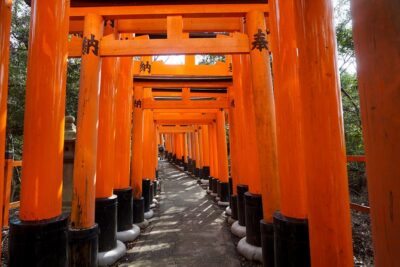
Fushimi Inari Hidden Hiking Tour (Private Option Available)
Read our review →
Kyoto/Osaka: Nara, Fushimi Inari Taisha, Arashiyama Bus Tour
Read our review →
Osaka/Kyoto: Arashiyama, Nara & Fushimi Inari Shrine w/Lunch
Read our review →
Nijo Castle, Kiyomizu & Fushimi Inari Guided Tour
Read our review →
Nijo, Kinkaku-ji, Arashiyama, Kiyomizu & Fushimi Inari
Read our review →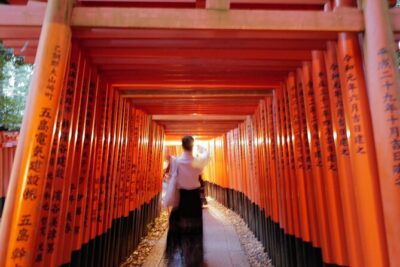
Browse the lists this tour appears in