
Reviewed · FUSHIMI INARI TOURS
Kyoto Early Bird Tour in Uji and Fushimi Inari
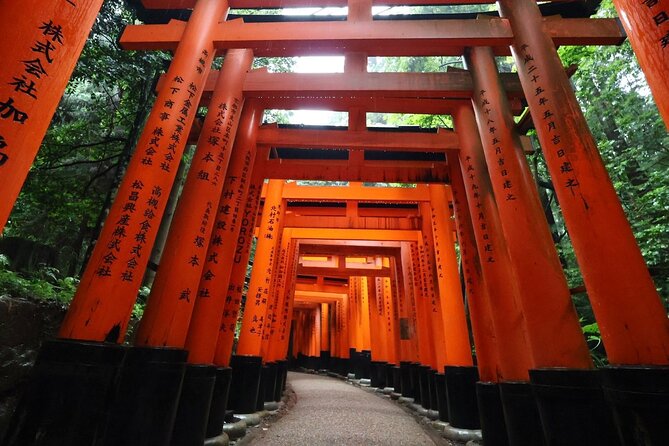
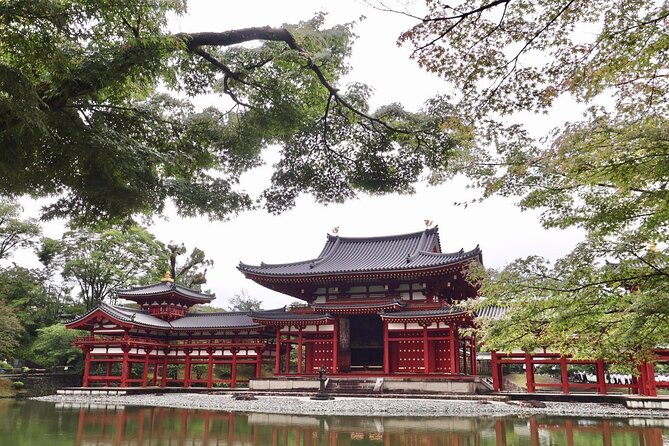
Fushimi Inari’s red torii gates are wonderful at any hour, but they feel far more atmospheric before the day’s crowds arrive. This early start also takes you south to Uji, where you visit Byodoin Temple, the UNESCO-listed Phoenix Hall shown on Japan’s 10 yen coin.
I like the small group of no more than eight, which gives you a real chance to ask questions. I also like that Byodoin’s entrance fee is included, and that the tour ends at Uji Station rather than sending you back through Kyoto. The main catch is the early start and the extra ¥390 transportation cost.
Key points at a glance
- Two major areas in one morning: Combine Kyoto’s Fushimi Inari with Uji’s famous temples.
- A calm start at Fushimi Inari: Spend about 90 minutes beneath the shrine’s thousands of red torii gates.
- Byodoin admission included: Enter one of Japan’s best-known Buddhist temples without buying a separate ticket.
- Small-group guiding: The maximum group size is eight, useful when you want to ask about Shinto, Buddhism, or local customs.
- A quieter Uji finish: Visit Ujigami Shrine and end near Uji Station, with directions available for your return to Kyoto.
- A moderate walking day: Expect temple grounds, shrine paths, and enough movement that comfortable shoes matter.
Why the early start changes Fushimi Inari
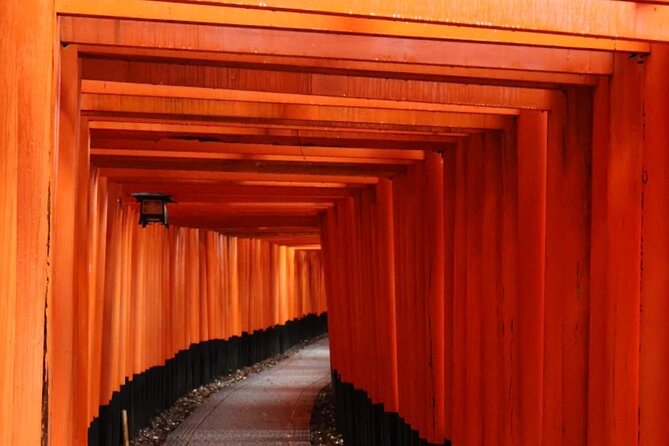
Fushimi Inari-taisha is one of Kyoto’s most recognizable sights. Its thousands of vermilion torii gates form long corridors up the wooded slopes of Mount Inari, creating the image most people carry away from Kyoto.
The timing matters here. Arriving in the morning gives you a better chance to walk through the gates without the thickest afternoon crowds. You still share the shrine with other people, of course, but the experience should feel less like a stop on a bus route and more like a proper shrine visit.
You have about 90 minutes at Fushimi Inari. That is enough time to pass through the lower torii corridors, look at the shrine buildings, and hear the guide explain what you are seeing. It is not enough for a full climb to the upper reaches of Mount Inari, so keep your expectations sensible.
This is one of the tour’s practical strengths. Fushimi Inari can swallow half a day if you walk far up the mountain, but that would leave little time for Uji. Here, the guide keeps the visit focused so you can enjoy the shrine and still reach the next part of the route.
The paths are not flat throughout, and the torii corridors involve steady walking. You should have a moderate level of fitness, as the day includes shrine paths and temple grounds rather than simple curbside sightseeing.
More ways to walk Fushimi Inari:
- Kyoto: Fushimi Inari, Kinkakuji, Bamboo Grove 1 Day Bus Tour
★ 4.8 · 4,316 reviews - Fushimi Inari Hidden Hiking Tour (Private Option Available)
★ 5.0 · 1,750 reviews - Kyoto/Osaka: Nara, Fushimi Inari Taisha, Arashiyama Bus Tour
★ 4.7 · 1,275 reviews
Byodoin Temple and the Phoenix Hall
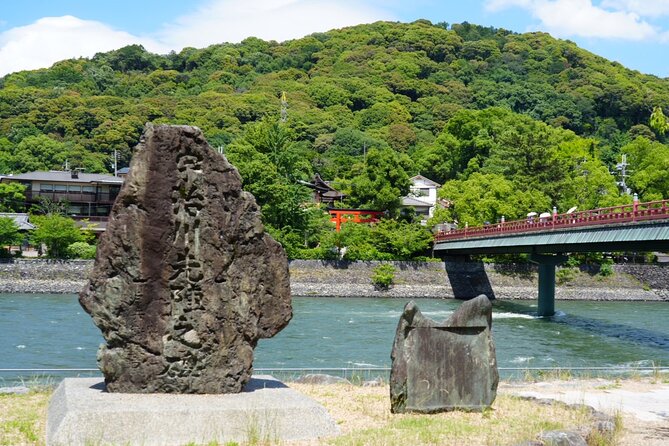
After Fushimi Inari, the tour continues to Uji, a separate city south of central Kyoto. Uji is closely associated with tea, temples, and the refined court culture of the Heian period. The most important stop is Byodoin Temple.
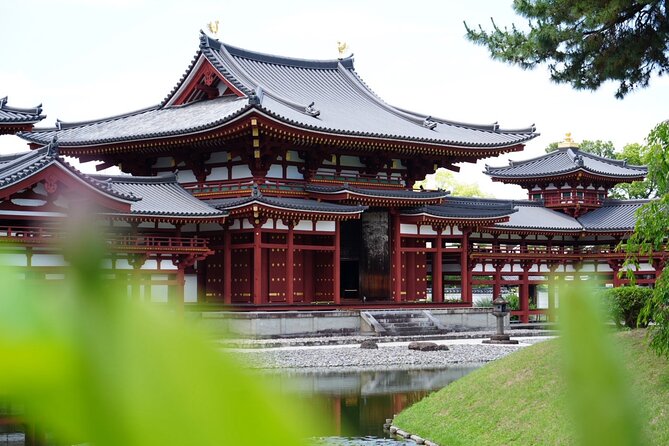
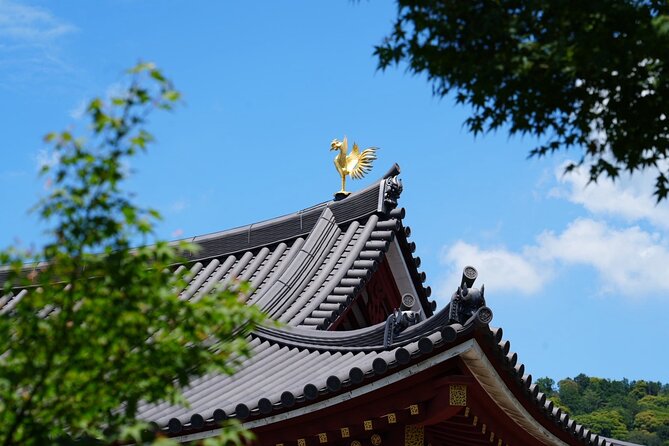
Byodoin is famous for its Phoenix Hall, an elegant structure that appears on the reverse of Japan’s 10 yen coin. Seeing it in person gives that small coin a useful sense of scale and place. The building sits beside a pond, and its reflection adds much of the appeal.
The temple is also a UNESCO World Heritage Site, so this is not simply a quick photo stop. You get about 90 minutes here, with admission included in the tour price. That saves you the trouble of handling a separate entry purchase and gives the guide a clear setting for explaining the temple’s religious and artistic importance.
The included ticket is a meaningful part of the value. At $55.18 per person, the tour is not just paying for transport and a walk. You are also covering entry to one of Uji’s central sights, along with an English-speaking guide and a carefully planned route through two different areas.
Byodoin is a popular place, so do not read early bird as a promise of an empty temple. The benefit is that you reach Uji before the heavier afternoon flow, not that you have the entire site to yourself.
Ujigami Shrine, a quieter final stop
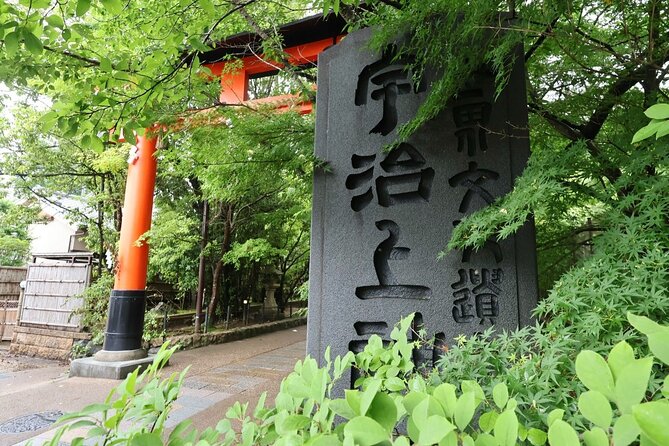
Ujigami Shrine provides a different mood from Byodoin. It is described as Japan’s oldest standing shrine, and its wooden buildings and moss-covered grounds offer a peaceful contrast to the bold red gates at Fushimi Inari.
You have about 90 minutes here as well. That is generous for a small shrine, and it allows the guide to explain the site without rushing you from one feature to the next. The setting is particularly useful if you want to see how Shinto shrine spaces can feel modest, quiet, and tied to the surrounding trees.
Guide Genki receives especially strong praise for making the religious background easy to follow. His explanations about the differences between Shinto and Buddhism are presented in manageable portions, rather than as a long lecture. That matters in Kyoto, where temples and shrines can otherwise blur together after a few days.
I like this final stop because it keeps the tour from becoming a checklist of famous buildings. Fushimi Inari gives you the iconic image, Byodoin supplies the major cultural landmark, and Ujigami offers a slower look at local religious architecture.
A guide-led look at Shinto and Buddhism
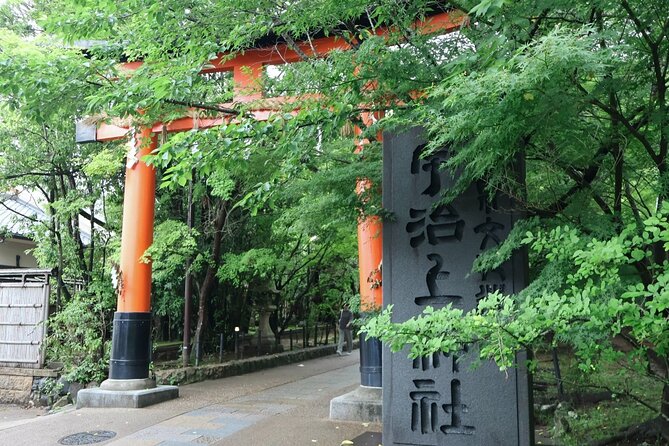
The guide can make or break a temple tour. At Fushimi Inari, Byodoin, and Ujigami, you are looking at places with different traditions, symbols, and uses. Without context, it is easy to admire the colors and woodwork but miss what separates a shrine from a temple.
Genki is specifically praised for clear, warm, and engaging guidance. The useful detail is not just that he knows the sites. He explains the difference between Shinto and Buddhism in a way you can retain while continuing to walk.
The small group helps here. With a maximum of eight people, you should have better access to the guide than you would on a large coach outing. You can ask a follow-up question, pause for clarification, or get help understanding a custom without trying to catch a guide’s attention across a crowd.
The tour is conducted in English. If religious history and local customs are important to you, the guide’s explanations add value that a self-guided visit may not provide. If you mainly want free time for photography, the guided structure may feel more limiting.
A few more Kyoto half-days to weigh up
- PERFECT KYOTO 1-Day Bus Tour
★ 5.0 · 13,518 reviews - Kyoto: Tea Ceremony in a Traditional Tea House in Kiyomizu
★ 4.9 · 3,519 reviews - Kyoto Geisha Walking Tour: Gion District & Hidden Gems
★ 4.7 · 3,273 reviews - Kyoto: Tea Ceremony Ju-An at Jotokuji Temple
★ 4.9 · 3,207 reviews
What the $55.18 price really covers
The listed price is $55.18 per person. That is a reasonable price for a five-and-a-half-hour small-group outing that includes an English-speaking guide and Byodoin Temple admission.
You also pay ¥390 per person for transportation. Lunch is not included, so budget for a meal after the tour or make your own plan in Uji. Since the tour ends at Uji Station, you are well placed to continue around Uji or take the train back toward Kyoto.
The value is strongest if you want to see both Fushimi Inari and Uji without arranging the route yourself. Doing the same morning independently would require planning train connections, deciding how long to spend at each site, buying Byodoin admission, and keeping an eye on time.
The value is less clear if you already know Uji well or prefer a slow, unstructured morning. You would have less control over the length of each stop, and the fixed schedule means you cannot simply linger at Fushimi Inari for several hours.
The transportation charge is modest, but it should not surprise you. Add it to the advertised price when comparing this outing with a self-guided visit or another Kyoto day tour.
Timing, meeting point, and the Uji finish
The tour starts at Kyoto Station, at Higashishiokoji Kamadonocho in Shimogyo Ward. Kyoto Station is a practical meeting area, but allow enough time to find the exact meeting point, especially if you are staying in another part of the city.
The full experience lasts about five hours and 30 minutes. That includes the three main visits and the movement between Kyoto and Uji. Because the tour is scheduled in the morning, check the exact start time carefully when booking and plan your route to Kyoto Station the night before.
The tour ends at Uji Station. This is an advantage if you want to remain in Uji after the guided portion. You can ask the guide for directions back to Kyoto, but the guide will not ride the train with the group.
That arrangement gives you useful freedom at the end. You can return to Kyoto, continue exploring Uji, or make your own lunch plan. It also means you should be comfortable handling the return journey independently.
How much walking should you expect?
This is not a vehicle-based sightseeing loop. You spend time walking through Fushimi Inari, around Byodoin, and across the grounds of Ujigami Shrine. The total duration is manageable, but the morning will feel active rather than leisurely.
Fushimi Inari includes sloping paths and torii-lined routes. Byodoin and Ujigami Shrine involve walking around historic grounds, where surfaces may not always feel as smooth as city pavement. Wear shoes that are comfortable for several hours.
The stated fitness requirement is moderate. You do not need to be a serious hiker, but this tour is not ideal if you need frequent seated breaks or want to avoid stairs and inclines.
The pace should suit people who want a well-organized introduction to southern Kyoto. Families with older children, first-time visitors, and adults who prefer a guide’s context will likely get the most from it. Anyone seeking a very slow photography session at one site should consider visiting independently instead.
What makes this route different from a standard Kyoto tour
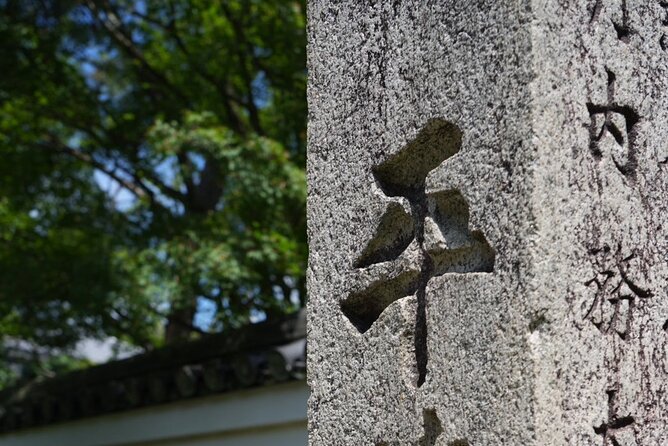
Many Kyoto outings focus on the city’s central temples or famous eastern districts. This route takes you south, pairing a major Kyoto shrine with two important Uji sites.
That combination gives the morning variety. Fushimi Inari is visually striking and energetic, Byodoin is formal and refined, and Ujigami is smaller and quieter. You get three distinct impressions instead of several similar temple courtyards.
The route also avoids leaving Uji as an afterthought. Uji is easy to skip when you are based in central Kyoto, yet Byodoin alone can justify the journey. Adding Ujigami Shrine gives you a second reason to make the trip.
The drawback is that you will not see every Uji attraction. The schedule centers on Byodoin and Ujigami Shrine, so do not book this expecting a full food, tea, or shopping tour of the town. The supplied details do not include a tea tasting or a dedicated lunch stop.
Small-group comfort and the role of Genki
The maximum of eight people is one of the most useful features. A group this size can move through shrine paths with less fuss, and the guide can keep track of questions and explanations more easily.
Genki is the guide name associated with the strongest praise for the experience. His style is described as warm, caring, and clear, with enough information to help you understand the difference between Shinto and Buddhism without overloading you.
That balance is important. Kyoto has no shortage of historical facts, but a good guide helps you remember the few points that make each place distinct. Genki’s approach appears suited to people who want substance without a nonstop lecture.
Guide quality can vary by departure, and the supplied information identifies Genki but does not promise that he leads every date. You should treat his presence as a possibility rather than a guarantee.
Who should book this early morning tour?
I would choose this outing if you want three things: an early start, a compact group, and a guided introduction to Fushimi Inari and Uji. It suits a first Kyoto visit especially well because it covers an iconic shrine and two major Uji sites in one organized morning.
It is also a smart choice if you dislike sorting out local transport. The extra ¥390 fee is small compared with the time and attention needed to plan the route yourself, particularly when you are trying to beat the crowds.
You may want another option if you need a late start, want a long lunch, or prefer to spend most of the day at Fushimi Inari. The tour is also less suitable if you want the guide to escort you back to Kyoto after reaching Uji Station.
Cancellation is free if you cancel at least 24 hours before the start time. Changes or cancellations made inside that window are not accepted for a refund, so keep the local cut-off time in mind.
Should you book the Kyoto Early Bird Tour?
Book it if you want an efficient, well-explained morning that links Fushimi Inari and Uji without the usual planning work. The included Byodoin admission, small group, early timing, and strong guide feedback make the $55.18 price appealing, even after adding ¥390 for transport.
Skip it if your priority is complete freedom or a long climb at Fushimi Inari. For most first-time visitors with moderate fitness, though, this is a well-balanced way to see southern Kyoto before the afternoon crowds gather.
FAQ
How long does the tour last?
The tour lasts approximately 5 hours and 30 minutes.
Where does the tour start?
It starts at Kyoto Station, at Higashishiokoji Kamadonocho in Kyoto’s Shimogyo Ward.
Where does the tour end?
The tour ends at Uji Station.
Is transportation included?
Transportation is not included in the listed price. The additional transportation fee is ¥390 per person.
Is Byodoin Temple admission included?
Yes. The entrance fee to Byodoin Temple is included.
Is lunch included?
No. Lunch is not included.
What language is the tour conducted in?
The tour includes an English-speaking guide.
How many people can join the tour?
The maximum group size is eight people.
What fitness level is required?
A moderate level of physical fitness is recommended. The tour includes walking at Fushimi Inari, Byodoin Temple, and Ujigami Shrine.
Can I return to Kyoto with the guide?
The guide can provide directions for returning to Kyoto, but will not take the train back with the group.
Just added around Kyoto
- Kyoto: Zen Meditation at a Private Temple with a Monk★ 5.0 · 25 reviews
- Kyoto: Gion Geisha District & Sake-in-Hand Walking Tour★ 5.0 · 37 reviews
- Private Pewter Sake Cup Experience with a Kyoto Artisan★ 5.0 · 31 reviews
- Your Private Vacation Photography Session In Kyoto★ 5.0 · 110 reviews
- Private Guided Traditional Buddhist Cooking in Japan★ 5.0 · 16 reviews
- Kyoto Wagashi(Japanese sweets) Cooking Class near Fushimiinari★ 5.0 · 60 reviews
- Traditional Japanese Music show & Experience Tour in Kyoto★ 5.0 · 57 reviews
- Kyoto:Family-Friendly Kimono & Yukata Experience at WARGO★ 5.0 · 147 reviews
Fushimi Inari Tours, compared.

Fushimi Inari, Kinkakuji, Bamboo Grove 1 Day Bus Tour
Read our review →
Fushimi Inari Hidden Hiking Tour (Private Option Available)
Read our review →
Kyoto/Osaka: Nara, Fushimi Inari Taisha, Arashiyama Bus Tour
Read our review →
Osaka/Kyoto: Arashiyama, Nara & Fushimi Inari Shrine w/Lunch
Read our review →
Nijo Castle, Kiyomizu & Fushimi Inari Guided Tour
Read our review →
Nijo, Kinkaku-ji, Arashiyama, Kiyomizu & Fushimi Inari
Read our review →
Browse the lists this tour appears in