
Reviewed · FUSHIMI INARI TOURS
Kyoto: Fushimi Inari Shrine and Tofukuji Temple E-Bike Tour
Kyoto’s famous sights are easier to understand when you connect them by bicycle. This four-hour ride takes you from Gion’s geisha district through residential streets and riverside paths to Fushimi Inari Shrine and Tofukuji Temple. I like that the route gives you both major landmarks and ordinary Kyoto scenes, rather than keeping you inside a string of temple gates.
I also like the practical shape of the tour. The electric bicycles make hills and longer stretches manageable, while guide Maki brings history, religion, customs, and personal stories to life. The main consideration is time: four hours moves quickly, and one traveler wanted more time at Fushimi Inari after the group lost some minutes getting started.
Key points to know
- A small group of up to eight makes it easier to follow the guide and ask questions.
- Guide Maki is frequently identified as warm, funny, highly informed, and especially good with families and teenagers.
- The route mixes famous and quiet Kyoto, including Gion, residential lanes, riverside stretches, shrines, and temples.
- Electric bicycles reduce the physical strain, especially on steeper sections and near the end of the ride.
- Fushimi Inari and Tofukuji provide contrast, from Shinto torii gates and rituals to Buddhist calm in a Zen garden.
- The tour includes bikes, helmets, insurance, water, a snack, and entrance fees, but not lunch or hotel transport.
Why an e-bike is a smart way to see Kyoto
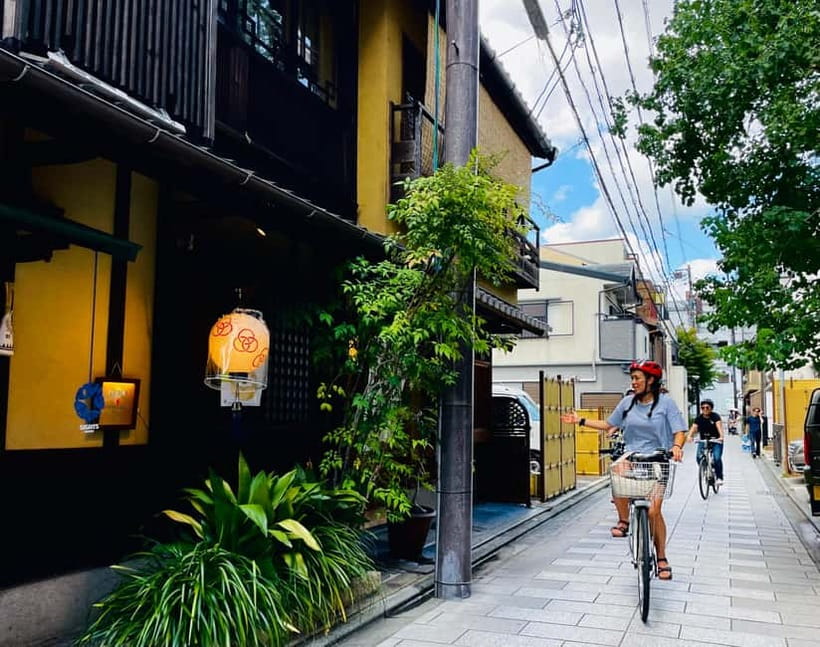
Kyoto is compact enough to explore by bicycle, but not always easy to cover on foot. The route between Higashiyama, Gion, Fushimi Inari, and Tofukuji includes city streets, quieter lanes, and some sloped sections. An electric bicycle gives you help when your legs need it without turning the outing into a hard athletic ride.
You begin at Pedal Adventure Kyoto, near Higashiyama-Sanjyo. The guide first explains how to use the e-bike and reviews how to ride in Japan. That orientation matters, especially if you are uneasy about city traffic or have not used an electric bicycle before.
The group size is limited to eight. That is small enough for the guide to keep an eye on the line and give directions at turns. It also lets you stop for questions without holding up a large bus group. Several family groups included teenagers, and the route was described as manageable for riders with mixed ability.
You should still be comfortable riding a bicycle and walking around temple grounds. The tour is not suitable for children under 12, pregnant women, or people with mobility impairments. Wear comfortable clothes and shoes, use sunscreen on sunny days, and bring water, even though a bottle is included.
More ways to walk Fushimi Inari:
- Kyoto: Fushimi Inari, Kinkakuji, Bamboo Grove 1 Day Bus Tour
★ 4.8 · 4,316 reviews - Fushimi Inari Hidden Hiking Tour (Private Option Available)
★ 5.0 · 1,750 reviews - Kyoto/Osaka: Nara, Fushimi Inari Taisha, Arashiyama Bus Tour
★ 4.7 · 1,275 reviews
Gion gives the ride a cultural start
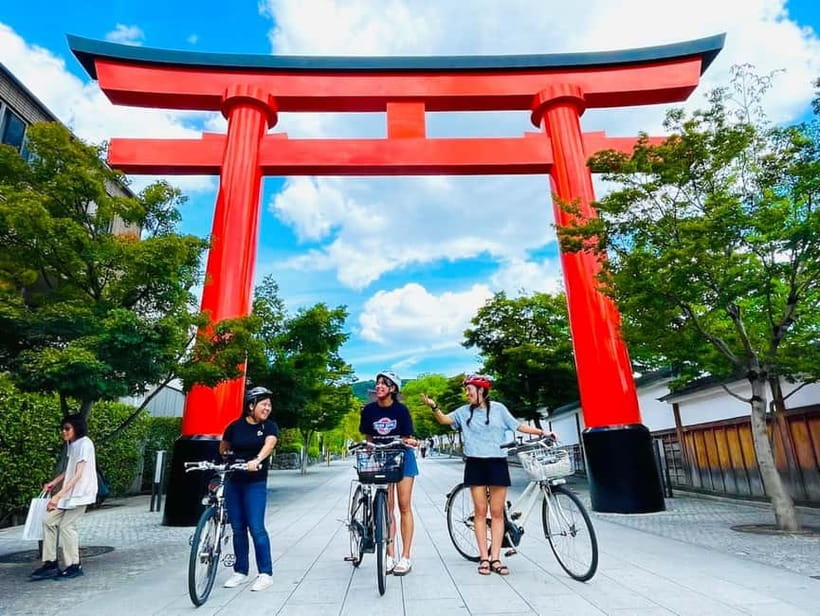
The first major section passes through Gion, Kyoto’s best-known traditional entertainment district. Your guide explains geisha culture, local customs, and the difference between seeing a historic neighborhood and treating it like a stage set.
This is one of the better reasons to take the tour early in your Kyoto stay. A guide can help you understand the customs you encounter later, from respectful behavior at shrines to the way religious traditions appear in everyday life. Maki is particularly good at connecting formal history with personal stories and humor, which keeps the explanations from feeling like a lecture.
The cycling itself adds useful context. Instead of jumping from station to attraction, you pass through parts of Kyoto where people live and work. The route includes quieter residential streets, small lanes, and stretches beside rivers and creeks. You might not stop at every place, but you get a look at the city between its headline attractions.
Busy roads are part of the outing. The guide gives instructions and leads the group through them, while also using side streets when possible. If you are nervous about cycling in a city, tell the guide at the start and pay close attention when the group moves off again. One rider suggested that a microphone or earpiece could help everyone hear the guide more clearly, especially when the group is spread out.
Fushimi Inari turns a bike ride into a Kyoto classic
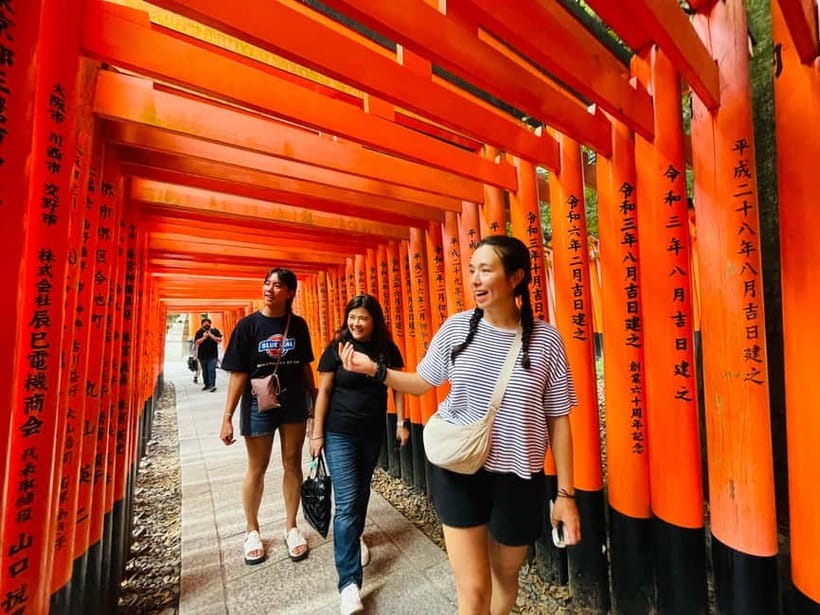
Fushimi Inari Shrine is the tour’s big-name stop. It is known for its long series of orange torii gates, but the site is more than a photogenic path. Your guide explains its history, the role of Inari worship, and key parts of Shinto practice.
The value here is interpretation. You can walk through a shrine and take pictures without knowing why people bow, how they purify themselves, or what the offerings and gates represent. A good explanation helps you look at the site with more care. The tour also gives you a chance to ask direct questions about Shintoism rather than trying to piece together meaning from signs.
Fushimi Inari is a place where time can disappear. The four-hour schedule includes cycling, several stops, and Tofukuji, so you should not expect an open-ended exploration of every path. One person specifically wished for more time at the shrine. If Fushimi Inari is your main priority, plan to return on your own for a longer visit.
That is not necessarily a flaw. The purpose of this tour is to place Fushimi Inari within a wider picture of Kyoto. You see the shrine, learn how it fits into Japanese religious life, and then continue to a Buddhist temple. For many people, that balanced approach is more useful than spending the whole half day at one famous site.
Tofukuji offers a quieter Buddhist pause
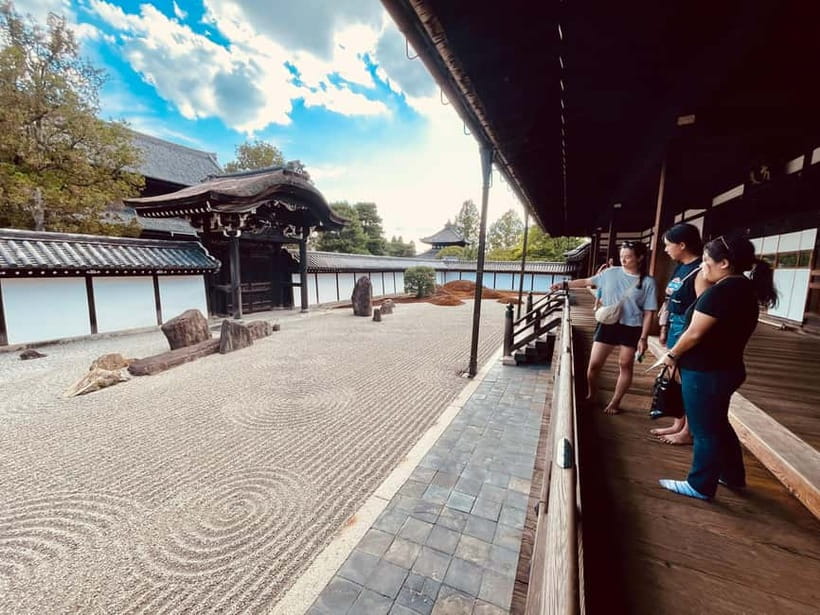
After Fushimi Inari, the ride continues to Tofukuji Temple. Here the mood shifts from the visual energy of torii gates to Buddhist architecture and a Zen garden.
The stop is designed for more than a quick photograph. You have time to sit, slow down, and take in the garden’s calm atmosphere while the guide explains the temple and the difference between Buddhist and Shinto traditions. Several parts of the tour focus on the contrast between the two religions, and this is where that comparison becomes especially clear.
I appreciate this pause in the itinerary. Four hours on a bicycle can become a race if every stop is treated as a checklist. Tofukuji gives the outing a quieter middle point and lets you absorb what you have seen.
The temple is also a useful counterweight to Fushimi Inari. One is strongly associated with Shinto worship and torii gates; the other offers a Buddhist setting for reflection. You do not need prior knowledge of Japanese religion to benefit from the explanation. You simply need to be willing to listen and observe.
More bike days around Kyoto:
- Hidden Kyoto E-Biking tour
★ 5.0 · 1,843 reviews - Bike Tour Exploring North Kyoto plus Lunch
★ 5.0 · 1,087 reviews - Arashiyama Bamboo Forest & Hidden Gems Bike Tour (Early Bird)
★ 5.0 · 613 reviews - 5 Top Highlights of Kyoto Full Day Bike Tour (E-bike option)
★ 5.0 · 511 reviews
The return route shows another side of Kyoto
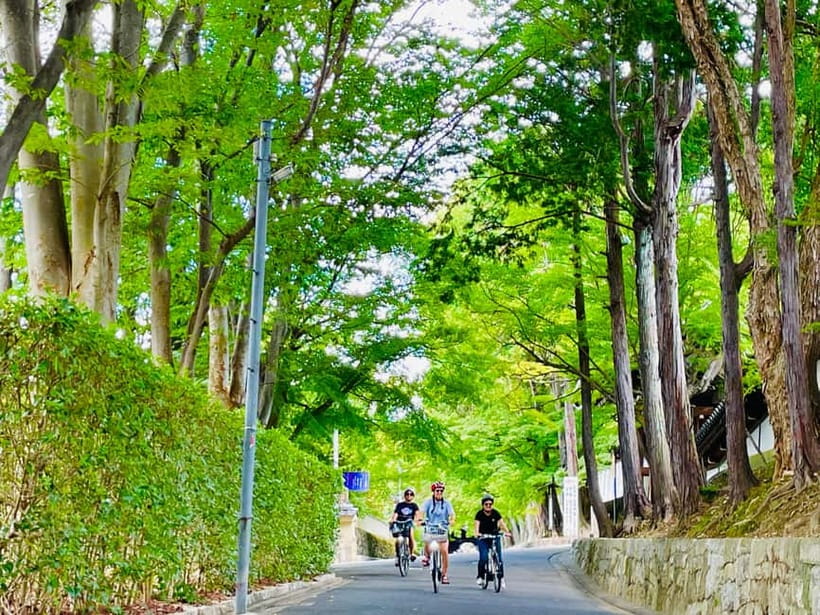
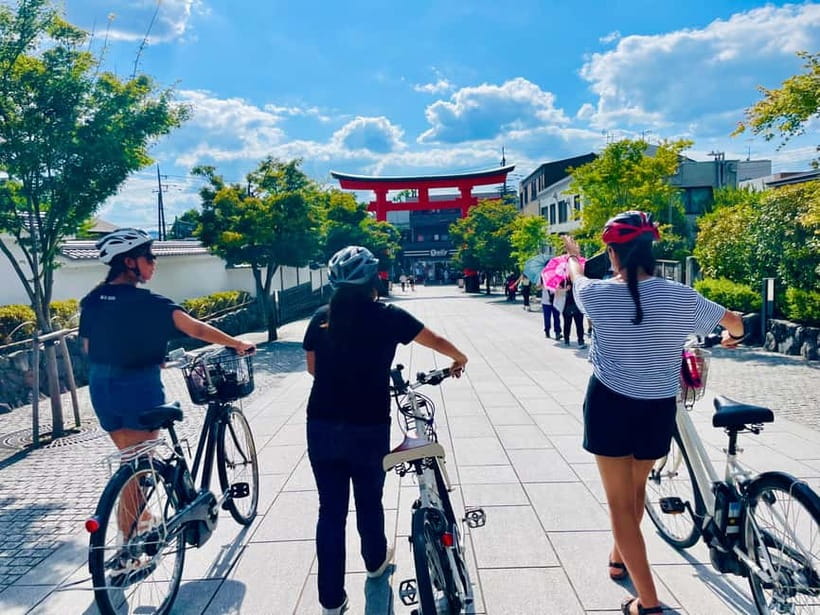
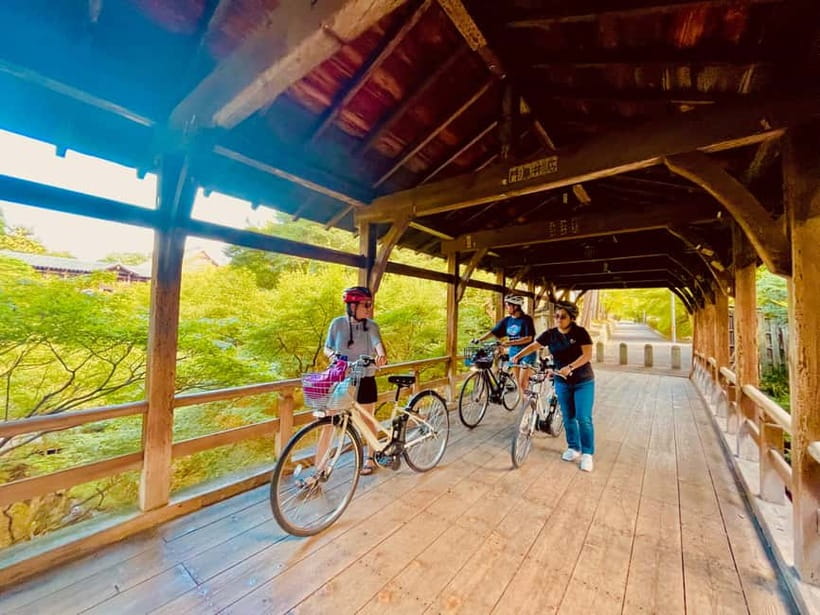
The ride back is part of the experience, not just transport to the shop. The route follows scenic riverside sections and quieter streets, giving you a more relaxed finish after the temple visits.
This is where the e-bike earns its keep. You may be tired from stopping, walking, and riding, but the electric assistance helps maintain an easy pace. The bicycles have been described as clean, sturdy, well maintained, and simple to use after the initial briefing.
The guide also takes photographs during the tour. That can be useful for families and couples who want pictures of the whole group without handing a camera to a stranger. Maki is often praised for taking family photos and for interacting well with teenagers, which adds a personal touch without changing the main purpose of the ride.
You should expect a mix of cycling and walking. Temple grounds and shrine areas are explored on foot, while the bicycle connects the stops. Comfortable footwear matters just as much as cycling clothes.
Maki’s guiding style is a major part of the value
The route is good, but the guide determines how much you take from it. Maki is the guide most often associated with this experience, and her approach combines clear English, humor, local knowledge, and personal stories.
She explains Japanese history, samurai battles, religion, infrastructure, geisha culture, and daily customs. The material is not limited to dates and names. Her use of photographs and visual aids helps when a subject is difficult to explain while standing beside a shrine or temple.
Her energy is another part of the experience. Families with teenagers found it easy to stay engaged, and adults appreciated the relaxed tone. That makes this a strong choice if you want cultural explanation without a formal classroom feel.
At the same time, a lively guide is not everyone’s ideal. If you prefer silent cycling and long stretches of independent sightseeing, this tour may feel guided at nearly every stage. The group moves together, and explanations happen at planned stops. I would choose it for conversation and context, not solitude.
What the $83 price includes
At $83 per person, the tour is not the cheapest way to reach Fushimi Inari. You could visit the shrine and Tofukuji independently using Kyoto’s public transport and spend less on admission and transportation.
The comparison changes when you count what is bundled in. The price includes:
- A live English-speaking local guide
- Electric bicycle rental
- Helmet
- Insurance
- Water bottle
- Snack
- Entrance fees for two places
You are also paying for the route design and for someone to handle the practical work of moving a small group safely through Kyoto. The guide selects quieter connections between major stops, explains what you are seeing, and answers questions along the way.
For me, the strongest value is the combination of transport and cultural context. You are not simply renting a bicycle, and you are not sitting on a bus. You are using the bike to reach areas you might skip on foot while learning how the city’s religious sites and neighborhoods fit together.
Lunch is not included, and hotel pickup and drop-off are not included. Meet at Pedal Adventure Kyoto, and allow time to reach the meeting point yourself. Since the activity lasts four hours, it works well as a morning or afternoon plan, leaving room for another Kyoto sight, meal, or evening walk.
Who will enjoy this Kyoto bike tour
I would recommend this tour to first-time Kyoto visitors who want an overview before exploring more deeply on their own. It gives you a feel for Gion, introduces key religious traditions, and shows you how the city changes outside the main tourist corridors.
It is also a good fit for families with children aged 12 and older, especially teenagers who may lose interest during a full day of temples. The movement keeps the pace varied, while the guide’s stories make the stops easier to connect with.
Couples and friends who enjoy cycling will appreciate the freedom of moving through the city without spending the day underground or in taxis. The e-bike is especially useful if your group has different fitness levels.
I would think twice if you dislike riding near traffic, need a fully accessible outing, or want a long, unhurried visit at Fushimi Inari. You should also reconsider it if you are looking for a private tour, since the experience is a small shared group rather than a one-to-one guide service.
Practical details that affect your day
The activity is offered in English and lasts four hours. Starting times vary, so check the available departure when booking.
Free cancellation is available up to 24 hours in advance for a full refund. You can also reserve now and pay later, which helps if your Kyoto schedule is still shifting.
Bring comfortable shoes, clothing suitable for cycling, sunscreen, and a camera. Smoking and alcoholic drinks in the vehicle are not allowed. The activity includes a mix of riding and walking, so do not dress as if you are spending the whole day on a bicycle.
The tour is best treated as a cultural introduction rather than a complete sightseeing day. You will see important places, but the real benefit comes from learning what to notice when you return to them or visit other shrines and temples by yourself.
Should you book the Fushimi Inari e-bike tour?
I would book it if you want to see more of Kyoto in half a day and care about understanding the places you visit. The route combines Gion, quieter neighborhoods, Fushimi Inari, Tofukuji, and riverside cycling, while the e-bike keeps the physical effort reasonable.
The clearest reason to choose it is Maki’s guiding style, if she is leading your departure. Her humor, strong English, cultural explanations, and attention to families are central to the experience. The main tradeoff is limited time at each stop, especially Fushimi Inari.
Book this tour early in your Kyoto stay if you want practical orientation and local context. Skip it only if you prefer exploring independently, need an accessible route, or want to devote several hours to one shrine.
FAQ
Where does the Kyoto e-bike tour meet?
The meeting point is Pedal Adventure Kyoto, near the Higashiyama-Sanjyo area.
How long does the tour last?
The tour lasts four hours. Starting times depend on availability.
What language is the tour conducted in?
The live tour guide speaks English.
How many people can join the group?
The group is limited to eight participants.
Are electric bicycles and helmets included?
Yes. Electric bicycle rental and a helmet are included in the price.
Does the tour include admission fees?
Yes. Entrance fees for two places are included.
Is food included?
A snack and a water bottle are included, but lunch is not.
Who should not take this tour?
The tour is not suitable for children under 12, pregnant women, or people with mobility impairments. You should also be comfortable with a mix of cycling and walking.
More E-Bike Rides in Kyoto
- E-Bike Tours of the highlights of Kyoto!!!
★ 5.0 · 291 reviews - Kyoto: City Secrets eBike Tour
★ 4.9 · 196 reviews - Pedal Adventure Kyoto’s iconic landmarks on an e-bike tour
★ 5.0 · 189 reviews - Kyoto: Hidden Gems E-Bike Tour with Local Japanese Guide
★ 4.9 · 189 reviews
Just added around Kyoto
- Kyoto: Zen Meditation at a Private Temple with a Monk★ 5.0 · 25 reviews
- Your Private Vacation Photography Session In Kyoto★ 5.0 · 110 reviews
- Kyoto: Gion Geisha District & Sake-in-Hand Walking Tour★ 5.0 · 37 reviews
- Private Pewter Sake Cup Experience with a Kyoto Artisan★ 5.0 · 31 reviews
- Private Guided Traditional Buddhist Cooking in Japan★ 5.0 · 16 reviews
- Kyoto Wagashi(Japanese sweets) Cooking Class near Fushimiinari★ 5.0 · 60 reviews
- Traditional Japanese Music show & Experience Tour in Kyoto★ 5.0 · 57 reviews
- Kyoto:Family-Friendly Kimono & Yukata Experience at WARGO★ 5.0 · 147 reviews
Fushimi Inari Tours, compared.

Fushimi Inari, Kinkakuji, Bamboo Grove 1 Day Bus Tour
Read our review →
Fushimi Inari Hidden Hiking Tour (Private Option Available)
Read our review →
Kyoto/Osaka: Nara, Fushimi Inari Taisha, Arashiyama Bus Tour
Read our review →
Osaka/Kyoto: Arashiyama, Nara & Fushimi Inari Shrine w/Lunch
Read our review →
Nijo Castle, Kiyomizu & Fushimi Inari Guided Tour
Read our review →
Nijo, Kinkaku-ji, Arashiyama, Kiyomizu & Fushimi Inari
Read our review →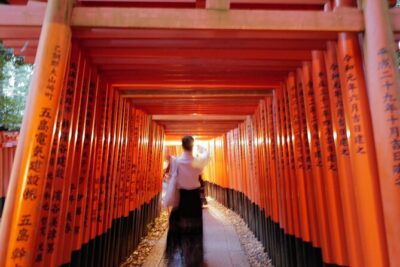
Browse the lists this tour appears in