
Reviewed · FUSHIMI INARI TOURS
Kyoto: Fushimi Inari Shrine Walking Tour
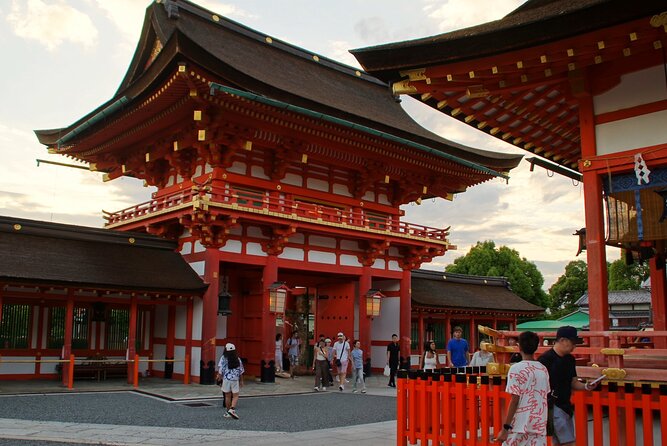
Fushimi Inari-taisha is more than a photogenic tunnel of orange-red torii gates. On this two-hour evening walk, you get the stories behind the gates, fox statues, offerings, and shrine customs that are easy to miss when you visit alone. The route also climbs into the forest, where the crowds often thin and Kyoto opens below you.
I like two things right away: the small maximum group of 10, which makes it easier to hear and ask questions, and the guide’s focus on local religious practice rather than quick photo stops. I also like that entry is included, so you can spend your time looking around instead of sorting out admission details.
The main consideration is the climb. Fushimi Inari is busy, and the evening tour still involves uphill walking on scenic mountain trails. If you want only the first torii tunnel and a flat stroll, this may feel like more work than you need.
Key points to know before you book
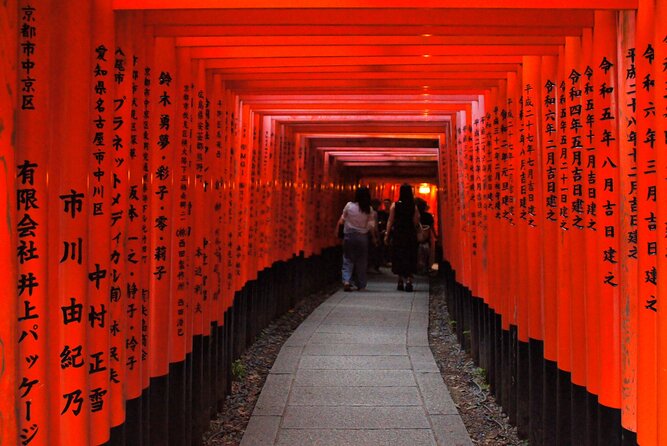
- The 6:00 pm start changes the mood: You visit as daylight fades, with the shrine shifting from busy sightseeing stop to quieter forest walk.
- Foxes explain much of the shrine: Your English-speaking guide connects the statues and symbols to Inari worship and Japanese shrine customs.
- The route goes uphill: You’ll walk beyond the most photographed gates toward forest paths and Kyoto viewpoints.
- A group of up to 10 is a real advantage: The guide can explain rituals and answer questions without losing you in the crowd.
- Admission is included: The price covers entry to Fushimi Inari-taisha, but food, drinks, and optional tips are extra.
- The tour returns to its starting point: Meet at Daily Yamazaki Fushimi Inari Shrine at 6:00 pm and finish back there.
Why Fushimi Inari needs more than a photo stop
Fushimi Inari-taisha is one of Kyoto’s most recognizable sights because of its thousands of torii gates. Yet the famous orange-red corridors can leave you with more pictures than understanding. The gates are tied to worship and devotion, and the shrine’s fox imagery points to Inari, a deity associated with rice, prosperity, and other forms of good fortune.
A guide gives these details a place in the walk. Instead of seeing every fox statue as decoration, you learn why foxes appear throughout the shrine complex and how they connect with Inari belief. You also get help reading the rituals taking place around you, including traditional practices that can look mysterious if you do not know what you are seeing.
That cultural context is the strongest reason to book. You can visit Fushimi Inari without paying for a tour, but it is easy to follow the crowd, walk through the gates, take a few photos, and leave. This experience is aimed at helping you understand the place as a working shrine, not just a famous Kyoto backdrop.
More ways to walk Fushimi Inari:
- Kyoto: Fushimi Inari, Kinkakuji, Bamboo Grove 1 Day Bus Tour
★ 4.8 · 4,316 reviews - Fushimi Inari Hidden Hiking Tour (Private Option Available)
★ 5.0 · 1,750 reviews - Kyoto/Osaka: Nara, Fushimi Inari Taisha, Arashiyama Bus Tour
★ 4.7 · 1,275 reviews
Starting at 6:00 pm near the shrine
The meeting point is Daily Yamazaki Fushimi Inari Shrine, at 93 Fukakusa Inarionmaechō in Fushimi Ward. The location is near public transportation, which makes it practical to reach without arranging a private transfer. The tour begins daily at 6:00 pm.
That start time is worth considering carefully. Fushimi Inari can be very busy, and the lower section may remain crowded at the beginning of the walk. Still, evening brings a useful change. As you move away from the entrance and onto the mountain paths, the setting can feel calmer and more reflective.
The late start also gives you a different view of the shrine than a bright midday visit. The forest takes on a quieter tone, and the changing light can make the torii corridors feel atmospheric. Since the exact daylight conditions depend on the season, you should not book this specifically for a sunset view. Book it for the evening setting and the chance to walk with a guide.
Walking beneath thousands of torii gates
The first major part of the experience is the torii gate route. These gates form long corridors through the shrine grounds, with repeated posts creating one of Kyoto’s most memorable sights. The color is striking, but the meaning matters more than the color alone.
Your guide explains the symbolism connected with the gates and helps you understand why they are found throughout the shrine. This is where the tour can turn a familiar image into a cultural experience. You are not simply passing under a series of gates. You are learning how donations, devotion, and shrine practice have shaped the place.
The lower gates are also where you should expect the most people. You may need to keep close to the guide, especially when stopping for explanations or photographs. The small group limit helps here. A group of 10 is still large enough to have company, but far easier to manage than a bus tour.
The pace appears designed to balance walking and explanation. You will stop to hear about the shrine, rituals, fox folklore, and local customs, then continue along the route. That makes the tour a better fit for someone who wants context but does not want to stand in one place for the entire visit.
Fox statues, rituals, and the meaning of Inari
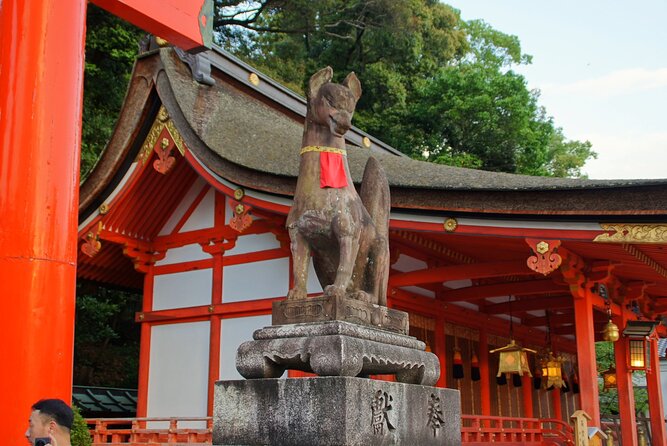
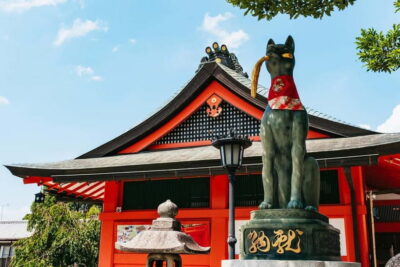
Foxes are central to the visual character of Fushimi Inari, but they are not treated simply as cute shrine mascots. The guide uses the fox statues to explain the connection with Inari worship and the stories that surround the shrine.
This is one of the most useful parts of the walk because the details are easy to overlook. A fox may hold an object or appear in a particular setting, and without explanation you might miss why it is there. The tour places those details within Japanese religious tradition and local custom.
You also have a chance to observe shrine rituals as they happen around you. The guide explains traditional practices so that you can watch respectfully rather than guess what each action means. That is a practical benefit in any active religious site. You learn not only what you are looking at, but how to behave while you are there.
The experience is not presented as a lecture on Japanese religion. It is a walking tour, so the information comes in small pieces as you move through the shrine. You can ask questions along the way, and the limited group size makes that more realistic.
More walking tours in Kyoto:
- Kyoto Geisha Walking Tour: Gion District & Hidden Gems
★ 4.7 · 3,273 reviews - Kyoto: Gion Magical Night Walking Tour with Geisha Trivia
★ 4.9 · 2,393 reviews - Kyoto: Gion Geisha District Walking Tour – Stories of Geisha
★ 4.7 · 2,187 reviews - Night Walk in Gion: Kyoto’s Geisha District
★ 4.5 · 2,003 reviews
The forest trail and the climb uphill
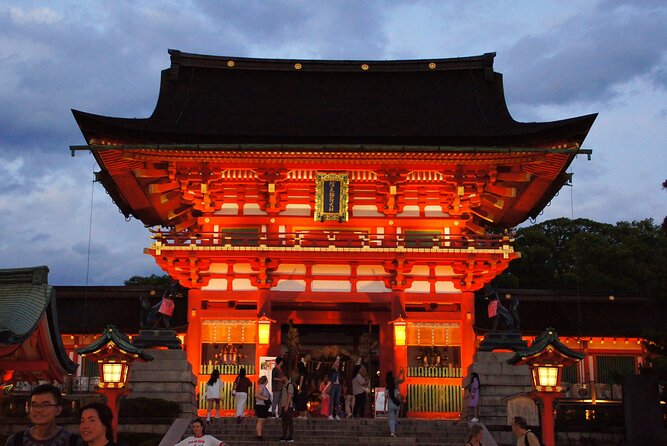
Fushimi Inari continues beyond the first torii corridors into wooded mountain trails. This is where the experience becomes more than a shrine walk. You leave some of the busiest areas behind and follow a route toward higher ground and panoramic views of Kyoto.
The climb is the tour’s main physical demand. The supplied details describe a scenic ascent, and one direct assessment calls it quite a climb. You should be ready for uphill walking over the course of the two hours. The attraction is not designed as a flat museum visit, and the guide cannot remove the steps and slopes from the route.
That effort pays off in two ways. First, the forest setting gives you a quieter side of Fushimi Inari. Second, the higher viewpoints provide a broader sense of Kyoto than you get at the shrine entrance. The views are part of the reward, but the walk itself is also important. The mountain paths help you see how large the shrine complex really is.
You should wear comfortable walking shoes and allow yourself enough energy for the climb. The tour does not include food or drinks, so carry what you need for the walk. The available information does not specify the exact distance, number of steps, or rest stops, so ask the provider if those details matter to you.
What the two-hour format gives you
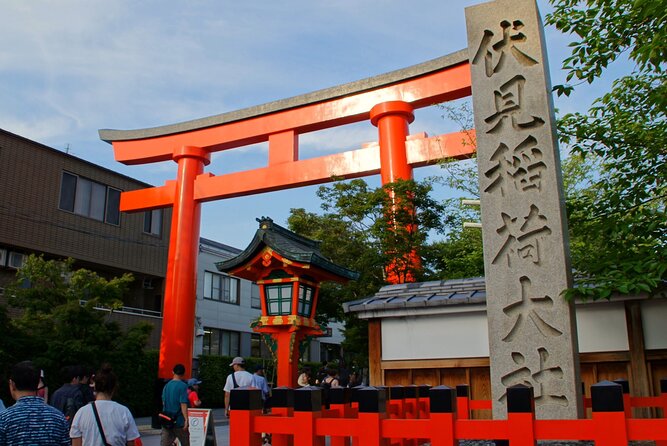
Two hours is enough time to get beyond the entrance, hear the main stories, and walk into the forest without turning the visit into an all-day hike. I like this length for a first visit because it gives structure to a large shrine complex.
The time is also short enough to fit into a Kyoto evening. You could spend the earlier part of the day in another district, then meet the guide at 6:00 pm. Since the tour ends back at the same meeting point, you are not left at an unfamiliar part of the mountain.
The tradeoff is that two hours does not allow you to see every part of Fushimi Inari at a slow pace. If you want to wander alone, linger at every shrine building, or continue far up the mountain after the tour, you may want extra time before or after the walk. The tour gives you a focused introduction, not unlimited time for independent exploration.
Why the small group matters here
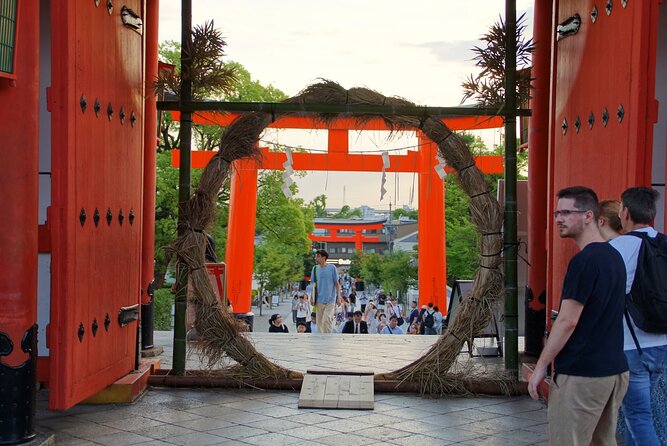
The group maximum is 10 people. That number is especially useful at Fushimi Inari because the lower paths can be crowded and the gate corridors encourage people to stop for photos.
With a small group, you have a better chance of staying near the guide and hearing the explanations. You can also ask about a fox statue, a ritual, or a custom while you are looking at it. This personal contact is one of the clearest reasons to choose a guided walk instead of simply reading a guidebook on your phone.
The group is not private, so you should not expect the guide to design every moment around your interests. Still, it is far more intimate than a large coach-style outing. The experience is best for people who enjoy a social walk but want enough space for questions and quiet observation.
The guide’s English is another important part of the value. The tour promises an English-speaking guide who provides historical insights into the district and explains the shrine’s religious meaning. No individual guide name is provided, so you should not book expecting a particular person.
Price and what you receive for $39.64
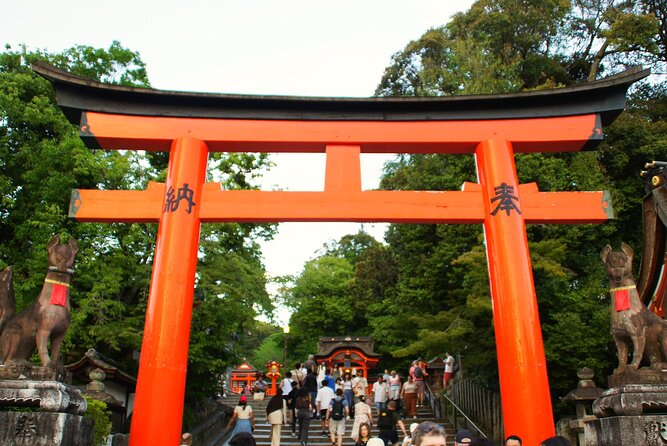
At $39.64 per person, this is not the cheapest way to visit Fushimi Inari because the shrine itself can be visited without paying an extra attraction fee. The price is paying mainly for the guide, the organized route, the cultural explanation, and the convenience of included entry.
I think the value is strongest if you are new to shrine customs or want more than photographs. The guide helps you make sense of the fox imagery, torii gates, rituals, and mountain setting. That can prevent the visit from becoming a quick walk through a famous photo spot.
The value is weaker if you already know Inari worship, prefer to explore alone, or plan to spend only a few minutes at the lower gates. In those cases, you can visit independently and keep your money for another Kyoto activity.
Tips are optional, and food and drinks are not included. The tour has a free cancellation policy up to 24 hours before the start time. Cancel less than 24 hours before 6:00 pm, and the amount paid is not refunded. Changes in that final 24-hour period are not accepted.
Who should book this Fushimi Inari walk
I would point this tour toward first-time Kyoto visitors who want a clear introduction to one of the city’s major shrines. It also suits anyone curious about Japanese spirituality, fox folklore, or the meaning of shrine rituals.
The tour is a good match for you if:
- You want an English-speaking guide rather than a self-guided visit.
- You enjoy a moderate uphill walk through forest trails.
- You want panoramic views as well as the torii gates.
- You prefer a group capped at 10 people.
- You value cultural explanation and local customs.
- You can attend at 6:00 pm.
It may not suit you if you have limited walking stamina, dislike crowds, or want a completely private experience. The information provided says most people can participate, but it does not give specific details about step-free access, seating, or the exact route conditions. Ask before booking if you need those details.
Practical tips for making the evening better
Arrive with enough time to find the meeting point at Daily Yamazaki Fushimi Inari Shrine. Keep the address saved on your phone, and have your mobile ticket ready since the booking provides mobile confirmation.
Wear shoes suited to uphill walking. The route includes scenic trails and a climb, so this is not the place for footwear chosen only for photos. Bring water because drinks are not included, and keep your belongings easy to manage while moving through crowded gate corridors.
Stay close to the guide during the lower section. Fushimi Inari is popular, and it is easy to lose sight of a group when people pause for pictures. The small group helps, but it does not replace paying attention.
Give yourself permission to slow down during the ritual explanations. The best part of this experience is not racing through the torii gates. It is learning why the shrine looks and operates the way it does.
Should you book it?
Book this tour if you want Fushimi Inari to make cultural sense, not just look beautiful in photographs. The English-speaking guide, small group, included entry, fox stories, ritual explanations, and forest climb offer a well-shaped introduction to the shrine.
Skip it if you want a short, flat visit or already feel comfortable interpreting Japanese shrine customs on your own. For most first-time visitors who can handle the uphill walk, $39.64 is a fair price for turning a famous Kyoto stop into a more thoughtful two-hour experience.
FAQ
How long is the Fushimi Inari walking tour?
The tour lasts approximately two hours.
What time does the tour begin?
It begins daily at 6:00 pm.
Where do I meet the guide?
The meeting point is Daily Yamazaki Fushimi Inari Shrine, 93 Fukakusa Inarionmaechō, Fushimi Ward, Kyoto, 612-0881, Japan.
Where does the tour finish?
The activity ends back at the meeting point.
Is admission to Fushimi Inari-taisha included?
Yes. Entry to Fushimi Inari-taisha Shrine is included.
Is the tour conducted in English?
Yes. An English-speaking guide leads the experience.
How many people can join the tour?
The group can have a maximum of 10 people.
Are food and drinks included?
No. Food and drinks are not included.
Can I cancel for a full refund?
Yes, if you cancel at least 24 hours before the experience start time. Cancellations made less than 24 hours before the start time are not refunded.
Just added around Kyoto
- Kyoto: Zen Meditation at a Private Temple with a Monk★ 5.0 · 25 reviews
- Your Private Vacation Photography Session In Kyoto★ 5.0 · 110 reviews
- Kyoto: Gion Geisha District & Sake-in-Hand Walking Tour★ 5.0 · 37 reviews
- Private Pewter Sake Cup Experience with a Kyoto Artisan★ 5.0 · 31 reviews
- Private Guided Traditional Buddhist Cooking in Japan★ 5.0 · 16 reviews
- Kyoto Wagashi(Japanese sweets) Cooking Class near Fushimiinari★ 5.0 · 60 reviews
- Traditional Japanese Music show & Experience Tour in Kyoto★ 5.0 · 57 reviews
- Kyoto:Family-Friendly Kimono & Yukata Experience at WARGO★ 5.0 · 147 reviews
Fushimi Inari Tours, compared.

Fushimi Inari, Kinkakuji, Bamboo Grove 1 Day Bus Tour
Read our review →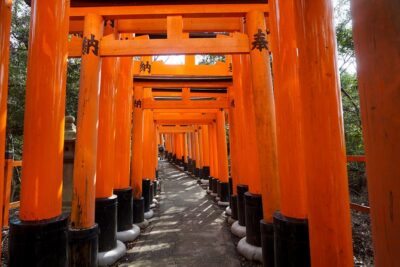
Fushimi Inari Hidden Hiking Tour (Private Option Available)
Read our review →
Kyoto/Osaka: Nara, Fushimi Inari Taisha, Arashiyama Bus Tour
Read our review →
Osaka/Kyoto: Arashiyama, Nara & Fushimi Inari Shrine w/Lunch
Read our review →
Nijo Castle, Kiyomizu & Fushimi Inari Guided Tour
Read our review →
Nijo, Kinkaku-ji, Arashiyama, Kiyomizu & Fushimi Inari
Read our review →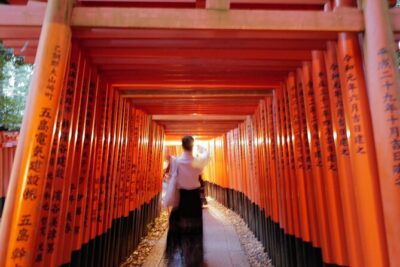
Browse the lists this tour appears in