
Reviewed · FUSHIMI INARI TOURS
Kyoto: Half-day Guided Bike Tour with Fushimi Inari
South Kyoto’s best sights make more sense when you connect them by bicycle. This tour takes you from Toji Temple and Higashi-Honganji through the Takase Canal, Kamo River, Gion, and Tofukuji before finishing at the orange gates of Fushimi Inari.
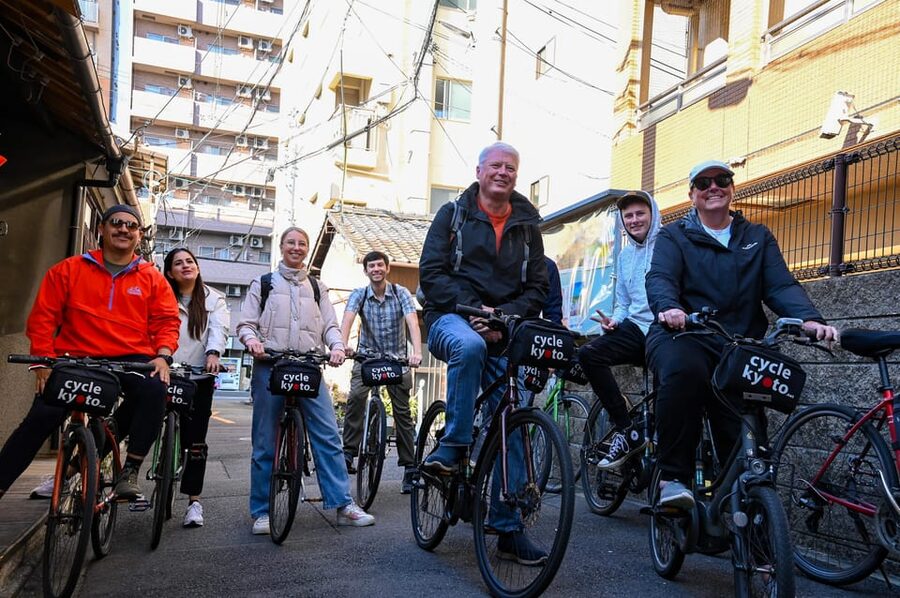
I like the small maximum group of eight, which gives the guide room to answer questions and adjust the pace. I also like the mix of famous places and ordinary Kyoto streets, especially the backroads around Gion and the riverside riding.
The main consideration is physical: this is a real bike ride, not a temple shuttle. One participant recorded more than 15 kilometers, and the tour is not suitable for children under 13, people with back problems, or anyone who cannot ride a bicycle.
Key points to know before you book
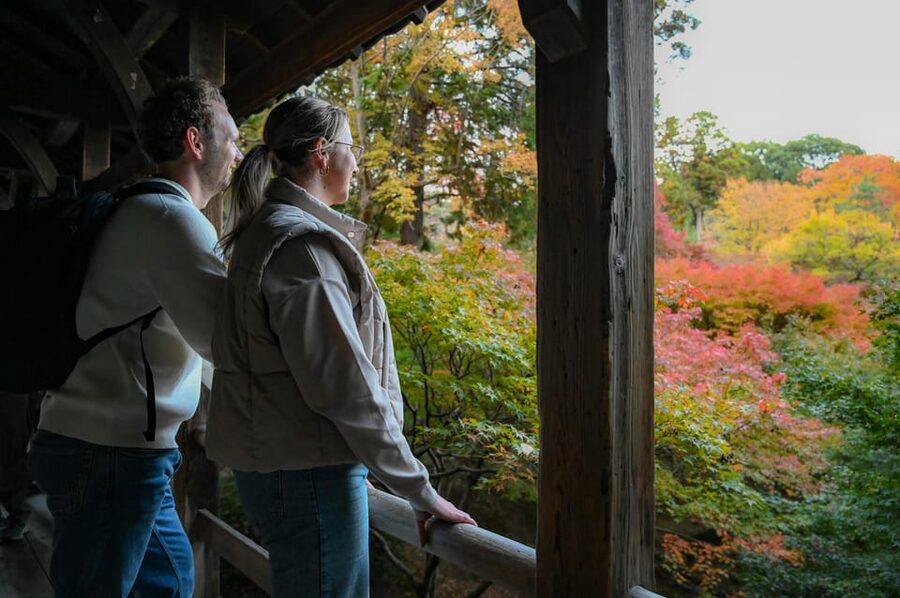
- Fushimi Inari comes near the end: You will walk around the famous torii gates after cycling there, so save some energy for the final stop.
- The group is limited to eight: That small size makes it easier to hear the English-speaking guide and ask questions.
- The route links major sights with local streets: You see Toji, Higashi-Honganji, Gion, Tofukuji, and Fushimi Inari without spending the whole morning on trains or buses.
- The pace is usually gentle: The route is designed for sightseeing, though the total ride can still be substantial.
- E-bikes cost 3,000 yen extra: Request one in advance if you want assistance on the ride.
- Several guides receive especially warm praise: Jay, Julian, Indra, Sean, Juan, and Mayco are named as friendly, patient, and well informed.
Why cycling is a smart way to see South Kyoto
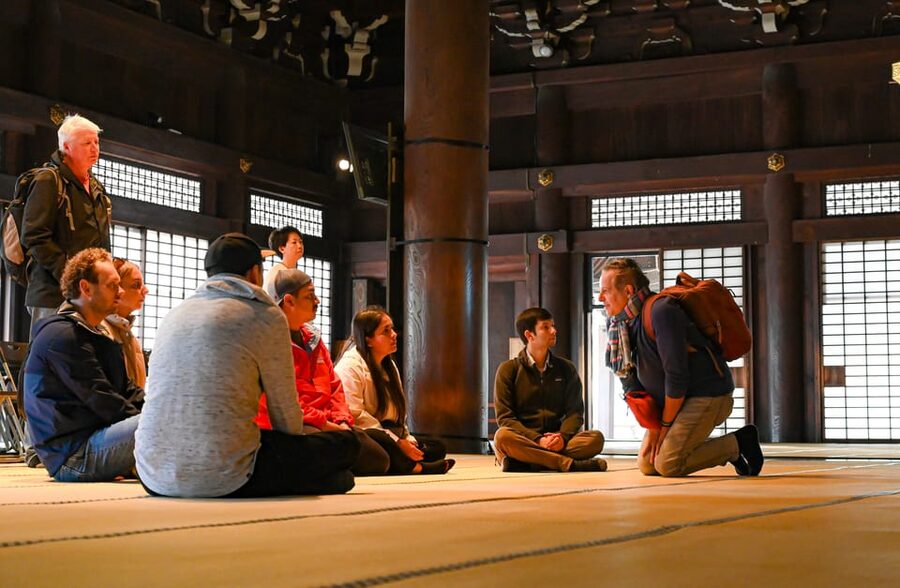
Kyoto’s major temples are spread across the city. Walking between them takes time, while public transport rarely drops you exactly where you want to be. A bicycle gives you a useful middle ground: you cover more ground than on foot and still move slowly enough to notice canals, residential lanes, temple walls, and river paths.
I like this route because it does not treat Kyoto as a string of isolated photo stops. The ride connects the central temples with Gion and the southern shrine district, showing how the city fits together. The canal and river sections also give you a break from temple courtyards and crowded approach streets.
The tour lasts 210 minutes, including the safety briefing and guided visits. That is long enough to see a lot, but short enough to fit into a morning or afternoon without taking over your entire day. The stop timings are generous at the main sights, with about 35 minutes at Toji, 35 minutes at Higashi-Honganji, 30 minutes in Gion, 30 minutes at Tofukuji, and 45 minutes at Fushimi Inari.
You should still expect a physically active outing. The pace is described as gentle, but the route can cover more than 15 kilometers. Comfortable clothes, shoes, sunscreen, and weather-appropriate layers matter more here than they would on a standard walking tour.
More ways to walk Fushimi Inari:
- Kyoto: Fushimi Inari, Kinkakuji, Bamboo Grove 1 Day Bus Tour
★ 4.8 · 4,316 reviews - Fushimi Inari Hidden Hiking Tour (Private Option Available)
★ 5.0 · 1,750 reviews - Kyoto/Osaka: Nara, Fushimi Inari Taisha, Arashiyama Bus Tour
★ 4.7 · 1,275 reviews
Starting near Kyoto Station
The meeting point is Cycle Kyoto, reached from Kyoto JR Station by going past Avanti, crossing one set of traffic lights, passing the Daily Yamazaki convenience store, and taking the next left. Give yourself enough time to find it, particularly if Kyoto Station is new to you.
The first 15 minutes are set aside for the safety briefing. This is useful rather than wasted time. You can get used to the bicycle, listen to the guide’s instructions, and make sure your helmet and personal items are arranged before the group sets off.
A small pouch on the bicycle is provided for personal belongings. Keep what you carry light. A camera, phone, sunscreen, and perhaps a small amount of water are sensible, but bulky bags will make the ride less comfortable.
Bicycle rental, helmet, guide, and water are included. Meals are not, so eat beforehand if you tend to get hungry during an active morning. The tour is conducted in English and is limited to eight people.
Toji Temple, Kyoto’s first major stop
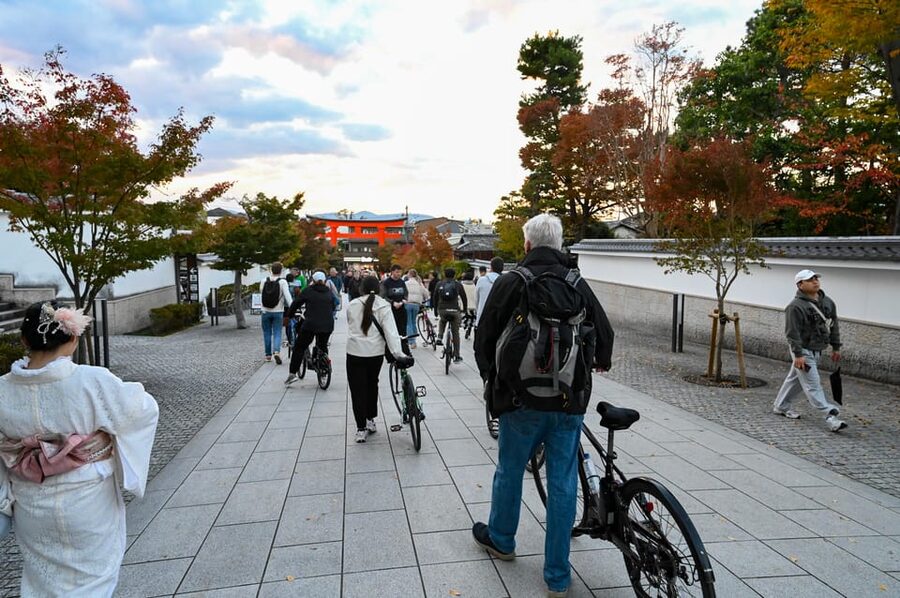
Toji is an excellent opening sight because it gives you an immediate sense of Kyoto’s religious importance. It is described as Kyoto’s oldest temple and is also a UNESCO heritage site, so this is not simply a quick stop beside a photogenic building.
You have about 35 minutes here with the guide. That is enough time for an introduction to the temple and its role, plus a look at the architecture and grounds. The guide adds context that can help you understand what you are seeing instead of treating the temple as a backdrop for photographs.
Toji is also a good reminder that Kyoto’s famous places are woven into the modern city. You are not being taken to a distant attraction in isolation. The bicycle lets you leave the station area and move into the historic side of Kyoto without a complicated transport connection.
Higashi-Honganji and the scale of a working temple
The next temple is Higashi-Honganji, one of Japan’s largest temples. Its scale gives the tour a different visual note from the narrower streets and smaller details you encounter later.
The guided visit lasts about 35 minutes. Listen for the guide’s explanation of the temple’s religious and cultural setting, then take time to appreciate the size of the buildings. The value here is not just seeing another temple. It is seeing how varied Kyoto’s sacred architecture can be.
You may find this stop more spacious and formal than the lanes of Gion. That contrast is useful. Kyoto is not one single old-town scene, and the tour keeps changing the setting before the final shrine visit.
More bike days around Kyoto:
- Hidden Kyoto E-Biking tour
★ 5.0 · 1,843 reviews - Bike Tour Exploring North Kyoto plus Lunch
★ 5.0 · 1,087 reviews - Arashiyama Bamboo Forest & Hidden Gems Bike Tour (Early Bird)
★ 5.0 · 613 reviews - 5 Top Highlights of Kyoto Full Day Bike Tour (E-bike option)
★ 5.0 · 511 reviews
Following the Takase Canal and Kamo River
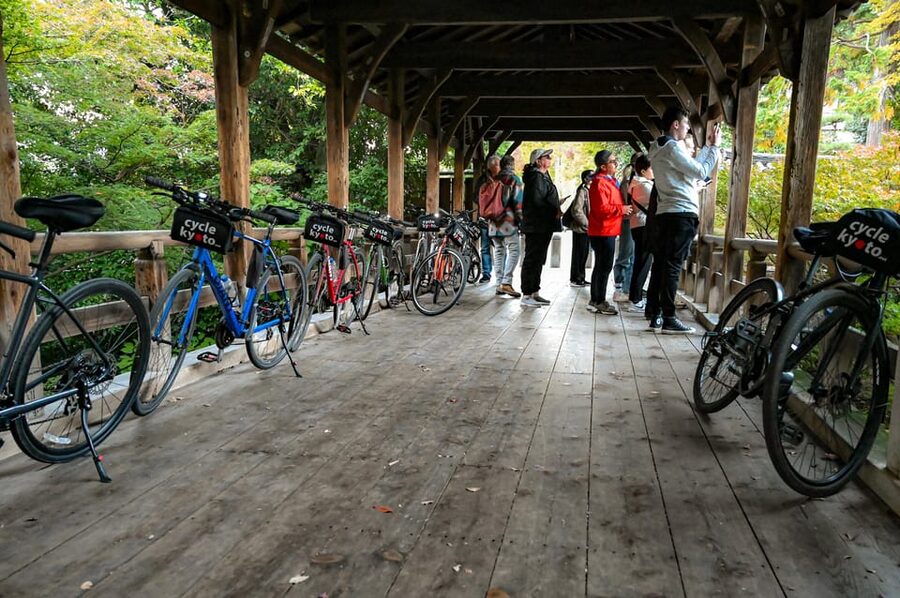
After the central temples, the route follows the Takase Canal for about 10 minutes and then reaches the Kamo River for around 15 minutes. These are shorter stops, but they help break up the temple visits.
The canal section offers a look at Kyoto away from the main sightseeing circuit. You are still close to major attractions, yet the waterway gives the ride a calmer, more local feel. The Kamo River adds open space and a change in pace before Gion.
I especially like these sections because they explain why a bicycle tour can feel different from a bus tour. You are not simply being moved from entrance to entrance. The transitions are part of the experience, and the water routes make the city feel more connected.
Weather matters here. On a clear day, the riverside riding should be a pleasant part of the route. In rain or cold, it will feel more exposed, so check conditions before departure and dress accordingly. One guide, Julian, is specifically praised for keeping the tour enjoyable despite poor weather, but good clothing will still improve your morning.
Gion from its quieter backstreets
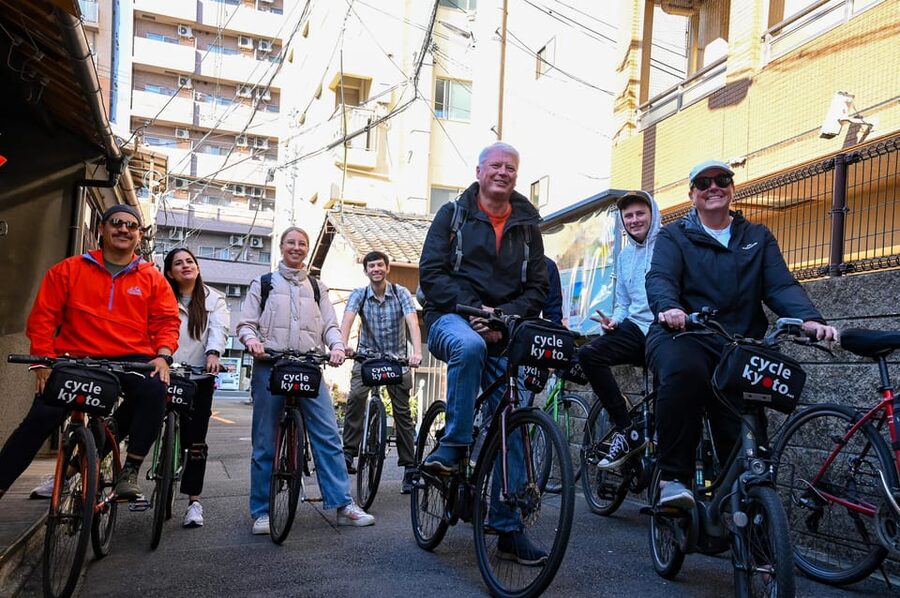
Gion is Kyoto’s best-known geisha and teahouse district, yet the most interesting part of this visit is not simply arriving at the famous streets. The tour weaves through Gion’s backstreets, giving you a closer look at the district’s lanes and traditional character.
The guided Gion portion lasts about 30 minutes. Your guide can explain what makes the area distinctive and point out details you could easily miss if you were rushing toward a single viewpoint. The bicycle is especially useful here because you can cover several lanes without turning the visit into a long walk.
Please remember that Gion is a living neighborhood, not a stage set. Ride and walk respectfully, follow the guide’s instructions, and avoid treating people or private entrances as photo props. The supplied information does not promise a geisha sighting, and you should not book this tour expecting one.
This is one of the strongest parts of the route for anyone who wants more than the standard temple checklist. You still see a famous district, but you approach it through its smaller streets rather than only its headline attractions.
Tofukuji Temple and a useful photo stop
Tofukuji comes after Gion, with about 30 minutes set aside for photographs. The temple is described as stunning, and the stop gives you time to frame the buildings and grounds before the final ride toward Fushimi Inari.
Because this is listed as a photo stop rather than a full guided visit, the emphasis is visual. That can be a welcome change after the longer explanations at Toji and Higashi-Honganji. You can use the time to take pictures, look around, and enjoy the setting without trying to absorb another long lesson.
The stop also works well in the sequence. Tofukuji sits near the southern part of Kyoto, so it brings you closer to Fushimi Inari. You are not making a random detour. The route gradually shifts south through neighborhoods before reaching the day’s most recognizable shrine.
Fushimi Inari and the orange torii gates
Fushimi Inari Taisha is the grand finale, with about 45 minutes for a guided visit. You cycle into the shrine area, then leave the bicycle for a stroll beneath the famous orange torii gates.
The torii are the defining image of Fushimi Inari, but the walking portion matters. You need time to enter the gates, take photographs, and get a feel for the repeated passageways. Forty-five minutes is enough for an introduction and a taste of the shrine, though it is not enough to explore every path on the mountain.
That limitation is worth knowing. Fushimi Inari is described as Japan’s most visited attraction, and it can be a very popular place. This tour gives you a structured visit rather than unlimited time. If you want to walk far beyond the initial torii gates, you would need to return independently on another occasion.
Ending here is sensible. The shrine is the tour’s biggest visual payoff, and the route has built toward it through temples, rivers, Gion, and Tofukuji. After the shrine visit, you cycle back to Cycle Kyoto.
The guides and the small-group feel
The guide can shape a bike tour as much as the route. The named guides associated with this experience include Jay, Julian, Indra, Sean, Juan, and Mayco. Jay is praised for making people feel comfortable and for bringing passion to Kyoto’s story. Julian is described as easygoing and able to keep the tour moving in poor weather.
Indra is noted for answering questions and sharing useful local information. Sean is credited with a relaxed pace and adapting the time spent at stops. Juan is described as patient, while Mayco receives praise for combining a friendly manner with strong local knowledge.
You cannot choose which guide will lead your departure based on the information provided, so treat these names as examples of the guiding style you may encounter rather than a guarantee. The consistent pattern is clear: the tour places real value on explanation, questions, and a comfortable pace.
The maximum group size of eight is a major advantage. You are less likely to lose the guide’s voice, and it is easier to stop for a question or mention that you need a moment. One small group had only four participants and was able to adjust how long it spent at each stop. That kind of flexibility may depend on the day’s group and schedule, but a small booking gives it a better chance.
Bicycle comfort, distance, and weather
The standard bicycle is included, along with a helmet and water. The bicycles have been described as being in good condition, with a range of sizes and helmets available. Still, tell the operator about your needs when booking so the right size can be prepared.
An e-bike is available for an additional 3,000 yen. I would consider the upgrade if you are uncertain about cycling more than 15 kilometers, visiting during a hot season, or simply want to save energy for Fushimi Inari’s torii gates. You must request it, and the extra fee means it should be part of your budget from the start.
The tour is not suitable for children under 13, people with back problems, or anyone who cannot ride a bike. It is also not a good match if you want a completely passive sightseeing experience. You will be cycling, stopping, getting on and off, and walking at the shrine.
Check the forecast before you go. Bring warm clothing in cool weather, sunscreen in strong sun, and clothes that are comfortable for riding. Smoking, alcohol, and drugs are not allowed.
Is $77 good value?
At $77 per person, the tour sits in the range where the guide and route design need to earn their keep. In this case, you get 3.5 hours of cycling, a bicycle, helmet, water, and an English-speaking guide. You also visit several major temples and shrines while seeing canals, riverside areas, Gion lanes, and local neighborhoods between them.
I think the value is strongest for a first Kyoto visit or for anyone with limited time. Organizing Toji, Higashi-Honganji, Gion, Tofukuji, and Fushimi Inari independently would require planning the order, finding the best connections, and working out how to move between the stops. The tour handles that structure for you.
The value is weaker if you already know Kyoto well, dislike group activities, or want to spend hours at one temple. You should also remember that meals are not included, and the information provided does not state that entrance fees are included. Check the final booking details if any paid entry is important to your plans.
Free cancellation is available up to 24 hours before departure, and you can reserve now and pay later. Those policies help if your Kyoto schedule is still shifting, though weather remains a practical concern.
Who should choose this ride?
I would choose this tour if you want a guided introduction to South Kyoto and feel comfortable on a bicycle. It suits active couples, solo visitors, friends, and families with teenagers aged 13 or older. The small group is a good fit if you want conversation without joining a large procession.
It is also useful for people who have already seen Kyoto’s central sights but want a different way to move through the city. The backstreets, waterways, and neighborhood riding add variety that you do not get from visiting temples one at a time by taxi.
I would skip it if cycling is difficult for you, if you have back problems, or if you want a slow indoor cultural tour. An e-bike can reduce effort, but it does not turn the experience into a non-cycling activity. You still need to ride and walk at Fushimi Inari.
Should you book the Cycle Kyoto tour?
Book it if you want to cover a lot of South Kyoto in one well-organized half-day and prefer local streets to a vehicle window. The strongest reasons are the small group, the mix of famous sights and quieter riding, and the guide-led explanations at Toji, Higashi-Honganji, Gion, and Fushimi Inari.
Choose an e-bike for 3,000 yen if distance or hills concern you, and leave enough energy for the final torii-gate walk. If you want long, unhurried visits inside each temple, book those separately. For an active first look at Kyoto’s temples, waterways, geisha district, and southern shrine quarter, this is a practical and appealing choice.
FAQ
How long does the Kyoto bike tour last?
The tour lasts 210 minutes, or three and a half hours, including the safety briefing, guided stops, cycling, and the return to Cycle Kyoto.
Where does the tour start and finish?
It starts and finishes at Cycle Kyoto. From Kyoto JR Station, go past Avanti, cross one set of traffic lights, pass the Daily Yamazaki convenience store, and take the next left.
What is included in the tour?
Bicycle rental, a helmet, an English-speaking guide, and water are included. Meals are not included.
Is the tour suitable for children?
The minimum age for a public tour is 13. The experience is not suitable for children under 13.
Can I use an e-bike?
E-bikes are available on request for an upgrade fee of 3,000 yen. Request one before the tour if you would prefer electric assistance.
What should I bring?
Bring comfortable shoes, comfortable clothing suitable for biking, warm clothing when needed, sunscreen, and a camera. Check the weather before departure. A small bicycle pouch is provided for personal items.
More Half-Day in Kyoto
- Kyoto Arashiyama Bamboo forest & Garden Half-Day Walking Tour
★ 5.0 · 413 reviews - Half-Day Private Walking Tour in Kyoto
★ 5.0 · 57 reviews - Kyoto top must-see Golden pavilion and Bamboo forest half-day Private tour
★ 5.0 · 52 reviews - Kyoto Private & Personalized Half-Day Walking Tour with a Local
★ 4.5 · 27 reviews
Just added around Kyoto
- Kyoto: Zen Meditation at a Private Temple with a Monk★ 5.0 · 25 reviews
- Kyoto: Gion Geisha District & Sake-in-Hand Walking Tour★ 5.0 · 37 reviews
- Private Pewter Sake Cup Experience with a Kyoto Artisan★ 5.0 · 31 reviews
- Your Private Vacation Photography Session In Kyoto★ 5.0 · 110 reviews
- Private Guided Traditional Buddhist Cooking in Japan★ 5.0 · 16 reviews
- Kyoto Wagashi(Japanese sweets) Cooking Class near Fushimiinari★ 5.0 · 60 reviews
- Traditional Japanese Music show & Experience Tour in Kyoto★ 5.0 · 57 reviews
- Kyoto:Family-Friendly Kimono & Yukata Experience at WARGO★ 5.0 · 147 reviews
Fushimi Inari Tours, compared.

Fushimi Inari, Kinkakuji, Bamboo Grove 1 Day Bus Tour
Read our review →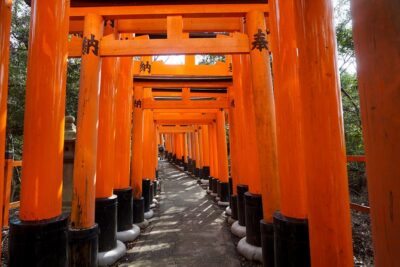
Fushimi Inari Hidden Hiking Tour (Private Option Available)
Read our review →
Kyoto/Osaka: Nara, Fushimi Inari Taisha, Arashiyama Bus Tour
Read our review →
Osaka/Kyoto: Arashiyama, Nara & Fushimi Inari Shrine w/Lunch
Read our review →
Nijo Castle, Kiyomizu & Fushimi Inari Guided Tour
Read our review →
Nijo, Kinkaku-ji, Arashiyama, Kiyomizu & Fushimi Inari
Read our review →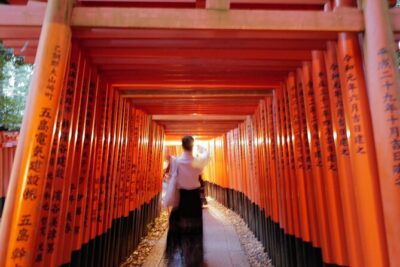
Browse the lists this tour appears in