
Reviewed · KYOTO TOURS
Kyoto: Japanese Koto & Shamisen Concert and Koto Class
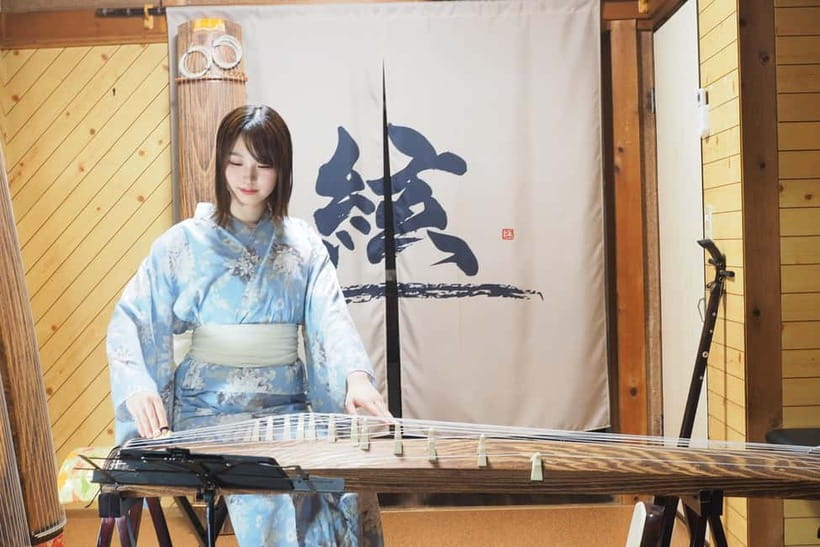
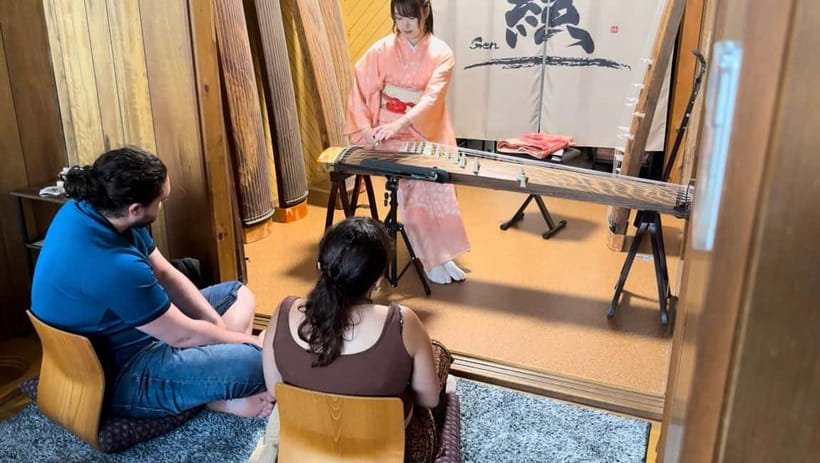
The best part of this Kyoto music experience is its setting: you hear the koto and shamisen inside a small old Japanese house, not in a grand concert hall. The room feels more like a family home than a formal venue, which brings you close to the musicians and their instruments.
I like the mix of listening and doing. You hear skilled performances by musicians such as Aoi, ask questions face to face, and then try the koto yourself. I also like the range of music, from classical pieces with singing to contemporary works and original compositions.
The main drawback is practical rather than musical: the house is in a residential area, and the small entrance can be difficult to spot. One visitor found the nearby alley dark and had to wait outside until shortly before the performance, so arrive with your directions ready and avoid cutting it close.
Key points at a glance
- A concert in a real Kyoto home: Expect a warm, intimate room rather than a temple stage or large auditorium.
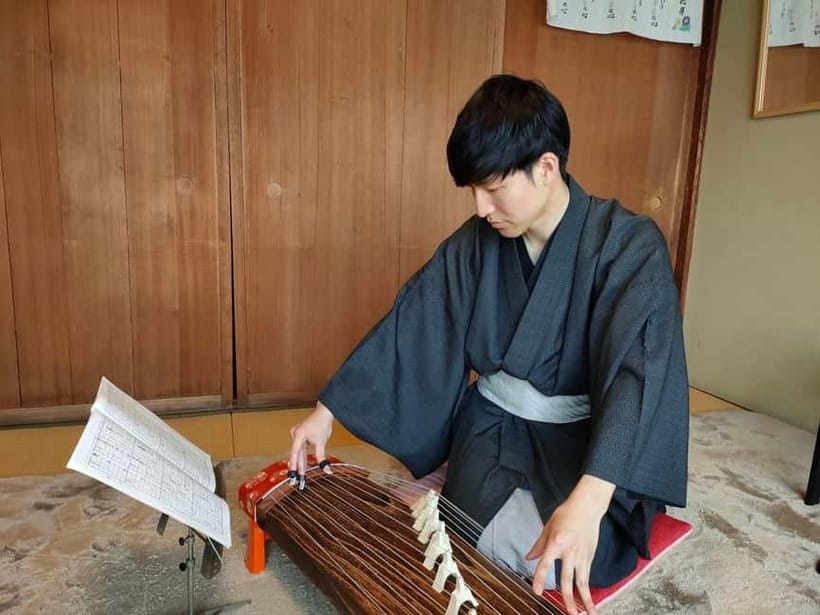
- Koto and shamisen together: Hear two very different Japanese instruments and learn how their music notation works.
- A simple hands-on lesson: A professional guides you through a short koto piece, even if you have no musical background.
- More than standard folk music: The program can include classical songs, contemporary pieces, and original works.
- Time for real questions: The close-up Q&A lets you ask about technique, instruments, and the performers’ work.
- Good location for sightseeing: Saiin Station gives you practical connections to Arashiyama, Nijo Castle, Kinkakuji, and Nishiki Market.
Why this small Kyoto concert feels different
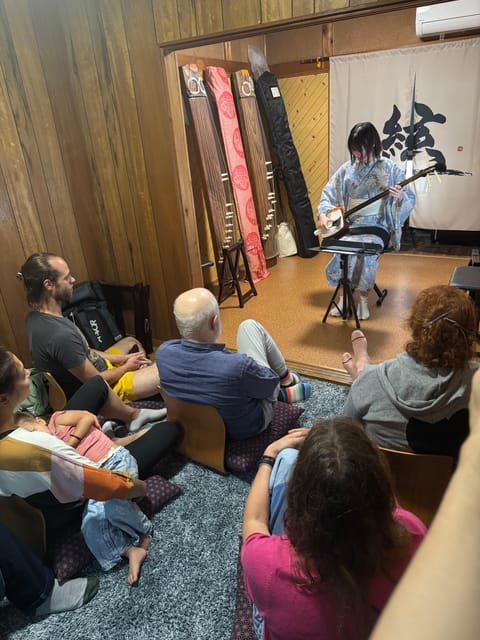
Kyoto offers plenty of polished cultural performances. This one takes a quieter route. You enter a compact house in a residential neighborhood, sit close to the performers, and listen without the distance you get in a large theater.
That closeness matters. You can see the musician’s hands move across the koto, notice how the shamisen is handled, and hear changes in tone that might be lost in a bigger room. The mood is personal rather than grand. It is a good choice if you want a cultural activity that feels connected to everyday Japanese space.
The setting also keeps the focus on the instruments. There are no elaborate costumes, massive stage effects, or long production numbers here. Instead, you get a short introduction, live music, conversation, and a lesson.
The published duration ranges from one hour to 100 minutes, depending on the option and schedule. That is long enough to give the instruments proper attention but short enough to fit around a day of sightseeing.
More live music in Kyoto:
- Kyoto: Traditional Concert at Townhouse or Bathhouse
★ 4.9 · 224 reviews - Concerts Played with Traditional Instruments in Kyoto
★ 5.0 · 50 reviews
What happens when you arrive
The exact meeting point can vary with the option you book, so check your confirmation carefully. The house is in a residential area and may not look like a major visitor attraction from the street.
Allow extra time to find it. A small alley and limited exterior signage can make the final approach slower than the train journey suggests. One visitor found the alley quite dark and waited outside until five minutes before the show. I would not plan to arrive at the last second, especially for an evening session.
Once inside, the small-house setting becomes an advantage. You are not dealing with a sprawling venue or a long walk to your seat. The room creates the close, homey atmosphere that defines the event.
Because this is a private or small-group activity, the number of people can be limited. That gives you a better chance to see the performer clearly and ask questions without speaking to a crowd. It also means the room may feel less formal than a regular concert.
The opening lesson on koto and shamisen
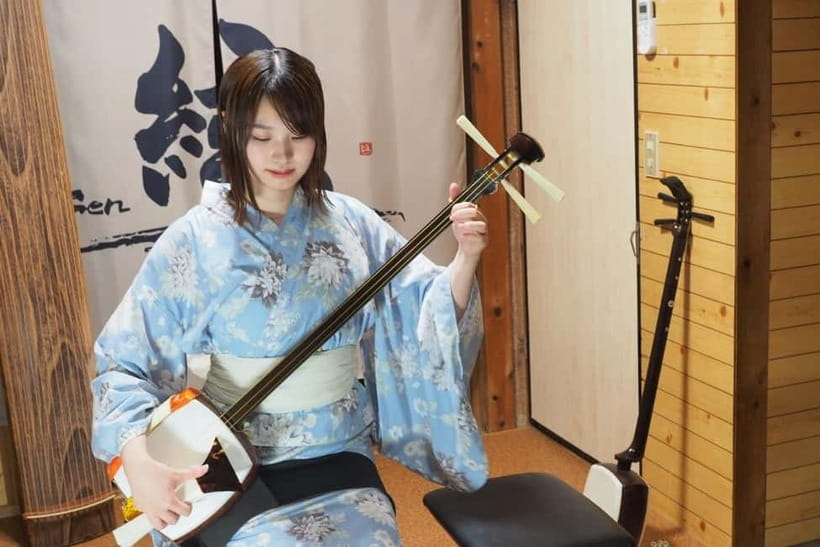
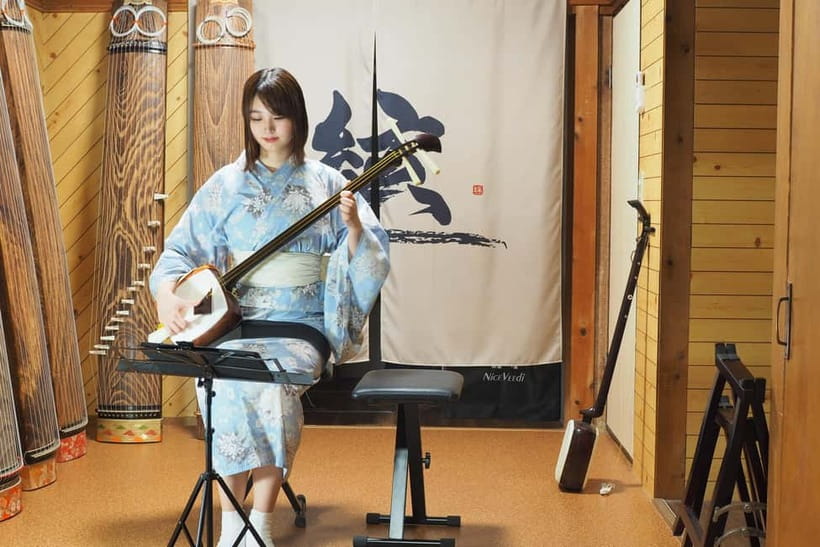
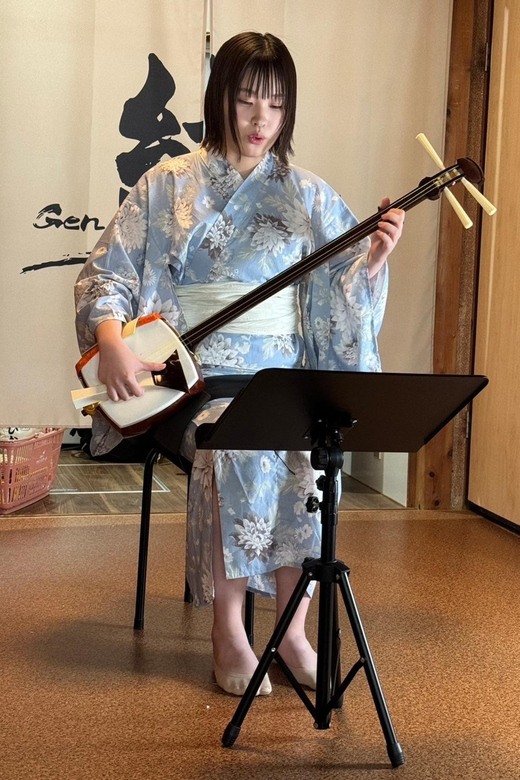
The session starts with a brief introduction to Japanese traditional instruments. The koto is a long, stringed instrument played horizontally, while the shamisen is a three-stringed instrument with a noticeably different shape and sound.
You also learn about the instruments’ distinctive sheet music. This is a useful touch because it helps explain how the performer remembers and reads the pieces. Even if you cannot read the notation yourself, seeing it gives you a better sense of the skill involved.
The introduction is short, so it does not turn the experience into a lecture. You get just enough context to listen with sharper ears. When a performer changes technique or tone later in the program, you have some idea of what you are hearing.
English and Japanese are available. An English-speaking guide or interpreter helps present the information and connect your questions with the performer. Kyoko is specifically praised for making the lesson welcoming and helping people try their own ideas, while Aoi is noted for both her playing and singing.
Hearing classical, contemporary, and original music
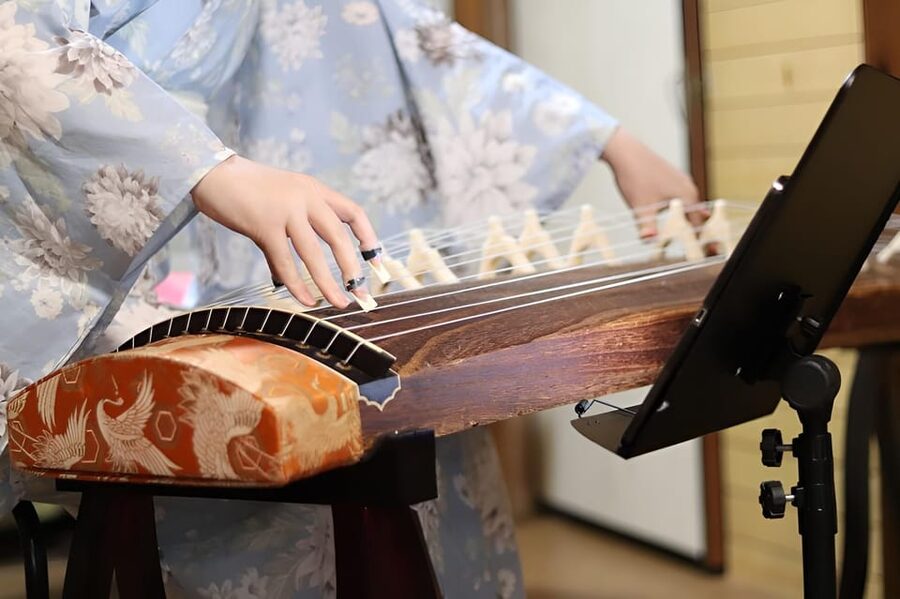
The concert does not stick to one narrow style. The program can include classical works, contemporary compositions, and original pieces, and it may change with the season or performer.
That variety is important for first-time listeners. A full program of unfamiliar classical music might feel difficult to place, but contemporary and original works can provide a more immediate point of entry. At the same time, the older pieces give you a sense of the instruments’ established sound.
Some traditional selections include vocals. Aoi’s singing has been singled out for its strength and feeling, particularly in pieces where voice and koto work together. The contemporary selections can bring more energy, while quieter works show off the instruments’ delicate tone.
You may also hear the musician switch techniques to create different timbres. The koto can sound soft and shimmering in one passage, then more forceful and rhythmic in another. The shamisen adds a sharper, more percussive color.
The program is not guaranteed to be identical at every booking. If you have a particular piece in mind, you should not assume it will be performed unless the provider confirms it. One person was delighted to hear the song KAI, but that does not mean it is part of every program.
More hands-on workshops in Kyoto:
- Kyoto: 45-Minute Tea Ceremony Lesson Experience
★ 4.3 · 2,378 reviews - Ramen Cooking Class at Ramen Factory in Kyoto
★ 5.0 · 1,937 reviews - Kyoto : Chopsticks Making Workshop in Gion with Engraving Option
★ 5.0 · 958 reviews - Kyoto: Samurai Sword Class by Experts in Traditional Arts
★ 4.9 · 657 reviews
The close-up question-and-answer time
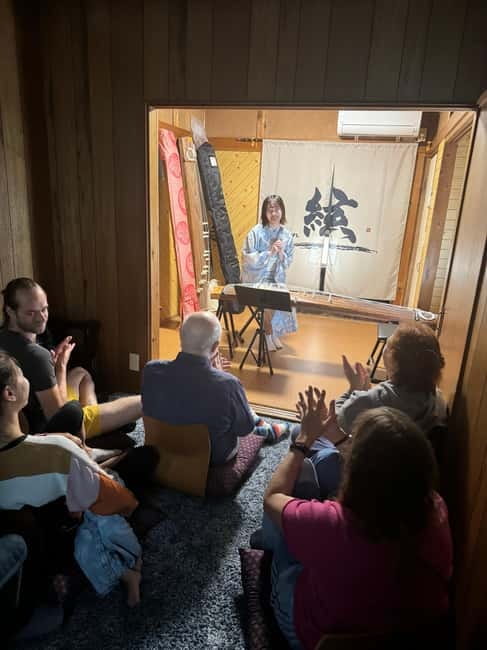
After the performance, you have time to speak with the musician and ask questions. This is one of the strongest parts of the experience because you are not limited to simply watching from your seat.
You can ask about the instruments, the music, the techniques used during the concert, or the performer’s training. The format is especially helpful if you are curious about how the koto and shamisen differ, or why their notation does not look like Western sheet music.
The atmosphere is described as safe and easy for questions. That makes this a better fit than a formal concert if you want interaction. You do not need to arrive with expert questions. Basic curiosity is enough.
There is also time for photographs. Photos of your experience are included, which is a thoughtful extra for a hands-on activity. If you are celebrating something, you can ask about special requests in advance. A birthday song was arranged for one participant, though special moments should be treated as possibilities rather than guaranteed features.
Your first koto lesson
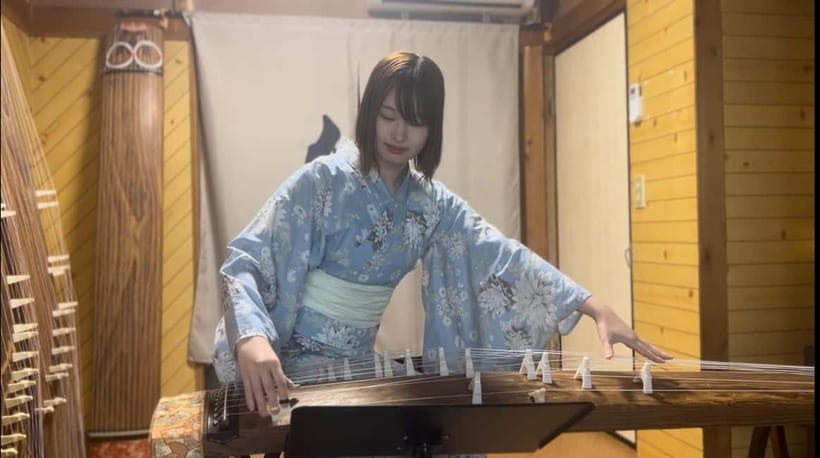
The hands-on portion comes after the concert. You sit with the koto and receive guidance from a professional instructor. The goal is not to turn you into a trained musician in one sitting. It is to let you feel how the instrument responds and learn a simple piece.
That modest goal works well. Several participants with little or no musical experience found the basics approachable, and the instructors are described as patient and encouraging. The lesson gives you a taste of the instrument’s techniques without pretending that a short class replaces years of study.
You may be surprised by how quickly you can produce a recognizable sound. The lesson can also make the concert more impressive. After trying the instrument yourself, you have a clearer sense of the control, timing, and finger movement behind the professional performance.
The private or small-group format helps here. You can ask for help as you go, rather than waiting for a teacher to move through a full class. If you have musical experience, there may also be room to try your own ideas with guidance from the instructor.
The exact amount of playing time depends on the option and total session length. If learning the koto is your main reason for booking, choose the option that includes the class rather than a performance-only choice.
How much value do you get for $38?
At $38 per person, this is a strong value if you want both a concert and a hands-on cultural activity. The price includes the performance, instrument use, necessary materials and tools, instruction, the cultural introduction, and photos of the experience.
You are paying for more than a short music show. A typical concert gives you the performance, while this session adds direct conversation and a beginner lesson. The small setting also gives you a level of access that can be hard to find in a larger cultural venue.
The value is strongest for couples, families with older children, or small groups who enjoy asking questions and trying something new. It is also useful for musicians and people collecting or studying traditional instruments. One participant who was interested in Japanese instruments appreciated being able to see, learn about, and play them.
There are limits. Transportation is not included, and neither are food, drinks, souvenirs, or extra koto accessories. You should also remember that the concert program changes. If you want a guaranteed specific repertoire, this is not the right kind of booking.
Still, for roughly the cost of a casual meal and activity, you receive a personal cultural lesson, a live performance, and a chance to play a rare instrument. That is a sensible use of part of your Kyoto budget.
Fitting the activity into a Kyoto day
Saiin is a useful base for combining this experience with other sights. Arashiyama is about 25 minutes away by train and on foot, and Saiin Station is a convenient transfer point between the Hankyu and Randen lines.
You can schedule the music before or after Arashiyama, but allow enough time for the residential walk to the house. Arashiyama itself can take much longer than expected, so avoid creating a tight connection if you are visiting the bamboo grove, temples, and river area on the same day.
Nijo Castle is about 20 minutes away by train and on foot. The location is close to Nijo Castle-mae on the Tozai Line, making this a practical pairing if your sightseeing plan already includes the castle.
Kinkakuji, the Golden Pavilion, is about 20 to 25 minutes away by bus and on foot from the Nishioji Sanjo area. Bus timing can vary, so leave a little room around the concert rather than treating the journey as exact.
Nishiki Market is about 25 minutes away by train and on foot. A direct Hankyu ride toward Karasuma or Kawaramachi makes it convenient to combine the music session with food shopping or a walk through central Kyoto.
I would place this activity on a day when you are already visiting western or central Kyoto, rather than crossing the city only for a one-hour booking. The music session is compact, but the final walk and transport connections still require planning.
Who will enjoy this most
This is a good match for anyone who wants cultural contact rather than a quick photo stop. You do not need musical training, Japanese language skills, or previous knowledge of the koto.
Families can enjoy the hands-on element, especially if children are old enough to sit through a performance and follow instructions. Children under the listed age limits are not suitable for the activity. The information gives several overlapping age restrictions, so check the booking option carefully if you are traveling with a very young child.
Musicians may find the session especially satisfying because the Q&A and playing time let you focus on technique. People who simply want a calm, unusual evening can enjoy it too, particularly if large shows are not your style.
This may not suit you if you want a long concert, a grand historic venue, or a guaranteed famous piece. It is also not ideal if you dislike small rooms, need a fully predictable schedule, or are unwilling to spend extra time finding a residential meeting point.
Tell the provider about physical limitations or allergies ahead of time. Late arrival can shorten the session, so punctuality matters more here than it would at a large theater.
Booking and cancellation basics
The activity can be booked with pay-later flexibility, so you do not have to pay at the time of reservation. Free cancellation is available up to 24 hours before the activity for a full refund.
Starting times vary, and the session lasts from one hour to 100 minutes. English and Japanese support is available, and you can choose between private and small-group formats when offered.
Check which option you are selecting. The meeting point may change, and some choices may focus on the performance while others include the koto lesson. The class is the better choice if playing the instrument is important to you.
Should you book the Kyoto koto and shamisen experience?
I would book this if you want a personal introduction to Japanese music and prefer participation over passive sightseeing. The combination of a professional concert, close questions, and a simple koto lesson gives you three useful ways to connect with the culture.
The strongest reasons to choose it are the warm house setting, the high level of musicianship, and the patient teaching. Aoi’s performance, the singing in some traditional pieces, and the chance to play alongside a professional can make this feel far more personal than a standard stage show.
Plan carefully for the address, arrive early, and keep your schedule flexible around transport. At $38, the experience offers very good value for a small group, a family with suitable-age children, or anyone who wants to leave Kyoto with more than another temple photograph.
FAQ
Where does the koto and shamisen experience take place?
It takes place in a small old Japanese house in Kyoto, in a residential area. The exact meeting point may vary depending on the option you book.
How long does the experience last?
The activity lasts between one hour and 100 minutes. Available starting times depend on the date and option selected.
What instruments will I hear?
You will hear the Japanese koto and shamisen. The program includes an introduction to both instruments before the live performance.
Can I play the koto myself?
Yes. The experience includes use of a koto and professional guidance for learning a simple piece. Choose an option that includes the class if playing the instrument is important to you.
Is the activity suitable for beginners?
Yes. The class is designed to be beginner-friendly, and no previous musical experience is required.
What kinds of music are performed?
The program can include classical pieces, contemporary compositions, and original works. The selection may change depending on the season or performer.
Is the activity available in English?
Yes. The available languages are English and Japanese.
Are transportation, meals, or drinks included?
No. Transportation to and from the location, meals, and drinks are not included. Souvenirs and additional koto accessories are also not included.
Can I cancel for a full refund?
Yes. You can cancel up to 24 hours in advance for a full refund. Late arrivals may shorten the experience, and you should report physical limitations or allergies ahead of time.
Just added around Kyoto
- Kyoto: Zen Meditation at a Private Temple with a Monk★ 5.0 · 25 reviews
- Kyoto: Gion Geisha District & Sake-in-Hand Walking Tour★ 5.0 · 37 reviews
- Private Pewter Sake Cup Experience with a Kyoto Artisan★ 5.0 · 31 reviews
- Your Private Vacation Photography Session In Kyoto★ 5.0 · 110 reviews
- Private Guided Traditional Buddhist Cooking in Japan★ 5.0 · 16 reviews
- Kyoto Wagashi(Japanese sweets) Cooking Class near Fushimiinari★ 5.0 · 60 reviews
- Traditional Japanese Music show & Experience Tour in Kyoto★ 5.0 · 57 reviews
- Kyoto:Family-Friendly Kimono & Yukata Experience at WARGO★ 5.0 · 147 reviews
Kyoto Tours, compared.


Fushimi Inari, Kinkakuji, Bamboo Grove 1 Day Bus Tour
Read our review →
Tea Ceremony in a Traditional Tea House in Kiyomizu
Read our review →
Kyoto Geisha Walking Tour: Gion District & Hidden Gems
Read our review →

Gion Magical Night Walking Tour with Geisha Trivia
Read our review →

Gion Geisha District Walking Tour – Stories of Geisha
Read our review →Browse the lists this tour appears in